Archive for the ‘CLASSIC ALBUMS’ Category

Graveface Records is a small independent label with a focus on all things hand-made, hand-assembled & unique

It’s giveaway time! For the next 48 hours you can download everything Graveface Records have uploaded to their  bandcamp page for free (name your own price – only exception being the one pre-order we have up). That’s 71 different Graveface releases you can explore and download . Happy Holidays! Seriously a great opportunity to grab our 2016 releases (TW Walsh, Hospital Ships, Stargazer Lilies, Geti, Casket Girls, Night School etc), check out some of our back catalogue gems (Toman – seriously, download Where Wolves Wear Wolf Wear, Marshmallow Ghosts, Monster Movie etc) or grab our best sellers (Appleseed Cast, Xiu Xiu, Black Moth Super Rainbow etc). Please share this info with your compatriots. I’m also extending this to their record label, TerrorVision since most of y’all have never checked that stuff out. It’s mostly horror/sci-fi soundtracks but there’s also some “Original Production” oddball stuff. Grab the Terror Vision catalogue for free by clicking here and the Graveface bandcamp catalogue for free over here.


Also, up for pre-order today is KNIFE PLAY by Xiu Xiu. It’s been out of print on vinyl since 2003 and this version comes with a bonus 7″ and a download code including Jamie’s drunk commentary (pretty amazing actually). This is a limited one time pressing for us so if this sounds cool to you, pick up a copy now. This is a Record Store Day Vinyl Tuesday release so if you want to grab one from your local indie shop those will appear on Jan 17th.

Last but not least we just confirmed a bunch of Graveface Record Club releases for 2017.  Read those deets below & click here to join the RC to receive the next 10 Graveface releases on exclusive colored vinyl + a sub tee.


That’s all folks.  Thanks for an incredible 2016. A special thank you to those that have made it a point to check out the physical store in Savannah. Super amazing meeting so many of you throughout the year.

For those unfamiliar with his work, Keaton Henson is an English folk-rock musician and poet, whose work incorporates a range of influences from contemporary to classical.

His work is also intensely performative, despite Keaton’s famously intense anxiety that has, for much of his career, precluded him from live performance. From an early age, Keaton learned to “gild the domestic cage” of his introspective world with “images and songs and poems of his imagined worlds” – not to mention music.

Keaton’s eagerly-awaited new album Kindly Now was released in September and to gain an insight into the music that’s shaped his own as he’s battled with isolation, Its such a rewarding listen,

‘Kindly Now’, his fourth album, is actually much the same of the same Keaton formula, an analysis of his own depression and anxiety, mixed with a healthy dose of self-loathing. However, it does feature a new side to him, with songs sounding much fuller and more arranged than previously, and a vocal delivery that’s a lot stronger than previous albums. In the track ‘Alright’, Keaton almost sounds angry at his inadequacies, a surge of weight behind his words, unlike his usual self-deprecating whine. I think on the whole this is a braver album, with Keaton owning up to his shortcomings without asking for a dashing of pity. The track ‘Old Lover’s In Dressing Rooms’ is particularly beautiful, detailing a conversation adrift with tension and woe between Keaton and an ex (presumably so anyway). It’s a great songwriting technique and catches the mood of a certain type of closeness between two people, a feeling most if not all of us have experienced and can understand.

Keaton Henson has crafted a career from writing immersive and deeply sad indie folk songs. “Kindly Now”, is no exception to the rule, giving us a glimpse into his inner struggles. From failing to connect with others to coping with anxiety, Henson is both candid in his storytelling and, in parts, determined that he will overcome his troubles. Across the record, Henson’s quivering voice is the main attraction. With his disarmingly timid falsetto, Henson trudges through twelve bittersweet orchestral heartbreakers.

Opening track “March”, a mash-up of diced samples and textures, showcases Henson’s more experimental side before the record plummets into the more familiar-sounding and frail “Alright”. Tipping a hat to fellow folk connoisseurs Perfume Genius and Destroyer, the song is stirringly beautiful, Once again experimental in colour, the anthemic ‘Comfortable Love’ opens with swaying, lazily-picked guitars;

In “The Pugilist”, with its dramatic strings and torn melody, Henson fights his corner as a serious artist, (“Don’t forget me, I still have art in me yet”), and implies that suffering for his art is a small price to pay to feel alive (“To remind me I’m living, And that I still need it”). Filled with cascading guitars and shivering cellos, “The Pugilist” is the record’s standout and most heartbreaking moment.

In contrast, Kindly Now’s most upbeat moment is the soulful Afro gospel, indie rock “Holy Lover”. With this ode to Paul Simon’s Graceland, Henson nervously confesses “I think I love you, baby please don’t be afraid of me.” The song feels like a turning point for Henson, not only on the album, but in his personal life too.

 The therapy continues on “How Could I Have Known” and “Good Lust”, as Henson continues to pick at the scabs of past relationships. Unable to let his insecurities dissipate, Henson sings about love like an awkward, heavy-hearted teenager, whispering lyrics “know that our love was real but I broke the deal all out I the cold, baby come hold me close, please don’t let me drown”, before the record comes to rest with the retreating sound of piano.

 Shaking off labels such as the ‘British Jeff Buckley‘, Henson has grown into his sound over time. If Birthdays was his attempt at self-loathing, then Kindly Now is his attempt at therapy; as with the album’s artwork, Henson has painted a self-portrait of himself and plastered over his faults. Stitched together with lulling orchestras, romantic sentiments and quivering vocals, the anxiety-ridden Kindly Now is an obscured window into the mind of one of music’s most reclusive characters.

Play It Again Sam Records

Pink Floyd The Early Years 1965-1972

The definitive Early Years box set, released 11th November 2016

27 DISC COLLECTION ON CD/DVD/BLU-RAY INCLUDES:

+ Many hours of rare and unreleased music & video
+ 14 Hours of video includes restored footage
+ original 4.0 Quad mixes / BBC sessions/live recordings
+ rare tracks including more than 20 previously unreleased
+ historic TV performances, live concerts and 3 feature films
+ Remixed 5.1 audio for ‘Live At Pompeii’ footage
+ collectable memorabilia
+100+ photos, most previously unseen
+ early singles + B sides on CD & vinyl

* 7 book-style packages, each with multiple discs. 6 are dedicated to a specific period and include related memorabilia and many unseen photos.

* Box bonus package includes collector’s audio and video. Box includes bonus larger replica memorabilia (posters, flyers, etc.) plus 5 x reissued replica 7″ singles, mastered from the original analogue tapes.

* The 6 year-specific packages will be made available in early 2017. The bonus package and larger memorabilia is exclusive to this box set.

The definitive Early Years box set, released 11th November 2016

Ullages

Eagulls have been one of the more interesting bands to emerge from the recent post-punk renaissance. Originally purveyors of quite spiky punk, their sound has mellowed a little over the past few years and their second album Ullages also an anagram of Eagulls marks a definite move forward from the band’s impressive self-titled debut of 2014. George Mitchell’s vocals are a little more defined, but retain their early Bob Smith quality, slightly stretched and pleading, reaching out for answers that never come, leaving only bewilderment and frustration. “Each night’s like the needle slipped, does existence have much more than this?”, “Is our future grey as the slabs on our drives?”, “Why don’t I ever stop and start to think?” – there are more questions than answers for Eagulls in the bleak world they inhabit, the desolate city scapes mirroring their inner desolation and helplessness.

If anything, there is less hope on Ullages than on their first album Eagulls, the tone is more resigned, the music less of an attack and more of a blurred soundscape. Emptiness, Eagulls

Eagulls delivered a daring follow-up that transformed George Mitchell’s vocals from echo-drenched hollers to sharp, wry observations. ‘Heads or Tails’ is an almost folky opener, while ‘Velvet’ and ‘Psalms’ sound like wandering alone into a dark alleyway, not sure whether you’ll make it out the other side.

Tony Wilson once said post-punk is about moving on from saying ‘fuck you’, to saying ‘I’m fucked’. Eagulls have encapsulated this perfectly in two albums.

Though the band describe the record as positive with a glass half-full mentality, it is a curious mind that would find positivity only in the fact that things couldn’t really get any worse. Sonically, there is a marked change, with more thoughtful backdrops framing the vocals, often slighty warped in an MBV style, though with plenty of picked notes and a clattering drum attacks straight from the Birthday Party. It’s a beautiful amalgam of all that has been good in music over the past thirty-five years, with jumping Cure basslines, plangent guitars, the occasional power chord and even some ambient flickers. There’s a very limited indies-only green vinyl edition, so get in quick, and all housed in a sleeve by cult photographer Peter Mitchell. Near enough the perfect package.

Musical duo Delaney and Bonnie Bramlett got their first recording contract for Stax in 1969. They then moved to Elektra before coming to Atco in 1970 for their longest sustained recording contract. While they never achieved much success as some others, they are best remembered for the “Friends” they had with them for their albums. And when your friends include Leon Russell, Isaac Hayes, George Harrison, Eric Clapton, Joe Cocker, and Duane & Gregg Allman, among others, it is easy to see why. Motel Shot, released in 1971, was the duo’s fourth studio album and third overall album on Atco. It had its genesis a year earlier as a prospective album for Elektra and sessions were recorded with engineer Bruce Botnick.

However, tensions grew with Elektra and the pair moved to Atco, recording a studio and a live album before circling back to the earlier material. The songs were re-recorded for Atco and the eventual LP gave Delaney and Bonnie their biggest chart success with “Never Ending Song of Love.” Guests on the album include  Leon Russell, Cocker, Duane Allman, Gram Parsons and Bobby Whitlock among others. The LP itself has never appeared on CD outside of Japan and this new edition is expanded with 8 recently discovered tracks from the original 1970 sessions. It has been remastered by Bill Inglot and features liner notes by Pat Thomas with quotes from Bonnie Bramlett, Bruce Botnick, Jac Holzman and Bobby Whitlock.

A0659032060 16

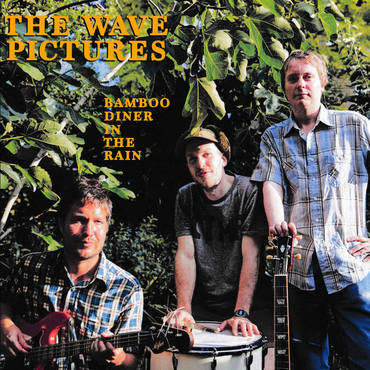
London based trio The Wave Pictures – Jonny Helm (drums), Dave Tattersall (guitar & vocals) and Franic Rozycki (bass) – return with their brand new album ‘Bamboo Diner In The Rain’ on Moshi Moshi Records.

Following on from last year’s Billy Childish collaboration ‘Great Big Flamingo Burning Moon’ and their recent acoustic record ‘A Season In Hull’, ‘Bamboo Diner In The Rain’ sees The Wave Pictures battling against the robot music apocalypse.

The new album is a bluesy, boozy love letter to the guitar, filled with American Primitive instrumentals, John Lee Hooker chugs and Link Wray style minor-key surf music. As songwriter and guitarist Dave Tattersall explains, “This album is set in the Bamboo Diner of my dreams, with rain beating on the windows and a jukebox stocked with blues. This is the most personal album I’ve made so far. In fact, that’s the whole idea of the band, to become more and more authentically ourselves on record. To grow inwards. Like everything on this dark and strange little album. It’s not robot music.”
106801

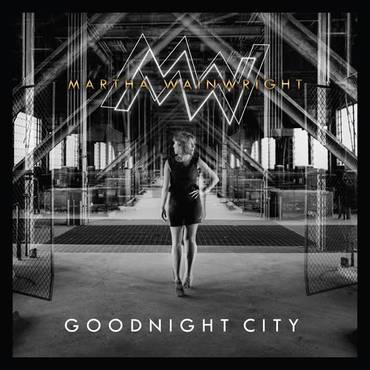
Martha Wainwright releases a wonderful new studio album, ‘Goodnight City’, on [PIAS]. It’s the follow up to her acclaimed 2012 release ‘Come Home To Mama’.

‘Goodnight City’ features 12 brand new songs produced by Thomas Bartlett (Surfjan Stevens, Glen Hansard) and longtime producer Brad Albetta. It recalls the emotional rawness of her debut album, much of it encapsulated by the captivating lead track ‘Around The Bend’ and her extraordinary voice.

“Making ‘Goodnight City’ was the most fun I’ve had in a long time,” Martha admits. “Thomas (keys), Brad (electric / bass), Phil Melanson (drums) and I would sit in a circle and work out arrangements for these vividly different songs. Recording them live with very few overdubs the focus remains on the integrity of the song and our ability to play together as a band.”

Martha wrote half the songs on the album while the other half were written by friends and relatives: Beth Orton, Glen Hansard, Rufus, Wainwright, Michael Ondaatje and Merrill Garbus of tUnE-yArDs.

“Because these writers know me and because I was able to personalise these songs by changing things here and there, I made them feel as if I wrote them myself,” Martha explains. “Somehow they wonderfully reflect my life and I am so thankful to the other artists for writing them.”

‘Goodnight City’ was recorded in Montreal. Last year Martha and Lucy Wainwright Roche released ‘Songs In The Dark’ as the Wainwright Sisters.

The Early Years 1965-1972

As massive and hefty as a cinder block, Pink Floyd‘s The Early Years 1965-1972 is no conventional box set. It is an archive in miniature, offering 28 discs — 11 CDs with the remaining discs being DVDs and Blu-Rays that offer duplicates of the same audio/visual material — alongside replicas of original poster art, fliers, press releases, 7″ singles and ticket stubs, all here to offer a deep, multi-tiered portrait of the years when Pink Floyd were fumbling around trying to find their voice. This isn’t precisely uncovered territory — during the eight years covered on this box set, Floyd released eight studio albums, and their early singles have been compiled on several collections, including 1971’s Relics — but what’s available on this box is almost entirely rare, with much of it being unheard and unbootleged. This isn’t limited to the audio tracks, either. The DVDs and Blu-Rays offer a cornucopia of stunning films, ranging from promo clips and BBC performances to interviews between Syd Barrett and Dick Clark, full live sets, documentaries, a version of “Interstellar Overdrive” with Frank Zappa from 1969, a ballet from 1972, rejected animations, and the entirety of More and Obscured by Clouds, two feature films Pink Floyd scored.

Sleigh Bells, Derek Miller and Alexis Krauss, have announced their first new album in three years. Entitled Jessica Rabbit, the album was produced by the band and mixed by Andrew Dawson (Kanye West, Tyler, the Creator); and for the first time ever they brought someone outside of the band into the creative process, working with Mike Elizondo (Dr. Dre, Fiona Apple) to shape five of the band’s favourite tracks on the album.

The result is an album that does not sound like anything Sleigh Bells has ever done – or anyone has ever done, for that matter. It is the sonic equivalent of firing synapses, with melodies zigzagging in different directions in a beautiful and ever-modulating controlled chaos. It is playful but darkly so; flirtatious but caustic; ebullient but downright sinister. It is a record that is wholly unique in sound and purpose, an unabashed and unafraid statement from a band that has made offending rote conceptions of pop music their signature and greatest strength.

Released as a companion to Robbie Robertson‘s 2016 memoir of the same name, Testimony is the singer/songwriter’s own take on his musical history — an 18-track compilation that samples from every era of his career, from his time supporting Ronnie Hawkins to his stabs at moody trip-hop. While the book ends when the Band disbands, Testimony finds space for selections from his solo career — five songs total, with 1991’s Storyville earning the largest play and the electronica aspects of 1998’s Contract from the Underworld of Red Boy and 2011’s How to Become Clairvoyant diminished. Still, the Band naturally figures heavily into the equation here, but Robertson avoids his biggest hits along with some of his best-known songs. Instead, he culls heavily from the Band‘s Live at the Academy of Music 1971 performance — it’s better known as the 1972 LP Rock of Ages — and the 2005 Band box A Musical History, which is where all the early cuts from Levon Helm & the Hawks and the Robertson-sung “Twilight (Song Sketch)” were first released. If Testimony is light on rarities, what matters is context. By piecing together all these elements of his career — including his time backing Hawkins(“Come Love”) and Bob Dylan (“Rainy Day Women #12 & 35” from Before the Flood) — he paints a fairly rich portrait of his musical achievements, so Testimony does indeed wind up being a musical memoir.

Wolf People – This London-birthed four-piece have long been hailed as a band with the alchemical charge to transform psychedelic, folk and riff-rock spirits into something both timeless and vibrant, avoiding the lure of retro pastiche. ‘Ruins’ however is unquestionably their greatest achievement to date, reinventing the earthy roar of ampstacks and a quintessentially English pastoral sensibility, and finding transformational ways to draw the cosmic dots between 1971 and 2016. The theme of this album may be a world in which nature has overcome the end of humanity, but the post-apocalyptic landscape has never sounded peachier.

Arriving on the heels of her 2015 road memoir Don’t Suck, Don’t Die: Giving Up Vic Chesnutt, which focused on Kristin Hersh’s long friendship with the late singer/songwriter, Wyatt at the Coyote Palace delivers another audio-visual experience via a 24-track LP and an accompanying hardback book stocked with lyrics, notes, essays, and photographs. Published through her own co-founded nonprofit organization CASH Music, the double album is a purely Hersh-oriented affair, with the alt-rock hero handling all of the parts. Having that kind of freedom can be a creative death knell for some artists, but Hersh has always operated in another realm, both sonically and lyrically, and she takes to the open-ended format with gusto. Opener “Bright” starts off on familiar ground, with Hersh fingerpicking one of her signature spectral melodies. However, things begin to shift gears quickly, with wild swaths of dissonance rolling in like downed wires. Hersh’s voice remains electric, if not a bit rawer than usual, and her knack for pairing big, circular pop hooks with dreamlike lyrics and rhythmic left turns remains intact. When all of those pistons start to pump, as is the case on standout cuts “Hemingway’s Tell,” “Diving Bell,” and “Between Piety and Desire,” the results can be hair-raising, but at just over 80 minutes of material, there’s a lot to digest here. It’s easy to stand on the sidelines and say that a more streamlined, ten- to 12-track version of the album would suffice, but one of the many things that’s helped to make Hersh such a singular talent over the years is her unwillingness to compromise, and on that front, the punishing and beautiful Wyatt at the Coyote Palace doesn’t disappoint.

Image may contain: one or more people, people standing and indoor

From the rich French psych pool that seems to throw up a head-scratchingly heavenly album every year (see Turzi in 2015 and Moodoïd in 2014), the second full-lengther from this Biarritz collective was a bonkers race through reverberant surf-rock, baroque pop, rickety krautrock, serene space-disco, swinging yé-yé and then some. This everything-but-the-kitchen-sink approach meant there was a surprise around every corner.

Psycho Tropical Berlin is the first studio album by French group La Femme, released on 8 April 2013.
00:00 – 04:09 : Antitaxi
04:09 – 08:49 : Amour Dans Le Motu
08:49 – 11:52 : La Femme
11:52 – 14:30 : Interlude
14:30 – 17:46 : Hypsoline
17:46 – 21:36 : Sur La Planche 2013
21:36 – 28:29 : It’s Time To Wake Up (2023)
28:29 – 34:39 : Nous Étions Deux
34:39 – 37:34 : Packshot
37:34 – 43:04 : Saisis La Corde
43:04 – 47:40 : Le Blues De Françoise
47:40 – 50:18 : Si Un Jour
50:18 – 55:43 : La Femme Ressort
55:43 – 58:08 : Welcome America

No automatic alt text available.

La Femme’s ability to dance across the spectrum of genres in their latest album makes it an instant standout of 2016. Mystére‘s opening jam, “Sphynx”, is a galloping techno groove accompanied by singer Clémence Quélennec’s bright vocals, directly followed by “Le vide est ton nouveau prenom,” an acoustic track with tambourine flourishes and spooky vocals. All throughout the collection, Quélennec pays homage to classic surf rock styles (“Où va le monde”), early pop (“Septembre”), spacey psych rock (“Always In The Sun”), and even throws drifty, ambient tracks in the mix (“Vagues”). What makes the album cohesive throughout its many influences is its use of dissonance. Eerie, murky synths are joined by strong, conversational vocals that trade French narratives throughout it’s entirety and keep listeners immersed in La Femme’s dark, twisted fantasy

From the rich French psych pool that seems to throw up a head-scratchingly heavenly album every year (see Turzi in 2015 and Moodoïd in 2014), the second full-lengther from the Biarritz collective was a bonkers race through reverberant surf-rock, baroque pop, rickety krautrock, serene space-disco, swinging yé-yé and then some. This everything-but-the-kitchen-sink approach meant there was a surprise around every corner.

Rick Brown was born in San Francisco, California and is a clerical worker at a law school in NYC. Che Chen was born in New Haven, CT and works for a cancer diagnostics company in Stonybrook, NY. They met via myspace and started playing together as 75 Dollar Bill approximately eight years later.

Brown plays percussion and homemade horns and Chen plays electric guitar.   “It’s hard not to slip into ridiculous hyperbole when it comes to 75 Dollar Bill. Whatever conclusion you come to personally, you’re gonna love the instrumental duo of guitarist Che Chen and percussionist Rick Brown. They’ve definitely nailed down a thrillingly original sound, centered around Chen’s specially designed quarter-tone guitar — something about his tone cuts right to the quick, with North African riffs blending into juke-joint boogies into more avant territory. Brown’s impressively minimalist setup (he mostly plays a wooden crate) is a perfect fit, adding a hypnotic thump to the mix. The whole thing is a little hard to describe,  75 Dollar Bill is amazing. On the band’s latest release, Wood / Metal / Plastic / Pattern / Rhythm / Rock, the group expand the lineup — baritone saxes, droning violas and contrabass — and deliver their most powerful music yet. Things feel a bit more composed and fleshed out as opposed to the improvised feel of some of their earlier recordings, but it works just fine: four mindbending tracks, each one a delight.

Rick Brown: plywood crate, maracas, shakers, bells, a drum
Che Chen: 12 and 6 string electric guitars, bass, shakers
w/
Carey Balch: floor tom (tr.3)
Rolyn Hu: trumpet (tr.4)
Cheryl Kingan: baritone & alto saxophones (tr 2 & 4)
Andrew Lafkas: contrabass (tr.2)
Karen Waltuch: viola (tr.2)

http://

Tony Molina speaks a plain truth rarely considered by modern musicians. He’s not going to waste your time pontificating on sentimentality when he knows that the very sentiments that power his music will stay with you long after the songs end. The West Bay guitarist’s background in hardcore, metal, and punk., The songs are like some Lennon-McCartney or George Harrison inventing a mode of sincere, world-beating pop expression and concentrating it into a span of seconds. That’s what’s happening here — a resourcefulness that is typically at odds with the kind of guitar mastery you’ll hear within.

You could fit the contents of Tony’s previous releases on Slumberland and Matador onto one side of a 90-minute cassette and still have room left over for the eight offerings on “Confront the Truth,” but would you want it any other way? When Tony sings about “trying to move on but I just don’t know how,” no extension of the time it takes for him to bring that feeling across is going to solve the problem at hand. You’re immediately thrust into the orbit of these songs.

The eight offerings on “Confront the Truth” notch a significant advancement in his style and approach. Almost completely absent from these new songs are the overloaded guitar crunch replaced by gentle acoustic balladry, tasteful Mellotron and piano backing, the kind of musicianship that often takes a lifetime to master. The sadness of this music has precedents in pop’s past, Tony found in those influences that shaped his experience; years upon years of focus and isolation in developing his guitar skills to speak to these truths.

The record’s coda, a highlight reel of Thin Lizzy’s “Banshee,” indicates that the Tony you knew is still in there, but the game has changed, and the rules are entirely his own. Tony Molina is in complete control of his own destiny, and we should all care about where he’s going.

http://