Archive for the ‘CLASSIC ALBUMS’ Category

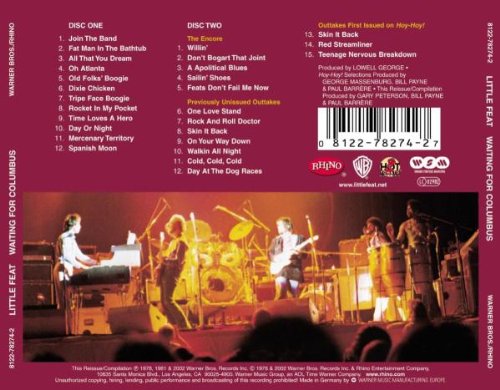
“Waiting for Columbus” was recorded during seven performances in early August 1977. The first four shows were held at the Rainbow Theatre in London, UK on August 1st–4th, 1977. The final three shows were recorded in George Washington University’s Lisner Auditorium on August 8th–10th in Washington, D.C. Little Feat was backed at some of these shows by the Tower of Power horn section.
August, 1st back in 1977 (Monday) Little Feat played the first show in London with the Tower Of Power horns, but none of the songs from that evening were chosen for the official release.
Is this the greatest live album, Ever!!! I’ll never forget the first time I heard the version of Spanish Moon. Everytime I hear those horns . Outstanding.

How the group pulled off one of the best live albums of all time, the double-LP “Waiting for Columbus”, is both a heartening story of persistence and a sad, cautionary tale about how band politics can become toxic, and destroy a beautiful thing in the process.

When Lowell George proposed doing a live album in early 1977, the group approved the idea at least partly, because they considered it a good sign that George was involving himself in any decision-making.

They were also anxious to capture their onstage power in the way the Allman Brothers Band, the Rolling Stones, Neil Young and the Band had before them. Little Feat made plans to include the five-piece Tower of Power horn section (Mic Gillette and Greg Adams on trumpets, with Lenny Pickett, Emilio Castillo and Stephen “Doc” Kupka playing saxophones), incorporating new super-funky arrangements inspired by Allen Toussaint’s work with the Band on Rock of Ages.

Every once in a while an album comes along that completely changes the way you think about a band. For me that band is Little Feat and the album is their timeless live offering, “Waiting For Columbus”. Spanning the course of seven shows in 1977, the band makes their way through a set of swampy blues-rock in a uniquely 70’s paradigm that reaches other-worldly altitudes. Little Feat was a band that makes you think many contemporary bands aren’t as revolutionary as you thought.

Little Feat members had always enjoyed recreational drugs and heavy partying, but George was now fully in the grip of a destructive cocaine habit. He often refused to rehearse or jam, disappeared for days at a time and virtually stopped writing songs, leaving production decisions and music construction to keyboardist Bill Payne and guitarist Paul Barrere. In an interview with journalist Bud Scoppa, Barrere described ’77 Little Feat as “without focus or direction, no real managerial control over the business aspect, and because our personal habits were so askew,

It’s one thing to hear the album, but it takes on awe-inspiring qualities when you sit back and listen to it.

First off, lead vocalist and slide-guitarist, Lowell George was an immense talent and should be heralded as a national treasure. His vocal work and lyrical contributions are timeless in-and-of-themselves. Not to mention, as a session guitarist he played on Robert Palmer’s cover of Allen Toussaint’s Sneaking Sally Through The Alley and as a producer, he produced The Grateful Dead’s 1978 album Shakedown Street. Combined with keys player Bill Payne, rhythm/lead guitarist Paul Barrere, Richard Hayward on drums, and bassist Kenny Gradney, Little Feat came together and made something special with “Waiting For Columbus” (especially considering the ensuing disbandment of Little Feat and George’s untimely passing).

On the original two-LP set the concerts’ song order was reconfigured for more dramatic effect, with nine performances from D.C. and eight from London. The Rolling Stones’ Mick Taylor guests on “A Apolitical Blues” from the August 3rd gig, which was otherwise excluded from consideration; it was subsequently known as the “Black Wednesday” show by the band. Barrere and George were seriously hungover after staying up all night with some of the Tower of Power members after the second show. Castillo told writer Ben Fong-Torres for his Willin’ band biography that Hayward and George got into a screaming match just before going on stage, with punches thrown. Road manager Doug Zahn prevented Hayward from physically attacking George, who started the fisticuffs. Other band members reportedly fought in the dressing room after the show as well.

Waiting for Columbus is an impressively thorough expression of the times in which it was created. They’re playing all the sounds available to them and pulling it off in a unique way that celebrates the cultural heritage of the American South, and more-than-adequately covers the eclectic influences of the day. There’s jazz, blues, rock n’ roll, boogie, folk, gospel, soul and the many expressions of these styles within the Americana framework.

The party gets started with a klanky cowbell run that leads into a pot-stirring vibe as “Fat Man in a Bathtub” gets revved up. This tune exemplifies the attitude of Little Feat that never takes itself too seriously; allowing the music to breathe without the air of seriousness that constricts many acts. The improvisational aptitude of the band more than compensates for any nonsensical attitudes displayed in their lyrics. Which are satisfying and flush with wit and humor.

“All That You Dream” opens up as an up-tempo rock city number before breaking into the glorious chorus of “I’ve been down, but not like this before”. Seemingly, to celebrate the perspective of the downtrodden as they harmonize beautifully through this gripping serenade.

“Oh! Atlanta” is the kinda tune that makes you look at ATL from a different angle. One that says “there must be something to this city”. A good ole’ country get-down that moves through luscious musical changes and makes you think, “there’s definitely some tonk in that honky”. Upon taking a closer look at this song, I realized that I didn’t fully appreciate the creativity and musical awareness of Little Feat. Notably, Lowell’s vocals throughout the verse are syncopated and stylized in truly original form.

“Old Folks Boogie” creeps up with a jazzy blues feel and lyrical content that shows how these guys can have fun with their music.

“And you know that you’re over the hill – When your mind makes a promise that your body can’t fill – Doin’ the old folks boogie – And boogie we will – ‘Cause to us the thought’s as good as the thrill” is a hilariously accurate insight to the aging process.

“Spanish Moon” is a song that plays like a soundtrack to wherever you end up at the end of “On Your Way Down” (included on the extended 2002 release). A low-down sinister groove, rife with visceral storytelling and a prominent feeling that it’s goodto be bad, “Spanish Moon” has one of the baddest bass lines on the album. The low-end here is heavier than lead and trudges through the filth of the visceral storyline.

At the moment, I can hardly think of a band that weaves as rich a narrative and moves through it with such compelling musical dexterity. As if to place exclamatory punctuations, the “Tower of Power” horn section lies in wait to unleash their brass-blasting fury.

Moving on to one of Little Feat’s most famous songs, a little left-hand piano boogie quickly opens up to some right-hand woogie as the extended/re-worked version of “Dixie Chicken” takes flight. Complete with an extended piano solo that traverses through a syncopated Fats Waller/Jelly-Roll Morton style and leads into a delightful, Dixieland breakdown with the Tower of Power horns. Cascading piano, sultry clarinet, trumpet and trombone lead the jam before it explodes into “Tripe Face Boogie” which features a tantalizing mix of synthesized sounds and Rhodes piano through the instrumental section.

“Willin’ > Don’t Bogart That Joint” is a slowed-down country crooner section with a beautiful, lonesome feel to it. Riding the edge between all-out-sorrow and a feeling of redemption that says “I’ve been through some shit, but I’m gonna be alright.. And damnit, if I’m not gonna be better off for it.” Speaks to a man at the end of his rope, but ready to heed the omen of progress:

“A Apolitical Blues > Sailin’ Shoes” marks the downright bluesiest section of the album. It starts off chuggin’ down the tracks and settles into a juke-joint vibe that carries through until the last track on the album; Bill Payne’s “Feats Don’t Fail Me Now”. A song that features a frothy bass line that keeps comin’ back for more. Drummer, Richard Hayward drops it into gear while Lowell’s vocals rev up the engine on this beast, for an expansive journey fitting to close out the album.

Little Feat represents a brand of Southern culture that belongs to everyone. Much in the same way that the 1776 ethos isn’t only identifiable to Boston, or Philly. They connect with something in all of us and deal with the full experience; the celebration of life, the evil urges, and a humorous outlook on the hard times that keeps the soul light.

Lowell George became a producer-for-hire, and began work on a solo album that was eventually issued as Thanks, I’ll Eat it Here. He died at the age of 34 while on tour promoting it, ironically playing the Lisner Auditorium a final time on June 28th, 1979, succumbing after a heart attack the next day, most likely brought about by a cocaine overdose. Little Feat eventually regrouped, and with many different line-ups they made fantastic music for decades. Hayward was killed by cancer in August 2010, as was Barrere in October 2019. Of the survivors, Payne has been the most active, working most recently with Leftover Salmon and the Doobie Brothers.

Waiting For Columbus’ cover art by Neon Park (Martin Muller) still confounds easy interpretation, and forms part of the mystique of the album. Is the anthropomorphic tomato-woman a symbol of idyllic America, before Columbus “discovered” her? Three additional outtakes were included on the 1981 Little Feat compilation Hoy-Hoy! and seven more emerged on the Rhino reissue in 2002. Maybe someday the powers-that-be at Warner Bros. Records will release everything recorded and finally satisfy the still-thriving Little Feat cult?

Waiting for Columbus continues to exert a big influence, especially on country, bluegrass, blues and jam bands. On October 31st, 2010, Phish performed the whole album in Atlantic City as part of their annual “Halloween disguise” shows, and on July 21st, 2018, the Peach Festival in Scranton, Pa., saw the remaining members of Little Feat join with moe., Turkuaz and the Midnight Ramble Horns to recreate Waiting For Columbus one more time.
Simply stated, Waiting For Columbus is a timeless classic, worthy of any record collection.

HAND HABITS DEMAND IT

“Wildly Idle”, the warmly enveloping new album from Meg Duffy, aka Hand Habits, is out tomorrow on Woodsist Records. Today, she shares the video for one of the record’s prettiest, most achingly wistful tracks, starring Duffy herself in a house with mysterious figures with fabric-draped faces, framed by soft-focus shots that lend the vid a gauzy, dream-like quality that suits the song nicely. Shot + directed by Christina Acevedo:

Album number two from this trippy Velvet/Chills loving band. Not sure they’ve ever surpassed that first EP, but I love to hear them keep trying. Proper Ornaments is the project of James Hoare (Ultimate Painting, Veronica Falls) and Max Oscarnold (Toy, Pink Flames). The band germinated slowly from their friendship, which began when Max distracted James from shop-keeping, as his then girlfriend attempted to steal shoes. Max was freshly arrived in London from Buenos Aires.

The chance meeting blossomed into an epicurean riot of luminous highs and cold, dismal crashes that conversely produced music that was very well ordered and faintly angelic. It was so much deeper and more refined, serious, simple and affecting .

http://

Taken from the album, Foxhole, out on January 20th through Slumberland (US) and Tough Love (R.O.W)

Pre-order Foxhole
ltd edition translucent blue

The psych scene is one that has never seemed to really go away since its birth in the mid-60s under the guidance of bands such as the Thirteenth Floor Elevators and early Pink Floyd. It may have faded into the background from time to time, but every few years it comes back with something new and interesting added to the recognisable template. Out of the present incarnation of this crowd, which includes the likes of Swedish tribalists Goat, the hypnotic Wooden Shjips and a slew of bands that have featured on the excellent Reverb Conspiracy compilations, comes Italian duo Sonic Jesus. Their debut album, “Neither Virtue Nor Anger” is a set of predominantly drone-based psychedelic tunes married to a motorik groove that blows the mind and moves the hips.

Sonic Jesus’ influences may occasionally be glaring, such as on the Black Angels’ pastiche “My Lunacy” and by the beyond-the-grave appearance of William Burroughs, Patron Saint of the Spaced-out, on “Monkey on my Back”. The whole certainly adds up to more than the sum of its parts, however, and Neither Virtue Nor Anger is much more than a retro attempt to recapture something from the distant past. Stand-out tune “Reich” is an unrelenting cacophony of howling synths which underlay a twangy trip with chanted vocals and urgent drumming. “Telegraph” suggests Syd Barrett-era Pink Floyd getting it together with original New York electro-punks Suicide, with its pulsating synth groove, reverb-heavy beat and spidery guitar lines, while album closer “Kali Yuga” has a dreamy, off-kilter vibe with bubbling electronics driven by an understated groove.

An 80-odd-minute double album of psych rock might be a bit much to swallow for some, but for those who like their psychedelia fried, “Neither Virtue Nor Anger” has some very tasty treats.

Sonic Jesus produced by Fuzz Club Records
Song written and recorded by Sonic Jesus
Scene from “Teatro sin fin”, a Panic Movement by Alejandro Jodorowsky

No automatic alt text available.

It’s kind of hard to believe that The Bats have been back for a decade now — this is their fourth album since their 2005 reunion, and like its predecessors, it shows that the band have lost none of the songwriting chops that made them one of the most prominent exponents of the much-lauded “Dunedin sound” in the 1980s. (They’re actually from Christchurch, but close enough.) While their music is timeless, their songs are very much rooted in the present. “Not So Good” (above), this album’s closing track, lambasts a leader who sounds awfully familiar: “Every time he opens up/ He’s filling up a liar’s cup / He knows better, and that’s for sure/ It’s your fault if you are poor.”

http://

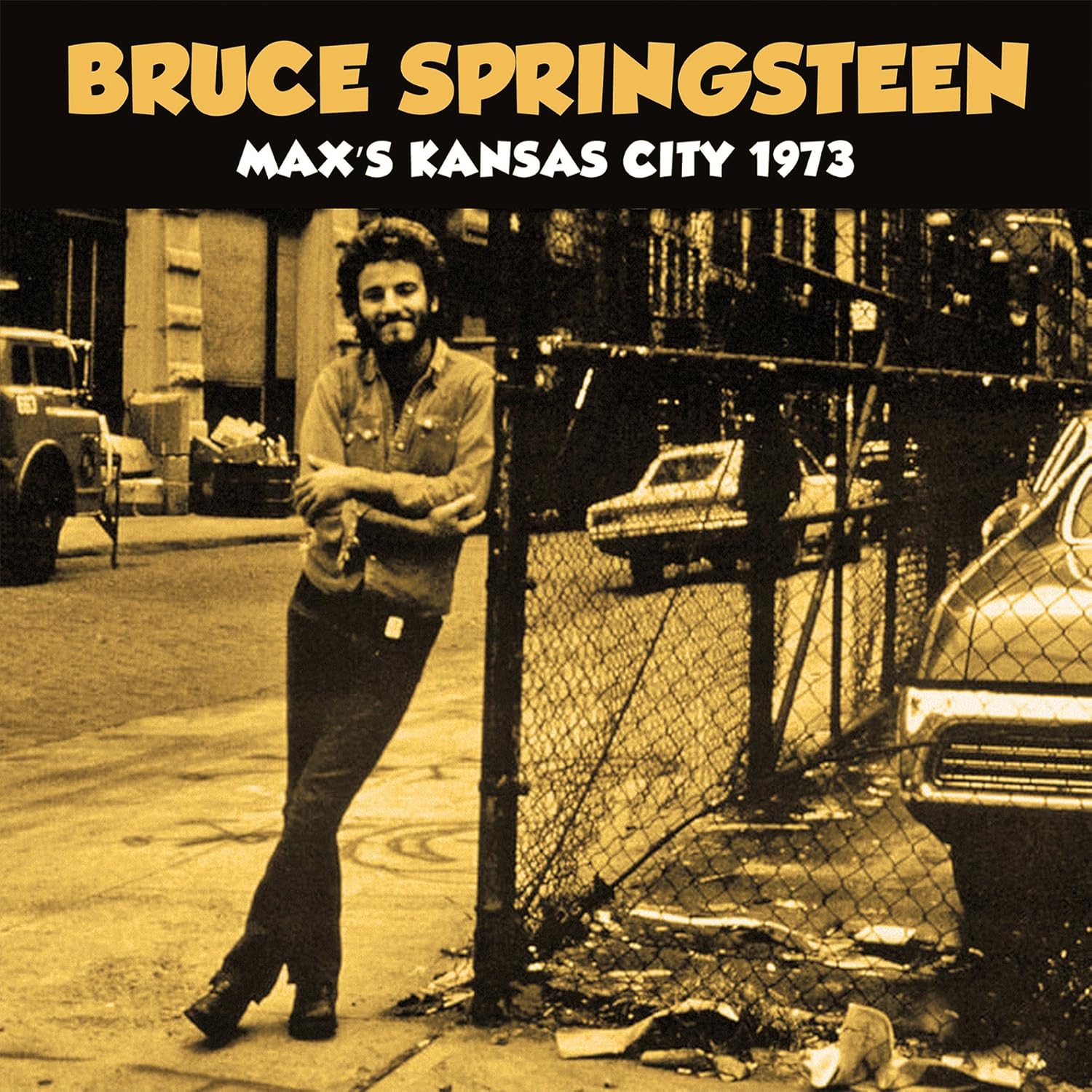
MAX S KANSAS CITY 1973 – Early Radio Broadcast from NEW YORK S most iconic venue. Bruce Springsteen a regular performer there during his early days would be an understatement; indeed, he played a staggering 17 shows at the venue in 1973 alone. This CD contains one such occasion captured on 31st January that year. Having just released his debut, Greetings From Asbury Park, N.J., Columbia Records had arranged a simultaneous radio broadcast to help promote the album. Featuring a host of early favourites, including Does This Bus Go To 82nd Street? and Spirit In The Night – along with several primitive versions of songs that would later appear on his sophomore record, The Wild, The Innocent & The E Street Shuffle, plus a number of other rarities – this collection is a fascinating artefact of the roots of one of rock music s most enduring talents

RR_108-2

In the early Nineties, the music world welcomed a refreshing thunderstorm of rock n’ roll that washed away all of the glitter and hair spray of the cheesy metal bands in the Eighties. Although there were a lot of grunge and alternative rock bands dominating the charts, the only band that put a shiny new coat of paint on some of the most pure rock ‘n’ roll sounds were the Black Crowes.

Chris Robinson grew up just outside Atlanta, GA, along with his brother and former bandmate in The Black Crowes. Chris Robinson Brotherhood released its fourth studio album “Any Way You Love, We Know How You Feel” on July 29, 2016, and on November 4, 2016, an EP titled “If You Lived Here, You Would Be Home By Now,” containing five songs left over from the same sessions.

Chris Robinson has clearly learned that one of the most important keys to success is proper preparation. On Anyway You Love, We Know How You Feel, it’s obvious that he and his band did their homework. On their fourth studio album, the Chris Robinson Brotherhood show off their unity and soul with a set of songs that perfectly utilize the skills and easy musical camaraderie that the band has built through years of sharing stages and tour buses. Having put in that time to completely gel as a unit, the band is free to further explore the southern fried soulful and funky results of the interplay of their various talents, which they do to great effect on their newest album.

The band’s bubbling, southern psychedelic sound has evolved since their last studio album, 2014’s Phosphorescent Harvest, adding a richness and a depth beyond any previous work. While obviously the star of the show, Robinson shares sonic space freely with his collaborators, particularly guitarist Neal Casal and keyboardist Adam MacDougall. Both men have powerful musical voices but manage to work in harmony with each other, all under the emotive drawl and chords of Robinson.

http://

“Narcissus Soaking Wet” opens the disc with a dreamlike intro that slowly coalesces into a funky, cosmic groove which casts a powerful spell from the very first notes. A slinky guitar line blends with a percolating organ from keyboardist and song co-writer MacDougall before expanding to a trance-like jam from the heart of the early seventies. Casal’s use of slide on the following “Forever As The Moon” is suitably restrained so that the majestic sound of his chords doesn’t drown out the rest of the piece. Here Casal, as throughout these recordings, takes great care to serve the song not his own ego, managing to compliment but never overwhelm the mid tempo tune with his peels of guitar joy.

chrisrobinsonbrotherhood

Whether tossing off a floating, quirky quasi-instrumental like “Give Us Back Our Eleven Days” or allowing Robinson and Casal let their jamming do the talking for them in the impressive outro on “Leave My Guitar Alone.” Anyway You Love, We Know How You Feel never loses sight of its tone and pace. “Oak Apple Day” exemplifies the languid and funky approach that is the order of the day, with all the hallmarks of the album prominently on display. Syrupy guitar leads, reedy organ flourishes and a call-and-response lyric that has Robinson entreating listeners to “Relax Your Mind,” which sums up the albums lyrical and sonic intent perfectly. Closing the album with “California Hymn” Robinson’s roots show the strongest with a plaintive pedal steel guitar and his charming drawl both turned up to their highest intensity, sending listeners out with a last moment of righteous fire.

http://

“All it takes is one good, small idea, and then if everyone’s focused and in the moment, a few hours later, you can have something that you realize you’ll be playing for as long as you’re making music,” said Robinson in a statement. “I think when everyone’s aware that that’s the sort of magic that we’re looking for. More than any other session that I’ve ever been a part of, that’s how all of these songs were done.”

As is often the case, having a strongly defined musical identity can be a double edged sword for a band. While obviously great care has been shown to make each track open and accessible, the soul and spirit behind them is personal and pervasive. Chris Robinson and his band aren’t trying to please the world, they’re just making the best music they can, and they’ve done themselves proud with this album. Flowing like a twisting and turning river that wanders but never loses sight of its destination, Anyway You Love, We Know How You Feel delivers a wonderful escape from the maddening beat of the modern world. As gifts go, a sanctuary for the soul, no matter how momentary, is a true blessing well worth sharing.

21st century concept albums Antlers

The Antlers – “Hospice” –Released in (2009; Frenchkiss Records) is the third studio album by American indie rock The Antlers, and their first concept album . It was initially self-distributed by the band in March 2009, and was then eventually remastered and re-released.

Part of what makes a concept album truly work is the narrative it’s beholden to. Hospice is a grizzly and harrowing work, which seeks—if nothing else—to completely hollow you as a human being. Dealing with a hospice worker’s romantic entanglement with a patient with terminal bone cancer, Hospice is an album with a palpable feeling of mournful hopelessness.

Singer Peter Silberman’s vocal styling is responsible for at least 50 percent of the latent intensity of the narrative, a quivering whisper of toiling emotions, annunciating with ruthless efficiency a narrative of intense tragic beauty, backed by the sometimes gigantic walls of sound produced by the band, as if to jolt you from the dreamy vocal patterns. It is passionate, powerful and pragmatic in its vision of a relationship that is cultivated through frailty and exposed through its own flaws. Hospice is a direct narrative of suffering without any obfuscation at all, its music perfectly pairing with the rollercoaster anyone experiences in a relationship, with an ending that either uplifts and destroys

The album was released to critical acclaim. Music blogs endorsed the re-release of Hospice with their “Best New Music” stamp.  NPR Radio placed the album at number one on their list of the top ten albums of early 2009. At the end of the year, praising its “power to emotionally destroy listeners

Personnel

  • Peter Silberman – vocals, guitar, accordion, harmonica, harp, keyboards
  • Darby Cicci – trumpet, bowed banjo
  • Michael Lerner – drums, percussion
  • Justin Stivers – bass
  • Sharon Van Etten – vocals on “Kettering,” “Thirteen,” “Two,” and “Shiva”

YoungerYesterdayCover.jpg

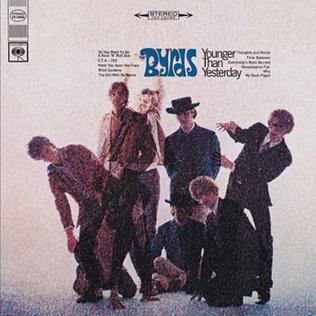
They started out as a folk-rock band equally influenced by the Beatles and Bob Dylan. But it didn’t take long for other artists outside of the usual pop confines to creep into their music. The Byrds’ first two albums  “Mr. Tambourine Man” and “Turn Turn Turn” , both released in 1965 included expertly played folk-rock songs, an instrumental distinction thanks to Roger McGuinn’s 12-string guitar sound and lots of Dylan covers. But by 1966’s “Fifth Dimension” , they were ready to move on.

The album’s centerpiece was “Eight Miles High,” inspired by Indian sitar master Ravi Shankar and free-jazz legend John Coltrane, and included a guitar solo that was as close to avant-garde improvisation as mainstream music got in 1966. It tested the waters for the Byrds’ next record, “Younger Than Yesterday”, which was released in February 1967.

Fifth Dimension had been the group’s first real psychedelic piece, but “Younger Than Yesterday” is the more accomplished album, a record of wild experimentation that was worlds away from the jingle-jangle rings of “Mr. Tambourine Man.” From the backward tapes and raga influences to the horns and, in a sign of things to come, down-home country rhythms that grace a couple of the songs, the album found the band working with new producer Gary Usher for the first time at its creative peak. The mind-tripping “C.T.A.-102,” a song about extraterrestrial life that uses an electronic oscillator to make its point, pretty much sums things up.

All but one of Younger Than Yesterday‘s 11 songs were written by a band member this time (the lone exception was another Dylan cover, “My Back Pages” this time). Gene Clark, the group’s most prolific songwriter, left the band before Fifth Dimension‘s release, though he did contribute to “Eight Miles High” and a few songs leading up to that LP’s sessions.

The album also marked the emergence of the band’s bass player Chris Hillman as a talented songwriter and vocalist, He turned out to be the standout writer on the Byrds’ fourth album, composing four songs on his own and one with McGuinn, the album-opening single “So You Want to Be a Rock ‘n’ Roll Star” (which included a trumpet solo by South African musician Hugh Masekela, another sign of the band’s burgeoning influences outside of their roots). David Crosby who was kicked out of the band the next year, also wrote four songs.

The Byrds’ move toward country which would become closer with their next album, The Notorious Byrd Brothers , until their full-on embrace of the genre with the classic “Sweetheart Of The Rodeo”, all began here. Hillman, who’d go on to the Flying Burrito Brothers with Gram Parsons, following his one-album gig with the Byrds, was a major architect of their sound moving forward.

His contributions to Younger Than Yesterday which was recorded in less than two weeks at the end of 1966 helped shape the album and the band’s future. He had a hand in the album’s two best songs — “So You Want to Be a Rock ‘n’ Roll Star” and “Have You Seen Her Face” and provided the foundation for what came next. But the Byrds were still a group, even if they were falling apart, and Crosby’s jazzier, more challenging entries can’t be discounted. It was his growing interest in more worldly music that took the Byrds into more unconventional territory here.

The three singles pulled from Younger Than Yesterday didn’t get higher than No. 29; “My Back Pages” would be their last trip to the Top 40.  Although it was largely overlooked by the public at the time of its release, the album’s critical standing has improved over the years and today Younger Than Yesterday is considered to be one of The Byrds‘ best albums. The title of Younger Than Yesterday is derived from the lyrics of “My Back Pages”, a song written by Bob Dylan, which was covered on the album.

The Byrds

Image may contain: one or more people, sky and outdoor

London-based Great Cynics are back with a brand new single ‘Only In Memories’. The first chance to hear the song was in a live stream last night via the band’s Facebook page . The band performed the track no less than 50 times in a row. It’ll be etched into their memories from that experience for sure.

Great Cynics’ vocalist and guitarist Giles Bidder says of the inspiration behind the track  “After the first shift I worked at the pub where I am now, one of my beer pouring colleagues and I got the bus back to Peckham to go do some karaoke at Canavans (a local pool hall). On the bus there he told me his granddad once told him “it doesn’t cost anything to be polite”. This should be a London-living mantra. We’re surrounded by arseholes – we’ve got to make ours and our neighbours’ lives as pleasant as possible.”

‘POSI’ was recorded in a warehouse in Philadelphia over one week. The lead up to their time spent in the studio was in stark contrast to the recording itself, as Bidder explains “we rehearsed in our friend’s basement in South Philly and went to shows every night, just generally had a nice time spending money on food and beers. The actual recording process really took it out of me – this is a really emotional record and it physically hurt singing some of the parts. I got ill as soon as we finished tracking, and that’s the only thing I can put it down to. We gave ourselves to this record.”

http://

GREAT CYNICS is:
Giles Bidder – Vocals / guitar
Bob Barrett – Drums
Oliver Ward – Bass
Gillie Rowland – Keys / vocals