Anyone curious about how two teenage former child actors from Long Island came up with the idea of sounding just like Todd Rundgren in 1972 is advised to visit YouTube, where Brian and Michael D’Addario’s dad, Ronnie, can be found doing pretty much the same thing a few decades earlier. His sons, it should be said, occupy the ground with rather more dash and flair: “Do Hollywood” is an album that sounds completely unconstrained by any idea of what’s appropriate. So Harromata goes from a harpsichord-led ballad intro into a berserk fairground carousel break; “A Great Snake” lasts nearly seven minutes, squiggly synths, guitar solos, lounge music coda and all. Thankfully, though, they can write tunes – “These Words” is the missing track from side one of Rundgren’s Something/Anything, with a harmony chorus that expands like a hot air balloon. Do Hollywood is a curiosity, but a pretty glorious one.
It’s entirely APT – almost too good to believe, in fact – that Brian and Michael D’Addario hail from a small, nothing-doing town in Long Island, New York called Hicksville.
The teenage brothers and leaders of The Lemon Twigs are a gloriously off-kilter proposition. Watch them live and you’ll see Michael leaping around the stage as if he’s been possessed by the spirit of a young, madcap Keith Moon. See them on TV and you’ll instantly think you’ve been transported back to the 1970s. Queen, Tom Petty, spandex jumpsuits, vintage synthesizers, The Beatles after the break-up and genuinely great hair all play a sizable part in their DNA. Haircuts aside, how many other indie bands in 2016 would willingly admit to liking any of the above? This is where even The Lemon Twigs must be surprised at their recent trajectory. Within six months they’ve gone from complete unknowns to being hailed as the future of rock ’n’ roll. Which is funny when you think about it – because they sure do sound a lot like the past.
On much of ‘Do Hollywood’, their debut album for 4AD, there’s a lineage that recalls the A-list of North America’s recent cult music heroes (The Garden, Tobias Jesso Jr and Foxygen, whose songsmith Jonathan Rado produced this record). But The Lemon Twigs’ sheer musical knowledge, and willingness to incorporate it into their own sound, means they’re in a different stratosphere altogether. Their greatest talent is their ability to pick the pockets of rock’s dinosaurs without making it seem passé or pastiche. So we get clever, intricate, well- planned and deftly executed songs that recall Syd Barrett’s Pink Floyd (‘Haroomata’), Wings (‘I Wanna Prove To You’), The Kinks (‘Those Days Is Comin’ Soon’) and classic, harmonious Beach Boys (‘These Words’). Only rarely does it ever sound trite. It’s thrilling for the most part, as if you’re being given a crash course in classic songwriting by two young know-it-alls.
Most remarkable is that this album is basically just a demo. Recorded in Rado’s front room, you can hear the hiss of the tape and nonsensical chatter as songs come and go. It feels authentic, like The Lemon Twigs aren’t hiding anything. And it leaves you wide-eyed when you wonder what they might come up with next time around.
Allah-Las are returning with Covers #1, which is the first in a series of EPs that will delve into the heart and soul of their sound and influence, as well as some that are just near to their hearts. The band sets off to play George Harrison’s “Fish On The Sand,” Kathy Heideman’s “The Earth Won’t Hold Me”, Further’s “JO Eleven”, and Television’s “Hard On Love”. The EP will be released on Mexican Summer Records on November 3rd, 2017 as limited edition 10” encased in a high quality embossed jacket and through all digital formats.
This collection will only be release physically through vinyl as a 10″.
Next Friday the ‘Live at SpaceFest!’ album drops for PURE PHASE ENSEMBLE 6 Featuring ANTON NEWCOMBE but today there is a new video plus the full download for the album in 320 kbps quality, and the new video for ‘Balwan’, the second single from this release, following up the first one ‘God Drugs’.
Pure Phase Ensemble 6 feat. Anton Newcombe has unveiled the video for‘Bałwan’, the second track teasing the forthcoming‘Live at SpaceFest!’ LP, to be released throughNasiono Records. This new single was preceded by the first one ‘God Drugs’, which sees The Brian Jonestown Massacre ringmaster Anton Newcombe at his best. The album includes seven tracks.
Pure Phase Ensemble is an eclectic rotating group of musicians, who come together every year in December during Gdansk’s illustrious SpaceFest!,. The group’s makeup constantly changes, guided by the artistic vision of a new curator every year and directed by Anna Szynwelska and Karol Schwarz of Nasiono Records, who has been responsible for its musical cohesion from the very outset.
Anton Newcombe led this current incarnation, along with with Emil Nikolaisen of Scandinavian rock band Serena Maneesh. The six other musicians involved this year were drawn from various Polish alternative bands. They include Karol Schwarz (7faz, KSAS), Olga Mysłowska (Polpo Motel), Maciej Karmiński (Jesień), Marcin Lewandowski (Judy’s Funeral, Castlings, Soon), Jakub Żwirełło (Oslo Kill City, Szezlong), and Kacper Graczyk (Aiodine, coding).
Just ahead of SpaceFest!, Nasiono Records hosts a workshop, with musicians improvising to produce a set of unique songs. These intensive sessions take place at Laznia Centre for Contemporary Art in the city’s Nowy Port district, the artists gathering inspiration amidst its post-industrial atmosphere. The festival then culminates in this music being performed and recorded in real time for the inevitable album release.
Underlying the importance of festivals like this, Anton Newcombe says, “turn on the fucking radio…then turn it back off. That shit is bad for you. erm…lets have an urban contemporary rap festival everywhere and see what happens. Let’s have more DJ festivals…name one fucking important DJ now that people will respect in 30 years…name a record besides some classic jam that anyone at a club cares about. It’s all disposable. We are all trying to create our own culture because Western culture is dead”.
“I want to help establish SpaceFest! as one of the most important cultural events in Poland and totally relevant in Europe. I would like to be involved on a deeper level. I want to integrate culturally, artistically with all of Europe…well not the fascist part haha, not the neocons…not the Polanski eyes wide shut fuckers… but the artists”.
This latest SpaceFest! also resulted in a one-on-one collaboration between Anton Newcombe and PPE 6 member Kacper Graczyk – together, the two have released the track ‘Not Blowing Smoke Up Your Ass’.
In past incarnations of Pure Phase Ensemble, the group was curated by Mark Gardener (Ride), Laetitia Sadier (Stereolab), Ray Dickaty (Spiritualized), Steve Hewitt (Placebo), Jaime Harding (Marion), Chris Olley (Six By Seven), and Hugo Race (The Bad Seeds, The True Spirit).
SpaceFest! has figuratively transformed Gdansk into the intergalactic capital of Poland, presenting psychedelic music at its best with shoegaze, Krautrock and space-rock plus cosmic energy, intergalactic cats, forest goblins, psyched visuals, pagan disco and more. The workshop is organized by the Nasiono Association in cooperation with the Laznia Centre for Contemporary Art, andl is co-financed by the City of Gdansk.
Clocking in at just over 44 minutes and priced at just €6.99, Pure Phase Ensemble 6 ‘Live at SpaceFest!’ will be released on CD and digitally on September 29, but can already be pre-ordered via Bandcamp.
Music by Pure Phase Ensemble 6
* Lyrics by Anton Newcombe
^ Lyrics by Olga Mysłowska, Karol Schwarz, Jakub Graczyk
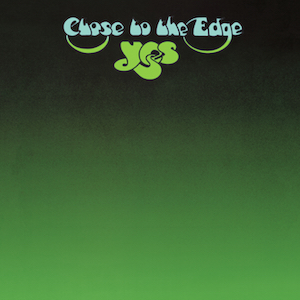
“Close to the Edge” is the fifth studio album by progressive rock band Yes, released on 13th September 1972 by Atlantic Records . Following a tour in support of their previous album, “Fragile” Yes returned to the studios in London to record their next album. Produced by the band and audio engineer Eddy Offord , the album consists of three tracks: “Cloase to The Edge” on side one; “And You And I” and “Siberian Khatru” on side two. When recording for the album finished, drummer Bill Bruford who was frustrated by the band’s style and laborious recording in the studio, left to join Robert Fripp’s King Crimson . His replacement was Alan White of the Plastic Ono Band and part of Terry Reid’s group.
Close to the Edge became the band’s greatest commercial success at the time of its release, reaching number a chart position of 3 in the United States and number 4 on the UK Albums Charts .
The combination of Anderson’s psychedelic, wide-eyed lyrics and anthemic vocal melodies fit perfectly with some of the fiercest, most intricately layered instrumental passages in the history of rock music. Those passages came courtesy of Bruford’s jazz-fusion finesse, Wakeman’s classical-tinged elegance, Howe’s spidery eclecticism, and Squire’s surging, muscular thud.
Another reason this album remains a touchstone is that it never lapses into the noodling or show-offy antics that plagued so many prog-rock albums during the genre’s peak. Instead, Close to the Edge (particularly the four-part, 18-minute title suite) is incredibly nuanced, composed with such masterful flow and economy that every solo or lyric or riff feels connected in a cosmic, over-arching fashion. Even at its most complex (the deceptively tricky “Total Mass Retain” section), the simplest ideas shine through. Howe’s sublime guitar theme (which runs throughout the entirety of the title-track) is one of the most elegant in the prog cannon.
But while “Close to the Edge” may be the album’s inevitable stand-out, two other excellent tracks round out the disc:. “And You And I” is a mini-epic, utilizing Howe’s most melodic and emotional 12-string work and a spine-chilling Anderson lead vocal, while “Siberian Khatru” closes the festivities with an instrumental workout that blends funky full-band riffing with jazz-fusion-styled interplay, pitting Wakeman’s bubbling organ against Howe’s soaring leads (co-arranged by Bruford, in a classic example of the band writing for each other’s instruments).
“We were on top of the world when we made “Close To The Edge” says singer-songwriter Jon Anderson, recalling the early months of 1972 when he and his Yes band mates (guitarist Steve Howe, bassist Chris Squire, keyboardist Rick Wakeman and drummer Bill Bruford) holed up inside London’s Advision Studios to record the follow-up to their breakout hit, Fragile, which was released a year earlier.
Comprised of just three songs – the title track along with And You And I, both four-movement epics, plus the relatively short (at eight minutes, 55 seconds) Siberian Khatru – Close To The Edge was the result of the progressive rock band’s musical impulses running on full, a broad canvas of dizzying instrumental exchanges supporting Anderson’s sublime, mystical poetic vistas.
“It’s very representative of what I think is the Yes style,” Anderson says. “We experimented a lot, but we also had the talent to back it up – it wasn’t just solo after solo. We told stories and created moods. It was all very daring and wonderful.”
The group eschewed making demos, preferring to work on rough ideas while co-producer Eddy Offord rolled tape. After several weeks, concepts were sewn together into elaborate song structures. “We’d get the basic sketch of something, and then it was a matter of refinement,” says Anderson. “A piece would start to feel complete, but then I’d look to Steve and say, ‘We need a very poignant 12-string guitar introduction.’ He’d come up with it, it would be great, and we’d be off.”
Anderson looks back at the writing and recording of Close To The Edge, offering his insights into the record track-by-track (and, more specifically, movement-by-movement). “It was the beginning of my musical journey in terms of really understanding structure,” he says.
CLOSE TO THE EDGE – THE SOLID TIME OF CHANGE
“The idea of the chant was key to the song. [Sings] ‘A seasoned witch could call you from the depths of your disgrace/ And rearrange-da-dada-dada-dada-da-da-daa.’ It’s a rhythmic thing. I worked that out with Steve.
“The band started playing, and I said, ‘Guys, maybe you should be doing something more syncopated instead of a straight-on beat.’ So while Bill and Chris worked on a drum and bass thing, I looked at Rick and said, ‘OK, how fast can you play?’ And, of course, he could play very fast. The whole idea was to make it musically entertaining even before we put the voices on.
“For lyrics, I did a rough sketch of the whole piece, but as the sections came together, that’s when I rewrote the words. It took about three or four revisions till everything was there. It’s all metaphors. Simply put, ‘A seasoned witch could call you from the depths of your disgrace’ – that means your higher self will eventually bring you out of your dark world.”
CLOSE TO THE EDGE – TOTAL MASS RETAIN
“We’ve laid the foundation of where we’re going to go, and now we’re into the second part. This is about the relaxation of life and being close to the edge of the realization of our universal experiences. That’s what the song is starting to explain.
“This part flows. It shows you that you have to let music guide you. It’s best to open up and not force the situation. Everything will come to you.
[Sings] “’Sudden cause shouldn’t take away the startled memory/ all in all, the journey takes you all the way.’ The idea is that life is an ongoing journey, and you have to enjoy it, you know?”
CLOSE TO THE EDGE – I GET UP, I GET DOWN
“We have the ‘the I get up, I get down’ part before it goes into a beautiful ocean of energy. You’ve gone through nearly 10 minutes of music that’s very well put-together, but then you want to let go of it. You relax a little bit.
“The song came about because Steve was playing these chords one day, and I started singing, ‘Two million people barely satisfy.’ It’s about the incredible imbalance of the human experience on the planet.
“The vocals came together nicely. I’m a big fan of The Beach Boys and The Association – such great voices. Steve and I were working on this, and at one point he said, ‘I have this other song…’ And I said, ‘Well, start singing it.’ And he went [sings], ‘In her white lace, you could clearly see the lady sadly looking/ saying that she’d take the blame for the crucifixion of her own domain… ’
“When I heard that, I said, ‘Wait. That’s going to be perfect! You start singing that with Chris, and then I’ll sing my part.’ We have an answer-back thing.
“I heard a record with a church organ. I can’t remember what the album was, but I remember that it really woke things up. Going into the end, we needed something really big. Sonically, it changes all the textures.”
CLOSE TO THE EDGE – SEASONS OF MAN
“The arrangement had gone to where Rick was doing a solo. We’d always tried to give Steve a solo, then Rick a solo… Chris and Bill were working out the drum and bass parts. I said, ‘There’s got to come a time where I can get back in with [sings] The time between the notes relates the color to the scenes.’ Because the band is just cookin’ away, so I knew we needed a crescendo, and that’s where I came back in singing. They rehearsed it a few time, and this phrase then came out of the keyboard-organ solo.
“The line that goes, ‘Then according to the man who showed his outstretched arm to space/ he turned around and pointed, revealing all the human race’ – I’d had this dream where I was up on a mountain. This man was holding me around the shoulders, and he was pointing and saying, ‘That’s the human experience.’ And I smiled because I realized that it was true.”
AND YOU AND I – CORD OF LIFE
“And You And I” was written in maybe five different sections, and then we put them all together. The idea was very straightforward at first. It was going to be a very pretty folk song that I wrote with Steve. Soon we decided that it was to be surrounded by very big themes.
“’A man conceived a moment’s answers to the dream/ staying the flowers daily, sensing all the themes’ – I love singing this song on tour. In fact, I still sing it.
“When we were writing in those days, it was ‘Here’s the verse, here’s the verse, we’ve gotta get from the verse to the bridge.’ We had to make the bridge very, very different. ‘And you and I climb over the sea to the valley, and you and I reached out for reasons to call’ – and then we’re going to hold that note, and the theme is going to come back in.
“I would always record Rick when he was writing music. He was working on something at the time, and I said, ‘Let’s develop this theme.’ It felt really good.”
AND YOU AND I – ECLIPSE
“You work on a solo section, and it gets to the point where you feel it’s finished, and maybe it’s time to get back to that part that we sang at the end of the second verse – and just double up on it. That’s how we brought this section back in.”
AND YOU AND I – THE PREACHER THE TEACHER
“It goes to a totally different song and feel. Steve is a magical guitar player, and he could switch to a new style so easily. I said to him, ‘It’s got to be have a real country feel to it.’ He knew just what to do, and then Chris, one of the greatest melodic bassists ever, came in, and right there the song sat together so sweet.
“We wrote this section in one afternoon, but it probably took about a week to put the whole piece of music for And You And I together.”
AND YOU AND I – APOCALYPSE
“Nearly all of the music we ever made had one thought behind it: what will it sound like on stage? We liked to make records, but our main reason for doing what we did was to perform live, surrounded by a sound system and under the lights.
“I remember when we did And You And I at the Spectrum in Philadelphia for the first time. The whole room was so alive with the music we were making – it was really overwhelming – and when we were finished, the audience cheered and clapped for 15 minutes. I’m not kidding.
“That’s what I think of when I remember the end moments of And You And I. It was one of those times in your life that you never forget.”
SIBERIAN KHATRU
“I was playing this on acoustic guitar the other day. ‘Khatru’ means ‘as you wish’ in Yemeni. When we were working on it, I kept singing the word over and over again, even though I had no idea what it meant. I asked somebody to look it up for me, and when they told me the meaning, it worked for the song.
“I had already written most of it, but I needed help with some of the sections. I started playing it on guitar for the band, and then I realized that it needed a strong riff. Steve really helped out with some of the parts and, of course, the riff. The song could work with the riff and the vocals alone.
[Sings] “’Even Siberia goes through the motions… ‘” The idea is that Siberia is so far away. The Iron Curtain still existed, and Siberia was like this no man’s land. Russia is such a huge country, and the thought was that life still happens there as it does here.
“The verses have a different rhythmic feel. We had a lots influences and elements going on. Before Yes, I was in a band in the ‘60s, and we did all the R&B songs that were on the charts. I loved singing those songs, but I didn’t want to write about the same things subject-wise. ‘My babe don’t love me no more, what am I gonna do?’ – why should I compete with people who were writing those songs so damn well?
“Steve’s guitar playing is brilliant. I’ve always been amazed at his incredible talent. Even on the last tour I did with him, I’d come off stage and say to him, ‘How do you do that?’ But the great thing about his playing here is that he’s always aware of the structure. He’s not just playing to play.
“The song builds and builds and builds and builds – you’re taking the audience on an epic adventure. People think it can’t get bigger, but it does. The vocalization I was doing – ‘Bluetail, tailfly, Luther, in time, suntower, asking, cover, lover’ – it builds and builds, too, and then it goes into the solo, and everybody goes crazy. A very cool song.”
Yes supported the album, with its release three months into the band’s with their 1972-73 World Tour their biggest since their formation. Recordings from the tour, both film and audio, were included on the band’s 1973 live album, “Yessongs” The filmed performance was recorded at the December 1972 shows at the Rainbow Theatre in London
It was reissued in 1994, 2003, and 2013, the latter included unreleased tracks and a new stereo and 5.1 Surround sound mix on the reissues remastered by Steven Wilson . Critical reception was mixed on release, though the album is retrospectively regarded as one of the band’s best works, and a landmark recording in progressive rock.
It doesn’t get more prog than this: Three songs, none less than nine minutes. Plus, two of those tracks are split into four movements each. Pretentious? Oh yeah. But when the songs are this good – “Close to the Edge,” “And You and I” and “Siberian Khatru,” .
Following up a hit record is no mean feat for any band, and even under the best of circumstances, Pink Floyd might have found it all but impossible to come back from the massive success of Dark Side of the Moon.
Unfortunately, when the band returned to the studio in January 1975, conditions were far from favorable in the band for a variety of reasons — not the least of which was the fact that, as they adjusted to life after a worldwide smash record, the members of the band found themselves more disoriented than fulfilled. Compounding the problem was a growing disconnection between bassist Roger Waters and the rest of Pink Floyd, particularly guitarist David Gilmour.
“We were all having to assess what we were in this business for,” Gilmour said in the 2012 documentary The Story of Wish You Were Here. “Whether we were artists or businessmen. Having achieved the sort of success and money out of it all, it could fulfill anyone’s wildest teenage dreams, why we would still continue to want to do it? Roger has said he thinks we may have been finished at that point, and he may have been right.”
It also didn’t help that, as drummer Nick Mason said in a separate interview filmed for the movie, the band didn’t exactly have a ton of material stored up for their next album. After spending years rotating through the industry’s tour-and-record cycle, they hunkered down on their Dark Side follow-up basically bereft of material — and some of the songs they had written ended up being thrown out of the running order.
The songs in question, “Raving and Drooling” and “You Gotta Be Crazy,” were excised from the album after a fight between Waters and Gilmour, prompted because Waters felt the songs they had didn’t hold together as a cohesive whole. In his view, it was better to expand one particular track — titled “Shine On You Crazy Diamond” — into a bookend that essentially enveloped the rest of the record. As Waters later revealed, the piece was largely inspired by his heartbreak over the self-imposed exile of the band’s founding guitarist and first leader, Syd Barrett.
“I’ve never read an intelligent piece on Syd Barrett in any magazine, never,” Waters is quoted as saying in Mark Blake’s book Comfortably Numb: The Inside Story of Pink Floyd. “I wrote and rewrote and rewrote and rewrote that lyric because I wanted it to be as close as possible to what I felt. There’s a truthful feeling in that piece. That sort of indefinable, inevitable melancholy about the disappearance of Syd. He’s withdrawn so far away that he’s no longer there.”
Waters’ feelings regarding Barrett’s absence could have been applied, to some degree, to the rest of Pink Floyd. “No one was really looking anyone in the eye,” he complained. “It was all very mechanical.”
“It was disengagement,” concurred Gilmour. “It was not being willing to apply yourself sufficiently. Lots of moments when any one of us might have been much more interested in thinking about what we were doing that weekend […] The concentrated activity was rather diluted, and I’m sure for a very pushing, driving sort of person like Roger, it was more frustrating than it was for anyone else — although it was very frustrating for all of us, I suspect.”
Thus preoccupied by feelings of alienation and disillusionment, the members of the group — primarily pulled along by Waters — cobbled together a set of songs built around absence, starting with the withdrawal of their friend Barrett and spilling over into the creeping disappointment they’d found with one another and in the industry they’d enriched with Dark Side of the Moon. In the midst of the recording, Barrett himself made an unannounced appearance in the studio, looking so different that the members of the band initially failed to recognize him.
Drummer Nick Mason, for one, later remembered Barrett looking like a “large, fat bloke with a shaven head, wearing a decrepit old tan mac and carrying a plastic shopping bag,” while keyboard player Rick Wright recalled a sad denouement to their former leader’s surprise visit: “Syd stood up and said, ‘Right, when do I put the guitar on?’ And, of course, he didn’t have a guitar with him. We said, ‘Sorry, Syd, the guitar’s all done.’”
Such was the band’s disconnect that one song on the album, titled “Have a Cigar,” ultimately ended up being sung by someone outside the lineup. After Waters and Gilmour tried and failed to lend the requisite degree of vocal snark to their sarcastic ode to music business cynicism, they ended up turning to singer songwriter Roy Harper, who was sharing the studio with them and happened to be in the room one day while they struggled to find a solution.
“Roger can write songs but he’s never going to be in the top one hundred as a rock singer,” observed Harper. “He tries hard, he’s a good lad. Anyway, neither of them could get up there. I just stood at the back, leaning against a machine and laughing. I said, ‘I’ll sing it for you,’ and someone said, ‘OK,’ and I said, ‘For a price.
Recording finally wrapped in the summer of 1975, and after settling on a typically evocative cover design from legendary artist Storm Thorgerson, the members of Pink Floyd sent their ninth studio LP — titled Wish You Were Here, after a particularly disaffected Gilmour-Waters cowrite — to their label. Scheduled for release on September. 12th, it immediately became one of the most highly anticipated albums of 1975.
Not that Pink Floyd necessarily acted like a band delivering a major piece of product. In fact, their only concession to the promotion machine was a single syndicated live show, recorded at the Los Angeles Sports Arena in the spring of 1975, which was broadcast in an array of major markets ahead of the tour booked to support Wish You Were Here. The sold-out set, which still included “Raving and Drooling” and “You Gotta Be Crazy,” also featured an extended “Shine On You Crazy Diamond” as well as “Have a Cigar,” “Echoes,” and “Dark Side of the Moon” — as well as an expanding roster of special effects that now included expensive and unpredictable pyrotechnics.
In spite of inevitably mixed reviews, Wish You Were Here went on to top the charts on both sides of the Atlantic, and although it couldn’t hope to match the gargantuan sales of Dark Side of the Moon, it enjoyed substantial success in its own right, selling more than six million copies in the U.S. alone. And while the Floyd machine would continue to churn out product on a regular basis in the near future — starting with 1977′s Animals, which included the jettisoned Wish tracks “”Raving and Drooling” and “You Gotta Be Crazy” the writing was already on the wall for Waters’ eventual departure from the band. As he pointed out in The Inside Story of Pink Floyd, even the biggest sales figures can’t balance out creative dysfunction.
“The dream,” shrugged Waters, “is that when you are successful, when you’re a star, you’ll be fine, everything will go wonderfully well. That’s the dream — and everybody knows it’s an empty one.”
So September 7th sees the start of the world famous annual never-been-done-before fierce panda never-going-back-to-school sale. The instructions are searingly simple: look at the massively giant list of record releases lurking below. Then log yourself onto www.fiercepanda.co.ukto buy any fierce panda album (or mini-album) on CD and get another CD of your choice absolutely free. Or buy any fierce panda vinyl album and get another vinyl album absolutely free. Or buy any fierce panda CD or vinyl and get a world famous ‘Every Day Is Record Store Day’ t-shirt free. Or just go right off panda piste and mix and match your order to your wee heart’s content – the deal is basically any two releases for the price of one, just remember that the cheapest of the two items you order will be the freebie. Once you have ordered your first choice then drop chris@clubfandango.co.uk a line to tell him which free album or indeed t-shirt you require and he will sort it out. This titillating 2-for-1 never-going-back-to-school-again-ever-ever-ever deal lasts until October 1st – happy punting!
As the diamond hits the plastic on Frankie and the Witch Fingers’ Brain Telephone, a sonic tornado swirls out of the speakers and into your ears like a psychedelic party-line flipping a black-and-white world into technicolor. The quartet cooks up a cachophonic soup of sounds which boil over as the troglodytic beat and the fuzzy phased-out guitars melt together. From here, the spell gets sweeter.
A rock n’ roll groove laced with slap back and heady lyrics quickly connects your call to the Witch Finger’s acid boogie shack nestled deep in the belly of Los Angeles. A transformation occurs as mind bending shadows appear on a yet-to-be-named purple planet with lush gardens of grinning neon fungi bopping and swaying along to each catchy hook and chorus. The serpentine tape reels capture Texas barn burners, hallucinogenic Chuck Berry guitar licks, and middle-eastern rave-ups along the way as well. This adventure is littered with evil caricatures and surrealistic visions that will warble your mind, if you stay on the line.
The National wanted to go home. For the past three-plus years, the band had been working in studios all over the world — in Los Angeles, Berlin, Paris, and upstate New York — on the long-awaited follow-up to its 2013 album Trouble Will Find Me, which firmly established the dour indie rock band as an internationally successful arena-rock outfit.
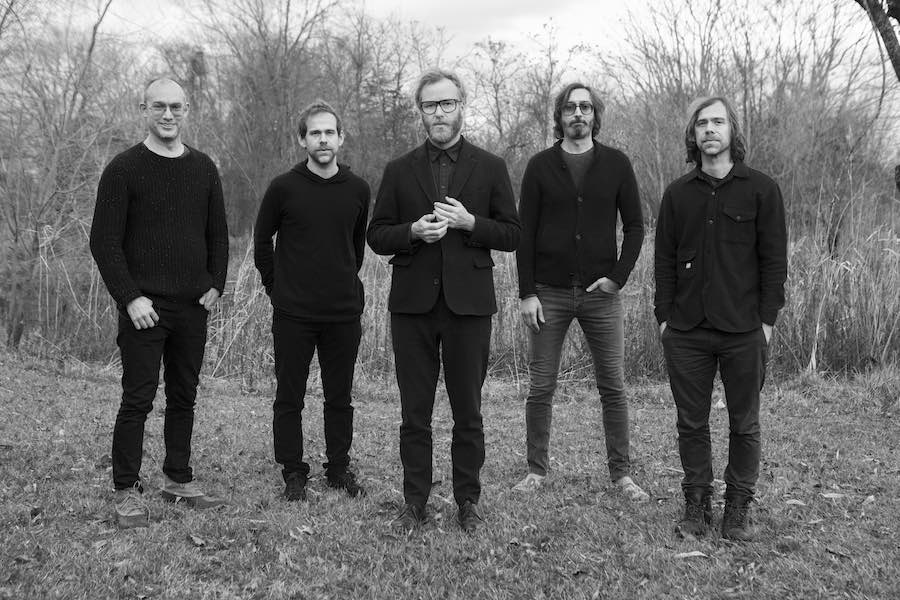
The quintet was wrapping up its second to last day at guitarist Aaron Dessner’s newly built home studio in Hudson, New York, when Matt Berninger, the band’s lead singer and lyricist, received a phone call.
On the other end was his wife Carin Besser, a literary editor who plays a large role in sculpting, editing, and occasionally contributing to her husband’s lyrics. Up to that point, the entire band had been feeling less than thrilled with the lyrics to one of its songs, whose chorus went something like this:
“Aaron takes his acid trip in Copenhagen/ Says he wants to stay that way/ But he can’t explain it any other way.”
Besser had a solution. She had found an early demo with a different set of lyrics Berninger had initially written, years earlier, and thought they might be a better fit. After the band had called it a day, Matt and Carin spent the evening texting tweaks to the old lyrics back and forth until they had rewritten the lyrics overnight.
The following morning, Matt, “red-eyed from no sleep and too much coffee and weed,” plugged his laptop into the studio speakers and started playing the alternate demo his wife had found on repeat as the band filtered into the studio to pack up gear and put a few final finishing touches on the record. The second time the song began to play through, Aaron stopped what he was doing and stood silently in front of the speakers, listening intently.
“Well, that sounds better than what we had,” Matt remembers Aaron saying to him. “I’m willing to chase this, if you really want to do it.”
“We do that sometimes,” says Berninger, recalling the eureka moment that resulted in the entirely revamped, current version of “The System Only Dreams In Total Darkness,” the lead single to the National’s latest album, Sleep Well Beast, “We flip the table over at the last minute, and if we don’t find anything when we flip the table over, then we know we’ve got the one.”
Over the past decade, the National has developed a reputation for being some of the most obsessive recording perfectionists in indie rock, a group that will record or mix a song in 80 different ways until they settle on something resembling consensus on a final product.
So when Scott Devendorf, the National’s bassist, recalls the moment when Matt and Aaron committed to reworking “The System Only Dreams” at the 24th hour, he remembers having one simple thought: “Okay, we’re going down that path again.”
For the past decade and a half, ever since releasing its self-titled debut album in 2001, the National has gradually developed one of the more fascinating collaborative songwriting methods for a band in any genre. Berninger writes lyrics to musical sketches made most often by guitarists Aaron and Bryce Dessner, with Scott and drummer Bryan Devendorf, who comprise the National’s rhythm section, later offering structural feedback and contributing additional instrumentation in the studio.
The National worked on its first several albums locally in Brooklyn, after the band moved to New York from their native Cincinnati in the late ’90s. But in the past five years, the group began to adjust how it made records after its members dispersed geographically, with Matt living in Los Angeles, Bryan back in Cincinnati, Scott in Long Island, Bryce in Paris, and Aaron splitting time between Copenhagen and upstate New York. As a result, much of Trouble Will Find Me was the product of several years of emailing song sketches, lyrics and instrumental parts back and forth.
The band’s newfound separation was one of the driving factors behind Aaron Dessner’s decision to build his new studio, a space where the band could once again convene to work for extended periods of time.
“That’s the big story of this record,” says Bryce Dessner, the guitarist and classically trained composer whose musical role tends to be pushing his bandmates towards left-field experimentation. “Finally having a place where we can all play together after all these years was really amazing for collaborating.”
Sleep Well Beast is the National’s seventh album and their first release in more than four years. In the period following their last album, the band devoted a good chunk of time toward Day Of The Dead, a three-disc tribute to the Grateful Dead organized by theNational and featuring artists that ranged from Lucinda Williams and Mumford & Sons to Courtney Barnett and Lucius.
“It definitely rubbed off,” says Scott, who thinks the group found themselves more willing to make less structured, more improvisational music after absorbing so much of the Dead’s influence.
Since their inception, the National have been defined by the push-and-pull creative dynamic between MattBerninger, a pop traditionalist who, as the group’s sole lyricist, gravitates toward recognizable melody and straight forward song structures, and the Dessner twins, progressive-minded multi-instruments who tend to favor the avant-garde.
That dynamic is more plainly on view than ever before on Sleep Well Beast, which contains strong dosages of both the most straightforward pop balladry and the most far-out experimentation the five-some has ever put on record.
Songs like “Carin At The Liquore Store” and “Dark Side Of The Gym” are straightforward pop numbers with hints of doo-wop and r&b, the latter a reference to Berninger’s hero Leonard Cohen’s 1977 tune “Memories.” Meanwhile, songs like “Walk It Back” and the title track are full of spoken word interludes, programmed drum beats, and complex rhythmic patterns.
“We allowed ourselves to try so many new things and take a lot of risks, but at the same time, if the song was special and obviously strong, we didn’t rule it out because it had something to do with our past,” says Aaron.
In the National, most songs begin with Aaron Dessner. He usually comes up with his initial ideas — typically some sort of “rhythmic or harmonic behavior” — by mindlessly tinkering around on guitar or piano.
Aaron, who composed the majority of the music for the band’s new album, goes into great technical detail when describing his group’s music, detailing a litany of harmonic patterns, rhythmic intervals, and chord inversions that comprise the National’s latest record. Aaron Dessner is an enthusiastic promoter of the National’s musical synthesis, eager to talk about the theory and process that defines the group’s creative dynamic; in our 30-plus minute chat, I ask him a mere total of five questions.
Over the years, the National’s internal studio arguments and laborious decision-making have become the stuff of indie rock legend. Bryce Dessner, for one, can still point to specific musical disagreements that happened nearly a decade ago. “Aaron resents me for writing ‘Lemonworld,’” he says, unprompted, at one point while calling from his home in Paris. “He thinks it’s not an interesting enough piece of music.”
Aaron recalls one particularly tense moment in Hudson. The group had been discussing the song “Sleep WellBeast,” an atypical musical sketch that Bryce and Aaron had become particularly invested in seeing to completion. But Berninger had been having a hard time connecting with the song, and at one point put forth a suggestion: “Why don’t we mute everything except for the drum loop, and we can write something else to it?”
Before Aaron went to sleep that night, he turned to his wife, and said, “I think we just destroyed the one song I’m most excited about.”
What happened next is typical of the National’s chaotic process: The band appeased Matt, using the drum loop to form the foundation of a new piano ballad, “No Guilty Party.” After writing that new song, Aaron, still trying to convince Matt of the musical possibilities of “Sleep Well Beast,” took the lyrics from “No Guilty Party” and inserted them into the “Sleep Well Beast” backing track. It worked: Matt slowly warmed up to the initial song sketch and began writing separate lyrics to that piece of music, which ended up serving as the record’s concluding moment (and the longest studio recording the National has ever put on record).
The resulting two songs, “Guilty Party” and “Sleep Well Beast,” are just the latest in a long line of examples of the National deploying its inherent creative tensions in its favor.
“We’re experimental and quite adventurous in our tastes and in what we do live and what we all do separately,” says Bryce. “Our records have tended to be a little more buttoned-up and … not conservative, but economical. If they’re adventurous it’s in more subtle ways, the way we would use an orchestra or the fact that we would make these weird hits out of all these sleepy songs.”
Those sleepy hits — be it 2007’s morose ode to disillusionment-turned-Obama-campaign song “Fake Empire,” 2010’s Great Recession-era lament “Bloodbuzz Ohio” or 2013’s anxious arena rock anthem “Sea Of Love” — have formed the backbone of the band’s songbook.
But on its latest, the National mostly abandons a core feature of its signature sound — the slow-building musical climax that’s been described as “crescendo rock” — for a more subtle approach. On Sleep Well Beast, the band allowed its sparse ballads to remain as such. And when the group did build exuberant musical landscapes, during the endings to “Walk It Back” or “I’ll Still Destroy You,” it composed entirely separate pieces of music and stitched them together.
“Where in the past we’ve been hammering this sort of anthemic thing,” says Bryce, “these ones have more information in them.”
Matt Berninger is surrounded by notebooks. He’s calling from his home in Los Angeles, where he’s lived since 2013, and at the moment, he’s sitting in a room where he stores all of his old writing journals.
Berninger used to depend on these notebooks: he’d constantly jot down lines and lyrics, fill them up with color-coded page markers, and write notes to himself in the margins.
“They stressed me out, all these notebooks, and staring at them gives me a bit of anxiety,” he says. “I don’t need to dig them up again. Those notebooks are dead bodies. Let them rest in peace.”
In recent years, Berninger has adopted an entirely new, unstructured approach to lyric writing. Nowadays, he doesn’t write unless he has music in front of him, and when he is writing, he now relies on a mix of improvisation and free-association. He’ll receive a demo from Aaron or Bryce, lie down on a recliner with some wine and weed, turn the music on, and begin singing the first thing that comes to his head.
“I find it much more exciting to just keep running forward through the woods, not worrying if I’m going in the right direction,” he says.
Berninger now uses one-page Word documents when he’s ready to begin gathering the countless revisions and rough takes he records — often directly into his laptop microphone — on GarageBand.
The lyrics on the Berninger’s newest batch of songs, however, are every bit as evocative in their specificity as anything he’s ever written. On “Carin At The Liquor Store,” Berninger, who’s always been at his sharpest when documenting upper-middle class malaise, paints an exquisite portrait of privileged summertime longing:
I see you in stations and on invitations
You’d fall into rivers with friends on the weekends
Innocent skies above
Carin at the liquor store
I can’t wait to see her
I’m walking around like I was one who found dead John Cheever
Over the span of his career, the essence of Berninger’s thematic focus as a songwriter has essentially remained the same. “Sometimes, I want to remind myself of ideas I’ve written, so I write them again in a different way,” he says. “Usually that idea is one of three things: I’m freaked out about the world, I want to be a good husband and dad and I’m trying but sometimes I’m a bit of an asshole, and I’m sorry. So it’s either: I’m scared, I’m sorry, or I love you. It’s one of those three things, almost always.”
With the National back in the studio together in Hudson without any immediate deadlines or time crunches, the band was able to experiment and create more freely, and more collaboratively, than they had in years.
Devendorf characterizes the band’s recording sessions as opportunities for each member of the band, “a five-headed monster,” as he puts it, to constantly give each other feedback and advice.
“There will be times when I think I’ve messed up a whole section on the drums and think it’s terrible, and Aaron will say, ‘That’s the best thing you’ve done on the whole record,’” says Bryan. “The band helps me see what’s working. Otherwise, I would just try to make things too complex.”
For their most recent sessions, Berninger introduced a few gags to help lighten the mood and foster directness. He instilled “Honesty Hour,” when the band would give unfiltered opinions about each other’s creative ideas. He also embroidered a knit cap with the word “Producer,” and whoever wore the literal “Producer’s Hat” would get to make production decisions at that moment. “Matt wore it a lot,” says Scott Devendorf. Indeed, Sleep Well Beast marks the first time Berninger receives an individual co-production credit on a National album.
Seven albums and 15-plus years into their career, the National are still finding ways to reinvent and fine-tune the way the band harnesses the talents of all of its individual members to write interesting songs and make lasting records.
“It’s kind of a cliché, but bands are all about the alchemy of individuals,” says Bryce Dessner. “There are fairly well-worn relationships that play out, and then we subtly challenge them. That’s part of keeping it interesting — we have to keep growing. How do you do that? Especially a band that becomes mildly successful, it’s easy to get overconfident. Part of it is that our self-deprecating personalities allow us to challenge ourselves. It’s like, ‘Actually, though, what we do is not that interesting, so let’s keep improving it.’”
Bob Mould took a different path after the dissolution of post-punk legends Hüsker Dü, memorably releasing an acoustic-based solo debut in 1989’s Workbook followed by a return to volume with Black Sheets of Rain a year later. Then Nirvana arrived. He said he knew, right then, that guitar records were back. “Copper Blue” is the debut studio album by American alternative rock band Sugar. It was voted 1992 Album of the Year
All of the songs were written by guitarist/vocalist Bob Mould, who also co-produced with Lou Giordano. The song “The Slim” is about losing someone to AIDS. Musically, the band continues the thick punk guitar of Mould’s previous band, Hüsker Dü, while slowing the tempo and emphasizing melody even more.
Bob Mould quickly formed Sugar with bassist David Barbe and drummer Malcolm Travis, releasing CopperBlue on September. 4th, 1992. Several tracks were recorded for this album, but were not included. Mould decided to release them separately as an EP entitled “Beaster”.
“Music is such a circular thing. When Nevermind came out, that album changed the way people listen to music,” Mould told NPR in 2014. “A lot of the songs that I had been writing in 1991 led up to my next group, Sugar — and had it not been for Nevermind, I don’t know if Sugar’s Copper Blue would have stood a chance in ’92. But people were now receptive to this sound.”
Constructed in the same power trio image as Hüsker Dü, Sugar instead leaned more toward power pop – extending Mould’s underground legend into a new arena and into a new generation. What it wasn’t, Mould insisted at the time, was “alternative.”
This sunburst of hooky joy, however, followed a very dark period. Mould was coming off a failed personal relationship, and a failed professional one. A recent separation from his manager revealed that he’d signed away Mould’s publishing rights without permission. A split with Virgin Records followed, leaving Mould to toil through a rigorous – but financially necessary – nine-month solo tour in 1991.
As he averaged some 300 miles of driving a day, Mould had plenty of time to jump start his creative impulses. Something he once called a “lonely and inspiring” experience led to “plenty of time for reflection,” and then to these new songs.
Then came an appearance at an outdoor festival in Germany before some 7,000 people – all of whom, it seemed, where there to see Nirvana. On the verge of releasing their breakthrough Nevermind, Mould admitted that Nirvana “customarily trashed the joint.” Mould had the bad luck to follow them onstage.
“Pounding away on a 12-string acoustic by myself at an outdoor festival in the middle of the afternoon was no easy feat,” Mould said in 2011. “Nirvana destroys the stage, then it’s me carrying on like Richie Havens at Woodstock.”
Change was in the air, and Mould was deeply aware of it. You could, of course, draw a straight line from HüskerDü to Nirvana. The time for a return to the outsized energy, the riffy focus and even the format of Mould’s critically acclaimed but always commercially overlooked first band seemed to have finally arrived.
“The success of Nevermind re-tempered the ears of the listeners throughout the world,” Mould told NPR. “It was a heavy, punky record, but there was something about it that was so accessible that it opened up all these pathways for other musicians — myself included — to have our music heard.”
Sugar’s songs, once envisioned as solo performances, took on new life with the arrival of Barbe and Travis, and they immediately started feeling like a real band, Mould said. Sugar selected their name in the most off-the-cuff manner possible, while sitting inside a Waffle House at Athens, Ga. where they band spent some time working out their emerging sound in R.E.M.‘s practice space. “We got a big pot of coffee and banged out about 24 songs,” Travis said in 1992.
Mould was right; their timing was perfect. “Helpless” hit No. 5 on the modern rock charts; “A Good Idea” – which Mould has said was “an unconscious homage” to the Pixies’ “Debaser” – became a fan favorite, too. Free of so many lingering worries, tracks like “Hoover Dam” (a triumph of jangly optimism) simply came tumbling out.
“It was this dream song that just turned up as I was waking up one morning,” Mould said of “Hoover Dam” in a 2014 interview with Team Rock. “It came to me fully formed, and then it’s just all the baubles that make it that crazy baroque band thing. All that was pretty much in my head too, but you have to sit down and make these baubles shine. That’s the production stuff.”
Copper Blue did even better in the punk-loving U.K., reaching the Top 10. NME named it Album of the Year, even as “If I Can’t Change Your Mind” reached the Top 30 there. “What a fun ride that was. That was like 0 to 100 in about eight seconds,” Mould told Moehlis, adding that he was grateful that “I had 13 years of experience under my belt before the rocket got strapped to my ass.”
After all, pressure like that often leads rock stars down rocky paths, since “everybody wants everything all the time.” Instead, Mould got to enjoy the ride. “At this point in my life,” he said in his autobiography See a Little Light, “I was euphoric.”
Of course, plenty of people began to frame Sugar as a call back to his time with Hüsker Dü. There were, on the surface at least, some obvious similarities. For Mould, however, this represented a brand new start, and a most welcome one, even if he was returning to a tried-and-true trio set up.
“It’s a pretty comfortable spot for me,” Mould said in a 2014 interview. “It’s odd to say ‘comfortable,’ because it’s really a lot of work for me but musically it’s the best way, when I have two other people that I need to connect with. There’s a real clarity and a purpose to it because everybody knows how much they have to lift at all times. I like that interaction. It feels like jazz.
Their sets, like Bob Mould himself, focused on the here and now. “Hüsker Dü broke up,” he told the Los Angeles Times. “We had eight good years, and one bad one. Sugar doesn’t do any oldies.”
In July 24, 2012, the album was reissued by Merge Records as a 3-disc set containing the full album accompanied by B-sides (disc 1), the Beaster EP (disc 2), and a 1992 live performance at the Cabaret Metro (disc 3) Band members
Bob Mould – guitars, vocals, keyboards, percussion
When listening to The Psychedelic Furs it is inevitable that I recall Molly Ringwald and the movie that was made in the early 80’s, when I first heard Pretty in Pink, this was a time of lost love,
The purity of those songs still remains intact, the unique voice of Mr Butler, the characteristic sonority of the Furs was forever marked in many adolescents of that time, who today, like me, have become adults, but still carry with them that purity eternalized by the Furs .Thanks to all the bands present on this project.
We dedicate this project obviously to the eternal Furs.
All songs originally recorded by The Psychedelic Furs
Discography
1980 – The Psychedelic Furs
1981 – Talk Talk Talk
1982 – Forever Now
1984 – Mirror Moves
1987 – Midnight to Midnight
1989 – Book of Days
1991 – World Outside