Five new tracks each recorded with a different producer: Timothy J. Fairplay, Ghost Culture, Bullion, Boxed In, Moscoman . Teleman announce new EP titled Fünf, the band’s third body of work following two critically acclaimed albums Breakfast [2014] and Brilliant Sanity [2016]. Having always wondered what it would be like to make a record with each song recorded by a different producer, the band enlisted five different producers from electronic/dance backgrounds to see if they could bring anything new to their sound, working with Timothy J. Fairplay, Ghost Culture, Bullion, Oli Bayston of Boxed In, and Moscoman.
The band say of the EP, “It was kind of tricky cos just as we were settling into the process it was time to up and off to another studio to meet the next guy. But mostly it was a great experience, we all enjoyed it a lot. The producers we worked with came mostly from dance backgrounds and some had never recorded a band before, so we were all pushed out of our comfort zones a bit which was great. All said and done, it still sounds like Teleman but each song has a different flavour which is what we were hoping for. ”
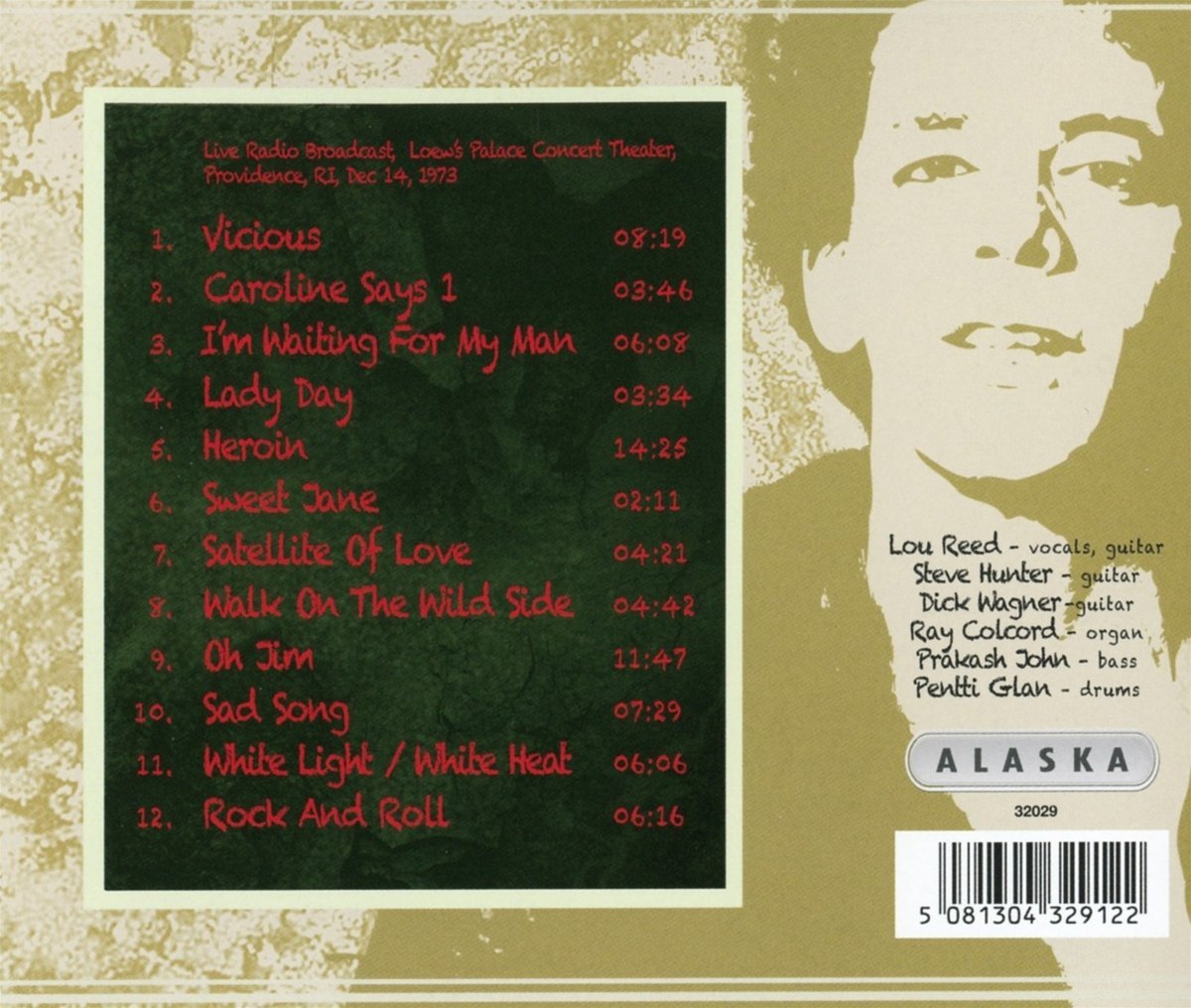
This is the same material as released on the albums “Rock’n’Roll Animal” and “Lou Reed Live” and from the recordings of the same tour. Although the band are as tight as they were on the seventies albums, The bonus tracks on Rock’n’Roll Animal were originally withheld because Lou wasn’t completely satisfied with his vocal performance . It’s a worthwhile addition to Lou’s live collection. Recorded a few weeks before what was to become the classic that is the ‘Rock ‘n’ Roll Animal’ album . It’s a slightly different ordered set, but tight and immensely powerful. Lou’s voice is indeed ‘strained’ to put it politely, but it doesn’t detract too much, and I can’t stop playing this album. A great curiosity I guess, but one well worth acquiring. I loved this era of Lou’s career for all it’s perceived faults, and I loved this band One of rock’s greatest bands.
Lou Reed – vocals, guitar; Steve Hunter – guitar; Dick Wagner -guitar; Ray Colcord – organ; Prakash John – bass; Pentti Glan – drums
This set, recorded at Loew’s Palace Concert Theater in Providence a week prior to the classic live album recording, captures this moment in time when Reed was creating emotionally honest musical turbulence on stage.
This recording begins with the band developing the soon-to-be classic opening jam for “Sweet Jane” that would eventually come to define the sound and creativity of this band. However here it is utilized as a prelude to “Vicious” instead. This opening jam clearly points the way toward the sound Reed fans would soon experience on his live Rock & Roll Animal album. The ambiguous “How Do You Think It Feels,” “Caroline Says 1” and “LadyDay,” all from the “Berlin” album follow in sneering style. Despite the first and third of these being incomplete, it is tantalizing to hear these musicians beginning to tackle the Berlin material. A tough, undulating “I’m Waiting For The Man” is up next, with this propulsive rhythm section taking this classic Velvets song to another level.
Following some tuning, the group eases into “Heroin,” and audible applause of recognition is heard from the audience. Every group added their own dimensions to this song and this band is no exception. One of the key elements is Ray Colcord, whose organ work greatly enhances the rush feeling following the verses leading into each jam sequence. Although all of the preceding material is engaging, “Heroin” finds the band fully hitting their stride and features an inspired vocal from Reed. The cascading flow of music from this band engulfs the lyrics as Reed battles his way through the highs and lows of addiction.
From here on out, most of the songs segue directly from one to the other. Upon the conclusion of the last frenzied rush in “Heroin,” where the group is fully cooking away, an incredibly abrupt transition occurs, where they suddenly ease into the opening bars of “Sweet Jane.” Both “Sweet Jane” and the “Satellite of Love” that follows, are incomplete, but the latter song is particularly interesting here. While “Satellite” was a dreamy, downright romantic ballad during the European tour leg earlier in the year, here the song has become far more forceful and upon it’s conclusion another remarkable transition occurs, as the band skillfully drops into the opening bars of “Walk On The Wild Side.” This segue is so well done that Reed can clearly be heard spontaneously exclaiming “Perfect! Alright!” to his band members. Also of note here is the wonderful bass work of new recruit Prakash John and the entire band providing background vocals much like the album arrangement. Certainly one of Reed’s most fully realized character studies, this is followed by another in the form of “Oh Jim.” Clocking in at nearly 12 minutes, “Oh Jim” gradually ratchets up the tension before blazing into a searing jam featuring plenty of great call and response guitar work from Hunter and Wagner. Another skillful segue occurs out of “Oh Jim” as the band transitions into the lurching beat of “Sad Song.” Once again, Reed cannot contain his elation and he exclaims “Beautiful!” as they begin. This is another great example of this band in top form, with fine vocal arrangements and the guitarists playing unison leads that couldn’t possibly be tighter. Just as a brief organ interlude from Colcord ends this number, the group immediately launches into the set closer, “White Light / White Heat.” This classic Velvets number is taken at a fast clip, with both guitarists reinforcing the chugging rhythm section. Colcord serves up a frantic electric piano solo, in addition to playing organ here, adding a whole new dimension to this song. This is a blazing conclusion to an extraordinary sequence that leaves the audience wanting more. Reed and the band return for an encore of “Rock And Roll.” A strong rendition all around, this features a highly engaged instrumental rave-up at the end and a standout contribution from Prakash John, whose bass is very prominent in the mix. A downright awesome performance, this number becomes an anthem for the only thing that can save Reed’s life: rock and roll.
In retrospect, 1973 was a year of massive growth for Lou Reed and certainly a critical step in his approach to live performing. Regardless of how the shows on this tour were perceived at the time, something important was clearly going on here. The melding of Reed’s unique brand of decadent, literate music with a big arena rock sound would eventually reach the masses in a way The Velvet Underground never could. The strange contrast between Reed’s detached, blasé vocals and the hard rocking professionalism of his backup band is the essence of its appeal.
Vancouver garage-rock trio The Courtneys are the first non-New Zealand band to sign to Flying Nun Records, an independent label known for its influential catalog of 1980s and ’90s guitar pop. Fitting for the band, devoted students of the sound they now recall and push forward with their sophomore LP, expanding the “jangle without sacrificing their cozy, lo-fi charm,” . Blending punk simplicity with hearfelt lyrics and good old-fashioned fun, these are bold songs “to be shouted into hairbrush-microphones everywhere.” Former tourmate Mac DeMarco once asserted: “The Courtneys are gonna melt your face off.”
Indie fuzz rock trio The Courtneys debuted in 2013 with a set that impressed on an international scale. The Courtneys II. The aloof, sugary singing from drummer “Cute Courtney” binds nicely with “Classic Courtney’s” exciting phaneritic guitar work. Together with “Crazy Courtney” on bass, the trio takes us on a highly engaging ride through lo-fi slacker culture and bubble-gum garage punk. The disc opens with “Silver Velvet”. “Country Song” bursts with a wall of guitars, the album’s standout jam. “Lost Boys” pays tribute to the 80s’ vampire craze while surf rock dresses up “Mars Attacks”. This was easily 2017’s best rock album.
Austra is a JUNO nominated electronic pop project from Toronto, created by Katie Stelmanis in 2009 and includes three other players. Future Politics is album number three. It offers a tighter, punchier sound than the previous two with addictive beats and instant likeability. Lyrically, the songs are smart in not offering specific political ideas in a world where a cacophony of entrenched opinions and opposing interests is flourishing fiercely, scattering humanity into different antagonistic camps. Universal themes are touched upon, for example that both exploitation and mendicancy are undeserving of praise.
Katie also re-introduces the subject of alienation by technology, certainly truer in today’s world with ubiquitous cell phone finger tapping. She does this, however, with a warmer presentation than grim visions presented by say Ultravox in “Dislocation”. As such, the album has more of a hopeful vision of the future and inspires us to be creative in conjuring up new and better systems of society than the worn-out models of today. And amidst the chaos and the hostile arguments, it reminds us too, via the cover, that you can lead a horse to water, but you cannot make it drink. Austra’s Future Politics offers a refreshing cleanse for wearied minds.
Whitby, Ontario’s Tom Meikle, through Paper Bag Records, presented his debut album “A Northern Star, A Perfect Stone” under moniker Mappe Of. Lyrically, he populates the disc with an interesting gang of characters: a disturbed boy setting fire to his family’s home, a vagabond in Australia who’s disavowed all family ties, a Canadian youth figuring life out overseas, and an elder dying from Alzheimer’s who can’t recognize his family. Musically, the album is a dreamy, meta-dimensional sequence of alternative folk masterpieces. Mappe Of blends synthesizers with organic instruments including guitars (both acoustic and electric), trumpets, violins, kalimba, and autoharp. Where you allow this album to take you is entirely up to you; it’s filled with sonic magic.
Jason Isbell’s third album in a row with outlaw-country “it” producer Dave Cobb (Sturgill Simpson, Chris Stapleton) is the pair’s most fruitful collaboration yet. Title notwithstanding, it certainly doesn’t sound like your typical Nashville product. Marked by a tangible intimacy and warmth and loaded with crisp performances from the 400 Unit, this is a true band album. It also happens to feature Isbell’s finest songwriting to date, with lived-in melodies that resonate and a remarkably varied narrative perspective. Cobb tinkers with the Isbell formula in interesting—but never obtrusive—ways, coaxing the accelerated pace that makes “Cumberland Gap” such an exhilarating rocker and adding a vaguely progressive intro and outro to “Anxiety,” one of the most harrowingly direct studies of emotional turbulence ever written. In quieter moments, Isbell continues to extract plainspoken poetry from the numbing predictability of life’s harsh realities. “Maybe we’ll get 40 years together/But one day I’ll be gone, or one day you’ll be gone,” he concedes on “If We Were Vampires,” a gorgeously delicate duet sung with wife Amanda Shires. Yep, death is inevitable—about as inevitable as another great Jason Isbell album.
Colter Wall is a 22-year-old from the pitiless plains of Saskatchewan, where the cruel winters and endless horizon can drive the even warmest souls to the bottle and age a man five years for every one. Maybe that’s why his deep, dark voice and tales of lonesome cowboys, jealous lovers and violent vagabonds cut so deep. On his self-titled debut full-length, Wall clambers through his country blues with an acoustic guitar and little more, every spare string echoing with the old soul of a human glacier in perpetual search of another train to hop—a jug of wine in one hand, a buck knife in the other. On slow-freeze songs like “Thirteen Silver Dollars,” “Codeine Dream” and “Transcendent Ramblin’ Railroad Blues,” his burnt rawhide voice reveals a frontier poet of the first order, and one the most exciting young talents in country music.
Country music is full of songs about small-town fuck-ups, but the title characters in Colter Wall’s “Me and Big Dave” are running so wild they’re no longer sure if they’re chasing something good or running from something bad. Singing in that ocean-deep voice, Wall ends the song with an existential epiphany: “This whole world’s full of ghosts that I believe that most folks can’t see, the particular demons that reason with Big Dave and me.”
Taken from his “Colter Wall” debut 2017. Young Mary’s Record Co. Colter Wall is one of country music’s most exciting young voices. His debut album is strange and stirring, rarely ever rising above a gentle rumble.
Rarely ever rising above a gentle rumble, Wall’s songs zoom in on haunting scenes and resolve in unexpected ways. They gain their intensity from his vivid, fragmented storytelling. The album begins with “Thirteen Silver Dollars,” a spirited ramble that finds our narrator lying in the snowy streets of Saskatchewan before a cop comes to take him away. Wall never explains how he wound up there (“For now we’ll say I had no place to go,” he offers) or what happens next—there’s not even a second verse. Instead, he closes with a rousing repetition of the chorus, proudly naming the few possessions he owns. It’s a fitting introduction to an album built from small details, conjuring larger pictures with what’s left out. Wall’s aversion to narrative spans the record and makes these songs a lot more hallucinogenic than their earthy arrangements suggest. “Kate McCannon” is told through one of folk music’s oldest tropes: the dual love song/murder ballad. But Wall offers little time for reflection, fading out shortly after the cathartic and inevitable round of gunfire in the song’s final couplet. “I ain’t in the business of making excuses,” Wall sings earlier in the album, and he doesn’t. As often as he references guns and drugs and death, Wall is too plainspoken for his stories to ever feel glamorized or romantic. Like Springsteen on Nebraska, Colter Wall surveys mankind in its most fragile states—betrayed, lonely, desperate, dangerous—as a means of addressing how much we have to lose, how easily it can all fall apart. “You Look to Yours” offers the album’s most useful (and timely) bit of advice: “Go about your earthly mission,” Wall sings, “Don’t trust no politicians.” Tellingly, the wisdom doesn’t arrive from Wall himself but from a series of women eloquently turning him down in various seedy bars, their kiss-offs echoing in his head as he stumbles home alone. Hummable and warm, it’s one of the album’s most upbeat songs, effortlessly summoning the honky-tonks Wall sings about with a lazy swing. “Motorcycle” is another moment of levity with a cheerful melody that masks the death wish driving its lyrics. The friction in Wall’s delivery highlights the genre’s ability to blend pain and joy past the point of differentiation: a power he seems to harness intuitively. The album was produced by David Cobb—the go-to guy for breakthrough acts like Jason Isbell, Sturgill Simpson, and Chris Stapleton. But Cobb takes a decidedly unmodern approach, letting Wall’s songs speak for themselves. The two songs on the albums that Wall didn’t write (Townes Van Zandt’s “Snake Mountain Blues” and the traditional “Fraulein”) slip seamlessly into the tracklist: an indication of just how gloriously out of touch his writing is. In the slow, ominous “Me and Big Dave,”Wall revels in his outsider mentality while conceding to the dangers of a life spent alone. “This whole world’s full of ghosts,” he concludes, “I believe that most people can’t see.” It’s one of the album’s most powerful lyrics, sold with a fierce and frightening conviction. For 40 minutes, Colter Wall brings you face to face with his ghosts until they’re so familiar you can hardly remember life without them.
Is Melbourne, Australia home to Earth’s greatest music scene? The latest evidence is Rolling Blackouts Coastal Fever, a band of cousins and brothers who established their krautrock-meets-jangle-pop sound a couple years ago with the overlooked Talk Tight EP. Rather than mess with the formula, they returned this year with The French Press, and this time the music world, from Australia to America, sat up and took notice. It spills over with urgent efficiency, motorik grooves, snappy bass lines and electric guitars that sparkle and slice through the rhythmic tension. Melodically, Rolling Blackouts offset their tightly wound sound with a sort of speak-singing looseness that recalls fellow Aussie Courtney Barnett, another Melbourne export.
Describing a band as “ Band A sounds like Band B” isn’t ideal; it’s usually more effective to just describe how the music sounds. But in the case of Hoops, they are like “Real Estate meets DIIV” is pretty instructive. This Bloomington, Ind., trio writes beautifully laid-back pop songs that echo the gently rolling melodies of Real Estate, and they decorate them with the kind of hazy, downcast jangle that makes DIIV a joy. Hoops’ 2017 album Routines sounds like perfectly winsome indie-pop submerged in a dreamstate of digital doodads and lo-fi aesthetic—a formula that produces a bucket full of amiable earworms.
Hoops is…
Drew Auscherman
Keagan Beresford
Kevin Krauter
Alex Lahey is a 24 year old singer songwriter from Melbourne , Australia who has just signed to Dead Oceans Records. who have just re-released her EP and it is an excellent listen. Lahey tackles your traditional 20-something issues including relationships and life choices. Like her fellow Aussie, Courtney Barnett, Lahey has some wonderful lyrics; often at her own expense. For years, we’ve heard that rock ‘n’ roll is dying. Fun fact: It’s not true. Rock ‘n’ roll is alive and well in people like Melbourne, Australia for newcomer Alex Lahey, whose debut full-length I Love You Like a Brother is a bracing blast of big hooks, bigger guitars and biggest fun. Lahey has a tremendous talent for spotting the meaningful moments of day-to-day life, especially relationships, and then cleverly turning them into irresistible anthems. In a year that sometimes felt like drowning in bad news, I Love You Like a Brother is a rock ‘n’ roll lifeline.
She’s going to have some dates in the UK including a stop Bodega. 20th March 2018, She’s firmly planted on my must-see list.