Arcade Fire are members of Saturday Night Live’s five-timers club. In support of their fifth studio album, Everything Now, the band served as the musical guest on last night’s episode, which marked their fifth appearance to date on the late-night institution.
Arcade Fire returned to Saturday Night Live to perform two songs off their 2017 album “Everything Now”. Making their first Saturday Night Live appearance in five years, Win Butler, Régine Chassagne and company first doled out “Creature Comfort” from their fifth studio LP, with the band all donning iridescent gold suits for the spirited rendition.
Echoing the casino motif of the band’s recent “Money + Love” short film, “Put Your Money on Me” the episode’s second performance, found Win Butler singing among a row of slot machines and video projections mocking capitalism and consumerism.
The performances marked Arcade Fire’s fifth visit to Saturday Night Live: In addition to their own musical guest appearances in 2007, 2010 and 2013,
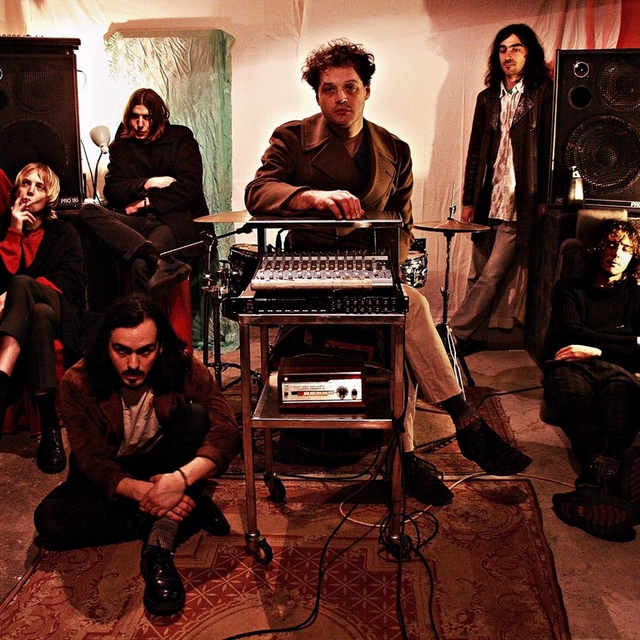
After releasing a string of superb singles – including ‘Where Is My Owner?’ and ‘The Never Never’ South Londoners Phobophobes have released their debut album!
‘Miniature World’ came out on 26th January via Ra Ra Rok and the band have also shared the title track! Speaking of the track, the band said: “Miniature World was spawned from long jam over a monotonous old drum machine, we hacked away at it to form a purposefully relentless, repetitive and simple structure that oscillates between the absurd and the familiar.
“We self-referenced the content of the song which questions the productive and reductive nature of modern communication, it acts as an ‘interruption’ within the setting of the album. The way the final chorus climaxes and diminishes into the bands layered vocals rhetorically wailing “Miniature World?”, I wanted the chorus’ to advertise the rest of the song, and the song to ironically advertise the rest of the album which is also titled “Miniature world”.
The band Phobophobes have dragged their weird and wonderful dark psychedelic rock’n’roll into the light of Miniature World, their debut album which was mixed by Youth, of Killing Joke. Their influences are widespread – and atypical – with the music closer to the spirit of apocalyptic garage rock than it is to consumer pop. Think Wall of Voodoo, Joe Meek
From the album ‘Miniature World’
Available on Ra-Ra Rok Records
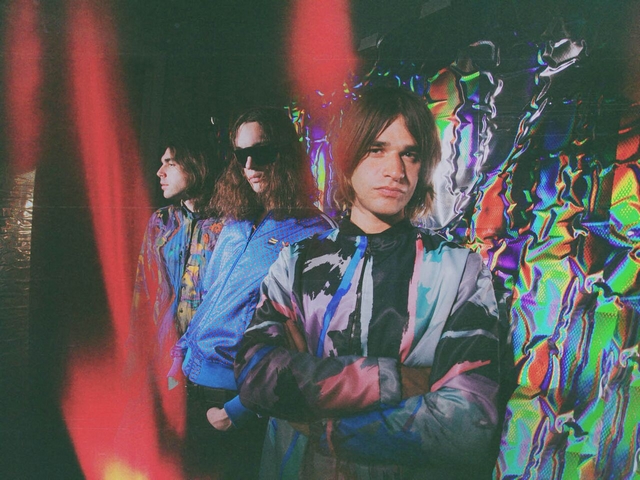
Love’n’Joy’s music offers a variety of styles, being reminiscent of the Golden Era, yet brisk and refreshing. The three piece’s trademark is an ever growing groove that is finished by catchy guitar riffs and impelling vocals.
After their Spring European Tour to promote the latest single ‘Come About’ (Crimy Records), the Kyiv-based collective is working on their debut album that will be released in Autumn 2018 Love’n’Joy are a band of young musicians from the Ukraine that combine indie rock with intelligent pop and psychedelic sounds from 1970s.
Band Members
Anton Pushcar – Guitar / Vocals , Andrei Sukharev – Bass / Backing Vocals, Sergey Zlobin – Drums / Percussion
As the drummer of the Australian band’s Pond and keyboard player for Tame Impala, polymath Jay Watson can be considered a veteran of the kind of tie-dye pop that’s melted minds at festivals across the globe. As an outlet for Jay’s personal music works, GUM has historically been a much more low-key affair than these collectives – an intergalactic journey explored largely from the comfort of his own bedroom studio. Here he is returning with his fourth album in 2018, ‘The Underdog’ is a record that sees him continue his quest with joyful aplomb.
As expected, bleary-eyed psychedelic pop numbers are the main ingredient of ‘The Underdog’, with the triumphant title track setting the mark for what’s to come. A space-age soul anthem straight from the book of Todd Rundgren, it packs enough bass licks to make Stevie Wonder blush, alongside a dizzying stack of rocket-launch electronics and fuzzy synths. Cosmic lullaby ‘Seratonin’ is another highlight; a tender and blissed-out plateau that offers a dreamy counterpoint to the bassy swagger found on tracks like ‘The Blue Marble’. Meanwhile, ‘Couldn’t See Past My Ego’ offers a different psych-out, recalling The Animals’ ‘House Of The Rising Sun’ with it’s merry-go-round synthesiser arpeggios and vocal hooks.
Elsewhere on the record there are hints of dark, throbbing electronic funk as Watson switches up his play with drum machines and sequenced electronics. Beginning with ’S.I.A.’’s motorik beats and dancing bass lines, the album’s side-odyssey peaks with the schizophrenic, arpeggiated climax of ‘Trying My Best’ and concludes with the six-minute rhythmic thumper ‘The Fear’ at the album’s tail end.
While the limited production leaves something to be desired (there’s little here that sounds like it was recorded with full live players), Jay’s knack for pop hooks makes his latest record shine just as much as his previous sun-soaked offerings.
My new album ‘The Underdog’ is out now! I’m touring across US, UK and Europe in April,
We got a small teaser of Hop Along’s new album when they opened for Conor Oberst at BRIC Celebrate Brooklyn! Festival in Prospect Park, a show they said they took a break from recording to play. Propelled by Frances Quinlain’s wild, raw voice, Hop Along really shine live, and they debuted a great-sounding new song at that show. Attendees of Cap’n Jazz’s House of Vans show in Chicago, which Hop Along opened, got to hear even more new material, and Frances promised new stuff at a few solo dates in October with Oberst and Tim Kasher. There hasn’t been much concrete info yet about Hop Along’s next album, but 2015’s Painted Shut was one of our favorite albums of the year, and we’re eager to hear Bark Your Head Off, Dog .
We are very happy to share our video for “How Simple” with you. Thank you to Derrick Belcham for his excellent work directing, and to all who were involved, this was a lot of fun to make.
What makes this album such a gratifying listen are the tensions Hop Along sets up: the ingenious interplay between the full band’s inviting hooks and abrasive progressions, between melodies you can sing along to and melodies you wouldn’t dare attempt, and between lead singer and lyricist Frances Quinlan’s sweet soprano and rugged rasp. Musically, everything bubbles to the surface and gasps for air, including, at times, Quinlan herself. Lyrically, Hop Along finds empathy for the Bible’s first murderer Cain (on “Not Abel”), illuminates the failures of false ideals in war (“Of course I am for peace, one that suits me”), and encapsulates the current cultural moment of untangling toxic masculinity in one perfect phrase (“So strange to be shaped by such strange men”).
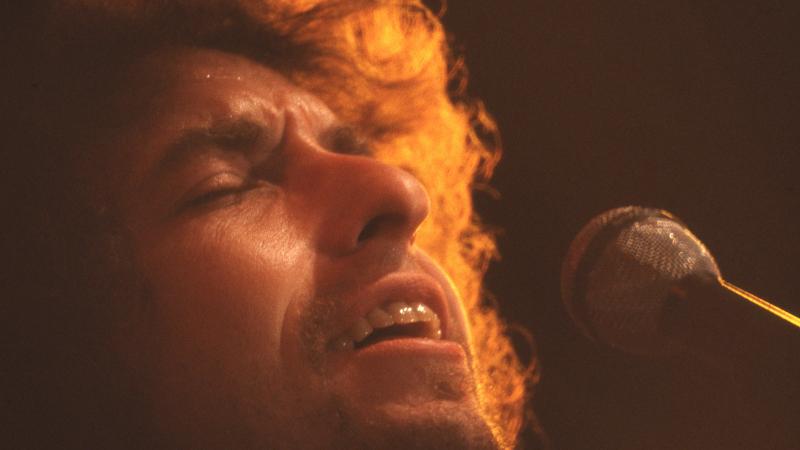
Bob Dylan’s Gospel years inspired and rankled in unequal measure – with the critical brickbats and audience boos often drowning out the strength and beauty of the impassioned musical ministries delivered by Dylan between 1979 and 1981, gathering around him his five-strong chorus of gospel singers, and a crack band that included Little Feet guitarist Fred Tackett, bassist Tim Drummond, Muscle Shoals keyboardist Spooner Oldham and pianist Terry Young, and veteran drummer Jim Keltner. it’s no great mystery that when Bob Dylan seemed to find new faith around 1979, a lot of fans and Dylanologists lost theirs — in him. it seems clearer that another major impetus for him in heading down the path of spirituality had to be the opportunity to tap into the higher power of a great rock-gospel band.
So what were audiences to think when, with the release of 1979’s “Slow Train Coming” album, he sang that he was “Gonna change my way of thinking / Make myself a different set of rules” and preached that “there’s only one authority / And that’s the authority on high”?.
Roots music aficionado that he’s always been, Dylan has long understood the power gospel music has to move and inspire listeners. In turn, BobDylan served up some of his most impassioned, electrifying performances with these gospel-steeped songs.
“Bob Dylan — Trouble No More — The Bootleg Series Vol. 13/ 1979-1981.” This one spans the so-called “Christian period” of his trio of albums: “Slow Train Coming,” “Saved” (from 1980) and “Shot of Love” (1981).
Slow Train Coming was at least a challenging and engaging album, with much typical imagery and complexity. A stunning gospel version of the title track features in the current hit play Girl from the North Country at the Old Vic theatre. The follow-up album, though, 1980’s Savedwas too close to pure gospel, too devotional, and alienated even more fans. Shot of Love in 1981 continued the religious theme to a degree, but it was intermingled with what one might term secular tracks, and there was evidence that Dylan was once again changing course.
Filmed at Toronto’s Massey Hall and in Buffalo, New York, Dylan’s gospel shows have long been a bootlegger’s holy grail, and it was only on last autumn’s Trouble No More boxed set, the latest volume in the official Bootleg Series, that some of that footage finally found official release. Now that hour-long film has made it The nights of religious fervour and impassioned performances. It intersperses up-close and personal studio rehearsals with exceptionally intimate live footage of some of Dylan’s strongest Gospel songs – the likes of “Solid Rock”, “Slow Train”, “When He Returns” and “Precious Angel” – with slightly contrived but absorbing enough “sermons” written by Luc Sante and performed by Michael Shannon, who plays a lean, mean kind of preacher who wouldn’t be out of place in Girl from the North Country, the hit Dylan musical.
A lot of fans abandoned BobDylan during his Gospel [de]tours, largely to their own detriment
The subjects for each “sermon” were apparently suggested by Dylan, but it seems the singer had no further part in shaping their texts. A shame. There was a bit of a disconnect between the tone of these spiritual homilies and the music itself, so intimately captured, and so strong and vivid an expression of Dylan’s spiritual journey at the time. It might have made more sense to, say, use Hank Williams’ Luke the Drifter song-sermons. It was material that certainly chimed with Dylan from an early age (“I could listen to the Luke the Drifter record all day and drift away myself, become totally convinced in the goodness of man…” he wrote in Chronicles).
Director/producer Jennifer LeBeau excelled in choosing the strongest musical performances, all of it prefaced by that remarkable rehearsal footage, and closing with an extremely affecting performance of “Abraham, Martin and John” by Dylan and Clydie King, his then-girlfriend and a Gospel singer whose voice sounds like the female voice of an Old Testament God – tearing the air like paper and raising whatever roof it’s under until it hits the ground.
A lot of fans abandoned Dylan during his Gospel [de]tours, largely to their own detriment, but this was a film that put the music’s undeniable power up front, in your face and centre stage. Plenty of people back in 1979 and 1980 were talking up the “end times” and we’re enjoying a new flavour of “end times” right now, aren’t we, in a more solid, indigestible form? In that light, it’s fascinating to see and hear these spiritually impassioned songs performed under “the darkness that will fall from on high” that Dylan felt pressing down on him during those Gospel years. But let’s leave the last word to one of the men who was there, Fred Tackett. Here’s what he thinks of the film: “I was amazed, man. Everything was just so good. They picked the very best songs. Him and Spooner Oldham playing this harmonica and Hammond organ together at the end of ‘What Can I Do for You’… it was just so cool and hip, and Bob Dylan is playing so great. They found the best stuff and put it in this movie.”
In tracks like ‘Solid Rock’, you can feel his heart bursting with religious passion
That force comes through as well in the best tracks of Bob Dylan’s Trouble No More – The Bootleg Series Vol 13 1979-81, the concert chronicle of his much-maligned “Christian” albums. The fiery gospel fervour delivered here benefits a great deal from being live rather than reproduced in the studio. These two discs are dynamite, containing, I am sure, some of the very most stirring moments of Dylan’s gigantic opus. In tracks like “Solid Rock” from San Diego in 1979, you can feel his heart bursting with religious passion, and everyone else – from the tightest of bands to five red-hot back-up singers – possessed by the spirit. This combination of note-perfect excellence and total letting-go can only be good for the soul, Dylan’s own, but for us the audience as well.
The deluxe set from Columbia Records/Legacy Recordings encompasses eight CDs and one DVD with director Jennifer Lebeau’s new documentary, “Trouble No More: A Musical Film.” An abridged two-CD set and a four-LP vinyl version are also available.
The deluxe set comprises 100 tracks: alternate studio versions, rehearsal takes and live performances. Only one has been previously released: “Ye Shall Be Changed,” which appeared on the first installment from 1991, “The Bootleg Series, Vol. 1-3.”
The first two discs of the “Trouble No More” set are drawn from various tour stops from 1979-81, while discs 3 and 4 collect rare versions of songs from the studio albums along with several that didn’t wind up on any of those releases. The fifth and sixth discs contain his full show from April 18th, 1980 in Toronto, while CDs 7 and 8 offer up another full concert from June 27th, 1981 at Earl’s Court in London. (For Dylan completists, the singer-songwriter’s website is offering two additional discs with yet another complete performance, this one from his Nov. 28th, 1979 tour stop in San Diego.)
Discs 1 through 4 are framed smartly, each of the four opening with markedly different renditions of the same song: “Slow Train Coming,” displaying how Dylan’s restless artistry was always in search of the right feel, tempo and attitude for a given song.
An alternate studio take of one of the “Slow Train Coming” album’s higher profile songs, “Gotta Serve Somebody,” features a livelier bounce in the rhythm section of Drummond and drummer Pick Withers, while keyboardist Barry Beckett pushes the song forward with beat-anticipating piano interlaced with funky clavinet parts. The backing gospel singers on the released version are absent.
The fidelity of the live versions varies noticeably in places, which makes for some compromises. The performance of “Man Gave Names to All the Animals” on the first disc, recorded in 1980 in Portland, Ore., benefits from a more fluid reggae-ized lilt by the band, and is buoyed further by a break where the gospel singers are featured.
But Dylan’s vocal is low in the mix, rendering certain lines difficult to discern, especially to anyone not already intimately familiar with his clever roster of creation stories he cooked up for so many critters.
Son Volt was one of the most instrumental and influential bands in launching the alt-country movement of the 1990’s. The Search takes Jay Farrar’s signature juxtapositions of the arcane and the modern to provocative extremes, contrasting the blue highways of a disappearing cultural landscape with a perilous world in which the center no longer holds – a world of information overload, of clueless leaders carrying out sinister agendas, of “Hurricanes in December – earthquakes in the heartland / Bad air index on a flashing warning sign,” as the artist sings ruefully on “The Picture.” Originally released in 2007, and out of print for the past several years, this deluxe reissue of The Search features bonus content and comes pressed on colored double vinyl.
The 22-track reissue features all of the original tracks plus songs from the band’s 2007 vinyl-only “On Chant and Strum”. Available via CD, digital and a double-LP opaque sea foam green pressing, this release has been sequenced to mirror “On Chant and Strum”
Field Report’s new album Summertime Songs featuring “Never Look Back” and “If I Knew” is available now: Centering around the narrative songs of Chris Porterfield (formerly of DeYarmond Edison with Bon Iver’sJustin Vernon).
Summertime Songs is Field Report’s third and most expansive album, following in the vein of Wilco, The National, and The War On Drugs. Named in honor of the season of its creation, Summertime Songs is a chronicle of disintegrating relationships – including the one that’s governing what’s left of our democracy.
It’s been a few years since the acclaimed Milwaukee band, Field Report, released a new album. But the wait is finally over. The group is releasing its third album, “Summertime Songs,”.
In the lead up to the album drop, the group has been busy. They opened for their friends (and former bandmates) Bon Iver at the 10th anniversary show for “For Emma, Forever Ago” at Milwaukee’s BMO Bradley Center. They also played some shows at the South by Southwest festival in Austin, Texas, this month.
Plus, the band recently stopped by Wisconsin Public Radio to play a couple tracks off “Summertime Songs,” and Field Report founding member, lead singer, and guitarist Christopher Porterfield
Porterfield has a good reason for the three-plus year wait on the new album. While he was recording the new record, he became a father. Lately, he’s been a stay-at-home dad to his 1-and-a-half-year-old daughter, Jane.
“Before her, it was all music. Since her, it’s been all her,” said Porterfield. “Now, we’re muddying the waters a bit here, we’ll see how it plays out and see how those two things coexist.”
Porterfield has been the only consistent member on each of the Field Report albums. Joining him on “Summertime Songs” is Thomas Wincek on keys, Barry Paul Clark on bass, and Devin Drobka on drums.
This band is amazing. I’ve never played with a group of people like them before“This band is amazing. I’ve never played with a group of people like them before,” said Porterfield. “They were all fundamental in how this record came out. It was a very collaborative process. (We were) responding to one another’s energy and ideas.”
“I’ve never gotten more blinding, exhilarating, thrilling, exciting energy than making music with these guys. So, from the beginning of recording this record, this was not a, ‘Hey guys, come on over! I have a bunch of completed songs I’d like you to dress up.’ It was, ‘OK, I’m going to throw some stuff down in the studio and you react to it and I’ll react to that and so on.
“It was like a collaborative painting studio where we would just show up and knew we could get consistently good light, and we had the time and tools to work and just start layering things and sculpting things and adding things on and pulling things away and throwing things out and starting over. Then going back to the garbage and wonder, ‘Oh, maybe that wasn’t so bad,’ and then repurposing it. Suddenly, it’s not a painting anymore, it’s part of the sculpture.”
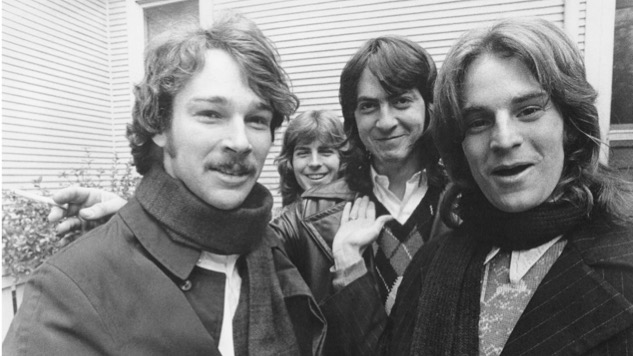
Big Star—one of the great and greatly underappreciated American bands of the 20th century, once merely a cult loved band, but now their fame has grown into something closer to a full-blown religion . Interest in the work of the Memphis group has rippled steadily outward since the relatively quiet days when their two studio albums—1972’s No#1 Record and 1974’s Radio City both hailed by critics
The albums led to a combined release in 1978 by a U.K. imprint to the desires of hungry music fans overseas. In the decades since, word of the band’s genius has filtered its way through bands like R.E.M., Teenage Fanclub and The Replacements, who loudly trumpeted the group.
A growing reissue market also embraced the band and its unique blend of British psych, Southern rock and radio pop, leading founding members Alex Chilton and Jody Stephens to reunite under the Big Star name in 1993. Two decades later, the Big Star reissue market is something of a cottage industry, and it’s never had a better year than 2017. Fueled by the vinyl revival, the complexities of licensing deals and some buzz stirred up by the 2010 deaths of AlexChilton and founding member Andy Hummel, record store shelves are now groaning under the weight of fresh reissues.
We’ve seen the release of the second and third volumes of the Omnivore Recordings’ comprehensive Complete Third series, which gathers all existing work surrounding the group’s aborted 1975 album, Third; a cassette boxed set of the group’s first three albums, issued by Burger Records; “Thank You Friends: Big Star’s Third…Live”, a three-CD set featuring a live recording of Big Star’s Third, Chris Stamey’s all-star tribute to the band, and a documentary about the project; Big Star’s Third Live at the Alex Theatre, Glendale, CA, a limited-edition vinyl release of the live material from that aforementioned set; The Best of Big Star, a single-disc compilation culled from their studio work; an expanded reissue of Chilton’s 1995 album A Man Called Destruction; Take Me Home and Make Me Like It, a vinyl release from Spanish label Munster Records pulling together solo sessions Chilton recorded in 1975; Looking Forward, a CD compilation of Chris Bell’s pre-Big Star work; a deluxe reissue of Bell’s abandoned solo album I Am the Cosmos; The Complete Chris Bell, a vinyl boxed set featuring Looking Forward and the expanded Cosmos material as well as a rare interview with the artist from 1975.
For a long time, there wasn’t any Big Star at all, and now there is, Cheryl Pawelski of Omnivore Recordings. “I believe strongly that the way you preserve music is to get it back out into the culture. Isn’ that good? Do you want it to be over?”
Incredibly, there’s more. On the docket for 2018 is a vinyl release of the 1973 live recording previously only available as part of the 2009 boxed set Keep Your Eye on the Sky, and there are rumors of a reissue of Alex Chilton’s 1979 album, Like Flies on Sherbert.
It’s a head-spinning amount of music to keep up with, especially for fans who were only recently introduced to the band. It can feel like sticking your mouth underneath the never-ending flow of a chocolate fountain, where the delights can give way to bloat. Naturally, the folks behind many of the above releases beg to disagree, to the point that Cheryl Pawelski, co-founder of Omnivore Recordings, the label behind Complete Third, Destruction and all the Bell releases out in 2017, sounds downright incredulous at the suggestion that it’s too much of a good thing.
As a fan, I most certainly don’t. All of the above releases are the kind of deep dives that I adore amid the current reissue craze. It’s opening doors into Big Star’s working relationship and creativity that I could never get when I was a budding music obsessive poring over my copy of “Third/Sister Lovers” that Rykodisc first issued on CD in 1992.
Take, for example, “I Am the Cosmos”. While the material on this album was recorded in the ‘70s, it wasn’t pulled together for commercial release until Rykodisc got the rights to do so in 1992. The album was brought out by RhinoRecords again in 2009 with a bonus disc of material, but issued in limited numbers through their mail-order only imprint,
Five years later, the label put out a mass-market version of the same two-CD set. Three years later, after leaving Rhino, Pawelski brought the album to Omnivore to once again re-release it on CD and now in the boxed set.
So how did the release dates for all of this music happen to land in one 12-month stretch? The process actually began about a decade ago, when Rhino started looking for the material that would make up Keep Your Eye on the Sky, much of it stored in the archives of the Memphis recording studio Ardent.
“Big Star literally had the keys to the studio,” says Bob Mehr, music critic for the Commercial Appeal in Memphis. “For them, the studio was a laboratory and a playground and a place to experiment. Relative to their output, there’s actually a lot more material than meets the eye. So all the stuff that ended up on [Keep Your Eye on the Sky], all the unreleased material and alternate takes of Third and live recordings, that was what kicked things off. Now you’re seeing the results of that, but it’s been in the making for a long time.”
Another factor is that Pawelski, who helped shepherd Keep Your Eye on the Sky and the 2009 Bell reissue into existence, did all that work before leaving her post as Senior VP at Rhino. So when she started up Omnivore, she was able to strike new licensing deals with Ardent and its owners Jody Stephens and producer John Fry. The wrinkle here is that those agreements didn’t include the material found on #1 Record and Radio City. The rights to those songs originally belonged to Stax Records, which helped release the first two Big Star albums, and were purchased—along with the catalog of famed R&B stars like King Curtis and Shirley Thomas—by Concord Music Group. That’s the label behind this year’s Best of Big Star compilation and the Big Star’s Third live set.
There will always be a supply of new listeners ready to swoon over the band’s dark poetry, gritty guitar work and the winsome vocals of Chilton, Bell, Hummel and Stephens.
Every year, there’s more record buyers who get into Big Star because it has a certain level of hipness. This band isn’t a nostalgia act. While there’s a big romantic myth attached to it, the music doesn’t age. It stays hip and it stays valid for new audiences.”
Melody Prochet of Melody’s Echo Chamber has openly discussed her returned to music after suffering a serious injury by announcing a release of second album Bon Voyage.
In June earlier this year, it was reported that Prochet had been forced to cancel her show due to suffering a ‘serious injury’, that injury turned out to be potentially life threatening.
Following a lengthy period of recovery, Melody’s Echo Chamber second album will now be released on June 15th. addressing the serious accident for the first time, Prochet explained how she still feels unable to discuss the specific details of the accident, She says: “Today I feel blessed, as I’m healed. It’s been traumatic but it has beautifully put some perspective into my eyes and broke a life pattern that didn’t work for me. I’m lucky it revealed more light.”
Given the stresses of what has happened, Prochet also explained that she has not felt ready to write any new music since her accident: “I needed a break from that sort of passion pattern and obsessing over music,” she said. “Open up to other horizons! Traveling the world and doing serious hikes is a new dream of mine. There is always music inside of me. Maybe I’ll let it [stay] in there for a while.”
Now though, in wonderfully positive news, The album made up of seven expansive tracks, Bon Voyagemarries Melody’s breathless soprano to the wildest sonic excursions, always pinned to an emphatic, clattering groove as she delivers her fables of spiritual search and emotional healing in multiple tongues (French, English and Swedish).
Prochet’s 2012 self-titled debut ‘Melody’s Echo Chamber’, which was was produced by Tame Impala‘s KevinParker – who happens to be her ex-boyfriend, had initially started work on its follow-up the Tame Impala man: “We always had a lot of fun and an easy time creating together,” Prochet says of working with Parker. “The painful part for me was that I had been working on my record for more than a year and I just could not finish it and release it. It’s been a million hours of work, thoughts, tears, a bunch of money invested in the process and lost.”
Melody’s Echo Chamber – “Cross My Heart”.
Melody’s Echo Chamber – “Breathe In, Breathe Out” from ‘Bon Voyage’, out 15th June 2018 on Domino Record Co | Fat Possum Records.