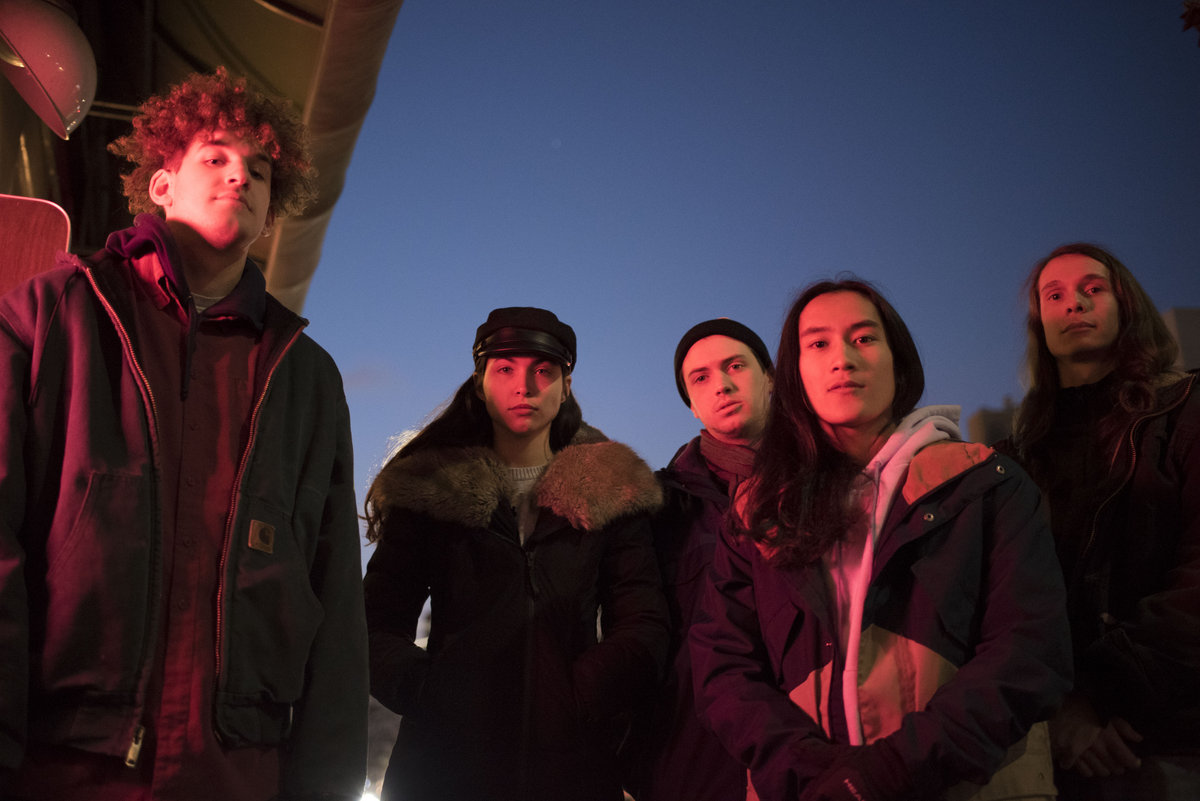
Before the critically acclaimed Catalonia band MOURN—Carla Peréz Vas, Jazz Rodríguez Bueno, Leia Rodríguez, and Antonio Postius—were signed to Captured Tracks, they were mired in a legal dispute with their Spanish label. Frustrated by their inability to tour behind their sophomore LP, Ha, Ha, He!, the band channeled that rage to create Sorpresa Familia, a snarling LP full of post-punk fervor. Sorpresa Familia spans the rock expanse, touching on emo, math rock, and straight-ahead punk, channeling these different iterations into something fiery and wholly unique. It’s an enthralling listen, and reflects the passion and excitement the group brought to this conversation of music discovery.
When talking about these teenage Barcelona punks, PJ Harvey’s name is always going to be the first one that comes up. That owes to frontwoman Jazz Rodriguez Bueno’s strident, gut-ripping howl, one of the few voices on the indie rock landscape that could merit such a comparison. But while Mourn may challenge Ms. Harvey’s elemental ferocity, they also play with a sloppily simple basement-hardcore urgency that’s just overwhelmingly endearing. That voice, combined with the band’s juvenile bash-it-out force, makes for a potent combination.
Orange Crate Art is the first collaborative studio album by American musicians Brian Wilson and Van Dyke Parks, released in 1995 on Warner Bros. Records. The album consists mostly of songs written and arranged by Parks, with Wilson featured as lead and backing vocalist. Its title refers to the sun-drenched, idealized paintings that grace wooden fruit crates, and its theme is a nostalgic view of the history of California.
Brian Wilson and wunderkind lyricist Van Dyke Parks worked together in the mid-1960s to compose The Beach Boys’ famously shelved SMILE album; the pair re-teamed 30 years later for Orange Crate Art. “It was to extol the propagandist art that brought California a sense of realty,” notes Parks of the title song, and the entire Warner Bros. collection paints the Golden State with a nostalgic glow. That’s Wilson’s sweet spot, even if songs like “My Hobo Heart,” “Hold Back Time” and “Lullaby” recall an era that predates surf music. As on their first collaboration, the wordplay is intricate, the arrangements dense and varied, and no expense has been spared to bring in top-flight instrumentalists. This is Brian Wilson’s birthday, and while others may mark it with his ’60s hits, we’ll take a deeper dive to celebrate the late-career resurgence heard on Orange Crate Art.
The song “Sail Away” from Brian Wilson & Van Dyke Parks’ 1995 album “Orange Crate Art”.
Sharing a title with one of Paul’s own paintings, Egypt Station is the first full album of all-new McCartney music since 2013’s international chart-topping NEW. Preceded by two of its tracks just released as double A-sides – plaintive ballad ‘I Don’t Know‘ and raucous stomper ‘Come On To Me‘ – Egypt Station was recorded between Los Angeles, London and Sussex, and produced (with the exception of one Ryan Tedder track) by Greg Kurstin (Adele, Beck, Foo Fighters).
Of the forthcoming album’s enigmatic title, Paul says, “I liked the words ‘Egypt Station.’ It reminded me of the ‘album’ albums we used to make… ‘Egypt Station’ starts off at the station on the first song and then each song is like a different station. So it gave us some idea to base all the songs around that. I think of it as a dream location that the music emanates from.”
True to the inspiration behind its title, Egypt Station ’s 14 songs combine to convey a unique travelogue vibe. Between the opening and closing instrumentals ‘Station I’ and ‘Station II’, each song finds Paul capturing a place or moment before transporting the listener seamlessly to the next destination. Stops along the way include an acoustic meditation on present day contentedness (‘Happy With You’), a timeless anthem that would fit on virtually any album of any McCartney era (‘People Want Peace’), and an epic multi-movement closer clocking in at seven minutes with a song suite structure harkening back to the days of Paul’s previous combos (‘Despite Repeated Warnings‘). The result is a kaleidoscopic journey through myriad musical locales and eras, yet firmly rooted in the here and now – with Paul’s singular unmistakeable melodic and lyrical sensibility serving as a guide.
Philadelphian band Restorations, are now 10 years running, named for more than just architectural stability. It’s emotional renewal for the members themselves and for anyone listening. The band’s self-reflective, true colors are just as loud and bold as the layers of guitars galloping through each song. But after touring hard on the soul-rattling 2014 album LP3, the Philadelphia rock band needed some restoration itself.
Four years later, Restorations returns with LP5000 via Tiny Engines, the label that released its debut album. Restorations have always been a band keenly aware of their surroundings and LP5000 is just that: Seven songs written and recorded during a time of transition. It’s a record about displacement. It’s about feeling complacent and coming to the sudden realization that maybe things aren’t as solid as they’d seemed—in politics, in personal relationships, and in the different corners of their hometown of Philadelphia.
Underlined by looping keyboard chitter-chatter a la “Baba O’Riley,” the lead single “The Red Door” explodes the band’s larger-than-life rock and roll hoarsely yawped from the streets, but instead of looking inward, lead singer (and one of three guitarists) Jon Loudon looks just next door.
“Philadelphia (and perhaps your town, too?) is rapidly changing,” Loudon tells us “I wonder about where people go when they can’t afford to live in these new neighborhoods anymore. The red doors on all the new buildings feels like some kind of warning sign.”
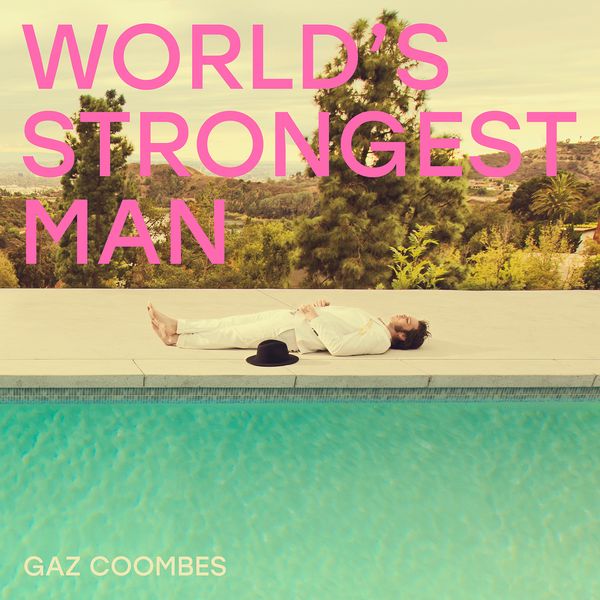
World’s Strongest Man is the magnificent third solo album by Gaz Coombes. Inspired variously by Grayson Perry’s the Descent of Man, Frank Ocean’s Blonde, Californian weed, British woodlands, unchecked masculinity, Neu! and hip hop (and a whole lot more besides), it’s a truly remarkable collection of eleven deeply personal songs each set to expansive, addictive melody. The book resonated on a personal level, making him contemplate his conduct as a man in the context of being a partner, a father to two daughters, a son, and a songwriter, but also as a male who feels compelled more generally to be an active participant in deconstructing and rebuilding masculinity in order to create a better, fairer, more equal society.
His way of doing this is to embrace the facets he thinks constitute a strong man. Which is to say, this is an album that presents vulnerability, the admission of flaws and emotional openness as routes to strength. There might be pokes at the negative repercussions of prevalent toxic masculinity (‘Wounded Egos’), but it’s mostly about his mind.
“I’m a little mashed up,” he sings on the opening line on the album’s title track, sounding torn: “I want to be by myself / Don’t leave me by myself.” That theme – that there’s benefit in sharing mental fragility – boomerangs around the LP, most directly on ‘The Oaks’, where he strolls to the woods near his countryside home to talk to the trees (“Came upon the oaks / told them about the episode”) and the ‘Vanishing Act’ where his voice cracks as he yells: “I’ve got to get my fucking head straight / I’ve got to put on my happy face”.
Coombes’ vocal, of course, gives the whole thing a nostalgic familiarity, but musically it’s an album that, for him, explores some fresh ground. Frank Ocean’s ‘Blonde’ and ‘Channel Orange’ were both influences, not just in their production but in their approach – their pride, in not just prioritising a big pop chorus, but in the smaller sonic details. Therefore, a lot of ‘World’s Strongest Man’ is about feel, a repetitive groove or a slow build (‘Slow Motion Life’). There’s the deft influence of Black Rebel Motorcycle Club on ‘Deep Pockets’, Daft Punk on ‘Shit (I’ve Done It Again)’, Beck on ‘Walk The Walk’ and, a likeness to fellow Oxfordites Radiohead on ‘World’s Strongest Man’ and ‘In Waves’.
If all this sounds like a long way from the goofy 18-year-old with the huge sideburns that wrote ‘Caught By The Fuzz’ – it is. So it should be: almost 25 years have gone by. Coombes, unlike some of his ‘90s peers, has shown an ability and, more importantly, a desire to challenge himself and move forward.
So here’s an album by a male songwriter who feels deeply affected by the conversations happening around men and masculinity right now in light of #MeToo, Time’s Up and gender inequality in all its forms. Gaz Coombes isn’t congratulating himself on having these thoughts, he’s just trying to be more like the man he wants himself and other men to be. There’s room for a lot more of those.
Ex Supergrass’ Gaz Coombes makes his Later… solo debut performing Deep Pockets
Later… with Jools Holland on BBC Two (12th June 2018)
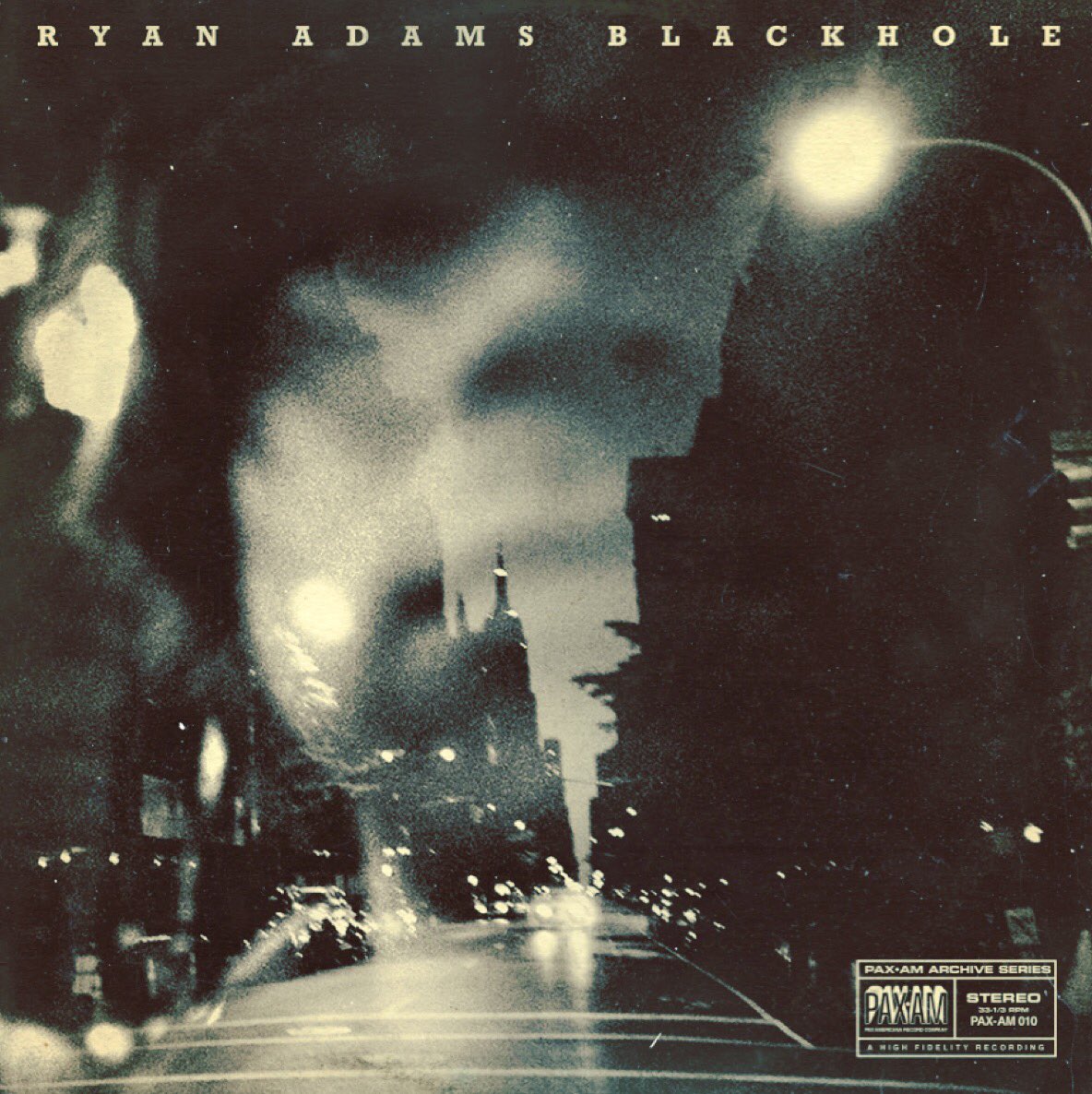
Ryan Adams has raised the hopes of the vast majority of his fan base, by teasing the release of a number of past projects, including his famously unreleased album, Blackhole.
Just a week after Ryan Adams tried his hand at reporting the weather thanks to a US television station, the musician took to Twitter today to test the waters in regards to the release of some of his long-awaited projects.
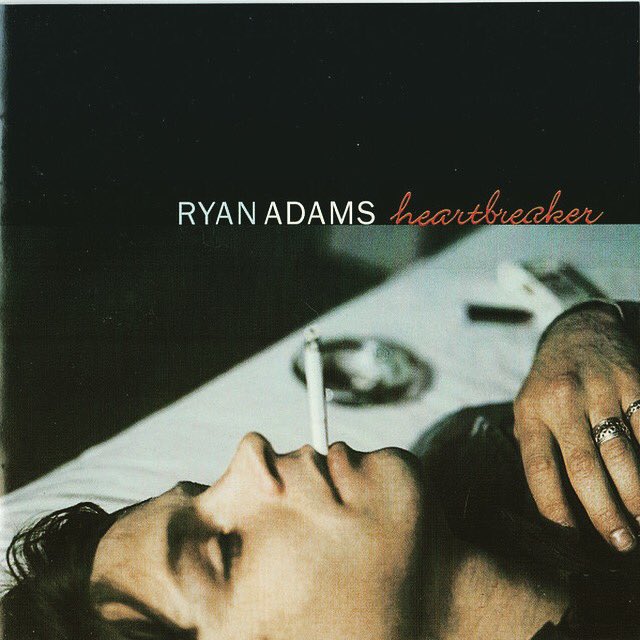
“I wrote this album. I have 17 new songs,” Adams wrote on Twitter, alongside an image of his debut solo album, Heartbreaker. “I have 4 records on a shelf. Does anyone want to hear Prisoner 2 & 3, Black Hole? Live at Capitol Theater w The Infamous Stringdusters, Exile on Main Street cover live & rehearsals ?”
He continued: “I’m just asking to see if maybe I’m crazy & no one does.” The two live albums he mentioned in the message referred to a show recorded in Port Chester, New York in July 2016 with The Infamous Stringdusters, and his Rolling Stones tribute from New Orleans Jazz Fest last month respectively.
“I’m just asking to see if maybe I’m crazy & no one does.”
This is a lot of unreleased material, but let’s start taking a look at what’s on offer.
As it stands, Ryan Adams’ last album, Prisoner, was released in 2017, becoming his most successful record to date, . While a new album would already be brilliant, a sequel (or two) to the record would definitely be well received by his fans. However, it’s not quite clear whether his “17 new songs” constitute what he calls to be Prisoner 2 & 3 or if is a totally different project altogether.
One of the live projects mentioned by Adams is his performance at The Capitol Theater with The Infamous Stringdusters back in 2016. This performance is rather famous among his fans for the hugely collaborative nature of the performance, in addition to featuring covers of Slayer’s ‘South Of Heaven’ and Black Sabbath’s ‘The Wizard’.
Likewise, the most recent of these live records is that of Adams’ recent Exile On Main Street concert, which saw him cover The Rolling Stones’ legendary album (almost) in full just last month.
In March, Adams said he had 11 new tracks recorded from sessions in his Pax-Am Studios. “Records are funny creatures sometimes,” he tweeted. “They wake you up like they can’t wait to just get born.”
Featuring the likes of Todd Wisenbaker on guitar, Cyril Neville of the Neville Brothers on percussion, Medeski Martin & Wood’s John Medeski on piano, and Don Was on bass duties, a professionally recorded version of this gig (and its rehearsal) would indeed be a massive addition to any record collection.
However, the most important of these potentially-forthcoming albums has to be that of Blackhole, an album supposedly recorded sometime last decade during the final stages of Adams’ severe drug addiction.
“There’s two versions of that record,” Adams explained in 2014 while considering releasing the album for Record Store Day. “There’s one where the vocals and the performances are really fucked-up.”
“Then there’s a second version, which was the last thing I did when I was still messed up. Bits and pieces of that had to be stitched together to make the final product like a patchwork quilt, because some of its vocal takes are too fucked-up to release. But it’s really cool and the end result made me very happy.”
While the record was never released for Record Store Day 2015, Adams stated that he was still unsure as to how he should release the record, and which version should see the light of day. We might not know what sort of plans he up his sleeve for this legendary unheard record, but we’d be keen to receive in any way he wishes to give it to us.
At this stage, it seems fans are pretty keen to hear all these unreleased projects, so hold tight, because you might have a lot of Ryan Adams coming your way soon!
Limited to 500 Copies (250 on Yellow and 250 on Red). Allie Hanlon’s Peach Kelli Pop returns after 2 years with a 6 song EP. In December 2017, Hanlon spent a week in her hometown of Ottawa, Canada. She recorded the EP in just four days, utilizing the dust-coated equipment left in her bedroom after she emigrated to the United States in 2013. “I really benefited from being in the specific home, and even room where I learned to play music when I was growing. Upon first listen, a new level of vulnerability is instantly detectable, effectively separating this release from any of the bands previous creations. This new intimacy is due to the predominantly autobiographical lyrics: songs about isolation, depression and feeling like an outsider in Hanlon’s current home of Los Angeles. Which Witch is akin to the Red Cross’ Posh Boy EP – both have 6 songs, each close to a minute long.
All 4 members of Peach Kelli Pop are outspoken Redd Kross fans; which comes as no surprise: the band is named after a Redd Kross song. On earlier material, Hanlon’s voice was passive, frequently inaudible and blanketed in reverb. Those days are gone; She now sings with confidence and clarity, demonstrating a refreshing assertiveness not seen before in her work. Which Witch holds the first glimpse of an evolution, a new stage in which Hanlon is finally no longer holding back.
When you’ve got riffs like these and a voice like hers, you’re pretty much golden. The riffs in question are the spindly, expansive, geometrically unusual building blocks of Forth Wanderers’ sound, arching guitar architecture that turns the band’s big Sub Pop spotlight moment into a monument. The voice belongs to AvaTrilling, who applies her deadpan soprano to lyrics like, “He says he likes my taste/ But I bite his tongue, you know, just in case.” Consider them Built To Spill built for 2018 indie rock, trading awestruck twee visions for frank ruminations on the politics of collegiate social life.
Forth Wanderers employ a tin-can-telephone style of composition which they use even when living in the same area code. Since first collaborating in 2013 as Montclair, New Jersey high schoolers, guitarist and songwriter Ben Guterl and vocalist Ava Trilling have passed songs back and forth like pen pals. Guterl will devise an instrumental skeleton before sending it to vocalist Ava Trilling who pens the lyrics based off the melody. The duo then gather alongside guitarist Duke Greene, bassist Noah Schifrin, and drummer Zach Lorelli to expand upon the demo. It’s a patient and practiced writing system that has carried the quintet through two EPs (2013’s Mahogany and 2016’s Slop) and one LP (2014’s Tough Love). Forth Wanderers, the group’s sophomore record and Sub Pop Records debut, is the group’s most comprehensive and assured statement yet.
Now living in Ohio and New York respectively, Guterl and Trilling have evolved their separate but collaborative writing process. “The only way I can really write is by myself in my room with a notebook, listening to the song over and over again,” Trilling says. “I’ve never sat down to write a story, I write the song as it unfolds.” Since her lyrics are often embedded with intimate truths from her life, the private writing experience often leads to intense self-reflection.
On Forth Wanderers these introspections include meditations on relationships, discovery, and finding oneself adrift. Despite the inherent heaviness of those themes, Forth Wanderers feels joyous, a rock record bursting with heart. Take “Not for Me,” a romping track about “the ambivalence of love.” Trilling’s confession of “I can’t feel the earth beneath my feet/Flowers bloom but not for me” resists feeling like a dreary, pitying complaint; instead, as her bandmates bolster her melancholy with interlocking harmonic intricacies, she soars with self-actualization. Opener “Nevermine,” is a surge of confidence inspired by an ex-lover who is still captivated by her image. “I don’t think I know who you are anymore/And I think I knew who I was before,” she jabs with relish. On “Ages Ago” Trilling paints the image of a constantly-shifting enigmatic lover. “I wasn’t sure who they were, they changed constantly (hence the metaphor describing the “grey coat” and cutting their hair just to “stay afloat”),” she says. “I wasn’t going to wait any longer to find out.”
Recorded over five days by friend and audio engineer Cameron Konner at his Philadelphia home studio, Forth Wanderers amplifies the heartfelt sentiments of their earlier works into massive anthems. Guterl and Greene’s guitars have never sounded sharper, Schifrin and Lorelli’s terse rhythm section is restless, and Trilling sounds more self-assured than ever. These are exuberant, profound songs driven by tightly bound melodies and a loving attention to detail.
Formed in New Brunswick, NJ in 2005, Screaming Females are Marissa Paternoster (guitar, vox), Mike Abbate (bass), and Jarrett Dougherty (drums). Over six albums and more than a decade of music making, the band has remained deeply individual and steadfastly DIY. They have also grown into one of the most dynamic and devastating touring bands going today.
Marissa Paternoster’s voice is the relentless force and central instrument that drives Screaming Females’ All At Once. Her howling vibrato doesn’t necessarily outshine the fired-up shredding or evocative lyricism. Rather, it makes those elements feel that much grander. The expression “I’ll make you sorry” never sounded as sly and, frankly, believable as it does coming out of Paternoster’s mouth. A sense of restless intensity translates stylistically, too. All At Once is a feverish rock n’ roll album, pieced together with power-pop grooves, punk progressions, indie-rock melodies, and even a hint of ska. But as ever, Paternoster is the star. When she sings, “The sun destroys me,” on “Agnes Martin,” it doesn’t sound hyperbolic; it sounds as if she’s on the verge of melting.
Out February 23rd, All At Once, is the trio’s most expansive and imaginative work to date — a double LP that swings between surreal miniatures and and solo-heavy sprawl. Concision takes a backseat to experimentation, with arrangements meant to evoke the energy and spontaneity of their live shows. It’s music built across a timeline that’s longer than our internet-enhanced moment typically tolerates and a testament to the band’s dedication and perseverance.
Songwriter Katy Davidson they/them revived the band Dear Nora in January 2017 when Orindal Records reissued the thirteen-year-old album Mountain Rock on vinyl. The reissue received great acclaim and the band toured the west and east coasts last year. Spurred by the momentum, Davidson decided to create the first album of new Dear Nora material in a decade, Skulls Example.
Katy explains: I wrote the songs on Skulls Example between 2009 and 2017, and recorded most of them during the latter half of 2017. “Skulls Example” is a name I once chose for myself during a party by closing my eyes and picking two words at random from a book of magic.
I tracked most of the basic instruments for each song with my bandmates Zach Burba (bass/synth), GregCampanile (drums), and Jessica Jones (guitar) at a studio in Portland, Oregon. We used nice microphones, ran audio into a Mackie mixer, then ran stereo audio out of the mixer to a Tascam 4-track cassette recorder. Then I bounced the individual instrument tracks from cassette to Ableton Live on my laptop. Zach overdubbed a lot of the bass and synth tracks remotely from his house in Seattle. I tracked all the vocals and recorded some guitar overdubs in a reverberant empty bedroom in my house in Portland. Engineer Tim Shrout expertly mixed the album on ProTools while I micromanaged.
It has been a decade since I have released new material under the name Dear Nora. The last time I released an album of new material was in 2011 – that was called California Lite and it was under the band name Key Losers. Thematically, California Lite makes sense as an early warm-up to Skulls Example. It’s about freeways, the internet, human connections (and broken connections), and wilderness.
Skulls Example is about how our weird, techno-futuristic present (VR, self-driving cars, drones, Tinder dates, reality TV show government, Starbucks ubiquity, iPhone as extension of human body, Blade Runner -esque income inequality, cryptocurrency “utopias”, etc.) juxtaposes so absurdly against the never-ending backdrop of inexorable, ancient elements (fire, ice, wind, storms, mountains, rocks, human instinct, etc) . It’s like we live in multiple realities at once: Now Reality layered upon Ancient Reality, Virtual Reality layered upon Now Reality. The palimpsest creates the illusion of collapsed time.
The album is specifically about humanity. Our capacities and feats are so incredible – we’re godlike – and yet we’re scrounging for happiness and basic survival, we’re heavily addicted, we just want love, we want family. We’re simultaneously so brilliant and so basic. To me, this feels like the worst and best time to be alive. I experience some level of horror and bliss on a daily basis.
One of the reasons I “retired” Dear Nora ten years ago was because I couldn’t figure out how to navigate financial stability as a full-time songwriter and touring musician. And for the last three years, I’ve worked as a commercial music producer. I enjoy my work, but I constantly think about how I’m contributing to the Massive Capitalistic Garbage Dump of Life. When Trump got elected, I knew it was time to make a new album.
I derived a ton of lyrical inspiration from several recent visits to Oaxaca and Mexico City. I’m fairly obsessed with Mexico’s culture, music, and attitude towards death. I also derived inspiration from the Mojave desert and Oregon’s high desert, places where there are creosote or juniper trees, and fields of ancient lava rock. To me there’s nothing like letting go of my thoughts and being in the dusty, sensual wilderness. Living on Earth feels like pure magic to me and I tried to bring that feeling to this album. .