Archive for the ‘CLASSIC ALBUMS’ Category

No automatic alt text available.

All Art Brut’s frontman Eddie Argos wants is to reassure you. He wants you to know that no matter how bleak things look, no matter how bereft your life appears, whether you’ve been through a bad break-up or you’re on bedrest, everything’s going to be alright. He even says so on “Hooray!”, the opening song from the band’s first album in seven years, Wham! Bang! Pow! Let’s Rock Out!, a title that promises nothing but pure, unadulterated good times and delivers on that promise. “Everything’s gonna be alright!” Argos hollers over the crack of Charlie Layton’s snare drum, the buzz of Toby MacFarlaine’s and Ian Catskilkin’s guitars, the thick hum of Freddy Feedback’s bass. If Wham! Bang! Pow! Let’s Rock Out! is a ramble, it’s an infectious ramble, too much fun not to rock out to; you’ll pick out bits and pieces of The Mr. T Experience, Descendents and Ted Leo in the record’s texture, but then again, you may be too busy bobbing your head along to care about such paltry things as influence. The very title is a goddamn invitation. Don’t hold Art Brut’s joie de vivre against them; we need it as much as they live it.

Band Members
Eddie Argos,
Ian Catskilkin,
Freddy Feedback,
Stephen Gilchrist,
Toby Macfarlaine,

Image may contain: 5 people, people sitting and indoor

Austin-based dream-rock band Moving Panoramas have shared “Baby Blues,” the first single from their forthcoming sophomore album In Two, out February. 22nd, 2019, via Modern Outsider. The track is a breezy, summery jam, made all the more light and airy by its carefree video. Directed by singer Leslie Sisson, the video finds the band prank-warring by sea and by land. The group seem enamored by the concept of “two”—it’s in the name of their album, which is their second, with a release date of 2/22—and “Baby Blues” seems to present the motif as a symbol of both progress and stasis. Moving Panoramas have had some lineup changes, and while Sisson’s dreamy vocals and the propellant jams of their previous work are still the focus, the subject matter seems to be oriented toward how certain things change, and how certain things stay the same. “Here we are / another year / same time, same spot,” Sisson sings.

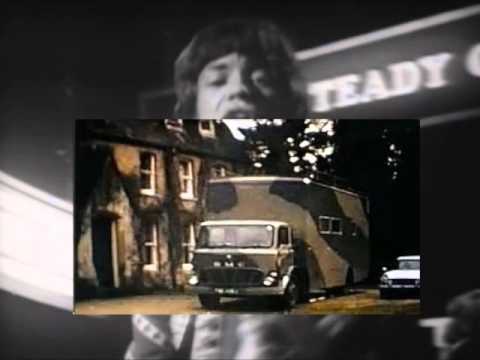
Image result for the rolling stone mobile studio images

Mobile recording studios have a longer history than you might think. As early as the 1920s, record companies in both the U.K. and the U.S. were experimenting with location recording, albeit with incredibly primitive equipment. This was the pre-magnetic tape era, after all.

In the U.K., the pioneer was EMI, closely followed by its chief rival, Decca. The purpose, for the most part, was to record live concerts of classical music, and while the equipment changed out of recognition during the following 30 years or so, that purpose remained: to capture live performances.

By the time rock music arrived around the mid ’60s, a new generation of mobile studios appeared that would capture some of the most important recordings of the era. And curiously, most of them were not recordings of live gigs. That was because the mobile studio soon became used as much for the freedom it offered artists to record in domestic locations as for capturing their stage performances.

Digital technology has helped bring about the demise of the mobile truck since the turn of the millennium. Now, artists can of course record on devices as small as an iPad (to name but one famous example, Damon Albarn recorded the Gorillaz album The Fall in just that way). Even if you don’t want to be quite as stripped-down as Albarn, a laptop armed with plugins and a small digital mixer can offer almost as much as a fully fledged mobile studio at far less cost.

However, before the mobile trucks rumbled off into the distance, the freedom they provided in that short period produced some remarkable recordings. Here are six of them.

The Who, Live at Leeds (1970)

This album, still regarded by many critics as the finest live rock LP ever, was originally designed to be Live at Hull and Leeds. It was recorded by the Pye Records mobile on eight-track analogue tape machines installed beneath the auditorium in a cloakroom. At this stage, mobile trucks were used simply to carry recording equipment to a gig. That equipment then had to be removed, assembled, and used in whatever space could be found.

With nothing more than split cables from the vocal, speaker, and drum microphones, the two recordings were plagued with technical problems. Some of the bass track from Hull was lost, and the Leeds concert suffered from crackles, which have caused controversy ever since. Years later, when the crackles were erased using digital wizardry, some fans objected that they removed the authenticity of the recordings.

Originally released as a single six-track vinyl LP, Live At Leeds has since appeared in many incarnations, some with and some without the infamous crackles. The Hull gig recorded the night before (February 13th) has been released, too, with John Entwistle’s missing bass parts replaced with carefully synced recordings from Leeds. There are those who claim that Live At Hull 1970 is even better than the raw and powerful Live At Leeds. They can both be heard on the 40th Anniversary collectors’ edition.

Led Zeppelin, IV (1971)

You could toss a coin over whether Led Zeppelin’s III or IV was the more significant album, but it doesn’t really matter for our purposes—both made very extensive use of the Rolling Stones Mobile (RSM) and were released before two other other landmark RSM recordings, the Stones’ Exile On Main St. and Deep Purple’s Machine Head.

A former 18th-century poorhouse, Headley Grange in Hampshire was the chosen venue, as it had been for much of Zeppelin III. The majestic sound of John Bonham’s drums—sampled a thousand times and still used today—was created in wood-paneled Headley Grange with a pair of distant Neumann condenser mics. It has probably never been equalled.

The Rolling Stones, Exile On Main St. (1972)

Just as The Who’s Live At Leeds is regarded by some as their finest hour, so the Stones’ Exile On Main St. stands as a testament to the band at its peak—even if a wobbly one at times.

In 1970, Mick Jagger bought Stargroves, a country house in Hampshire. The band’s pianist and tour manager, Ian Stewart, suggested that in order to make full use of it, they needed their own mobile studio. This saw the birth of the most famous truck of them all, the Rolling Stones Mobile. It is one of the few things you can use the word legendary about without risk of exaggeration.

Unlike earlier trucks, the Stones Mobile had a control room inside the vehicle, so it really could go anywhere and do almost anything. The band used it to record most of the Sticky Fingers album, and a year later, beset with taxation problems, they decamped to the Villa Nellcôte in the South of France, with the RSM following.

The sessions that followed have become the stuff of rock legend and lore. Beside the technical problems imposed by an unsuitable recording environment—a cramped, damp basement—and compounded by an erratic power supply, the band’s “personal issues” should have made the resulting album a shambles. Indeed, engineer Andy Johns described them as “the worst band in the world” for much of the time. But somehow, in true Stones fashion, what emerged from the chaos was one of rock’s most memorable and charismatic albums. It just reeks of authenticity thanks, at least in part, to the location and the way in which most of it was recorded.

Deep Purple, Machine Head 1972

If Exile On Main St. really put the Stones Mobile on the map, it was Deep Purple who immortalized it in “Smoke On The Water.” The song recalls the night in 1971 when the Casino in Montreux, Switzerland burned down following a gig by Frank Zappa and The Mothers Of Invention.

The plan had been to record the next Deep Purple album in the Casino, but the fire put paid to that. A couple of other venues in the town were hastily found for the recording sessions, which produced, among others, “Smoke On The Water,” the lyrics of which refer to the RSM as “the Rolling truck Stones thing.”

The Who, Quadrophenia 1973

On the face of it, this seems an unlikely album to have emerged from a mobile studio, and in fact it was made at an unlikely location, too. Ronnie Lane’s Mobile (known as the LMS) was parked in Battersea, south-west London for much of the recording of Quadrophenia, in an urban jungle outside a still uncompleted Ramport Studios, which The Who were in the process of building.

Ronnie Lane, the ex-Faces bass player, had chosen an American Airstream trailer for his mobile studio, and Bad Company, Led Zeppelin (notably on Physical Graffiti), Rick Wakeman, and Eric Clapton were just some of the musicians who would make excellent use of it. Of all the British golden-era mobiles, Lane’s was one of the most successful.

Radiohead, OK Computer 1997

There were many impressive albums recorded using mobile studios between The Who’s Live At Leeds in 1970 and Radiohead’s OK Computer in 1997, and there were more mobiles than we have space to include here, among them Jethro Tull’s Maison Rouge, Virgin’s Manor Mobile, and Mickie Most’s RAK.

By the late ’90s, however, the era of the truck was coming to an end—and OK Computer provides fitting mood music. Relatively inexpensive and highly portable digital equipment and computers meant that the need for a large studio on wheels was passing.

In fact, OK Computer wasn’t recorded using a truck at all, but it epitomizes why mobile trucks had been so popular: location recording enabled a band to work at their own pace, in their own way, in an environment completely unlike an essentially sterile fixed-site studio.

For this album, which Rolling Stone described as “the last masterpiece of the alt-rock movement,” Radiohead were given a reputed £100,000 by their record company. Their producer Nigel Goodrich used it to buy recording equipment for use in St Catherine’s Court, a spectacular manor house near Bath in Somerset, owned at the time by actress Jane Seymour. In the same way that the natural acoustics of Headley Grange helped Led Zeppelin achieve astonishing looseness, vitality, and depth, so St Catherine’s Court added its brooding presence to a haunted, dark, and troubled album.

One thing binds together the albums featured here: none of them could have been made in a traditional fixed-location recording studio. In the case of recordings of gigs, it’s obvious why that should be. But a common quality shared by the albums featured here is the live ambience of an environment that wasn’t carefully designed to sound neutral. In the age of Pro Tools sameness, that is definitely something to be cherished.

There is another angle, too. Musicians often complain that “clocking in” to record every day is too much like going to work, especially in a traditional city-center studio. In a residential location, they can not only experiment with different sounds but also socialize and make music in a freer and more creative way. You may not be able to quantify that.

Image may contain: text and indoor

Matt Maltese’s piano-centric, self-described “Brexit pop” sound is marked by his baritone croon, songs of love and heartache, post-modern gripes and velvet-cloaked metaphors of apocalypse. His lounge-style piano, bouncy guitar licks and cheery brass are tried and true—a solid, classic counterpunch to whip-smart lyrics firmly rooted in the present. His latest single “Less and Less” is one of the most somber, understated numbers on his recent album Bad Contestant, as it chronicles a couple’s gradual growing apart with smooth vocals, elegant keys and chorus-like backing vocals. Maltese comes to the conclusion that even fond, nostalgic memories brought upon by familiar scenes aren’t enough to heal a relationship meant to end. The video was directed by Maltese’s longtime collaborator Sam Hiscox, who also created the visuals for another album track, “As The World Caves In.” This new video tells the story of two people who live under the same roof, but are dealing with inverse feelings of heartbreak and closure

LAURA GIBSON – ” Goners “

Posted: November 25, 2018 in CLASSIC ALBUMS, MUSIC

“Goners”, the fifth album from Laura Gibson. It is her best record, and also her strangest.
There are hauntings and transformation, odd birds and harbingers. Women become wolves, men metamorphose into machines, ghost-children wave in the rearview mirror, a scar becomes a vessel for memory.
Her lyrics are populated with sharp objects: a needle, a thistle, a sickle, a scythe, claws and animal teeth.
Her language has never felt more alive, her storytelling sharper, her imagination looser. It is a record for thinkers and feelers, for the fierce and also the weary, and despite its darkness, she has succeeded in making a work of radical hope.https://www.youtube.com/watch?v=YT2U87At62c

Gibson co-produced Goners with engineer and friend John Askew, with whom she’d also collaborated on her 2016 album, Empire Builder, in his Portland, OR, studio. She ditched her guitar on half the songs, and instead played piano and Wurlitzer. Gibson enlisted a number of long time collaborators, including guitarist/synth extraordinaire Dave Depper (Death Cab for Cutie), drummer and found-sound percussionist Dan Hunt (Neko Case), and stand-up bassist Nate Query (The Decemberists); then built horn and woodwind arrangements with Kelly Pratt (St. Vincent and David Byrne, Father John Misty) and imaginative string parts with Kyleen King (Stephen Malkmus, Case/Lang/Veirs).

http://

Released October 26, 2018

Way back in July last year, Cat Power announced she had her tenth album “ready to go“. Now almost a year later, the follow up to her 2012 album Sun has been announced. Wanderer  released on October 5th via Domino.

The trailer for the new album, accompanied by new music. From what we’ve heard so far, it’s a step back into her folk rock roots. A big change after Sun which featured a lot of electronic elements.

Produced entirely by Chan Marshall AKA Cat Power herself, the album features guest vocals from Lana Del Rey whom Marshall was recently supporting on tour. The new record tells the story of “my journey so far” over 11 tracks says Marshall. “The course my life has taken in this journey – going from town to town, with my guitar, telling my tale; with reverence to the people who did this generations before me. Folk singers, blues singers, and everything in between. They were all wanderers, and I am lucky to be among them.”

In 2006, Chan Marshall was visiting a shop in Memphis when she happened upon an instrument—not necessarily one that most readers of this magazine would find covetable—that spoke to her. It was an abused, no-name nylon-string that cost only $40. Marshall, who performs under the stage name Cat Power (borrowed from a trucker’s hat decorated with the phrase Cat Diesel Power), has since relied on the instrument as her songwriting muse, and she used its subdued voice to excellent effect on her latest album, Wanderer, her first in six years.

At 46, Marshall, whose first name is pronounced Shawn, has long been an indie-rock icon. After a childhood spent in Georgia, North Carolina, and Tennessee, where she absorbed the region’s Baptist, blues, and country sounds, she moved to New York City in 1992 and was exposed to an entirely different scene of free jazz and improvisation. Her earliest shows in the city were semi-improvised, but beginning with her first full-length album, 1995’s Dear Sir—which she recorded with Tim Foljahn (Two Dollar Guitar) and Steve Shelley (Sonic Youth)—she focused on her songcraft.

On the strength of her earliest efforts, Marshall was signed to Matador Records, a premier indie-rock label. Over the course of seven albums for Matador—from 1996’s What Would the Community Think to 2012’s Sun—she laid the groundwork for contemporary independent singers like Phoebe Bridgers and Angel Olsen.

With songs like “The Greatest,” “Good Woman,” and “American Flag,” Marshall has created a body of work that is both strong and fragile—music that, in contrast to much indie rock, draws frequently from blues, country, and gospel.

Marshall’s guitar work—on the acoustic or her customary Danelectro or Silvertone—has always been a study in understatement. On the electric, she plays chiming, reverb-drenched parts, with rolling arpeggios and the occasional off-kilter harmony that perfectly complement her soulful, whiskey-toned vocals.

She was once known for sometimes-erratic performances, owing to anxieties and struggles with substance abuse, but in recent years she has made some transformations. Marshall recently cut ties with Matador, due to mutual creative differences. In interviews, Marshall’s explained that when she presented her latest album to the label, an executive played her an Adele recording to demonstrate how he thought it should sound. That obviously did not go over well.

At the same time, Marshall has stepped into the role of single mother. Her toddler son appears on the cover of Wanderer, next to the neck of her Danelectro. Motherhood has put her in a protective and nurturing place, which is apparent in the album’s generally quiet and cozy vibe, with guitar- and piano-based songs that are produced much more sparsely than those on Sun, with its shimmering electronic layers.

The record will be supported by an international tour, For many years Cat Power had a reputation for disappointing live performances and cancelling tours. However in recent years, her performances have become more consistent.

Chan Marshall last visited to perform her album Moon Pix in full. The one off show was in celebration of the album’s 20th anniversary. Moon Pixwas recorded in Melbourne and is often referred to as her breakthrough album.

‘Wanderer’ is the new album from Cat Power, released 5th October on Domino Record Co.

With the passage of time, it’s becoming increasingly clear that Lone Justice were a great band who did their finest work in the recording studio quite some time before they put out their debut album. While the two LPs Lone Justice released in their lifetime — 1985’s Lone Justice and 1986’s Shelter — were both burdened with misguided production choices and too many guest musicians at the behest of their label, Geffen Records, the 2014 release This Is Lone Justice: The Vaught Tapes, from 1983 captured them live to two-track in a no-frills demo session. The Vaught Tapes documented the interplay between Maria McKee’s stellar vocals and the band’s twangy but powerful take on rock & roll with a energetic simplicity their albums did not, and four years later, Omnivore Recordings have brought out The Western Tapes, 1983, a six-song EP that gives Lone Justice’s first demo tape a public airing for the first time.

By the time guitarist Ryan Hedgecock and singing force of nature Maria McKee got together in 1982, that scene’s scope had already expanded beyond hardcore and post-punk into blues rock, rockabilly, folk, and other realms of Americana courtesy of the Blasters, X, the Gun Club, and others. In their day, Lone Justice shared the goofy genre label “cowpunk” with similarly country-besotted rock bands like Rank and File, Jason and the Scorchers, and the Long Ryders.

McKee was an 18-year-old with a giant voice and a charismatic presence that intuitively plays to the crowd even when the crowd was just Vaught and her bandmates. It’s no coincidence that Dolly Parton (who contributes an endorsement to the liner notes) was an early fan; in addition to a vocal similarity, neither can mask that personal effervescence — a joy in performing — no matter how sad the song.

There’s no missing that Lone Justice could play. Hedgecock, in particular, comes off better here than on the self-titled album, laying down intricate country-rock licks that producer Jimmy Iovine would largely bury under additional guitars and layers of organ (from Heartbreaker-on-loan Benmont Tench).

Cut in May 1983, this EP features the group’s first lineup, with McKee and guitarist/songwriter Ryan Hedgecock joined by bassist Dave Harringtonand drummer Don Willens, and if this rhythm section boasts a bit less snap than the classic lineup with Marvin Etzioni (who produced this session) and Don Heffington, this band still has an energy and freshness that are absolutely winning. Etzioni was also a more savvy producer than Lone Justice usually had behind the controls; the sound is straightforward but full-bodied, he brought out solid performances from everyone on board, and the decision to bring in David Mansfield to add fiddle and pedal steel on some of the tunes was inspired. And Maria McKee’s voice is still a thing of wonder all these years later, a pure country instrument that still has the force to sing thoroughly convincing rock & roll. One can’t help wish some smart indie label had cut a low-budget album on this band in the manner of the Blasters’ outstanding self-titled album for Slash that would have documented their heyday before Geffen got ahold of them. But between The Western Tapes and This Is Lone Justice, we now have some reasonable approximation of it, and this is great fun from a band that had a lot to offer — more than their best-known work might suggest.

thanks to allmusic for the words

Somnium by Jacco Gardner on fulltimehobby.co.uk

Described by its architect as “a voyage into the deepest corners of your mind”, Somnium is a 43 minute journey into the unknown, conjured in Jacco’s new Lisbon studio utilising his collection of analogue synthesisers. Where as on previous albums Jacco found inspiration in the baroque side of psychedelia, Somnium is more in line with the progressive studio adventures of European electronic experimentalists Cluster, Bo Hansson, Vangelis, Tangerine Dream, Eno and Mike Oldfield (the album was in fact mastered by Simon Heyworth whose production credits include the latter three). And whilst it is an album which takes inspiration from experimental music’s past, it also exists as a futuristic pursuit. “The past has always felt very much alive to me and so full of mystery that I have to conclude that the present and the future are probably no different,”

Jacco explains.

As for the album being completely instrumental, this is linked to the idea of voyaging inside one’s own mind in a more complete way. “I deliberately removed my voice from the experience as it made it more difficult for me to achieve the intended state of mind. I think it makes the journey more interesting, more deep, and more intimate. I didn’t feel the need to show my face while one drifts away into thought. Somnium is a visionary experience. The album is more than just a trip, it is about contact with a deeper – hidden – reality.”

“if Radiohead had the balls to release this, we’d be talking about “Somnium” as a classic” – Loud & Quiet

Jacco Gardner’s third album “Somnium” is out now

Lionsesh

The Lioness is the first Jason Molina project to fully turn away from the battlefield folk and deconstructed Americana of earlier Songs: Ohia recordings. At the dawn of the 21st century, the album felt modern. It aligned Molina with a new set of peers – Low, Gastr del Sol, Red House Painters and, most importantly, the influential Scottish band Arab Strap, whose producer and members were crucial in the creation of The Lioness. The avant-garde tones and arrangements of Arab Strap are absorbed here into Molina’s songwriting to create what would become, for many acolytes, the archetypal Songs: Ohia sound. Love and Work: The Lioness Sessions, the box set reissue, will serve as the seminal log of the era, complete with lost songs, photos, drawings, and essays from those who knew Molina best.

We know Molina was diligent in both love and work. He treated songcraft like a job at the mill, and his approach to romance was not so different. We know that when he fell in love with his wife, he was dutiful in his adoration. There were strings of love letters and poetic gesture. Included in this edition are replicated examples of this relentless love – an envelope with a letter from Molina, a photograph of Molina and his to-be wife, a postcard, a Two of Hearts playing card, and a personal check for one million kisses. Some of these items were gifts he would send to his new love from the road; others, like the 2 of Hearts, were totems he’d carry with him around this time as a symbol for his burgeoning love.

And so, the head-over-heels album that is The Lioness has its workman counterpart. Nearly another album’s worth of material was recorded in Scotland during the album sessions. While similar in tone and structure, the songs seem to deal in the grit and dirt of being. These are songs for aching muscles getting soothed in the third-shift pub. But they’re also examples of Molina’s diligence as he constructs what would be the essential elements of The Lioness. In addition to these outtakes, we also have a 4-track session made weeks earlier in London with friend James Tugwell. Comprised of primarily guitar, hand drums and voice, these songs are raw experiments that mostly serve to illustrate Molina’s well of words and ideas. But then, there is the devastating Sacred Harp hymn Wondrous Love. While he may have had his new love in mind, one can’t help but think of Molina’s legacy as he softly warbles “Into eternity I will sing / Into eternity I will sing.” You don’t have to try too hard to mythologize Molina. He did all the work for you.

Image result for cartoon record player

lots of new releases and reissues out tomorrow as well, the major titles including  –

New Ed Harcourt album ‘Beyond The End’.
A limited Morrissey 7″ – ‘Back On The Chain Gang’
A very limited Type O Negative coloured vinyl reissue of ‘Bloody Kisses’.
Three more Bauhaus reissues – The Bela Session, ‘The Sky’s Gone Out’ and ‘Press Eject…’.
Vol.2 of the Marc Bolan ‘Home Demos’ is finally out after some delay.
A very lovely looking Chic box set. along with the vinyl version Boxed Set of the Tom Petty American Treasure

And in other news…….
King Gizzard & The Flying Wizard 
coloured vinyl reissues are flying out – have you got your copies yet?
Mumford & Sons 
latest album is also selling fast on coloured vinyl.
the excellent new album from Marianne Faithfull.
Post Malone – ‘Beerbongs and Bentleys’.   

0.jpg

Songs: Ohia ‘Love & Work: The Lioness Sessions’ ltd vinyl box set

Songs: Ohia – ‘Love & Work: The Lioness Sessions’ limited translucent purple coloured double vinyl LP.

The release also includes a 16-page booklet with photos and meditations by Jason’s family and collaborators, as well as replications of ephemera from Jason’s guitar case & life from the time (a handwritten love letter, a postcard, a 2 of Hearts playing card, and more)

Hc bambi lp digital tg web

Hippo Campus – Bambi

Hippo Campus release their second album, Bambi through Transgressive Records. On their sophomore album Bambi, the St. Paul, Minnesota-bred band navigate that upheaval with deliberate self-reflection. The result is a selection of songs that drift into much darker terrain, but unfold with a frenetic yet fragile beauty that makes even the most painful moments feel glorious. Partly recorded at Steve Albini’s Electrical Audio in Chicago, Bambi finds Hippo Campus working again with producer BJ Burton (Bon Iver, Low, Francis and the Lights), who handled production on their 2017 full-length debut Landmark. And in sculpting Bambi’s distinctly inventive arrangements, Hippo Campus significantly expanded their use of drum machines and synth. Throughout Bambi, Hippo Campus match their relentless self-examination with a joyfully adventurous sonic approach, ultimately transforming the emotional experience of the problems they’re exploring.

unnamed.png

Breeders ‘Safari EP’ ltd 12″ reissue

Being released this November as part of Record Store Day’s sister Black Friday event is a faithful repress of the 12” version of The Breeders’ Safari EP, complete with Shinro Ohtake’s 1983 charcoal drawing Nairobi VIII adorning its cover. Originally released in April 1992, sandwiched between their first two albums (Pod and Last Splash), The Breeders’ Safari EP came at a time when Kim’s Pixies commitments were winding down and her new band were on the cusp of releasing a platinum-selling album.

Their first record to feature Kim Deal’s twin Kelley, the EP was recorded in two studios with the bulk coming from a session in New York, which provided an early version of Do You Love Me Now?, Don’t Call Home and a cover of The Who’s So Sad About Us. The title track, Safari, was recorded separately in London by Kim, Josephine Wiggs and drummer Jon Mattock (Spacemen 3 / Spiritualized).

181011_stooges_rsd_rarepower.jpg

Iggy & The Stooges – ‘Rare Power’

The untamed energy of Iggy and The Stooges comes to vinyl for Record Store Day Black Friday on Rare Power, a collection of rare tracks from the sessions that produced their landmark 1973 album Raw Power. Eight of these nine outtakes and alternate mixes are available on vinyl for the first time, and composer Josh Mobley’s remix of Gimme Danger (heard in the best selling video game Watch Dogs) is commercially available for the first time ever.

The Byrds – Sweetheart Of The Rodeo (4 X 12″ Vinyl LP)

By the time Sweetheart Of The Rodeo was released in 1968, The Byrds had already changed the sound of rock music twice; from jangling folk-rock to experimental acid-rock, they constantly sought to push the boundaries of what rock music could be. The 1967 departure of David Crosby left a creative void filled quickly by country music-loving Gram Parsons, whose addition led Roger McGuinn, Chris Hillman and company to record an album comprised mostly of authentic country material in Nashville, with the aid of local session aces (including future Byrd Clarence White). For the first time on vinyl—and on the heels of a 50th anniversary tour of the album by original members McGuinn and Hillman—this Legacy Edition of Sweetheart Of The Rodeo showcases this country-rock masterpiece alongside 28 bonus tracks, including demos, outtakes, rehearsal versions and tracks by Parsons’ pre-Byrds outfit, The International Submarine Band.

91g01oveqol. sy355

Chris Robinson Brotherhood – Betty’s Midwestern Magic Blends

The Chris Robinson Brotherhood is indisputably one of the hardest working bands in rock ‘n’ roll. 2018 marks the fourth year in a row that they’ll play over 200 shows across the U.S. and Europe. Through that prolific touring schedule, the band has emerged a razor sharp, riveting live unit. Each evening The CRB plays two sets of music with a dynamic, ever-changing setlist. Presenting original material stretching across six studio albums, plus a repertoire of covers that runs from Slim Harpo to Bob Dylan and beyond, it’s only fittng that the band would document this output. They’ve done exactly that through a series of live recordings dubbed, ‘Betty’s Blends’ taking its moniker from legendary Grateful Dead archivist and recording engineer Betty Cantor-Jackson who is called upon to capture The CRB’s performances in multi-dimensional, audio-verite. ‘Betty’s Midwestern Magik Blends’ is the fourth volume from the acclaimed series, gathering highlights from three shows in Milwaukee, Madison and Chicago in October 2016. Available as a vinyl exclusive, 3-LP set with only 3500 copies released, the collection finds The CRB in peak form delivering highlights like “New Cannonball Rag,” “Forever As The Moon” and “Shadow Cosmos,” as well as adapting two from The Rolling Stones: “Down Home Girl” and “Let It Bleed” and the seldom played fan favorite, Steppenwolf’s “Magic Carpet Ride.”

81ybxn599xl. sy355

Violent Femmes – Permanent Record: The Very Best Of Violent Femmes

Permanent Record: The Very Best of Violent Femmes provides a comprehensive overview of The Violent Femmes historic recording career – beginning with tracks from their legendary debut up until their 2000 release, Freak Magnet. The compilation includes the original studio recordings for hit singles such as Blister In The Sun, American Music, Gone Daddy Gone, amongst others, and is a must have for both new listeners and devoted fans alike.

A1vthrny8hl 696x1051

Jeff Tweedy – Let’s Go (So We Can Get Back)

Through his pioneering work in the legendary country-punk band, Uncle Tupelo, to his enduring legacy as the creative force behind the unclassifiable sound of Wilco, Jeff Tweedy has weaved his way between the underground and the mainstream – and back again.

Funny, disarming, and deeply honest, his memoir casts light on his unique creative process and the stories that shaped his life and career, from a childhood spent in Illinois to the release of No Depression in the early 90s – which set the blueprint for alt-country – and later working with Mavis Staples and, posthumously, Woody Guthrie.

Screen shot 2018 10 01 at 09.54.42

The Go Betweens – Right Here

Grant McLennan and Robert Forster, the founding members of seminal Brisbane band The Go-Betweens had been close friends and collaborators since their late teens some thirty years before. As it unfolds, we discover how relationships – both creative and romantic – are continually tested, challenged, remoulded and, in some cases, destroyed. The film truthfully exposes all the highs, lows, joy, pain, sorrow and beauty of being in a cult band and of trying to survive the harsh, brutal realities of an at times exploitative music industry. Unflinching, insightful and at times painfully honest, the film tells the story of The Go-Betweens from the inside out, from the people who lived it and from those whose lives were transformed by it.

This Week
Art Brut – ‘WHAM! BANG! POW! LETS ROCK OUT!’ LP
Bauhaus – ‘The Bela Session’ LP reissue
Bauhaus – ‘Press Eject & Give Me The Tape’ ltd white vinyl LP reissue
Bauhaus – ‘The Sky’s Gone Out’ ltd violet vinyl LP reissue
Marc Bolan – ‘Tramp King Of The City: Home Demos Vol. 2’ LP
Bouquet Of Dead Crows – ‘Motus Octo’ splatter vinyl LP
Breeders – ‘Safari EP’ limited 12″ reissue
Mansur Brown – ‘Shiroi’ LP
Lindsey Buckingham – ‘Solo Anthology’ 6LP Box set
Calexico – ‘The Black Light’ ltd clear vinyl 2LP reissue
The Chic Organisation – ‘1977 – 1979’ 5LP + 12″ vinyl box set
Ry Cooder – ‘Mambo Sinuendo’ 2LP
Deep Purple – ‘In Rock’ purple vinyl LP reissue
Deep Purple – ‘Fireball’ purple vinyl LP reissue
Ed Harcourt
 – ‘Beyond The End’ LP
Hippo Campus – ‘Bambi’ ltd coloured vinyl LP
Hozier – ‘Nina Cried Power’ ltd 12″ EP
Durad Jones & The Indications – ‘Live Vol. 1’ blue vinyl LP
Laibach – ‘The Sound Of Music’ gold vinyl LP reissue
Levellers – ‘Levellers’ ltd orange vinyl 2LP reissue
Amy Macdonald – ‘Woman Of The World: 2007-2018’ 2LP
Morrissey – ‘Back On The Chain Gang’ limited 7″
OST – ‘Dredd’ ltd red vinyl LP
OST – ‘End Of Days’ 2LP

Tom Petty – ‘An American Treasure’ 6LP Box Set
Planet B – ‘Planet B’ coloured vinyl LP
Irmin Schmidt – ‘5 Klavierstucke’ LP reissue
Songs: Ohia – ‘Love & Work: The Lioness Sessions’ ltd coloured vinyl box set
Mikael Tariverdiev – ‘Sevnteen Moments Of Spring’ LP
Transmaniacon – ‘The Strange World Of Suzie Pellet’ limited colour vinyl LP

Type O Negative – ‘Bloody Kisses’ ltd silver vinyl 2LP
Vessel – ‘Queen Of Golden Dogs’ LP