Archive for the ‘CLASSIC ALBUMS’ Category

Chadvangaalen friendlyaliens cover 3000x3000

How’s about a shiny new Chad Vangaalen tune for yr ears? “Friendly Aliens / Monopoly Arp” just landed in all the digital music listening places:

What’s the story behind it? According to Chad, “I wrote this song to remind myself that I need be easier on people and ideas in general. To be kind and patient.”

‘Friendly Aliens / Monopoly Arp’ (Release date: November 27th, 2018)

The Citradels are self-releasing their ninth album “Fuck The Hits: Vol. 1”, changing up their recording process and musical style once again. The culmination of roughly 18 months work, the album intermingles 60s pop harmony and structures with synthesis and dense soundscapes.

FTH v1 is a collection of love songs for people who can’t write love songs. Lyrically, it is as simplistic or dark as the listener cares to read into. With a nod to conventional mid 60s pop structure, these songs clock in at around two or three minutes. Lush arrangements and traditional instrumentation is augmented with otherworldly, inorganic sounds and samples.

http://

“Fuck The Hits: Vol. 1” is a sonically diverse journey that will reward repeated listens.

releases November 28th, 2018

Image may contain: 3 people

The sophomore album from Connecticut fuzz-rockers Stove “s’ Favorite Friend” , finds them seeking refuge in art: The album was written and recorded after songwriter Steve Hartlett and drummer/vocalist Jordyn Blakeley had both recently lost loved ones, and the resulting songs reckon with “grief and the sometimes harsh realities of time passing,” per a press release. That search for catharsis plays out in “Stiff Bones,” on which Hartlett’s rueful yowls, Blakeley’s powerful drums and an onslaught of washed-out guitars push through upheaval to find peace. “When you try to play it off / as if your heart is truly soft / You gave away / and slave away / Alone is how you want to be / so lonely’s what you’ll feel with me / and everyone / not anyone,” Hartlett and Blakeley sing as one.

Band Members
Steve Hartlett, Mike Hammond, Jordyn Blakely, Alex Molini

“Stiff Bones” by Stove from their upcoming LP, ‘s Favorite Friend, out October 31, 2018 on Exploding in Sound Records

Mimicking Birds have a sound that covers all sorts of genres, ranging from anywhere between stripped down serenades to subtle synth soundscapes. Through these elements, the Portland folk-pop quintet creates something that works for both the coffee shop next door and a movie soundtrack.

In 2014, Mimicking Birds released debut album Eons and proved to the music world that it was an interesting and formidable contender to wrestle with. Through simple strums of a guitar, eloquently woven with singer Nate Lacy’s velvety rasp, the band showed a phenomenal ability to form a beautifully crafted story, both lyrically and sonically. Lacy’s vocals also created an angelic, yet haunting atmosphere comparable to the likes of Bon Iver and James Vincent McMorrow.

http://

Band Members
Nate Lacy, Aaron Hanson, Adam Trachsel

Released November 22nd, 2018

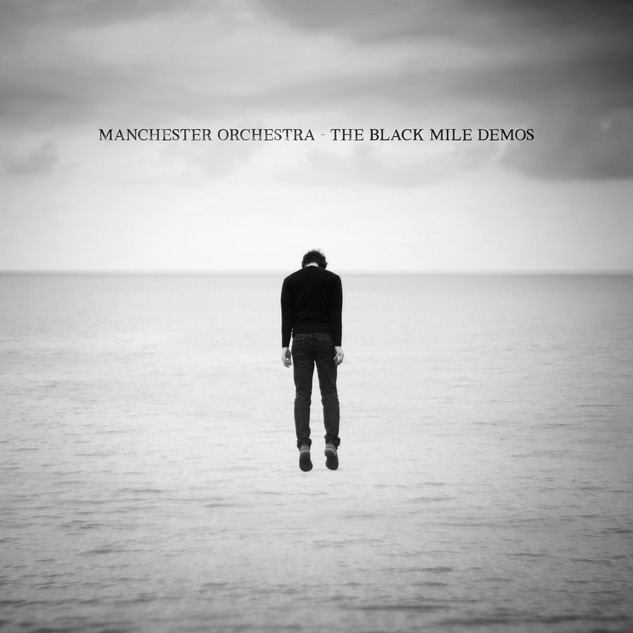
ManchesterOrchestraBlackMileDemosCOVER.jpg

Last year, beloved Atlanta alt-rockers Manchester Orchestra explored their softer side on an excellent sixth studio album, A Black Mile To The Surface. For Black Friday Record Store Day, they’re releasing a vinyl with six demo versions of songs from that record. The Black Miles Demos will be shoppable in the form of a 12” LP and will feature the following songs: “I Know How To Speak,” “It’s Amazing,” “The Gold,” “No Ears,” “Each Part” and “Amplified In The Silence.” Move fast if you want one: There are only 2000 limited edition in existence!

6 track Opaque Flume Coloured Vinyl featuring the demos for Black Mile. These are the initial, rough-around-the edges recordings, done with one microphone in some distant and often strange locations before they were continued to be worked on in Asheville, NC at Echo Mountain studio

“We’re a band that loves to use heavy, crunchy guitars,” says frontman Andy Hull. “We wondered how we could limit the use of that, so that when the guitars come in they can be creative and impactful. For Swiss Army Man [a Sundance hit the boys worked on] we had to make seventy minutes of music with our hands tied behind our backs. When you’re creating all the sounds you need just from the human voice, it allows you to rethink what is possible, and determine what is really needed. We wanted to make an album in a ‘ non-Manchester’ way if there is such a thing.”

'Gallipoli'

Zach Condon, the mastermind behind Beirut, will release his fifth studio album Gallipoli on February 1st 2019,  here he shares the title track and details of a forthcoming North American and European tour.

Beirtut frontman Zach Condon said the band’s forthcoming new album, Gallipoli, came to him after rediscovering his Farfisa organ, the instrument on which he wrote much of 2006’s Gulag Orkestar and 2007’s The Flying Club Cup. While the organ stayed at his home in New York, Condon began to spend more time in Berlin, eventually moving there to live full-time, which led to an exodus through the streets of Gallipoli. It’s that combination of nostalgia and new experiences that courses through the song “Gallipoli.” Condon’s unique brand of baroque pop is alive and well, full of joy, wonder and invention in equal measure. It shuffles like the religious procession Condon and company shadowed that fateful day in its namesake city. The flugelhorn rises, the timpani rolls and, of course, the Farfisa, too, fluttering along behind the whole thing, a reminder of where the band has come from. It’s a testament to how much has changed, and how little at the same time.

The 12-track Gallipoli started life in the winter of 2016, with Condon returning to his old Farfisa organ, Condon settled in Sudestudio, a studio complex deep in rural Puglia, southern Italy. It was here that he rediscovered the old joys of music as a visceral experience which became the founding principle for Gallipoli.

Title track from Beirut’s new album, ‘Gallipoli’, out on February 1st 2019.

Available today, Gallipoli’s title track is a cathartic embrace of old and new. Condon says, “We stumbled into the medieval-fortressed island town of Gallipoli one night and followed a brass band procession fronted by priests carrying a statue of the town’s saint through the winding narrow streets behind what seemed like the entire town. The next day I wrote the song entirely in one sitting, pausing only to eat.”  A deeper dive into the origins of Gallipoli,

Gallipoli started, in my mind, when I finally had my old Farfisa organ shipped to New York from my parent’s home in Santa Fe, NM. I acquired the organ from my first job at the CCA; the local foreign film theater and gallery space. A traveling circus’ keyboard player (not a joke) had left it in the warehouse after certain keys and functions of the organ had broken down and stopped working. I spent the next three years writing every song I could possibly squeeze out of it. Most of my first record (Gulag Orkestar, 2006) and large parts of my second record (The Flying Club Cup, 2007) were written entirely on this organ as well, where it lived in my childhood bedroom not far from downtown Santa Fe. I enlisted my father’s help to get it shipped out to Brooklyn, then up to my new home at the time in a corner of Westchester on the Titicus reservoir. The house was the caretaker’s home of a mansion owned by a multi-millionaire serving 20 years for tax and money fraud and I don’t know what else.  I started writing the first songs of Gallipoli on that organ sometime in late 2016, as the winter started.

Soon songs began to take shape in quick and inspiring ways and I booked a three-week session at a fairly new start-up studio in Chelsea Manhattan, called Relic Room in the deep winter of that year. I brought in Gabe Wax, the producer of No No No, who I felt shared a similar vision sonically as I do, and who I knew was as game as I was to push every sound to its near-breaking point. With the main instruments recorded, with the help of my bandmates Nick Petree and Paul Collins on drums and bass, we proceeded to channel every note played through a series of broken amplifiers, PA systems, space echoes and tape machines, sometimes leaving a modular synth looping in the live room at volumes so loud we had to wear headphones as earmuffs while running into the room to make adjustments to the amplifiers. I wanted every creak and groan of the instruments, every detuned note, every amp buzz and technical malfunction to be left in the cracks of the songs. Even so, the Farfisa organ reappeared, where it was serviced and fixed by a friend of the studio’s over the course of a week so that it was back in working order to add into the mixes of the songs I had originally demoed on it. Ben Lanz and Kyle Reznick, the other brass players in the band, joined us towards the end for an amazing brass session. Ben helped arrange a beautiful brass rendition of a song I had written over a repeating motif on a modular eurorack (which Paul had brought to the studio and introduced me to).

Simultaneously around this time things in my personal life were shifting wildly, and I found myself traveling back and forth between New York and Berlin for longer periods of time. I would visit with my cousin Brody Condon (whom I roped into designing the record cover with me), spent time in the studios of Mouse on Mars (Jan Werner had been staying with me in Brooklyn during trips to New York), and drifted into some amazing concerts and other random events around town. New York had been feeling drained of life after all of its recent development in my mind, and I’d always had a certain personal calling to spend my time somewhere back in Europe ever since I lived in Paris back in 2008. I don’t know if it’s a coincidence that it’s the city that has appeared the most in my lyrics and song titles in the past, but Berlin had always left a deep impression on me one way or the other since the first time I came here 14 or 15 years ago.

When spring of 2017 came I gave in to the call of the new skate park that was built in front of my house in Brooklyn the year before. I had barely spent a week at the park reacquainting myself with the board when I missed a simple trick and fell, breaking my left arm for the fourth or fifth time in my life. I had been floating the notion of a second three-week recording session in the studio in New York in the coming months, but, injured and dejected, I decided to just head back to Berlin and do a lot of nothing. A week or so upon arrival I had what could vaguely be called an epiphany during a cigarette break in Prenzlauerberg and I decided to just pack things up and stay for good.

I got lucky with some private studio space in Berlin pretty quickly and settled happily into the new swing of things. I wrote for another half year, now often on a borrowed Korg Trident and other synthesizers from the owners of Kaiku studios on Stralauer Allee. By the summer of 2017 I was convinced I had enough material for another extended recording session. With the utter shit-show of American politics and the media frenzy surrounding it chattering on, and the prohibitively expensive prices of recording and staying back in New York city, I thought it best if Gabe and the others came out to Europe to join me for the final session. Paul had spent some months during his honeymoon out in Rome getting to know the city and burrowing in to parts of the Italian music scene, where he caught wind of a large studio in a rural part of Puglia, in the boot heel of Italy. We scoped it out and it seemed to be the right amount of isolated, well-equipped and not overbearingly fussy and we decided to go.

So me, Paul, Gabe and Nick met up in the first days of October 2017 in Rome, and hopped on a train to Lecce, Puglia, where we were picked up by Stefano Mancas, the owner of Sudestudio and driven to the studio complex out in the country. Ben and Kyle had scheduling complications due to touring with other bands and projects, so I became determined to dig my heels back into the way I used to do brass on my own and see what could happen.

The next month was a flurry of 12 to 16 hour days in the studio, with day trips around the coastline and a steady diet of pizza, pasta and tear-inducing ghost peppers we bought from the chili-man in Lecce. We stumbled into a medieval-fortressed island town of Gallipoli one night and followed a brass band procession fronted by priests carrying a statue of the town’s saint through the winding narrow streets behind what seemed like the entire town, before returning late to Sudestudio. The next day I wrote the song I ended up calling ‘Gallipoli’ entirely in one sitting, pausing only to eat. I eventually dragged Nick and Paul in to add some percussion and bass around midnight after a trance-like ten hours of writing and playing. I was quite pleased with the result. It felt to me like a cathartic mix of all the old and new records and seemed to return me to the old joys of music as a visceral experience. This seemed to be the guiding logic behind much of the album, of which I only realized fully at that point. We spent the rest of the month in the studio in Italy, eventually finishing the bulk of the album by November.

I returned to Berlin, where I started to put unfinished vocal parts to tape in my own studio whenever I got the chance.  At some point I realized Gallipoli was done and flew Gabe Wax into Berlin for a final mixing session at Vox Ton studios, run by Francesco Donadello, a talented engineer and musician working deeply in analog equipment and experiments, and funnily enough, a good friend of Stefano Mancas from Sudestudio. After the Vox Ton session I mastered the record with Francesco at Calyx, not far from my own apartment in Berlin.


Zachary Condon
Berlin, Aug 2018

No automatic alt text available.

Indie-folk guitarist William Tyler has released the first single from his forthcoming LP “Fail Safe.” from “Goes West” is Tyler’s first new album since 2016’s Modern Country and is scheduled for release on January. 2th5, 2019. The intricately woven, guitar-based instrumental feels like a journey, with his acoustic as star of the show. The strings layer, growing through the track’s end, giving it a sense of restlessness and excitement—of choosing not to stay stagnant but also embracing the change. Whatever downsides moving cross-country to sunny California may have, the impact on Tyler’s music certainly isn’t one. In a statement about the album, M.C. Taylor (of Hiss Golden Messenger) described the “emotional clarity” of Tyler’s forthcoming album. “It offered up a model for what I wanted my head to feel like,” said Taylor. “Goes West marks a sort of narrowing of focus for William’s music; it sounds as though he found a way to point himself directly towards the rich and bittersweet emotional center of his music without being distracted by side trips.

From the album Goes West, out January 25th, 2019 on Merge Records

Image may contain: 1 person, smiling, sky, ocean, outdoor, close-up and water

“People are complicated, and I am no exception!” This was the crux of multi-instrumentalist Haley McCallum’s statement in regards to her latest album, Pleasureland—an expectation-bucking, all-instrumental release she felt moved to do after the success of 2016’s Impossible Dream. A composer, producer, writer, guitarist, keyboard player, pianist, teacher, and mother, McCallum—formerly known to the music world as Haley Bonar decided to shine a light on other aspects of her artistry, leaving the power-pop and barbed, lyrical observations she has become known for, behind. Stark, melodic, layered, and emotion-filled, Pleasureland feels like a step-out of time—a meditation—a moment taken for oneself to reflect.

As you listen to the inherent beauty of her piano-based compositions, your own thoughts and interior world feel reflected back at you as you drift from track to track. Even in Pleasureland’s most idyllic moments, a layer of subconscious unease remains—the one exception being the drop-dead gorgeous “Next Time (For C)” which is beauty and romanticism and its finest. Trickling, agile piano—reminiscent of the most poignant works of Emahoy Tsegué-Maryam Guèbrou—mixes with strings and air for the most romantic, lilting, and light moment of the album. Pleasureland is an unexpected turn for McCallum, but an interesting exercise in autonomy and expectations. The result is a slight 27 minutes that manages to contain worlds—of emotion, texture, and feeling.

When I first heard Haley’s ‘Snake Moon’, it was in a different incarnation when we worked together in a different capacity. There was an immediate cinematic quality to the song, a sombre charge into a beauty robust yet fragile. I love silent films because of the expressiveness of the actors and the scene. This song, I think, captivates the listener in the same way. I wanted to try and match that. It was also a fun thing to try and shadow puppet the snake.

The concept of Pleasureland began while driving on I-94 east of Minneapolis, MN, passing an RV Sales park with the same namesake. Hundreds of giant RVs glistened on the hot pavement, awaiting a purchaser to indulge the dream of comfort and leisure. There was something hollow about the number of enormous vehicles built for the concept of adventure and pleasure, yet the lot was devoid of human life. I began writing songs that echoed my sentiments on capitalism, consumerism, racism, feminism, and violence- the true landscape of the so-called American Dream. All is not lost- but I was personally lost for words in dark times. I found it difficult to portray anything more than a feeling without a lyrical narrative. Behind all of these concepts is the pulse of the human heart- humanity prevails and goodness exists, despite relentless news that states otherwise. I wanted to convey simultaneously the power and violence that silence creates. The deconstruction of the American Dream as we know it creates room for new growth and definition. But the destructiveness in its path is real, revealing a war within the self- silence to others suffering is no longer under the surface. I created the videos in order to present a visual interpretation for the auditory concept. Happening upon footage of a pre-9/11 America while scrolling developed unmarked tapes from my dad’s basement, I found a version of our nation before everything changed- almost like a window back in time. The television selling the narrative of consumerism as success and poverty as failure is still eerily relevant. Personal family footage was used in order to echo the aforementioned sentiments of humanity which we are born to love and conditioned to forget. These videos are intentionally low budget and DIY, using gritty VHS, iphone, and manipulated found footage, almost antagonizing the purpose of visual commodity in music. This is not to say that I am necessarily against music videos- in fact, I love and respect many directors who make a living doing this. For me, creating something raw, unstable, and lacking self-seriousness more appropriately aligned with these compositions.

Taken from HALEY’s new album ‘Pleasureland

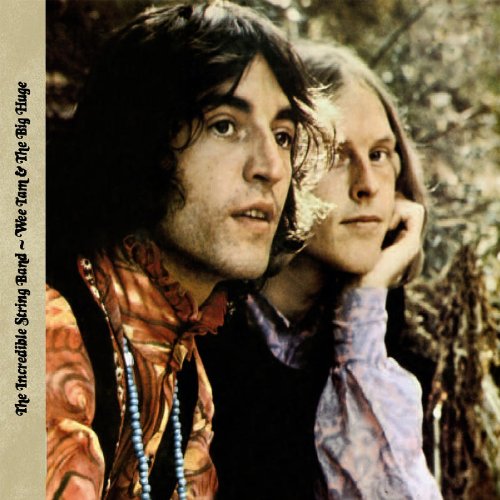
Wee Tam and the Big Huge was the fourth album by this Scottish psychedelic folk group, the Incredible String Band, It was released in Europe as both a double LP and separate single LPs in November 1968 by Elektra Records. In the US, however, the two discs were released separately as Wee Tam and The Big Huge

The album title imagined a friend of the band (Wee Tam) contemplating the vastness of the universe (the Big Huge) and the work was hallmarked by a vast array of stringed and other instruments from around the globe. The songs were written by Williamson or Heron, always individually. Both men had quite disparate styles. Heron largely embraced a warm, simplistic celebration of the natural world, while Williamson’s lyrics were full of mythical wonder, with imagery raided from paganism.

Heron’s tunes had immediacy. Williamson’s took more getting to know. Yet, their voices work so well together. Their instrumental playing is at times inspired, and the way they blend vocals and instrumentation allows two different souls to become one. As much as the playing shimmered with virtuosity, there was also a coy, amateurish side to the band,

originally released as two separate albums in 1968, Wee Tam& the Big Huge were audacious then and still monumental now. these were, in effect, the Incredible String Band’s fourth and fifth albums; their debut had appeared just two years prior. the band expanded their base with more stringed instruments from around the world, and increased the song length. more than half the songs are over five minutes in length to accommodate the band’s exploration of folkish moods and mysticism. Mike Heron’s “Log Cabin in the Sky” is a classic by any measure, and Robin Williamson’s “The Half-Remarkable Question” shows him in full command of a deeply anchored musical sensibility. the whole set feels like a continuous piece, with the songs rolling into one another with graceful ease.

Wee Tam is arguably the more accessible disc with notable highlights, The colorful and optimistic “You Get Brighter”, and the atmospheric “Air”. It’s a precursor for the brilliance of the Big Huge where Williamson’s creative touch dominates. The second disc starts with the wondrous epic “Maya”, which is sheer poetry and imagination set to vibrant music. The song ends with the sentiment that humanity creates a “troubled voyage in calm weather.” The overriding sense is that there is little wrong with the natural world and it is man who must find his place and learn to live in peace with the earth and his fellow occupiers.

Another peak is the mystic-poetic “The Iron Stone”, a slow-burn exploration, which suddenly morphs into the hippy equivalent of rap as “love paints the cart with suns for wheels” and ends in a wonderful instrumental melange with Heron’s sitar dueling with Williamson’s guitar. It’s sheer brilliance, and you feel exhausted and exhilarated afterward. Mind you, Heron manages to outdo his band mate with weirdness on this side of the album, with the impermeable “Douglas Traherne Harding”.

The real joy of Wee Tam and the Big Huge is that it takes you to places few albums have or will. It is nature’s roller coaster ride. It’s green before its time, haunting and plaintiff, spiritual and uplifting, funny and sad, baffling and informed, and it should be in everyone’s record collection, preferably on vinyl.

Originally a trio, the ISB were signed by legendary producer Jo Boyd. After seeing them at Clive’s Incredible Folk Club, a small venue in Glasgow’s famous Saucihall Street Boyd placed them on the Elektra label. The band released their seminal fourth album, Wee Tam and the Big Huge, in 1968. A double album, no less, which was far out, as was the way the lyrics appeared unconventionally on the album covers, rather than inside. The typography and how initial letters of each song lyric were illustrated in a Book of Hours style. The inside spread was occupied by two pure flower-power portraits of Williamson and Heron together.

Willamson and Heron were the epitome of experimentation, free spirit, weirdness, beauty, and truth.

Image result for The INCREDIBLE STRING BAND - " Wee Tam And The Big Huge

Image result for cartoon record player


Jason isbell and the 400 unit live from the ryman ser9989

Jason Isbell and The 400 Unit – Live From the Ryman

Americana icon Jason Isbell and his band the 400 Unit release a new live album release. The album is set in none other than the Mother Church of Country Music, the Ryman Auditorium. Live From the Ryman was recorded at Nashville’s famous auditorium, and will feature live versions of songs from Isbell’s three latest releases, Southeastern, Something More Than Free andThe Nashville Sound. Songs included on the project are Last of My Kind, Hope the High Road, Something More Than Free and the Grammy Awards-winning If We Were Vampires, among others.

Hay012cd lp lpc

The Lucid Dream – Actualisation

The Lucid Dream return with the release of their 4th album, Actualisation. Driven by fans raising £10,000 to help replace all equipment robbed after a Paris show in early 2017, a new album became the instant focus in the summer of 2017 for a rejuvenated The Lucid Dream. Actualisation is soaked in the influence of acid house, amalgamated with dub and kosmische. The album was penned over the summer of 2017 by Mark Emmerson (vocals/guitar/synths), using only the classic Roland 303/808 synths, bass and vocals as tools for writing. Inspiration for the writing was formed via continuous listening to the Chicago to UK acid house works of 1986-1992, the focus predominantly on the groove. Several months on from those writing sessions and The Lucid Dream have completed their 4th album in 5 years. A record made for the dancefloor. Recorded at Whitewood Studios, Liverpool, with Rob Whiteley, the album is produced alongside long-time collaborator Ross Halden (Ghost Town Studios, Leeds), with mastering via Dean Honer (All Seeing I/I Monster/The Moonlandingz). The confrontational techno-punk of Alone In Fear opens the album, a 9-minute attack fuelled by the frustration and anger spawned by Brexit, government and a realisation of what 2018 Britain currently is. Recent single SX1000 (the first work from the album, unveiled via 12′ vinyl in April this year) is the band’s first move into pure acid house. The acid house fusion runs throughout the record, represented furthermore by Ardency, a track already praised by live critics when aired live for the first time earlier this year as ‘even on first hearing, would’ve raised the roof of The Hacienda’. The 2-part opus of Zenith follows, commencing with a space-dub / house instrumental groove before building into a track that will go for your head as much as your hips. Only Breakdown harks back to sounds of old for the band, a little reminder of the skull-crushing impact they can make when stripped to the bare bones. No Sunlight Dub closes the album, a dark-dub that invites the classic acid-house tool (Roland 808) into the dub. The track makes a stop-off into drum ‘n’ bass / jungle along the way before rounding up in a manner suited to Lee Perry, King Tubby, Augustus Pablo and other Jamaican greats.

Titus halloween 1538401087 640x640

Titus Andronicus – Home Alone on Halloween

Limited to 1,300 for world on Orange Vinyl with Download. With Home Alone on Halloween, noted rock band Titus Andronicus celebrate the spookiest of the seasons by staring into the abyss and confronting the bone-chilling terror which lies at the haunted heart of our human experience. Bearing the justly feared catalog number MRG666, the 12-inch EP spans 31 minutes and features three tracks recorded concurrently with the group’s most recent full-length A Productive Cough, offering an autumnal tableauof dread and decay to complement its LP companion’s springtime visions of rebirth and new possibilities. The title track remixes A Productive Cough’s hardest-rocking selection, foregrounding its ominous strings and swelling organ and featuring a soulful new lead vocal from frequent captain Matt “Money” Miller, while Only a Hobo plucks an oft-forgotten gem from the dusty corners of the Bob Dylan songbook to paint a grim portrait of hopes dashed and potential squandered. Eeriest of all is A Letter Home, which, across nearly 17 minutes and more than 1,200 words, drags the listener along for a harrowing descent into the darkness and proves definitively that this ceremony is no mere monster mash.

Moshicd88

Kiran Leonard – Western Culture

Kiran Leonard is a 22 year old musician from Saddleworth, Greater Manchester. Debut album proper Bowler Hat Soup(2014) and follow-up Grapefruit (2016) were both recorded at home, with Kiran playing virtually every instrument himself. Dervaun Seraun (2017), a concept album in five movements inspired by five pieces of literature and arranged for piano, strings and voice, was an ambitious departure from his usual sound. Western Culture now sees him return to the signature sound of his first two records, yet marks a huge sonic progression thanks to the involvement of his venerable live band on record for the first time, as well as being the first to have been made in a professional studio (Old Granada Studios in central Manchester).

Image007

Novo Amor – Birthplace

Novo Amor, aka multi-instrumentalist, songwriter and producer Ali Lacey comes from deep in the Welsh mountains. Recording, mixing and producing everything in his home studio, Lacey’s emotive vocals and the sounds he uses, often formed through sonic experimentation, make for fantastically atmospheric songs that are moving and striking. On his debut album Birthplace, the sounds of his home bleed in – the chatter of a party across the street, Bonfire Night fireworks, the seagulls that gather on the building site next door. Even the sound of the late-night recording hours kept to avoid the sounds of construction make their presence felt. The songs cover many theme and thoughts – Repeat Until Death deals with friends experiencing drug addiction, Seneca is rooted in the story of a town in Nebraska that tore itself apart over a dispute over how many horses might be kept in a yard.

LP – Single LP made from recycled vinyl, housed in full-colour printed inner sleeve and full-colour printed reverse board outer sleeve. Includes download card and 8-page 12’’ tracing paper booklet, featuring gold Pantone detail to mirror the effect of the original artwork used on the cover. As using recycled vinyl every record will be unique, no two colours will be the same. All cardboard used is FSC certified.

A2760049983 16

The Oscillation – Wasted Space

The Oscillation are back with their sixth and most ambitious album to date, Wasted Space. A meditation on the nature of existence in the face of what can be insurmountable odds, Wasted Space finds The Oscillation painting from the darker shades of the kaleidoscopic scale. “The origins of Wasted Space go back to Monographic in 2016,” muses Demian Castellanos – themastermind behind The Oscillation. “That was a very bleak and heavy record and I really needed to move out of that mindset. Making U.E.F freed me up to write a coherent collection of narrative songs and compositions. Wasted Space is a partial continuation of a journey started with U.E.F., but one that re-incorporates more song-based ideas again.”What’s immediately apparent is that Wasted Space sets it stall well away from the prosaic third-eye tropes that have become orthodoxy. Album opener ‘Entity’ establishes the pace with a focus on the dance floor as much as on the navigation of existence. Fusing muscular grooves with an industrial wall of sound,these are bold steps into wholly new territories. “There’s an irony at play here,” considers Castellanos. “It’s a twisted party song, albeit a party for one.” But what a party it is. The mutant disco is bolstered by the rhythmic call-and-response of ‘Drop’, a track that eschews conventional methods of dance sensibility for more instinctive and primal urges. This is music that calls out to the suitably attuned.

Webb550lp cloudnothings lbb ps

Cloud Nothings – Last Building Burning

Last Building Burning is the product of eight days with producer Randall Dunn (Sunn O))), Wolves in the Throne Room, Boris) in Texas studio Sonic Ranch. Clocking in just over half an hour, the eight-song album sees Cloud Nothings capture their onstage appeal with help from Dunn, who Dylan Baldi describes as “technically minded without relying on technology to perfect the live sound.” In that, Last Building Burning is a return to Cloud Nothing’s sharpest form – the unhinged, feverish, guitar-heavy sound that they explode with onstage – without their early angst. “It’s not an angry record,” says Baldi. “It’s a very joyous thing for me. And it feels so nice to scream again, especially when you know people in the crowd will be screaming along back at you.”

Holsapple vs chilton death of rock ov 303 600x600

Peter Holsapple vs Alex Chilton  –  The Death Of Rock

Newly discovered recordings of early solo Peter Holsapple and Like Flies On Sherbert–era Alex Chilton. Liner notes by Peter Holsapple and author / filmmaker, Robert Gordon. Previously unseen photos from the collections of Peter Holsapple and Pat Rainer. It’s 1978 at Sam Phillips Recording Service in Memphis, TN. Peter Holsapple had rolled into town chasing the essence of Big Star. He hooked up with musician / engineer / friend-of-Big-Star, Richard Rosebrough after approaching, and being turned down by, Chris Bell who Holsapple had hoped might be interested in producing him. Together Richard and Peter started laying down tracks during the off hours at the studio. Chilton meanwhile, was knee deep in the making ofLike Flies On Sherbert, also being tracked at Phillips. He told Peter, “I heard some of that stuff you’re working on with Richard . . . and it really sucks.” Alex promised to come by and show Peter “how it’s done.” The results? Alex’s tracks definitely line up with the chaos found on Flies, while several of Peter’s songs found homes on The dB’s albums (Bad Reputationand We Were Happy There) and on an album by The Troggs (The Death Of Rock retooled as I’m In Control), so not a loss at all. What we have in these newly discovered tapes, is a fascinating pivot point with both artists moving past each other headed in distinctly different directions. Chilton moved toward punk/psychobilly as he began playing with Tav Falco’s Panther Burns and produced The Cramps debut, Songs The Lord Taught Us, within a few months of these recordings. Holsapple was off to New York to audition for The dB’s and enter the world of “sweet pop.” Liner notes by Peter Holsapple tell the story of these recordings firsthand and author / filmmaker / Memphian, Robert Gordon, helps pull the time and place into focus. Previously unseen photos included in the package are drawn from the collections of Peter Holsapple and Pat Rainer.

Dmb come tomorrow

Dave Matthews Band – Come Tomorrow

ATO records release Dave Matthews Band’s long-awaited new albumCome Tomorrow. Come Tomorrow is the band’s ninth studio release and its first since 2012’s Away From The World, which debuted at No. 1 on Billboard 200. Working between tours at studios in Seattle, Los Angeles and Charlottesville, Dave Matthews Band chose to record with several different producers, including John Alagia, Mark Batson, Rob Cavallo and Rob Evans. The cover art for Come Tomorrow is by Béatrice Coron, who creates narrative allegories in silhouette to render archetypal stories.

20000000051509

Insecure Men – Karaoke for One: Vol 1

Insecure Men return with a 10 track covers record, featuring takes on Bruce Springsteen, The Pogues, The Carpenters, Peter Andre et al.

Rem bbc productshot box

R.E.M.  –  Live At The BBC

REM grew up with the BBC, and this historic relationship is lovingly celebrated across an incredible collection that beautifully illustrates the career trajectory of one of modern music’s greatest bands. The collection comprises a treasure trove of rare and unreleased live and studio recordings culled from the BBC and band archives. This is a must-have collection for REM fans and an authoritative introduction for newcomers.

9CD – In-studio performances featured in the 8-CD / 1-DVD box set include a John Peel Session (1998), Drivetime and Mark and Lard appearances (2003) and a glorious Radio 1 Live Lounge performance (2008). Live broadcasts include a rough-and-tumble show from Nottingham’s Rock City (1984), the stunning 1995 Milton Keynes Monster Tour (their first after a six-year break), a blistering 1999 Glastonbury headline set and an invitation-only 2004 show at London’s St James’s Church. The DVD kicks off with a sixty-minute intimate retrospective of the band’s legendary performances at the BBC in the Accelerating Backwards film – previously broadcast only in the UK and available commercially for the first time here. Accelerating Backwards also includes revealing interviews with Peter Buck, Mike Mills and Michael Stipe, further testifying to R.E.M.’s long, special relationship with the BBC. The DVD also offers a complete 1998 Later….With Jools Holland episode uniquely dedicated to the band, plus TV appearances on Top of the Pops and more.