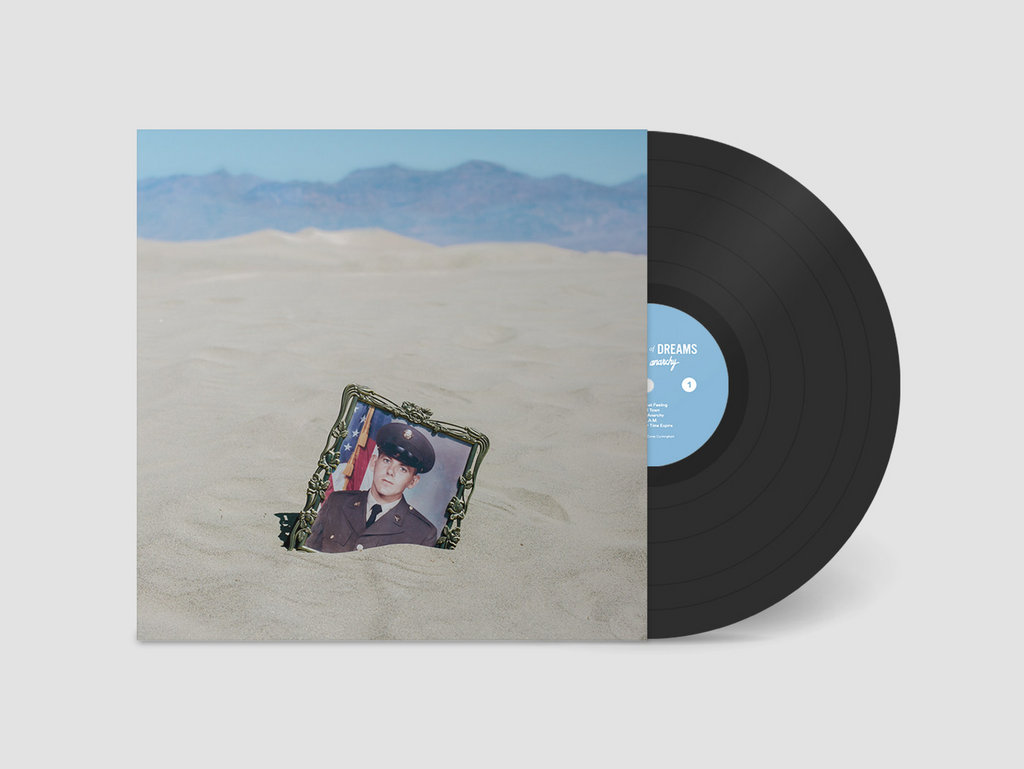
Corey Cunningham has studied his forebears—The Smiths, Cocteau Twins, Pale Saints—so well that he could ghostwrite for them. The Magic Bullets and Terry Malts alum returns to his newest solo moniker, Business of Dreams, to pen a collection of could’ve-been singles primed for Britain’s ‘80s synth-pop boom. Ripe for Anarchy amplifies the era’s perennial pop sigh into full-blown existentialism, resulting in songs like “My Old Town” and “N.R.E.A.M,” which spiral outward beautifully under the sheen of glittering synth hooks and breezy acoustic guitar.
With his new album “Ripe For Anarchy,” Cunningham has honed the songwriting with an eye towards regret, existence, and perseverance. “When I’m gone you won’t cry for me, focus on the moment, be free,” he sings on “Chasing That Feeling.” And that’s the mantra here: it’s time to let go. “The album is about living in the moment, shedding neurosis, and the desire to discard the general societal malaise we’ve been roped into.”
This album is a major contestant for heavy release of the “year and should win all the awards.” – Anna Rose
Just making the cut-off with a 28th June release date, the second album from Melbourne alt-rock force The Beautiful Monument, I’m The Reaper, explores grief, redemption, growth and being, with vocalist Lizi Blanco developing tenfold as a songwriter while the band’s music goes from strength to strength.
After playing at Download Festival earlier this year, they signed to Greyscale Records for its release. Reviewer Anna Rose labelled the record “raw, clever, concise, distinctive”, while also calling it “the album of the year”. Enough said.
Very rarely does one come across a band that hits as heavy and magnificently as the Beautiful Monument. Boasting an arsenal of genuinely memorable songs and strong, energetic stage presence,
Band Members
Lizi – Vocals, Andy – Guitar. Alex – Guitar, Amy – Bass, Adam – Drums
New year, new Sløtface album—the political Norwegian punks are slated to dish out their second LP, “Sorry for the Late Reply”, at the end of January, which touches on everything from climate change to frontwoman Haley Shea’s expatriatism from her native U.S.
Today, the four-piece is sharing the fifth single from the album, an exhausted acknowledgement of the need for meaningless New Year’s resolutions. “Keep hoarding books I’ll never read, keep making plans I’ll never keep,” sighs Shea in a matter-of-fact tone recalling Sadie Dupuis, over a grungy take on pop-punk that would sound right at home on a Speedy Ortiz record.
“This one is about all the promises we keep to ourselves, and all the good advice we give but never take,” she shares of the track. “I’m a master of thinking I can always be better, work harder, sleep less, do more, but maybe that’s not always possible. It’s about working on taking care of yourself and taking advice you would give to someone else.”
After a solid performance at this year’s South By Southwest and tours opening for Parquet Courts, Viagra Boys, Oh Sees and Fontaines D.C., Montreal five-piece Pottery released their debut EP No. 1, recorded in just over two nights and cut live to tape. Crediting Orange Juice, Josef K and DEVO as influences, Pottery blend the whimsical, danceable and the arty leanings of some of pop and punk’s greatest groups. The instrumental “Smooth Operator” is a slinky opener, evolving from a cool and collected bluesy strut to an anxious punk freakout. Another somewhat rootsy tune “Hank Williams” is unexpected, but it’s one of the peppiest country-punk tracks since Iceage stomper “The Lord’s Favorite.” “The Craft” finds their eccentric post-punk at its sharpest and most cartoonish. Their wonky percussion, frisky vocal snarls and lyrics of life’s rat race result in freakish art-pop profundity
The chorus to “Hank Williams,” Pottery’s debut single, is “Hank Williams does speed for the first time.” Apparently, a musician trying out for the band said that’s what the song sounded like, and it’s as good a way as any to describe their sound — not exactly country, but old-school psych-pop and post-punk spiked with a shot of decidedly modern creative energy. Recorded two years ago in a two-day marathon session, their debut EP No. 1 is a vibrant snapshot of musical clay taking shape. And if their live show is any indication, their next release is gonna be a sweet-ass vase.
“The Craft” from ‘No. 1’ EP out now on Partisan Records and Royal Mountain Records.
In another era, when the wallop of a supreme rock band and the wail of a powerful singer were as good as gold records, Reese McHenry might have been a superstar—a howling poet of the defiantly broken-hearted. But the 13 tracks of her gripping “No Dados”, a breakup album about fighting the urge to break down, are an unapologetic testament to the form’s real eternal power: to wrestle with our most primordial feelings, like lust or loss. One of rock’s most commanding current singers, she wrangles—or, rather, roars—these urges into a riot act of one.
Reese McHenry (Dirty Little Heaters) sings, plays guitar and writes catchy, heavy rock and roll songs. Releasing album No Dados on April 12th through Suah Sounds, McHenry has been touring with members of Drag Sounds.
Band Members
Reese McHenry, Thomas McNeely, Mike Wallace, Mark Conner, Kaitlin Grady
Kate Davis picked up a violin at age five, a bass at age thirteen. She entered the Portland Youth Philharmonic before puberty, the Grammy Jazz Ensemble before adolescence. By the time she graduated high school, Kate won the Presidential Scholar in the Arts Award and a full ride to the Manhattan School of Music. By the time she graduated college, ASCAP’s Robert Allen Award and slots at Carnegie Hall and Lincoln Center. As a young adult, the virtuoso claimed enthusiastic endorsements from NPR, MTV, PBS and BBC as well as coveted invitations to the stage from Herbie Hancock, Ben Folds, Alison Krauss, Jeff Goldblum and the like. Most recently, she co-wrote Sharon Van Etten’s hit single “Seventeen.”
On Trophy, Kate Davis embraces indie rock after an adolescence spent as a jazz darling. She uses her experiences in that world both as lyrical fodder—on “Cloud,” she imagines more typical teenage years—and to inform her unique music sensibility (“I Like Myself” incorporates elegant strings arrangements). Her instrumentation is complex, but all of it ultimately works to serve her distinct voice. On Trophy, Kate Davis has discovered herself at last.
With an elegant, nuanced and emotionally affecting singing style (Cerys Matthews described her as having a voice that can “trickle back over centuries”) Josienne Clarke has frequently been compared to the great Sandy Denny, but present too are elements of Nina Simone and Gillian Welch; all three are important influences on her work.
In recent years, Josienne has supported the great Richard Thompson on a dream-come-true tour of the UK and opened for the legendary Robert Plant across Europe, as well as performing at some of the UK’s best-loved festivals, including Latitude, Larmer Tree and End Of The Road. She also found herself in demand as a writer and broadcaster, contributing to Standard Issue magazine and appearing on BBC Radio 3’s The Verb to discuss her pet subject melancholy, alongside poet Simon Armitage.
Original track from Josienne’s latest album ‘In All Weather’.
“this album is thirty two minutes of bliss”
“Clarke the master of restraint, delivers short wafts of bliss on a small but perfectly formed album and leaves us, wanting more”
The Norwegian duo recently released their debut album ‘Saints and Sebastian Stories’ to widespread acclaim,
Konradsen’s warm intimacy both strangely familiar but uniquely their own is one which will stay with you in the months and years to come…” Ending the year on a high, the project have shared the full video for heavenly song ‘Dice’.
Stripped from the recent album, it’s given fresh life in this visual rendering, the soft focus visuals having a raw yet also intimate quality. Steered by Teodora Georgijević, the clip is the perfect compliment to Konradsen’s soothingly addictive melodies.
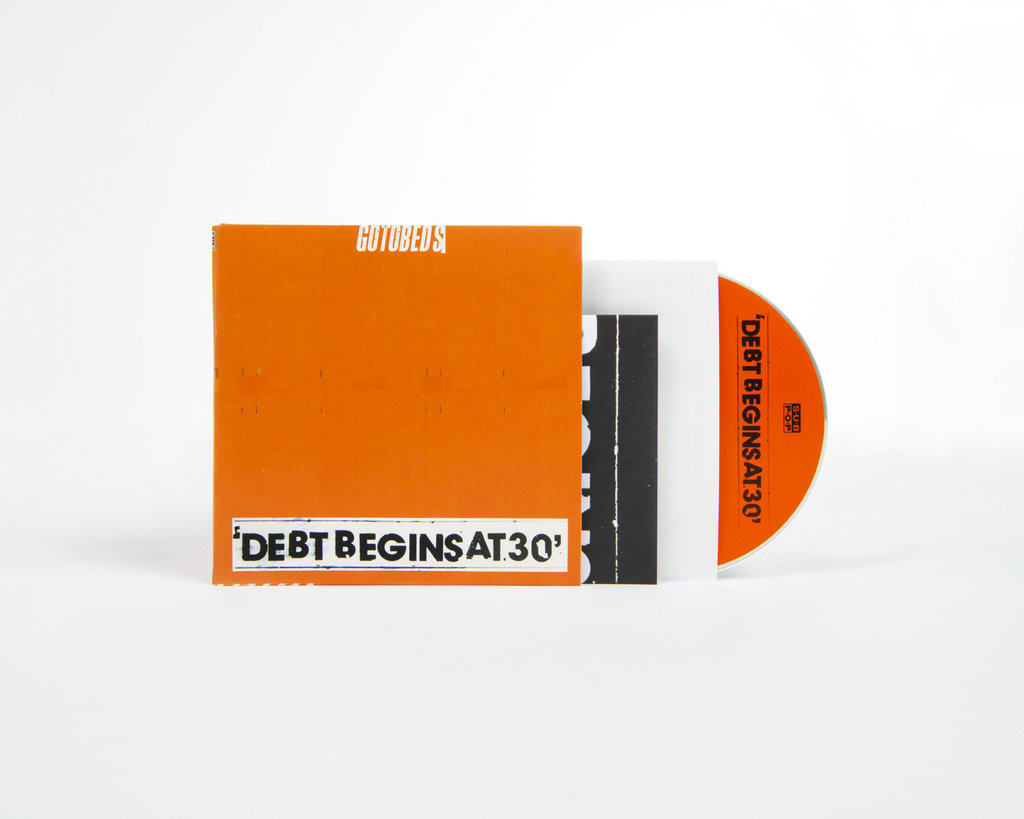
In May The Gotobeds – Cary, TFP, Eli and Gavin – return to the fray with their third full lengther, After 10 plus years in the underground, Sub Pop’s least-famous band made their best record yet with “Debt Begins At 30”, a fitting title for a record that isn’t afraid to sound its age or remind you of yours. Featuring contributions from a laundry list of fellow punk lifers, Debt Begins At 30 is a rollicking post-punk mixtape of sorts that still bears all the hallmarks of a Gotobeds record: thrashy guitars, loudmouthed politics, more guitars, and heaps of bitingly acerbic humor—this time, with even stronger songwriting and some studio polish that does nothing to dial down their inherent commitment to being the loudest band in the basement. And you’ve gotta give it up for a band with enough confidence to not only put the title track on the record twice, but let Victoria Ruiz of Downtown Boys, who takes vocal duties on the second go-round, rewrite the lyrics in Spanish when none of the band’s members actually speak the language.
Give me a minute or three to extol the virtues of The Gotobeds, the modern rock and roll sensation that has always sounded like they love to play. Never maligned by having the world’s weight on their backs,
When Lana Del Rey emerged with the virally successful single ‘Video Games’ in 2011, she wasn’t someone who I had pegged for a long career. ‘Video Games’ had a unique atmosphere, a cinematic ballad with nostalgic Hollywood glamour, but also pigeon-holed Del Rey into a distinctive style.
Since then, Del Rey’s worked with different producers, who’ve provided different backdrops, but regretful and languid ballads have remained her bread and butter. To give her credit, she’s worked at her craft, shaking up her sound just enough to stay fresh while continuing to write fascinating lyrics, keeping her critically and commercially relevant.
The album “Norman F*****g Rockwell!”, largely written and produced by Del Rey and Jack Antonoff, has been widely acclaimed as Del Rey’s best album to date. It has manifested gradually – the excellent singles ‘Mariners Apartment Complex’ and ‘Venice Bitch’ appeared a year before the album giving us a taster of the songs.
Del Rey has credited the chaotic presidency of Donald Trump and worsening environment threats with inspiring her the album which explores the decay of the American dream. Typically, it’s steeped in Californian nostalgia, with references to film and musicians like Crosby, Stills, and Nash, Dennis Wilson, and the Eagles. The album is named for the painter Norman Rockwell – he serves as a metaphor for immature men.
It helps that Del Rey is endlessly interesting. Her visual aesthetic for Norman F*****g Rockwell!has apparently consisted of submitting whatever photo she had on hand for her single and album covers – hence the Norman F*****g Rockwell! cover shot of Del Rey with Duke Nicholson, Jack Nicholson’s grandson. She’s also exchanged words with critic Ann Powers, taking umbrage at Powers’ suggestion that Del Rey uses a persona – surely a difficult position for Del Rey to defend, her real name is Elizabeth Woolridge Grant, and the consistent lyrical aesthetic she uses.
Jack Antonoff is largely known for his synth-pop productions for Lorde, Taylor Swift, and Carly Rae Jepsen, but here he backs Del Rey with classy piano-based arrangements. The material is consistently excellent, but at 67 minutes with very little variation in tempo or style, Norman F*****g Rockwell! is less than the sum of its parts.
The song that deviates furthest from the Lana Del Rey template is ‘Venice Bitch’ – it’s almost ten minutes long, and the second half is given over to lovely psychedelic noodling
This is Lana Del Rey‘s sixth studio album “Norman Fucking Rockwell” has been released to a storm of critical praise and instant fan love and it’s easy to see how. Seventeen tracks of inward-looking barebones, atmospheric confessionals have created Lana’s most sincere and vulnerable outing to date, resulting in an album that feels both timeless and highly specific to the times we live in. Opening track ‘Norman fucking Rockwell’ is a manifesto piece for the album, swiftly asserting a wryly confessional tone granting insight into her real-world experiences of womanhood and the man who made those experiences more difficult against a backdrop of warm piano-led balladry.
The references to mid-century icons—The Beach Boys, Sylvia Plath, Slim Aarons—are all still there on her new album, but Norman Fucking Rockwell!, right down to its title’s dismissive interjection of “fucking,” plays out as both a send-up to old avatars of the American Dream and a dismantling of them. Of course, Del Rey is not the first pop star to critique the culture—Taylor Swift, Katy Perry, and Miley Cyrus have all attempted to “get woke” in recent years, with sometimes embarrassing results—but Lana’s approach has certainly been the most authentic.
Lana Del Rey stands amongst the wreckage with us, filtering the apocalyptic malaise of this year through sweeping, majestic piano ballads that recall twentieth century greats, delivering lines like “Goddamn, man-child / You fucked me so good that I almost said, ‘I love you’” on the title track, as if updating Joni Mitchell’s “The Last Time I Saw Richard” for the Tinder generation. Despite the overall quality, the album’s not helped in that the most memorable material is clustered around the front. Along with ‘Mariners Apartment Complex’ and ‘Venice Bitch’, Del Rey’s cover of Sublime’s ‘Doin’ Time’ is also featured early. There are pretty piano ballads sprinkled throughout ‘Cinnamon Girl’, ‘The Greatest’, and ‘Hope Is A Dangerous Thing For A Woman Like Me To Have – But I Have It’ are all diminished in impact by the album’s length.
It would be harsh to cull some of these terrific pieces, but there is a lack of stylistic variation, Norman F*****g Rockwell! is difficult to digest in one stint, and it would be better served with a shorter running time. Nostalgia feels so silly and indulgent now that even an artist who has built her name around an (at times, contrived) vintage romanticism cannot help but turn an eye toward confronting the times in which she is living, rather than rehashing the halcyon days of decades past.