Nandi Rose has shared this synthy mood piece from her upcoming Half Waif album The Caretaker which is out March 27 via ANTI-Records . “‘Halogen 2′ is a song about isolation and the search for strength,” says Nandi. “The halogens are some of the most reactive elements on the periodic table, and in this song, winter and a life alone in the country are like halogen: an unrelenting force that produces change. I wrote this song at home in Upstate New York last March at a time when my sense of isolation was at its height. And yet I’ve always been someone who loves my alone time, so there was a sense of shame that I couldn’t handle it this time. I needed to tell myself and anyone witnessing my restlessness: ‘Don’t misunderstand, I do what I must.’ Nearly a year after writing the song, we shot most of the music video in the same location: my house and yard. The two opposing feelings presented by the verses and choruses are represented visually in the Blue World of cold, stagnant country life and the Orange World of the unfettered, fiery strength that lies beneath.
“Halogen 2” by Half Waif from the album ‘The Caretaker,’ available March 27th
Having created a grassroots buzz with their homemade proto-power pop classic Black Vinyl Shoes, Illinois band Shoes duly attracted major label interest, and they signed to Elektra Records in early 1979. Over the next three years they released a triptych of classic pop albums – Present Tense, Tongue Twister and Boomerang – and a clutch of Wurlitzer-worthy seven-inch nuggets that should have catapulted them to fame, fortune and all manner of related excess. Sadly, however, they never quite made the leap from critics’ darlings to Top Thirty success, and the band were obliged to settle for enduring cult status as power pop avatars. But while rock-star level fame and fortune never quite came their way, Shoes do have the considerable consolation of knowing that their body of work has stood the test of time far better than many of their more commercially successful contemporaries.
This 4-CD anthology of the band’s recordings for Elektra, fleshed out with a swathe of pre-album demos, “lost” songs, alternative versions and live tracks dating from the same period, is a veritable smorgasbord of perfect pop from a time when Shoes were genuine contenders for rock’s glittering prizes. Housed in a stylish clamshell box, Elektrafied contains a 32 page booklet that features rare photos and a new 10,000 essay on the band’s adventures during their sojourn with Elektra Records.
Blind Faith is the self-titled and only album by the English supergroup Blind Faith, originally released in 1969 on Polydor Records in the United Kingdom and Europe and on Atlantic Records in the United States. The band contained two-thirds of the popular power trio Cream, in Ginger Baker and Eric Clapton, working in collaboration with multi instrumentalist Steve Winwood of the Spencer Davis Group and Traffic, along with Ric Grech of Family. They began to work out songs early in 1969, and in February and March the group was in London at Morgan Studios, preparing for the beginnings of basic tracks for their album, although the first few almost-finished songs didn’t show up until they were at Olympic Studios in April and May under the direction of producer Jimmy Miller.
The recording of their album was interrupted by a tour of Scandinavia, then a US tour from July through August, supported by Free, Taste and Delaney & Bonnie and Friends. Nevertheless the band was able to produce two hits, Winwood’s “Can’t Find My Way Home” and Clapton’s “Presence of the Lord”.
The album cover featured a topless pubescent girl holding what appears to be the hood ornament of a Chevrolet Bel Air, which some perceived as phallic. The American record company issued it with an alternative cover showing a photograph of the band on the front as well as the original cover. The cover art was created by photographer Bob Seidemann, a friend and former flatmate of Clapton’s who is primarily known for his photos of Janis Joplin and the Grateful Dead. In the mid-1990s, in an advertising circular intended to help sell lithographic reprints of the famous album cover, he explained his thinking behind the image. I could not get my hands on the image until out of the mist a concept began to emerge. To symbolize the achievement of human creativity and its expression through technology a spaceship was the material object. To carry this new spore into the universe, innocence would be the ideal bearer, a young girl, a girl as young as Shakespeare’s Juliet. The spaceship would be the fruit of the tree of knowledge and the girl, the fruit of the tree of life. The spaceship could be made by Mick Milligan, a jeweller at the Royal College of Art. The girl was another matter. If she were too old it would be cheesecake, too young and it would be nothing. The beginning of the transition from girl to woman, that is what I was after. That temporal point, that singular flare of radiant innocence. Where is that girl? . Seidemann wrote that he approached a girl reported to be 14 years old on the London Underground about modelling for the cover, and eventually met with her parents, but that she proved too old for the effect he wanted. Instead, the model he used was her younger sister Mariora Goschen, who was reported to be 11 years old Mariora initially requested a horse as a fee but was instead paid £40.
The image, titled “Blind Faith” by Seidemann, became the inspiration for the name of the band itself, which had been unnamed when the artwork was commissioned. According to Seidemann: “It was Eric who elected to not print the name of the band on the cover. The name was instead printed on the wrapper, when the wrapper came off, so did the type.” This had been done previously for several other albums.
In America, Atco Records made a cover based on elements from a flyer for the band’s Hyde Park concert of 7th June 1969 in London.
Steve Winwood plays an acoustic version of Blind Faith’s “Can’t Find My Way Home”
Critically, Blind Faith was met with a mixed response. Reviewing in August 1969 for The Village Voice, Robert Christgau found none of the songs exceptional and said, “I’m almost sure that when I’m through writing this I’ll put the album away and only play it for guests. Unless I want to hear Clapton — he is at his best here because he is kept in check by the excesses of Winwood, who is rapidly turning into the greatest wasted talent in the music. There. I said it and I’m glad.” In Ed Leimbacher said of the quality, “not as much as I’d hoped, yet better than I’d expected.” His colleagues at the magazine — Lester Bangs and John Morthland — were more impressed, especially Bangs in his appraisal of Clapton: “[With] Blind Faith, Clapton appears to have found his groove at last. Every solo is a model of economy, well- thought-out and well-executed with a good deal more subtlety and reeling than we have come to expect from Clapton.
Retrospective appraisals have been positive. According to Stereo Review in 1988, “for 20 years this has been a cornerstone in any basic rock library. AllMusic’s Bruce Eder regarded the album as “one of the jewels of the Eric Clapton, Steve Winwood, and Ginger Baker catalogs” In 2016 ,Blind Faith was ranked 14th on Rolling Stone list of “The 40 Greatest One Album Wonders”, which described “Can’t Find My Way Home” and “Presence of the Lord” as “incredible songs”.
The Band:
Steve Winwood – keyboards, vocals, guitars; bass guitar on “Presence of the Lord”, autoharp on “Sea of Joy”,
Eric Clapton – guitars; vocals on “Do What You Like”
Ric Grech – bass guitar, violin on “Sea of Joy”; vocals on “Do What You Like”
Ginger Baker – drums, percussion; vocals on “Do What You Like”
When the Velvet Underground’s second album descended on the world in January, 1968, nobody was ready for it. As the story goes, it was a relentless, screeching, thudding, scoffing assault on the pop sensibilities of its time. For its 45th anniversary it was reissued in expanded, remastered form, and listening to White Light/White Heat now. The Velvet Underground and Nico, the year before, had had Andy Warhol’s imprimatur to promise that its passages of bleeding-raw chaos were art; it had also had the complicated but unmistakable beauty of the songs Nico sang as a lifeline for the tiny mainstream audience that caught on to it at the time. White Light/White Heat didn’t have that either.
By the time they released it, the Velvets were downplaying the art-world connection (despite the very arty slash in the album’s title, and the fact that its black-on-black sleeve was designed by the Factory’s Billy Name). Nico was now out of the band, although bassist John Cale would continue to work with her for years. And the album was a relentless, screeching, thudding, scoffing assault on the pop sensibilities of its time: six songs with lyrics designed to horrify the bourgeoisie (not that they’d have listened to the Velvet Underground in the first place), ending with a one-take, two-chord, 17-minute speed freakout. It clung to the bottom of the album chart for two weeks, disappeared, and went on to become the glorious, tainted fountain from which all scuzz flows.
That’s the White Light/White Heat of legend, anyway, keeping time was never their strong point—it’s been reissued in expanded, remastered form, as if what this pinnacle of sloppy noise needed was remastering. As always, the title track, which seems like it should start cold with Cale and Sterling Morrison’s backing vocals, sounds like it’s had a little trimmed off the top to remove an extraneous sound—although, of course, extraneous sounds are kind of the whole point of this album. When I first bought it in 1973, when I first became a Lou Reed fan, but over the years I have become to love it almost as much as “VU and NIco”. It is certainly harder to get into on first listenings, at least for someone who likes 3-minute songs and nice melodies – “Here She Comes Now” is about the only song on the original album you could call “pretty”. But it is an absolute classic. Side 2 of the original album has become my favourite side, with “I Heard Her Call my Name” an amazing bit of guitar playing, must have been one of the wildest songs ever recorded at that time, and “Sister Ray” at 17 minutes long, wasn’t exactly designed for maximum radio airplay.
Lou Reed’s song writing is often a lot more conventional than it’s reputed to be. Strip away the noise and flash and references to illicit drugs and sex, and “White Light/White Heat”, “Here SheComes Now”, and “I Heard Her Call My Name” are all the sort of simple rock’n’roll that Reed had been cranking out at Pickwick Records a couple of years earlier. (So is “Guess I’m Falling In Love”, recorded in scorching instrumental form at the White Light sessions.
If you get the 45th anniversary 2-CD version you are getting the best value for money, with various extra tracks, not all of them essential, but “Stephanie Says” is an absolutely beautiful song, and there is a wonderful, chugging, early version of “Beginning to see the Light”, and of course you get the excellent “Live at the Gymnasium” as well.
On the Anniversary set, the live disc appended to this edition is a reminder that the Velvet Underground were radical in a totally acceptable way for their time—that, professionally speaking, they were a party band with an audience of hippies, who appeared on bills with the likes of Sly & the Family Stone, Canned Heat, Iron Butterfly, Quicksilver Messenger Service, and Chicago Transit Authority the year White Light/White Heat came out. The performance, apparently from John Cale’s collection, was recorded at the Gymnasium in New York in April, 1967 (two of its songs previously appeared on the 1995 Peel Slowly and See box set). It presents the Velvets as a full-on boogie band, whose set is bookended by the instrumental grooves “Booker T.” and “The Gift”—turns out they’re slightly different songs, contrary to what VU fans have assumed for the past few decades. The rest of the gig includes what might or might not have been the first public performance of “Sister Ray” (it was still a very new song, at any rate), and one legit addition to the canon: “I’m Not a Young Man Anymore”, a chugging electric blues that wouldn’t have been out of place in Creedence Clearwater Revival’s early repertoire.
What possessed Cale to start playing an out-of-time, two-note bass part louder than anything else at the end of “White Light/White Heat”, and how could he have guessed that that was a great idea? Was the famous split-second pause before Reed’s splatter bomb solo on “I Heard Her Call My Name” intentional? What the fuck was up with Reed filling in words—”SWEETLY!”—in the middle of Cale’s vocal on “Lady Godiva’s Operation”, and why is it still hilarious? Speaking of that song, might lyrics about a delicate hypersexual creature interacting with “another curly-headed boy,” directly followed by a medical horror-show, have anything to do with a curly-headed songwriter who was given electroconvulsive therapy to “cure” his bisexuality as a teenager? Why is “Sister Ray” way, way more potent than any other extended jam on a simple riff by any other American band of the 60s?
It’s surprising to hear anything besides the universe catching its breath after “Sister Ray” ends, but the first disc of this reissue is filled out with other previously released evidence of John Cale’s final months in the Velvet Underground: the instrumental “Guess I’m Falling In Love”, both versions of the electric-viola showcase “Hey Mr. Rain”, and the band’s thoroughly charming stab at making a commercially viable single, “Temptation Inside Your Heart”/”Stephanie Says”. There’s also a previously unheard alternate take of “I Heard Her Call My Name” (not quite as good as the official one, and mostly interesting to hear which of Reed’s apparent ad-libs weren’t), and one fascinating curio: an early version of “Beginning to See the Light”, recorded at the “Temptation Inside Your Heart” session. By the time the song appeared on The Velvet Underground in 1969, it had become lither and wittier, and Reed had sharpened a few of its lyrics; this broad-shouldered, clomping version is distinctly not there yet, but everything the Velvets released on their official albums is so canonical that it’s strange and heartening to realize that their songs didn’t just spring into existence already perfect.
Prefab Sprout have reissued four albums on vinyl, via Sony Legacy. The ’80s sophisti-pop group was formed in 1977 by brothers Paddy and Martin McAloon, releasing their debut album “Swoon” in 1984. The Durham natives became a mainstay in UK music, going on to release a total of 13 LPs. Prefab Sprout date back to 1970s art-rock; leader Paddy McAloon was sent a rejection letter by Brian Eno’s record label in 1976. They didn’t release their debut album “Swoon” until 1984, by which time the lineup had solidified. Paddy McAloon was joined by his brother Martin on bass, Neil Conti on drums, and Wendy Smith on backing vocals.
Paddy McAloon is a great pop writer, and Prefab Sprout have released a lot of great material.There are different theories on where Prefab Sprout got their name. My favourite is a misheard lyric from Nancy Sinatra and Lee Hazelwood’s 1967 hit ‘Jackson’ (“We got married in a fever hotter than a pepper sprout”).
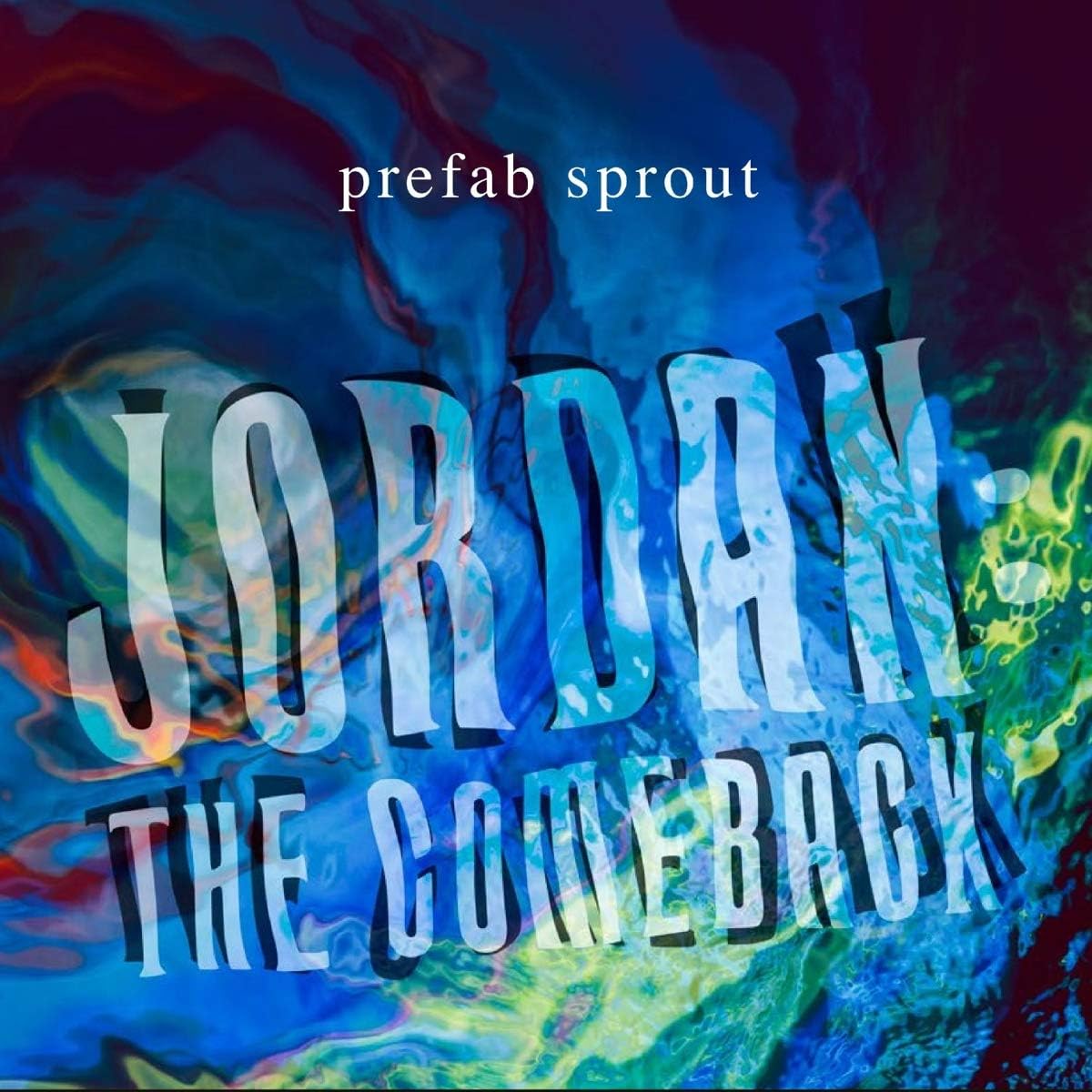
The four records will be reissued – “Swoon” (1984), “From Langley Park to Memphis” LP (1988), “Jordan: The Comeback” LP (1990), and compilation “Life of Surprises:The Best of Prefab Sprout” (1992).
All of the remastering was overseen by Paddy McAloon, the groups’ songwriter. Prefab Sprout enjoyed some commercial success in the 1980s and early 1990s, but have been relegated to the status of cult band ever since. It’s a shame, as McAloon is a very talented songwriter; he’s able to integrate complex chord structures into catchy pop songs, and his lyrics are often filled with clever wordplay and his preoccupations with mortality, religion, and stardom.
Paddy McAloon expected debut Swoon to be bigger than Michael Jackson’s Thriller, but it’s a demanding listen; songs like ‘I Never Play Basketball Now’ are packed with crazy chord sequences, delivered with a touch of post-punk rawness. Swoon is the album equivalent of an over eager puppy – its songs are stuffed with complex chord changes and time signatures, and precocious lyrics. At the same time, the production is far less elaborate than later albums, and it’s more of an indie guitar album than their later work. Swoon is a highly original record, melding various styles into one unique vision, resulting in a sophisticated sound the band could claim as its own. It has been sited as a strange fusion of Aztec Camera and Steely Dan, which makes sense, but ultimately Swoon proves too complicated for simple comparisons.
Some fans swear by Swoon as one of Prefab Sprout’s best albums, but it took me a long time to warm to it, as there’s so much happening. ‘Cue Fanfare’ is a good example of the album’s dense and skewed nature, with its references to “Playing for blood as grandmasters should,” and McAloon’s yelped falsetto and synthesizer stabs. ‘Don’t Sing’ was the single, and it’s probably the most accessible song, while under the busy arrangement, ‘Cruel’ has a torch song vibe.
Swoon is a polarising album since it’s so unique.
Steve McQueen/Two Wheels Good, 1985
Prefab Sprout streamlined their sound for their next album released in 1985 “Steve McQueen” the band prospered over the next five years. Their biggest hit was the 1988 novelty ‘The King of Rock’n’Roll’ – McAloon later told the New Musical Express that “it’s a bit like being known for Yellow Submarine rather than Hey Jude”.Prefab Sprout’s best-known album opens with a rockabilly-tinged song named for country star “Faron Young”. The song opens with the word “antiques” – apparently McAloon had written the music but was struggling for the lyrics, and asked then-drummer Michael Salmon for a random word to spark his lyric-writing process. “Antiques” leads into one of my favourite Sprout lyrics; “As obsolete as warships in the Baltic”.
Even more powerful is “Goodbye Lucille No. 1 (Johnny Johnny),” sung from the perspective of a man trying to make a close friend get over a girl who has rejected him. The words are frank and painfully realistic as McAloon doesn’t sugarcoat the dialogue. He rips into his buddy’s futile romantic fantasies and lets the hard light of reality shine upon him: “Ooh Johnny Johnny Johnny you won’t make it any better/Ooh Johnny Johnny Johnny you might well make it worse.”
Steve McQueen was re-titled Two Wheels Good for the US market after legal difficulties with McQueen’s estate; it established their career in the UK after ‘When Love Breaks Down’ became a successful single on its third release. The major change for Prefab Sprout’s sophomore effort was Thomas Dolby collaborating as their producer; Dolby had spoken favourably of ‘Don’t Sing’ from Swoon, and the band contacted him to produce their second album. Dolby chose his favourite songs out of 40-50 songs that were bought to the table by McAloon , and provided a lush production job that complements the literate lyrics – Wendy Smith’s vocals are processed in ways that sometimes make her sound like a synthesiser. The precociousness and frenzy of Swoon is toned back, and while there are still complex chord changes and lyrics on Steve McQueen, it’s a lot more accessible.
Steve McQueen has two clear halves; the first side is built around accessible and upbeat pop songs, while the second side is more esoteric. The hits on the first side include the rockabilly of ‘Faron Young’, and the perfect pop of ‘Appetite’, while the title ‘Goodbye Lucille #1’ apparently refers to the fact that McAloon had written a full album of songs with named Goodbye Lucille. There’s more clever pop like ‘Movin’ The River’ and ‘Hallelujah’ on the second side, but there’s also slowed down material like ‘Blueberry Pies’ and ‘When The Angels’.
The key figure behind Prefab Sprout between 1985 and 1990 was producer Thomas Dolby. The tech genius added a sophisticated synth sheen to McAloon’s compositions, and treated Wendy Smith’s voice to sound like another instrument. ‘Appetite’ is among my favourite from the album’s first side, the primal urge of lust presented with sophistication. Paddy McAloon claimed that he was ‘probably the best songwriter in the universe’. He wasn’t far off the mark. This album is a collection of beautiful, atmospheric, catchy, moving, thoughtful songs, treated with one of the best production efforts Thomas Dolby has ever done – and that’s quite something. Wendy Smith’s simple, soaring backing vocals and Dolby’s very personal keyboard sounds suit Neil Conti’s crisp drums, Martin Mcaloon’s deep bass and Paddy’s complex compositions perfectly. Dolby and the band struck something very special and undefinable on this album that they haven’t quite been able to recreate on their following collaborations.
Steve McQueen was re-released in 2007 with a bonus disc of eight newly recorded acoustic versions by McAloon. They’re gorgeous, and underline how strong the material on the album is.
From Langley Park to Memphis, 1988
Paddy McAloon’s always had a sentimental streak, but it’s rendered palatable by his musical and lyrical sophistication. The music video for ‘I Remember That’ situates the band in an early 20th century jazz club. The lyrics are sharp enough not to wallow in romantic nostalgia; “there’s nothing pathetic listing clothes she’d wear/If it proves that I had you, if it proves I was there.” I only had room for one pick from 1988’s From Langley Park to Memphis, but I would have liked to include McAloon’s affectionate ribbing of Bruce Springsteen on ‘Cars and Girls’.
Even though Steve McQueen had some production sheen, it was essentially still an indie guitar album. From Langley Park to Memphis takes Prefab Sprout in a more adult contemporary direction – McAloon has stated that he was writing show tunes during this period. There’s an Americana theme, with songs like ‘Hey Manhattan’, lyrics like ‘Hot Dog! Jumping Frog! Albuquerque’, and the Springsteen pastiche of ‘Cars and Girls’. Following on the success of Steve McQueen, it’s also a more high profile release, with cameos from Pete Townsend and Stevie Wonder.
There’s some strong material here, but From Langley Park to Memphis is less than the sum of its parts – the sequencing where the first side is clearly stronger than the second, the adult contemporary sheen from a variety of producers, and the novelty hit ‘King of Rock and Roll’ all detract from the album. There are at least a couple of top tier Prefab songs here – ‘I Remember That’ is a beautiful piece of gospel infused pop. While it’s hard to know if ‘Cars And Girls’ is an affectionate tribute or a gentle take-down of Springsteen, but either way it’s a strong song in its own right. There are pretty melodies like ‘Nightingales’ and ‘Nancy Let Down Your Hair For Me’, but the awkward rock of ‘Golden Calf’ hurts the momentum of the second side.
Released in the middle of their 1980s’ peak, Langley Park is a key Prefab Sprout album, but it’s not quite the towering achievement that it could have been.
Protest Songs, 1989
Protest Songs was originally scheduled as a followup to Steve McQueen – it was announced for December 1985, but wasn’t in stores until 1989. It’s low-key, with an indie guitar-pop sound, but it’s a substantive entry into the band’s catalogue. I particularly enjoy the opening track, ‘The World Awake’, which presents a typically complex McAloon song in a low-key arrangement.
Protest Songs does open with some upbeat, accessible songs; the opener ‘The World Awake’ is one of my favourite Prefab Sprout songs with its bizarre backing vocals and insistent hook, while the affectionate advice of ‘Life of Surprises’ is hooky and energetic. There’s more pointed current event commentary than usual – ‘Diana’ discusses the Princess of Wales, while ‘Dublin’ concerns Irish politics – while McAloon returns to his common themes of mortality with the low key conclusion of ”Til The Cows Come Home’ and ‘Pearly Gates’.
With its low key nature, Protest Songs has aged gracefully
Jordan: The Comeback 1990
The sprawling Jordan: The Comeback is their masterpiece. The group lost momentum after Jordan, as record company miscommunication sabotaged the followup album, Prefab Sprout’s output slowed after this 1990’s ambitious double album Jordan: The Comeback, but there have been gems among the later releases. The double album Jordan: The Comeback allows McAloon space to explore some of his lyrical obsessions; over its running time, he examines Elvis Presley, death, and God. The wonderful crashing drums after the organ solo at the beginning of ‘Scarlet Nights’ still makes the hairs on the back of my neck stand up – as do Jenny Agutter’s ‘I want you’s’ on Wild Horses. Sublime, and even better now in its remastered form ‘Scarlet Nights’ is arguably the most uplifting song about dying ever recorded; “This is where you’ll wake/To find the river, Jordan, flows.” Group mastermind Paddy McAloon covers the gamut here, ranging from incisive takes on American legends (Elvis and Jesse James) to love songs both wistful We Let the Stars Go and self-assured Looking for Atlantis Jordan climaxes with One of the Broken, a singular plea for compassion in which McAloon assumes the character of none other than God.
‘The Ice Maiden’ was inspired from youthful memories of watching ABBA on TV, but it quickly escalates an examination into mortality. “Death is a small price for heaven” is the most memorable line. Driven by an electronic pulse, it packs a lot into a little over three minutes; Wendy Smith’s prominent vocals, a dramatic key change, and Paddy McAloon’s chunky guitar riffing. It culminates in screams before abruptly segueing to the whimsical ‘Paris Smith’.
Andromeda Heights
Andromeda Heights is a concept album about stars, but there are plenty of love-struck lyrics as well. Drummer Neil Conti had left the band by this point, and there’s not much of a band feel to most of the tracks. Often the orchestral instruments that augment the band are more pronounced, although the orchestrations aren’t as interestingly as on McAloon’s 2003 solo album, and they’re more about adding warmth and lushness. The sentimentality that was often present on Prefab Sprout’s earlier albums is much more pronounced on Andromeda Heights.
Andromeda Heights is one of Prefab Sprout’s weaker records, but my favourite Prefab Sprout is outtake from it is ‘The End of the Affair’. It’s more sentimental and string-laden than most of Prefab Sprout’s work, but it’s a beautiful tune. Prefab Sprout have some other great b-sides too; other notable efforts include 1985’s ‘Donna Summer’ or the rocking ‘Nero the Zero’.
Prefab Sprout also have plenty of interesting non-album material which has never been collected onto CD – early singles like ‘Lions In My Own Garden (Exit Someone)’ are well worth tracking down, ‘The End of the Affair’, originally written for Cher. Rumour has it that McAloon has albums full of unreleased material, including a concept record about Michael Jackson and an album full of songs titled ‘Goodbye Lucille’.
Prefab Sprout hadn’t released an album of new material since The Gunman and Other Stories in 2001, so 2013’s Crimson/Red is essentially a collection of the best songs McAloon had written in the previous twelve years. It’s recorded solo by Paddy McAloon in his home studio, but it’s much more professional sounding than the demos of Let’s Change The World With Music, and it’s easily Prefab Sprout’s strongest release since 1990’s Jordan: The Comeback.
Crimson/Red, 2013
The band’s latest release was Crimson/Red back in 2013, as well as a vinyl reissue of McAloon’s 2003 solo album “I Trawl the Megahertz” earlier this year. By 2013, Prefab Sprout was effectively a name for Paddy McAloon’s solo endeavours; he played all the instruments and provided all the vocals for ‘Billy’. There’s a great bass-line and his vocals have barely aged. McAloon typically uses complex chord structures, but ‘Billy’ cycles through the same five chords for its entirety. Its breezy and fun, with McAloon charmingly cycling the subject’s name between “Bill”, “William”, and “Billy”.
Paddy McAloon has grown a long white beard, but he still sounds youthful – he even makes the word “assholes” sound exquisite. 2013’s ‘The Best Jewel Thief in the World’ is impressively energetic and melodic. It’s McAloon’s best song of the 21st century, even though it’s hamstrung by a poor music video; the fan-made version (presented below) is much better.
‘The Best Jewel Thief in the World’ is an immediate winner, a hook-laden and energetic piece of pop, while the disarmingly simple ‘Billy’ is warm and immediate. There are shout-outs to fellow songwriters, with ‘The Songs of Danny Galway’ covering Jimmy Webb and ‘Mysterious’ about Bob Dylan, while ‘The Dreamer’ is straight-out beautiful. There are also some memorable lyrics like “Adolescence – what’s it like? / It’s a psychedelic motorbike / You smash it up ten times a day / Then you walk away.”
If we’re being picky, there are a few too many slow songs, but Crimson/Red is an definite comeback from Prefab Sprout and worth the attention.
The reissues are available now with a new album titled Femmes Mythologiques incoming later this year.
Last year, LIFE broke their Humberside confines to become a truly national, if not international, sensation after their second album ‘Picture Of Good Health’ saw them established as a real force to be reckoned with through a marriage of punk anger and post-Britpop appeal. Adapting the left-wing politics of the first LP ‘Popular Music’ and framing them through their own personal everyday experiences with the distinct gritty texture of living in Hull, their second record chimed with British audiences and listeners across the continent as they gigged heavily, hit the European festival circuit and played support on IDLES world tour.
Continuing to develop their sound, Life have once again returned to the studio and returned with new single ‘Switching On’ which embraces greater experimentation and seems to take its quest from such tightly lacerating yet claustrophobic bands as Suicide and Big Black.
“After completing ‘A Picture of Good Health’ I felt like I belonged in the world, lyrically painting over the bone – eating demons, I wanted to express why this was. I wanted to scratch it out like people do on woodland trees or moorland rocks. It was love; I found love. ‘Switching On’ is my lyrical attempt of charting that journey; the initial giddy, nervous and pinch – me moments, the wanting to be accepted, the lust and the incredible feeling of finding that person and falling in love. The band wanted to be open to all aspects of musicality so that the lyrics were given an aural heart. We wanted to be brave, bold and exciting as we evolve our sound and rhythms by bringing in elements of synths, pads, machines and pure bass and guitar experimentation. ‘Switching On’ is a nod to where we want to be and where we are going; the future.” – Mez Green
Accompanying the single is the post punk upstarts answer to Wes Anderson in the form of a promotional video adapting the colour palettes and symmetrical shots for which the acclaimed cult director is famed. The mini movie was made with the help of local filmmaker and long term visual collaborator Josh Moore who have succeeded in capturing the tension of the track, as told through the suffering of plants losing at love and life in a sequence of desperate video dates.
Currently causing chaos in NYC, they return to plagued Europe to tour next month with dates around the UK in April.
“Just Like Heaven” features 16 cover versions of Cure favorites by a bevy of indie artists, including; The Wedding Present, Dean & Britta, The Rosebuds, Tanya Donelly & Dylan in the Movies, The Submarines, Elk City, Class Actress, Joy Zipper, Black Francis, and so many more. Mastered by West West Side Music (Galaxie 500, The Wrens, Fleetwood Mac). Original illustrations and artwork by Melinda Rainsberger.
These tribute albums have become so ubiquitous and are so generally asinine that this one comes as a genuine, and at times quite moving, surprise. It’s not just that the artists who contributed are clearly doing so without any of the usual ironic detachment, but also that many of them have clearly thought very carefully and often very insightfully about their arrangements and interpretations. Elizabeth Harper & the Matinee deliver a sweetly sad and admirably straightforward version of “Pictures of You,” one that clears away the layers of gauzy, torpid psychedelia that characterized the (excellent) original version to create a song that has a very different spirit without sacrificing anything of its essence. Cassettes Won’t Listen give “Let’s Go to Bed” a slightly stiffer, more electro interpretation — again, one that reveals a depth of regret and bitterness that was better hidden in the original. It should probably come as no surprise that Tanya Donelly would pick the slightly creepy “Love Cats” to cover, in a duet version with the gruffly insinuating Dylan in the Movies turn “Close to Me” into a strangely detached disquisition on the obsession and self-disgust that animated the original, while Kitty Karlyle turn “In Between Days” into a brilliantly edgy slab of rough-and-ready pop-punk. Not every interpretation is equally brilliant, but every one of them shines an interesting new light on this powerful material.
“An outstanding compilation… this is a must for all Cure fans“ – NYC Daily News “A genuine, and at times quite moving, surprise.“ – All Music Guide “Indie darlings past and present come together to repaint the mood swinging lyrics and remix the eternal sunshine of The Cure hits.“ – Rolling Stone
After five years out of the spotlight, Sophie Jamieson has returned with brand new track ‘Hammer’. Our first glimpse into a bigger body of work, this beautiful new song sees Sophie back doing what she does best, delivering the goods with her gorgeous ethereal style and raw lyricism.
“This is the first in a wider group of songs that explore self-destruction, self-medication, and trying to understand how to cope,” she explains. “This song is a window into the less positive or constructive ways of dealing with overwhelming feelings. But most of all it’s about accepting them.
I’ve changed a vast amount since the songs I wrote 5, 6, 7 years ago…but I’ve kept a fascination for the ugliest of human emotions. The ones you keep to yourself. Because those eat you up from the inside…and the ones that bring comfort when you hear them from someone else’s mouth. They’re the emotions I strain to hear in other people’s music, and which ultimately, are evidence of our humanity. To accept them, to see their complexity and ultimately their beauty is one of the most peaceful things I think you can do.”
Brooding band False Heads first formed in 2015 and have spent the years developing a cult following, drawn to their atmospheric songs, bursting with intensity. Now, they prepare to break the mainstream with their first full length record.
‘It’s All There But You’re Dreaming’ is the debut album from the grungy trio and is reminiscent of the masterpiece records from the late 90’s which married anthemic walls of distortion with dark introspection and angry political outbursts. Hailing from the outskirts of East London, False Heads formed in 2016. Behind the energy of their live shows, the trio quickly thrust themselves into punk-rock limelight, catching the attention of Punk’n’Roll legend Iggy Pop, ex Ramones manager Danny Fields and music tastemaker Rodney Bingenheimer. Having quickly graduated from playing empty rooms in London to supporting The Libertines on a sold-out tour, the buzz around the young band is undeniable. False Heads are Barney Nash (Vocals & Drums), Luke Griffiths (Vocals & Guitar) and Jake Elliott (Bass).
‘It’s All There But You’re Dreaming’ is released by independent label Lovers on Silver Vinyl LP, MP3 + CD and sees the troika show off their new material with a Brighton show in Latest Music Bar on Saturday 5th of April.