Weird times out there, eh? We hope you and your loved ones are all safe and secure and actively listening to the advice of your public health officials…it’s the only way that we can all get through this thing…and we are all in this thing together, whether we like it or not.
In the meantime, we have some new music for you to listen to and hopefully provide you with a small distraction. It’s a set of songs that we’ve been working on for the past year and which we were set to launch when our worlds turned upside down. The plan was to release a very limited edition, audiophile double-album made up of a re-mastered, re-cut version of All That Reckoning along with a second disc that contains the new music, Ghosts. We have the test pressings and they sound beautiful. But, as you all know, logistics are difficult right now, so we are delaying the release of the vinyl (there will be no CD) until the world returns to something resembling normal.
In the meantime we have decided to release the new music on streaming sites everywhere. It’s an intense set of songs, but that’s probably not a surprise to you….read on if you are interested in the genesis of Ghosts.
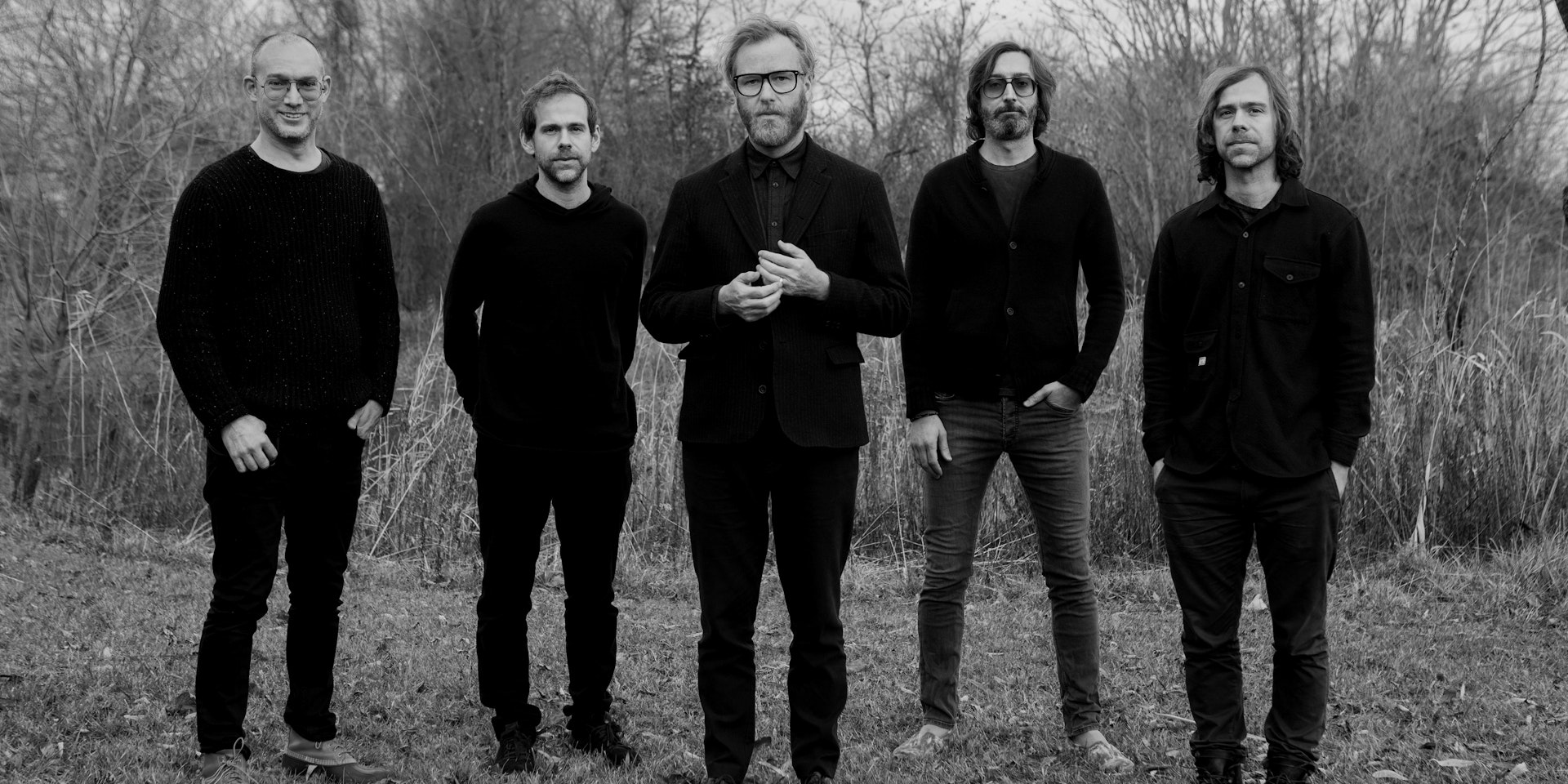
In July of 2018 we released our album All That Reckoning. Two months later our mother died and we realized that there was more reckoning still to come. Ghosts is the result of that realization; a suite of songs revolving around grief, pain, fear, anxiety, beauty; a set of songs examining the complexity of emotions that subsume us after losing a parent. We were writing and creating these songs while we were touring ATR and as they took shape it became clear to us that they belonged as part of, or at least as an addendum to, the songs that make up All That Reckoning. They deal with the ultimate reckoning, the reckoning that comes with the death of a loved one and the reassessing that one goes through as one tries to process such a loss.
The concept behind this project was to present it as a two disc vinyl-album set. All That Reckoning and Ghosts work best as two bodies of work, reflecting off of each other, but you know what they say about the best laid plans of men….so in the meantime enjoy, enjoy, enjoy.
The Wants describe themselves as inspired by the minimal structures of punk-punk and while that may be true Container feels more deeply indebted to the earliest threads of industrial music. This is an electronics-forward record; mechanical drum beats, retro synths, and pounding digital bass punctuated with spiky guitar riffs that cut through the noise like razors. There are other stylistic touch-points that spice up the compositions, like the early 00s DFA-lite electroclash vibes of the lead track, “Ramp,” that plays like a pared down and condensed b-side from The Rapture’s Echoes. Title track “Container” features a lyrical structure that strings together a series of urgent verbs that recalls Daft Punk’s “Harder Better Faster Stronger” but with positive productivity swapped out for an indictment of possessive consumption. “Fear My Society” is the most clearly post-punk track on the album and slinks from the speakers on a precise and minimal guitar riff backed by punchy synths reminiscent of Depeche Mode at their most radio-ready.
Some of the most interesting compositions on the album are instrumental, delicious slices of pure atmosphere that amp up the drama between the lyrical segments. This is where The Wants truly start to experiment. Mechanical menace builds over the brief 52-seconds of “Machine Room,” a clanging beat over doomsday synths bleeding directly into the opening riff of “Fear My Society.” The deeply unsettling ambiance of “Aluminum” is tangibly electric, like reaching out through ionized air to touch the glowing static-screen of an ancient tube TV in a pitch-black room. “Aluminum” showcases The Want’s mastery of John Carpenter-esque creeping dread that lurks mostly in the shadows on the rest of the album, a tone that surfaces again on “Waiting Room,” but backed with a thick dance beat and a healthy portion of sonic anxiety.
Conceptually, Container is highly focused on the individual and preserving that uniqueness in the face of external pressures to conform. There’s an inherent human drive to classify everything; man, woman, black, white, gay, straight. The convenience of organizing people and things into neat little categories often comes at the expense of other traits that make us unique and completely ignores those that by nature or choice do not fit into the generally accepted societal framework.
The Wants completely reject the idea of compartmentalized conformity, taking a strong and often aggressive stance on standing out from the pack. “I will stay a deviant or I will die of boredom” punches through on “Ape Trap” as a singular statement of intent upon which the entire album orbits, a personal ultimatum that vehemently defines individuality in a world that actively undermines those that don’t fall in line. It’s a do-or-die stance that requires Herculean levels of discipline and the construction of emotional walls to keep the outside at bay. “I have no intimacy, I’m never vulnerable” Madison Velding-VanDam sings on the standout track “Clearly A Crisis,” a battle-cry of self-preservation wrapped up in an infectious dance beat.
There are moments of levity that keep Container from getting too unwieldy. “Motor” is propelled forward with a thick bassline and contagious riff, backing vocals from Heather Elle delivering the icy-cool come-on “let’s go fast” as the music churns like a packed dancefloor under pulsing strobes. A chip-tune Gary Numan synth and swirling digital sound effects feel like the soundtrack to an anime apocalypse on “Nuclear Party;” Neo-Tokyo succumbing to atomic annihilation as Velding-VanDam sing/chants “kiss my bombs and I’ll kiss your bones.” Its heavy and destructive, but so absurdist and nonchalant that you can’t help but grin which is probably the point.
Container is out now and may be just the thing to get you up and off your couch during the challenging days ahead. Nothing like a little end of the world dance party with your significant other, roommates, or pets to beat the cataclysm blues. Stay strong, stay weird, stay true.,
Grizzly Coast is the musical project of Toronto based indie-rock musician Alannah Kavanagh.
Dreamy guitar rock sensibilities combined with thoughtful lyricism evokes the feelings of longing and loneliness that you experience when you know you’re on the cusp of the end of a relationship. “Forever” is dynamic in its soundscape with an eclectic melody and powerful vocals. From the imaginative, yet highly-analytical mind of Alannah Kavanagh comes Grizzly Coast, the Toronto-based indie rock project with heavy-hitting instrumentation that tears up the stage and heavy-lifting lyrical narratives that compel you to think deeper.
Formerly performing as an acoustic singer-songwriter, Grizzly Coast wears her expansion into full-band territory well, having toured her powerful and effervescent live show throughout Ontario and Alberta, including opening slots for Fast Romantics, Begonia, and Exclaim! magazine’s Class of 2020. Grizzly Coast blends her trademark thoughtful lyricism with dreamy guitar rock sensibilities on her singles Half-Light Boy and High-Functioning, and is releasing her debut EP this spring.
The Plimsouls were an American rock band formed in Paramount, California in 1978. The band recorded two full-length albums and an EP before splitting up in 1984.
Formed by singer, songwriter, guitarist Peter Case, who has sported a wide-ranging musical career ranging from Power Pop to folk-rock to solo acoustic performance; he was a member of cult fave San Franciso band The Nerves who had released the influential 1976 self-titled EP that included the song “Hanging on the Telephone” (later a hit for Blondie) Case (who had fronted the “The Nerves”.
The Plimsouls began as a trio in 1978, initially named the Tone Dogs, which included Case, bassist Dave Pahoa, and drummer Louie Ramírez From their inception, the band quickly became a crowd favourite in the Los Angeles club scene. Long Beach promoter Stephen Zepeda signed the group to his Beat Records label for a five-song EP called Zero Hour which was released in 1980. The_Plimsouls added guitarist Eddie Muñoz who joined the group during the recording of the EP.
Danny Holloway produced the Zero Hour EP and managed the group. The song “Zero Hour” received heavy airplay on local station KROQ-FM, and the Plimsouls grew to be one of the top club draws in the city. Case received critical praise for his song-writing. In 1981, Planet Records signed the group and released their self-titled debut album which Holloway also produced. The single “Now” received strong local airplay in Los Angeles and was also covered by Phil Seymour appearing on the 2011 CD edition of his second album. Seymour also appeared live with the Plimsouls during the late 1970s, both as a guest vocalist and as an artist on the same bill. The band received some national attention in 1982 when the single “A Million Miles Away” was released on their own Shaky City record label, distributed by Bomp! Records. The song reached No. 11 on the Mainstream Rock (chart). “The song was also featured in the 1983 film “Valley Girl.
The band also appeared in the film performing the song and parts of two others. The song was included on the band’s second album, Everywhere at Once released by Geffen Records in 1983. “A Million Miles Away” was re-released as a single in 1983 and peaked at No. 82 on the chart. The band broke up 1984. Several years later, in 1990, a then up-and-coming band named the Goo Goo Dolls covered “A Million Miles Away” on their Hold Me Up album. A re-recorded version of the song is also included on the Speed (1994 film) soundtrack album.
The Plimsouls – A Million Miles Away
Singer, songwriter & guitarist Peter Case, who has sported a wide-ranging musical career ranging from Power Pop to folk-rock to solo acoustic performance; he had been a member of cult fave San Francisco band The Nerves who released the influential 1976 self-titled EP that included the song “Hanging on the Telephone”. The Plimsouls became one of the standard bearers of ’80s Power Pop via such essential tracks as as “A Million Miles Away” & “The Oldest Story in the World”, & were featured in the movie, ‘Valley Girl’; Peter’s critically-acclaimed solo career began with the 1986 album ‘Peter Case’ & the 1989 ‘The Man With the Blue Post-Modern Fragmented Neo-Traditionalist Guitar’; he released five studio albums on folk label Vanguard Records between 1995-2002; his 2007 ‘Let Us Now Praise Sleepy John’ (on Yep Roc) was nominated for a Grammy award; his most recent releases include the 2010 ‘Wig!‘, followed by outtakes compilation ‘The Case Files’ in 2011 & new studio album ‘HWY 62’ in 2015 (Omnovire Records); The Plimsouls were inducted into the Power Pop Hall of Fame in 2017; Peter is also an active musicologist & regularly conducts songwriting workshops.
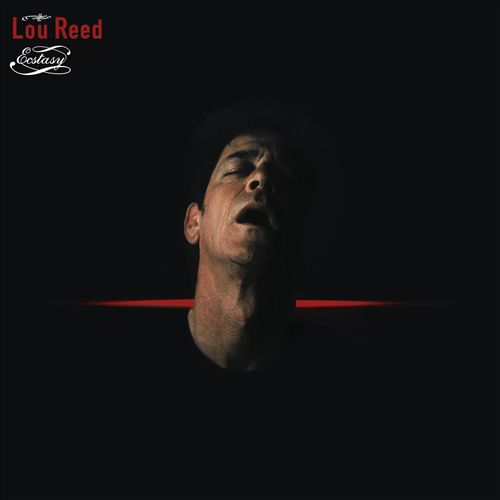
“Ecstasy” is the eighteenth solo studio album by American musician Lou Reed, released in 2000. It is a concept album about Reed’s personal experiences with marriage and relationships and is his final rock album
Ecstasy is even more impressive. Dominated emotionally by dark songs about extreme sex and relationships gone sour, it will once again be linked to Anderson, even though many of its details diverge radically from what everyone knows about the couple’s life together — that they have no children, for instance. Resist the impulse to turn music into gossip and hear Ecstasy for what it is a complex, musically gorgeous synthesis of the obsessions that powered Reed’s failed 1973 Berlin and his great marriage albums of the early Eighties, especially The Blue Mask.
Since happy love is much rarer in good art than it is in good lives, Twilight remains moderately miraculous — far from innocent of struggle and doubt, it’s nevertheless the most openhearted, sweet-tempered record Reed has ever put out there. It was only a moment, though, and on Ecstasy he says hello to his old demons. Masking profound rage with bitchy back talk, Reed’s romantic egotism has always doomed his personal and artistic commitments — he needs new sensations. But perhaps because he’s put in two decades as an attempted mensch, first with ex-wife Sylvia Morales and then with Anderson, his demons now sometimes seem more like daemons, geniuses, as on the passionately impenetrable title song, which is about a soul-shaking sexual adventure by or with a mythified someone who could be rough trade or a prominent New York performance artist. On the amazing “Mad,” Lou’s tirade after he’s caught cheating — “You said you’re out of town for the night/And I believed in you/I believed you” lays open the asshole he knows himself to be without apologizing for his base-line arrogance. And the impossible marriages of “Tatters” and “Baton Rouge,” both carefully fictionalized, are sketched with the kind of intimate incidental detail only appreciated by someone who has learned from experience how specific relationships are.
Add several paeans to the perverse — among them a hopeless declaration of sexual indenture and a moaned and shouted eighteen-minute noisefest, and three off-message changes of pace that include a slave’s freedom rant and an upliftingly spiritual closer — and the complexity of Reed’s conception should be clear. Words, however, are truly only half of it. Understandably, Reed’s old fascination with sadomasochistic transcendence puts off those who don’t swing that way at least a little. But the music on this record, its gorgeous part, could change that.
Together with his longtime guitarist Mike Rathke and the ever-more-fluid bassist Fernando Saunders, Reed has gradually adjusted his trademark minimalism toward a body-friendly responsiveness. The guitar hooks on “Mad” and “Ecstasy,” far less trebly and staccato than the Velvet Underground norm, render those demented statements rather beautiful — touching and vulnerable alongside hateful and proud. And while the timbre of Reed’s Sprechgesang will never again be as supple as in his moments of youthful lyricism, like “Pale Blue Eyes,” his sere thoughtfulness here is at least as tender — his perspective seems like mature understanding rather than neurotic distance. If rock is to be an art form — and, come on, it’s earned the option — best it should honor life’s physical reality as unmistakably as this music does. Let his fellow big shots respect him. Us guys’ll just give him R-E-S-P-E-C-T.
Heavyweight Double LP reissue of Lou Reed’ s 18th and final (non-collaborative) solo rock album “Ecstasy”, Originally released in 2000.
Never let it be said that Lou Reed has lost the ability to surprise his audience; who would have thought that at the age of 58, on his first album of the new millennium, Reed would offer us an 18-minute guitar distortion workout with lyrics abut kinky sex, dangerous drugs, and (here’s the surprise) imagining what it would be like to be a possum? For the most part, Ecstasy finds Reed obsessed with love and sex, though (as you might expect) his take on romance is hardly rosy (“Paranoia Key of E,” “Mad,” and “Tatters” all document a relationship at the point of collapse, while “Baton Rouge” is an eccentric but moving elegy for a love that didn’t last) and Eros is usually messy (“White Prism”), obsessive (“Ecstasy”), or unhealthy and perverse (“Rock Minuet”). Reed genuinely seems to be stretching towards new lyrical and musical ground here, but while some of his experiments work, several pointedly do not, with the epic “Like a Possum” only the album’s most spectacular miscalculation. Still, Reed and producer Hal Wilner take some chances with the arrangements that pay off, particularly the subtle horn charts that dot several songs, and Reed‘s superb rhythm section (Fernando Saunders on bass and Tony “Thunder” Smith on drums) gives these songs a rock-solid foundation for the leader’s guitar workouts. As Reed and his band hit fifth gear on the album’s rousing closer, “Big Sky,” he once again proves that even his uneven works include a few songs you’ll certainly want to have in your collection — as long as they’re not about possums.
Track 4 from his eighteenth solo album “Ecstasy” released in 2000 copyright Sire Records. This album was his last solo release before his death in 2013. It was well received by critics as another strong album, some say his “masterpiece.” Written by Lou Reed and produced by Lou Reed & Hal Willner. RIP Lou & Don Alias. Featuring: Lou Reed – Lead vocals, lead & rhythm guitars, percussion on “White Prism” Mike Rathke – Lead & rhythm guitars Fernando Saunders – Bass & background vocals Tony “Thunder” smith – Drums, percussion & background vocals Special Guests: Don Alias – Percussion on “Ecstasy” Laurie Anderson – Electric Violin on “White Prism”, “Rouge” & Rock Minuet” Steven Bernstein – Trumpet & horn arrangements Doug Wieselman – Baritone & tenor saxes Paul Shapiro – Tenor sax Jane Scarpantoni – Cello
Laura Marling’s exquisite seventh album “Song For Our Daughter” arrives almost without pre-amble or warning in the midst of uncharted global chaos, and yet instantly and tenderly offers a sense of purpose, clarity and calm. As a balm for the soul, this full-blooded new collection could be posited as Laura’s richest to date, but in truth it’s another incredibly fine record by a British artist who rarely strays from delivering incredibly fine records.
Taking much of the production reins herself, alongside long-time collaborators Ethan Johns and Dom Monks, Laura has layered up lush string arrangements and a broad sense of scale to these songs without losing any of the intimacy or reverence we’ve come to anticipate and almost take for granted from her throughout the past decade.
Releases April 10th, 2020, Chrysalis Records Limited, in partnership with Partisan Records
High Violet is one of those albums that exists as both a showcase of new music and an event. For The National, High Violet represented some sort of promise fulfilled. Just a year after Grizzly Bear’s Veckatimest, Animal Collective’s Merriweather Post Pavilion, and Dirty Projectors’ Bitte Orca, the National became another indie act made good. Brooklyn was booming, and the band consisting of a wine-guzzling midwestern Leonard Cohen, two brothers plucked from guitar-nerd heaven, and two more brothers using the Grateful Dead and good vibes as the chief inspiration for the rhythm section, somehow became one of the most captivating acts in the nation.
Like seemingly every National record, High Violet begins with an absolute bang. “Terrible Love” is an all-time album opener, and perhaps the best song the National have recorded to date. Singer Matt Berninger begins with his vision blurred and words slurred, acting out the destructive tendencies he describes. His voice moves between self-contained characters at a moment’s notice, at one point almost too zonked to speak and the next completely raspy from pleading for understanding. It’s a performance, a method acting masterclass in character-based songwriting. Early National albums like Boxer and Alligator before it moved from quiet to loud and clean to messy. Here, on “Terrible Love,” the band throws away this rulebook, with the Dessner brothers fuzzing up their guitars from the outset as the Devendorfs use the rhythm section to slowly pull the song toward its thrilling apex.
The next few tracks on the album do more to establish tone and aesthetics than shine through in their own right, as “Sorrow” builds off of trembling acoustic guitars and a cleaner baritone from Berninger. The drums are nearly echoless, bright in tone and simple in composition. “Little Faith” scurries in panic, with sirens for guitars blaring above melodic and stagnant synthesizers. Bryan Devendorf shows off just how impressive of a drummer he is, giving the song its entire pace with just a few scattered ghost notes on his snare drum. Berninger’s desperation is palpable as he sings, “All our lonely kicks are getting harder to find / We’ll play nuns versus priests until somebody cries.” In the narcotized Upper Manhattan world that the National often watch and comment on, any emotion at all will suffice; even if it causes tears.
Afraid of Everyone” is the album’s second single after “Bloodbuzz Ohio,” and while the album’s second-half is a masterpiece in a way the first doesn’t quite reach, these two tracks are an apt thesis on the National’s changed approach for High Violet. Sufjan Stevens lends harmonies to the former, giving an ethereality to a band that’s so often rooted in a cold, broken reality. Berninger goes nearly breathless during the song’s finale, “Your voice has stolen my soul, soul, soul,” he sings, literally losing his voice as he does so ― a masterful showcase of descriptive vocal performance.
“Bloodbuzz” was released about two months before the album came out, and it’s a brilliant dividing point between the album’s two halves. Devendorf’s drums again steal the show, bouncing across the recording like a proton looking for its partner. The horns build with a quiet fury, and Berninger’s voice is more delicate here than on most of the record. The song is an emotional ode to the state that birthed the band, with lyrics from Berninger like, “I was carried to Ohio in a swarm of bees / I’ll never marry but Ohio don’t remember me.” Even when the images are nostalgic, they’re dipped in pain and regret: “I never thought about love when I thought about home.”
Berninger’s characters tend to always be running from things, and on High Violet his imagination doesn’t stop trying to escape, but perhaps these voices have grown comfortable with the practice. The album is a reconciliation of broken faith and half-hearted regret. There’s no point in letting pain linger if it doesn’t hurt that badly in the first place. The album’s back half begins with “Lemonworld,” an imagistic narrative from Berninger that’s more of a novel in verse than lyrics to a song. It’s spare and precise, with Berninger’s words cutting cleanly: “You and your sister live in a lemonworld / I want to sit in and die.” Among the layers and layers of theNational’s elegant and pain-stakingly assembled compositions lie Berninger’s lyrics, which deserve their own listen outside the context of the music. His storytelling is incredibly intoxicating and he’s able to conjure the emotions of the words he sings in a way I’ve never heard before. It’s poetry, plain and simple .“Runaway” is a slow-building triumph, stadium-ready in a way the National began to master throughout High Violet. The album’s closing run is flawless, with “Conversation 16,” “England,” and “Vanderlyle Crybaby Geeks” each succeeding in independently ecstatic ways. “Conversation 16” moves with the propulsion of a Hollywood thriller, while “England” is unabashedly anthemic, epically stirring without ever becoming corny. “Vanderlyle” is somber and mournful with hints of optimism, which is perhaps the only way to rightfully end a National album.The creation of the album was rumored to be an intense and volatile process, with the band spending days on certain details that nearly ripped the threads of the group’s foundation apart. It’s dramatic, but it also makes sense considering how thoroughly technical every detail of High Violet is. The band’s ability to stitch together a quilt and hide the seams betrays the work of masters, and it foreshadows a run of records that solidified the National as one of the most thrilling bands we’ve seen in a decade or more. Now, the group is more an entity than a band, with a festival and documentary populating album releases, but High Violet propelled them to this place. It was the last time The National were simply a band, before the world truly came calling. Prior to High Violet, they never had to answer.This edition of High Violet is about as deluxe as it comes; it’s on 3LP, comes with bonus tracks, and is housed in a triple gatefold sleeve. It’s the National album that broke them on the Billboard charts; the one that has arguably their most potent fist-pumper (“Bloodbuzz Ohio”) and it’s also the one that feels most underrated in their catalouge. Revisit 2010’s best indie rock album by getting this reissue, now. The National‘s 2010 album High Violet will be reissued as an expanded 10th anniversary 3LP coloured vinyl package in June.This includes unreleased tracks ‘You Were a Kindness’ and ‘Wake Up Your Saints’ as well as alternate versions, B-sides, and live recordings. The album proper is across the first two LPs, with the third reserved for the bonus tracks. As can be seen from the image above, this release is being pressed on stunning white/violet coloured vinyl mix. These are numbered and come with a foil-blocked cover and a ‘bellyband’ (presumably the purple strip on the image).
The original punk album, The Stooges is a Molotov cocktail delivered straight to the faces of the hippies of 1969, an album made by Michigan goons who were sick of everything, and wanted to be your dog. The album marked the arrival of Iggy Pop, one of the last true rock ‘n’ roll iconoclasts, and though the album was considered an historic bomb upon its release–it never cracked the top 100–it influenced basically every glam, punk and post-punk album released in its considerable wake.
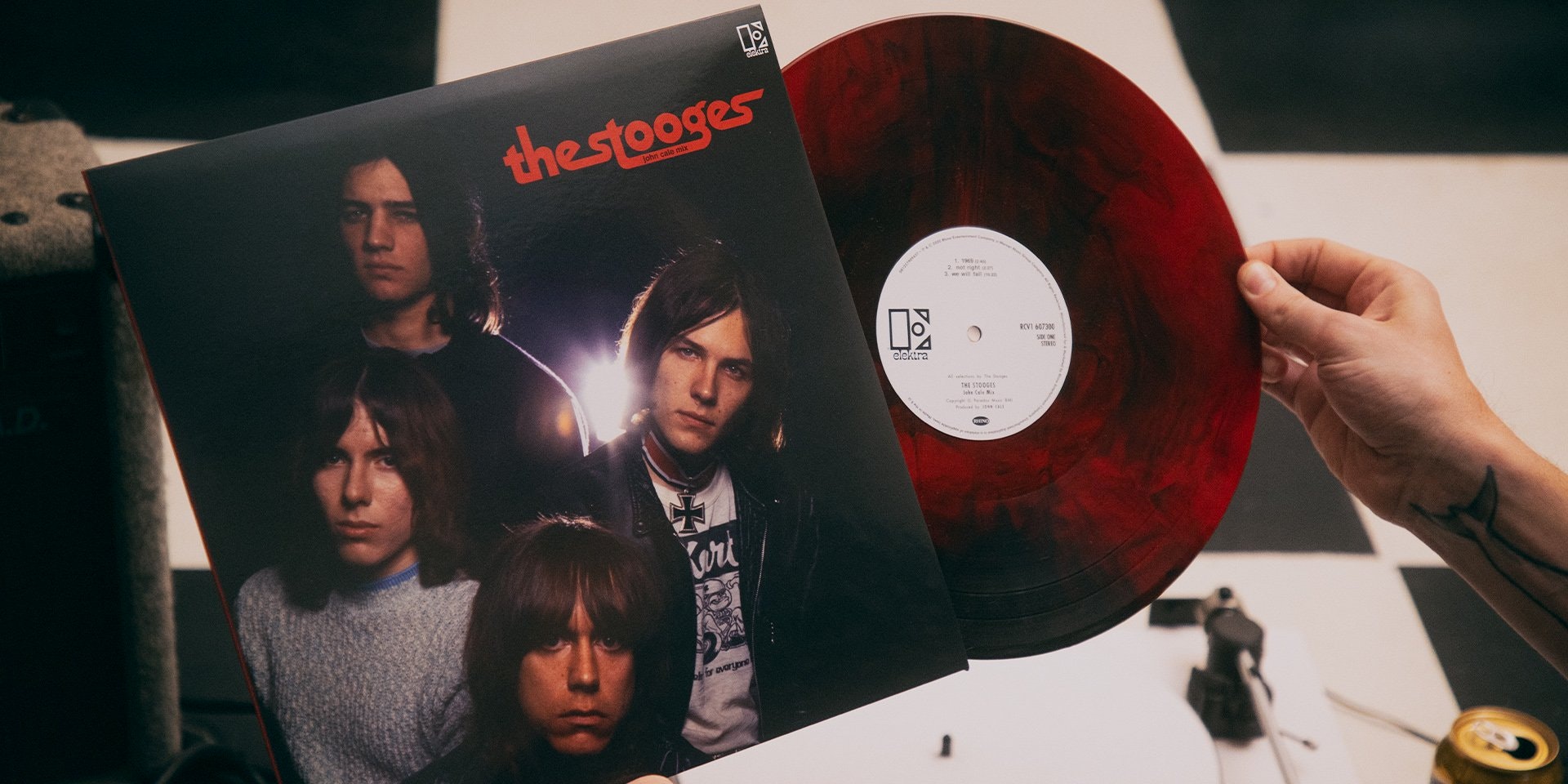
The album’s original mix by producer John Cale was infamously rejected by Elektra Records–they thought it sounded too abrasive–and it has never appeared on vinyl. Until now. A new way to hear a classic album, this version is presented in the way that John Cale originally intended,
First, there’s the story of the album, which is that when the Stooges recorded this, 51 years ago, it was produced by John Cale, fresh off quitting the Velvet Underground. And he immediately realized that the Stooges should not sound like the Doors, or the Byrds, or whoever else. They were raw power, a barely contained riot, a train bearing down on you as you’re tied to the tracks. So he gets them to record their eight songs, one of my favorite side stories is that the Stooges showed up only having five songs, thinking that was more than enough for an album, and then lied and said they had eight when questioned and had to write three more basically overnight and he mixes the album like it’s this murder in real time, just all fuzz, and violence and ooze. The suits at the label hear this mix, and say what ,in retrospect everyone would say about the version that came out: That it sounded like shit, that it sounded dumb, that it was too uncontrolled to see release. So they fire John Cale, and ditch his mixes, and Iggy and Jac Holzman from Elektra re-mix and resequence the record, which is the version that comes out now.
John Cale’s original vision was the album as sort of a redemptive arc; his version ends with “I Wanna Be Your Dog,” which he saw as Iggy deciding to fall in line with society. The label saw it as one of the singles, so it’s on side one on the original version. So anyway, the original Stooges comes out, and it’s a bomb. But it secretly influences basically every hard rock band that has come since; it’s not an over-exaggeration to say that there’s basically no hard rock if the Stooges don’t lay the groundwork for punk on this album. It’s rightly lauded as one of the most important albums of all time.
Yeah, so meanwhile, there’s this version of the album that basically just lived in Stooges lore, that John Cale’s mix existed but was scrapped. And then in the early ’00s, these tapes walk into Rhino, and somehow, someone has a copy of the John Cale mixes. The speculation is that someone cut an unauthorized walking version of the album basically, one to take home and they confirmed with John Cale that what was on the tapes were his mixes. So they put the album out in digital form in 2010, however, they realize later that they actually released the album at too slow a tempo; the version on the tapes they found was likely recorded not from a deck, but from an echo machine, so for almost 10 years, the version known as the “John Cale Mix” was actually way slower than it should have been.
They corrected the tapes for the 50th Anniversary edition that came out last fall digitally. And this is the final part of the story: WEA/Rhino came to us to ask if we wanted to do the first original vinyl pressing of this album, and once we realized what they were asking, this was a no-brainer. We all listened to it, and I, for one, couldn’t believe that songs I’ve loved since I was a teen could sound even more like they were coming from the end of the scariest alley in town. We’re getting to present one of the most important albums in rock history, and doing so in the way it was originally meant to be heard. It’s a tremendous honor for all of us on the music team.
It’s one thing for us to tell you that the John Cale mix of The Stooges sounds gnarlier than the original; it’s another to let you hear it. Here’s a mini-doc telling the story of the album, and comparing the two records.
You have to remember what it was like before. For a full quarter of 1969, the No. 1 album in the country was the soundtrack to Hair, Blood, Sweat and Tears had a No. 1 album for seven weeks and, no offense to Al Kooper, but nothing on that group’s self-titled told life like it really was in 1969. The music that made its way to the charts back then, how life was on the ground for a Michigan resident raised by a working class family whose only prospects were the already-dying assembly lines or the frontlines of Vietnam.
And then, 10 days before the opening of Woodstock, it also is the ground zero for every angry album of noise that came since; without it, you don’t get glam, you don’t get British or American punk, you don’t get pop-punk, Green Day, and you maybe don’t the evolutions that happened to bring us every type of metal music. You don’t get any of it. Instead, Thank God, and Michigan, then, for The Stooges.
The Stooges were never a safe bet; not only in the “are they going to be coherent enough for shows?” way, but especially in the “These guys are gonna be stars!” way record labels are usually looking for. Fronted by James Newell Osterberg Jr., who came from a trailer park in Ann Arbor, Michigan, and who played the drums as a kid after his parents gave up their bedroom for him to have the space to play. Eventually ol’ James was banging the skins in a band called the Iguanas when he got his nickname, Iggy Pop. Sometime in 1967, at 20, and dropped out of the University of Michigan, Iggy saw the Doors, who were then known as a travelling disaster, as frontman Jim Morrison turned each gig into something like performance art crossed with a riot. Iggy decided he didn’t want to be behind the kit, and wanted to be out front doing that. He linked up with the Asheton Brothers Scott and Ron two guys who liked to party as much as he did, and could play the shit out of their drums and guitar — and Dave Alexander, a guy they all liked who had just recently started teaching himself to play the bass. They played their first show as the Psychedelic Stooges on Halloween, 1967. They’d ditch the hippie shit soon enough. Iggy and the Stooges quickly got a reputation around Michigan, particularly in Detroit, where another band of street toughs called the MC5 had set up shop. The bands became kindred spirits, and often shared bills; the MC5, though, always sounded like they wanted to be hard rock Motown, where the Stooges felt like they were a raw nerve set to make music. Anger and self-loathing and depression set to primitive funeral marches and barely contained war parades. Eventually, an enterprising A&R man from Elektra named Danny Fields signed both bands, in a bid to make Elektra the home of new Detroit rock. Both the Stooges and MC5 would be unmitigated disasters from a corporate level, the MC5 lasting a single album (1969’s live proto-punk volley Kick Out The Jams) before their careers flamed out in booze, drug busts, and legal troubles.If Elektra was worried their two-pronged Detroit rock machine was in danger following the MC5’s debut getting savaged by Lester Bangs in the pages of Rolling Stone he eventually came around on it, as critics were allowed to do in those days — they had still had no fear in April 1969, when they sent the Stooges to Hit Factory in New York City to record their self-titled debut. They hired a recent underground rock hero named John Cale to produce the album, fresh off his time in the Velvet Underground, where his artiste sensibilities meshed with Lou Reed’s misanthropy to make the first two Velvet Underground albums, case studies in taking a label’s money, doing something no one had done before, and paying the cost for it with low sales while gaining a reputation for being ahead of your time (which the Stooges would soon follow). The Stooges came to the studio with only five songs (“No Fun,” “1969,” “Ann,” “We Will Fall,” and “I Wanna Be Your Dog”), thinking that’s all they needed to make an LP, and when they were told they needed more, lied and said they had them, and went off and wrote three more (“Not Right,” “Little Doll,” and “Real Cool Time”), playing them for the first time as a whole group in front of Cale in the studio. Those eight songs served as the foundation for too many rock movements to line up in paragraph form here, but more than 50 years later, the thing that has to be remembered is how shocking something like “I Wanna Be Your Dog” had to be to people who were used to “Incense and Peppermints.” That opening noise is like an electric chair being fired up, and the death march riff sounds more evil than any Swedish Black Metal band has mustered with 50 years advancement in guitar technology. Iggy didn’t want to hold your hand, he didn’t want to be your baby; he knew he was a dirty dog, and felt he deserved to be treated as such. Iggy studied at the altar of the Chicago blues for a time in the ’60s, and from there he took the willingness to be self-effacing and pitiful; no one sounded more put through a meat-grinder before or since. https://www.youtube.com/watch?v=1Svz3va6iekThe Stooges took rock and stripped it down to its barest studs and refused to build it back up on The Stooges. Something like “No Fun” might have read to people like Robert Christgau as “stupid” in 1969, but it’s without any artifice; it’s all attitude, all raw power. “1969” was the first song about teenage malaise and boredom to actually sound like it was made by people who were sick and tired of being sick and tired; entire bands’ discographies would be pilfered from its two verses:
“Well it’s 1969 okay All across the USA It’s another year For me and you Another year With nothing to do, Last year I was 21 I didn’t have a lot of fun And now I’m gonna be 22 I say oh my and a boo hoo And now I’m gonna be 22 I say oh my and a boo hoo”
When the band finished recording in April, 1969, Cale delivered his mix to Elektra, and things hit the fan. Mixed in a raw, naked form that emphasized the sinister, wild side of the band over sonic clarity, the original Cale mix of the album was rejected by Elektra, in a portent of things to come. Cale’s mixes were thought lost before resurfacing in the early ’00s, and after being originally released at the wrong speed, they’re out on the right speed on vinyl for the first time.
But in 1969, Cale’s mixes weren’t appreciated; Elektra president Jac Holzman and Iggy himself remixed the album, bringing the vocals higher into the mix, and lowering some of the abrasiveness. At this point, it was clear both men thought the Stooges had some commercial potential if they just cleaned it up, which, even without hindsight, is enough to make you spray water out of your nose. Albums this hard didn’t move units in 1969, and they don’t move them now. The people at the front of the herd hacking their way through the wilderness don’t get to enjoy the fruits of the civilization they made possible, and The Stooges hit the marketplace like a brick to the philtrum. It made next to no impact on the charts (it eventually rose to 106 on Billboard’s album charts, but died quickly), was savaged in reviews, and was left to be consistently rediscovered by every generation of fucked up kids who came since; it eventually got its place in the pantheon, but by as much force as is present on the album.
To Elektra’s credit, they kept the Stooges on roster for another LP; 1970’s Fun House added jazz skronk to its mix via saxophonist Don Mackay, but when it too went over like a lead balloon, the band broke up, amid Iggy’s worsening heroin problems, and a lack of much juice in their career. Thanks to David Bowie staking his new stardom on his adoration for Iggy, the band reformed in 1973 on Columbia with Raw Power, and around guitarist James Williamson, whose leads were more punk fury than Asheton’s blues-based piledrivers, and that band broke up almost immediately when Iggy went further into heroin and began palling around with Bowie as a solo artist. Iggy would become something of a solo star and a cultural icon over the years, but until the early ’00s, he and the Stooges remained mostly broken up. However, they reformed with the Ashetons (Dave Alexander died in 1975 of alcoholism-related illness) back on guitar on drums, where they’d both remain until their deaths in 2009 (guitarist Ron) and 2014 (drummer Scott).
Iggy has talked recently of packing it in for good, his legacy cemented under nuclear-blast level concrete at this point. And he should; the man has lived enough lives for a whole litter of kittens. His debut album remains one of the most direct statements of purposes for a recorded body of work that has maybe ever existed; Iggy and the Stooges came to cave in heads, and it’s taken them more than 50 years to even think about stopping.
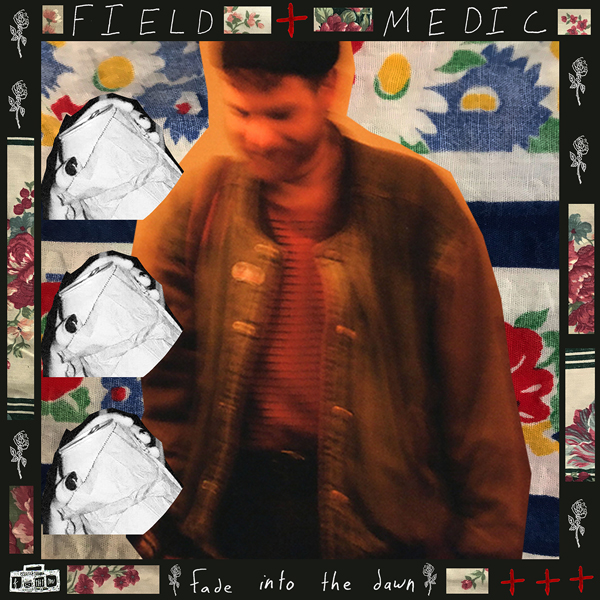
“Any song that’s true is a good song in my mind,” says Kevin Patrick, the lo-fi bedroom folk artist better known as Field Medic. “That’s why I never find it necessary to add too much stuff to my recordings. I’m just into songs themselves.” That principle is the guiding light behind Field Medic’s hypnotically beautiful and fearlessly honest new record, ‘fade into the dawn.’ Patrick’s first proper full-length release for Run For Cover and his first since making the leap to full-time musician, the collection features ten sparse, acoustic tracks that reckon with our perceptions of success and self as they face down the inevitable complications that arise from realizing any hard-won dream. Patrick has always written candidly about doubt and darkness and anxiety, but he digs deeper than ever before here, blending black humor and bold introspection as he weighs fantasy against reality and searches for meaning in the mundane. “I used to be a romantic / Now I’m a dude in a laminate,” he sings of life on perpetual tour, encapsulating at once both the tantalizing allure and endless tedium of the road.
“You always expect that in having some portion of your dreams fulfilled, your life will get better on a day to day basis,” reflects Patrick. “But I discovered that in the process of getting here, my desire to drink ramped up and my own internal self was actually a lot darker than I thought. That felt like something I wanted to work on.”
At the time, Patrick found himself going through a number of tumultuous changes: he relocated to Los Angeles from San Francisco, where he’d lived and recorded on and off for several years; he left the world of day jobs behind in order to tour year-round; and he decided to quit drinking, only to return to it halfway through a particularly grueling run of shows. It was the sort of emotional rollercoaster that he would normally work through in song, but even the simple act of writing seemed profoundly more complicated than ever before.
“I struggled after I got signed because every time I started writing something, I’d get nervous about whether it was good enough, and that went against my entire initial philosophy, which was to record and release absolutely everything,” says Patrick. “I had to learn to let go again, because the best songs are the ones that happen inexplicably, that feel like they come out of me almost against my will.”
While Patrick decided to record this album digitally for the first time (his self-released 2015 debut, ‘light is gone,’ and the 2017 Run For Cover-issued collection ‘Songs from the Sunroom’ were both recorded straight to a four-track), he managed to faithfully preserve his DIY ethos, recording each song in a maximum of three live takes. The result is a collection that feels higher definition and more ambitious than ever before (live drums and lead guitar appear on this record for the first time), but still maintains the raw, spontaneous character that’s defined Field Medic from the start. Back in the beginning, I’d record a song a few times, walk away, and then just choose a take and be done with it,” says Patrick. “I tried to take that same approach this time around even though I was recording digitally and didn’t have the same restrictions as I did with the four-track. I just find that if I dwell too much on any recording, it loses the feeling. You have to accept it for what it is in that moment.” Patrick’s ability to capture specific moments in all their messy, complicated ambiguity is a large part of what’s earned him both his devoted cult following and his widespread critical acclaim.
Philadelphia NPR station WXPN hailed Field Medic as a “West Coast freak-folk poet who will capture your heart,” while the San Francisco Chronicle praised his “intensely emotional” voice as a “melodic quiet storm,” and the Chicago Reader swooned for his “charming, unvarnished acoustic bedroom songs.” Patrick’s tracks racked up well over a million collective streams on Spotify, and his captivating live performances (in which he’s accompanied by nothing more than his guitar and an old school boombox) landed him dates with everyone from The Neighbourhood and Wallows to HEALTH and Girlpool.
“With the boombox, I have a few different cassettes with beats for songs on them to back me up live,” he explains. “I played in a band for a long time, but I was always more into lyrics than anything else, so when I started Field Medic, I wanted to find a way to give my songs some rhythm without taking any focus off the words. Now when I’m out on the road, the boombox is my bandmate.”
The road is precisely where “fade into the dawn” picks up, with Patrick recounting a particularly brutal night on tour in the infectious album opener “clam chatter in the heart of brooklyn.” “I swore that I’d quit / But I need a drink tonight,” he sings, setting up the album’s central struggle between restraint and release, moderation and obsession, sobriety and surrender. The woozy “hello moon” calls to mind Jose Gonzalez as Patrick meditates on the nightly loss of control he felt when using alcohol to temper his anxiety, while the waltzing, Neil Young-esque “the bottle’s my lover, she’s just my friend” confronts the ways in which escape can seem helpful even when it’s destructive, and the tender “it helps me forget…” (recorded in a single take into an iPhone’s voice memo app) searches for relief from the pressures we impose upon and the walls we build around ourselves.
“It seemed like alcohol was popping up in every aspect of my life,” says Patrick, “whether it be during my career, which is touring, or during my love life, when I felt like I’d rather be drinking than chilling with a girlfriend, or just in the day-to-day, when I was trying to forget all these things I felt anxious about.” Rather than succumb to the siren song of oblivion, though, Patrick finds resolve and redemption in human connection. The banjo-driven “tournament horseshoe” draws strength from devotion to a lover, while the charming “henna tattoo” (recorded once again on the trusty four-track and backed by a simple drum machine) throws worry to the wind for a chance at real love, and the dreamy “songs r worthless now” spins a romantic fantasy about baring your soul at the end of the world.
“I had this thought recently that in my songs, I feel like I’m this super version of myself,” Patrick reflects. “In my day to day life I’m reserved and quiet and do my own thing, but in my songs, I can share how I really feel and say all the things that I’ve always wanted to say.” In that sense, Field Medic isn’t just a stage name for Patrick, it’s a permission slip, an invitation to shed his self-consciousness and become his truest self. And truth is what it’s all about, after all. It’s where love and satisfaction and all the best songs come from. ‘fade into the dawn’ is proof positive of that.
Pearl Jam newest album ‘Gigaton’ one of the biggest rock bands in the world return to semi-brilliance this is Eddie Vedder and co.’s 11th album won’t change your life, but should boast enough vitriol to satisfy long-term fans
Assessing the work of bands that are in the truest sense of the world seminal often feels like a brutal internal skirmish. The head knows they’ve changed, aged, softened into something that feels at-times unbearably unrecognisable from their youthful defiance. But the heart, in all its fervour, wants what it knew and adored. And Pearl Jam particularly in the last decade have pandered to the former. Their last record, ‘Lightning Bolt’ (2013) was the opposite of its moniker; a gentle jaunt into middle-aged nothingness, it commanded a sense of loss for the greatness that had been. For many Pearl Jam fans, this was pretty devastating. It felt like the end.
And so ‘Gigaton’ – their 11th record and first in seven years – arrives into a curious space for the band and in a new musical status quo where guitar music seems to have taken a backseat. Yet album opener ‘Who Ever Said’ is exciting even in this climate, sounding not unlike something from 1998’s ‘Yield’-era Pearl Jam, a vestige of grown-up grunge with a welcome bluesy Stone Temple Pilots edge. It brims with hope (much-needed, right now) that evokes a sense of urgency.
‘Superblood Wolfmoon’, am album highlight, fits into that fold of brilliance, too. You can just imagine it at a festival, slotted between ‘Do The Evolution’ (1998) and ‘Hail, Hail’ (1996) with pacey, hip-shaking swagger and clever time signatures. Frontman Eddie Vedder’s silky vocals perch over Mike McReady’s riffs to perfection with melody firmly at the top of the agenda. This is the kind of song that won the band seismic radio airplay back in the ‘90s (and some backlash too) as contemporaries like Alice In Chains and Soundgarden stayed firmly in the heavy rock stable with little mainstream crossover. They’re both solid tracks, great, even, and a truly exciting start of a band renewed. But they’re sadly not always indicative of the rest of the album.
A lot hinges on single ‘Dance Of The Clairvoyants’ to follow up with some fervour. But its synth-laden noughties vibe although catchy – just feels too far from their original sound to resonate in an old world or a new one. The smoothness jars against Vedder’s vocals while McCreedy’s guitar soars try to salvage something. But we’ve entered a mediocre zone the band need to be wary of and have occasionally fallen into.
Nestled in-between is ‘Quick Escape’, which is something of a relief. A listenable crescendo of strings, bass and sonic excellence, it’s the kind of track that would slip into a live set with relative ease. ‘Never Destination’, with its classic rock vibes, tempers along slowly and delivers something thoroughly palatable. ‘Take The Long Way’ similarly sounds like a cleaned-up Pearl Jam of yore with lines such as “I always take the long way / Leads me back to you’ pushed up against frenetic licks.
Everything feels OK – for a moment. But that’s when the sickly, MOR ‘Buckle Up’ sidles up to you and if followed by the gentle ditty ‘Comes Then Goes’. They both fall into the category of Pearl Jam tracks that sound – much like Vedder’s solo stuff – nice enough, but are pretty darn samey.
The band’s records have long featured unremarkable material – and this kind of filler gets less remarkable with each record. New track ‘Retrograde’ has its charming acoustic moments, but as this record closes with ‘Rivers Cross’ – which is one-part Pearl Jam epic, one-part cultural commentary with lines such as ‘the government drives all discontent‘ – you can’t help but look back across a legacy spinning over 30 years.
While ‘Gigaton’ features threads of similarity to 2009’s ‘Backspacer’, which boasted acid tenderness, and 2002’s ‘Riot Act’, which was all furious punk medleys, those magical moments do feel a little fleeting on this record. A handful of great songs might not be quite enough to sustain a new listener, or placate an older one.
‘Gigaton’’s saving grace? There’s plenty of malcontent here, even if Vedder leaping from amps might be a thing of youthful memory. Here his well-honed, biting lyrics signal fury at a world that seems to have lost its way entirely. The political climate comes into fire and references to grief and loss abound. A resonating line from ‘Comes And Goes’: ‘It’s all vivisection in the end’. Pearl Jam have, undoubtedly, as pioneers and figures that have shaped rock history, earned the right to make whatever the fuck they like. But the question is whether anyone is still listening any more? With this multi-faceted record, the answer is likely yes. It just won’t change your life.
Release date:March 27th on Monkeywrench Records/Republic Records,