One thing you won’t be able to avoid on Bambara’s “Stray” is death. It’s everywhere and inescapable. It would be wrong, however, to characterize the group’s fourth album as simply a dark and gloomy affair. The sonic landscape is varied, showcasing the band at both their heaviest and most nuanced, while the lyrics quickly go from the sublime to the surreal. It is undoubtedly their strongest statement yet.
Bambara released Stray, their full length fully Southern Gothic record. It’s 100% set in Georgia, which is teeming with gothic imagery according to the band. Everything from the moss to the family structures. A little before the album came out we met up to take some pictures at The Broadway, the most Brooklyn place there is. The Bateh brothers Reid and Blaze and their fellow Georgian William Brookshire blend in perfectly well here, but there’s something about them that doesn’t scream maybe quietly creaks like floorboards warped by a humid southern summer that tells you they’re coming from somewhere else.
The album itself is intricate and precise, each song a chapter telling another character’s part in the bigger story. It could come off a little theatrical if you’re not used to it but that’s kind of the whole point. There’s nothing more dramatic than death, and this record is death-obsessed, mainly dark but never dull. The characters were created in a concentrated bout of writing, with Reid calling away from work and submerging himself in this place he was creating. That frantic energy comes out on track 2, “Heat Lightning,” after a super moody opener, “Miracle.” From there it takes you wherever the characters need to go.
“Heat Lightning” was the 3rd single released by Brooklyn-based post-punk band Bambara from their 4th LP, Stray. Formed in Georgia by brothers Reid and Blaze Bateh, Bambara trailed their southern roots to the streets of Brooklyn in 2009. The intoxicating noise of the city streets seems to feel right at home to the group as they find a certain sort of comfort in the claustrophobia of metropolitan life. A quiet city at night feels much more eerie than peaceful, and Bambara is able to capture this sort of darkness in the way they know best – noise.
Reid’s voice is almost evocative of Protomartyr’s Joe Casey and fills it with Girl Band’s anxiety, the darkness of Daughters, and the cinematic sensibilities of The Murder Capital. However, these comparisons all render meaningless because Bambara is uniquely their own in this increasingly saturated landscape of post-punk bands.
Bringing listeners to a realm of their own design, Bambara sets a listener on edge and fills them with adrenaline at the same time. Rather than being set in a New York landscape, the group distances you from reality and into a gothic western. Incredibly dark with slow, droning lyrics on top of a sinister, fast-paced guitar and a western-tinged twang makes “Heat Lightning” cinematic in a way that sends chills down your spine.
Bambara knows how to tell a story and listening becomes a fully immersive experience. The band’s lyrics are darker than they have ever been, focusing on the motif of death. In this track, Death becomes a character, spouting wisdom that rips apart the idea that everything can be explained. It becomes clear that Death is talking directly to you and dread inches through your body with every note. The consequential air of mystery and coldness leaves listeners wanting even more of the stories Bambara is telling, and to experience this haunting realm once more.
Unfold the rest of the mystery on February 14th when Stray is released on Wharf Cat Records.
The beautiful new song ‘Jesus Christ 2005 God Bless America’ is The 1975 at their most fragile and vulnerable,
The haunting acoustic track is taken from the band’s upcoming new album ‘Notes On A Conditional Form”.
Each of the singles released so far from Matty Healy and co.’s upcoming album ‘Notes On A Conditional Form’ bears a sense of Devil-may-care abandon. ‘Jesus Christ 2005 God Bless America’, the band’s latest release, featuring the vocals of heart-breaker Phoebe Bridgers, is yet another change of pace from a gang who cherish the unexpected. Stripped down to mostly vocals and acoustic guitar, this track is the simplest song The 1975 have put their name to since Nana’ (from 2016 album ‘I Like It When You Sleep, for You Are So Beautiful yet So Unaware of It’) but that just allows its haunting beauty to shine.
Leaning into Matty’s desire to create something like Bruce Springsteen’s ‘Nebraska’, it’s stark and personal, made for the comforting embrace of headphones. They’ve played it at live sessions previously and, for a band who embrace being fluid, it’s a testament to the power of ‘Jesus Christ 2005…’ that it hasn’t been tinkered with too much. Its sparseness allows the weighty lyrics room to fully flex.
Balancing at the point of heartbreak, the track sees Matty pondering faith, love and belief. “I’m in love with Jesus Christ,” he sings. “I’m in love with a boy I know but that’s a feeling I can never show.” It’s a world away from the buoyant skip of ‘Me And You Together Song lines, “It’s OK – lots of people think I’m gay but we’re friends, so it’s cool / Why would it not be?”, and packs a gut-wrenching punch. The always-excellent Phoebe Bridgers really elevates the track, though, adding a new point of view. The 1975 have always wanted to soundtracks moments in peoples’ lives and typically that comes in the form of a sense of celebration, but ‘Jesus Christ 2005’ sees them flirt with defeat. It’s fragile and vulnerable. “I’m just a footprint in the snow,” Matty acknowledges. But Bridgers’ lines “I’m in love with the girl next door/her name is Claire / Nice when she comes round to call / And masturbate the second she’s not there” remind us he’s not the only one with a story to tell.
Seven years since their debut, the 1975 are still reaching new heights – and ‘Jesus Christ 2005 God Bless America’ is their most heartfelt, emotional turn yet.
The Greta Thunberg assisted ‘The 1975’ implores rebellious action, Everyone out there, it is now time for civil disobedience, the teenage activist implores – while the hardcore-inspired ‘People’ sees the band at their most furious. ‘Me And You Together Song’ is a heartfelt throwback to simpler times, mirroring their formative years as Drive Like I Do, while the melancholy ‘The Birthday Party’ released in February – provides a twinkling, dreamlike escape from the everyday.
Dirty Hit, under exclusive licence to Polydor Records and Interscope Records Released on: 2020-04-03
“Either Light” is an album for right now. Outside spring is blossoming, the weather is getting milder, and birds are happily chirping away as they prepare nests to nurture this year’s young. The world is returning to life. On the other side of the glass we sit in self-imposed quarantine as a highly contagious virus spreads furiously across international borders, wreaking havoc on the global economy and testing the very limits of our cultural fabric and personal sanity. This startling dichotomy is the essence of Vundabar’s most recent release, an album of ruminations from the dark side set to disarmingly upbeat melodies.
At first blush, Either Light is 11 tracks of lush indie rock and a stylistic departure for the band. Where previous albums were characterized by brash, angular six-string heroics the compositions here feature measured and restrained guitar supported by a myriad of additional sounds that pack each channel to the bursting with engaging melodies and lavish textures. This does not by any means imply that Vundabar has gone soft, quite the opposite. Instead of screaming into the void the band now stands resolute in the face of destructive forces, determined to recognize and beat back against the black with a brighter, more focused light.
A significant portion of Either Light is fixated on death, from insects violently squashed against the grill or reduced to ash in the searing heat of an automobile’s roaring engine, to the quiet passing of a friend from an overdose. But this is not a suicidal album, far from it. Vundabar does not fear the Reaper but they do not embrace him either, instead treating death with a kind of neighborly familiarity and resigned tolerance borne from acknowledging it as the inevitable end of all things. The spread of today’s pandemic underscores this, especially so in regions that have been so mortally impacted by the destructive disruption of daily life. It would have been easy for Vundabar to compose downcast music to score this record but just like the videos of Italians singing songs of happiness from their balconies Either Light’s upbeat tone and driving, forward momentum ensures that even in the face of death we can still dance our way into oblivion.
For Vundabar an impetus of these morbid thoughts is the constant, unyielding grind of the capitalist system. An economic machine designed to separate the wheat from the chaff in a crushing process that expels so much of the human harvest as discarded waste. “I was the wretched rail that takes the train away, to chase elusive dollar on some breathless day” sings vocalist Brandon Hagen on the propulsive “Burned Off,” a vivid image of the working class literally ground under the wheels of industrial progress, left behind and bolted in place as the locomotive of prosperity barrels away into the horizon on the backs of a human infrastructure. “Montage Music” cynically lampoons the wasteful nature of cultural consumerism with a bouncy TV gameshow vibe that cloyingly prescribes “a brand-new soul and a new set of clothes” as the cure for whatever is bringing you down.
The irony here is that in the face of a widespread public health emergency the global economy is in an unprecedented tailspin. Factories shut down, businesses close their doors, bars and restaurants and music venues go dark in an effort to stem the spread of the novel virus. Vundabar didn’t have this specific scenario in mind when writing Either Light, but the band’s sentiments and expressions of fear and frustrations with the current system are universal and borderline prescient when viewed through the lens of current events.
Either Light is a heavy album for heavy times but as chaos unfolds around us it is important to remember that winter is over, life is returning all around us, and with proper precautions, hard work, and the support of our communities we will bounce back. In the meantime, play some Vundabar on Spotify and dance like the world is ending.
‘Either Light’ out March 13th 2020 on Gawk Records
The album artwork for ‘Container’ displays cans of tinned food – stockpiling chic, if you will – while portentous song titles such as ‘Fear My Society’ and ‘Clearly A Crisis’ could hardly chime more with the doomy current climate.
Comprised of two members of New York art-punks Bodega Madison Velding-VanDam and bassist Heather Elle and completed by drummer Jason Gates, the confident self-produced debut from is riven with taut anxiety and a sense of looming dread.
Madison Velding-VanDam is one busy guy. If he’s not developing and producing the music of Brooklyn art-punkers Bodega, he is racking his brains for the right words as the primary songwriter of The Wants, his buzzy side project. Oh, and if that doesn’t sound like much, Velding-VanDam also switches between lead guitar and bass for both bands, churning out watertight, propulsive riffs while he’s at it.
Madison’s schedule might be busy, but he can’t get enough of the thrill of it. Working double duty for both Bodega and The Wants has provided him with a new creative gateway into arranging and playing guitar with different visions for each respective band. This method has paid off, too; The Wants’ forthcoming debut record, Container, is a bolshy, turbulent 30-minute trip through the darker complexities of American society. It is a whip-smart, forward-thinking body of work and essentially a product of his calculated collaborative process.
Yet it’s also a collection of razor-sharp pop songs that gleam through the gloom. They mine the sinuous basslines and euphoric bleakness of post-punk outfits such as Gang Of Four (with Velding-Van-Dam’s lyrics seemingly similarly preoccupied with stripping away the lies of capitalist and consumerist culture) and the dancefloor nous of bands from their home city (think LCD Soundsystem. So while ‘Clearly A Crisis’ apes Andy Gill’s distinctive, serrated slashes of guitar, the title track ‘Container’ takes us back to the early noughties when Mattie Safer first picked up a cowbell and James Murphy fretted about losing his edge.
The brooding Depeche Mode style existential goth-pop of ‘Fear My Society’ dealing with the post-crash economic fallout of a man pondering his place in the world – proves that Velding-VanDam is worthy of wearing the Dave Gahan-style leather chaps he regularly sports onstage. ‘Ape Trap’ and ‘Hydra’ could be cuts from Interpol totemic first record ‘Turn On the Bright Lights’ , and – inspired by the soundtrack to David Lynch’s cult movie ‘Lost Highway’ ‘The Motor’ is a frantic, pulsating rave-up. The fallout shelter funk of ‘Nuclear Party’ locks into a lolloping Talking Heads groove, with Velding-VanDam sardonically deadpanning lyrics like: Kiss my bombs and I’ll kiss your bones.
Interspersed throughout are dark, ambient instrumentals ‘Machine Room’, ‘Aluminum’, ‘Waiting Room’ and ‘Voltage’. This adds an extra layer of claustrophobia and menace, but also feels like the band are padding out a very good eight-track album into 12 songs.
Still that’s a minor quibble – as ‘Container’ is a masterful statement of intent, The Motor, Container, and Ape Trap are three tracks fromContainer that signal our path forward. These best reflect our effort to mix our influences of dance, post-punk, and pop genres we’re drawn to in exciting ways. I can see us making even more danceable and vocal melody heavy music.
I don’t feel finished engaging with the lyrical and visual themes of this record, either. The dark heart of America and the complexities of my country’s iconography still keep me searching for answers.
Since the last time we heard from Aaron Maine of Porches, he’s spent some time holed up in his New York apartment, immersing himself in his emotions and creating more low-key electronic ballads. In the space of a decade, this project has consistently delivered raw and understated synth-pop. The sounds reflects his ‘look’; it’s glossy and glamorous. Luckily it’s also incredibly compelling.
2018’s ‘The House’, his third album, delivered colourful, vibrant pop while showcasing an intimate internal dialogue about seeking clarity of your own emotions. Maine recently said of his creative process: “My aim is to swim to the bottom of myself and find the most beautiful and strange things I can offer.” He’s essentially put the magnifying glass on this concept with latest record ‘Ricky Music’, and although the production is rich and textured, it also feels less polished here, as though he’s thrown his thoughts and feeling straight into the laptop.
Maine’s mournful vocal leads the way on opener ‘Patience’, evoking a sense of struggle and dogged self-belief. “Cause I’m rooting for you / And I’m rooting for me / And I’m rooting for that baby”, he sings, alluding to a complicated relationship over poignant and dramatic synths. The accompanying video depicts Aaron being pelted with basketballs, through which he battles to the other side of a gym; it’s a smart reference to his resolve to deal with everything life throws his way.
None of these synth-pop songs are longer than they need to be. This album is like a well-kept diary, neat entries playing part of a much bigger picture. Things continue in this vein with ‘Do U Wanna’ and ‘Lipstick Song’, which further explore the minimal and spacious electro sound.
You get the sense that Maine has as many sultry synth-pop bangers inside him as he pleases but, while he’s capable of dominating a more mainstream territory, he refuses to indulge in such temptations. Instead he’s taken the road less travelled, carefully placing his honey-sweet lines and choosing the moments to excite the senses musically. The occasional hard-hitting synth brings to mind something between the sounds of Stranger Things and Twin Peaks.
Still, Porches knows when to cut loose. There’s a shiny glamour to the Italo-disco synths throughout, which peak on the ’80s-influenced ‘I Wanna Ride’. “Each day the night falls,” he sings, “I stare at the moon ’til my eyes get so messed up / I can almost see you”. This is swiftly followed by the minimal acid-rave sounds of ‘Madonna’. It feels like the album has been building to this pivotal moment of release.
Whether he continues to be a minimal outlier like friend and collaborator (Sandy) Alex G, or makes a bolder move towards the limelight with his next step, you get the feeling that Aaron Maine isn’t a man who’ll make concessions to the mainstream. This effort is a bold step that shows no compromise on the horizon
Porches – “Patience”, from ‘Ricky Music’, out now on Domino Record Co.
Catherine Wheel were a four-piece alternative rock band from Great Yarmouth, England. The band was active from 1990 to 2000, experiencing fluctuating levels of commercial success, and embarking on many lengthy tours. The band comprised singer-guitarist Rob Dickinson (cousin of Iron Maiden’s Bruce Dickinson), guitarist Brian Futter, bassist Dave Hawes, and drummer Neil Sims. Hawes had previously played in a Joy Division-influenced band called Eternal. They took their moniker from the firework known as the Catherine wheel, which in turn had taken its name from the medieval torture device of the same name. The band was sometimes included in the shoegazing scene, characterized by bands that made extensive use of guitar feedback and droning washes of noise, as well as their continuous interaction with extensive numbers of effects pedals on the stage floor.
The band performed a Peel session in early 1991 while still unsigned; two 12″ vinyl EPs were released on the Norwich-based Wilde Club Records,named after the regular weekly Wilde Club gigs run by Barry Newman at Norwich Arts Centre. They signed to major-label Fontana Records after being courted by both Creation Records and the Brian Eno-run label Opal Records. The band’s debut album, 1991/92’s “Ferment”, made an immediate impression on the music press and introduced Catherine Wheel’s second-biggest U.S. hit, “Black Metallic”, as well as the moderate hit “I Want to Touch You”. The album features re-recorded versions of some of the Wilde Club-issued EPs. “Black Metallic” was later featured in the film S. Darko.
The more aggressive Chrome followed in 1993, produced by Gil Norton. With this album, the band began to shed its original shoegazing tag, while still making skillful use of atmospherics, such as on the song “Fripp”In a 2007 interview, Rob Dickinson said that members of Death Cab for Cutie and Interpol told him that without this album, their bands “wouldn’t exist.
1995’s Happy Days saw the band delving further into metallic hard rock, which alienated a portion of their fanbase, even as it increased their exposure in the United States during the post-grunge era. The single “Waydown”, and especially its plane-crash themed video, received heavy play in the U.S. A more sedate strain of rock known as Britpop was taking over in the UK, causing Catherine Wheel to continue to have greater success abroad than at home.
The B-sides and outtakes collection, Like Cats and Dogs, came out the following year, revealing a quieter, more contemplative side of the band, spanning the previous five years. This carried over into Adam and Eve in 1997, wherein the band scaled back the sonic force of their sound from its Happy Days levels, with clean playing on some songs that featured extensive use of keyboards and acoustic guitars. Alternately, songs like “Satellite” and “Here Comes the Fat Controller” were lush and orchestral in scope.
In 2000, Catherine Wheel re-emerged with a new record label, a new bassist (Ben Ellis); a modified name (The Catherine Wheel); and a new album, Wishville. After mixed reviews, record company turmoil and lacklustre sales, the band went on a still-continuing hiatus.
In March 2010, Ferment was re-released, containing bonus tracks and extensive sleeve notes.
Melkbelly sculpts their signature balance between subtle melody and frantic noise on new album “Pith”, their second for Carpark Records/Wax Nine. The Chicago-based foursome has made spatial dynamics central to its arrangements, reaching for weirder highs and more startling atmospherics, negative space giving way to enveloping walls of chaos. This sense of form is reflected not only in the purposeful production, but in the ceramic cover art created by Chicago artist Deborah Handler.
As with many of the groups who’ve been traversing Chicago’s underground scene for the past decade, Melkbelly are hard to classify. They’ve slowly pivoted from bizarro lo-fi noise into, well, a slightly more polished version of bizarro lo-fi noise, writing songs with titles like “Twin Lookin Motherfucker” and “Kissing Under Some Bats.” Miranda Winters’ deceptively calm vocals float alongside a largely indistinguishable wall of grunge guitar (courtesy of Bart Winters) and bass (Liam Winters), and James Wetzel’s Lightning Bolt–like percussion.
Recording in two short sessions six months apart, the band worked with longtime collaborator Dave Vettraino, this time at Bloomington, Indiana’s Russian Recording. Alongside an arsenal of rock gear and airy synth layers coaxed from a Moog Prodigy, Pith’s multidimensionality was refined by the studio’s collection of rare Russian tube mics, which were placed in every corner to capture Melkbelly’s unabashed loudness. Frontperson Miranda Winters’ charmingly bright vocals are newly effected, delayed to a menacing, mysterious thickness. Guitars, handled by Miranda and Bart Winters, interlock and separate with dizzying ease, riffs dissolving into floating trails and reappearing with metallic edges. Bassist Liam Winters’ low grooves bounce and kick along with drummer James Wetzel’s rhythmically unsettling performance, which stretches time yet never falters.
After two years touring internationally, the band felt comfortable enough to rearrange songs they knew well, their renewed closeness guiding them. Their literally familial relationship was crucial for support, as Pith was summoned from a place of mourning. “We lost an incredible friend suddenly and nostalgia always acts as a helpful tool for me in navigating difficult times,” Miranda says. “Revisiting emotionally challenging moments or significant social interactions helps shed light on confusing feelings for me. Lyrically, grief gave way to considering life.” She drew from diverse scenes—Grimm-like children’s stories too dark for kids; thorny, mossy forests—to create stories that feel distinctly Melkbellian: philosophically strange, strikingly textural, funny and sad and open-hearted.
Maturation, as well as their DIY reverence, can be heard on the tempo-shifting “Sickeningly Teeth.” It’s an homage to “feel[ing] like shit really loudly or obnoxiously. You know, in an unapologetic youthful way,” deadpans Miranda. James describes it as a “rhythmic exploration to make the song feel like it’s pulling itself apart.” Follow-up single “LCR” similarly shapes Pith’s dynamics and mood. Its shifting signatures held steady by James’ frantic beat, the track is a purgatorial homage to motion, ultimately propelled by its tangled guitars and layered vocal harmonies. “It’s about how having conversations with the dead can scoot you along in life, even when you’re really only hearing one side of the conversation or making up the other half,” says Miranda.
Since their 2017 debut Nothing Valley, the members of Melkbelly have an even better understanding of their sonic motivations. “We’re always going to sort through the past to make better sense of the present,” Miranda says, and in doing so Melkbelly continually finds ways to mutate its sound. On Pith, Melkbelly sought space, and succeeded in crafting it. What a pleasure to be let in.
1. “THC”
Miranda: This is a song about losing a friend physically versus losing a friend emotionally—it’s a sad Venn diagram. Liam: Miranda calls the bass during the verse on this track “prom bass” after the original bass line was much more aggressive. Bart: A friend of ours says he likes to get stoned and listen to this track on repeat, which to me is the highest compliment you can give. James: If there were one Melkbelly song selected for the golden record sent out on the Voyager Spacecraft, it would be “THC.”
2. “Sickeningly Teeth”
James: Teeth is a tempo experiment—it pushes and pulls itself apart as the song progresses. It once was a ten-minute song that got chopped down significantly in the recording/mixing process. Bart: Usually we kinda tear apart the melodic parts of the songs Miranda brings to the band, but we decided to lean into it on the chorus for this one. I miss the ending that just continued to slow down for another three minutes.
3. “LCR”
Bart: Not something that we overtly discussed, but on most of these tracks we tried to pull back a little during sections of songs to allow for more variety in the song. On “LCR,” one of the guitar takes is pulled from the opening verse, leaving just Miranda’s sparse rhythm guitar. Felt weird at first but ended up working, in my opinion. Miranda: This is one of those songs that just fell out super fast which usually makes me nervous. We were happy with how basic it was and fought to keep it simple.
4. “Little Bug”
Miranda: When we were in Berlin I was feeling real low and ended up at the apartment alone for a while. I was laying on my bed pitying myself when this moth showed up and wouldn’t leave me alone. The frustration inspired me to get up and start writing “Little Bug.”
5. “Humid Heart”
James: The oldest song on the record. Been playing this one for years and years and years.
6. “Kissing Under Some Bats”
Bart: This was originally not an eight-minute song, but during recording we started messing around with repeating the last note, stretching it past the point of being obnoxious or gimmicky (we hope) into a more meditative thing (Miranda still may not like this track). We are not reinventing the wheel, but, as with most Melkbelly songs, we don’t really have any goals for song genre or song length. It’s really just whatever we’ve been listening to lately or is rattling around in the back of our skulls.
7. “Season of the Goose”
Bart: We had a lot of challenges with this song. Initially it was James’ aggressive beat, then it was whether we should keep Bart’s synth-like guitar riff in the beginning. Developing this song was the complete opposite of something like “LCR.” We experimented with altering almost every aspect of the song at some point. I really like how it turned out, and its position on the album right after “Kissing Under some Bats.”James: I’m a huge advocate of “the riff” at the top of this song. It almost didn’t make the cut, but thank god it did.
8. “Mr. Coda”
James: The best song on the record. Liam’s time to shine. It was fun to experiment with the second half of this track. There’s some Moog Prodigy bass line that’s being triggered/gated by the kick drum. And some Serge synth drone wobble in the background. When we figure out how to play this one live, it will be great. Liam: Miranda had a very specific vision of the bass tone for this song. I tried a lot of different options until we agreed on something passable. I don’t think it was what she wanted, but I’m happy with how this song turned out.
9. “Stone Your Friends”
Miranda: This was a song that took a lot of playing before it felt comfortable. It’s about shopping at the mall.
10. “Take H20”
James: Oldie but goodie. Blue Man Group inspiration throughout (think “Rods and Cones”). Bart: We played this song live for the first time at the Pitchfork Music Festival. It was one of the easiest to record because we had been playing it for so dang long, but also I think we were a little bored with the song by the time we recorded it so we ended up going back to the recording and changing/adding additional instrumentation. I think we tried to channel Oozing Wound during the little jam-out.
11. “Flatness”
Bart: Just a simple song that highlights Miranda’s voice and proves James can play the drums softly.
released April 3th, 2020
Miranda Winters – Guitar, Vocals, James Wetzel – Drums, Moog, STS, Bart Winters – Guitar, Liam Winters – Bass Guitar
All songs written by Melkbelly
Lyrics by Miranda Winters
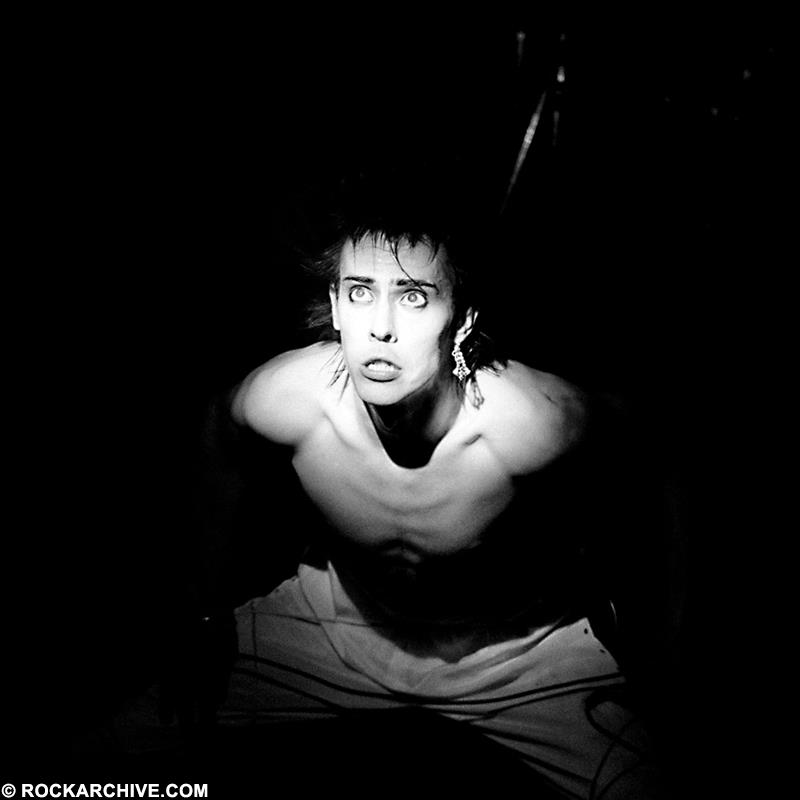
The Staatliches Bauhaus commonly known as the Bauhaus, was a German art school operational from 1919 to 1933 that combined crafts and the fine arts, the band Bauhaus released five studio albums, four live albums, three compilation albums, four extended plays (EPs), eleven singles and three video albums. Bauhaus were an English post-punk band, formed in Northampton, England in 1978. The group consisted of Peter Murphy (vocals, occasional instruments), Daniel Ash (guitar), Kevin Haskins (drums) and David J (bass). Although they dropped the numerical portion within a year of formation, the band was originally named Bauhaus 1919, in reference to the first operating year of the art school Bauhaus. Generally considered one of the first gothic rock groups, Bauhaus were known for their gloomy sound and dark image. However, musically the band was quite diverse. Throughout their career, they incorporated a variety of genres, ranging from reggae to funk.
Bauhaus broke up in 1983. Peter Murphy began a solo career while Ash and Haskins continued as Tones on Tail and, later, reunited with David J to form Love and Rockets. Both enjoyed greater commercial success in the United States than Bauhaus had, but disappeared from the charts in their homeland. Bauhaus eventually reunited for a 1998 tour and again from 2005 to 2008.
Bela Lugosi as he is better known, died in 1956, but his reputation and aura not only survive but thrive – ironically because of a song commemorating his demise.the band Bauhaus released five studio albums, four live albums, three compilation albums, four extended plays (EPs), eleven singles and three video albums. The band was formed in Northampton Daniel Ash(guitar), David J Kevin Haskins(drums) and Peter Murphy (vocals).
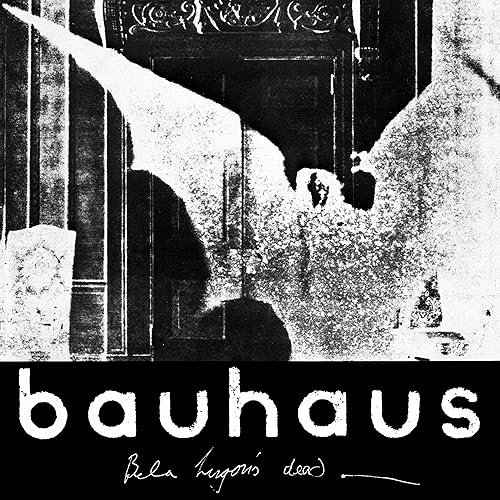
Namely Bauhaus’ debut single ‘Bela Lugosi’s Dead’, inspired by the Hungarian actor who defined Count Dracula (at least until Christopher Lee’s era) in the 1931 film adaptation of Bram Stoker’s novel. Carved out of the same experimental, questing spirit as the best post-punk of the times, the Northampton quartet’s track was simultaneously maximalist – nine minutes long – and minimalist – sparse, often instrumental, and as much about the spaces as the notes. The epic tune was released by London indie Small Wonder in autumn 1979, and reissued several times since, On various vinyl editions.
Since Bauhaus formed, Leaving/Stones Throw have released a newly remastered 12”, spearheading The Bela Sessions EP with three unreleased tracks from the same exploratory session. By the end of 2018, Beggars Banquet reissued six Bauhaus albums.
Bauhaus almost single-handedly launched the sub-culture of goth – a sound and vision all carved in black. Once upon a time, it was ‘gothic’, a term apparently used by Factory MD Tony Wilson to describe Joy Division, but which could also apply to Siouxsie & the Banshees. But once Joy Division morphed into New Order, likewise the Banshees into psych-pop, and Bauhaus released the likes of ‘Stigmata Martyr’, they shunted themselves to the front of what followed.
Many years on from ‘Bela Lugosi’s Dead’, did Bauhaus deserve to be saddled with a label that was applied in a fashion, and what did they achieve beyond the ‘founding father of Goth’? Perhaps their records can still say more.
“The bats are in the belfry/The victims have been bled, bled, bled.” If you’re going to talk about Goth, you might as well start towards the beginning. Bauhaus‘ chilling funerary post-punk is still death rock, but dipped in romantic Horror imagery, like ball bearings wrapped in black velvet. Plus, a young Bauhaus perform “Bela Lugosi’s Dead” in The Hunger, the dead sexiest vampire movie ever made, featuring a young David Bowie and Susan Sarandon.”
The Bela Sessions
(Leaving, 2018)
Bauhaus – singer Peter Murphy, guitarist Daniel Ash and sibling rhythm David J (bass) and Kevin Haskins (drums) – had only been together a month when David J wrote a lyric after watching Lugosi’s Dracula. Matched to what Ash called “a haunting riff” and Haskins’ bossa nova beat, Murphy “recited the lyrics pretty much as you hear them on the record,” David J recalled.
Recorded very soon after the demo, ‘Bela Lugosi’s Dead’ was a true original: intense, cavernous and spacious. (David J was a big fan of dub). In the same session, however, the band had demoed ‘Some Faces’ (power-pop), ‘Biting My Lip’ (new wave), ‘Harry’ (reggae) and ‘Boys’ (a drum-free Bowie rip-off), none of which sounded promising or visionary. “We were trying to find our voice,” said Haskins. Well, at least they found it in ‘Bela Lugosi’s Dead’.
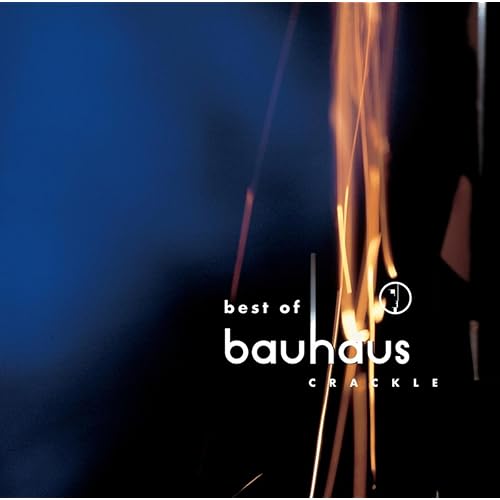
Crackle
(Beggars, 1998)
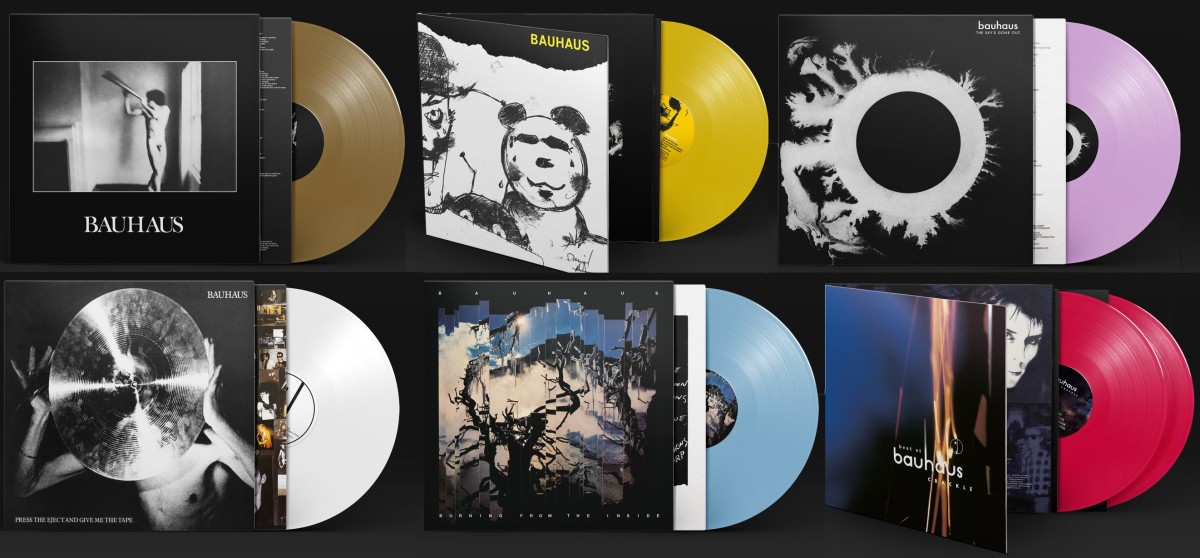
Beggars’ ‘ruby’ reissue. This compilation, released to coincide with Bauhaus’ first reunion is the best way to source their early singles, though ‘Bela Lugosi’s Dead’ is here in its ‘Tomb Raider Mix – if anything, a better version. Second single ‘Dark Entries’ was one of four 7” released simultaneously in 1980 to launch the Axis label – quickly renamed 4AD – after the label’s co-founder Peter Kent overheard the demo while it was playing in the Rough Trade shop.
From the start, the band eschewed the label ‘goth’, preferring their own description: “dark glam”. Though the enthralling ‘Dark Entries’ directly correlates to early Joy Division and Banshees, the lyric was inspired by the decadent anti-hero of Oscar Wilde’s novel The Picture of Dorian Gray “a story of great narcissism… A rock star’s story,” shared Murphy. Bela, Dorian… this was not the austere climate that punk, and much of post-punk, drew on – likewise with Murphy’s habit of shining a torch under his chin as he prowled across the stage. Though the stark, strutting rock-disco of their third single ‘Terror Couple Kill Colonel’ resembled PiL more than others, a cover of T. Rex’s ‘Telegram Sam’ clarified the band’s willingness to stand alone.
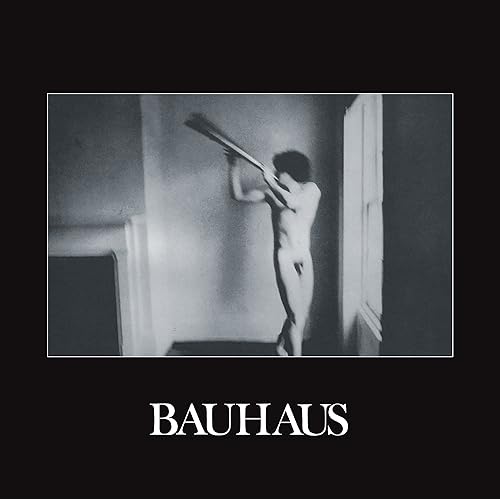
In A Flat Field
(4AD, 1980)
Beggars’ ‘bronze’ reissue. Bauhaus’ early singles were all, in their own way, definitive, but not their album debut. Stentorian intro ‘Double Dare’ is terrific, but this was the licensed John Peel session version because they couldn’t match it by themselves. Murphy lacked Ian Curtis and Siouxsie’s ear for melody; as a result, In A Flat Field is too stark for its own good. But Ash’s scrapes and volleys and the music’s lithe dynamic still resonates (check ‘A God In An Alcove’ or ‘The Spy In The Cab’). But with ‘St Vitus Dance’ and ‘Stigmata Martyr’ and a booming Bowie-esque delivery that could lean toward overkill, Murphy was laying the ground for ‘goth’, especially when he’d shine a light under his chin when prowling across the stage.
The Birthday Party were ‘goth’ too: they created ‘Release The Bats’ in 1981 after touring with Bauhaus, but surely Nick Cave was parodying ‘goth’. At the same time, they were ‘cool’ and Bauhaus were not. In A Flat Field won some unusually vindictive reviews. NME “Nine meaningless moans and flails bereft of even the most cursory contour of interest”). But Ian Curtis was a Bauhaus fan, and In A Flat Field was a commercial success – ‘Bela Lugosi’s Dead stayed in the indie charts for two years – so it triumphed over a couple of attitudinal journalists.
Mask
(Beggars Banquet, 1981)
The ‘yellow’ reissue. ‘Telegram Sam’ wasn’t a national top 75 hit, but it suggested a view to a commercial kill, which didn’t suit 4AD’s left-field direction, but fit much better on 4AD’s parent label – Beggars Banquet, which had the necessary budget after Gary Numan’s phenomenal success. Said Murphy, “We didn’t want to be consigned to an independent music ghetto…we wanted to be massive.”
The band responded with a more nuanced and diverse second album, defined by its two singles, ‘Kick In The Eye’ – their first ‘pop’ record, like something off Bowie’s Scary Monsters, and ‘PassionOf Lovers’. ‘Of Lilies And Remains’ and ‘Dancing’ dallied in dub (David J’s is probably the era’s most underrated bassist), ‘Hollow Hill’ was eerie and slow without toppling into cliché, while the title track’s forwards/backwards blend of sound (including keyboards) was the right side of psychedelic experimentation. In other words, Mask sounded nothing like Joy Division or the Banshees, or goth stalwarts such as Sisters Of Mercy or Specimen.
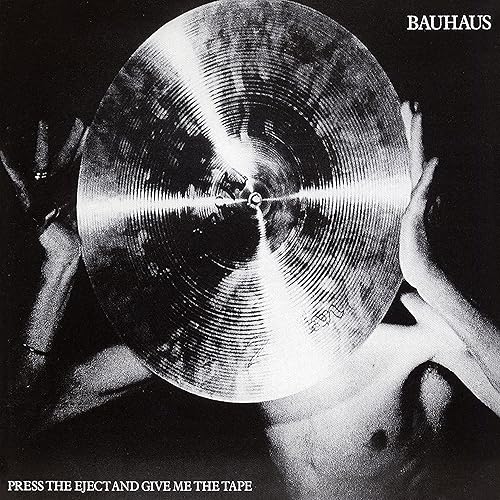
Press The Eject And Give Me The Tape
(Beggars Banquet, 1982)>
The ‘white’ reissue. Press The Eject gets its title from a security official demanding a bootlegger hand over his tape; but there was an official recording of several UK shows in 1981–82. A live album also went against the post-punk grain, but it was a gift to fans, and a kind of ‘greatest hits’ of sorts, including ‘Bela Lugosi’s Dead’, ‘Dark Entries’, ‘Kick In The Eye’, ‘The Spy In The Cab’, ‘Hollow Hill’ and ‘Dancing’ (with Ash on sax as well as guitar), plus their take on John Cale’s spooky dirge ‘Rosegarden Funeral of Sores’ (a studio version was a ‘Telegram Sam’ B-side).
An intense atmosphere on top of song selection make this one of Bauhaus’ strongest records.
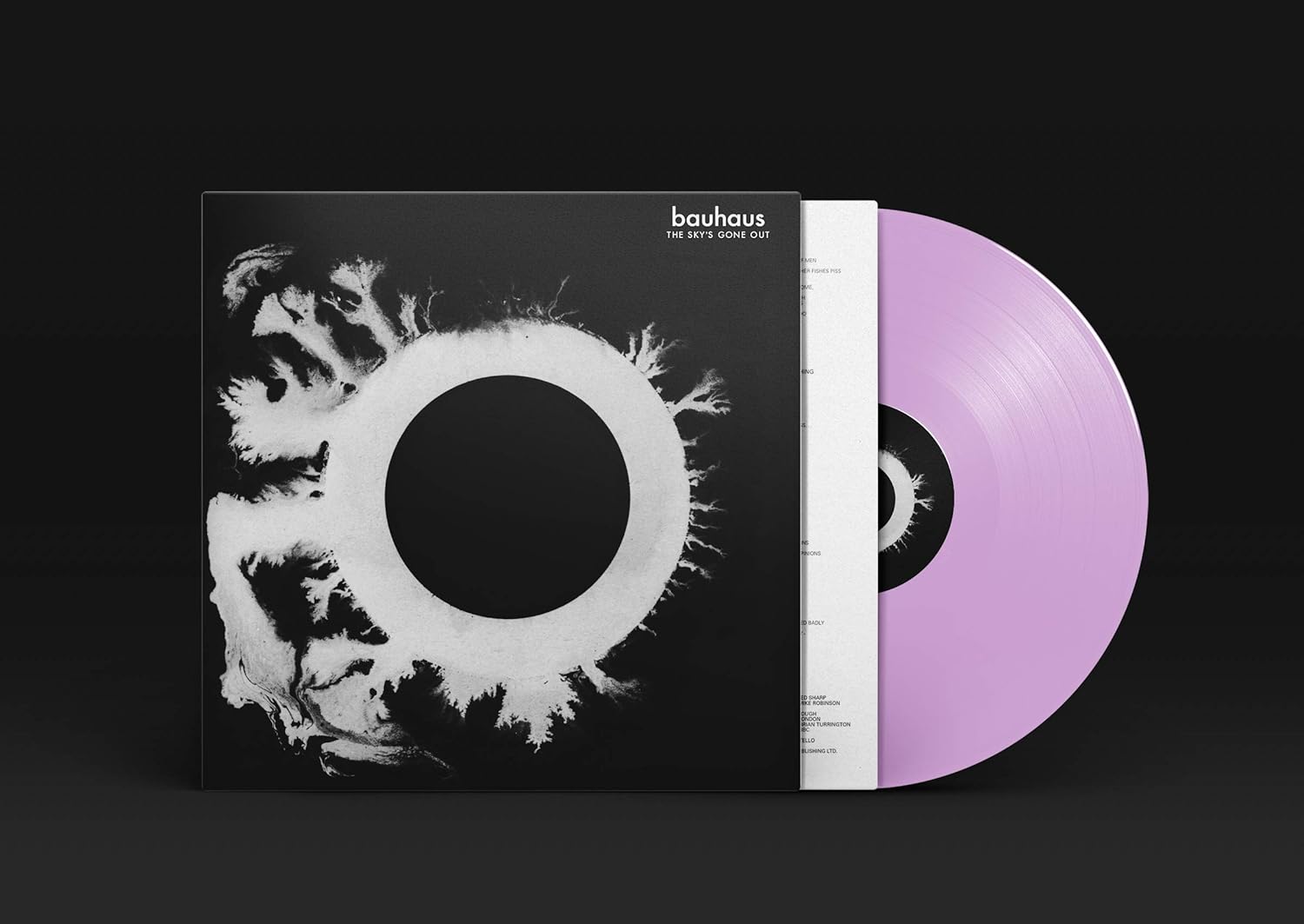
The Sky’s Gone Out
(Beggars Banquet, 1982)
The ‘violet’ reissue. The Sky’s Gone Out opened with a cover of arguably Eno’s most rockin’ track – ‘Third Uncle’. Since Bauhaus had already recorded a cover of Bowie’s ‘Ziggy Stardust’ for a Peel session, and then a studio version as a single that finally broke them nationally, there was no sense of shame in tapping the obvious. ‘Swing The Heartache’ aimed at a ‘Nightclubbing’ (Iggy and Bowie’s robo-disco classic) vibe, but with such a naked backdrop, Murphy’s booming vocal is Marmite. Shot in August of 1982 beneath Camden Lock market in a series of complex tunnels, known locally as The Camden Catacombs. A mock gig complete with the entire back line in situ…Bauhaus does Bowie…gloriously. directed by Mick Calvert for Standard Pictures, from the October 1982 double A sided single. The guitar work is interesting in the sense that Ashcombines distorted, discordant riffs with a clean driving bass from J and simplistic territorial beats from ,Haskins, Murphy’s disjointed surreal poetry finishes it all of nicely with a caustic nonsense that all too often, makes sense! It is “Music Hall” it is Avant Garde, it is even Bebop, but overall it is well put together and produced making it a colourful collection of soundscapes that weaves between the sharped barbs of “Silent hedges” and “In The Night”, to the almost Terpsichorean “Spirit”,hitting the quirkiness of “All I Ever Wanted Was Everything” Sandwiched between the gnarly, caustic and inventive “Three Shadows” and “Exquisite Corpse”.
A new recording of preceding single ‘Spirit’ benefitted from restraint, likewise Bauhaus’ first straightforward ballad, the gorgeous ‘All We Ever Wanted Was Everything’, and the first two parts of the triptych ‘The Three Shadows’. Album finale ‘Exquisite Corpse’ even had a reggae/ska coda. But when Bauhaus – performing ‘Bela Lugosi’s Dead’ – provided the opening nightclub scene of Tony Scott’s vampire saga ‘The Hunger’, the Goth tag was superglued to them
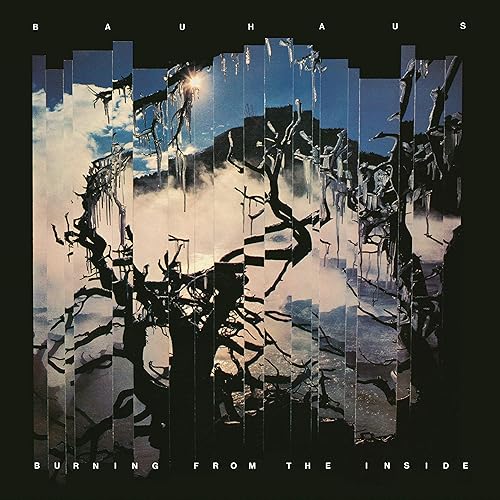
Burning From The Inside
(Beggars Banquet, 1983)
The ‘blue’ reissue. Averaging one album a year, their fourth LP was released just after the band broke up. The Hunger clip resembled a Murphy solo spot, and a gulf had appeared between the singer – who described himself, immodestly, as, “raw, spontaneous, like a fine art installation, more Iggy than Iggy,” and the rest. (As Ash explained: “We all had very dominant personalities.”) Burning from the inside, indeed it’s a shame, because album intro ‘She’s In Parties’ was one of their greatest singles, showing how farMurphy had come in forging memorable melody (so much so that the outrageous Bowie-cockney impersonation is almost forgivable).The final studio album by Bauhaus is a rather fractured piece with lead singer, Peter Murphy, laid low with viral pneumonia for most of its recording. The band played on and recorded a number of songs without him, some of which rate among the finest Bauhaus have ever produced. The best of these is “Slice of Life” written and sung by guitarist Daniel Ash. After a promising start the album flops towards the end. Opening with the magnificent single “She’s in Parties” the band take us through a range of styles, from the haunting acoustic mantra of “King Volcano” to David J’s “Who Killed Mr. Moonlight?” a slow piano piece. My personal favourite is “Honeymoon Croon” a reworking of a song Bauhaus first in wrote 1979. Derided by the music press of the day for their posing and pretensions and for being David Bowie copyists, this album doesn’t escape that criticism, although it is their best work. The chords of “Kingdom Coming” are straight out of “Space Oddity”. The self-explanatory “Antonin Artaud” gives us a lecture about the Theatre and its Double and “Honeymoon Croon” draws on Oscar Wilde’s “The Portrait of Dorian Gray” for reference. The weak ending to this album is saved by the bonus tracks available on the CD. “Lagartija Nick” is a wonderful dose of pure Bauhausian energy. Peter Murphy’s alien-esque voice is at its best on “Departure”, a return to the theme previously explored on “The Man With The X-Ray Eyes”, from the album “Mask”, inspired by the 1963 Roger Corman film, about acquiring a power that proves to be a curse. The excellent “Sanity Assassin” which was to remain a limited edition single for fanclub members until the Bauhaus backlog was reissued. Thankfully this CD gives us a chance to enjoy this ode to paranoia. Overall this is the best produced, sleekest work that the band came up with. The absence of Peter Murphy on some tracks allowed the other members to take the band’s sound into other directions and this listener’s thoughts on the album are one of regret: that Bauhaus did not stay together for a bit longer to follow up this great album.
The band’s arrangement sounded if a piece with the ‘New Pop’ new wave Perhaps the death knell was Murphy’s illness that prevented him from starting the record. David J and Ash sung some lead vocals – both had already recorded solo, with two David J singles and Ash making the Tones On Tail EP with schoolmate/Bauhaus roadie Glenn Campling) – so they would have sensed the freedom of not having a third creative vision. ‘David J’s piano-led ‘Who Killed Mr. Moonlight?’, and Ash’s almost acoustic, psych-tipped ‘Slice Of Life’, for example, would never be mistaken for classic Bauhaus.
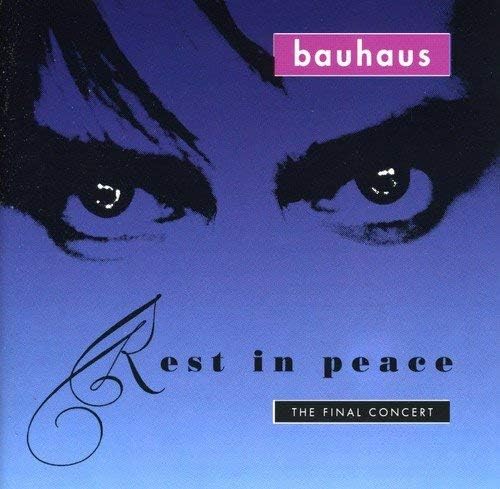
Rest In Peace: The Final Concert
(NEMO Recording, 1992)
This was the band’s stage swan song – a 5th July 1983 concert at London’s Hammersmith Palais released in 1992, and so RIP it seemed. Murphy soon pursued a solo career while Kevin Haskins joined Ash in Tones On Tail, which morphed into the (very successful, at least in the US) Love & Rockets when David J also joined. A pointed Bauhaus reunion minus Murphy. Maybe it’s the recording, or the fact the band knew they’d exhausted each other, but it often sounds dispirited. And no ‘Bela Lugosi’s Dead’, though the finale of ‘Dark Entries’ is ragged and thrashy, as if they can’t wait to get out of the building.
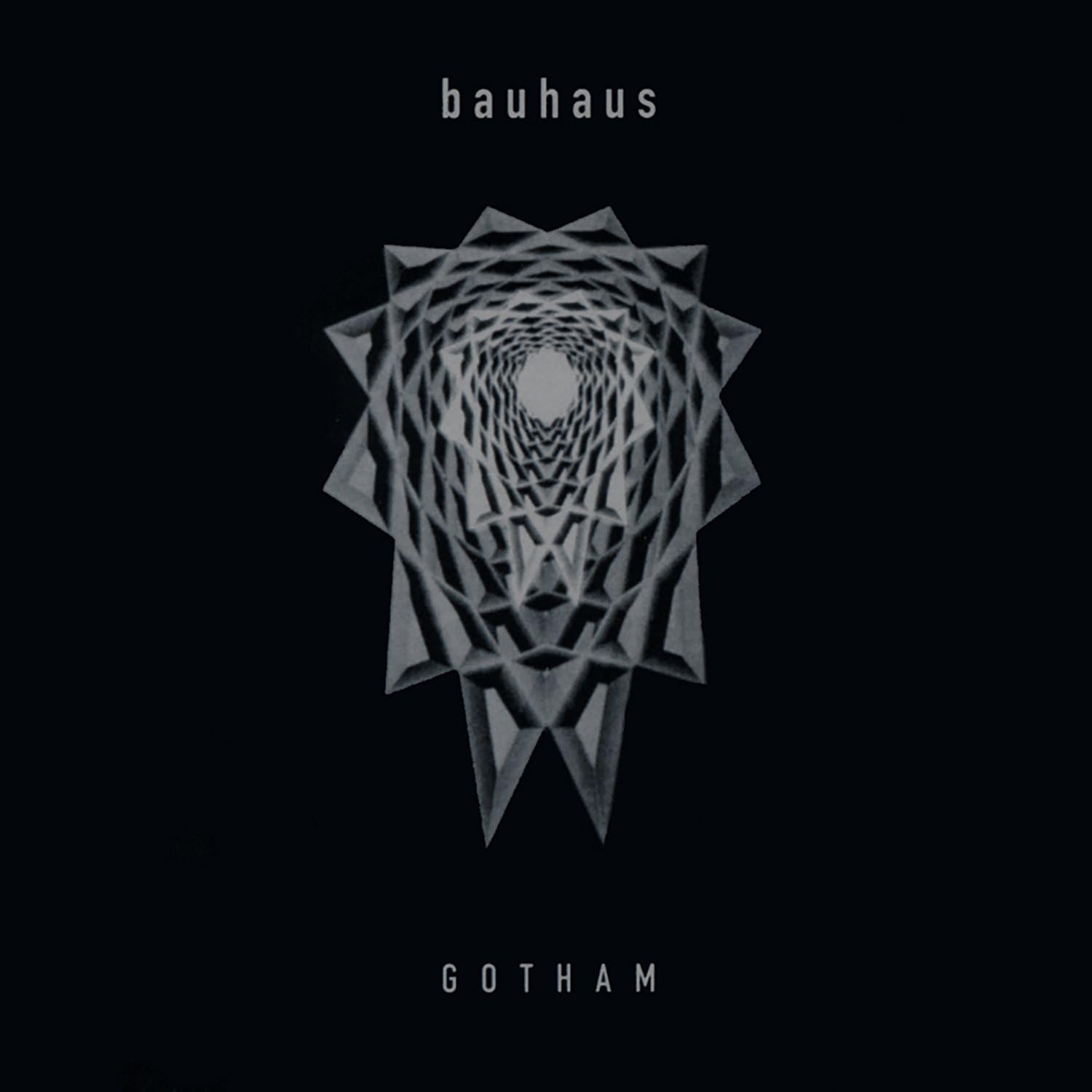
Gotham
(Metropolis, 1999)
In 1998, after years of being namedropped by the likes of Nirvana, Jane’s Addiction, Nine Inch Nails and Marilyn Manson – children of goth just as Bauhaus were Bowie’s kids – Bauhaus did reform. But only for the ‘Resurrection Tour’ as they called it, a reference to the vampirical aspect of their reputation. The only new recording wax was the lengthy, woozy ‘The Dog’s A Vapour’, subsequently included on the soundtrack to Heavy Metal 2000 and a studio version of Dead Can Dance’s ‘Severance’ bizarrely tacked onto to the end of Resurrection Tour memento Gotham.
The two silverlings “Gotham” document the celebrated return of the legendary quartet, which disbanded for the first time in 1983, to “Peter Murphy” and “Daniel Ash”, It’s a live album of the highest class recorded during the “Resurrection” tour in the venerable “Hammersmith Ballroom” in New York City in 1998. Bauhaus first performed in a club here in 1980, many of the listeners at this show were not even born at that time, this shows the importance of this band over the decades. From the grandiose and well-known 12′ Inch “Bela Lugosi’s Dead” which served as a blueprint for the “Darkwave/Gothic Scene” from 1979 up to new “Dead Can Dance” cover “Severance” included in a studio version there is (almost) everything the fan desires or wants to hear. Even the cover versions of “Ziggy Stardust” and “Telegram Sam” with which Bauhaus pay homage to their idols “David Bowie” and “Marc Bolan” (RIP), according to David J.”Haskins (bass) in his biography “Who killed Mr. Moolight”.
His brother “Kevin Haskins” on the drums completed the quartet, which in later years around 2005 released a whole series of live albums about the “Instant Live” series from the “Near the Atmospere” tour. This album is a “highlight” for the collector and fan, but which live recording is your favourite can only be decided by everyone.
The album easily trumps Rest In Peace by surfing on a wave of rabid fan reaction, plus much better technical know-how than early eighties stage sound and reproduction allowed. As the video shows, Murphy wore a cape for ‘Bela Lugosi’s Dead’ and did his best Dracula impersonation, before the band finished with ‘Telegram Sam’, ‘ Ziggy Stardust’ and Iggy/Bowie cover ‘The Passenger’. Goth, and glam legacy, all intact.
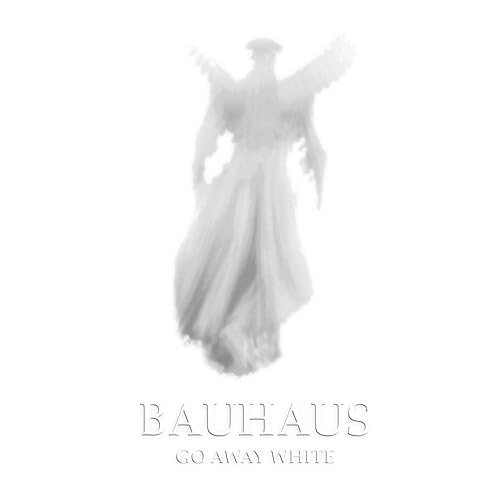
Go Away White
(Cooking Vinyl, 2008)
Another reunion followed in 2005, with Murphy lowered upside-down to the stage at the Coachella festival while singing ‘Bela Lugosi’s Dead’. Amazing what a difference three decades makes. This time, Bauhaus did make a new album, their first in over 20 years, one that mocked the idea of goth by eschewing post-punk-dark trademarks for a streamlined, diverse modernity.
‘International Bullet Proof Talent’ bordered on industrial/ danceable (complete with female backing vox) just as ‘Zikir’ bordered on ambient trip-hop. Even when Murphy tapped his inner Bowie on ‘Saved’ and ‘Mirror’, the arrangements were sparser, and more haunting, than even the old dub forays of the past. Murphy had been living in Istanbul, the others in California, and they now sounded nothing like grey, abrasive Britain circa 1980. Very promising, except apparently Murphy did something so unspeakable (literally, no one will say exactly what) that the band burnt out from the inside once again, before the album was released. This 2008 album from the Goth quartet, recorded before their final split. Go Away White was recorded in 18 days at Zircon Skye in Ojai, with singer Peter Murphy, bassist Daniel J, guitarist Daniel Ash and drummer Kevin Haskins playing together as a band in one room, taking first takes as final cuts. So, a new record but apparently a final one, the band having decided to release it as a posthumous swan song. Go Away White is everything you would hope Bauhaus would deliver as their final statement. Fronted by a cover photo of Bethesda, the angel of the healing waters in New York’s Central Park, the music inside is pure-cathartic renovation, a psychedelic glimpse into an enchanted moment.
Ten years on, there has been some measure of rapprochement, with David J and Murphy currently on a Ruby Anniversary tour of Bauhaus songs, while in 2017, Ash and Kevin Haskins toured as Poptone, with Haskins’ daughter Diva Dompe on bass, performing Tones on Tail and Love And Rockets tracks alongside ‘Slice Of Life’ (from Burning From The Inside). Ash says “never say never” regarding another Bauhaus reunion, but even if it never happens, Bela Lugosi lives, and so do Bauhaus, survivors of the Goth Wars.
Nordic mellow: those two words perfectly describe the music of Oslo-based indie folk artist Siv Jakobsen. It’s apropos, since that is also the title of her 2017 debut LP. Somehow this talented singer with celestial vocals has not found global stardom yet. Perhaps the release of her next album – the aptly titled A Temporary Soothing – will help the world realize what they’ve been missing. Siv’s music is beautifully mellow, much like diary-entries – filled with unfiltered thoughts and reflections. With references to Damien Rice and Ane Brun, listening to her music is like being a fly on the wall while she sings you her secrets.
If “Fight or Flight” is your introduction to Jakobsen, you are in for a treat. She just shared this single a few days ago. The melody greets your ears with fireside warmth while her crystalline voice caresses you. Every note provides comfort. Every layer complements the rest. There is a peaceful calm to her overall style that is on par with Daughter and Ane Brun. But the beauty of Jakobsen’s sound is its sun-kissed elegance. “Fight or Flight” has a early springtime quality, imbued with the hope of better things to come while still feeling the coolness of winter. This is the perfect song for these times: a tonic for our souls.
Siv Jakobsen should be on your radar. You simply do not encounter a voice this pure every day. A Temporary Soothing from Bandcamp is available on April 24th.
2020, and the scene is now: world in flames, deserts in permafrost, everyone in their own corners, looking down into their hands. Nothing in common. We can all see that the way it’s happening isn’t working, and for a lot of us, that’s okay, as long as it doesn’t rock our boat. But for people who are invested in the future, any future – like Flat Worms – they’re out there, full time living, playing to change minds. And they’re not alone.
“Antarctica” is the third Flat Worms album in the past four years. It reflects a situation that’s dire, but not hopeless. Since the release of their 2017 debut LP — even since last year’s “Into the Iris” mini-LP — the sound of the trio has hardened, with the polarities of psych and post- punk smelted into a brutal cobalt alloy. No doubt they’re aided by the Steve Albini-engineered sound rendered at Electric Audio, where the album was recorded and mixed (in collaboration with Steve Albini and Ty Segall) in six days.
The rest of the evolution is down to Flat Worms, whose world view and musical viewpoint pulse with a remorseless drive and a sense of collaborative unity. Will Ivy’s cortex-scorching guitar leads are in united space with the full-body rhythm of Tim Hellman’s bass and Justin Sullivan’s drums. Their social comment, bleak, yet earnest, is leavened with bone dry humor (the title track’s isolation conundrums: “My dog is smiling as I drive her to the park / we sit together in the kitchen after dark / I ask her questions / She just barks”) and caustic pronouncements; a vision of the chaotic, dysfunctional contemporary landscape that recalls the tragicomic expressions of 100 Flowers and the indefatigable recitations of The Fall.
Commitment. Intention. Collaboration. And a sense that we’re meant to enjoy what we’re doing. Even in the desert of Antarctica, Flat Worms are looking for the upside.