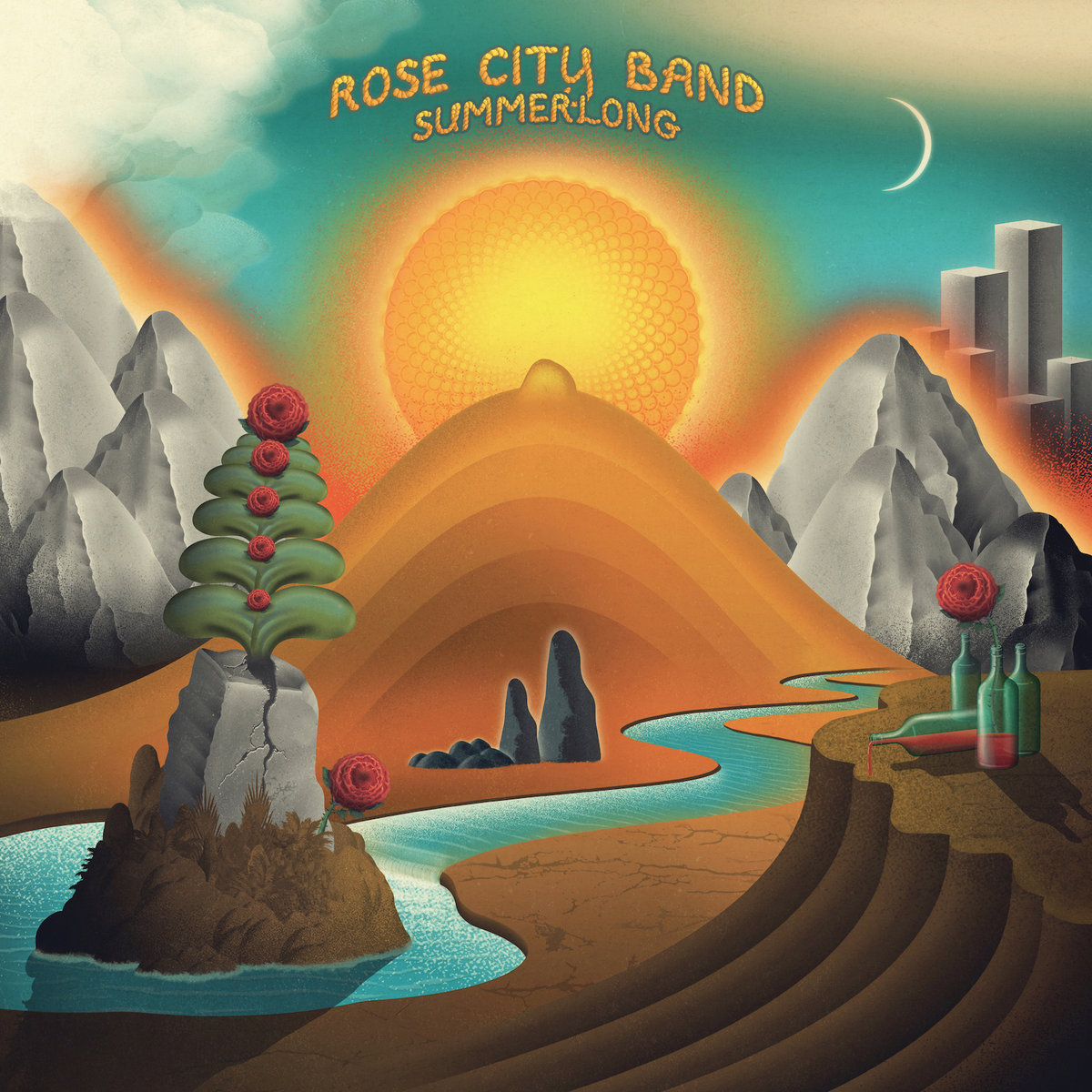
Portland, Oregon has always been a groovy place and musicians like Ripley Johnson are the reason why.Best known as one half of droning psych funkers Moon Duo and the leader of spacey cult favorites Wooden Shjips, Johnson has called Portland home for years now.Fittingly, his aptly named side project the Rose City Band proudly waves the flag for its namesake city with its heady blend of country, psych and 70s rock and roll.Originally started as a recording project for Johnson that resulted in a self-titled debut, the Rose City Band is now stepping fully into the spotlight with their follow-up“Summerlong”.
Coming in at only eight songs,Summerlongmay be on the shorter side but it hardly feels like an EP.This might be because there are a handful of longer tracks that find the band stretching out and getting comfortable as if improvising live in front of a crowd.From the opening track “Only Lonely” – a breezy, twangy groover with mellow folk rock vocals and carefully picked guitar solos with plenty of breathing space – it’s clear we are in for an exciting trip. “Empty Bottles” slows things down for a bummed out, dreamy sound as Johnson reflects on his own lost loves, bringing to mind the surfy twang of Li’l Cap’n Travis and Yo La Tengo before switching gears and launching into a funky instrumental jam to let you fall into the stoned embraced of the music.
The band cranks things back up for the rambling “Real Long Gone”, balancing the West Coast country sounds of the Grateful Dead alongside vocals that bring to mind Dire Straits while dosing the driving rhythm with intertwining guitar solos. “Floating Out” drips along at the pace of a lazy Sunday afternoon, easing into its introspective lyrics with blissed out vocals and a slowly percolating, sparsely beautiful guitar solo. “Morning Light” is quick and cheery, accented with the high and lonesome twang of a steel guitar, while “Reno Shuffle” drops in heavy with a lurking blues groove and organ to give the song a bouncing 60s psychedelia vibe.Many of the songs fall in a similar vein to throwback cosmic country acts like Natural Child and Mail the Horse, but where the Rose City Band takes thing in a different direction is in tripping out and taking a more jam-friendly, acid-soaked approach.This culminates in the album’s last two tracks, with the synth-laden “Wee Hours” morphing into a free-flowing, danceable instrumental jam before segueing into “Wildflowers,” a song brimming with the kind of flowery guitar playing that would make Jerry Garcia smile.
Interestingly, Johnson has said he started this project with no expectations and even joked with his friends about retiring from touring and just playing in a country rock band at the local bars.But across these eight tracks it becomes clear that Johnson isn’t messing around, with a sound that marries all of the styles he is best known for with his passion for country.Johnson has more than earned his credentials as a psych rocker, and if you listened to the most recent Moon Duo album the sound of the Rose City Band may come as a bit of a surprise, but withSummerlonghe proves he has chops as a country rock artist too while championing the grooviness of the band’s namesake city.
The album is one of the standout releases of the year, and also leaves you wanting to experience the Rose City Band live as soon as we are allowed to do that again.
“Music to me, whatever kind it is, it’s inspiring to me, meaningful to me; it gives my life meaning and writing songs gives my life purpose.”
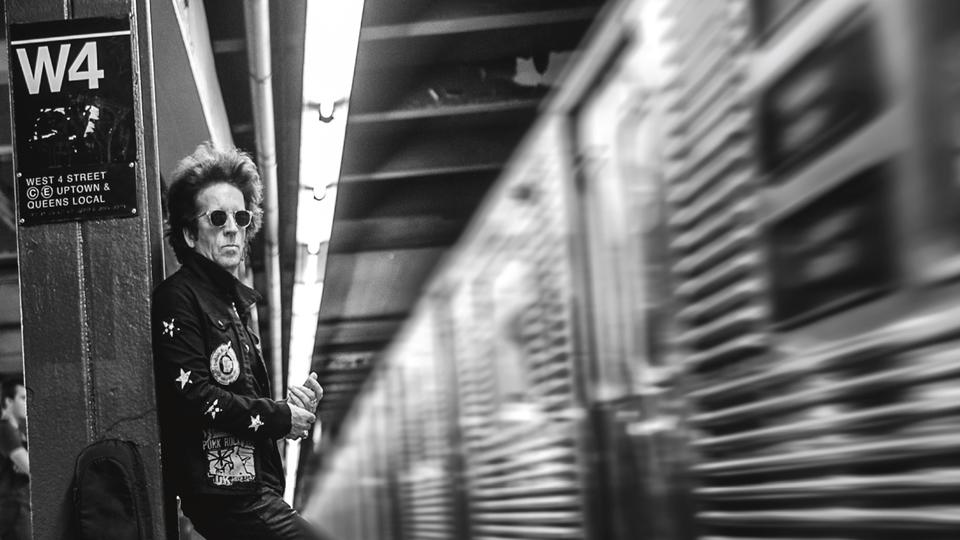
Willie Nilereleased his first album in early 1980, afterNew York Timesmusic critic Robert Palmer had seen him playing in Greenwich Village and the resulting write-up garnered record company interest and he was signed to Arista Records.Having come down to the City from Buffalo, where he had been studying Philosophy at the university, Nile played solo at open mics at a time when punk was starting to take over from the coffeehouse folkies.Needless to say, Nile’s idea of a solo acoustic show was more rock & roll than quiet introspection.
With the recent release of “New York At Night”, Nile’s thirteenth studio album, he again leads us into the world of his adopted city, where the characters he sees on the subway or passes on the street can inspire a song that captures the beat, the very breath of the inner New York City, away from Times Square or Central Park.Nile illuminates that New York with his musical soundtrack.From the rockabilly-toned “New York Is Rockin’” to the Irish flavor incorporated into “Lost & Lonely World” and the reflective “Doors Of Paradise” and “A Little Bit Of Love,” Nile has produced one of his best albums to date.
When Nile was a young guy, hot on the release of his self-titled debut album, the hype was unavoidable, especially with songs like “Vagabond Moon” and “Old Men Sleeping On The Bowery.”Pete Townshend was a fan and Nile was asked to open for The Who on theirFaces Dancestour.He recorded his second album while John Lennon was in another room at the same studio.
Fred Smith from his favorite band Television started playing bass in his band.The spotlight was firmly shining on him yet he kept his wits about him and his feet on the ground and at age seventy-one, he’s still going strong.
Pacific Rangeis a promising young band whose second album (and first for Curation Records) was produced byDan Horne, multi-instrumentalist of Circles Around The Sun.“High Upon TheMountain”is a mutually empathetic collaboration that illustrates that, while the quartet’s playing transcends its own material, that doesn’t undermine their potential.It’s a perfectly natural state of affairs for many fledgling bands whose instrumental chemistry coalesces before their own writing skill(s).
When Pacific Range begins to jam on ”Nothing Else More,” for instance, the connection with the Grateful Dead becomes readily apparent.Yet such improvs, appearing increasingly frequently as the twelve tracks progress, evince laudable patience and precision.Otherwise, the group might well have been mistaken for one of the plethora of country-rock ensembles, like Firefall, that proliferated during the Seventies.None of those ensembles, however, were so inclined to luxuriate in lengthy instrumentals, but then they were not blessed with an agile rhythm section like this one comprised of bassist Cameron Wehrle and drummer Nate Ward.
Smooth lush harmonies (to which vocalists Jade Castrinos, Bek Stanley and Nikki Segal add their voices at certain points) are one of this band’s stocks-in-trade, an attribute that distracts attention from how derivative is some of their original material such as “Heartbeat of Change.” “Studio Walk” is also a little too reminiscent of famous songs such as “China Cat Sunflower,” but when the band moves away from the structure of the song, the point becomes moot, especially as the glowing tones of Stewart Forgey’s keyboards appear.While Horne was an astute choice as producer—and he chips in with pedal steel on both versions of “Guiding The Mast”—he might well have turned a more discerning ear for such all-too-obvious touchpoints.
Nevertheless, he certainly made sureHigh Upon the Mountainsounded good.When acoustic guitars mix with electrics on “Rainbow Song,” before the entry of some delicate percussion, the audio approaches a 3D quality.That sonic virtue also enhances the crisp definition of terse guitar exchanges between chief composer Seamus Turner and Mapache’s Clay Finch during “Swap Meet.”In contrast, the notable fretboard interlude featuring Duane (son of Dickey) Betts on “Comin’ After You” sounds too much like direct absorption of an Allman Brothers influence, sans much personal imprint from Pacific Range; more acoustic numbers would complement their singing and diversify their sound while stretching out instrumentally more often might also engender multiple ideas for distinctive composition.
Still, while knowledgeable music lovers with eclectic tastes may be overly tempted return to the sources so clearly evoked here (including the Youngbloods and early Marshall Tucker Band), there’s no reason those listeners won’t also savorHigh Upon The Mountain. And once Pacific Range can plumb a wellspring of their own ideas as densely populated as the busily colorful cover artwork of the LP, they will no doubt end up sounding even more interesting than they already do.
We present – “Mixtape One” – a collection of reworkings and covers of some of our favourite songs – available now on Bandcamp for free. If you fancy downloading, we would ask that you make a donation to Refuge (or your favourite charity) directly through their website(s).
Friends; we now present – “Mixtape Two” – our second collection of reworkings and covers. It’s available now on Bandcamp for free. If you fancy downloading, we would again ask that you make a donation to Refuge (or your favourite charity) directly through their website(s).
This mix contains a selection of cover versions performed by USA Nails:
1. Paranoid – Originally performed by Black Sabbath
2. New Life – Originally performed by Depeche Mode
3. Digital – Originally performed by Joy Division
4. Pretty Baby – Originally performed by Sister Sledge
5. I Am The Fly – Originally performed by Wire
6. Goodbye Horses – Originally performed by Q Lazzarus
This mix contains a selection of cover versions performed by USA Nails:
1. Over And Over – Originally performed by Hot Chip
2. Don’t You Forget About Me – Originally performed by Simple Minds
3. Arabian Knights – Originally performed by Siouxsie And The Banshees
4. White Lines – Originally performed by Melle Mel
5. My Sharona – Originally performed by The Knack
6. Essex Dogs – Originally performed by Blur
So so excited and mushy to announce that our debut record “Reverse of Mastery” will be coming on July 24th on Exploding In Sound Records. First single premieres today on Flood Magazine! This record has been a loooong time in the making and was such a group ass effort of aaaall the buds and truly so excited to share!!! Lomita featuring Nick Llobet on the vocal cordios:)) The beautiful painting on the cover is by GLA4.
The concept of “summer music” is a little weird to think about right now, but as the world outside begins to warm up, In addition to the many May releases rescheduled to drop mid-summer, Brooklyn’sDig Nitty is adding to the pile of highly anticipated summer jams, announcing their debut Reverse of Mastery today with the quick-burning surfy “Lomita.”
Blending West Coast garage-rock guitars with the sounds of their native DIY scene, the two-minute introduction to Mastery manages to pack in catchy hooks, a ripping guitar solo, and some pretty relatable lyrics about returning to the outside world. “It’s a song about visiting a hospital—Lomita is the name of the street I would go on to get there,” vocalist Erin McGrath shares of her time spent in California. “It’s a song about wishing you could bring the outside world to someone inside, and how weird it is to be able to just leave a hospital room and go back to the outside world. The second verse compares death to take-off in an airplane or spaceship.”
Contributions from:
Nick Llobet (guitar/vocals)
Sabrina Rush (violin
Davis Boardman (violin)
Adam Brisbin (guitar)
Chappy Hull (guitar)
“Lomita” by Dig Nitty from the upcoming LP, “Reverse of Mastery” out July 24th 2020 on Exploding in Sound Records.
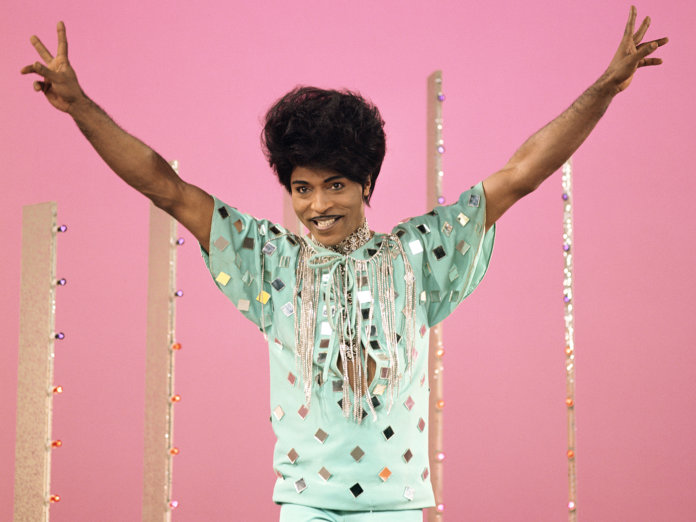
Born in Macon, Georgia, on December 5, 1932, Richard was one of 12 children. His father was a preacher who also ran a nightclub, and his mother was a devout Baptist.
Speaking to BBC Radio 4 in 1998, he said he started singing because he wanted to stand out from his siblings. I was the biggest head of all, and I still have the biggest head,” he said. “I did what I did, because I wanted attention. When I started banging on the piano and screaming and singing, I got attention.”
As an artist, Little Richard’s breakthrough came in 1956 with the single “Tutti Frutti“, before cementing his fame and reputation with the run of hits “Long Tall Sally“, “Lucille” and “Good Golly, Miss Molly“, among others. His 1957 debut album, “Here’s Little Richard”, remains a template for the genre.
Earning the nickname “The Innovator, The Originator, and The Architect of Rock and Roll”, he had an immeasurable influence across the world of music – his flamboyant style and free-spirited attitude inspired the likes of The Beatles, The Rolling Stones, David Bowie, Elton John and countless more.
It’s impossible to list all the major rock stars that the Little Richard influenced. His look, sound, and attitude really wrote the blueprint for what it means to be a rock star, and tons of the most major artists of all time covered his songs (and often became popular for their own versions). The Beatles had no lack of Little Richard covers, and his music was also performed by Elton John, Eric Clapton, The Kinks, Creedence Clearwater Revival, Queen, Motorhead, Scorpions, Bruce Springsteen, The Band, The Animals, Fleetwood Mac, T. Rex’s Marc Bolan, The Zombies, Deep Purple, and that’s really just a small sample size.
Little Richard was among the first artists to be inducted into the Rock & Roll Hall of Fame in 1986, alongside Elvis Presley, Chuck Berry, Jerry Lee Lewis, James Brown and Buddy Holly. His other honors include a GRAMMY® Lifetime Achievement Award (1993) and inductions into the Songwriters Hall of Fame (2003), the NAACP Image Awards’ Hall of Fame (2002) and the Blues Hall of Fame (2015).
Bob Dylan has paid tribute to Little Richard, who has died at the age of 87.
The musician’s son, Danny Jones Penniman, confirmed the rock’n’roll pioneer’s death to Rolling Stone, adding that the cause of death was cancer. Bob Dylan wrote: “He was my shining star and guiding light back when I was only a little boy. His was the original spirit that moved me to do everything I would do.”
Announcer: “The Beatles, with Paul McCartney paying tribute to ‘the Everlys’ with Lucille.” Really? How can Paul McCartney be paying tribute to the Everly Brothers by playing a song written by, and made famous by Little Richard? , Just another example of how many of these Rock and Roll and Jazz Radio Disc Jockeys can be heard uttering nonsense on many archival broadcasts.
Before the Beatles became stars in their own right, they were opening for Little Richard in Hamburg and Liverpool. They were huge fans of his, and would go on to cover many of his songs over the years, including “Long Tall Sally”, “Ooh! My Soul” and “Lucille.”. Two of the band members covered Richard’s songs in their solo careers, too: John Lennon recorded “Slippin’ and Slidin’” and a medley of “Rip It Up”/“Ready Teddy” on his 1975 covers album, Rock ‘n’ Roll, while Paul McCartney recorded “Lucille” for a live album in 1988.
Little Richard(born Richard Wayne Penniman) combined the passionate spirit of gospel, the bawdiness of the blues and the swing of New Orleans jazz to createsomething altogether fresh: rock & roll. Whenthe young artist was signed bySpecialty Records’ Art Rupe in the mid–‘50s, he gained a new platform to showcase his bold sound and flamboyant persona, captured in all their glory on his legendary1957 debut, “Here’s Little Richard”.
The album, which primarily gathered the artist’s early Specialty singles from 1955-1957, could easily serve as a best-of compilation. In fact, seven of the songs on Here’s Little Richardwere Top 10 hitson theBillboard R&B chart, while two tracks peaked in the Pop Top 10(“Long Tall Sally” and “Jenny Jenny”). The album also included such favourites as“Reddy Teddy,” “Slippin’ and Slidin’,” “Rip It Up” and Little Richard’s most iconic song, “Tutti Frutti.” Originally released inOctober1955, the effervescent singlehelped usher in an exciting new genre of music.
Little Richard Medley: Tutti Frutti / The Girl Can’t Help It / Long Tall Sally / Jenny Jenny (Live at Royal Albert Hall 12/1/1969) · Delaney & Bonnie & Friends On Tour With Eric Clapton
Creedence Clearwater Revival play Little Richard “Good Golly Miss Molly” from the album Bayou Country
“Slippin’ and Slidin’” – This track had an interesting evolution—almost like a game of musical telephone. In 1955, R&B singer-songwriter Al Collins wrote a song called “I Got the Blues for You.” A year later, New Orleans blues pianist Eddie Bo reworked the song and recorded it as “I’m Wise.” Little Richard then created his own rendition of the tune, “Slippin’ and Slidin’,” which would become the definitive version. Richard revisited the song several times throughout his career, recording it a decade later with Vee-Jay and, later, Modern. A host of other artists would cover Little Richard’s version, including John Lennon, Johnny Winter and Otis Redding.
While the artist would go on to release more than a dozen studio albums after Here’s Little Richard, his debut remained his crowning achievement, as well as his highest-charting full-length (peaking at No.13 on the Billboard 200).Richard wouldrevisit those foundational 12 tracks throughout his career.
Over the decades, Here’s Little Richardhas been widely acknowledged for its importance in pop music history. In 2012, Rolling Stoneranked the title at No. 50 in its roundup of the “500 Greatest Albums of All Time”while TIME included Here’s Little Richardin their “All-Time 100 Albums” list.In 2007, Mojo ranked “Tutti Frutti” at No.1 in their “100 Records That Changed the World”list, and in 2010, the Library of Congress inducted the song into its National Recording Registry, proclaiming that the song “announced a new era in music.”
“Ready Teddy” – Though “Ready Teddy” was a Top 10 R&B hit for Richard, the song would be made even more famous by one of his biggest fans, Elvis Presley, who sang the upbeat tune in front of 60 million television viewers on his record-breaking debut appearance on the Ed Sullivan Show. It also graced the silver screen twice—in the 1958 Jayne Mansfield comedy The Girl Can’t Help It(Richard’s recording of the title song was a hit in the US and UK) as well as in Federico Fellini’s 1960 classic,La Dolce Vita, where it was performed by Italian rocker Adriano Celentano
“Rip It Up” – This song was a No.1 R&B hit for Little Richard and a Top 20 single (peaking at No.17 on the Billboard Pop chart in the summer of 1956). However, the significance of these charting hits was often muted for Little Richard and other black musicians at the time, because of a common record industry practice in the ‘50s, which called for “safer” white artists to cover popular R&B singles. This was often the case with Little Richard’s songs and became a point of contention for the artist. In the case of “Rip It Up”, contemporaries Bill Haley and the Comets covered the tune (hitting No.25 on the Pop chart) and later performed the song in the 1956 film Don’t Knock the Rock. Richard did have the opportunity to make a cameo in the musical, though, and his over-the-top showmanship stole the show, as he performed “Long Tall Sally” and “Tutti Frutti.”
The Skids were a Scottish punk rock and new wave band, formed in Dunfermline, Fife, in 1977 by Stuart Adamson (guitar, keyboards, percussion and backing vocals), William Simpson (bass guitar and backing vocals), Thomas Kellichan (drums) and Richard Jobson (vocals, guitar and keyboards). Their biggest success was the 1979 single “Into the Valley” and the 1980 album The Absolute Game.
Skids played their first gig on 19th August 1977 at the Bellville Hotel in Pilmuir Street Dunfermline. Within six months they had released the “Charles” EP on the No Bad Record label, created by Sandy Muir, a Dunfermline Record shop and music shop owner turned Manager. The record brought them to the attention of national BBC Radio 1 Disc jockey John Peel. This led to a local gig supporting The Clash. Virgin Records then signed up Skids in April 1978.
In a two year period in 1979-80, the Skids hit the UK top 40, four times, with singles like “Into The Valley” (a top 10 hit), “Masquerade” and “Circus Games” plus the singles “Sweet Suburbia” and “The Saints Are Coming” both made commercial inroads, Guitarist Stuart Adamson left the band in 1980 to form Big Country, while singer Richard Jobson went on to form The Armoury Show, before becoming a poet, TV presenter, writer and film director, with six features films to his name.
Adamson took his own life in 2001. The Skids first reformed in 2007, with Adamson’s former Big Country band mate Bruce Watson, and Watson’s son Jamie, on guitars.
Scared to Dance
The band released their debut studio album, “Scared to Dance” the same year. It was recorded at The Townhouse Studios in London, England with record producer David Batchelor, Adamson walked out towards the end of the sessions before all the guitar overdubs were completed .Session guitarist Chris Jenkins was chief maintenance engineer at Townhouse studios and completed the album using Adamson’s studio set up, adding additional guitar to four tracks “Into the Valley”, “Integral Plot”, “Calling the Tune” and “Scared to Dance”.
The Skids’ anthem was born from Alfred Tennyson’s The Charge of the Light Brigade – its anti-war sentiments are still relevant today. People seem to remember it more for my daft dancing rather than the themes we were exploring. That’s the price you pay for doing a daft dance on TOTP.”
In the meantime, Adamson had returned to Scotland when the recording was finished. He re-joined the band for the live concert tour promotion of the album. The record included “The Saints Are Coming”, which was later covered in late 2006 as a single by American band Green Day.
Days in Europa
Skids enjoyed a further year of chart success as “Masquerade” and “Working for the Yankee Dollar” reached the UK Top 20 singles chart. Both came from their second album, also released in 1979, “Days in Europa” with the record’s production and keyboards by Bill Nelson (musician) of Be-Bop Deluxe” Nelson was the obvious choice for the record’s production duties as he was not only Adamson’s principal ‘guitar hero’ but also an enormous influence on Adamson’s playing. Nelson also played an important role in polishing Skids’ sound and in encouraging the development of Jobson’s lyrics. Just before recording of the album commenced, Kellichan left the band and was temporarily replaced on drums by Rusty Egan from the band Visage and later The Rich Kids The New Romantic Egan played on the album and later on the live concert tour of the record. Keyboard player Alistair Moore also temporarily joined the band to perform live with them. He had been recruited to play Bill Nelson’s keyboard parts from the record. The opening track of [second album] Days In Europa. It sets the tone for the new Skids. This was our second album. We had gone to Wales to record with Bill Nelson and we wanted to do something new and fresh. Bill encouraged me to write lyrics the way I wanted to write, which is captured perfectly here in this abstract poem on the working man. “Thanatos” “A blistering, ferocious song that always seemed to work better live than on record. It sits well on Days In Europa. We still play the song today as part of our live set and it still works. A song about Death called Death. I think I must have been going through a difficult period with my health at the time which has dogged me all my life. I’m epileptic.”
I was thinking about my father when I wrote it, he was a coal-miner. Adamson’s guitar work is brilliant and Rusty Egan helped develop a new sound through his innovative drum playing.” People missed the irony of Days In Europa and misread the lyrics as having some kind of Fascist fetish thing going on. I hate fascists and everything they stand for. The song was about the undue pressure put on young men to be somebody in the traditional sense of masculinity. This was something we all rejected.”
“A backwards version of Animation with a spoken word poem about the crumbling fabric of Europe after WW2. It was a brave thing to do at the time and critics were always looking to shoot anyone down who dared rise above their station. Fuck the critics.”
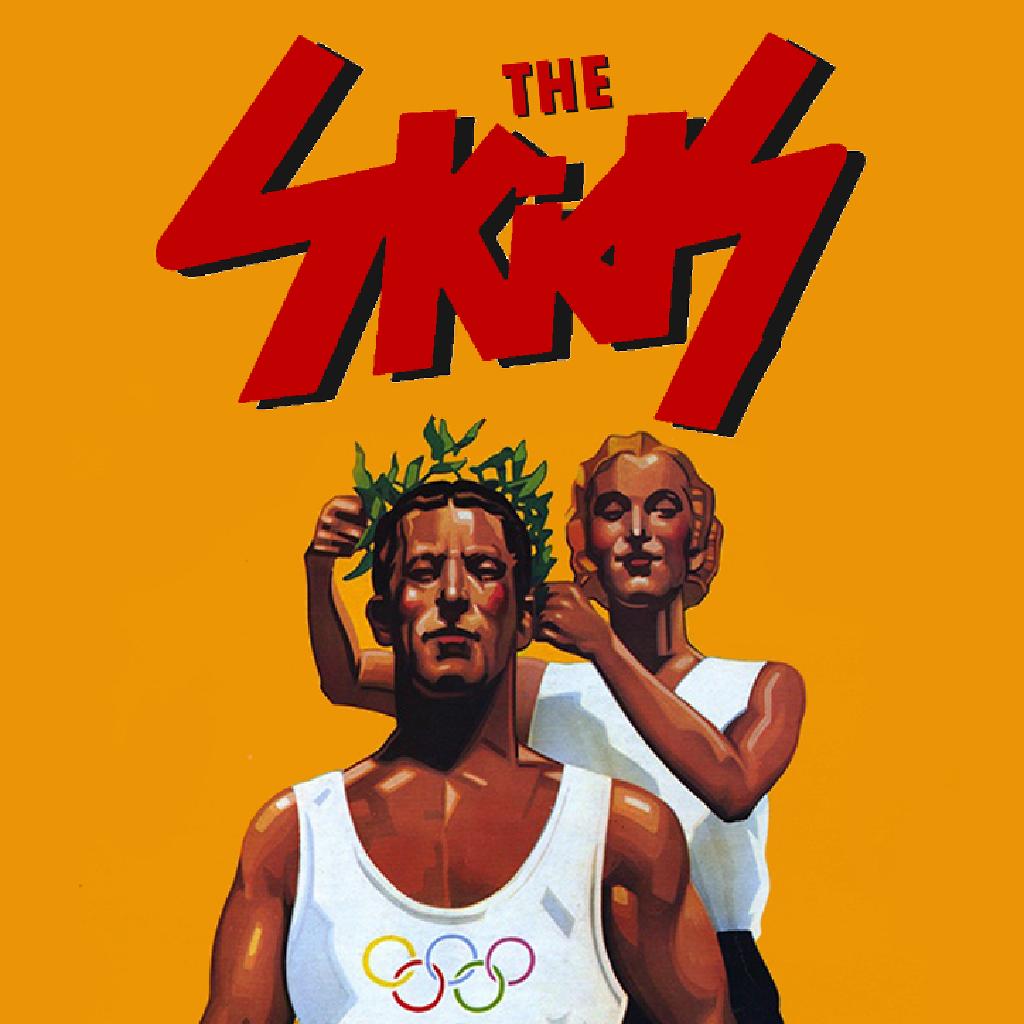
In November 1979 Mike Baillie, ex-Insect Bites, was recruited as a permanent band member, taking care of the drums, backing vocals and percussion). He slowly took over from Egan, while the band was still touring “Days in Europa”. Some of Jobson’s lyrics as well as the album cover caused controversy. It showed an Olympic Games” Olympian being crowned with laurels by an Aryan looking woman, and the lettering was also in Gothic script. Some, including DJ “John Peel” felt that this glorified Nazi ideology and it was indeed similar to posters from the “1936 Summer Olympics” held in Germany. After the original version of the album had already been released, The Canadian record producer Bruce Fairbairn was brought into the project. The original cover and the track “Pros and the Cons” were removed. The sleeve was completely re-designed and the song “Masquerade” added. The album was also remixed and the tracks re-sequenced. This second version was released in 1980.
The Absolute Game, Joy
In February 1980 one of the Skids founding members William Simpson left and was replaced by Russell Webb (bass guitar, backing vocals, keyboards, percussion, and guitar). Webb joined as a permanent band member and immediately started work on the recording of the band’s third album “The Absolute Game”, released in 1980 and produced by Mick Glossop. It proved to be the band’s most commercial release, reaching the Top 10 of the UK Albums Chart and contained the minor hit single “Circus Games” Jobson has great memory of recording in the manor studios in Oxfordshire. We were working with Mick Glossop who focussed on Adamson’s guitar work and the band’s love of big choruses. We weren’t sure of how to make this song ignite until we decided to try kids singing the chorus. Its a song about people making mistakes and somebody paying the price, which is normally kids or the next generation.”
A few of the tracks on the album also included a collection of fourteen adult and child backing vocalists, along with a lone didgeridoo player. Initial copies of The Absolute Game came with a free limited edition, second album entitled Strength Through Joy, echoing the band’s previous controversial themes. Jobson claims to have got the title from Dirk Bogarde’s autobiography
Soon after the release and live concert tour of The Absolute Game Baillie left the band and was followed soon after by Adamson (although Adamson did stay around long enough to play on one more song for the next album “Joy”, called “Iona”). Baillie moved back to Scotland to live and Adamson went on to launch his new band, Big Country. This left Jobson and Webb to write and record the band’s fourth and final album Joy, which Russell Webb also produced. The pair played multiple instruments on the album, and also invited a collection of seventeen musical friends to perform on various tracks with them. Skids finally dissolved in 1982, with the compilation “Fanfare” posthumously issued by Virgin. It was a mixture of most of the band’s singles and some B-sides, though it omitted any tracks from the Joy period.
Jobson and Webb then went on to form a new band called The Armoury Show. The group recorded just one album, “Waiting for the Floods” in 1985 before splitting up. Jobson went on to pursue a solo career as a poet, songwriter, television presenter and most recently, as a film director. He released albums on the Belgian record label Les Disques du Crepuscule and the UK’s own Parlophone Records. Webb proposed a solo career and, according to Armoury Show fan page, later joined Public Image Ltd. in 1992 (but played only on their last tour), and is now a video game designer.
Studio albums
Scared to Dance (1979)
Days in Europa (1979; remixed and re-issued with a new sleeve design in 1980)
Intervention Records is thrilled to announce The Flying Burrito Bros. classic 1970 sophomore effort Burrito Deluxe on 180-gram vinyl.
Burrito Deluxe is the second and final hot Burrito made while the band was still led by former Byrds member Gram Parsons. The Flying Burrito Bros. are widely viewed as the inventors of country rock and are one of the most influential bands of all time. “Burrito Deluxe” is another classic full of great tunes written and sung by Parsons and Chris Hillman.
The original LP art is restored by IR’s Tom Vadakan and the old-style, “tip-on, brown-in” LP jacket is printed by Stoughton and features super deluxe red foil accents on the front cover. For years now, we’ve touted Intervention Records’ superlative work in the vinyl reissue front. The team’s attention to detail, impeccable artwork, and stellar sonics across genres have given them a reputation in the reissue world as one of the best. Their established quality in the LP world happily extends to the digital realm, as well.
Is this the album that made country cool? Former Byrds Gram Parsons and Chris Hillman picked up where they left off with Sweetheart of the Rodeo with this stunning masterpiece of a debut album by The Flying Burrito Bros. While Parsons had already pushed rock in a country direction during his brief stint with The Byrds and The International Submarine Band, The Gilded Palace of Sin is why the Burritos are widely viewed as the inventors of country rock. Indeed with this album, Hillman and Parsons carved a substantial place in music history as one of the most influential albums and bands of all time.
The Gilded Palace of Sin was 100% Analog Mastered by Kevin Gray at CoHEARent Audio from the best source available- a phenomenal sounding 1/2″ safety copy of the original stereo master tapes. All of the top-end energy and “snap” of the original A&M LP is preserved, while the bass foundation is fully restored to make this new Intervention reissue the definitive listening experience for this classic LP! , For their sophomore album, the band’s original songs were joined by a country classic (“Image of Me,” popularized by Conway Twitty), a gospel standard (“Farther Along”), and tunes by Dylan (“If You Gotta Go”) and the Stones (the first recording of “Wild Horses”). “Burrito Deluxe” featured Gram Parsons, Chris Hillman, “Sneaky” Pete Kleinow, Bernie Leadon, and Michael Clarke plus guests including Leon Russell (tickling the ivories on Leadon and Parsons’ “Man in the Fog” and the Glimmer Twins’ “Wild Horses”). It would prove Parsons’ final album with the group.
Indie rock band Grand Am with the rebellious and catchy soundscape of “Five days a week and twice on Sunday”. With this exquisite and intoxicating blend of melodies and lyrics they pull us in an instant and remind us that there are things out there that we are sure to want more than anything. The track is perfection and in an instant became one of my favourites and during this time at home, it has become one that I can jam to every afternoon. The track is infectious and there’s something about it that catches you with lush and rebellious hooks that will surely connect with you. The soundscape is a sweet blend of classic and contemporary melodies that make it a one of a kind addition to the rock genre. So come with me and let us remember that there are things still pending that we want more than anything out there. When things get well, let’s go out there and pursue our dreams.
“The story behind the hook u“Five Days A Week And Twice On Sundays” goes back to when I lived in New Orleans. There was an old guy in the neighbourhood who used to come around, and he would show up (uninvited) at a barbeque or house party would stay a little while and tell some stories. I only met him a handful of times, but the thing that stuck with me is that when he was talking about something he really wanted or liked he’d say “five days a week and twice on Sundays.” And he said it a lot. It was such an expressive way of saying yes and showing how badly he wanted something, and it stuck with me. When we wrote the retro rock riff that’s the foundation of this song it brought me back to my time in New Orleans with it’s groove and attitude, and that old saying that’s been stuck in my head all these years felt like a perfect fit.” – Grand Am
As a composer, producer and engineer at The Music Playground in Manhattan, James Panepinto has been the engine behind the soundtracks heard on shows on MTV, A&E and CBS and in films at Sundance, Tribeca and Cannes. But his work on big and small screens represents a small fraction of his creative energy. Panepinto has been even busier outside his career in the music industry, quietly building a massive catalogue of riffs, melodies and beats.
After A five year period that brought dizzying success with 14 US Top 40 singles and eight US Top Ten studio albums. British song-writing partnership of pianist/vocalist Elton John and lyricist Bernie Taupin had seen their last five consecutive LPs all hit the top spot. By early 1975, it was hard to imagine the dynamic duo blowing up any bigger. But they did. And 45 years ago this week (May 19, 1975), they released what would become arguably their most celebrated album to date Captain Fantastic and the Brown Dirt Cowboy.
Captain Fantastic is a personal retrospective a musical diary and one that reflects John and Taupin’s humble beginnings working together in the late ’60s. There’s a scene in director Cameron Crowe’s iconic film, Almost Famous, in which 11-year-old William Miller gazes wide-eyed as he peruses his older sister’s vinyl album collection in 1969. There is the classic LPs from The Who, Neil Young, Crosby, Stills & Nash, Joni Mitchell and others. That scene is particularly spot-on, as in those wondrous days, record releases were beautiful works of art from the songs to the album covers to the liner notes to the photography. Captain Fantastic delivered that spectacular cover art created by Alan Aldridge, two booklets and a “fantastic” poster of the entire opened gatefold jacket .
Music consumption always has been a very personal experience for us all. As it’s been said, our music chooses us not the other way around. At age 12, many of my closest friends had older siblings whose “personal” albums included classics from the Beatles, the Stones and Zeppelin. I had my best friend Johnny Hawker, we would sit in his room and he would play the most amazing albums.
The songs bathed in Elton’s warm Fender Rhodes piano and glossed with his honey-soaked vocals, the song is accented by Davey Johnstone’s crisp acoustic guitar work throughout, Along with John’s long-time producer, Gus Dudgeon who once stated, “There’s not one song on it Captain Fantastic that’s less than incredible.” Even EltonJohn himself has said, “I’ve always thought that Captain Fantastic was probably my finest album.” Hence, to dissect the record properly, could fill an entire book.
There is are an array of stand-out bullet points. On “Tower of Babel,” John’s vocals are soulful, while Johnstone’s solo is gloriously gritty. “Bitter Fingers” packs playful verses and crunchy choruses I’m sick of tra la las and la de das. “Tell Me When the Whistle Blows” remains a delicate, bluesy treasure, while the record’s sole single, “Someone Saved My Life Tonight” has become one John’s most endearing songs that John has referred to as, “one of the best songs that Bernie and I have ever written together.”
There is the heart-racing, guitar-driven urgency of “(Gotta Get A) Meal Ticket,”. Conversely, “We All Fall in Love Sometimes” is a beautiful, heartfelt masterpiece. Although the song is about John and Taupin’s early creative relationship, as a naive 12-year old, it sounded like a sweet, romantic love song. Heck, even as a little old man navigating through a young girl’s world in 2020, that one still makes me cry.
In addition to Johnstone’s brilliant guitar playing, the record also benefits equally from Dee Murray’s rock-ribbed basslines. Nigel Olsson’s dry, yet fat-sounding, signature-style meat and potatoes drumming is superb. He knows when to bash the shit out of a note, and he knows when to simply let it breathe. Sometimes less IS more. For mad looking Ray Cooper, his percussion work dances from left speaker to right — making these songs pop with masterful precision.
There are very few who have not been touched profoundly over the years by Captain Fantastic Elton John and Bernie Taupin who intended the Captain Fantastic record to tell their story.






:format(jpeg):mode_rgb():quality(90)/discogs-images/R-354905-1164039664.jpeg.jpg)
:format(jpeg):mode_rgb():quality(40)/discogs-images/R-6061323-1410068821-9526.jpeg.jpg)


