Jordon Zadorozny has been releasing music as Blinker The Star since back in 1994. He has done almost everything an artist would want to do. He got a major label record deal. He’s written music with and for artists like Lindsey Buckingham, Chris Cornell, and Courtney Love. He’s played in some amazing venues and lived the rock and roll life.
You may think that over 25 years into his career, he might be satisfied with cranking out songs that sound like they were written in the mid-’90s. But that just isn’t the case. Jordon has been steadily writing and releasing fresh-sounding music for years. Case in point, Blinker’s new single “Cairo”,
The song has its influences in early ’80s Cure and New Order but with a grittier sound. That is partly Jordon’s writing, partly the people he collaborated with on the track. While Jordon does most of the heavy lifting, he gets some help from long time friends. Bob Wilcox plays the synths in the song, while Ken Stringfellow of The Posies sings backing vocals.
Having recently put out their third album, ‘Interzone’, Brooklyn duo The Vacant Lots are today sharing a new video for ‘Fracture’. The song’s hazy 80s synth-pop paired with visuals recorded by the band in isolation and directed/edited by Sam Quinn.
Interzone is the third full-length album by New York’s electro post-punk duo The Vacant Lots, to be released on Fuzz Club Records, Friday, June 26th, 2020. A genre-blending synthesis of dance and psych, Interzone is made for secluded listeners and all night partygoers, meant for headphones and the club.
Uninhibited by the limitations of two people and continuing their mission of “minimal means maximum effect,” The Vacant Lots’Jared Artaud and Brian MacFadyen create an industrial amalgam of icy electronics and cold beats with detached vocals and hard hitting guitars. Interzone’s trance-like opener ‘Endless Rain’ and the kinetic krautrock stomper ‘Into The Depths’ are followed by scintillating dark disco anthems ‘Rescue’ and ‘Exit’. Side 2 kicks off with 80’s synth-pop track ‘Fracture’ and haunting after-hours minimal wave ‘Payoff,’ while ‘Station’ and album closer ‘Party’s Over’ deal with disillusionment and conquering one’s indifference to make real change.
The album creates order from chaos and delves into escapism, isolation, relationship conflicts, and decay. With nods to William S. Burroughs and Joy Division’s song of the same name, “Interzone is like existing between two zones,” Jared says. “Interzone doesn’t mean one thing. It can mean different things to different people.
“Jared and I bounced ideas back and forth while working in seclusion on opposite coasts. We would just send files to each other until the songs were arranged. Then we met up at the studio in Brooklyn where we were fortunate enough to borrow Alan Vega’s Arp synth and finished recording with engineer Ted Young. We then worked with Maurizio Baggio to mix it,” recalls Brian. After the band finished producing Interzone, long term visual collaborator Ivan Liechti designed the album artwork.
The Vacant Lots have released singles with Mexican Summer and Reverberation Appreciation Society, collaborated on their debut album Departure with Spacemen 3’s Sonic Boom, their second album Endless Night with Alan Vega, and most recently on their two EPs, Berlin and Exit, with Brian Jonestown Massacre’s Anton Newcombe at his studio;s in Berlin.
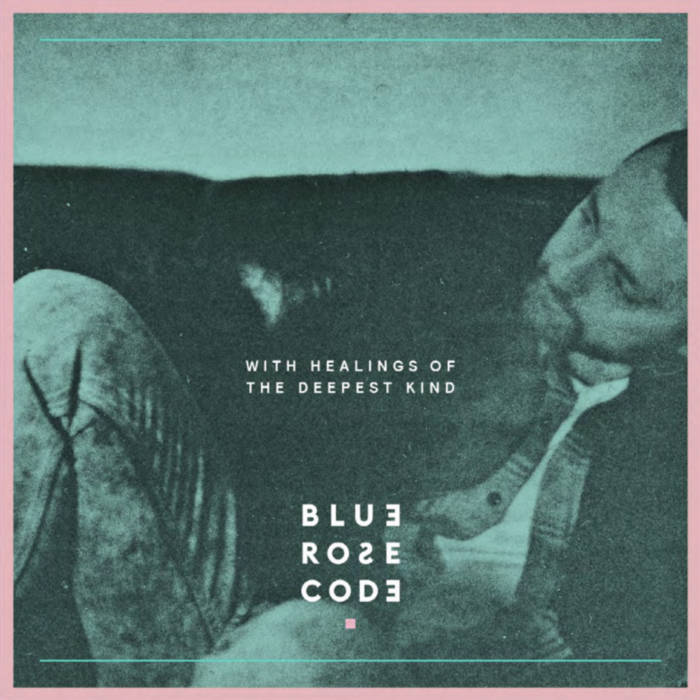
Blue Rose Code is Edinburgh-born songwriter Ross Wilson. At the edge of contemporary alt-folk, Wilson’s music evokes a meeting of Van Morrison and a young John Martyn, both shipwrecked with a bunch of Motown records. The music of Blue Rose Code is not simply music to listen to… But music to engage with in an emotional transaction that will tear your heart out, dance on it, repair it, replace it and somehow leave you feeling richer for the experience. I was introduced to the soul stirring and joyous experience that is Blue Rose Code some years ago, I think after the second single and have followed his music since. Ross Wilson is an exceptional composer and musician, his songs invoke strong feelings of passion for home and the land, for loyalty and love.
Ross’ soft Scottish brogue combines with some of the most emotive music you are ever likely to hear, he doesn’t write songs, he creates moments of musical wonder and beauty. Ross Wilson has spent most of his musical life curating; he sculpts his band to every mood and temperament in order to create the perfect happening. I find it so hard this artist has not made it to the bigger echolons of the music scene.
Nine songs, nine stories, nine perfect moments frozen in time, ‘With Healings Of The Deepest Kind’ is, perhaps, Ross’ greatest creation yet. Each track will take your heart and soul an a wondrous musical journey and lead you to place of peace, calm and love.
The highlights for me are the lilting, laid back charm of opener You’re Here And Then You’re Gone, the absolute grace of The Wild Atlantic Way and Starlit, the humble bare charms of Red Kites and the folk/blues/americana humble wonder of closing track Riverstown.
When it comes to music that salves the soul and gives joy to the heart, this album has few peers. An utter musical joy and one that everyone should listen to at least once, it has an honesty and innocence that is rare in the music industry these days.
DMA’S have inspired a flood of passionate responses from their listeners, after the release of their third album, The Glow. Though the album has countless hits, and numerous instances of skilled songwriting, ‘Learning Alive’ has been a Twelve Inch favourite. ‘Criminals’ is another criminally underrated tune, which will leave you itching for festivals and gigs to make a comeback.
DMA’S are an Australian three-piece rock band formed in 2012 in Sydney. The band is composed of Tommy O’Dell, Matt Mason, and Johnny Took. It’s not just the music that’s on another level: lyrically, ‘THE GLOW’ sees DMA’s at their most vulnerable, most excitable and most inspiring. ‘Silver’ is a slow-burning chunk of reflective uncertainty that sees lead vocalist Tommy O’Dell admit “I’m way too tired to want it all”, while the celebratory ‘Learning Alive’ sees him terrified (“never been so scared to be open“) but determined to fight. “All the world is spinning, I just want to hold it together… I’m on your side,” he promises. Elsewhere, the optimistic haze of ‘Strangers’ puts all its trust in other people (“I believe in strangers”) and the glitching ‘Criminals’ encourages you to chase your dreams (“You can be anyone now”).
You’re in for a treat this week if you’re a fan of DMA’s! The Sydney band have dropped new album ‘The Glow’ before they come to the UK in October.
DMA’s first two albums, released in 2016 and 2018 respectively, were unapologetic love letters to Britpop. A mix of Oasis’ swagger, the frenetic energy of Blur and The Stone Roses’ want to be adored, the Aussie trio made music to bellow along to at the top of your lungs while becoming mates with total strangers – scenes which naturally played out over and over again across the series of raucous, larger-soaked DMA’s gigs across the globe that followed.
But then their ‘MTV Unplugged: Live’ record, released nearly a year ago, stripped things back to basics with an acoustic arrangement that demonstrated that there was more to the three-piece than simply soundtracking the art of lobbing pints and ‘avin’ it large. The slow evolution of DMA’s in their bid to be something greater than The Next Whoever continues with ‘The Glow’, which sees the band continuing to shrug off expectations.
Chicago-based hardcore punk band LURK have released a lyric video for their song “Pressure Points” as well as an acoustic version of their song “Trample”. The songs are off of their upcoming EP, Pressure Points due out July 29 via Pure Noise Records.
Vocalist/guitarist Kevin Kiley tells us that the new song was recorded during the same sessions as the upcoming album, but that LURK “decided to keep it aside to release with this collection of songs instead.”
“Lyrically it’s about the damage caused by our desire for comfort and normalcy,” he continues. “In the wake of it we deplete our natural resources, murder animals, lower the standards of education and now apparently accept living with a deadly virus. It goes without saying but we need to do better and need rapid change.”
LURK tend to be a pretty genre-defying punk band, and “2043” is a fine example of this. It starts off giving the same IDLES-meets-Pere Ubu vibes as “Pressure Points” before evolving into a chorus that kinda sounds like shoegazy Stooges, and the song’s coda fuses psychedelic sound effects, harsh shrieks, and ’70s guitar heroism. It’s all over the place, but it works. Hear it for yourself below. LURK also tell us they also recorded some covers at home while quarantined, so stay tuned for those and more details on the upcoming LP, which Kevin says “will be coming when the timing is better.”
Our new single “Pressure Points” is out now via Pure Noise Records along with an acoustic version of an older song called “Trample”.
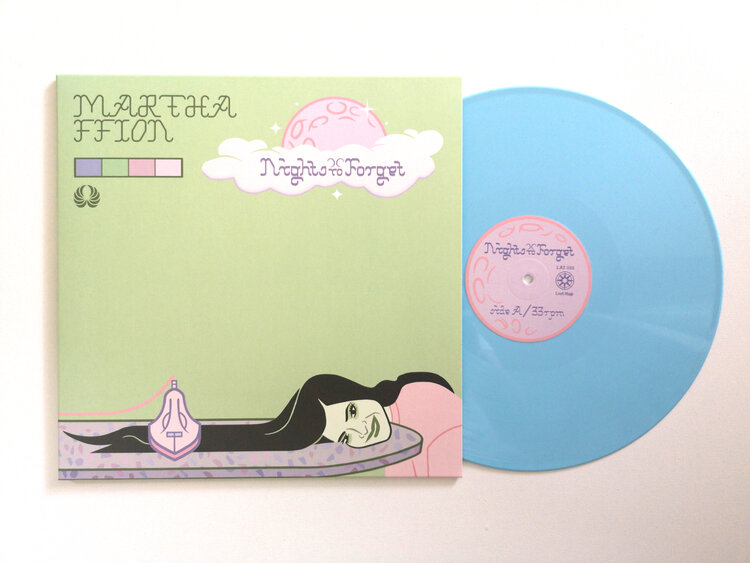
Nights to Forget is the much-anticipated second album from Scottish Album of the Year Award nominated Glasgow-based Irish singer-songwriter Claire McKay, AKA Martha Ffion. Set for release on August 14th, 2020 on 12” vinyl and via digital platforms, it’s a bold and exciting departure from her previous work, embracing Claire’s love of envelope-pushing contemporary pop, forgoing the storytelling of her debut album Sunday Best in favour of personal reflections on loss, letting go, looking forward and the futility of nostalgia. The album is preceded by the singles ‘After the Fact’ and ‘Want You To Know’, both of which are available now.
Produced by Dave Frazer and recorded at his home studio in Glasgow, Nights to Forget finds Claire pondering on everything from politics, feminism and depression to David Attenborough, and channelling her love of artists from St. Vincent and Roisin Murphy to Anderson .Paak and Grimes, on a mission to make a record that she wanted to hear, rather than a record that felt like an obvious follow-on from its predecessor.
“Most of it was written the summer after Sunday Best came out,” explains Claire. “It was an uncharacteristically hot summer by Glasgow standards but I spent most of it holed up in my flat on Garageband. When I would venture out for a walk, I kept bumping into my friend, Dave Frazer and we’d end up chatting about music for ages. I told him about the kind of record I wanted to make – something more fresh and modern – and we decided to give it a go together. I wasn’t tied to any label or timeframe, so we ended up gradually rebuilding and reworking my demos over the course of a year. We mainly worked in his flat, after work or on weekends. Everything was given so much breathing space – it was nice to let each song properly develop in its own time rather than having the pressure of studio deadlines. Deciding when to say it was finished was the hard part.”
My new album ‘Night to Forget’ – out 14.08.2020 on Lost Map – is now available to pre-order at a special price.
If you’re thinking about getting a copy (or buying releases by other independent artists) it would be good to do so today while all revenue goes directly to artists/charities!
Post punk group spread thin across the wild west country. “Romance” is Neurotic Fiction‘s final exhalation. Dragged around the block, dishonoured at the dinner party, pining over its own reflection, it crawls back into bed with its tail in its mouth, surrendering four agonising spasms of neurotic obsession before it expires, liberated at last from its waking thought – “oh no, not again” Having called it quits in July 2019 after touring with Doe and playing the Madrid Popfest with Martha, Neurotic Fiction faded from view with a vague hint about unreleased music cast over their retreating shoulders… a year later we’re pleased to announce this lost treasure: their final 7” Romance. Four more tracks of frantic hook filled post-punk with elements of garage, indie pop and surf. Clever, thought-provoking lyrics tucked in between tasteful riffs on a Wurlitzer. Recorded with Mark Jasper(Witching Waves / Soundsavers Studio) at Delicious Clam in Sheffield it neatly captures the magic of Neurotic Fiction’s shimmering guitar and intertwined vocal lines.
The Baltimore duo of Victoria Legrand and Alex Scally had established themselves as effortlessly sublime dream-pop adepts by the time of their third album, but they hadn’t yet embraced the production values that might convince people who weren’t reading mp3 blogs. Teen Dream, Beach House’s Sub Pop debut, was the sound of a band going for broke at that exciting moment before they know what they’re really capable of achieving. Recording in a converted church with producer/engineer Chris Coady, whose credits span Amen Dunes to Yeah Yeah Yeahs, the pair demonstrated a rare balance of preaching to the choir and pulling in new converts. The spidery guitar lines, dimly lit organ tones, and sparse drum machines remain.
But there’s also much more attempted: crystalline Fleetwood Mac–style harmonies, shoegaze-teetering crescendos, even kitchen-sink piano balladry. Each of the 10 songs could’ve been a single, and the physical edition’s accompanying DVD offers pleasantly warped videos for all of them. It was still dream pop, all right, right down to the “Twin Peaks”-echoing lyrical hook of the bleakly glamorous “Silver Soul.” But it was dream pop that could entice Jay-Z and Beyoncé out to a gig. Beach House have a well-earned reputation for not changing much, but on Teen Dream, they came into their own, and ushered the languid reveries of Galaxie 500, Mazzy Star, and Cocteau Twins into the current Instagram decade.
Beach House’s bleary-eyed dream pop is a soothing after-sun for the mind. The cymbals crash like waves on a deserted beach in late-summer, when the shadows are longer, the air is cooler and the carefree excitement of the previous months is replaced with a sedated satisfaction. Victoria Legrand’s contralto voice feels more shadowy than anything peak season would have allowed, whilst Alex Scally provides the flickers of brilliance that keep the whole record warm and alight, like a campfire under the starry skies.
The freshly released debut album by these Brits isn’t reinventing any wheels. In fact it could have also been released in the early 90s sounding exactly like this and you can take that as a compliment. bdrmm sound like the lost love child of Slowdive and The Cure, mixing mighty shoegaze moments with dark wave spirit. If you love the sound of those classics and also new groups like DIIV then “Bedroom” is the album for you. It’s a record for the hopelessly romantic indie kid in you, one that chooses a certain nostalgic timelessness over state-of-the-art innovation. bdrmm are doing a great job in recreating this very specific sound and personally I don’t need any innovation here as long as the music is as good as on this one.
With an awkward, vowelless name that has to be constantly explained, it is unsurprising that the titling of Hull / Leeds-based quintet bdrmm’s debut album is eponymous. “We have been pronounced as Boredom, Bdum and my old boss actually thought we were a ska band called Bad Riddim. We’re all sarcastic cunts, so Bedroom spelt correctly seemed like the perfect title,” explains frontman Ryan Smith. Widely praised for their innovative approach to shoegaze in their early singles, the group have taken a sonic and lyrical step up from last year’s If Not, When? EP. With named influences such as RIDE, Radiohead, The Cure, Deerhunter, Slowdive, Beach House, Alex G, Björk, John Maus and DIIV, the album spans krautrock, post-punk, proto-shoegaze and their cross-fading of some tracks means the album is an almost seamless listen.
As intimate as the name suggests, the whole album spans the violent ups and downs of being in your early twenties: “mental health, alcohol abuse, unplanned pregnancy, drugs… basically every cliché topic that you could think of,” reveals Smith. “But that doesn’t mean they ever stop being relevant. It’s a fucker growing up, but I’m lucky enough to have been able to project my feelings in the form of this band, surrounded by four of the best people I’ve ever met.” These four include his younger brother and bassist, Jordan, an old bandmate, Joe, synth player Dan, and drummer Luke. Ranging in age from teenagers to their mid-30s, they played incessantly over the last couple of years, supporting the likes of Fat White Family, Her’s and Viagra Boys. They found themselves on the radar of indie label Sonic Cathedral last January, who initially offered them a show at The Social and asked if they’d be up for contributing to the Sonic Cathedral Singles Club series of 7”s. From there, they went on to release debut EP, If Not, When? and it hit a nerve with BBC Radio presenters, critics and their peers from the palpable and universal feeling of “everything being too good, that it’s inevitably going to come to an end” (Smith).
Four months in and out of the studio resulted in something truly remarkable, at once elating and dark. More than just a genre record, as something stamped with the label ‘shoegaze’ so often is, Bedroom works its way from fuzzy indie-pop to heavier dirges via sound collages and a distorted sample of a Megabus driver. We’ve been sent this exclusive track by track of the album, so delve into bdrmm’s world as you listen:
‘Momo’ is named after a pretty fucked-up online hoax – a viral game that allegedly got sent to students’ phones that would goad them into violence and suicide. Our manager works in a school and he got really convinced that it was real, and to this day we’ll never let him live it down. It seemed only fitting that it be cemented in history as the first track on an album he helped create. I’ve always been a fan of instrumental openings to albums, I feel they’re like the opening credits, and set the mood of what the listener is in for.
Push/Pull
We really wanted to make an album that flowed seamlessly throughout, so hearing ‘Momo’ going into ‘Push/Pull’ like it does is something special. It’s not an album filled with random tracks, it’s meant to be listened to in full, in order. We spent so much time deciding on the tracklisting, there were so many different combinations. ‘Push/Pull’ is a recollection of the first time you meet somebody. It’s quite dark as it’s not a generic ‘how I met the love of my life’ story. It’s remembering them from the End.
A Reason To Celebrate
A reason to celebrate was actually going to be the name of the album. This is our ode to the genre, I think; we wanted to make a proper shoegaze record. I was sat in my old house about two years ago just messing about on an acoustic guitar with five strings and came up with the chord progression and sent it onto Joe [Vickers, bdrmm guitarist]. We agreed it needed to be something. It’s about proudly, yet stupidly, letting go. It’s the voice in your head giving you all the different reasons why you should. I love this track, it’s a personal favourite. When we play it live, we never want to stop.
Gush
‘Gush’ is a very, very, very old song. It’s a very personal track, too, probably the most I’ve ever delved into my own life with a track. As much as I would love to share this topic, I feel it’s too much. I shared something very special with somebody, which we lost. It was a very upsetting couple of months for us, but we got through it. This track is filled with optimism because things do get better, no matter how bad they get. Be there for your loved ones, always.
Happy
Ahhh, ‘Happy’. This is our song. We have been playing it live, practicing it, working on it since we started playing together. It’s one of the first tracks I ever wrote and has proudly stood the test of time. I actually have a video of the first show we ever played which includes it. This song is all about bitterly yet humbly wishing somebody who has hurt you the best. You’re sick of fighting, you’re tired, you just want to move on, and if that means you have to be the bigger person, so be it. You deserve to be.
(The Silence)
‘(The Silence)’ was created in the studio. It was a day when it was just me and Alex [Greaves, producer], working on some guitar parts and some extra synth. I think we got a bit carried away in dragging out the ending of ‘Happy’, which can happen when you’re working with a Space Echo. They’re like crack for anybody making this kind of music. Alex added layers and layers of synth, and a beautiful guitar line. Nothing about it is in time, it’s very disjointed, especially when the drums come in. We’re both huge Deerhunter fans, so took a lot of inspiration from them. I went into the vocal booth and it was a proper turn all the lights off moment. The vocals were recorded in pitch darkness. “The silence, you speak, in my ear. Proves that, you can’t, be here”.
It’s literally about somebody having nothing to say. There’s nothing to be heard.
(Un)Happy
We always follow ‘Happy’ with a little jam, which is playing the same chords in half time, kinda just trudging along. It’s very moody. I didn’t expect it to make its way on the album, but I’m so glad it did. It’s a part of ‘Happy’ now. ‘Happy’, ‘(The Silence)’ and ‘(Un)Happy’ are a trilogy. There is a sample underneath at the end which you can hear which is a voice recording I took of the driver of the Megabus from Manchester to Leeds. I’d had the worst night, I had to steal a phone charger from Poundland to book a coach home because I had no money. I was stealing food from Tesco, it was raining and it was a real low point for me. I had a real problem with alcohol and drug abuse, this was the day I realised it needed to sort it out, which I’m definitely on the road with. But when I was on the bus home, the driver was having a conversation on the phone with his mate about meeting up after his final journey. It brightened up what was a very bleak day, I’m glad I stole that charger now.
If….
This track is named after the 1968 Lindsay Anderson film If….. Not because it’s about Malcolm McDowell or school shootings, but because I watched it a lot during the period when I was getting over somebody. Its sheer bleakness made me realise that there are a lot more fucked up things in the world than getting out of a relationship, so stop moping about and do something about it. It’s now become one of my favourite films of all time. I’m a big film enthusiast, so I am indebted to who showed me it. She’s great, too.
Is That What You Wanted To Hear?
This is the first track we completely finished in the studio. It all came together so beautifully; it was a symphony of one-takes. This is another one we love playing live, it’s got all the parts to be a really pretty song, but it’s not. It’s about standing up for yourself. “Fine, you win, I never felt what you felt. Is that what you wanted to hear?”. After constantly reassuring someone that you love them, but they don’t believe it, you just give up. There’s only so much truth telling you can withstand before you start lying to yourself.
Forget The Credits
This was originally just called ‘Forget’. It’s almost like a weight being lifted from your shoulders. The chords drift off into space taking everything that’s just happened with it. It was always meant to be the last song on the album. I remember when I recorded the first demo, it was the first time I played drums for a track. It’s very open ended. It’s the end of a chapter, not the end of the story.
bdrmm release debut full-length album Bedroom on Sonic Cathedral on 3rd July 2020.
John Martyn’s best songs had an intensity and raw emotional power that earned him a cult following which remains strong even today. Martyn was a musical maverick, a bitingly honest songwriter, and one of the most brilliant acoustic guitarists of his generation.
One of Martyn’s biggest technological innovations was his use of Echoplex delay, which allowed him to build layers of guitar. The technique was ahead of its time, and has been cited as an inspiration by U2’s The Edge. As well as influencing contemporaries such as Eric Clapton, Martyn’s work has earned him adoration from artists as varied as Beck, Joe Bonamassa, and Beth Orton. Although Martyn never had a hit single, some of his best songs, including the folk anthem “May You Never” and the ethereal “Solid Air,” are modern classics.
His finest work was for Chris Blackwell’s Island Records, who called Martyn “a true one-take man.” Blackwell gave the musician the time and backing to create a very personal sound. Although Martyn was a powerful live performer, dazzling with his guitar work and his extraordinary smoky, sweet-voiced inflections, he instinctively understood what was needed for music to come alive in a recording studio. As a result, he left a series of enduring albums from a volatile four-decade career.
“May You Never,” “Sweet Little Mystery,” “Fine Lines,” “Don’t Want to Know,” “Couldn’t Love You More”
As a youngster, Martyn was a fan of the guitar styles of blues men such as Mississippi John Hurt and Skip James. He developed his own hard plucking, dextrous style to accompany his brooding, introspective lyrics. The combination became a trademark of much of Martyn’s best work in the 1970s. His most enduring song is perhaps the catchy “May You Never,” which appeared on the 1973 album “Solid Air”. Fellow folk guitar maestro Richard Thompson, who played with Martyn in this era, said, “you could put it into a hymn book.” Martyn’s friend and occasional collaborator Clapton covered “May You Never” on his 1977 album Slowhand.
Martyn was born Ian David McGeachy, taking his stage name when he moved from Scotland to London in 1967. He recorded accessible, melodic tunes throughout his career, including “Sweet Little Mystery” from 1980’s Grace and Danger. Martyn oozed ease, something evident on “Fine Lines,” a song which featured his ad-libbed comment that “it felt natural” – an aside retained on 1973’s Inside Out album – as he slid into a tender song about friendship and loneliness. The album was made with “no self-consciousness… probably the purest album I’ve made musically,” said Martyn.
The son of two light opera singers, John Martyn’s best songs often saw him using his voice like an instrument, especially when he was repeating phrases. He sings impressively on “Don’t Want to Know,” also from Solid Air, which was written in Hastings with the help of his first wife Beverley Kutner. Another good introduction to Martyn’s back catalogue is “Couldn’t Love You More,” from 1977’s One World, which featured his long-term collaborator and bass player Danny Thompson. On the surface, it’s a sweet romantic ballad but, in typical Martyn fashion, there is an ambiguous undertow to the tender lyrics, suggesting a lover who has nothing more to give. With Martyn, the darkness usually held back the light.
“Solid Air,” “Go Down Easy,” “Small Hours” Martyn was a musician who brought the intensity of a live performance to studio work. “Solid Air,” the mesmerizing title track to his most popular album, was written for his friend Nick Drake, shortly after the release of Drake’s masterpiece Pink Moon. In the years since Drake’s death in November 1974, the song has turned into a kind of requiem for the talented singer-songwriter, who was just 26 when he passed away.
Martyn once said that he loved jazz saxophone players – he raved in particular about Ben Webster – and the singer’s deftly-phrased delivery gelled magnificently with the tenor saxophone playing of Tony Coe on “Solid Air.” Coe was a sought-after session man who had recorded with jazz greats such as Dizzy Gillespie and Art Farmer. “John Martyn would smooth in his entries like a saxophone. It was almost like an actor’s voice,” John ‘Rabbit’ Bundrick, the keyboard player who performed on the album told Graeme Thomson, author of an excellent biography entitled Small Hours: The Long Night of John Martyn.
“Go Down Easy” is another song from Solid Air that has an atmospheric appeal. It’s worth listening closely to the way Martyn and upright bass player Thompson interact throughout. Thompson once said that playing with Martyn was like “a natural musical conversation.” The arrangement of the song, which was recorded like a live jam session, allowed Thompson’s deft playing to entwine with Martyn’s guitar playing in what is a masterclass of intonation.
John Martyn’s best songs often had a hypnotic, free-form grace, something evident on One World, the triumphant album he recorded at Chris Blackwell’s house Woolwich Green Farm in the summer of 1977. The project started in Jamaica, involving singer and producer Lee ‘Scratch’ Perry, when Blackwell made the rare decision to produce Martyn. He got the best out of the singer. The title track featured a haunting guitar solo, while the epic, soothing “Small Hours,” which is just under nine minutes, is one to let wash over your brain.
(“Bless the Weather,” “One Day Without You,” “Hurt in Your Heart,” “Our Love,” “Angeline”) “Bless the Weather” is a fierce love song and a good example of the way Martyn explored the flaws and frailties of the human heart. As his career went on, Martyn’s compositions grew progressively bleaker. The man who wrote the warm-hearted “One Day Without You” (“One day without you/And I feel just like some lost ship at sea”) in 1974 was a different beast to the man who went into the studio six years later to record Grace and Danger. By that point, Martyn was trying to make sense of “a dark period in my life,” one that included divorce and addiction.
The pain came out in eviscerating confessional songs such as “Hurt in Your Heart” and “Our Love.” Martyn is quoted in Thomson’s book as saying that the songs on Grace and Danger were “probably the most specific piece of autobiography I’ve written. Some people keep diaries, I make records.”
Although Grace and Danger marked the last true high point of Martyn’s album-making, he returned to the theme of lost love with “Angeline,” on 1986’s Piece by Piece. Although “Angeline” is a more melodic offering than “Hurt in Your Heart,” it is full of passion and sorrow. Island released it as a single, but it’s worth seeking out live versions, where Martyn extended the song considerably.
(“Over the Hill,” “Dancing,” “Singin’ in the Rain”)
Although some of John Martyn’s best songs have a mordant, disturbing quality, he was also a witty stage performer, capable of recording exuberant, joyful songs. The acclaimed comedian Billy Connolly, who was a folk singer himself in the mid-1960s in Scotland, remembered Martyn as “a good laugh.”
One of Martyn’s most uplifting songs is “Over the Hill,” from Solid Air, on which Richard Thompson plays mandolin. Martyn’s song, which describes a homecoming, was written about the final part of a journey into Hastings, the train ambling through the countryside before revealing the seaside town.
Island released his 1977 song “Dancing” as a single, and this Afrobeat paean to the joys of the life of a travelling, stay-out musician, is truly infectious. Martyn was never enamored with the old-fashioned image of British folk music – which he scornfully dismissed as “the dingly-dangly-dell of life” – but he was a fan of nostalgic songs that put “a smile on your face.” He frequently performed “Singin’ in the Rain,” both live – where he encouraged singalongs – and in the studio, including his 1971 version on Bless the Weather.
(“Wining Boy Blues,” “The Glory of Love,” “I’d Rather Be the Devil,” “Spencer the Rover”) Martyn was a gifted interpreter. He even cut a whole album of covers – 1998’s The Church with One Bell – which featured songs written by Randy Newman, Lightnin’ Hopkins, Elmore James, and Bobby Charles. Martyn grew up loving Jelly Roll Morton’s “Wining Boy Blues” and he recorded his own version early in his career, along with a touching take on Billy Hill’s “The Glory of Love,” a song first made famous by Benny Goodman in the 1930s.
One of his most spell-binding performances was of Skip James’s “Devil Take My Woman,” which Martyn retitled “I’d Rather Be the Devil” for Solid Air and turned into a passionate six-minute tour-de-force, full of the electronic effects from the tape device known as the Echoplex. Although Martyn had originally played straight acoustic versions of the song – which he’d learned at Les Cousins Folk Club in London in 1969 – his recorded version was the finest example of his experiments with Echoplex, something that started with the 1970 album Stormbringer! By 1973’s Solid Air, it had become a key part of his repertoire, his skill with it even earning praise from Bob Marley. “Bob was totally blown away,” Blackwell is quoted as saying in Thomson’s book.
Although Martyn rarely covered traditional songs, his version of “Spencer the Rover,” a folk song that had origins in the northern English county of Yorkshire, is sublime. Martyn, who named one of his sons Spenser, always enjoyed singing what was, perhaps, a romanticized version of his own wild wanderings.
Martyn’s roving days came to an end in 2003, when he had his right leg amputated below the knee because of a burst cyst. He continued performing until 2008, using a wheelchair. When Martyn received a lifetime achievement award at the 2008 BBC Folk Awards, Clapton was quoted as saying that the innovative Martyn was, “so far ahead of everything, it’s almost inconceivable.”