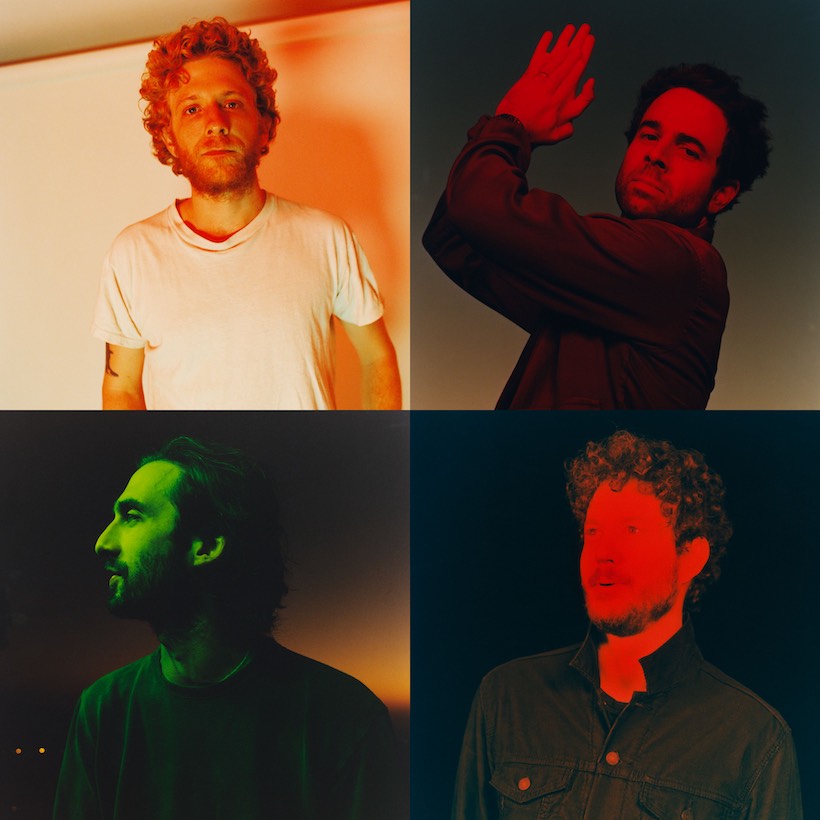
When Soul Asylum needed a new lead guitarist in 2016, Ryan Smith answered the call, indefinitely delaying the RyanandPony show in the process. Freed to work on side projects, having fulfilled his duties with the mangy Twin Cities alternative-rock curs on their strong 2020 knockout Hurry Up and Wait, Smith hooked up again with Pony, aka Kathie Hixon-Smith, for the sleek, fast-paced indie rock of Moshi Moshi, their debut LP.
Stuffed with tight hooks and bristling with propulsive, cyber-punk energy, it’s still an emotionally resonant, human record that’s timely and insightful, as the dark pulse of “First Night” races, the thumping, squeaky clean “Start Making Sense” lives with modern tension and “Starry Eyes” glazes over in a rushing dream-pop reverie. Slick, infectious EDM moves “Cinematic” and “Fast As I Can” glide along and groove, as Ryan and Pony take Prince’s “I Would Die 4 You” on a guitar-oriented, rock ‘n roll joy ride. Ryan And Pony is a brand-new project from two indie-rockers who have been kicking around the much-vaunted Minneapolis music scene for years. Their debut album Moshi Moshi was recorded at a variety of Minneapolis studios including Flight Simulator, Flowers, Master Mix, and The Kill Room with Ryan producing.
Ryan is a workaholic multi-instrumentalist who has been playing lead guitar in Soul Asylum since 2016. Pony is a flamboyant performer and artist raised by deaf parents. Together they have made numerous albums and toured internationally leading The Melismatics. On Moshi Moshi they fuse Dream-Pop, post-Punk, Brit-rock, EDM, and good ol’ fashioned Rock ‘n’ Roll into a sound all their own; irony, weirdness, and melody are at its heart. Peter Anderson (The Ocean Blue, Run Westy Run, The Honeydogs) adds his killer drum skills to the mix.
It’s even easier to fall for the sweet jangle-pop sparkler “Trouble in Mind” – song of the year candidate? – and the moonstruck, ’60s girl-group swoon of “Be Still My Baby.” Moshi Moshi doesn’t play hard to get.
Band Members:
Ryan-singing and stuff
Pony-singing and stuff
Featuring Peter Anderson on drums
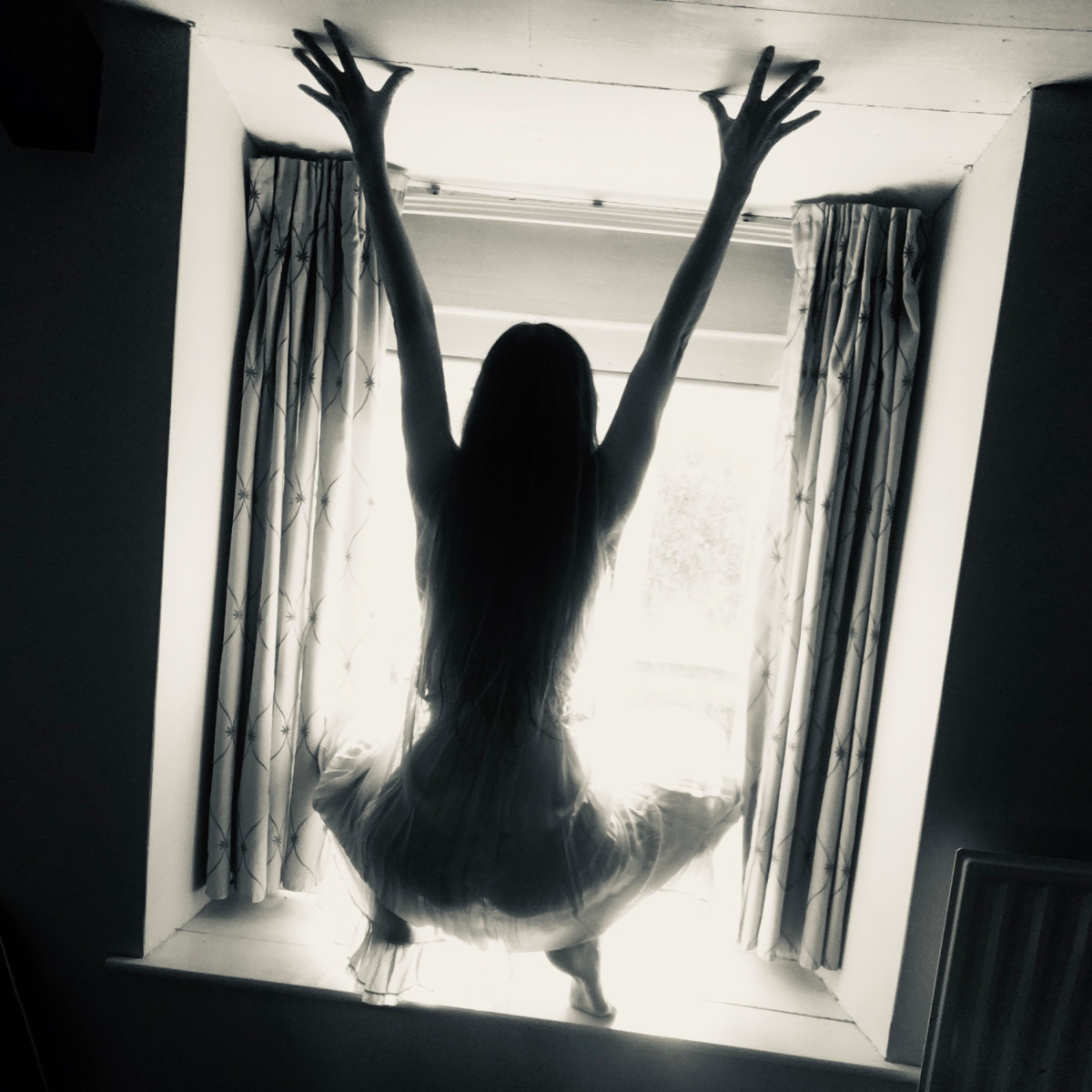
Considered one of the original “Riot Grrrls” by no less an authority than Courtney Love, the reclusive Katie Jane Garside is again ready for her close-up. Once the shrieking, whispering doll in dirty, ripped dresses who angrily fronted noisy indie-rock terrorists Daisy Chainsaw in the late 1980s and early ‘90s, Garside has been collaborating more recently with partner Chris Whittingham as Ruby Throat, releasing four albums and an EP under that name.
Now going by Liar, Flower, the duo unveil the brilliantly arty and delightfully confounding alternate reality of “Geiger Counter”, where the wintry folk of “Baby Teeth,” the ethereal and haunting “Blood Berries” and an eerily quiet “Hole in My Hand” consort with the carnivalesque romp “Little Brown Shoes” and the radioactive, glam-rock euphoria of “My Brain is Lit Light an Airport.” A dirty bomb going off in an electrical storm, the latter surges forward on the strength of a magnetic, repeating guitar riff, just as the trashy, distorted blues of a crackling “Mud Stars” is sucked into glittery sonic quicksand. Often coy and alluring, with outbursts of witchy, bloody screams and squeals, the sheer diversity of Garside’s uniquely textured vocal mania is dramatic and dizzying, just like the fairy tale poetry of Geiger Counter.
“Little Brown Shoe” from the album ‘Geiger Counter’ by: Liar Flower
On August. 14th, the David Bowie estate will drop a new Live record, showcasing the late rock legend’s 14th October 1999 performance in Paris, France. Bowie was in particularly good spirits that night at the the Elysée Montmarte, having been awarded the country’s highest artistic honour – the Commandeurs of the Ordre des Arts et des Lettres – earlier that day.
The Bowie’s rarities-filled concert in 1999 Paris will serve as the next installment in an ongoing series of digital releases dedicated to the music icon’s Nineties concert work.
“Something in the Air (Live Paris 99)” — one of a handful of full-concert promotional performances Bowie made following the release of 1999’s Hours. To stoke excitement for the release, fans can now view a live clip from the show, marking Bowie’s first performance of Aladdin Sane track “Drive-In Saturday” in 25 years. That night Bowie responded with a set that journeyed into the less-travelled corners of his back catalogue.
The 15-song concert featured “Can’t Help Thinking About Me,” a single he recorded in 1965 and hadn’t performed live in over 30 years, plus revived renditions of Station to Station’s “Word on a Wing,” and the live debut of Hours’ “Something in the Air.”
While three of the concert’s recordings were used for “Hours” B-sides, the other 12 tracks remained unreleased. Something in the Air (Live Paris 99) will debut on streaming services on August 15th. The live LP follows the similar digital-only releases of an Earthling era live collection, LiveandWell.com as well as Ouvrez Le Chien (Live Dallas 95).
Something in the Air (Live Paris 99) will be available via all steaming platforms on August. 14th.
Lookman Adekunle Salami -aka ‘L.A. Salami’ – is a rare breed of musician that the world has been craving since the height ofstorytelling legends like Joni Mitchell, Paul Simon and Neil Young. Not quite folk, not quite indy, not quite common and certainly not boring, L.A. Salami’s lyricism and voice are hypnotic, His new album ‘The Cause of Doubt & A Reason To Have Faith’ is out now,
The LP sees Lookman explore experimental ground, touching on a bit of everything from rap to psychedelic folk, and sultry grooves which venture into extended hypnotic jams. This isn’t the music of a virtuoso: it’s explorative, daring, meditative and wild. Lookman describes the inspiration behind his new album, “I love the deliberateness, cleanness and colour of modern music, but I also miss the complete chaos of old, like some Captain Beefheart and Velvet Underground records, or even 90s HipHop records with the peaking 808s and static compressed vocals al la Wu Tang, or blues records like Robert Johnson’s. Somewhere in there is the carnival I’ve been searching for. This entire album could very well be a love letter to Lou Reed and The Velvet Underground.”
Lookman began writing poetry at a very early age, which then evolved into writing lyrics and he taught himself the guitar aged 21. Fostered from birth, Lookman was periodically re-united with his birth mother from the age of 5, which he describes as being emotionally confusing, “I find it rears its ugly head consistently in my life, and music became one of the easiest ways to release that pressure valve every so often.”
L.A. Salami’s two albums to date, ‘Dancing With Bad Grammar’ (2016) and ‘The City of Bootmakers’ (2018), have seen the London-based artist present a singular vision. His evocative, poetic lyrics span everything from grand existential questions to vignettes of everyday life as well as the affairs and anxieties of modern Britain.
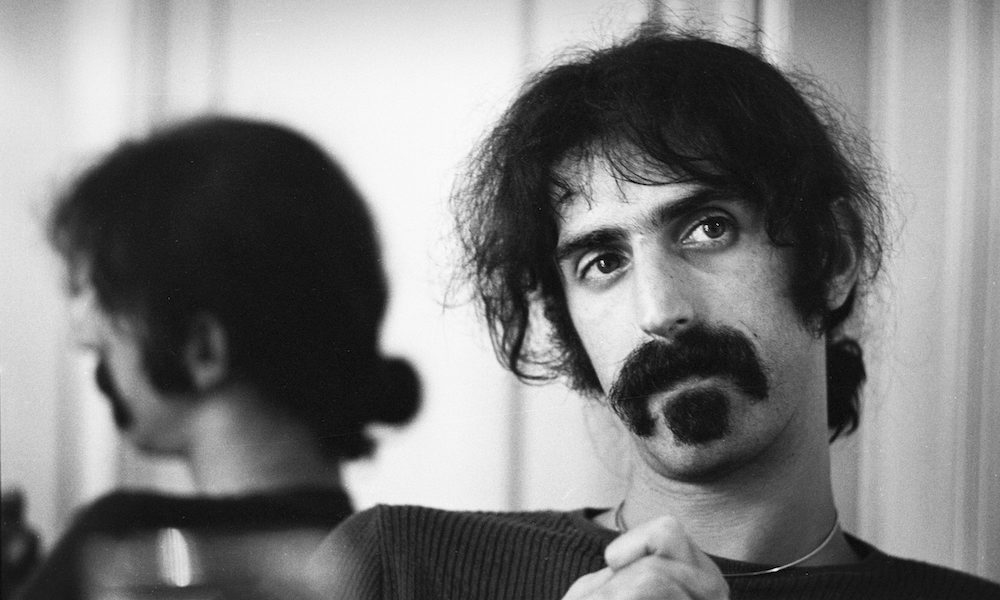
A new documentary will offer an in-depth look at the singular life and work of pioneering artist, Frank Zappa. Directed by Bill & Ted star Alex Winter (The Panama Papers, Downloaded), Zappa is set for release over Thanksgiving Weekend, via Magnolia Pictures. the film has been described as “an intimate and expansive look into the innovative life of the iconic – and iconoclastic – musician and artist.” Deadline also confirmed that the film will delve into “the private life behind the musical career that never shied away from the political turbulence of its time,” thanks to a trove of archival content.
Fans can also expect new and archival interviews from a variety of friends, family members, and collaborators, including the musician’s late widow, Gail Zappa, as well as from Mothers of Invention multi-instrumentalist Ian Underwood; guitar virtuoso Steve Vai; author, musician, actress, and Zappa-family-nanny, Pamela Des Barre; Kronos Quartet founder David Harrington; bassist Scott Thunes, and many others. The excellence of Frank Zappa with magnificent sound recorded at various venues on the 1981 tour (except for 3 tracks from Fall 1980) with some studio overdubs added at Zappa’s home recording studio.
To my information tracks from this that appear on official albums have extensive overdubs and different mixes.
“Alex Winter has created an amazing documentary,” said Magnolia President Eamonn Bowles in a statement. “Zappa is an incredibly nuanced and compelling look at the visionary iconoclast and the environment that formed him.” Winter added, “This is the most ambitious project I’ve ever worked on, with a couple years of archival preservation in addition to several years to make the film itself. This isn’t your typical music doc but rather a multi-faceted narrative that aims to bring this complex artist to life.”
More recently, Zappa’s work with his band The Mothers was celebrated in a new 4CD and digital collection of 70 unreleased live and studio recordings engineered by the then-unknown producer Roy Thomas Baker, which make up the box set’s first disc. Overseen by the Zappa Trust and produced by Ahmet Zappa and Zappa Vaultmeister, Joe Travers, The Mothers 1970 collects together more than four hours of previously unreleased performances by the heralded line-up which lasted roughly seven months in 1970.
Dawes have released “St. Augustine At Night” as another preview of their first album for Rounder Records, and seventh studio release overall, “Good Luck With Whatever,” which is due on October 2nd. Says Goldsmith: “‘St. Augustine at Night’ is a song about one’s relationship to their hometown, but also is a song about the varying degrees in which we all watch our lives pass us by.” The five-minute track strikes a confessional, reflective air, with simple accompaniment to frontman Taylor Goldsmith’s vocals by acoustic guitar and piano. The band, also featuring Griffin Goldsmith (drums), Wylie Gelber (bass) and Lee Pardini (keys), introduced “St. Augustine At Night” at some of their shows on their 2019 tour.
It’s been 11 years (next month) since L.A. rockers Dawes launched dual residencies that fueled the success of their debut album “North Hills” and cemented them as Southern California favourites. Six albums later, their take on Everyman classic rock has aged well — familiar, earnest, relatable music that wears like denim.
The quartet — Taylor and Griffin Goldsmith, Wylie Gerber and Lee Pardini — today announced that their seventh album, “Good Luck With Whatever,” will be out October. 2nd. It’s their first release for Rounder Records.
“In the past, I’ve definitely been more precious about the way I wanted the songs to sound, but that’s never as fun,” Taylor Goldsmith says of the album. “The music we make is everyone’s mode of expression, and the other guys all have chops that I don’t have and never will. The fact that we’re able to lean on each other and celebrate each other as individuals just makes us so much more excited about getting to play together in this band.”
The first single “Who Do you Think You’re Talking To?” is a saxophone short of a blue-jeaned Springsteen, the kind of tune you blare on the open road. “This song is about the way we bring our baggage with us as we move away from traumatic experiences and relationships,” Goldsmith says. “And the irony of sometimes our newer partners needing to be part of the processing more so than the folks who caused the trouble in the first place. It’s also about the other side of that coin — trying to assess a situation but knowing when not to take it personally and also finding a way to avoid over-analyzing.
“As a band, it was the first time we’ve ventured into certain grooves/arrangements for our tunes, so it was fun to push ourselves, see what felt natural and what we could get away with.”
The album was produced by six-time Grammy winner Dave Cobb (Chris Stapleton, Brandi Carlile, Jason Isbell) at Nashville’s RCA Studio A. Caitlin Gerard directs the video.
In June, Dawes released “Live From Richmond, VA,” a digital album with proceeds going to Reform Jails LA and Black Lives Matter LA. In the midst of all this changing and learning and growing we have decided to release ‘Live From Richmond’ as a digital download on @bandcamp with 100% of our proceeds being split 50/50 between @reformlajails and @blmlosangeles. Please check out both organizations if you have the chance.
Yesterday someone I admire told me that this is the first time they have felt hopeful in years. I’ve got a lot of work to do and this is barely just the beginning….but I feel hopeful too. And that feels so good. I hope you enjoy the music. Link in the bio. – TG The band’s last studio album was 2018’s Passwords, the last of three on HUB Records.
Band Members:
Wylie Gelber,
Taylor Goldsmith,
Griffin Goldsmith,
Lee Pardini,
(It was 50 years ago today! August. 5th in 1966: The Beatles ‘Revolver’ album was released in the UK (August. 8th in the US); it was the band’s 7th studio release featured the likes of “Taxman”,“Eleanor Rigby”, “I’m Only Sleeping”, “Here, There & Everywhere”, “She Said She Said”, “And Your Bird Can Sing” & “Tomorrow Never Knows”; it reached #1 on both the UK (seven weeks) & US (six weeks) charts; in a 1967 article for ‘Esquire’, music journalist Robert Christgau called the album “twice as good & four times as startling as ‘Rubber Soul’, with sound effects, Oriental drones, jazz bands, transcendentalist lyrics, all kinds of rhythmic & harmonic surprises, & a filter that made John Lennon sound like God singing through a foghorn”; Rolling Stone ranked it #3 on their list of ‘The 500 Greatest Albums of All Time’…
“Revolver” is the seventh studio album by the English rock band The Beatles, released on the Parlophone label and produced by George Martin. Many of the tracks on Revolver are marked by an electric guitar-rock sound, in contrast with their previous LP, the folk rock inspired Rubber Soul (1965). In Britain, the fourteen tracks from Revolver were released to radio stations throughout July 1966, “building anticipation for what would clearly be a radical new phase in the group’s recording career”. The album was remastered 9th September 2009 for the first time since its 1987 digital compact disc release. the album is often regarded as one of the greatest achievements in music history and one of The Beatles’ greatest studio achievements.
We’d had acid on Revolver. Everyone is under this illusion… even George Martin saying ‘Pepper was their acid album,’ but we’d had acid, including Paul, by the time Revolver was finished. … Rubber Soul was our pot album, and Revolver was acid. John Lennon, Sept 1971, St. Regis Hotel, NYC
Unlike our previous LPs, this one is intended to show our versatility rather than a haphazard collection of songs. We use trumpets, violins and cellos to achieve new effects. George has written three of the tracks. On past LPs he never did more than two and Ringo sings, or rather talks, a children’s song. This is all part of our idea of being up-to-date and including something for everybody. We don’t intend to go back and revive ideas of twenty years ago. Paul McCartney, 1966
The Beatles had initiated a second pop revolution – one which while galvanising their existing rivals and inspiring many new ones, left all of them far behind.
~Ian MacDonald (Revolution in the Head: The Beatles’ Records and the Sixties) ….. Either way, its daring sonic adventures and consistently stunning songcraft set the standard for what pop/rock could achieve. Even after Sgt. Pepper, Revolver stands as the ultimate modern pop album and it’s still as emulated as it was upon its original release.
~Stephen Thomas Erlewine (allmusic.com)
Recorded on 6th April – 21st June 1966, at EMI Studios, London
All the rules fell by the wayside with Revolver, as the Beatles began exploring new sonic territory, lyrical subjects, and styles of composition. It wasn’t just Lennon and McCartney, either — Harrison staked out his own dark territory with the tightly wound, cynical rocker “Taxman”; the jaunty yet dissonant “I Want to Tell You”; and “Love You To,” George’s first and best foray into Indian music. Such explorations were bold, yet they were eclipsed by Lennon’s trippy kaleidoscopes of sound. His most straightforward number was “Doctor Robert,” an ode to his dealer, and things just got stranger from there as he buried “And Your Bird Can Sing” in a maze of multi-tracked guitars, gave Ringo a charmingly hallucinogenic slice of childhood whimsy in “Yellow Submarine,” and then capped it off with a triptych of bad trips: the spiraling “She Said She Said”; the crawling, druggy “I’m Only Sleeping”; and “Tomorrow Never Knows,” a pure nightmare where John sang portions of the Tibetan Book of the Dead into a suspended microphone over Ringo’s thundering, menacing drumbeats and layers of overdubbed, phased guitars and tape loops…
It may seem like an odd introduction to one of the Beatles’ more important and experimental albums. Written as a children’s song, “Yellow Submarine” made an impression at the time, but my fondness for Revolver only grew as I did and learned about what it really meant, about the impact it had for the band and for music. Now that I’m a music writer and proudly own their albums—on vinyl, Revolver offers an entirely different listening experience. Hearing it now, “Yellow Submarine” doesn’t quite fit, and yet it somehow does. Revolver is an amalgamation of different styles and genres, and the Beatles excelled at all of them.
The band was heavily involved with drugs at the time—the most mild being marijuana with Lennon becoming more interested in LSD—and questioning their musical identities among other more existential inquisitions. Pair that metaphysical exploration with three months in the studio after they retired from touring and the result is an album that defies the limits often ascribed to music genres.
If one thing in particular defines Revolver, it’s the fact that it evades the Western notion of meaning; of a definitive beginning, middle and end. “Tomorrow Never Knows,” the first song the Beatles recorded for the album and the final track on it, served not as the period to a complete sentence but as a pathway back to the start again. As Ian MacDonald noted in his book Revolution in the Head, part of the song’s instrumental break contains Paul McCartney’s guitar solo (chopped up and played backwards) from “Taxman,” the album’s opening track. However minutely, the album’s last song references its first, and in doing so presents something closer to a cyclical chant that’s meant to go on and on and on.
Even Revolver’s title referred to a continual loop, but with a keener self-referential touch. McCartney observed that albums “revolved,” so Revolver became an album about albums—about making them and defying what that typically entailed. The now oft-quoted lyric from “Tomorrow Never Knows,” “Turn off your mind, relax and float downstream,” which John Lennon pulled from Timothy Leary’s LSD drug manual The Psychedelic Experience (which itself is an adaptation of The Book of the Dead), presents a challenge to listeners used to albums being a certain way. Are you willing to let go of any preconceptions you have of pop music? Are you willing to do away with any clear categorized notion of “the Beatles?”
How influential was “Tomorrow Never Knows” exactly? It’s always celebrated by rock and pop magazines, but even dance music magazine Muzik ranked it as one of the most influential records of all time, saying “Every idea ever used in dance music exists in this song. ” Again, this is on the same album with “Yellow Submarine,” the string octet of “Eleanor Rigby” and the garage rock of “Taxman.”
By the time of Revolver, Paul McCartney had developed an interest in more classical sounds, which arise in the French horn on “For No One” and the orchestration in “Eleanor Rigby.” But George Harrison went in a different direction. He preferred sounds that lay farther East. “Love You To” integrates Hidustani classical instrumentation and juxtaposes McCartney’s sound at the time as well as the other two songs Harrison contributed to Revolver, “Taxman” and “I Want to Tell You.” Harrison said in 1980, “’Norwegian Wood’ was an accident as far as the sitar part was concerned, but [‘Love You To’] was the first song where I consciously tried to use the sitar and tabla on the basic track.”
That the world’s most popular pop band could explore such varying and digressive ideas in one album signalled the possibilities involved in letting loose rather than keeping an album to one strict idea, be it thematic or melodic. Songs like “Doctor Robert” and “Got to Get You Into My Life” seemed like the natural progression from Rubber Soul, but paired next to such strange and singular songs as “I’m Only Sleeping” and even “Yellow Submarine,” Revolver showed what the Beatles could really do when someone loosened the reigns a little. “We were really starting to find ourselves in the studio,” Starr said of their recording sessions, according to biographer Bob Spitz.
Even though McCartney’s “For No One” feels closer to the typical pop structure the Beatles had followed up to Revolver, it too is an exercise in meditation a la “Tomorrow Never Knows.” At two minutes, it’s the briefest of thoughts with a French horn serving as the harmony John and George would’ve normally provided. Their absence allows McCartney to weave his narrative, but he isn’t concerned with an ending. “And in her eyes, you see nothing/ No sign of love behind the tears, cried for no one/ A love that should have lasted years,” he sings before the horn ends the song. It would make more sense to include an ellipses at the end of his last line, because the fade away is so sudden. There is no grand finale, no punctuative moment that marks its finish. The song merely ends before a silent beat stars the next track and listeners are on to “Doctor Robert.”
For Beatles fans across the globe, “What’s your favourite album?” serves as the ultimate litmus test. No matter the answer, Revolver can’t be ignored, even if, like me, your appreciation for it started off far differently than it did for a Beatles fan in 1966. It changed the game quite literally for the Beatles and for pop music, and continues to resonate to this day, gaining new fans every year, myself included.
Perhaps if my second grade teacher had played “Taxman” or “Tomorrow Never Knows” (the latter probably would have gotten her in trouble), I wouldn’t have been drawn in at such an early age. And maybe that’s the genius of “Yellow Submarine”: it was an invitation to children, then and now, to enter a world that they would love for the rest of their lives.
Voormann’s history with the Beatles dates to Hamburg, and later living with George Harrison and Ringo Starr in the band’s flat after Lennon and McCartney moved out to be with their ladies.. Voormann who divided his time between graphic arts and playing bass, provided Manfred Mann with a bottom in in the late ’60s, worked as a session musician for Lou Reed, James Taylor and others, and on the Beatles’ Lennon, Harrison and Starr’s solo work. As a graphic artist, he designed a host of album covers for a variety of artists and was enlisted by Lennon to create the cover for the Beatles’ 1966 classic “Revolver.” This is one of the many variations before the final version evolved. His black and white collage style was the perfect complement to the Beatles‘ zany style at the time. Voormann left a lasting mark on the graphic arts and is still busy as he approaches 82. Most people who know his work will forever associate him with his classic “Revolver,” album design.
In the long spectrum of the Beatles’ work, Revolver serves as the dividing line. It marked the boundary between the light-hearted fare that helped the band rise to worldwide fame, and the more serious song writing and experimentation that would define the latter half of their career. Released on August 5th, 1966 in the UK (with the U.S. release following three days later), Revolver signified a meditative moment that would not only change the face of pop music, but continues to impact listeners as powerfully as it did upon its arrival 50 years ago.
The Beatles John Lennon – lead, acoustic and rhythm guitars, lead, harmony and backing vocals, piano, Hammond organ and harmonium, tape loops and sound effects, cowbell, tambourine, maracas, handclaps, finger snaps Paul McCartney – lead, acoustic and bass guitars, lead, harmony and backing vocals, piano, clavichord, tape loops, sound effects, handclaps, finger snaps George Harrison – lead, acoustic and rhythm guitars, bass, lead, harmony and backing vocals, sitar, tamboura, sound effects, maracas, tambourine, handclaps, finger snaps Ringo Starr – drums, tambourine, maracas, handclaps, finger snaps, lead vocals on “Yellow Submarine”
Track Listing:
Side one
1. “Taxman” (Harrison)
2. “Eleanor Rigby”
3. “I’m Only Sleeping”
4. “Love You To” (Harrison)
5. “Here, There and Everywhere”
6. “Yellow Submarine”
7. “She Said She Said”
Side two
1. “Good Day Sunshine”
2. “And Your Bird Can Sing”
3. “For No One”
4. “Doctor Robert”
5. “I Want to Tell You” (Harrison)
6. “Got to Get You into My Life”
7. “Tomorrow Never Knows”
Bitch Falcon; a name you won’t forget and a band who won’t let you forget them. This trio from the vibrant, much-hyped music scene of Dublin was formed by front-woman Lizzie Fitzpatrick with her friends in a small kitchen in the city in 2014. Since these freshman days, the line-up has galvanised around the rhythm section of Barry O’Sullivan on Bass and Nigel Kenny on Drums, Here’s some behind the scenes footage of the making of Gaslight. It was shot in Dublin over the course of a very quick day at Mill Studio, Dublin 8.
Dublin alt-rock trio Bitch Falcon exploded onto the Irish music scene in 2014. They quickly established themselves on the live circuit through the intensity of their performances, with the snarling vocals and pulsating riffs of lead singer and guitarist Lizzie Fitzpatrick announcing a new sound in Irish rock. Hard-hitting debut single ‘Wolfstooth’ encapsulated the raw energy of their live shows and brought the band to a wider national audience. During 2015 and 2016 Bitch Falcon’s evolving sound fused together the strongest elements of rock, grunge, metal, hardcore and melodic electro-pop. Follow-up singles ‘Syncope’, ‘TMJ’, ‘Clutch’ and ‘Of Heart’ registered this development and garnered increasing critical acclaim for the band in Ireland and the UK.
Bitch Falcon have honed the frenzy of their live show over the past few years, completing several headline Irish tours along with performing at all the major Irish festivals including Electric Picnic, Other Voices, Body&Soul, Castlepalooza, and Sea Sessions. The trio have shared the stage with an impressive array of international acts including Fucked Up, Torche, Girl Band, Sleeping With Sirens, The ZZZ’s, Glen Hansard, Fontaines D.C. and Les Butcherettes. Their increasing popularity meanwhile has seen them begin to make an impact in North America, with the band recently packing rooms in Toronto, Montreal and Los Angeles but it is the UK that has developed a serious appetite for the band. They have travelled the length and breadth of the country and most recently have begun their assault on UK festivals such as The Great Escape, Y Not, Teddy Rocks and 2000 Trees.
Releases November 4th, 2020 Band members:
Vox/Guitar – Lizzie Fitzpatrick Bass – Drums – Nigel Kenny
It’s been a while. We are very happy to announce that our 3rd LP It’s Never Going To Happen And This Is Why will be released on Hallow’s Eve Eve, via our new DARK HABITS imprint. It will have been three and a half years since “Condition” and it really has felt a lot longer…but let’s save all that for another time and cut to the chase. Spectres return with ‘It’s Never Going To HappenAnd This Is Why’, their bluntest, most bludgeoning LP yet. The oft sprawling and trance-inducing explorations of feedback and terror featured on their previous two critically acclaimed albums ‘Dying’ (2015) and ‘Condition’ (2017) have been supplanted by a rifle chamber of condensed noise nuggets firing in at three minutes or less. Spectres have gone pop.
Recorded by Alex Greaves at The Nave, a 19th century Methodist church in Leeds, and released on their own new Dark Habits imprint in Europe / Little Cloud Records in the USA, the mischievously titled album sees Spectres at their most radical and playful, splattered with guest spots from experimental artists Klein, Elvin Brandhi, Ben Vince and French Margot.
The video for the initial taster, An Annihilation Of The Self, can be seen from 10am on Friday by clicking on the still below.
The video is a collaboration between Joe and Adrian from the band. Joe in the fix of his own Blair Witch and Adrian bringing the words to illustrative strife with inimitably grim effect.
Slightly indulgent but something we have been wanting to do for a while. A square 12″ wooden box that will contain a test pressing of the album, all artwork from the album as a 12″ printed booklet, a copy of Dark Habits zine, signed one off original artwork and a few surprise extras plus hand painted lid. We’ll be hand building these so expect a few exciting defects, and they may well come nailed shut, like a real coffin. Limited to 10.
Long-time misery botherer and harbinger of melancholy Josienne Clarke brings you a new collection of rare early demos and song-writing sketches. It contains fragments and songs previously unreleased and entirely unheard by ears other than Josienne’s, alongside some early originals of well-known Clarke Classics.
A real collector’s collection, or “the contents of a folder that should have gone directly into a f**king skip” as the artist herself explains. “It’s the audio sketchbook for most of the stuff I’ve ever made. I record song ideas and sketch arrangement/production ideas, either sung in or attempted on the instruments I have to hand, before showing them to anyone. If I’m selling these off, then things have got pretty bad or I’ve gone f**king mental.”
Spanning the many years of her career, it starts with a recovered low-grade recording of the artist aged 3 doing an early cover version then wends its way non-chronologically through the various years’ releases and unreleased compositions in a double volume of 53 tiny songs at a total running time of 85 minutes.
Tracks such as ‘i never learned french – original demo’ expose the roots of Josienne’s production ideas and choices, such as the hummed string lines and mouth trumpet solo, that would later appear re-packaged on the 2015 release ‘Nothing Can Bring Back The Hour’. A treasure-trove of original ideas, a burgeoning song-writing talent, brimming with Clarke’s irrepressible originality.
This is the artist alone in her bedroom-studio-office, it’s where the magic lives, the bits you don’t normally get to hear, that first spark of an idea as it appears, complete with missteps and mistakes and the frisson with which such creativity is charged. It hisses and crackles with pure, imperfect, creative endeavour, the nearest you’ll get to seeing how it’s really done. Take a peak over the fourth wall, behind the stage curtain, way beyond the dressing room and into her home to take a seat with a view over her shoulder as she pens some of the finest songs in her catalogue, a catalogue which is among the finest original song-writing this country has to offer.
“It is a candid and exhausted documentation of a whole life spent in song and how utterly, beautifully pointless that is.” says Josienne.
The cover of Historical Record Vol 1 & 2 was designed by photographer & videographer Alec Bowman, using a photograph taken of Josienne in 2009 during a shoot for her debut album ‘One Light Is Gone’. Alec explains “Josienne is almost lost in a fog of digital degradation, but not quite; she’s standing, still, defiant in the face of all the noise. I used a hex editor to violate the integrity of the file & create the impression of a slow data collapse out of which Josienne appears, a quiet ghost in a static roar.’
Historical Record vol. 1 & 2 will be released on Corduroy Punk Records on 15th May 2020. It will only be available as a digital download & only on Bandcamp. “It will not be available on any streaming services, I’m sick of other people making more money from my creative endeavour than I do…”
All songs written, composed, arranged & recorded by Josienne Clarke
Vocals – Guitar – Recorders – Clarinet – Josienne Clarke




:format(jpeg):mode_rgb():quality(90)/discogs-images/R-6196465-1566564655-3757.jpeg.jpg)