Archive for the ‘CLASSIC ALBUMS’ Category

Printer’s Devil

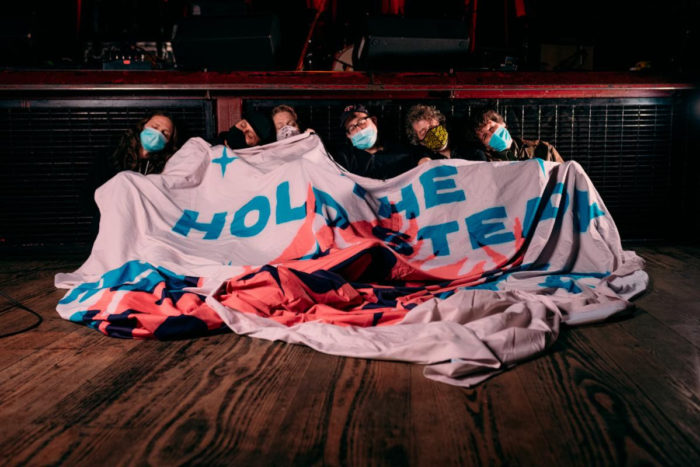
Ratboys have been quietly churning out folk-rock masterpieces over the last few years, but Printer’s Devil turns up the volume. Sharper, louder, and bolder than 2017’s GN, the album retains the band’s distinctive sensitivity to the world around them, telling empathetic stories with deft nuance and a lot of heart. “Looking toward the sky for something bona fide, I’m listening for it all,” Julia Steiner sings on the standout “Listening,” and that’s a good summation of the band’s approach. Printer’s Devil is full of characters fleshed out with the kind of detail that can only come from a writer who’s really paying attention—like the anxious, out-of-place extraterrestrial on the rousing opener “Alien with a Sleepmask On” or the memory of a loving babysitter on the ‘90s rock-indebted “Anj.”

Upheaval and change are themes spread throughout the songs on “Printer’s Devil”, the latest Ratboys LP, It came out February 28th, 2020 via Topshelf Records. But all the while, singer-songwriter Julia Steiner embraces moments of uncertainty as a necessary part of growing. Steiner recalls a David Byrne lyric, “I’m lost, but I’m not afraid” as inspiration for the transformative outlook, considering the line a personal mantra while writing Ratboys’ third full-length record. “There’s definitely a lot of uncertainty about what’s next, but I like to think that, in the midst of creating a lot of vulnerability for ourselves, we’re confident and becoming more self-assured.”

Steiner wrote the record with guitarist Dave Sagan while she was experiencing a dramatic shift in her own foundations, demoing out songs in her Louisville, Kentucky childhood home, which had just been sold and emptied out. “Demoing there was almost too intense,” Steiner says. “I kept writing in my journal that it feels like we shouldn’t be there. I don’t know if that feeling made its way directly into the lyrics, but to me the songs will always be connected to that sense of home and time passing.”

With years of touring under their belts, Steiner and Sagan have welcomed a newly consistent four-piece line-up, after years of shuffling through drummers. The band’s comfortable core — which sees Steiner and Sagan backed by drummer Marcus Nuccio and bassist Sean Neumann — is tangible across Printer’s Devil. What started as an acoustic duo has finally transformed into a full-scale indie-rock band with a clear identity. The rhythm section brings the band not only consistency, but a jolt in line with Steiner and Sagan’s growing sonic aspirations: Printer’s Devil was recorded live at Decade Music Studios in Chicago and was produced by the band and engineer Erik Rasmussen. Big-chorus power pop songs like “Alien with a Sleep Mask On” and “Anj” sound massive and larger than life, while the band’s dynamics beautifully thread together intimate folk songs like “A Vision” and devastating alt-country tracks like “Listening,” showcasing a rare range that invites listeners to imagine the band blowing out a 2,000-cap room or playing quietly next to you in the living room.

Building off their previous albums—AOID (2015) and GN (2017), which feature bright, youthful Americana narratives centered around soft vocal cadences and fluid, melodic lead guitars—Ratboys captures the bombastic, electrified fun of their live show in a bottle on Printer’s Devil and showcases their growing chemistry as a tight-knit group. Through all the change that fuelled the record, Ratboys’ latest album Printer’s Devil finds a band that’s truly grown into itself and is just getting started.

http://

The Band:

Guitar, vocals, lyrics – Julia Steiner
Guitar, bass (Tracks 3, 8, 9) – Dave Sagan
Bass – Sean Neumann
Drums, synths – Marcus Nuccio
Drums (Tracks 3, 4, 8, 10), Vibes – Ian Paine-Jesam

Released February 28th, 2020

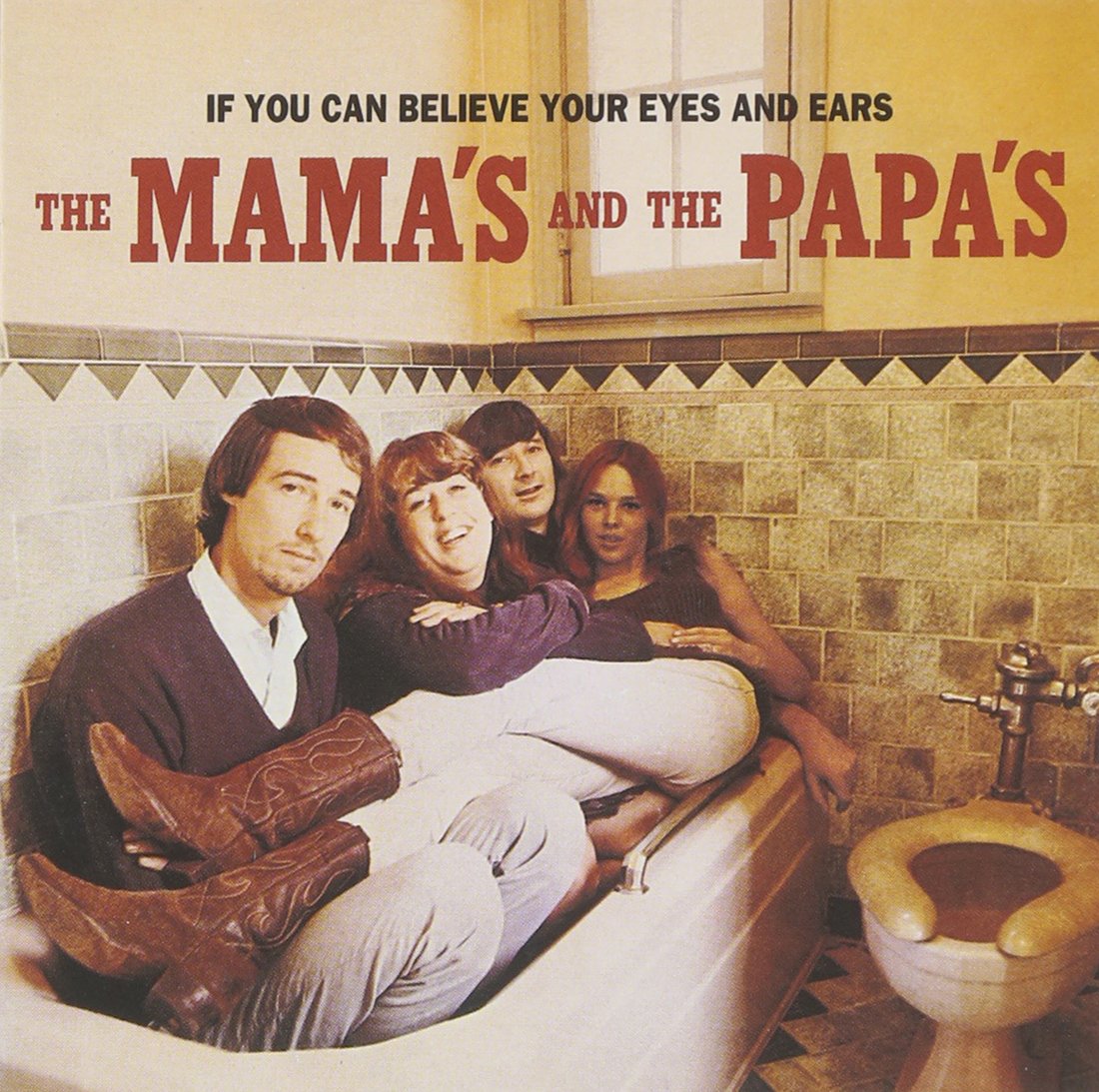
The Mamas & the Papas’ debut album, “If You Can Believe Your Eyes and Ears“, is being reissued on vinyl in all of its porcelain greatness, with the original cover photo, which was censored at the time for showing a toilet. The 12-song 1966 LP, a pop-rock favourite, showcases the impeccable harmonies of Cass Elliot, Denny Doherty, John Phillips and Michelle Phillips. The reissue arrives January 29th, 2021, via Geffen/UMe.

“If You Can Believe Your Eyes and Ears” reached No#1 on the Billboard album chart within months of release and spent more than 100 weeks there. The Lou Adler-produced gem opens with the “Monday, Monday” and includes “California Dreamin’,” which reached No#4.

The Mamas & the Papas signed in 1965 and disbanded shortly after their performance at the 1967 Monterey Pop Festival, where “Monday, Monday” was first performed live. In between, the foursome embarked on what has become a storied career during their brief time together. Contributing to their status as pop culture icons were memorable performances on The Ed Sullivan Show, including the John Phillips penned “Monday, Monday,” their interpretation of Lennon & McCartney’s “I Call Your Name” and “California Dreamin’,” co-written by John and Michelle Phillips.

From the reissue announcement: The album features a mix of originals and covers that captivated fans and critics alike. First released on February 28, 1966, If You Can Believe Your Eyes And Ears opens with the chart-topping ode to the first day of the work week, followed by the upbeat, bass-heavy rocker “Straight Shooter.” On “Got A Feelin’,” co-written by Denny Doherty and John Phillips, a ticking clock underscores the melancholy vibe that someone is cheating; the aptly titled “Go Where You Wanna Go” (given the LP’s controversial cover), “Somebody Groovy” and “Hey Girl” round out the original compositions with the musical and lyrical flair that defined their style.

The Mamas & the Papas also brought their easy-listening harmonies to Leiber & Stoller’s “Spanish Harlem” and Bobby Freeman’s “Do You Wanna Dance,” while gently rocking to the Turtles’ “You Baby.” Cass Elliot’s rollicking cover of Billy Page’s “The ‘In’ Crowd” closes the album.

In the decade-plus I’ve known Maxwell Stern, he’s never been one to stop. And I’ll go out on a limb and say that anyone else who has come to know Max—maybe from one of his several bands (Signals Midwest, Meridian, Timeshares), or perhaps sweating it out in the pit at a show at some point in time, or maybe from a ska message board in the early 2000s—would say the same thing. Max has this undeniable urge to create. It’s like an impulse, really; an uncontrollable desire to try and make sense of the thoughts and emotions and anxieties about the world that swirl around our heads at any given point in time—and funnel it all into a song. Maybe it’s a song that people can relate to. Hopefully it’s one that they can sing along to.

For Max, ​Impossible Sum​—his first proper solo record—is an honest-to-God effort to wrangle heartfelt and sometimes confusing feelings of adjustment, displacement, and settling into song. These songs have the kind of heart-on-the-sleeve vulnerability that fans of his other bands have come to admire, but presented in a completely unfiltered fashion, existing exactly as they need to be. ” Max tells me. “So I really tried hard to throw that kind of thinking out for the sake of making something different.”

Independent venues have given me everything – jobs, friends, inspiration and a means of self-discovery. I don’t know who I’d be without places like The Grog Shop, Johnny Brenda’s, Boot & Saddle, O’Briens, Great Scott, and the Beat Kitchen. I became a better version of myself in these rooms, as have countless others. The National Independent Venue Association (NIVA) is an organization working to secure financial support for independent venues across America. These establishments are not just places of employment – they’re tourism destinations, revenue generators and so much more.
 
Independent venues were the first to close as COVID overtook the American ecosystem, and they will be the last to reopen, and when they do they will require help and solutions unique to the live music industry that we all love so dearly. Tying Airplanes to the Ground · Maxwell Stern · Ratboys

Sam Lynch is a Vancouver based singer-songwriter and musician, who makes wallflower hush-rock songs that will stare you down and slow your breathing. Her debut album “Little Disappearance” is out now via Birthday Cake. Since the release of her 2017 single “Mess You Made” and 2018 EP “Light and Lines”, Lynch has been gathering a dedicated audience by way of her confessional song writing and emotionally evocative live performances.

I’m sitting at my kitchen table as I write this, the same spot where so many of my songs seem to start. I’m thinking back to a year and a half ago, sitting at this table, scribbling down my thoughts and fears before flying to Montréal to begin my first studio recording process—it feels like a lifetime ago. this record captures some of my biggest and smallest moments from the past few years of my life. in the widest sense, this collection of songs circles around various forms of loss—loss of self, loss of memory, loss of time and youth; the experience of moving through your days, but feeling like little pieces are going missing as it’s all happening. yet, through recording these songs, I have begun to understand that loss can be so much more than heartbreak: a clearing, a catalyst.this record holds a dissolving resentment, a release, a fading memory, a changing reflection; a little disappearance. thank you, endlessly, for giving these songs a place to land. my words look puny in relation to the gratitude I feel. xx

“Good Year” off Sam’s album ‘Little Disappearance’—out now via Birthday Cake.

There’s something comforting about the sound of familiar music. No matter how dark the outside world may seem, we can huddle by ourselves and play our favorite songs for consolation and reassurance. Nashville’s Molly Tuttle has taken this a process a step further. The multi-talented singer-songwriter and instrumentalist taught herself how to use Pro Tools digital audio workstation to record and engineer while stuck at home alone. She then sent them to producer Tony Berg in Los Angeles, who employed session musicians to fill in the parts from their home studios. The result, “…but I’d rather be with you” is a lovely, low-key, intimate affair.

In March 2020, Tuttle experienced the devastating tornado that tore through much of East Nashville, followed by the global pandemic. While sheltering at home, she found solace by revisiting favourite songs in an attempt to “remind myself why I love music.” An idea for an album emerged, to be recorded with Los Angeles-based producer Tony Berg (Andrew Bird), despite being over 2,000 miles apart. 

http://

Tuttle’s list is esoteric and reveals the pleasures of having catholic tastes. She chose a wide range of material, including one track each from the National, the Rolling Stones, Arthur Russell, Karen Dalton, FKA Twigs, Rancid, Grateful Dead, Yeah Yeah Yeahs, Harry Styles, and Cat Stevens. Tuttle keeps the arrangements simple and uncluttered. She plays flawlessly here without ever showing off. The same thing is true for her voice. She lets it sparkle and shine when the song calls for it, such as on her version of the Stones‘ semi-psychedelic “She’s a Rainbow” or in the giddy moments of falling love as on Arthur Russell’s “A Little Lost”.

Released August 28th, 2020

Folk singer/songwriter and multi-instrumentalist Sarah Jarosz recently announced that her new album World On The Ground will arrive on June 5th via Rounder Records. Lead single “Johnny” landed on our best folk songs of the year (so far) list ahead of the next single “Orange and Blue.” Co-written with producer John Leventhal, “Orange and Blue” is a balance of longing to flee one’s small hometown and wanting to stay fully nestled in the comforts of home. Delivered over slow-tempo piano, Jarosz sings, “I think I found it now / And nothing else will do / a heart that burns to true / burning orange and blue.” Per a press release, the song was written in homage to her childhood home in Wimberley, Texas. World On The Ground is Jarosz’s fourth solo album, following 2016’s Undercurrent.

World on the Ground, though, is an act of looking inward, of keying into small details rather than grandiose ambitions. This is a smart idea. The album, Jarosz’s fifth, takes as its subject the space of central Texas, and the lives of the people there. (She hails from the Austin-orbit town of Wimberley, and currently resides in New York City.) In their unique ways, the ten songs that comprise World on the Ground feel like individual short stories, novelistic rather than journalistic in their detail. The perspective Jarosz takes in looking at her hometown the kind of view one gets of their home after spending many years away from it. Her mini-narratives reveal a deep love for her roots, a love that “burn[s] orange and blue” like a flame, as she puts it on second single “Orange and Blue”. These humane and sympathetic tales, like a good short story, paint a vivid picture from a small slice of life.

Looking at the career of Sarah Jarosz, one gets the impression that her world has never been bigger. Having broken into the Americana scene at a young age, Jarosz at 29 has four studio records under her belt. She’s toured the world both as a solo artist and as a member of the folk power trio I’m With Her, along with bandmates Sara Watkins (Nickel Creek, Watkins Family Hour) and Aoife O’Donovan (Crooked Still). She’s a regular guest on the national variety show Live From Here. Her last studio LP, 2016’s Undercurrent, earned two Grammy Awards, and she netted some additional hardware for I’m With Her’s 2019 tune “Call My Name”. It would be reasonable to think that, on the heels of such success, Jarosz might swing for the fences with her next album, especially given that in 2017 she was commissioned by the FreshGrass festival to write a lengthy composition that came to be called “The Blue Heron Suite”.

Sarah Jarosz’s “World on the Ground” is a heartfelt reminder that a period of flailing is temporary, often the period before a transition. The album’s title is derived from the track “Pay It No Mind”, where Jarosz takes on the vantage point of a fledgling inflight. As such, the album is a consideration of identity, a reflection of the past as an informant of the present while finding the artist squarely focused on the future. Jarosz tackles existentialism with a springy lens, she is clear-eyed and hopeful throughout. Her storytelling is compelling, often showing affinity with Gillian Welch or Mary Gauthier. As a multi-instrumentalist, she shifts between mandolins, multiple guitars, a claw-hammer banjo, and piano, all the while her vocals are at the forefront. She relies on folk, blues, gospel, soul, country, and bluegrass genres to centralize her roots but manages to define a musical space endowing Jarosz’s caliber. Listen closely, her drawl occasionally emphasizes her melodies while concretizing her position in Americana music.

In 2018, she, along with fellow roots musicians Sara Watkins and Aoife O’Donovan, released the album See You Around as the supergroup I’m With Her.

One of Americana’s biggest head-turners in 2020 hails from Norway. The Northern Belle became a blip on the Americana radar this year with “We Wither, We Bloom”. Navigating rocking, high-octane arrangements with soaring crescendos and crisp, tasty guitar tones and harmonies, the septet have often drawn comparison to 1970s-era Fleetwood Mac and others that fall within the “desert rock” aesthetic. The band ultimately creates an atmosphere all their own thanks to the efforts of powerhouse frontwoman Stine Andreassen acting as the soulful staple to their sound. Expressive, ebullient, and instantly impressionable, We Wither, We Bloom is one slick production that tastefully elevates Americana further onto the pop stage.

With their affection for words and the pure heartache in old country music, The Northern Belle have captured the attention of Oslo’s folk/country-scene. They mix traditional country with pop and Norwegian folk music, resulting in a unique musical output. The singer is a true storyteller and the instruments, especially the Hardanger fiddle and the steel guitar, enhance the melodies and tales. 

Written as an examination of personal relationships, the new album by The Northern Belle is aptly titled We Wither, We Bloom. The Norwegian septet is among the pioneers of the nordicana scene that has been gaining momentum in the US the last few years. Fronted by prolific singer-songwriter Stine Andreassen (also of folk quartet Silver Lining) and armed with pedal steel, slide guitar, lush harmonies, a string quartet and their secret weapon, the Norwegian Hardanger fiddle, The Northern Belle have developed their own unique brew of pop-oriented americana and folk music. Imagine Fleetwood Mac fronted by Jenny Lewis in a country mood.

Brimming with melodic tunes and clever lyrics, We Wither We Bloom is the band’s third studio album, albeit the first to be released internationally. Having made the difficult decision to quit her day job to pursue music, Andreassen and The Northern Belle received widespread praise and a Spellemann nomination (Norwegian Grammy) for the 2018 album
Blinding Blue Neon. In the spring of 2019, Andreassen traveled to Nashville for three months to write the follow-up. The welcoming and thriving music scene found east of the Cumberland River sparked a creative songwriting spell that resulted in this inspired collection of tracks. The distance from home allowed for new views on friends, family, love, loss and homesickness, resulting in the band’s most personal album to date.

http://

The songs vary in tempo and style, from the melodic rocker “Gemini” to the string-laden “Born to Be a Mother”. “Remember It” is a fiery tell-off to a horrible ex (“I wanna hurt you and remember it”), “Tailor Made” is a tribute to the band’s Nudie suit-wearing heroes of the past, while “Late Bloomer” in a way sums up the album title – a song about taking time before daring to pursue music.

“I’ve struggled with the feeling of not being good enough, being labelled because I’m a woman and that I should have had kids already and that the clock is ticking. I’ve destroyed friendships and made new ones, but I’m left with feeling stronger than before because I’ve confronted the things that hurt in my songs,” says Andreassen, who has written the bulk of the album with a few contributions from local Nashville songwriters.

Constantly evolving as a band, The Northern Belle’s sound in 2020 is inspired by contemporary acts such as Erin Rae, Kacey Musgraves, Phoebe Bridgers and Marit Larsen, as well as legends such The Beach Boys, The Byrds and Glen Campbell. All resulting in a record that pays tribute to its inspirations while also showing true originality.
 
 
Released August 28th, 2020

Previous Jayhawks’ records primarily featured the work of leader Gary Louris (or if one goes back far enough Louris and Mark Olson). XOXO features significant contributions from every longstanding member in the band. Each one is in charge of how his/her songs were arranged and recorded, as well as their parts on the co-written material. The album’s title was intended as a nod to Elliot Smith’s sensitive masterwork XO. Indeed, songs such as “Homecoming” and “This Forgotten Town” would fit right in with Smith’s delicate yet noisy oeuvre. XOXO does not have a cohesive theme as much as a consistent sunshiny tone in the land of gloom: the silver lining to the dark cloud. Even the sad songs seem to contain a wistful smile. We may be “Living in a Bubble” due to COVID-19, where Big Brother and the television news seem to control how we see the world when we are afraid to go outside, but things could be worse. “Life may be full of trouble”, but it beats the alternative. And there are ways to escape and find our sanity, if only momentarily.

The Jayhawks are very excited to premiere the full length version of the “Dogtown Days” video. Directed by renowned director and rock video pioneer Philip Harder and filmed in May 2020 during quarantine, the video tells the story of two friends on a road trip to see a Jayhawks show in the 7th St. Entry, circa 1985.

This dramatic video was produced with social distancing filming techniques and expertly integrates some archival footage of the band culled from several time periods, including actual 1985 footage shot in the Entry. Dogtown Days has a little bit of everything that makes for a great video: stunning cinematography, thrilling drone shots, an engaging plot and characters, a cool “reveal” and even an easter egg for astute students of Jayhawks history.

The beautiful full length “film short” version of Dogtown Days – featuring an extended prologue and an evocative, three dimensional sound design not found in the standard version – makes its debut today exclusively on The Jayhawks digital properties.

The 2nd single from The Jayhawks “XOXO” album, coming July 10 on Sham/Thirty Tigers.

The 5 Best Roots Releases From July 2020

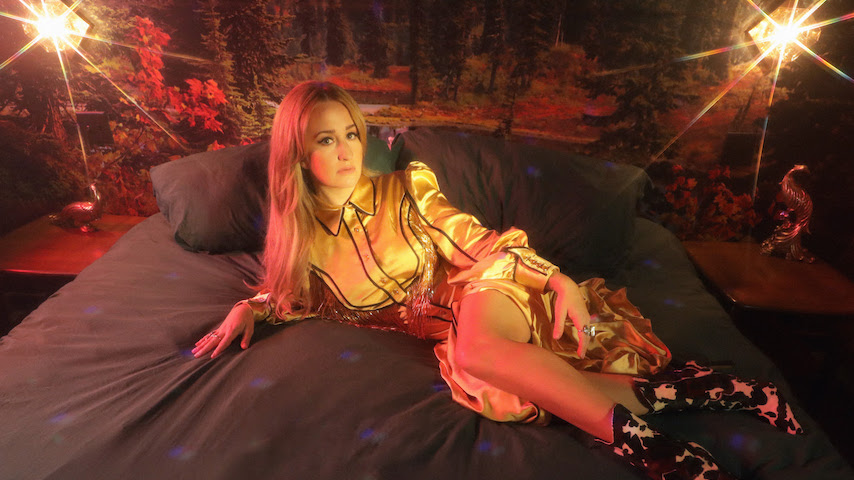
Margo Price’s album is the work of a singer ready to shake up preconceived notions. The Nashville musician has been doing that all along to a degree, but That’s How Rumors Get Started is a conscious—and sometimes self-conscious step out from under the shadow of all the “bright future of country music” buzz that surrounded her previous solo work. That’s How Rumors Get Started is Price’s third LP as a solo artist, after three previous albums fronting the Nashville band Buffalo Clover. If that group had a shaggy late-’60s blues-rock bent à la Big Brother and the Holding Company, Price certainly leaned more toward the sound of fiddles and pedal steel guitar on Midwest Farmer’s Daughter in 2016 and All American Made in 2017. The latter even featured a duet with Willie Nelson. This time around, there’s as much blustery rock and hard-edged soul as there is country twang. Margo Price has paid her dues, both professionally and personally. Whereas she honours those challenges, she rejects singularity as the underlying factor in defining her music and identity. In That’s How Rumors Get Started, Price reimagines Americana’s sound as well as her position within the genre.

Some of that change is probably due to Price’s old pal Sturgill Simpson, who produced the album and assembled a band to play on it, in place of Price’s usual road band. On the other hand, the mix of sounds is more in line with what Price presents onstage in concert. When it works here, she demonstrates a certain amount of breadth as a performer. Yet it doesn’t always work. There’s a difference between upending expectations and contrarian posturing, and the song writing on That’s How Rumors Get Started isn’t consistently sharp enough to strike the right balance. Price goes for broad strokes on these 10 songs, musically and lyrically.

“That’s How Rumors Get Started”, an album of ten new, original songs that commit her sky-high and scorching rock-and-roll show to record for the very first time. Produced by long time friend Sturgill Simpson (co-produced by Margo and David Ferguson), the LP marks Price’s debut for Loma Vista Recordings, and whether she’s singing of motherhood or the mythologies of stardom, Nashville gentrification or the national healthcare crisis, relationships or growing pains, she’s crafted a collection of music that invites people to listen closer than ever before.

Margo primarily cut That’s How Rumors Get Started at Los Angeles’ EastWest Studios (Pet Sounds, “9 to 5”). Tracking occurred over several days while she was pregnant with daughter Ramona. “They’re both a creation process,” she says. “And I was being really good to my body and my mind during that time. I had a lot of clarity from sobriety.”

While Margo Price continued to collaborate on most of the song writing with her husband Jeremy Ivey, she recorded with an historic band assembled by Sturgill, and including guitarist Matt Sweeney (Adele, Iggy Pop), bassist Pino Palladino (D’Angelo, John Mayer), drummer James Gadson (Aretha Franklin, Marvin Gaye), and keyboardist Benmont Tench (Tom Petty & The Heartbreakers). Background vocals were added by Simpson on “Letting Me Down,” and the Nashville Friends Gospel Choir, who raise the arrangements of “Hey Child” and “What Happened To Our Love?” to some of the album’s most soaring heights.

http://

Margo Price and her steady touring band – Kevin Black (bass), Jamie Davis (guitar), Micah Hulsher (keys), and Dillon Napier (drums) – will perform songs from That’s How Rumors Get Started at dozens of shows with Chris Stapleton and The Head & The Heart this spring and summer, in addition to festival appearances and more to be announced soon.

“That’s How Rumors Get Started” follows Margo’s 2017 album All American Made, which was named the #1 Country/Americana album of the year by Rolling Stone, and one of the top albums of the decade by Esquire, Pitchfork and Billboard, among others. In its wake, Margo sold out three nights at The Ryman Auditorium, earned her first Grammy nomination for Best New Artist, and much more.
Released July 10th, 2020

New album, “That’s How Rumors Get Started” out now

See the source image

Badfinger – 1970 -This was a rock band from Swansea, that had all the potential in the world and was coming into its own between 1970-1972. Their first three albums on Apple including “No Dice,” (1970) and “Straight Up,” (1971) were best sellers and featured four consecutive, exquisite singles “Come and Get It,” (produced by Paul McCartney) “No Matter What,” (produced by Mal Evans) “Day After Day,” (produced by George Harrison, and “Baby Blue,” (produced by Todd Rundgren).

All but the last reached Top 10. They also wrote and recorded “Without You,” a song that Harry Nilsson covered and rode to the top of the charts.

Their story is often told today as a tragedy but before the suicides of core members Pete Ham, in 1975, and Tom Evans eight years later, Badfinger was one of the great pop-rock bands of its time. And it was “Come and Get it,” written by Paul McCartney and released on the Beatles’ Apple label, that started the ball rolling.

They began in 1961 as the Iveys, from Swansea, Wales. By the late ’60s the personnel had stabilized as Ham (vocals/guitar/piano), Mike Gibbins (drums), Ron Griffiths (bass) and David Jenkins (guitar). A couple of changes later, and the classic line-up emerged, with Evans replacing Griffiths and Joey Molland taking the place of Jenkins, but not before the still-developing quartet experienced some optimism and some disappointment.

Things first started happening for the Iveys in 1968 when Mal Evans, the Beatles’ assistant, became their champion at the company. It took him a while but he (with some nudging from cohort Peter Asher) finally convinced the Beatles to sign the Iveys. Their first single, “Maybe Tomorrow,” was released to little fanfare, bombing in the U.K. and peaking at No#67 in the United States. It wasn’t until the second half of 1969 that the Iveys’ fortunes began turning around. McCartney, having been told of the group’s frustration with its Apple deal, offered the Iveys a song he’d written for the film The Magic Christian, “Come and Get It.”

He also offered to produce the recording—as long as the band copied his demo and didn’t try to change a thing. It was further suggested by Neil Aspinall, the head of Apple, that the Iveys change heir name to Badfinger. Finally, they were on their way. Released on December 5th, 1969, in the U.K. “Come and Get It” took off on both sides of the Atlantic in early 1970, reaching #4 in the U.K. and #7 on the American Billboard singles chart. It established Badfinger as one of Apple’s success stories, with two more top 10 singles following in both markets, “No Matter What” (#8 in 1970) and “Day After Day” (early 1972). “Baby Blue” landed at #14 in the States, and there were a few quasi-successful albums during the original Badfinger era—No Dice(1970), Straight Up (production begun by George Harrison, finished by Todd Rundgren; 1971) and Ass (late 1973).

Badfinger moved on to Warner Brothers and two other labels but their best days were behind them. Unscrupulous management by Stan Polley after Apple Records dissolved destroyed the band literally. Pete Ham hung himself in 1975, but the surviving members soldiered on for the next six years, with little success. Tom Evans, who never recovered from Ham’s death, took his own life by hanging in 1983, and tragically, Badfinger was no more. Sad, since their music surely benefited from the Apple Records brand and by production work from two Beatles. By the way, the Iveys (Badfinger’s original name) was Apple Records first signing in 1968.

There were other highlights during their initial run all four Badfinger members played at The Concert For Bangla Desh  Ham, Evans, and Molland played acoustic guitars while Gibbins played percussion , but the self-inflicted death of Ham by hanging at age 27 effectively ended their glory days. The surviving members would carry on in various guises on other labels, and Molland still leads a Badfinger group today, but rock historians will always look back on those few years in the early ’70s as Badfinger’s time to shine.