Seattle post-punk female four piece return with their second album and their first for Sub Pop offshoot, Hardly Art.‘Time to Go Home’ sees Chastity Belt take the nights out and bad parties of their past to their stretching points, watch the world around them break apart in anticipatory haze, and rebuild it in their own image with stunning clarity before anyone gets hung over. Cool, twangy and languid guitars meet vocals dripping in melancholy.
Let yourself be swept away by this stunning, meditative clip for Chastity Belt’s “Lydia,” off of their widely-acclaimed 2015 album “Time to Go Home”.
Chastity Belt is a rock band consisting of four friends – guitarists Julia Shapiro and Lydia Lund, bassist AnnieTruscott, and drummer Gretchen Grimm. They met in a tiny college town in Eastern Washington, but their story begins for real in Seattle, that celebrated home of Macklemore and the Twelfth Man. Following a post-grad summer apart, a handful of shows and enthusiastic responses from the city’s DIY community led them, as it has countless others, into a cramped practice space. They emerged with a debut album, No Regerts, sold it out faster than anyone involved thought possible, and toured America, a country that embraced them with open-ish arms. Now they’re back and the tab is settled, the lights are out, the birds are making noise even though the sun isn’t really up yet: it’s Time to Go Home, their second long-player and first for Hardly Art.
In the outside world, they realized something crucial: they didn’t have to play party songs now that their audience didn’t consist exclusively of inebriated 18-22 year olds, as it did in that college town. Though still built on a foundation of post-post-punk energy, jagged rhythms, and instrumental moves that couldn’t be anyone else’s, the songs they grew into in the months that followed are equal parts street-level takedown and gray-skied melancholy. They embody the sensation of being caught in the center of a moment while floating directly above it; Shapiro’s world spins around her on “On The Floor,” grounded by Grimm and Truscott’s most commanding playing committed to tape. They pay tribute to writer Sheila Heti on “Drone” and John Carpenter with “The Thing,” and deliver a parallel-universe stoner anthem influenced by Electrelane with “Joke.”
Recorded by José Díaz Rohena at the Unknown, a deconsecrated church and former sail factory in Anacortes, and mixed with a cathedral’s worth of reverb by Matthew Simms (guitarist for legendary British post-punks and one-time tourmates Wire), Time to Go Home sees Chastity Belt take the nights out and bad parties of their past to their stretching points, watch the world around them break apart in anticipatory haze, and rebuild it in their own image with stunning clarity before anyone gets hung over.
TRACK LISTING
1. Drone
2. Trapped
3. Why Try
4. Cool Slut
5. On The Floor
6. The Thing
7. Joke
8. Lydia
9. IDC
10. Time To Go Home
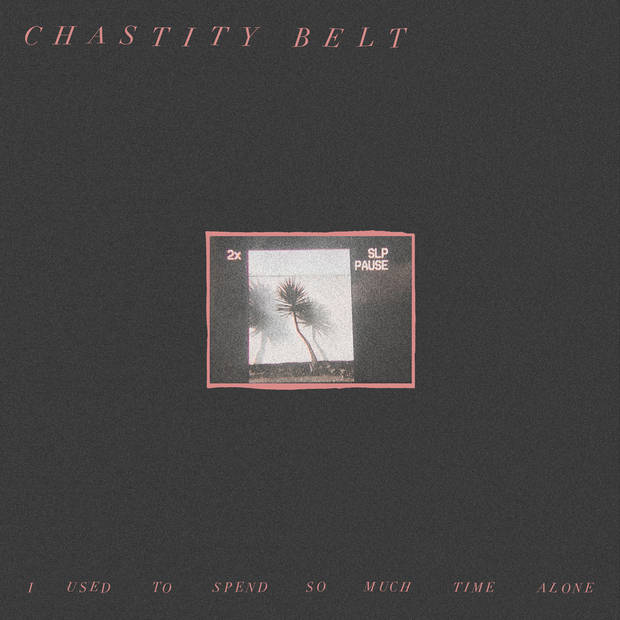
Chastity Belt will share their third studio album I Used to Spend So Much Time Alone in June via Hardly Art Records. Announcing plans to play a number of showcases at this year’s SXSW between the 14th and 17th March, Chastity Belt have also released the new video for single ‘Different Now’.
The new record, we’re told, stems from a moment a few years ago, while in a tour van somewhere in Idaho, Julia Shapiro, Gretchen Grimm, Lydia Lund, and Annie Truscott—opted to pass the time in a relatively unusual fashion: They collectively paid one another compliments, in great and thoughtful detail.
So, if that’s anything to go by, the new stuff should be just bloody lovely.
On International Women’s Day, here’s Chastity Belt with ‘Different Now’
Seattle pop-punk band Tacocat is also responsible for the new Powerpuff Girls Theme, if you need any more reason to get on board. Their follow-up to NVM, Tacocat’s Lost Time is just the sort of ‘90s-nostalgic pop punk the doctor ordered. Combining sci-fi and vaporwave vibes with the social-political concerns of the information age, Lost Time is filled with great singles. Whether it’s “Dana Katherine Scully,” honouring the X-Files heroine, or “I Hate the Weekend” written in dedication to the tech bros taking over the band’s home-city, Tacocat’s LostTime scratches that topical pop punk scene.
Produced by new wave-shoegazer Erik Blood, Lost Time is also the most meticulously recorded of Tacocat’s three releases to date. Expansiv creative, catchy guitar hooks, pithy, well-crafted lyrics, and in their elaboration on anti-patriarchal themes from NVM and their debut, Shame Spiral.
With the addition of drummer Tim Cheney and bassist Damien Scalise, Jilian Medford’s solo project Ian has evolved into the full band now called Ian Sweet. But it’s still Medford’s bruised, beating heart that lies at the center of Shapshifter with twitchy tangles of guitar-rock, and it’s her voice we hear cracking into a strained yelp time again and again. Shapeshifter is a brutal listen of an album, an album about anxiety and self-destruction and giving yourself up for someone who only makes you feel more alone. But it’s also a hopeful album about going through the wringer and coming out on the other side with a smile
Often referred to as Sub Pop’s “sister label,” Hardly Art is an offshoot of Sub Pop designed to spotlight emerging talent. While the label’s initial focus was local when it started up in 2007, it has since expanded its roster to welcome artists from all over the United States and abroad.
With the goal of cultivating a stable of vital, young, and relatively undiscovered bands, Hardly Art journeyed underground while a booming Sub Pop stayed above the surface (though both operate out of a shared office space in downtown Seattle). Since its inception and immediate worldwide reception as a paradigm-shifting, taste-making powerhouse (wink), Hardly Art has expanded to three full-time employees, broadening its purview along the way to include reissues, EPs, one-off seven inches, and other dubiously profitable ventures. Currently, the label prides itself on having one of the most diverse catalogs of any label its size.
From its inaugural release (Arthur & Yu’s In Camera) to its most recent, Hardly Art has sought to support new bands in need of a wider audience, with a particular emphasis on the rising stars of the garage, punk, and bedroom pop genres. Here below are our top recommendations from this wonderful label.
Happy release day to The Julie Ruin! Hit Reset, their highly-anticipated new record is finally out today on CD, LP, cassette, and digital formats. Next Tuesday, July 12th, The Julie Ruin will perform live on NBC’s Late Night with Seth Meyers and the band hits the road in support of HitReset starting next Thursday
In late 2014 The Julie Ruin began work on their second album, Hit Reset. Mixed by Eli Crews, Hit Reset expands on the band’s established sound: dancier in spots and moodier in others, with girl group backing vocals and even a touching ballad closer.Hit Reset is the sound of a band who have found their sweet spot. Kathleen Hanna’s vocals are empowered and her lyrics are as pointed and poignant as ever. From the chilling first lines of “Hit Reset” (“Deer hooves hanging on the wall, shell casings in the closet hall”) to the touching lines of “Calverton” (“Without you I might be numb, hiding in my apartment from everyone / Without you I’d take the fifth, or be on my death bed still full of wishes”), Hanna takes a leap into the personal not seen completely on the first album or possibly even in the rest of her work.
Seattle band Tacocat will be capping off their already-incredible 2016 with another nationwide tour this September/October–including a headlining show at Brooklyn’s Music Hall of Williamsburg–with even more dates TBA. Head here for a full list of upcoming shows, including next month’s West Coast run with The Regrettes.
The band’s also heralding the arrival of summer weather with a cover version of The Sunray’s 1965 gem “I Live For The Sun,”
The new record from Seattle band Tacocat has your first look at “Dana Katherine Scully,” the group’s new self-made music video for Lost Time’s opening track. The Powerpuff Girls, for which Tacocat performed the theme song ”Who’s Got the Power?”, premieres on Cartoon Network this Monday.
On the tour front, the band recently opened for Senator Bernie Sanders Seattle Campaign rally, to a crowd of thousands. They tour the U.S. and Europe starting in June, and just announced a slew of West Coast and Southwest U.S. dates for this July. See the tour page for a full list of upcoming Tacocat performances, and find copies of LostTime on all formats (LPs on colored vinyl!)
As La Sera, Katy Goodman turned an aching heart into two marvelous, alluring yet bittersweet break-up albums (2011’s self-titled debut and 2012’s Sees the Light). On her latest, though, the former Vivian Girl is through crying. Hour of the Dawn sees Goodman waking up, throwing open the bedroom windows and welcoming the day.
“I wanted the new La Sera record to sound like Lesley Gore fronting Black Flag,” Goodman says. “I didn’t want it to be another record of me sad, alone in my room. I wanted to have fun playing music and writing songs with a band.” To back her nimble bass lines and enchanting vocals, Goodman assembled a new band helmed by guitarist Todd Wisenbaker.
“We started playing faster, louder and more aggressively,” Goodman says. “I wanted to get that energy onto the album.” The forceful new La Sera line-up set about fleshing out Goodman’s melodies and lyrics into strapping rock anthems, debuting them to enthusiastic crowds on tour, and refining them with a newfound obsession to detail.
After a year of perfecting their new material, La Sera was ready to commit it to tape. In the summer of 2013, the group decamped to a sweltering studio in East Los Angeles with engineer Joel Jerome and banged out the ten songs that would become Hour of the Dawn—an album that never walks, but runs, a collision of unleashed punk and ‘80s power-pop.
“We wanted to make a classic American record,” Wisenbaker says. “The album was inspired by a lot of bands: The Pretenders, Minor Threat, X, The Smiths, The Cars and more.”
The sound that emerged from these disparate influences combined hardcore energy with tuneful harmony, as exemplified by opening track “Losing to the Dark.” Title track “Hour of the Dawn,” meanwhile, rides a steady groove towards a long horizon of sunrise. It’s the record’s thematic center: a final wave goodbye to a messy past and the beginning of a new day. In a burst of bright, immediate and jangly Smiths-inspired pop, “Fall in Place” captures La Sera at an emotional and musical crossroads.
Hour of the Dawn, as its title suggests, heralds the beginning of a radiant and energetic new chapter in La Sera’s evolution—the summit of Goodman’s steady ascent to rock and roll queen dom.
As a prospect it can be terrifying, sad, and worst of all, inevitable. But on I Want to Grow Up, her second album for Hardly Art, Colleen Green lets us know that we don’t have to go it alone.
This latest collection of songs follows a newly 30-year-old Green as she carefully navigates a minefield of emotion. Her firm belief in true love is challenged by the inner turmoil caused by entering modern adulthood, but that doesn’t mean that her faith is defeated. With a nod to her heroes, sentimental SoCal punks The Descendents, Green too wonders what it will be like when she gets old. Throughout songs such as “Some People,” “Deeper Than Love,” and the illustrative title track, the listener has no choice but to feel the sympathetic growing pains of revelatory maturation and the anxieties that come along with it.
Sonically the album is a major change for the LA-based songwriter, who has come to be known for her homemade recordings and merchandise. Her past offerings have been purely Green; testaments to her self-sufficiency and, perhaps, trepidation. This time, she’s got a little help from her friends: the full band heard here includes JEFF theBrotherhood’sJake Orrall and Diarrhea Planet’s Casey Weissbuch, who collaborated with Green over ten days at Sputnik Sound in Nashville, TN.
I Want to Grow Up is an experience, not unlike life: questioning, learning, taking risks. And in true CG fashion, a quote from a beloved 90s film seems the perfect summation: ”Understanding is reached only after confrontation.”
Chastity Belt is a rock band consisting of four friends – guitarists Julia Shapiro and Lydia Lund, bassist AnnieTruscott, and drummer Gretchen Grimm. They met in a tiny college town in Eastern Washington, but their story begins for real in Seattle, that celebrated home of Macklemore and the Twelfth Man. Following a post-grad summer apart, a handful of shows and enthusiastic responses from the city’s DIY community led them, as it has countless others, into a cramped practice space. They emerged with a debut album, No Regerts, sold it out faster than anyone involved thought possible, and toured America, a country that embraced them with open-ish arms. Now they’re back and the tab is settled, the lights are out, the birds are making noise even though the sun isn’t really up yet: it’s Time to Go Home, their second long-player and first for Hardly Art.
In the outside world, they realized something crucial: they didn’t have to play party songs now that their audience didn’t consist exclusively of inebriated 18-22 year olds, as it did in that college town. Though still built on a foundation of post-post-punk energy, jagged rhythms, and instrumental moves that couldn’t be anyone else’s, the songs they grew into in the months that followed are equal parts street-level takedown and gray-skied melancholy. They embody the sensation of being caught in the center of a moment while floating directly above it; Shapiro’s world spins around her on “On The Floor,” grounded by Grimm and Truscott’s most commanding playing committed to tape. They pay tribute to writer Sheila Heti on “Drone” and John Carpenter with “The Thing,” and deliver a parallel-universe stoner anthem influenced by Electrelane with “Joke.”
Recorded by José Díaz Rohena at the Unknown, a deconsecrated church and former sail factory in Anacortes, and mixed with a cathedral’s worth of reverb by Matthew Simms (guitarist for legendary British post-punks and one-time tour mates Wire), Time to Go Home sees Chastity Belt take the nights out and bad parties of their past to their stretching points, watch the world around them break apart in anticipatory haze, and rebuild it in their own image with stunning clarity before anyone gets hung over.
“They’re funny, and slightly goofy, and gently vulgar, and they play with an appealingly loose, relaxed confidence.” –
“In between pelvic-thrusting sexual innuendo and self-mockery, Chastity Belt filter feminist theory, cultural commentary and general intellectual bad-assery…Chastity Belt isn’t the band 2013 wants—it’s the band 2013 needs.”“The guitars on this record…have a nice ring to them, like Liz Phair’s recordings.”
It can never be said that La Luz are disinclined to hard work. The tour-happy four-piece returns to the road today with a show in Claremont, California that kicks off a three-month North American tour which includes appearances at the Levitation, Sasquatch!, and Pickathon music festivals. Additionally, Hardly Art is pleased to announce that La Luz’s breakthrough debut EP Damp Face is now available on vinyl for the first time ever. This 10” release an be purchased exclusively through the Hardly Art Webstore, in record shops, or at the band’s merch table on any given stop of their ambitious Spring/Summer tour.
For most, a brush with death would be cause for retreat, reflection, and reluctance, but Seattle band La Luz found something different in it: resilience. Having survived a high-speed highway collision shortly after releasing their 2013 debut LP It’s Alive, La Luz, despite lasting trauma, returned to touring with a frequency and tirelessness that put their peers to shame. Over the past year-and-a-half of performing, the band arrived at a greater awareness of their music’s ability to whip eager crowds into a frenzy. In response, frontwoman Shana Cleveland’s guitar solos took on a more unhinged quality. The bass lines (from newly-installed member Lena Simon) became more lithe and elastic. Stage-dives and crowd-surfing grew to be as indelible a part of the La Luz live experience as their onstage doo-wop-indebted dance moves.
When it came time to record Weirdo Shrine, their second album—released August 7th—the goal was to capture the band’s restless live energy and commit it to tape. In early 2015, Cleveland and Co. adjourned to a surf shop in San Dimas, California where, with the help of producer/engineer Ty Segall, they realized this vision. Tracking most of the album live in shared quarters, La Luz chose to leave in any happy accidents and spur-of-the-moment flourishes that occurred while recording. Cleveland’s newly fuzzed-up guitar solos—which now incorporated the influence of Japanese Eleki players in addition to the twang of American surf and country—were juxtaposed against the group’s most angelic four-part harmonies to date. The organs of Alice Sandahl and the drumming of Marian Li Pino were granted extra heft and dimension. Thematically, Cleveland channeled Washingtonian poet Richard Brautigan on “You Disappear” and “Oranges,” and sought inspiration from Charles Burns’ Seattle-set graphic novel Black Hole.
The resulting album is a natural evolution of the band’s self-styled “surf noir” sound—a rawer, turbo-charged sequel that charts themes of loneliness, infatuation, obsession and death across eleven tracks, from the opening credits siren song of “Sleep Till They Die” to the widescreen, receding-skyline send-off of “Oranges” and its bittersweet epilogue, “True Love Knows.”
In describing Weirdo Shrine, Segall remarked that it gave him a vision of a “world…burning with colors [he’d] never seen, like mauve that is living.” In “Oranges,” the Brautigan poem which inspired the aforementioned track of the same name, the poet writes of a surreal “orange wind / that glows from your footsteps.” These hue-based allusions are apt: the sound of La Luz is (appropriately) vibrant, and alive with a kaleidoscopic passion. WeirdoShrine finds them at their most saturated and cinematic.
“La Luz is ready to take on the world.” – MTV Hive
“…a uniquely haunting – albeit occasionally unintentional – spin on the innocent guitar-driven pop of the late ’50s and early ’60s, nudging the sock hop vibes of Dick Dale and the Shirelles into a darker parallel dimension.” – Paper Magazine
“Imagine all of the Shangri-La’s trying, precariously, to balance on top of Link Wray’s surfboard.” – Pitchfork
“One of those bands that hit the ground not running, but sprinting.”
Joe Casey was once why he chose to start his first band with a group of guys roughly ten years his junior. His answer was simple: He needed them, needed this, needed Protomartyr. He didn’t want to end up singing classic rock covers in a carport or dive bar one night a week. At 35, with no musical background and crippling stage fright, he needed friends who were young and hearty enough to want to write and record and practice and tour and be heard as badly as he did then. He’d just lost his father to an unexpected heart attack, and his heartbroken mother to the beginnings of Alzheimer’s shortly thereafter. He’d come to understand, all too intimately, how brutal and finite a life can be. Consider then the urgency with which he joined his bandmates—guitarist Greg Ahee, drummer AlexLeonard, and bassist Scott Davidson, fellow alums of the University of Detroit Jesuit High School and Academy—for the first time, in a basement full of unsuspecting onlookers. Consider the urgency with which they’ve approached everything since—three albums in three years, each more extraordinary and rewarding than the last. This music is inherently, unassumingly high stakes. I can think of no other band that moves me like they do.
October marks the release of The Agent Intellect, their third and finest work to date. Named after an ancient philosophical questioning of how the mind operates in relation to the self, it’s an elegant and often devastating display of all that makes Protomartyr so vital and singularly visceral an outfit. Over the course of several months, Ahee waded through more than a hundred song fragments until he reached the bottomless melodies of “I ForgiveYou” and “Clandestine Time”, the inky depths of “Pontiac ’87” and titanic churn of “Why Does It Shake?” Lyrically, Casey is at his most confident and haunting. He humanizes evil on “The Devil in His Youth,” and, amid the charred pop of “Dope Cloud,” he reassures us that nothing—not God, not money—can or will prevent our minds from unraveling until we finally fade away. We are no one and nothing, he claims, without our thoughts. It’s a theme that echoes through the entirety of the record, but never as beautifully as it does on “Ellen.” Named after his mother and written from the perspective of his late father, it’s as romantic a song as you’re likely to hear this or any year, Casey promising to wait for her on the other side, with the memories she’s lost safely in hand.
I remember a story he told me in Detroit. A few months earlier, he’d been driving with his mother as a Protomartyr recording played on the stereo.
“Joe,” she asked him. “Who is this?” “This is us, Mom,” he told her. “That’s me.” “Oh!” she said, “This is very good.”
Protomartyr share a video for their song “Dope Cloud” (from their critically acclaimed albumThe Agent Intellect, which was directed by self-proclaimed Protomartyr fan Lance Bangs. Bangs, known for directing music videos for the likes of R.E.M., Pavement, Sonic Youth, Nirvana, and Arcade Fire, was simply drawn to the song and made the video on his own time and submitted it to the band. The video shows the demise of one of the last phone booths in the country.
Meanwhile, Protomartyr continues their huge tour of everywhere, which has them basically playing everywhere humanly possible. New Canadian, east coast, and European dates have been added.
It’s not surprising that La Luz moved to L.A. It’s surprising that they aren’t from here in the first place.
If you didn’t know better, you’d figure the Seattle transplants were born in a Hermosa Beach house, circa 1964. They cast psychedelic surf-rock spells, ripe for the best party that Inherent Vice’s Doc Sportello never crashed, playing with the sunshine-noir dialectic embedded in this city’s DNA.
As soon as they arrived in the first months of 2016, the all-female quartet staked a claim as the city’s best rock group. Several full moons later, they’ve acclimated as well as you’d expect from an outfit whose name translates to “the light.”
“Maybe it’s just because we’re new, but it feels like people have been really supportive and interested in what we’re doing,” says keyboardist Alice Sandahl. “It seems like there’s plenty of room to have fun, hang out and coexist.”
Despite a punishing tour schedule, La Luz’s interludes in L.A. have been long enough to discover the natural splendor of the Eastside’s hiking trails. They’ve exchanged the frequent rain of the Pacific Northwest for shorts, tees and a warm apartment at the top of a Highland Park cul-de-sac, cooled off by cans of La Croix.
“It was kind of like, ‘How long can we be here and still have people like us?’” jokes Shana Cleveland, La Luz’s lead singer. “Seattle is a medium-sized city, and every press outlet had already written about us. There are so many bands fighting for not that much space.”
Save for some records, basic appliances and necessities, most boxes remain unpacked in the space that several of the bandmates share. Southern California isn’t exactly strange territory. Cleveland, Sandahl, drummer Marian LiPino and bassist Lena Simon have regularly gigged here since forming in 2012. Early last year, they accepted an offer from garage-rock wunderkind Ty Segall to produce their latest record, the phenomenal Weirdo Shrine, released last summer on Hardly Art Records.
The idea was to record at his home studio, but when that became unavailable, they decamped to a storage facility in San Dimas often used as a workspace. The previous tenant fittingly made surfboards, an irony so absurd that the band members roll their eyes at its mention.
“I wanted to be in a band where people had a good time at our shows,” says Cleveland, who had previously joined Li Pino in the now-defunct Curious Mystery. “That sounds obvious, but it feels like a lot of bands don’t always have that goal. I wanted people to understand our music off the bat but have it also be interesting and complex, relatable but with a deeper mystery.”
The sensibility is somewhere between Our Band Could Be Your Life and Broad City. Dick Dale meets Daniel Clowes. Raw garage-rock intertwined with legitimate pop songwriting chops and seraphic harmonies. The music is alternately romantic and chimerical — inspired by graphic novels, dreams and poetry (which Cleveland studied at Chicago’s Columbia College).
There’s also a sense of urgency, partially underscored by a near-fatal car accident that occurred when their tour van slipped on black ice in late 2013. It didn’t necessarily change anyone’s perspective on life but reconfirmed an innate desire to pursue a life in music without looking back. Ultimately, the only logical place to go was L.A., the most contradictory of cities, where lightness and darkness peacefully coexist.
The Julie Ruin return with the second single from their forthcoming album “Hit Reset”. The new track “I’mDone” weaves traces of primitive rock ‘n’ roll and girl-group pop into Kathleen Hanna’s confrontational punk-rock offensive, but whereas the prior single darkly stomped along into chaotic noise, this one bops like a B-52s-inflected beach party. Hanna’s distinctive rallying cry remains out front as always, riding high atop the surfy undercurrent with shout-along lyrics like “I’m sick of waiting around to be heard!” It’s rad, so press play and wild out. “I’m Done” is the second single from The Julie Ruin’s Hit Reset, out Friday, July 8th on CD, LP, cassette, and digital formats from Hardly Art records
In late 2014 The Julie Ruin began work on their second album, Hit Reset. Mixed by Eli Crews, Hit Reset expands on the band’s established sound: dancier in spots and moodier in others, with girl group backing vocals and even a touching ballad closer.Hit Reset is the sound of a band who have found their sweet spot. Kathleen Hanna’s vocals are empowered and her lyrics are as pointed and poignant as ever. From the chilling first lines of “Hit Reset” (“Deer hooves hanging on the wall, shell casings in the closet hall”) to the touching lines of “Calverton” (“Without you I might be numb, hiding in my apartment from everyone / Without you I’d take the fifth, or be on my death bed still full of wishes”), Hanna takes a leap into the personal not seen completely on the first album or possibly even in the rest of her work.
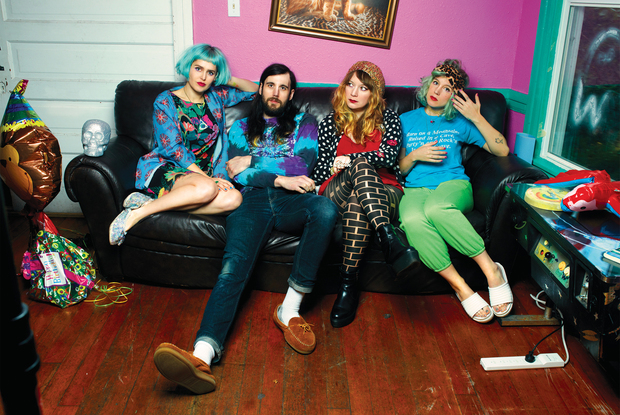
Meet the women of Chastity Belt in their charming new music video for “Cool Slut,” off of them acclaimed new record Time to Go Home, out now on Hardly Art Records. Chastity Belt is a rock band consisting of four friends – guitarists Julia Shapiro and Lydia Lund, bassist Annie Truscott, and drummer Gretchen Grimm.
They met in a tiny college town in Eastern Washington, but their story begins for real in Seattle, that celebrated home of Macklemore and the Twelfth Man. Following a post-grad summer apart, a handful of shows and enthusiastic responses from the city’s DIY community led them, as it has countless others, into a cramped practice space. They emerged with a debut album, No Regerts, sold it out faster than anyone involved thought possible, and toured America, a country that embraced them with open-ish arms. Now they’re back and the tab is settled, the lights are out, the birds are making noise even though the sun isn’t really up yet: it’s “Time to Go Home”, their second long-player and first for Hardly Art Records.
Recorded by José Díaz Rohena, Time to Go Home sees Seattle four-piece Chastity Belt take the nights out and bad parties of their past to their stretching points, watch the world around them break apart in anticipatory haze, and rebuild it in their own image with stunning clarity before anyone gets hung over. Time to Go Home is their first full-length for Hardly Art.
Chastity Belt performing live in the KEXP studio. Recorded March 28th, 2015.
Songs:
Dull
Time To Go Home
Drone
Joke
Members: Julia Shapiro Gretchen Grimm Lydia Lund Annie Truscott
In the outside world, they realized something crucial: they didn’t have to play party songs now that their audience didn’t consist exclusively of inebriated 18-22 year olds, as it did in that college town. Though still built on a foundation of post-post-punk energy, jagged rhythms, and instrumental moves that couldn’t be anyone else’s, the songs they grew into in the months that followed are equal parts street-level takedown and gray-skied melancholy. They embody the sensation of being caught in the center of a moment while floating directly above it; Shapiro’s world spins around her on “On The Floor,” grounded by Grimm and Truscott’s most commanding playing committed to tape. They pay tribute to writer Sheila Heti on “Drone” and John Carpenter with “The Thing,” and deliver a parallel-universe stoner anthem influenced by Electrelane with “Joke.”
Recorded by José Díaz Rohena at the Unknown, a deconsecrated church and former sail factory in Anacortes, and mixed with a cathedral’s worth of reverb by Matthew Simms (guitarist for legendary British post-punks and one-time tourmates Wire), Time to Go Home sees Chastity Belt take the nights out and bad parties of their past to their stretching points, watch the world around them break apart in anticipatory haze, and rebuild it in their own image with stunning clarity before anyone gets hungover.
Let yourself be swept away by this stunning, meditative clip for Chastity Belt’s “Lydia,” off of their widely-acclaimed 2015 album Time to Go Home.
The not-so-secret weapon wielded on Seattle punk groupChastity Belt‘s second album is performative lassitude. Time To Go Home is full of slow, hazy songs whose tempos and degrees of exerted energy are an exact inversion of their weighty subject matter. Feminist political statements are couched in eye rolls, designed to combat sexism by belittling it. The record is mellow, yet cohesive — so an interesting thing happens when one of those songs is plucked from its context and turned into a single, as is the case with “Lydia,” the video for which we’re premiering here: That languorous vibe comes across as downright pretty.
Chastity Belt’s music isn’t abrasive, and never ugly. But “Lydia” in particular uses a guitar line that approaches sunny, and is the only one of the album’s 10 tracks to feature LydiaLund’s vocals, which is softer than that of front woman Julia Shapiro. For the video, director Shaun Libman married the vulnerability and accessibility of Lund’s voice with equally dreamy visuals. Libman describes the artistry of the video’s set —constructed from hand-cut paper scenery, and filmed in striking black and white — as “an experiment. We were hoping we could shoot the paper in such a way that it would look dreamy and strange, both delicate and sturdy. Every shape and curve…embodies the emotional state of the main character.”
Time To Go Home is a punk album, and “Lydia” is a punk song. But Lund’s voice, as well as the song and video it inspired, have a softness and warm spaciousness that stand out from the rest of the record’s practiced cool.
On a Saturday sometime back in August, Pitchfork presented a pop-up show at Villian. It featured a set from the band Protomartyr, and Pitchfork.tv shared three songs from their performance. Watch them perform “Why Does It Shake?”, “I’ll Take That Applause”, and “How He Lived After He Died” below.
Protomartyr is an American post-punk band formed in 2008 in Detroit, Michigan. It features Joe Casey on vocals, Greg Ahee on guitar, Alex Leonard on drums and on bass guitar.
Protomartyr – “I’ll Take That Applause” – Live
On August 29th, 2015, in Williamsburg, Brooklyn, three bands came together for a pop-up show announced only days before, with a surprise headliner.Protomartyr




 The Fat Angel Sings