Posts Tagged ‘Best Albums of 2016’

Explosions in the Sky

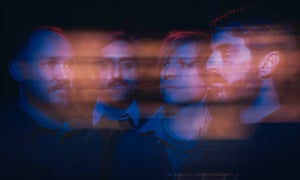
Texan four-piece Explosions in the Sky have developed an international cult following as their post-rock instrumentals have appeared everywhere from film soundtracks to TV trailers. However, drummer Chris Hrasky recently quipped that the last fate the band want for their sixth album is for it to accompany “rousing sports montages”. It’s unlikely, as the band have taken a detour from trademark glacial beauty into more pensive, sinister terrain. Thus, among The Wilderness’s gentle pianos and Eno-like ambience are percussive depth charges, industrial machine-like sounds and frantic math-rock.

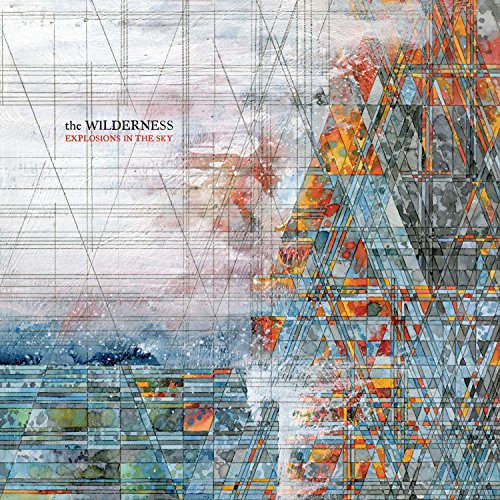
Explosions In The Sky finally returned this year with their long-awaited followup to 2011’s Take Care, Take Care, Take Care. How they still find ways to make their brand of post-rock feel as fresh and angelic as it first did 16 years ago is one of the many alluring facets of the new album “The Wilderness” . It’s another sprawling epic, yawning with fresh air and stretching impressive muscles previously unused by the Lone Star post-rockers. Digitized bleeps and bloops punctuate their amber swells (“Tangle Formations”) while Chris Hrasky’s rousing percussion (“Logic of a Dream”) turns self-respecting atheists into believers.

The Wilderness

The lovely Colors in Space suddenly erupts into jarring noise reminiscent of Hitchcock’s Psycho. It works, though, because the melodies are as strong as ever, and among the darker shades, the lighter moments wallop home. Tangle Formations and Infinite Orbit are terrific tunes, and the elementally softly rocking Landing Cliffs makes a spectacularly pretty climax to another beautifully understated epic.

Light Upon the Lake

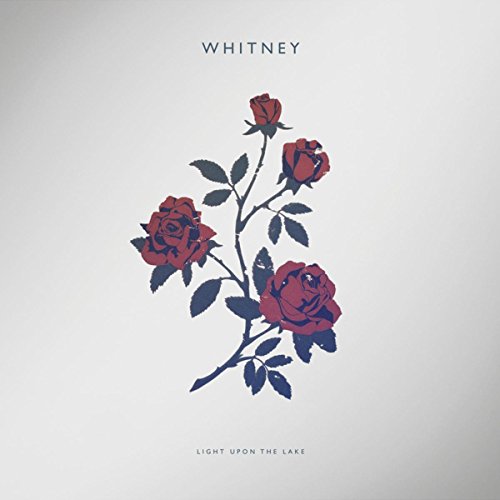
Over the course of three Smith Westerns albums, the group matured from fuzzed-out buzz band to 70’s-sheen rockers. But with the emergence of the band Whitney it’s apparent that it wasn’t frontman Cullen Omori that made the Smith Westies such an intriguing project. Instead, it’s guitarist Max Kakacek and drummer Julien Ehrlich that have managed to re-purpose the band’s best ideas and push things to unexpected places.

Whitney are chill with lo-fi tracks are, if anything, even more magical live than they are recorded. Add in the visual of a drummer/vocalist and some expert brass instrumentation, and you have a perfect storm of sonic goodness. Their set at the Bodega Social was exactly that, and I’m counting down the minutes and seconds till they play in my city again. Light Upon The Lake,  that pops with jukebox familiarity. Maybe it’s the guidance of fellow 70’s rock aficionado Jonathan Rado that translates the ideas of Whitney into such a fully-formed, unexpected debut,

Adore Life

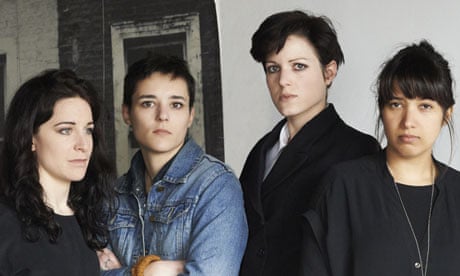
We have a lot of love for Savages. As forerunners in the recent renaissance in alternative music, they put themselves out on a limb while others lacked the courage to risk the fall. Their amazing live outings were mirrored by an inventiveness in their sound that lifted them head and shoulders above their contemporaries. Before they had recorded their first album, we had marked them as the best show in town and the release of the excellent Silence Yourself in 2013 only served to confirm this.

Thankfully, their pioneering approach became infectious and over the past few years a large number of fine new bands have emerged, leaving their erstwhile mentors in the strange position for young musicians of being veterans in a rapidly expanding field.
It has taken Savages a fair while to follow up on their debut; long gone are the days when artists would release a quality album every year and the four-piece appear not to have had much downtime in a hectic schedule. Perhaps this left them playing catch-up, for Adore Life bears the hallmark of a group keen to get new recordings out without perhaps taking the time to thoroughly explore the distant boundaries of the realm of possibility. The ten-track, thirty-nine minute collection is a punchy one, more capturing the live essence of Savages than embracing the spirit of exploration that helped infuse Silence Yourself with such delightful subtleties and daring. It’s almost brutal in its attack and, despite dropping in a couple of slower moments, the pressure is unlifting. Soundwise, there is no escaping the fact that Jehnny Beth sounds like Siouxsie Sioux and much of Adore Life could have come from mid-period Banshees, though Savages always wear fewer disguises and perhaps lack some guile. Gemma Thompson’s guitars crash and occasionally wail, but never take charge, leaving the voice dominant, and drummer Fay Milton probably added a few muscles in the record’s making but she is immersed in the assault rather than revelling in the opportunity to dance around it. On the other hand, bassist Ayse Hassan thrives in the record’s rumbustiousness and lays down some marvellous patterns that only underline her position as one of the great bassists of the modern era.

By no stretch of the imagination is this a bad record, but there is no escaping the faint feeling of disappointment that Savages haven’t taken things further; they haven’t pushed enough and always want to punch instead of cajole and allure. When they hit the spot on the shining ‘Slowing Down The World’, they sound untouchable and there are highlights throughout, but there is a little too much journeying going on without enough effort to take in the views.

Image result

Vancouver-birthed psych-rock greats Black Mountain haven’t released a proper studio album since 2010’s Wilderness Heart , but their latest album this year comes bearing the appropriately-epic title IV.

Every music note cast by Black Mountain instantly turns to gold and no, this is not a statement that is up for debate. Very few bands can start their album with an eight-and-a-half minute song and keep you completely glued to it for every last millisecond of this album’s 56 minutes. Songs like “Florian Saucer Attack” possesses a sound that countless bands are trying to emulate, but none of them can do it justice quite like Black Mountain. It’s a testament to what they are: a true rock band, through and through

1_Mothers_Berlin

What started as a solo musical endeavor of Athens, Georgia native Kristine Leschper has turned into a promising band that we now know as Mothers. Earlier this year they released their rather lovely debut offering, “When You Walk a Long Distance You Are Tired”, via Grand Jury Music.
The group first caught my attention last year during CMJ, where their powerful and emotive live show caught my attention. They returned to New York in February for a performance giving us a taste of what was to come on the released album. the album is a sprawling multi-instrumental landscape, shaped out of exhaustively experimental song structures. Each song follows its own erratic path, and even the most serene moments teeter on the edge of dissolution, about to give away to chaotic instrumental interludes. The album is therefore easy to disappear into, and lengthy, winding songs like “Nesting Behavior” and “Hold Your Own Hand” are the entryway. The submersing atmosphere is the work of the instrumentation, from the simple, frail sound of the plucked mandolin to the bigger orchestral arrangements.

Mothers
The group sounded every bit as strong as I recalled, powerfully going through the shape-shifting stop-start sounds off the album, offering emotional insight that connected at all angles. As great as their record is, there’s just something special about this band live that is sort of missing on recordings. Mothers are a band that will continue to grow and evolve over the years, with every show providing as unique opportunity as the next. I’m already waiting to catch them again the next time they return to us hopefully early next year with a new album.
.
2_Mothers_Berlin

Working in the sweetly swinging tradition of Serge Gainsbourg and the yé-yé sound of the ’60s, the Limiñanas have a sound that blends sunny psychedelia with vintage pop. Based out of Perpignan, France, the group is composed of drummer and sometime vocalist Marie Limiñana and bassist, organist, and jack-of-all-trades Lionel Limiñana, as well as a host of guest vocalists including MU. With its combination of fuzzy organ, half-spoken/half-sung vocals, and vintage production, the band captures the sexy, ultra-hip sound of classic French pop. After releasing a series of singles, the duo released its self-titled debut in 2010 through the Chicago label Trouble in Mind. The band continued to crank out singles, and a second album, Crystal Anis, followed in the summer of 2012. After taking some time to revamp the Limiñanas’ sound to introduce more elements of French and Italian soundtrack music, the duo returned quickly with its third album for Trouble in Mind. Costa Blanca was issued in late 2013. The band are now back with new relase “Malamore”.

http://

mitski

Not many artists have had better years than Mitski. With the release of her celebrated album “Puberty 2” (via Dead Oceans Records), Mitski only got bigger and bigger, but always on her own terms. On November 21st, she played her largest headlining show in New York yet, with a sold out performance at Webster Hall, along with two great openers in Weaves and Fear Of Men. It was even more impressive to see the hold she had over Webster Hall crowd during every living moment of her personal 15-song set. She attracts a young and passionate fanbase, who are devoted to every word and line she delivers, singing it back even more emotional than it was originated. There’s a sincere power to her voice, and it’s hard not to be swept up by it all.
Mitski is only going to garner more accolades as the best of the year lists continue to file in, it’s safe to say that her star will only rise even more over the years. It’s been a great pleasure to watch her grow as an artists, and here’s to whatever she does next.

In “A Loving Feeling” from her new album Puberty 2, Mitski Miyawaki asks, over static and guitars, “What do you do with a loving feeling/ if a loving feeling makes you all alone?” It’s a question she poses, in various forms, throughout the record, sometimes in a hopeful whisper, other times in an enraged, accusatory shout. By the end of “Puberty 2″, it becomes clear that it’s a question she can only answer herself.
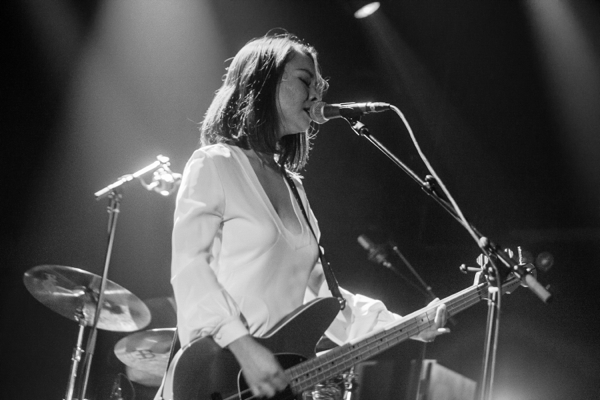
The album’s title positions it as a sequel—the awkward, cruel extension of a life stage few people would willingly revisit. She depicts that tension and confusion with particular pointedness in “Happy,” where the titular emotion finally visits her, only to leave a mess behind. “Well I sighed and mumbled to myself/ ‘Again I have to clean,’” she sings in amusement. The sax riff and dry applause that follows land like a punch line.

Subtle images of “pinky promise kisses,” of being the little spoon that “kiss[es] your fingers forever more,” of taking one last look at a lover in the rear view mirror, convey a vulnerable intimacy; it’s as if Mitski, in the midst of self-doubt and anxiety, wants to make herself smaller. Yet throughout the album, those subtleties give way to sudden, explosive moments of exhilaration and self-assertion: slow doo-wop declarations of love in “Once More to See You,” ragged howls and aggressively-strummed guitars in “My Body’s Made of Crushed Little Stars,” the invasive flash of sweet memories during “one warm summer night” in “Fireworks,” and the fierce look of love on “I Bet on Losing Dogs.” By the record’s end, it’s clear that Mitski has made peace with her question about a “loving feeling.” She finds all of the strength and peace she needs simply by loving herself. She may be alone, but she’s never lonely.

Mitski — Puberty 2

That might make Puberty 2 sound meek. It is anything but. Mitski and her sole collaborator and producer, Patrick Hyland, trade the slightly rustic quality of 2014’s Bury Me At Makeout Creek for grungy sharpness and spacey ambience, These 11 tracks creep up on you, as her coiled melodies suddenly explode into cavernous freak-outs or build to a crescendo of unbearable catharsis.

Mitski – Puberty 2 (Dead Oceans Records)

Puberty is a motherfucker. It’s a time when your body’s doing weird stuff, your hormones are running wild, and every little problem seems like the end of the world. But things gets easier. Your emotions don’t go away or even get smaller, necessarily — you just learn to deal with them, to manage them, to live your life anyway. That’s what growing up is, and Puberty 2 is the sound of Mitski growing up.

http://

The fuzzed-out indie-rock that’s become her signature is supplemented by drum machines, synths, even a saxophone, blossoming from the soft/loud dichotomy of Bury Me At Makeout Creek to a more nuanced spectrum of sound. Lyrically, Mitski is focused on what basically amounts to Newton’s third law of emotion: for every feeling, there is an equal and opposite un-feeling. On opener “Happy,” that endless and inevitable cycle is cause for hopelessness and exhaustion. But by the closing track, you get the sense that she’s figured out the secret to living, which is that that there isn’t really a secret to living — you kinda just have to do it. Or, as she sighs in the album’s closing lines: “So today I will wear my white button-down/ I can at least be neat/ Walk out and be seen as clean/ And I’ll go to work and I’ll go to sleep/ And all of the littler things.” Puberty 2 might be a huge achievement, but it’s the sound of all the littler things that get you through the big things. It matters.

In the same way Benji was about “death” and 69 Love Songs was about “love,” Camp Cope’s enthralling debut is an album about “shame.” There are dozens of times where Georgia Maq, leader of this Melbourne trio, recognizes the subtle way shame has goes viral in real time, tinting and tainting almost every one of her interactions: The discomfort and depression she feels after passing by a homeless man in the park, getting catcalled at a construction yard or busking in the streets. Each encounter is processed as a projection of her emotional state or payback for the original sin of having been born. Maq’s emotional intelligence is off the charts here, but in that aspect, she might admit she’s too smart for her own good.

On “Flesh & Electricity,” Maq exhales, “I’ve been desensitized to the human body/I could look at you naked and all I’d see would be anatomy,” like she just might sink so far into her couch that she disappears. When she modulates the chorus a few steps higher, she sounds even wearier; the effect is like watching someone force a smile in a crushingly repetitive job. It’s perhaps the saddest of Camp Cope’s eight songs because it was inspired by her actually trying to do good in the world; Maq worked as a nurse during the writing process of Camp Cope, but her altruism might have just been shame management: “My father says it’s atonement for my reckless years,” she says in “Flesh & Electricity.”

Camp Cope’s sound is, increasingly, the sound of indie rock today: a divergence from the too-cool VUthe FallPavement lineage that embraces the effusive, empathic and emphatic qualities of emo, with some pop-punk (Tigers Jaw and UV Race are namedropped in “Stove Lighter,” WHY? is paraphrased in “West Side Story”) and a social awareness that negates any of the aforementioned’s previously questionable politics. You can tell from the stock chord progressions and loudly projected vocals that Camp Cope used to be Maq’s solo project, but if it’s folky at all, it resembles the superlyrical the Front Bottoms or the Mountain Goats rather than any roots music.

It’s a testament to Camp Cope’s unique magnetism that they never cheat towards the catharsis typically expected to balance out such heavy subject matter. They often use deadpan humor instead: “Jet Fuel Can’t Melt Steel Beams” references nutball 9/11 conspiracy theories, but uses it as part of a pattern where any authority condescends to you, whether it comes from the NRA (“the only thing that can stop a bad man with a gun is a good man with a gun”) or the victim-blaming inherent in most sexual assault investigations.

The most powerful moments on Camp Cope come when Maq shows a willingness to take some kind of power back after being talked down to her entire life, by parents, by teachers, by partners (“Hey, I was looking for a reason to leave and it’s you”), friends and peers in the punk community. There are no revelatory epiphanies for Maq, just valuable growth spurts that feel like acceptance. In “West Side Story,” Maq gets closest to the “survive and advance” thesis statement of Camp Cope:  “It all comes down to the knowledge that we’re gonna die/find comfort in that or be scared for the rest of your life.”

http://


102690

Teens of Denial is the thirteenth album in Car Seat Headrest’s (aka 23-year-old Will Toledo) and the second on Matador Records, and the first to be recorded in a proper studio with a full band and producer (Steve Fisk). On Denial, Toledo moves from bedroom pop to something approaching classic-rock grandeur and huge (if detailed and personal) narrative ambitions, with nods to the Cars, Pavement, Jonathan Richman, Wire, and William Onyeabor. By turns tender and caustic, empathetic and solipsistic, literary and vernacular, profound and profane, self-loathing and self-aggrandizing, he conjures a specifically 21st century mindset, a product of information overload, the loneliness it can foster, and the escape music can provide. At the heart of the album sits the 11:32 Ballad of the Costa Concordia, which has more musical ideas than most whole albums (and at that length, it uses them all). Horns, keyboards, and elegant instrumental interludes set off art-garage moments; vivid vocal harmonies follow punk frenzy. The selfish captain of the capsized cruise liner in the Mediterranean in 2013 becomes a metaphor for struggles of the individual in society, as experienced by one hungover young man on the verge of adulthood.

Will plays guitar while a guy has a bad time. From the new album “Teens Of Denial”,

An intuitively smart and fearlessly generous record – this is an artist in complete command of their craft at the top of their game and is already a contender for album of the year. After 2014’s stunning Burn Your Fire for No Witness which dramatically raised her profile, Angel Olsen perhaps felt pressure to make a big statement the next time out. My Woman finds her rising up to the challenge, maintaining a harrowing intensity in full-band rockers and solitary confessionals. Olsen is a brilliant songwriter and an even better vocalist, who can go from stern to tender to deranged, and back again, in a single verse. In the beginning of “My Woman”, Olsen mostly pursues love with wild-eyed fervor, whereas the closing songs disconsolately consider its ruins. Yet, the relentless heat of My Woman can be exhausting over the course of the 10 searing tracks—the addition of a throwaway would give a weary listener time to regroup. But Angel Olsen’s fearless and eloquent embrace of raw emotions in all their messy splendor ultimately feels oddly uplifting, the way it always does when you witness a gifted artist at her best.

Angel Olsen – “Sister” from the album ‘MY WOMAN’ released September 2nd, 2016 on Jagjaguwar Records

249896-013-014-2.psd