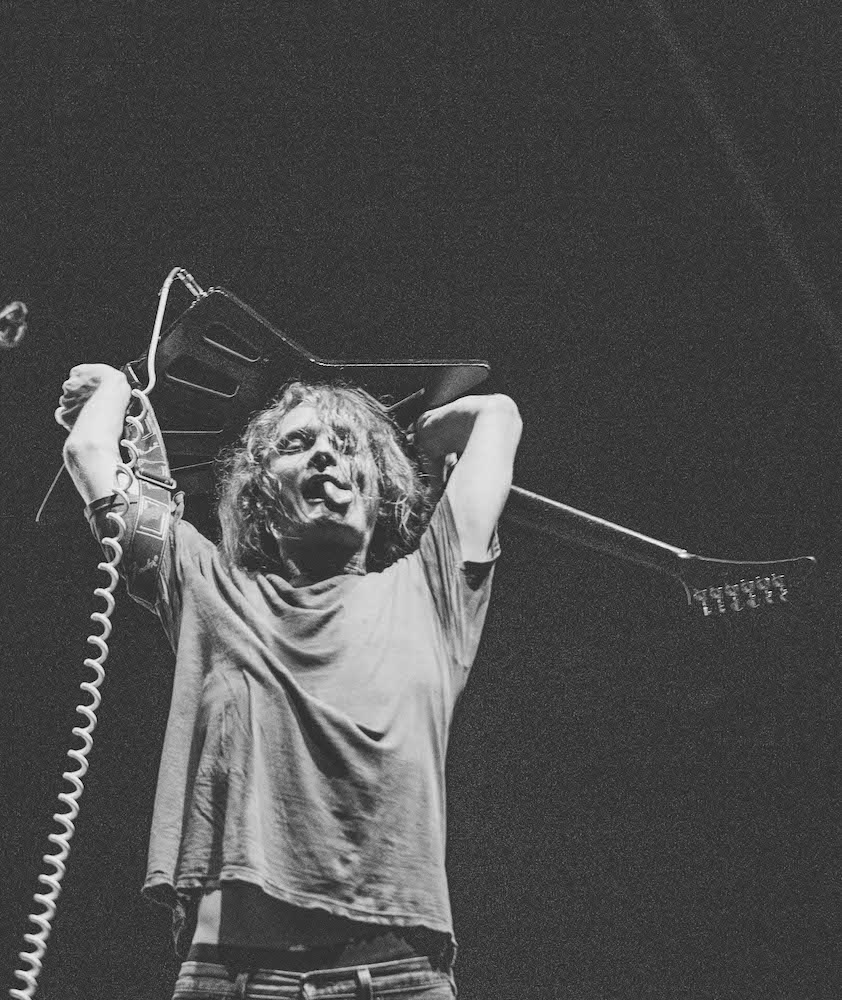
The prolific Melbourne band played their biggest-ever headline show to date at the 10,000-capacity venue in the capital, with the promise of “a new set, new songs and a whole new visual experience” being made by the psych-rock troupe. This was an anomaly. An Australian psychedelic rock band, blessed with the kind of name a 14-year-old comes up with during a particularly boring double maths lesson, sells out the 10,000-capacity Alexandra Palace with little radio support and no hit records. What’s more, their latest of many albums since 2012 (they released five in 2017 alone) is a ferocious thrash metal concept piece about ecological disaster called Infest the Rat’s Nest. No focus group would come up with the King Gizzard approach to musical success.
The heady, inspired, confusing, and addictive path King Gizzard & The Lizard Wizard set out on almost a decade ago has led to this point. Announcing – and then swiftly selling out – a headline date at Alexandra Palace, the Australian group took on one of North London’s most imposing venues. A historic landmark, thousands of fans descended on the people’s palace for the show, an indication of just how big these psychedelic outlaws actually are. Rampaging through their leviathan-like catalogue, King Gizzard & The Lizard Wizard pulled out all the stops for the biggest night of their lives.
Short, punchy, and fun, King Gizzard gives a more matured take on their early surf rock sound. Such a sunny treat on this Christmas Eve. Don’t say King Gizz & The Lizard Wizzard never gave you anything. Just in time for Krimbo, the unstoppably prolific Australian eccentrics have done it again, dropping not one but two new albums on their Bandcamp page.
First and foremost of the two is Teenage Gizzard, a collection of early non-album singles and rarities that date back to 2010 and 2011, even before their debut album. Of course, for those who can’t get enough of KG in performance, there’s also Live in London ’19, the latest in a series of self-explanatory concert recordings they’ve dropped this year. You can check them both out below, or click through if you’d like to buy them. Not that you have to shell out: The band have also started up their own Bootlegger page, allowing anyone to download these discs (and several more) and release them — as long as they share. Here’s how they put it:
“Yo indie labels, bootleggers, fans, weirdos. We’ve got a deal for ya… If anyone wants to release these albums, you’re free to do so. Below you’ll find links to audio master files and cover art. Feel free to get creative with it if you like — it’s yours. Only deal is you’ve gotta send us some of them to sell on Gizzverse.com — whatever you feel is a fair trade is cool with us. Ideas: double LPs, 7”, remix, reimagined cover art, bizarre-looking wax, live show box sets, tapes. Or keep it simple — that’s totally OK. Anyone keen?!”
I’m sure they’ll have no trouble finding takers. As for me, I’ll be spending some quality time with these albums over the next few days — and into the new year. Although I’ve been a fan of KG&LW for years now, I’ve resolved that 2021 is going to be the year I go deep into the their back catalogue and truly embrace my inner lizard. Or wizard. Or whatever. Anyway, enjoy.
Tracks 1-8 recorded some time in 2010 in Angelsea, Victoria, Australia Tracks 9+10 recorded some time in 2011 in Carlton, Victoria, Australia Mixed by Stu Mackenzie
It started with a plea from one friend to another. George Harrison had been close to the legendary Indian classical musician Ravi Shankar since the mid-’60s, when the Beatle first sought an expert to teach him to play the multi-stringed Indian sitar. RaviShankar, older than Harrison by some 22 years and the acknowledged world master of the instrument, was from Bangladesh (previously known as East Pakistan) in the South Asian region of Bengal. At the time, in 1971, Harrison’s website states, “The country was ravaged by floods, famine and civil war, which left 10 million people mostly women and children fleeing their homes.” Feeling distraught and wanting to help, Shankar met with Harrison and asked if he might be able to draw attention to the crisis, and possibly use his fame to do something to raise some funds for aid. “Yes,” Harrison told him, “I think I’ll be able to do something.”
In April of 1971, Harrison went to work recruiting friends for a one-time-only concert; by June he had already received commitments from several of the biggest names on rock. He also arranged for a film and recording to be made of the event, the proceeds of which would go toward the cause. The concert date was set for August 1st, 1971, two shows .The shows were held at 2:30 and 8:00pm(afternoon and evening) to take place at New York’s Madison Square Garden. Not only would The Concert for Bangladesh be Harrison’s first major live appearance since the Beatles quit touring five years earlier, it would go down as one of the greatest evenings of classic rock in history. The event was the first-ever benefit of such a magnitude, and featured a supergroup of performers that included Harrison, fellow ex-Beatle Ringo Starr, Bob Dylan, Eric Clapton, Billy Preston, Leon Russell and the band Badfinger. In addition, Shankar and Ali Akbar Khan – both of whom had ancestral roots in Bangladesh – performed an opening set of Indian classical music. The concerts were attended by a total of 40,000 people, and the initial gate receipts raised close to $250,000 for Bangladesh relief, which was administered by UNICEF. After collecting the musicians easily, Harrison found it extremely difficult to get the recording industry to release the rights for performers to share the stage, and millions of dollars raised from the album and film were tied up in IRS tax escrow accounts for years, but the Concert for Bangladesh is recognised as a highly successful and influential humanitarian aid project.
Shankar’s original hope was to raise $25,000 through a benefit concert of his own, With Harrison’s commitment, and the record and film outlets available to him through the Beatles’ Apple Corps organisation, the idea soon grew to become a star-studded musical event, mixing Western rock with Indian classical music.
According to Chris O’Dell, a music-business administrator and former Apple employee, Harrison got off the phone with Shankar once the concept had been finalised, and started enthusing with his wife, Pattie Boyd, and herself about possible performers. Ringo Starr, Lennon, Eric Clapton, Leon Russell, Jim Keltner, Voormann, Billy Preston and Badfinger were all mentioned during this initial brainstorming. The Concert For Bangladesh happened because of my relationship with Ravi … I said, “If you want me to be involved, I think I’d better be really involved,” so I started recruiting all these people. O’Dell set about contacting local musicians from the Harrisons’ rented house in Nichols Canyon, as Harrison took the long-distance calls, hoping more than anything to secure Bob Dylan’s participation
Almost all of Harrison’s first-choice names signed on immediately, while a day spent boating with Memphis musician Don Nix resulted in the latter agreeing to organise a group of backing singers. The Sunday, was the only day that Madison Square Garden was available at such short notice. By the first week of July Harrison was in a Los Angeles studio recording his purpose-written song, “Bangla Desh”, with co-producer Phil Spector. The song’s opening verse documents Shankar’s plea to Harrison for assistance, and the lyrics “My friend came to me with sadness in his eyes / Told me that he wanted help before his country dies”
Harrison then met with Apple signed band Badfinger in London to explain that he would have to abandon work on “Straight Up” , before flying to New York on 13 July to see Lennon. During the middle of July also, once back in Los Angeles, Harrison produced Shankar’s Bangladesh benefit record, an EP titled Joi Bangla. As with Harrison’s “Bangla Desh”, all profits from this recording would go to the newly established George Harrison–Ravi Shankar Special Emergency Relief Fund, to be distributed by UNICEF.
Also around the middle of July, the upcoming concert by “George Harrison and Friends” was announced via a small ad buried in the back pages of the New York Times”, Tickets sold out in no time, leading to the announcement of a second show. Towards the end of the month, when all parties were due to meet in New York for rehearsals, Harrison had the commitment of a backing band comprising: Preston, on keyboards; the four members of Badfinger, on acoustic rhythm guitars and tambourine; Voormann and Keltner, on bass and drums, respectively; and saxophonist Jim Horn’s so-called “Hollywood Horns”, which included Chuck Findley, Jackie Kelso and Lou McCreary. Of the established stars, Leon Russell had committed also, but on the proviso that he be supported by members of his tour band. Eric Clapton insisted that he too would be there, even if O’Dell and other insiders, knowing of the guitarist’s incapacity due to his severe heroin addiction, were surprised that Harrison had considered him for the occasion. Among Harrison’s former bandmates, John Lennon initially agreed to take part in the concert without his wife and musical partner Yoko Ono, as Harrison had apparently stipulated. Lennon then allegedly had an argument with Ono as a result of this agreement and left New York in a rage two days before the concerts The line up was staggering: First, there was Ringo Starr. As if half of the Beatles wasn’t enough of an enticement to fans,
As well as the songs he would go on to perform Harrison’s list included his own compositions “All Things Must Pass” with Leon Russell, apparently “Art of Dying” and the just-recorded B-side “Deep Blue” Eric Clapton’s song “Let It Rain” appeared also, while the suggestions for Dylan’s set were “If Not for You”, “Watching the River Flow” (his recent, Leon Russell-produced single) and “Blowin’ in the Wind”. Only Harrison, Voormann, the six-piece horn section, and Badfinger’s Pete Ham, Joey Molland, Tom Evans and Mike Gibbins were at Nola Studios on that first day of rehearsals, and subsequent rehearsals were similarly carried out in “dribs and drabs”, as Harrison put it.
Only the final run-through, on the night before the concert, resembled a complete band rehearsal. On Tuesday, 27th July, Harrison and Shankar, accompanied by a pipe-smoking Allen Klein, held a press conference to promote the two shows notoriously performance-shy, Harrison said “Just thinking about it makes me shake. The “Bangla Desh” charity single was issued in America with a UK release following two days later. Ringo Starr arrived on the Thursday, and by Friday, 30th July, Russell was in town, interrupting his US tour. Leon Russell’s band members Claudia Linnear and Don Preston were added to Don Nix’s choir of backing singers. Billy Preston would switch to lead guitar for Russell’s solo spot during the shows, just as bassist Carl Radle would replace Voormann temporarily. At this point, Clapton’s participation was gravely in doubt, and Harrison had drafted in Jesse Ed Davis as a probable replacement. The ex-Taj Mahal guitarist received last-minute coaching from Voormann, who was more than familiar with Harrison’s songs, as well as those by Billy Preston and Starr.
The final rehearsal, the first for some of the participants, was combined with the concert soundcheck, at Madison Square Garden, late on 31 July. Both Dylan and Clapton finally appeared at the soundcheck that night.Even then, Clapton was in the early stages of heroin withdrawal – only a cameraman supplying him with some methadone would result in the English guitarist taking the stage the following day, after his young girlfriend had been unsuccessful in purchasing uncut heroin for him on the street. To Harrison’s frustration, Dylan was having severe doubts about performing in such a big-event atmosphere and still would not commit to playing. “Look, it’s not my scene, either,” Harrison countered. “At least you’ve played on your own in front of a crowd before. I’ve never done that.” Stephen Stills having proceeded to sell out Madison Square Garden two days before the concert on 30th July, in support of his album, “Stephen Stills 2”, allowed Harrison to use his stage, sound, lighting system and production manager but was upset when Harrison “neglected to invite him to perform, mention his name, or say thank you”. Stills then spent the show drunk in Ringo Starr’s dressing room, “barking at everyone”.
The shows began with sets by Shankar and his musicians, followed by Harrison and his entourage, performing material both from his emerging solo career. Harrison began the concert with “Wah-Wah”, followed by his Beatles hit song’ “Something” and the gospel-rocker “Awaiting on You All”. Harrison then handed the spotlight over to Preston, who performed his only sizeable hit “That’s the Way God Planned It”, followed by Ringo Starr, whose song “It Don’t Come Easy” had recently established the drummer as a solo artist. Next up was Harrison’s “Beware of Darkness”, with guest vocals on the third verse by Russell, who covered the song on his concurrent album, Leon Russell and the Shelter People. After pausing to introduce the band, Harrison followed this with one of the best-received moments in both the shows – a charging version of the White Album track “While My Guitar Gently Weeps”, featuring him and Clapton “duelling” on lead guitar during the long instrumental playout.
Both the band introduction and “While My Guitar Gently Weeps” are among the few selections from the afternoon show that were included on the album and in the film. Another one was Leon Russell’s medley of the Rolling Stones’ “Jumpin’ Jack Flash” and the Coasters’ “Young Blood”, which was also a highlight of Russell’s live shows at the time. With Don Preston crossing the stage to play lead guitar with Harrison, there were now temporarily four electric guitarists in the line-up. Don Preston, Harrison and Claudia Linnear supplied supporting vocals behind Russell. In an effective change of pace, Harrison picked up his acoustic guitar, now alone on the stage save for Pete Ham on a second acoustic, and Don Nix’s gospel choir, off to stage-left. The ensuing “Here Comes the Sun” – the first live performance of the song, as for Harrison’s other Beatle compositions played that day was also warmly received. At this point, Harrison switched back to his white Fender Stratocaster electric guitar he looked down at the setlist taped to the body of the guitar and saw the word “Bob” followed by a question mark. “And I looked around,” Harrison recalled of Bob Dylan’s entrance, “and he was so nervous – he had his guitar on and his shades. It was only at that moment that I knew for sure he was going to do it.” Among the audience, there was “total astonishment” at this new arrival. As Harrison had envisaged, Dylan’s mini-set was the crowning glory of the Concert for Bangladesh for many observers. Backed by just Harrison, Russell (now playing Voormann’s Fender Precision bass) and Starr on tambourine, Dylan played five of his decade-defining songs from the 1960s.
The moment that put the Concert for Bangladesh over the top as one for the ages was when Bob Dylan walked out onstage. Like Harrison, he had not performed in public much recently, since a 1966 motorcycle accident that caused him to reassess his life and career. Dylan, who was reportedly nervous about playing to such a large audience, arrived onstage for the first show accompanied by Harrison, Russell (on bass) and Starr (playing tambourine) and performed five of his greatest compositions: “A Hard Rain’s A-Gonna Fall,” “Blowin’ in the Wind,” “It Takes a Lot to Laugh, It Takes a Train to Cry,” “Love Minus Zero/No Limit” and “Just Like a Woman,” before Harrison and the band closed out the show. The evening show followed a similar trajectory, with both Harrison and Dylan making a handful of changes to their set lists: Dylan, notably, added “Mr. Tambourine Man” in place of “Love Minus Zero.”
Harrison and the band then returned to perform a final segment, consisting of his recent international number one hit, “My Sweet Lord”, followed by the song of the moment – “Bangla Desh”.
The Concert for Bangladesh recording, featuring highlights from the two shows, was released on December 20th, 1971, also winning the Grammy for Album of the Year. The film, Following the Bangladesh concerts, some controversy ensued over the allocation of the funds but an estimated $12 million ultimately found its way to aid in the relief efforts over the next decade and a half. And in the world of rock music, the 1971 Concert for Bangladesh is viewed as a landmark event, the first true large-scale benefit concert of its type; it would serve as the model for Live Aid and is seen as the prototype for many other such charitable events even today.
As of August 2020, neither the album nor DVD was in print. Perhaps for its 50th anniversary in 2021we get an updated version along with a full set of the songs performed each night.
Last March, the Portland singer-songwriter’s West Coast jaunt in support of his third album “Natural Beauty” was cut short. Then, his Midwest and East Coast shows were postponed as the pandemic wiped out live music for the foreseeable future. Steeped in punchy power-pop hooks, dissonant harmonies and tinges of ’60s orchestral rock, Natural Beauty is something of an ode to the music of Troper’s teenage years, including the White Album, his favourite Beatles record, and fellow Portland indie band Dear Nora.
Troper played most of the instruments on the album himself, and penned a majority of the 12 tracks after returning to Portland from a yearlong stint living in L.A. “If there’s a theme for the album,” he says, “it’s getting back in touch with my Portland roots.”
But the 28-year-old isn’t the least bit bitter about having to put the promotion for his latest release indefinitely on hold. “With COVID, and the protests, there are much more important things going on,” he says. “It just doesn’t feel like the right time to be promoting [anyway].”
This year has been nuts and I’m bummed I wasn’t able to tour, but I really appreciate all the support I’ve received. If you’ve listened to my music at any point over the last year, please know that I really appreciate you. Not to be too self-deprecating but it’s still wild to me that people actually take the time to listen to my songs. Much love and happy holidays, and hopefully see you irl next year, -Mo
Releases December 25th, 2020 written, produced, and mixed by Mo Troper
Since their founding in 2015, Swedish post-punk band Viagra Boys have made a name for themselves burning up stages around the world. There’s a little Iggy Pop spit and seethe, a David yow drunken stumble, and a bite of Nick Cave’s haunted bark. add a dash of motorik groove, a pinch of post-punk grime, and a dose of no wave howl. for every gruff and gritty croak in the outfit’s catalogue, they come back with a pair of bongos, squared-off synths, and a squonky saxophone, with songs that deftly lay waste to society’s normalization of toxic masculinity, racism, misogyny, classism, and self-obsession.
Viagra Boys’ Sebastian Murphy dreams about everyone hating his guts a lot. “I kept having this recurring nightmare where my mom was crying and my friends were all pissed off at me,” he recalls, almost reverently. the band’s new album, “Welfare Jazz”, doesn’t bargain with the anxiety in that defeated feeling, but rather a boiling certainty that nothing and no one is absolute.
There’s plenty of blame to go around, and things are just a lot more interesting when you admit that you’re not always going to be nice, you’re not always going to pick the right words in a fist-fight. so why not keep moving forward, swaying and strutting into the night.
In loving memory of John Prine From the album ‘Welfare Jazz’, out January 8th on YEAR0001
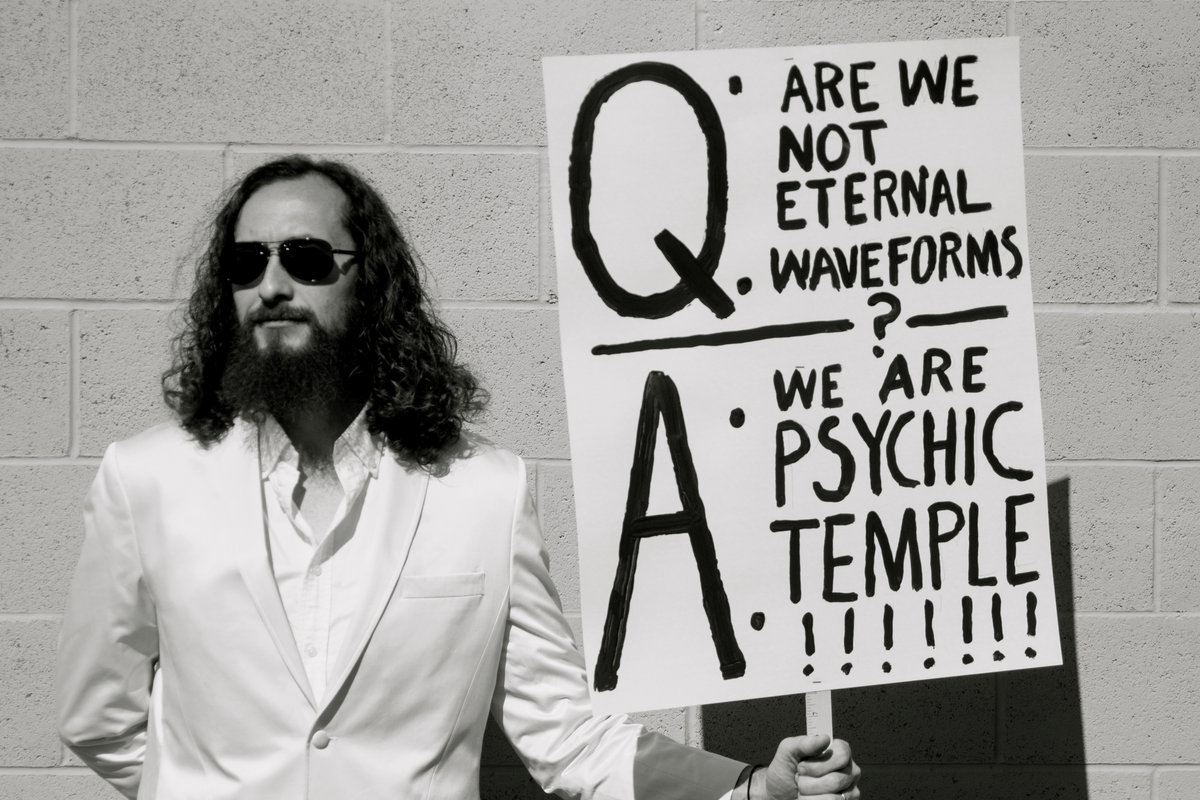
Two years ago, SoCal studio cultist Chris Schlarb, a.k.a. Psychic Temple, announced a new project in which he would collaborate with four completely different artists for each side of a double album. He called it “Houses of the Holy” which made sense, coming after albums titled I, II, III, and IV — and introduced it with a fun EP of desert-singed garage-pop tunes made with Los Angeles’ Cherry Glazerr. The full 2-LP adventure, rolled out this last September, features those songs plus some jazzier moods with cornetist Rob Mazurek’sChicago Underground trio; along with paisley-hued psychedelic rock with the Dream Syndicate; and big-band backpack rap with local MC Xololanxinxo.
All those sounds hang together with the logic of a long, weird dream, thanks to Schlarb’s instinct for unlikely musical connections. As a generous celebration of what can happen when you put a bunch of talented people together in one room — in this case, Schlarb’s Long Beach, California, studio, Big Ego “Houses of the Holy” was all the more welcome this lonely year.
The concept is pretty cool. Basically, I take over an existing band on each side and we write and record together.
Cherry Glazerr (Side A)
Chicago Underground Trio (Side B)
Dream Syndicate (SideC)
Xololanxinxo (Side D)
The first single, “Why Should I Wait?” with The Dream Syndicate is out now and you can pre-order the album over at Bandcamp today. I’m really proud of this record. If you take a listen, please let me know what you think. The vinyl is especially fun since each side is its own thing, but together its like the album is a mini box set. “Lightning” I particularly keep playing. It makes me feel like it could have been a song in an old old dream I had trouble remembering until I hear it and I can almost recall it again. Give the album a good listen and I think you’ll find something to enjoy.
Psychic Temple off the album ‘Houses of the Holy’ out on Joyful Noise Recordings.
Acclaimed singer/songwriter Joan Osborne is back with “Trouble And Strife”, her first album of original material in six years. The album finds the gifted vocalist offering a strong yet uplifting response to some of the socio-political issues plaguing our nation over the last several years. Osborne beautifully balances the weight of her messages with solace and optimism. A quarter-century after “One of Us,” Osborne remains an undervalued resource as interpreter (her Dylan covers), band member (an early member of Trigger Hippy), and record maker (check out later work like 2014’s Love and Hate). She’s always been adept at making roots music sound saucily modern and vivacious rather than dutiful, an approach that continues on Trouble and Strife. Even when she adheres to soul and R&B basics, she’s not afraid to have her musicians toss in a proggy synth or metallic guitar, and she still sings with a throaty purr that nods to the past but never feels simply imitative of anything. For added contemporary flavour, this album of largely Osborne originals is also among her most sombre, addressing immigration (“What’s That You Say”), cultural corruption (“Hands Off”), sexual identity (“Boy Dontcha Know”), and the age of misinformation (“That Was a Lie”). The world’s a mess, but Trouble and Strife makes it sound like a place you’d still want to visit now and then.
Times are tough right now, but luckily we have a new Joan Osborne album to raise our spirits. With Trouble and Strife the singer/songwriter returns to tender folk-country, and it’s an oasis in times of madness.
“To all the fans who have been waiting, I’m very excited to announce the new album “Trouble and Strife” is out today!! My first collection of original songs in 6 years, this record wrestles with our turbulent times by using the power that music has to energize and lift us up. Thanks to the amazing musicians who brought these songs to life
For her new album, she enlisted a large live band (including several musicians who played on her last album, Songs of Bob Dylan), featuring guitarists Jack Petruzzelli, Nels Cline and Andrew Carillo, keyboardist Keith Cotton, bassist Richard Hammond, drummer Aaron Comess and vocalists Catherine Russell, Ada Dyer, Martha Redbone and Audrey Martells.
Joan Osborne “Take It Any Way I Can Get It” off the upcoming album “Trouble and Strife” out September 18th, 2020.
Chicago-based rock quartet Ganser shared a self-directed video for their new track “Emergency Equipment and Exits” off of their forthcoming LP “Just Look at That Sky”, out July 31st on Felte,.
Out of the din of distorted pads emerges a groove that bursts into a soaring melody at full speed, immersing you in a hook only to branch elsewhere. The video features the band performing at their practice space interspersed with shots of downtown Chicago before settling on a swamp for a fleeting instance of pastoral quiet. With two terrifyingly cool lead vocalists in Nadia Garofalo and Alicia Gaines and a relentless guitar/drum attack from their bandmates Charlie Landsman and Brian Cundiff, this Chicago quartet kicked up one of 2020’s most impressive rackets on their second LP.
Post-punk outbursts like “Projector” and “Self Service” (both shouted by Garofalo) hit with just the right intensity to crowd out this headache of a year for a few minutes. Just as impressive were the subtler sounds that emerge on Just Look at That Sky’s back half: “Shadowcasting,” sung by Gaines, is a sparkling slow-burner that recalls mid-2000s Radiohead. The only thing missing was a chance to see how these songs sound in concert — and the webcasts that Ganser put on this year suggest they’ll leave our ears ringing in the best way when they’re able to tour again.
Alicia Gaines (vocals and bass) describes the video as follows: “Sometimes everything gets too close, even when things are good, and you get this screaming desire to run away. The song and video are both about feeling estranged from reality and choosing nothing over too much—the floor drops out, and you only have yourself to deal with. It was very strange to be focused on not only the video direction, but also safety precautions during this time.”
Single taken from Ganser’s ‘Just Look At That Sky’ Album —- Recorded 2019 at Altered States
Iggy Pop has shared a new song about the novel coronavirus. The song, called “Dirty Little Virus,” begins, “COVID-19 is on the scene.” Other lyrics include, “Grandfather’s dead/Got Trump instead,” and “She’s only 19, but she can kill ya.”
In a video about the song, Iggy Pop explained, “I was moved to write a direct lyric, not something too emotional or deep, more like journalism.” He concluded, “If there was still a Man of the Year, it would be the virus, so I wrote the lyric.” Iggy Pop co-wrote “Dirty Little Virus” with Leron Thomas, who also edited, arranged, and played trumpet on the track.
For those who need an escape, want to travel without moving and altogether keep their ears and minds open.
On their fourth album The Great Dismal, Philadelphia shoegaze outfit Nothing triumph with both bold and subtle sounds. The band have always excelled at details and dynamics, and they deliver here without fail. The final passages of opening track “A Fabricated Life” really cement the album’s prodigious and intimate themes: “Long before the fall / Did we have it all along? / Sing the same old songs / Beat the same old tired drum / But what else can I ask for? / I’m nauseous from the ride / Degeneration in the wind / A fabricated life.” These moods of erosion, numbness and uncertainty pervade the album, and their mythical soundscapes bolster the weight of these feelings and elevate their sense of urgency.
The Great Dismal watches as humanity is put through the wringer and responds with godlike, pummelling guitars and metaphorical, emotionally revealing lyrics. One minute, they’re contemplating themes of love, reason, perception and death on a grand scale, and in simple terms, and the next, they’re marvelling at people’s reaction to rain (“Isn’t it strange / Watching people / Try and outrun rain”). It’s a sweltering expulsion of anxieties and a thoughtful chronicling of our species’ downfall.
Nothing return with their highly anticipated new full-length, The Great Dismal. Recorded entirely during quarantine, The Great Dismal explores existentialist themes of isolation, extinction, and human behaviour in the face of 2020’s vast wasteland. The Great Dismal came out October 30th on LP/CD/CS/Digital via Relapse Records.
Philadelphia rock band Nothing has a way of putting words and sounds to the rock-bottom moments in life. Consider the title of their wide-eyed and beautiful fourth album—The Great Dismal and see if you can think of a better way to sum up the combination of slow heartbreak, frustrated ambition, and deadening boredom that took up so much of our emotional bandwidth this year. In their best moments, Nothing does us one better, taking these states of psychic purgatory and blowing them up widescreen, so that they feel pregnant with a significance that is hard to put into language but also darkly addicting.
On The Great Dismal, which they recorded during the first few weeks of the pandemic, they let the guitars do a lot of the talking; from the wailing bends on the “April Ha Ha” to the shimmering, oceanic tones on “Blue Mecca,” the shoegaze influence is more apparent than ever, rendered with a clarity of signal that makes every texture pop. Even frontman Domenic “Nicky” Palermo’s voice sounds more feathery than usual, which somehow makes his words cut even closer to the bone when he startles us with a line like “Trapped / In skin that fits me / But never fit me / Was never mine.”
The thing I love about Nothing and their new album The Great Dismal is you don’t know what to expect as each song takes a different twist and turn. Are they Godflesh, The Cocteau Twins, Rorschach… what the fuck is this? Every time I listen and think I have it figured out they switch moods making it a brand new record spinning in a swan dive from your mind into your soul. While I don’t advocate drugs, Nothing makes one appreciate hallucinogens while braving a new flight. The first single off the album, “Say Less,” is a great introduction to what you’re about to receive, and it’s only available on widescreen.