Celebrating over 50 years since the release of ‘All Right Now’, and Free’s classic album “Fire and Water”, this official book features hundreds of contributions from fans, musicians and, of course, Paul Rodgers and Simon Kirke.
In their careers beyond Free, Rock ‘n Roll Fantasy follows the band members’ journeys via an oral history of eyewitness accounts and memories, incorporating Bad Company, The Firm, The Law,Queen and other projects. Rock ‘n’ Roll Fantasy features previously unseen photos and rare, collectable memorabilia from the late-sixties British blues boom to the present day.
Passion, excitement, and emotion are the words that keep cropping up in the pages of this book. The music that Paul Rodgers and Simon Kirke have created, solo, as part of Free, Bad Company, Queen and other outfits has deeply touched and affected the lives of so many people. Rock ‘n’ Roll Fantasy is an outpouring of the stories and eyewitness accounts of concerts and precious moments experienced by fans and musicians who literally can’t get enough of their music.
And the love and respect for Paul and Simon in these pages is also directed at Paul Kossoff, Andy Fraser, Mick Ralphs, Boz Burrell and many more musicians. They have all contributed to the unique-sounding blues rock that the various bands have performed and recorded so brilliantly over more than half a century. From Paul Rodgers’ Road Runners in the early 60s to his most recent Bad Company and the Free Spirit Tours tours, the quality of the music has remained undiminished. Paul Rodgers is the epitome of the rock god but, as the stories in this book will attest, the most approachable and generous of rock stars. It is no surprise to discover that the loyalty of the fans contributing to this book is so unwavering.
From the Nag’s Head in Battersea to Madison Square in New York City, this is the journey made by Free, Bad Company and the rest and described by the people who were there…
David Roberts is the author of music locations guidebooks Rock Atlas UK and USA and the biography of Stephen Stills: Change Partners. Farther back in time,
“I am really enjoying it so very much. The anecdotes, stories and memories from fans and the bands are real gems.” Steve Scott
“Beyond excited. Fantastic job!!! I love the layout and all the stories.” Paula Terry
“I can’t begin to tell you how excited I was to open the package and take this beautiful book out and begin reading and looking at pictures. You did an absolutely sensational job on this and I’m sure Paul and Simon are thrilled with the outcome.” Tony Scott
“What a beautiful book this is! Congratulations! It is indeed an honour to be included in the book, and I simply can’t wait to read it!” Jan Ramsey
“I have the special edition. The book is fantastic. It has been written, and put together brilliantly. I love reading the memories of the fans, other bands and music writers. The photos are great too. Thank you so much for a great walk down memory lane.” Christine Killen
“Rock ‘N’ Roll Fantasy – The Musical Journey of Free and Bad Company” has been nominated for the 2021 Association for Recorded Sound Collections Awards for Excellence in Historical Recorded Sound Research.
“Without a doubt, this could well be one of the finest books of 2020!” Strutter Magazine
“Rock ‘n’ Roll Fantasy is, much like the artist it writes about, brilliant.” New Sounds Magazine
Both books come with a handwritten foreword by both Paul Rodgers and Simon Kirke.
The Special Edition is limited to 500 copies only and are individually numbered.
Slip Case Edition comes complete with bonus items including:
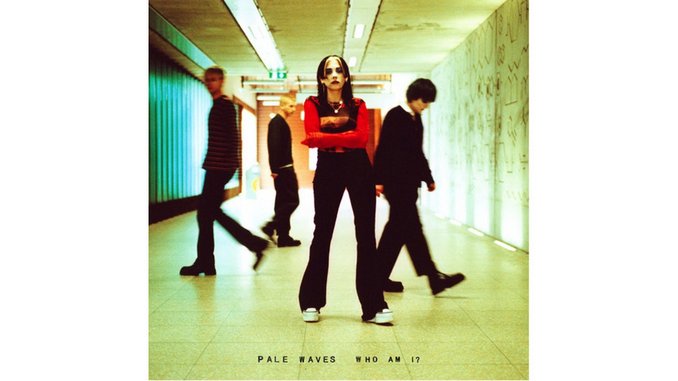
Pale Waves from the band’s very beginning. They had the dark, brooding look of an ‘80s goth act, but a discography full of danceable pop hits. Even while receiving acclaim as the NME Under The Radar Award winner before their debut album’s release, they caught heat from critics for sounding too much like other indie-pop artists. With all of the discourse on the individuality of Pale Waves (or lack thereof), their second album “Who Am I?” amplifies the qualities that caused fans to label them as the next big thing
Pale Waves are looking forward to calmer waters in 2021. Last year promised so much—the release of their sophomore album and an ensuing world tour, for one thing—but amid the COVID-19 pandemic, the UK indie rock band found their usually steady boat rocked by rough seas.
A near-deadly tour bus crash last March wasn’t the only life-altering event that they endured (drummer Ciára Doran, lead guitarist Hugo Silvani, and bassist Charlie Wood were lucky to escape with their lives). Self-identity struggles plagued Doran and lead singer Heather Baron-Gracie, and the usually tight-knit duo found themselves butting heads over their next album’s musical direction. Add in a life-threatening virus that completely changed how records are produced, and the physical and mental impact of numerous setbacks was taking their toll.
And yet, hope sprung eternal. The pandemic’s arrival allowed Doran, Silvani, and Wood to recover from their injuries. For Baron-Gracie, the global shutdown provided the opportunity for some long-overdue self reflection—a period that has not only led to Pale Waves’ frontwoman being more open about her sexuality and inner demons, but one that lit a creative fire.
Born out of that soul-searching is “Who Am I?”,Pale Waves’ second LP that is equal parts post-grunge and pop-rock, a middle finger to societal labels and a haven for anyone who feels lost or alone. Speaking to us over Zoom, Baron-Gracie revealed the unusual influences behind the album, discussed comparisons to The 1975, and shared why the foursome are closer than they’ve ever been.
Pale Waves excels at making the personal feel relatable on “Run To” and “Tomorrow.” While “Run To” is told from Baron-Gracie’s perspective and “Tomorrow” is a collection of stories from others, both songs take an optimistic view of the growing pains that arrive with coming of age as an outcast. With catchy and relatable one-liners like “sexuality isn’t a choice” and “everything is going well / except my mental health,” the band reaches through their past of stifling small towns and feelings of hopelessness to uplift fans who know their feelings all too well.
“Who Am I?” opens with “Change,” a track that trades the ‘80s glam synths of Pale Waves’ debut album My Mind Makes Noises in for a ‘90s-inspired acoustic guitar. The switch-up is perfect for frontwoman Heather Baron-Gracie’s vocal prowess, with the singer’s voice landing somewhere between the pop-with-an-attitude of Avril Lavigne and the raw emotion of The Cranberries’ Dolores O’Riordan. This isn’t to say Pale Waves floats by on the nostalgia factor alone—the band translates their many inspirations into their own brand of indie pop that feels perfectly fit for 2021, with their lyrics bouncing between relationships, identity and mental health. On an album centered around a question of identity, the band is at their strongest when shouting out the answer. Few songs on the record compare to “You Don’t Own Me” in terms of pure anthemic pop-rock, as Baron-Gracie defiantly asserts, “You don’t own me / and I’ll do whatever I want to” in the face of everyday misogyny.
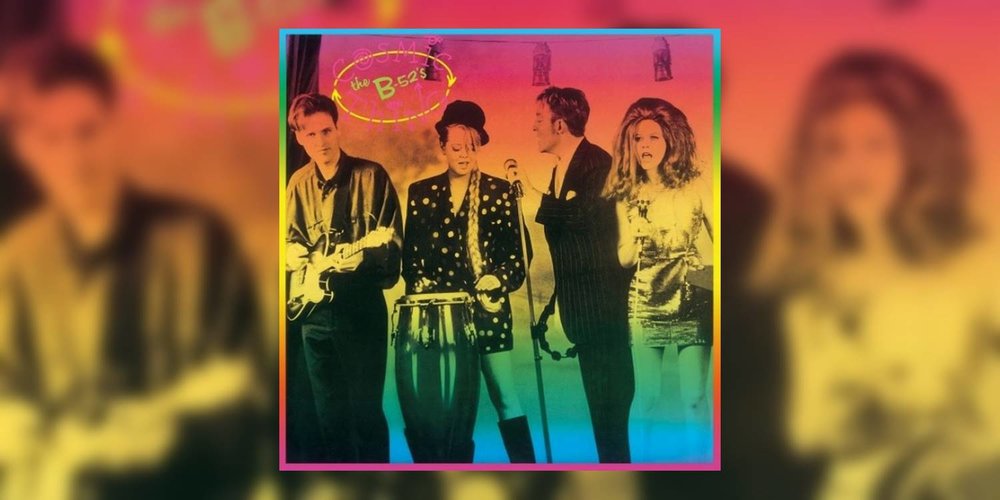
“Cosmic Thing” is the fifth studio album by American new wave band the B-52’s, released in 1989. It contains the singles ” Love Shack ” and ” Roam “. The success of the album served as a comeback after the death of guitarist Ricky Wilson in 1985. Once The B-52’s released their underrated fourth LP Bouncing Off The Satellites in the wake of the death of guitarist Ricky Wilson, the impact of losing such a key member on the frontlines of the AIDS epidemic made it difficult to think about recording new music. For a moment, “She Brakes For Rainbows” seemed like the last song we’d ever hear from the Athens, GA new wave heroes.
“After Ricky died, we felt that the band was finished,” admits Keith Strickland, who co-wrote “Rainbows” with Wilson and also took over his major role in the band as lead guitarist. “We couldn’t imagine going on without him.”
“When Ricky died, it was very uncertain if we would continue or if we could continue,” remembers Kate Pierson, who along with Ricky’s sister Cindy Wilson comprises the iconic vocal harmonies of the band. “We all just withdrew into our own worlds for a little while and then we began communicating again. So during that time Keith moved upstate and I also bought a house up here as well. We were neighbours across the pond.” Strickland, who was living in Manhattan at the time (as was singer Fred Schneider and Wilson and her husband), felt a need to relocate from his citified surroundings. And just as such greats as Bob Dylan and Sonny Rollins had done in the past, he chose to head to Woodstock, long before it became the go-to transplant for Metro area expats.
“After Ricky died, I just wanted to get out of New York City,” he says. “I was also studying Buddhism and had on occasion attended teachings and events at the Karma Triyana Dharmachakra Monastery in Woodstock. I had always wanted to live in the mountains, so I thought Woodstock would be an excellent place for me to live.”
As it turned out, Strickland was on to something. The town of Woodstock has long been a rustic getaway residence for such music icons as Bob Dylan, Todd Rundgren, Paul Butterfield and Jack DeJohnette. And for one of the B-52’s chief songwriters, who just lost the Lennon to his McCartney, living in such a holistic habitat indeed opened up his creative pores in short order, creating the roots of what would become Cosmic Thing, released 30 years ago on June 27th, 1989.
“I moved to Woodstock in the summer of 1986 and rented a little cabin on a pond off Wittenberg Road that was covered with lily pads and abundant with wildlife,” explains Strickland. “It was idyllic and very healing. I wrote the instrumental portion of the songs. I would record a multi-track of music, and Kate, Fred and Cindy would improvise over it, and together, we would arrange their lyrics and melodies with the music. I remember starting the track for ‘June Bug’ with wildlife sounds that I’d recorded on the pond.”
“Keith is a very underrated musician,” Schneider comments . “The music he brought us for Cosmic Thing, we thought, was brilliant and inspiring. There was some trepidation about doing another record, but once we heard the music and got to jamming, everything fell into place really quickly.”
Pierson also moved to Woodstock, The singer also saw it as a place of catharsis in the wake of Ricky Wilson’s death.
“For Keith and me, it was a sense of peace we found up here,” she reveals. “Just being in this small town, it was the same as it was in Athens. They both have a similar spirit in that it’s very liberal and there’s a lot of interesting musicians who live here. Being in the country while working on Cosmic Thing gave us the easy going, porch swing life we had in Athens that we needed to make these songs.”
The songs on Cosmic Thing were a slight move away from the band’s previous four albums which had been perceived as more underground “new wave.” Their 1979 eponymous debut album was a hit, particularly in Australia where it achieved the number 3 spot on the charts along with all three singles achieving similar success. Both “Rock Lobster” and “Planet Claire” have become some of music’s most legendary songs in their own right and have also gone on to forever be synonymous with the band and the new wave era they epitomized throughout the ‘80s.
The band’s following three albums did moderately well, with many claiming that their sophomore LP Wild Planet (1980) is their best. Whammy! (1983) and Bouncing Off The Satellites (1986) did not go on to achieve the same success as the previous two and maybe because of this, the band felt the need in the making of the latter album to write separately and switch up instruments (Keith Strickland moved from drums to guitar and keyboard).
Eventually all four surviving members of the B-52’s would agree to find an apt studio location to begin fleshing out the cache of songs that would become Cosmic Thing. They chose two distinct locations: Sigma Sound Studios in New York City, where they would cut the majority of the material with Nile Rodgers of Chic. But for four songs, they went to Dreamland Studios in West Hurley, a little town in northern Ulster County not too far from Woodstock, and record with Don Was, who came in almost immediately on the back of his work on Bonnie Raitt’s Grammy-winning classic Nick of Time.
“I remember working on Cosmic Thing like I remember summer camp when I was a kid,” said Don Was . “I had just wrapped Nick of Time and headed to New York. And here I was at Dreamland, I remember sitting out back there at night. The nights were beautiful, and you could hear all the crickets. It was lovely, man. I don’t remember any stress. I recall driving one night we saw the Northern Lights at a Zen monastary up on a mountain. I remember it as a very moving and warm experience up there.”
“I remember one night up at the studio, we had a UFO sighting,” adds Wilson. “Fred and I were standing in the front yard and saw this light in the sky that was shaking and twirling around and around, kind of like in a unity pattern and jumping all around. We could not figure out what it was, but it stuck around for a little while and then left.”
“Dreamland turned out to be the perfect studio for us,” recalls Strickland. “The big room sounds great. I remember when we were recording ‘Love Shack,’ a lightning storm knocked out the electricity in the middle of the song during the bass breakdown. So we took a dinner break, went to the Gypsy Wolf Mexican Restaurant in Woodstock. Then returned to the studio and listened to the last take, and realized how good it sounded, so we quickly went for another take and spliced to the two together.”
“I remember Don Was sitting in the kitchen and we all sat around the kitchen table and listened to cassettes on a portable cassette player,” adds Pierson. “Then we’d go and drive around in the car and listen on the car stereo, because that’s the way most people were listening to music at the time.”
The region would continue to serve as a harbinger of healing and salvation for the band when they found the location for what would trump “Rock Lobster” as the singular hit of their careers. The “Love Shack” was indeed a little ole place nestled in the deep woods of Plattekill, NY, in southern Ulster County, where their unwitting local fans had no idea some MTV video history was going down inside a wildly designed, multi-coloured house owned by ceramic artists Phillip Maberry and Scott Walker.
“Our friend Tommy and the famous hairdresser Danilo, they told us when they heard the song ‘Love Shack’ and we were gonna do a video they said ‘Oh my God, you have to do the video in this house. It literally is the Love Shack,” Pierson recalls. “So I went to the director and told him we have to shoot at this house. I had gone up there though I didn’t know Phillip and Scott lived in this house, which was a literal shack. And they had the checkerboard roof, and two goats named Kate and Cindy. There was an amazing garden and it was in this sorta grotto with stone all around.”
“It was actually already painted in those bright and fanciful colours,” Strickland remembers. “We invited friends from the city to join us. It was a beautiful summer’s day in the Hudson Valley.”
“It was a perfect place to film,” adds Wilson. “It was a glorious day, and all the colours in the house all popped. It was amazing.” “We all loved it, but the director wanted to do it in a studio in New York, not have to schlep upstate,” Pierson explains. “But once they saw it, they were like, ‘Oh yes, this is it.’ So they made these signs that say ‘Stay Away Fools’ and ‘Love Rules’ and put the goats in the video. And we invited all our friends and had a party. The video was just one big party. We started out really early in the morning and it turned into this rave. RuPaul got the dance line going, and it almost felt like we weren’t being videotaped.”
“It was indeed a party,” Strickland agrees. “We wanted to recreate the Soul Train dance line, but the video director didn’t get the process. So RuPaul, who was there, directed that scene.”
“It was great having RuPaul in it,” adds Schneider in regards to the drag legend’s public debut on the set of the video. “I had met him years before on the 14th St. bus. But the police, however, didn’t like us up there.” And given just how ubiquitous “Love Shack” remains 30 years later, especially as a wedding standard as essential to the night as the “Chicken Dance,” it’s hard to believe the song almost didn’t make the finished album.
“We finished all the songs we had to do a day early, so we had this extra day to do something,” remembers Was. “So they said, ‘We have this other thing, but its 15 minutes long and we haven’t figured it out.’ I remember sitting on the steps outside the studio and thinking about this thing they were improvising about a love shack and going, ‘Well maybe that’s the chorus.'”
“I remember how ‘Love Shack’ wasn’t put together yet, and Don said how it needed a chorus,” interjects Pierson. “It wasn’t even gonna make the album because it wasn’t solidified. But after we added that chorus, Bingo, here it is; it sounds like a hit. But we didn’t aim to write hits, we aimed to heal ourselves and channel Ricky’s spirit. That was the goal, and I knew his presence was there.”
“So we started rearranging the lyrics like a puzzle, and we were able to get it down to three and a half minutes with a chorus and some semblance of a plot line and cut it,” explains Was. “The first take was killer except when we got to the tin roof rusted part. Cindy started with this exuberance that shocked everybody. I don’t know what that line means; I don’t think anybody knew what that line means (laughs). But she infused it with so much feeling, it threw everybody. I think she even choked up at the end of the line. It was really deep, and we tried to do it over and over and we couldn’t get the feeling we had in that first take. It took me all night to figure it out before I realized everything should be punched in right after the tin roof rusted line, because we never got that thing back again, that manic energy.”
“We had a hard time selling ‘Love Shack’ at first,” admits Schneider. “I remember our A&R guy taking me around while Kate and Cindy would do soundcheck and we would go to radio stations basically to beg them to play the song. Even the record company thought it was too weird. I thought it was the most accessible thing we had done. College radio embraced it immediately, but mainstream wouldn’t touch it until they saw how well it was doing. We went to No. 1 in several markets, though in America we were beat out by Milli Vanilli and Paula Abdul, both of whom were accused of not singing on their hit songs!”
It’s a wonder to look back on the roots of Cosmic Thing on its 30th anniversary, commemorated with the release of a deluxe edition of the album by Rhino Records that includes a killer live show from The Woodlands, TX, in 1990 as the bonus disc (along with an expanded version of the classic LP that includes remixes of the album’s triad of hits in “Love Shack,” “Channel Z” and “Roam”). It might not be as ubiquitous to the Woodstock region as, say, The Band’s Music From Big Pink, Bob Dylan’s The Basement Tapes orThe Muddy Waters Woodstock Album, but the catharsis experienced during the creation of Cosmic Thing couldn’t have been achieved anywhere else.
“Cosmic Thing wasn’t a plan to do this big comeback for Ricky,” Pierson explains. “It really was a healing thing. It was about doing it together as a means to heal, because after Ricky died we have this amazing, precious thing that was each other still. So we figured let’s get together and try this again. And the vibe of being at Dreamland in Ulster County to record this album was magic.
Francis Of Delirium are a duo out of Luxembourg matching Jana Bahrich, a 19-year-old Vancouver native, with the significantly older drummer and producer Chris Hewett, who hails from Seattle. They’re dropping their new EP “Wading” in April on Dalliance Recordings, which has released music from the likes of Gia Margaret and Common Holly. It’s preceded today by “Let It All Go,” a talky and anthemic multi-segmented track that climaxes with Bahrich repeatedly yelling, “Aren’t you tired of being alone?!”
Francis Of Delirium is the product of an unlikely collaboration: Vocalist Jana Bahrich is a 19-year-old from Vancouver, drummer Chris Hewett is almost 30 years older and from Seattle, but the two met and teamed up in Luxembourg, of all places. Together, they’ve made spiky, grunge-inflected indie rock on Wading, a sophomore EP released this past spring. But the band is already changing, still in the early stages of crafting their sound: More recent singles “Come Out And Play” and “All Love” leaned in a more atmospheric, shoegaze-oriented direction, and they were the best songs Francis have released yet.
With an accompanying claymation-filled music video. “Let It All Go” unfurls with an energy on the brink of self-detonation. It’s a steamy, cathartic breakup song drawing on classic indie rock and emo, marked by Bahrich’s exasperated spoken vocals and climaxing with violently euphoric yelps of “Aren’t you tired of being alone?” Instead of shying away from the ugliness of relationships, it displays it shamelessly, while also lending self-forgiveness. Bahrich says the new single “feels like this vertigo, justifying and grappling and releasing.
This week Cherry Glazerr (the Los Angeles-based band led by Clementine Creevy) shared a new song titled “Big Bang.” It marks their first music release of 2021, and is out now on Secretly Canadian Records. Cherry Glazerr shared their first new music of 2021 with a single titled “Big Bang.” inspired by lead singer Clementine Creevy’s time spent listening to DJ Koze, Caribou, Yaeji and Kaytranada. The bass-heavy, atmospheric track is marked by Creevy’s silky vocals and fits of endlessly catchy pop. “I wanted to give it a sort of early ‘aughts pop production feel, with the interplay between the acoustic guitar figure and the bass synth and the 808 hits during the choruses,” Creevy says. “The lyrics came from feeling like I was growing apart from someone who was close to me in my life, and the song is essentially about heartache, but it’s euphoric at the same time. That’s what I like about it — the intensity of those very personal feelings paired with a sort of huge, exposed energy. I feel like I was able to let a lot out with this song. It feels really special to me.”
Creevy speaks about the song in a press release: “Some songs take on a lot of forms until they finally end up the way they do and this was one definitely one of those. It lived a few different lives for sure, I just kept changing up the rhythms until I was like, ‘oh yeah that’s it right there!’”
She adds: “I wanted to give it a sort of early ‘aughts pop production feel, with the interplay between the acoustic guitar figure and the bass synth and the 808 hits during the choruses. The lyrics came from feeling like I was growing apart from someone who was close to me in my life, and the song is essentially about heartache, but it’s euphoric at the same time. That’s what I like about it the intensity of those very personal feelings paired with a sort of huge, exposed energy. I feel like I was able to let a lot out with this song. It feels really special to me.”
The band released a new song titled “Rabbit Hole” in December of last year. Their most recent album, Stuffed & Ready, came out in 2017 on Secretly Canadian.
This week Ryley Walker announced a new album, sharing a song from it titled “Rang Dizzy.” The upcoming album, “Course in Fable”, will be out on April 2nd via Walker’s own Husky Pants label.
“Rang Dizzy” is made up of such poetic lines as: “I extend my hand to all probable possibilities/That I may be baptized in seltzer from glaciers” and “As the cherry water runs down my spine/I recall coupon codes from minimum wage jobs/Unionized by labor kept in sheep skin/Saving up for tires that light up when you drive them.”
“Rang Dizzy,” is a free-flowing tune that incorporates some jazz influence into the mix. Like the album as a whole, the song was produced by Tortoise’s John McEntire.
As Walker noted, he doesn’t have any fancy new press photos for this album cycle yet, as he tweeted, “i didn’t have time to go to the woods or an alley to take press photos of me looking away from the camera cause I’m packing records. this is all I got.”
Walker’s most recent original solo album was Deafman Glance, which came out in 2018 on Dead Oceans. Later that year, he also released The Lillywhite Sessions, a cover album of an unreleased 2001 Dave Matthews Band album. Also that year, he and Charles Rumback collaborated on the album Little Common Twist. Now, he’s soon to be back with another solo record: Walker has announced Course In Fable, which is set to come out on April 3rd via his own Husky Pants Records.
Releases April 3rd, 2021
Ryley Walker- Guitar/Vocals Andrew Scott Young – Bass/Piano Bill MacKay – Guitar/Piano Ryan Jewell – Drums/Percussion John McEntire – Engineer/Mixing/Synth/Keys/Vibraphone Douglas Jenkins – String Arrangements/Cello Nancy Ives – Cello
“And It’s Still Alright” is out now Listen to “Redemption” written for and featured in the upcoming film “Palmer”. Singer Songwriter Nathaniel Rateliff’s end-credits song, “Redemption,” is garnering awards buzz for as the race for best original song continues.
Says Rateliff, “For me, the song is about what I saw in the film, and what I see out there in the world, of continuing to struggle until we find some kind of peace and some kind of answer. It’s about hope and connection. At the end of the song, there’s the line ‘we keep running until we learn to find peace’.” Rateliff says. He drew inspiration for “Redemption” through finding familiarity with the film’s protagonist, Eddie.
Growing up in rural Missouri, Rateliff saw “good people trying to move away from bad situations and trying to get ahead, and stumbling when they try to move forward.”
Timberlake had conversations with Rateliff over the phone to convey to him the essence of the story. The song’s title was born out of one of those conversations, where Timberlake described a “redemptive” courtroom scene, with the wording becoming etched in Rateliff’s mind.
To build the track, Rateliff says he started with a guitar and then layered his voice and added drums. He reached out to a singing group of three sisters he’d met when asked to perform at a Black Lives Matter rally in Englewood, Colorado. He also enlisted some of his band members in his group, the Night Sweats, to add claps and other percussion.
Synopsis for the film: After 12 years in prison, former high school football star Eddie Palmer returns home to put his life back together—and forms an unlikely bond with Sam, an outcast boy from a troubled home. But then, Eddie’s past threatens to ruin his new life and family.
Palmer is directed by Academy Award winner Fisher Stevens (Stand Up Guys, Before the Flood) from a script by Cheryl Guerriero . The film stars Justin Timberlake (The Social Network, Alpha Dog), Juno Temple (Atonement, “Ted Lasso”), Alisha Wainwright (“Raising Dion,” “Shadowhunters”),
“Redemption” Written and performed by Nathaniel Rateliff .
Buck Meek released a video for “Halo Light” this week. The video was filmed during the recording sessions for “Two Saviors” in the New Orleans Victorian house called Wonderland where the album was laid to tape. It’s the same take of the song as appears on the record and features Adam Brisbin (guitar), Austin Vaughn (drums), and Mat Davidson (guitar/pedal steel/bass). The video was shot and directed by Riley Engemoen and edited by Alex Winker (fellow Austinites!).
Some words from Buck about the song: “I wrote Halo Light in two seasons – first as a healing process to accept loss as the seed of new growth – then, by a long string of coincidences, I ended up at Joni Mitchell’s home on New Year’s Eve, at a party filled with her old friends, all standing around the piano singing,” says Buck. “She held court in the centre of the room in an easy chair, like an ascended master, speaking with people one at a time with absolute presence. I remember her eyes being purple. I spoke with her briefly at the end of the party, and was struck so deeply by how the ephemerality of the human body and soul can manifest a collection of work for others to reflect upon and live through for generations to come, expanding outward. I wrote the chorus and finished the song that night when I returned home.”
“While the Big Thief guitarist’s solo work makes more room for American country music than his main band, it offers much of the same warmth and whispery intimacy.” – Pitchfork
“A gentle, charming country-folk treasure from a songwriter and guitarist of real pedigree.” – Guitar Magazine
Guitar performed by Buck Meek and Adam Brisbin Drums performed by Austin Vaughn Pedal Steel and Bass performed by Mat Davidson Produced and Engineered by Andrew Sarlo
Cory’s first solo, ‘The Unborn Capitalist From Limbo’, was an intense affair, a grand experiment that produced inspiring, unconventional music – but this time around, he wanted to breathe a bit easier, to feel that breath in the music as well. So he and his band drove out to the desert to record in a low stress environment: Brian Harris’ Cactopia, a house surrounded by 6ft tall sculptural psychotropic cacti. They built a studio inside and then they made music and lived off pots of coffee and chili and cases of Miller High Life as they played guitars, bass, keyboards and drums in what seemed increasingly like a living biomech, their tech made out of fungal networks and cacti needles.
Waiting placidly for end of days, a rictus grin flashing winningly as he summons strength for the already-in-progress epic clash, Cory Hanson delivers a new music video for Pale Horse Rider. The third single/title track from the forthcoming album ascends to climactic heights (both within itself and in the context of the larger record coming into view) via majestic country gospel-inflections and ambient steel guitar, swelling to a repeated chorus radiating with cries of catharsis from our Cory. Like the two before it, this new song is insanely amazing! The “Pale Horse Rider” video pairs sumptuous sunny California imagery to lyrics anointing the arrival of mass destruction while Cory acts as demonic guide to the future wasteland, skipping about the scene impishly. The stakes are high – and driven calmly through the heart of the matter. Out with the old, in with the new age.
Watch the title track today, but heed the note below –Pale Horse Rider is still approaching, but has slid back in time slightly, to allow for end-of-eon-type delays and adjustments. All the better to allow you to obsess on these advance singles! : The digital release date has moved to April 16th. Physical orders will be delayed, with a new ship date of May 21st.
It was loose and flowed onto tape well. Recorded by Robbie Cody and Zac Hernandez (who assisted on Wand’s ‘Laughing Matter’), the sounds were great from the get-go. First takes were mostly best takes. Fuelled with DNA lifted from country-rock cut with native psych and prog strands, Cory guided his craft toward the cosmic side of the highway, a benevolent alien in ambient fields hazy with heat and synths, early morning fog and space echo spreading the harmonies wide.
‘Pale Horse Rider’’ got a lot to get out of its mind, looking around and seeing that, on the surface, things don’t always look like much. A lifelong Californian, Cory’s naturally found himself standing to the left of most of the country. The west may be only what you make it; these days, the roadside view looks exceptionally sunbleached and left behind. ‘Pale Horse Rider’ eyes the city, the country and the fragile environment that holds them both in its hands – a record as much about Los Angeles as it can be with its back to the town and the sun in its eyes; as much about nostalgia as new music can be with the apocalypse over the next rise.
Cory’s adroit ability to flip through the gains and losses of any given moment with a simple line or two is given delicate bloom on the latest single “Bird of Paradise.” An ominous fever dream of opaque moral lessons (a la Bobbie Gentry’s “Refractions”), “Bird of Paradise” is a flowing ballad sparked from within by bubbling guitar arpeggios, glittering electric keyboards and arcs of steel guitar like falling stars shooting through the night sky. Moods of estrangement and desire play out delicately in the shadowy grid of a deserted urban landscape.
On ‘Pale Horse Rider’, Cory Hanson moves ceaselessly forward. The old myths weave and waft, the shadows of tombstones flickering in the mirages and the light that lies dead ahead.
Title track from “Pale Horse Rider,” to be released on LP/Cassette/CD/Streaming on March 12th, 2021, from Drag City Records.
Mo Troper’s recording and production methods skew DIY—a fitting approach given his musical influences. “I was sort of just working with what was available to me, which wasn’t a lot,” Troper says of his experience crafting this album “I don’t actually have a drum kit or a guitar amp right now, so I knew I was going to have to rely on, like, Apple Loops and GarageBand presets. I suppose I was trying to go for something like the Lightning Seeds, or anything else from that strange era of British music where indie pop and shoegaze sort of overlapped. I was also listening a lot to the Tokyo-based songwriter Yokosawa Shunichiro’s newest album, Zettai Daijoubu, which is really ornate, artful bedroom pop.”
“I don’t have any impressive synthesizers or anything,” he adds, “so a lot of the sounds are actually sampled from old video game music. There’s a kick drum taken from Super Mario RPG and one of the arpeggiators samples a specific noise from Yoshi’s Island.”
All proceeds go to Defense Fund PDX, a support group that prioritizes marginalized people in jail and Portland’s houseless population, It’s Mo doing the Beatles. Take my money, no questions asked. Please do Abbey Road.
Mo Troper: vocals, guitars, bass, keys, drums, programming
Tyler Blue Broderick: vocals on “Yellow Submarine”
recorded and mixed by Mo Troper at home in late 2019/early 2020
all songs written by Lennon-Mccartney, with the exceptions of “Love You To,” “Taxman” and “I Want To Tell You,” written by George Harrison. recorded and released with permission from sony/atv music publishing and sony atv tunes llc.