Tragedy looms over The Frightnrs‘ stunning debut. Soon after this quartet from Queens, New York began recording the album, their singer, Dan Klein received a fatal diagnosis: ALS. Less than two months before the album’s release in September, Klein died. However shattering his story, Klein left a significant legacy on ‘Nothing More To Say.’ It offers a highly informed riff on the mid-’60s Jamaican style known as rock-steady, a genre which drew heavily on American doo-wop and soul. The band’s beats mine a deep groove, while Klein sang with a strained poignancy, giving him a distinct cry. It’s a sound both urgent and fleeting. The lyrics too have double meanings, moving from love lorn odes to meditations on a life that’s been lost.
In early 1970, Jimi Hendrix sought to pen music that stretched beyond conventional rock & roll songs. “Pieces. I guess that’s what you call it,” he decribed in an interview, “Like movements. I’ve been writing some of those.” One day he grabbed his Martin acoustic guitar and recorded a 16-song suite onto some cassettes. Writing “Black Gold” on the label, he presented the tapes to drummer Mitch Mitchell to work out parts for a studio recording. Hendrix died before this could take place, and the cassettes remained in Mitchell’s possession, forgotten for two decades.
During this time, the tapes were presumed stolen and lost forever, leading to endless speculation about what they contained – if they existed at all. Hendrix rarely spoke about “Black Gold” in the press, offering only oblique references to his new creative direction. “It’s mostly cartoon material,” he said. “I make up this one cat who’s funny. He goes through all these strange scenes. You could put it to music, I guess.”
The mystery of Black Gold was partially solved in 1992 when Mitch Mitchell rediscovered the missing tapes in his English home. Six songs had been completed in the studio and issued on posthumous albums, but the other nine titles were unique to the tape. After years of legal wrangling, Hendrix’s estate has promised to deliver Black Gold at some point “this decade.” So far only one song, the opening number called “Suddenly November Morning,” has seen release.
After the release of the widely praised double LP “Neither Virtue Nor Anger” and an intense period of touring around Europe, it seemed like Sonic Jesus’ fate was set to follow an already traced path . Their hypnotic, industrial psych-drone has been transformed into a dense, synth-driven coldwave/post-punk sound.
Sonic Jesus is the Italian music project of multi-instrumentalist Tiziano Veronese. Following on from an incredibly well-received double LP and a split single with The Black Angels on Fuzz Club Records
Jellyfish’s career was all about being in the wrong place at the wrong time. Their painfully short two album span came when grunge had taken a somewhat angst-ridden hold of the nation’s sensibilities and Kurt Cobain’s cries for help were the defining noises of the era.
Against this, Jellyfish’s love of harmony and hook lines were considered desperately uncool, but both their debut album, “Bellybutton” and the glorious sophomore effort “Spilt Milk” have consequently not only stood the test of time but actively improved with it.
From the slim pickings of just two studio albums (1990’s Bellybutton and Spilt Milk from 1993) and a brief four year existence,Ominvore Records have compiled various ‘new’ releases including, in 2012, the “Live AtBogarts” set and more recently “Radio Jellyfish”(a collection of largely unreleased radio sessions). A special mention must go to the most satisfying Omnivore set for Jellyfish aficionados, the “Stack A Tracks” two-CD collection which offered up instrumental versions of both albums.
Both Bellybutton and Spilt Milk are two-CD sets and the bonus discs for each contain – more or less – the entire albums in demo form (and more). These demos are incredibly well developed and quite similar to the polished album versions. “I remember thinking we should not veer to far from the arrangements we came up with on the demos, because I thought they were really good,” reveals guitarist Jason Falkner in the excellent notes. Some of these demos actually predate even the Fan Club set with the UK CD singles for The Ghost At NumberOne (CUSCD10) and New Mistake (CUSCD11) bolstering their appeal with some of those unheard recordings.
Bellybutton grows from the original 10-tracks to 36, while Spilt Milk echoes this with 25 tracks on top of the original 12. These are presented as eight-panel style digipacks with extensive booklets which include new interviews with various band members (and producer Albhy Galuten) and also a track-by-track guide by songwriters and core members Andy Sturmer (drums/vocals) and Roger Manning Joseph Jnr (keyboards/multi-instrumentalist). In the main, these are nice looking packages
Spilt Milk is a wonderfully unpretentious homage to pop music in its essential form: catchiness and melody are the keynotes here. From the soaring ‘Joining A Fan Club’ – with typically arch lyrics on fanboy culture and harmonies cut from Queen and The Beach Boys – to the psychedelic pop doodlings of ‘Sebrina, Paste and Plato’ the band explore a range of possibilities within the pop format – and well beyond. Never less than enjoyable, nearly always exhilarating, Spilt Milk is an absolute joy.
Amber Arcades’ Annelotte De Graaf might be among the hardest working human in alternative rock. Despite pretty much never stopping touring since releasing her debut album last year, Annelotte has found some time to go back into the studio. This week Amber Arcades have shared a brand new track, “It Changes”, which is apparently lifted from a new EP, coming out later this year. That release is on top of more touring soon as support to Grandaddy .
Thankfully, on It Changes the hard-work more than pays off. It’s a slightly less-polished affair than some of AmberArcade’s previous output, the guitars just a little more rough around the edges and a bit more rocky, the vocal a bit less dreamy and a bit more out there, it works beautifully. What it still does possess, as almost all AmberArcades tracks do, is a stunning chorus, an easy bouncing rhythm, Annelotte simply repeats, “it changes, it changes“, but somehow stumbles upon a melody that just won’t leave your head. Discussing the track Annelotte notes, “I always try to aim for constancy and stability but things always get messier than I foresaw. And hey maybe that’s actually what makes it worthwhile”. The music is anything but, just perfect glistening pop from a star in the making.
Amber Arcades UK tour soon, including dates with Grandaddy.
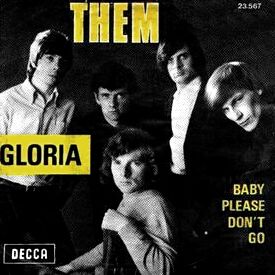
The song “Gloria” is built on just three chords that any garage band can play and that almost every garage band has. Yet the list of artists who have covered this tune include many bands Jimi Hendrix, the Doors, Patti Smith, Tom Petty, David Bowie, R.E.M., Iggy Pop, U2, Bruce Springsteen, Elvis Costello..even. Bill Murray strapped on a guitar and played it at Eric Clapton’s Crossroads Festival, the Grateful Dead used to jam on it, and it might be the only song that Jon Bon Jovi and Johnny Thunders have in common.
How has such a minimal song have had such a huge impact? Why does it still reverberate today, in arenas, at festivals, in bars and studios? And how did Gloria become such a resilient classic rock tune. Written more than fifty years ago by Van Morrison for his band Them , the story the song tells couldn’t be more archetypal: the singer (usually but not always male) knows this girl and he’s eager to tell us about her, but he doesn’t share much in the way of detail. She comes down the street, up to a room, knocks on a door, enters, makes the singer extremely happy.
She is, nearly all the time, about five feet, four inches tall (on the original demo, she was five feet). As physical descriptions go, that’s at once very specific and very incomplete. Dark-haired or light, curvy or slender, who knows? At just about midnight, she appears. There is, we can assume, something sensual about the way she moves, because the song itself slithers with an air of hypnotic mystery, those three chords (E-D-A) setting the scene.
The Shadows of Knight, version clocked in at a tidy two and a half minutes, but that was too constricting for other groups like the Hangmen, the Blues Magoos, and the Amboy Dukes, all of whom easily exceeded the five-minute mark and turned it into early psychedelic-rock classic.
On the debut studio recording by Them, Van Morrison takes the listener into his confidence, and it’s a little like bragging, He wants to tell us about his baby (on the demo, she’s his “gal”), but aside from her head-to-the-ground measurement, he doesn’t tell us much more. She makes him feel good. Also for some reason, he feels compelled to spell out her name before he says it, “G-L-O-R-I-A,” as though it were something exotic or complicated. so she does whatever she does with Van, and instead of describing what that might be, he spells her name out again. He wants to make sure we get that name right, This woman who’s about five feet, four inches, and her name is G-L-O-R-I-A.
“Gloria” was cut at Decca’s studio in West Hempstead in the summer of 1964, the first Them session. Them had been doing the song live for a while in Ireland clubs, but from all reports, they were not the most adept musicians in the studio, so the producer brought in some ringers, and here’s where the saga of “Gloria” gets a little fuzzy. It’s pretty clear from the audio evidence—compare the demo’s sluggish drumming to the finished studio version—that London’s top session drummer Bobby Graham was recruited. Graham told an interviewer for the Independent that Morrison “was really hostile as he didn’t want session men at his recordings. He calmed down but he didn’t like it.” In addition to Graham, The guitar playing was none other than Jimmy Page , Page: “It was very embarrassing on the Them sessions. With each song, another member of the band would be replaced by a session player…Talk about daggers! You’d be sitting there, wishing you hadn’t been booked.”
There’s something so compelling about the record, the rawness, the sudden startling instrumental leap midway through, Morrison’s intensity, the erotic momentum, the flurry of drums at the end. It was the sexiest thing. And it was stuck on a B-side, It was the flip side of Them’s second U.K. single “Baby Please Don’t Go” In England, “Baby Please Don’t Go” charted at numer 10. In America, it was released on Parrot Records, But it was “Gloria” that got a bit of attention, it was like that with “Gloria” it wasn’t a hit, but all around the world, local bands who discovered it found a Holy Grail. How many group rehearsals everywhere began with “Let’s try ‘Gloria’?” If you hadn’t been playing guitar for very long, this was an instant entry-level classic, and if you were playing gigs and didn’t have many songs in your live arsenal, you could stretch out on “Gloria” for a while, just keep that going. If you had a kid on Vox organ in your combo, it sounded even better.
Part of the brilliance of “Gloria” is in its vagueness and ambiguity. It feels explicit, but that’s a trick. The whole song is an ellipsis. Gloria the object of desire, someone who makes it all so easy: she comes up to your room, raps at your door (at a Bottom Line gig years ago, T Bone Burnett compared her knock to the drum beat of Al Jackson Jr. from the M.G.’s), no pining, no scheming. we don’t know if Gloria’s night ends satisfactorily.) The narrative is a sketch, but over the years, some of its interpreters have felt compelled to flesh it out. Leave it to Jim Morrison or JimiHendrix to make the goings-on considerably more graphic. It was a part of the Doors’s set since their early days on the L.A. club circuit (you can hear how the dynamics of “Gloria” got appropriated for the “Light My Fire” climax, the American Morrison went much further in his on-stage embellishments, some of which came out officially on posthumous Doors releases. He addresses Gloria directly, and sometimes there’s a predatory creepiness: “Meet me at the graveyard, meet me after school.” On one released version, he yells, “Here she is in my room, oh boy!” and for nine minutes it’s like a cautionary after-school special: her dad is at work, her mom is out shopping, and he’s giving her instruction: “Wrap your legs around my neck/Wrap your arms around my feet/Wrap your hair around my skin.” He continues “Hey, what’s your name, how old are you, where’d you go to school?” What’s her name? Is he missing the whole point of this song? here.
Not to be outdone, Jimi Hendrix, on a slamming off the cuff version with the Experience from October 1968, also asks her name she replies (he says), “It don’t make no difference anyway…You can call me Gloria.” Is she a call girl? (That would explain the midnight knocking.) A groupie? More likely. Hendrix mentions that Mitch Mitchell and Noel Redding also have “Gloria”s, and there is some kind of “scene” going on that involves the arrival of a pot dealer and, subsequently, the police. “Gloria, get off my chest,” Jimi says. “We gotta get out of here.” Meanwhile, he’s playing some amazing guitar, and Mitchell is just on fire, and the song is a long way from its beginnings with Them.
The song still belonged to Van Morrison, who has had a notoriously ambivalent relationship with some of his earlier hits, but he has almost always stuck with “Gloria” it’s on his landmark live album “Its Too Late To Stop Now”, and he’s revisited it over and over through the years, on record with John Lee Hooker, live with U2 (who not only have done Morrison’s version, but wrote their own song called “Gloria”) and Elvis Costello, on TV with Jools Holland’s big band. But in 1975, Patti Smith found a way to radically reinterpret it by incorporating it into the lead track from her debut album “Horses”. The cut is in two parts, the first part “In Excelsis Deo” starts off with a stark statement of intent “Jesus died for somebody’s sins, but not mine” and keeps building and building until Smith through a window, sees a “sweet young thing,” and she’s transfixed. It’s almost unbearably tense, the way Patti’s group coils around the melody, the rising excitement in her voice. It’s midnight (naturally: that’s when this always happens), and the woman comes up the stairs in “a pretty red dress” and knocks on the door, and you don’t even realize it, but the song is sneakily turning into Van Morrison’s: Patti asks the girl’s name. “And her name is…and her name is…and her name is…G…” you know the rest. With this performance, Patti’s done two things. She’s made a breathtaking breakthrough that’s completely new, and connected it with rock tradition (her guitarist Lenny Kaye is steeped in the era of “Gloria,” and compiled the essential garage-rock collection Nuggets). It was a tremendous cultural moment.
Nothing has been able to stop “Gloria” because the song is whatever it needs to be. It’s remained a rock staple. IggyPop has done it live (and singing “I-G-G-Y-P-O-P”), Joe Strummer’s pre-Clash band the 101’ers had it in their repertoire and so did Bon Scott’s group the Spektors, On his 1978 tour, Bruce Springsteen often would include it as part of a medley with “She’s The One” and sometimes “Not Fade Away.” R.E.M. was performing it in the eighties, and so was David Bowie, in conjunction with his own “The Jean Genie” .
Some more recent live interpretations stand out. Rickie Lee Jones starts to play it, and after about a minute and a half, it turns into a reminiscence. The band keeps on riffing on those three chords, those chords that give the singer all the freedom in the world to amplify, to comment, to reflect. “I was twelve when this song came out,” she says, “and I have never forgotten, I would never forget, that’s why I will never get old, what it felt like to me as he described this [and here she pauses] girl.” “I’m gonna shout it all night, gonna shout it every day,” the song goes, and if you were around twelve years old when it came out, as Rickie Lee was, or you were more like fifteen or sixteen, as Bruce Springsteen and Tom Petty were, that shout of ecstasy was something that made possibilities open up for you. And that’s why Springsteen (who introduced it at a 2008 show by saying “Bring it back to where it all started! Follow me boys!”) and Petty can’t stop going back to it. It probably was where it all started, in their nascent rocking days.
Tom Petty makes it almost like a prequel. It became a set-piece for him and his band the Heartbreakers in the late nineties, played the song several times on his Highway Companion Tour in 2006, and he closed most of the shows with it during his twenty-night run at The Fillmore Auditorium in San Francisco in 1997. Up to this century, and there are versions floating around, from German TV, from Bonnaroo, where he unspools a story about walking on an uptown street and approaching this woman: “Don’t walk so fast,” he tells her. “I’m a true believer and I loved you at first sight.” She spurns him, she bolts (in one version, she tells him he smells like marijuana), and he’s getting nowhere.
Like Springsteen in the song “Rosalita” he plays the only card he has. “I got this little rock and roll band,” he says. “Things are going good.” We don’t know what happens, ultimately, except this: all he wants to know is her name, this tiny shred of information. And suddenly, he hears it. Not from her, but from the wind. The wind began to sing her name. At this point, Petty’s audience knows what its part is, and the band has been patiently waiting for this eruptive moment, and like a huge gust of wind, the name rises up from the crowd, louder and louder: “Gloria!” Because even five decades after she first appeared, there’s no one anywhere who doesn’t know who she is, and the power she has.
After her soundcheck Tess Parks hung out on some steps outside the club to film a Jammed Tapes session where she played her own slowed down rendition of the classic Van Morrison song “Gloria”. Her coarse vocals combined with the familiar, yet sparse chord progressions added new depth to the rock and roll standard, turning it into an atmospheric, brooding piece whose temperature kept rising until the timely arrival of a fire truck on the street . After the session was recorded she went back into the venue where she played her set with her new backing band which features members of TheeMVP’s .
If anyone became worried about Ryan Adams and his broken heart following his acrimonios divorce from Mandy Moore, they won’t find much peace after listening to the new album “Prisoner”. From the opening track and lead single, “Do You Still Love Me?,”Adams sets the stage for an album full of heartbreak and confusion, frustration and uncertainty and plenty of questions, with the first being, quite simply, “Do you still love me?”
Though he may never get a clear answer to that question and others, Prisoneris far from a hopeless album. Sure, on a song like “Shiver and Shake,” he sings the heart jerking lyrics, “I miss you so much, I shiver and I shake / I’ve been waiting here like a dog at the door / You used to throw me scraps / You don’t do it anymore,” but then on “Doomsday” he stands up and admits, “My love, we can do better than this / My love, how can you complicate a kiss.” Somehow, in the midst of such significantly personal and affecting lyrics, Adams manages to display a type of confidence one can only find after picking up the remains of a destroyed heart and shaking it off.
Beyond the heartache, though, Prisoneris soaked in reverb and chorus, radiating the best of the ’80s at nearly every turn. Fans and critics alike are quick to point out the undeniable comparisons of Adams’ vocals and the record’s production quality to the likes of Petty or Springsteen, and nowhere is that more obvious than on “HauntedHouse” and “We Disappear.” When either track starts, close your eyes and you’ll swear you’re listening to a never-before-heard Springsteen outtake.
This ’80s-drenched sound shouldn’t come as much of a shock to fans of Adams; from a production perspective, Prisoner will soon be viewed as a companion piece and ultimately, a fulfillment, to his 2014 album “Ryan Adams”. In fact, as far as Adams is concerned, he’s finally perfected the sound for which he’s long been looking .
Throughout the new disc, Adams is at his best and his most brutally honest. Though he may not always find answers to the questions he asks, he manages to dust off his heart, toss it on his sleeve, and continue playing the part of a prisoner in love. Whether fans are drawn to Prisonerbecause of the pristine sound or the wide-open, unobstructed look inside the singer’s heart—or both—they’ll be greeted with a quintessential Ryan Adams record from start to finish.
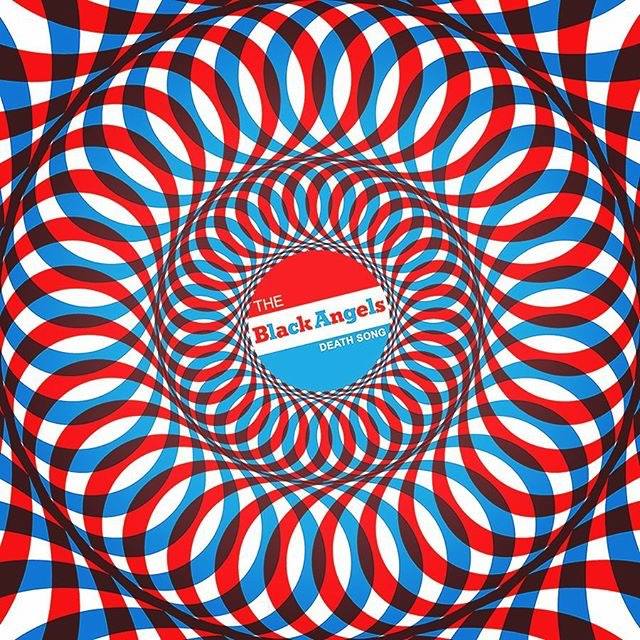
The Black Angels are back after a four year hiatus and are now part off the acclaimed Partisan Records roster. “Death Song” will be their debut album release. Here’s some info on the album.
Written and recorded in large part during the recent election cycle, the music on ‘Death Song’ serves as part protest, part emotional catharsis in a climate dominated by division, anxiety and unease. “Currency,” a strong contender for the heaviest song the band has ever put to wax, meditates on the governing role the monetary system plays in our lives, while slow-building psychedelic earworm “Half Believing” questions the nature and confusing realities of devotion.
From Death Song – The new album from The Black Angels out April 21.
John Andrews has spent some time playing with the Brooklyn band Woods, Widowspeak and Kevin Morby as well as the psych-folk rock band Quilt. check out the track Drivers Its got a very cool sound to it. Kind of like a blend of Woods & Whitney. Anyway, I’m excited to hear some more. The “Drivers” video plays at the lyrical notion of fighting off demons with a smirk, placing The Yawns’ drummer in a devil’s costume and challenging Andrews to a lake hockey game. Bad Posture more earnestly tackles the demons of solitude with the inclusion of “Home Is Just As Good As Anyplace,”
The songs were written slowly & quietly throughout the winter, usually late at night next to the wood stove for warmth. It was recorded in his barn with the doors ajar, welcoming the springtime. The humble recording gear invites the outside noises in. You can hear the crickets chirping with the occasional truck driving by. The songs themselves lend their hand like slow backwoods Beatles demos covered in a thin blanket of tape hiss. John’s voice lulls us in an earthy calmness as he sits hunched like a scarecrow over the piano.
Bad Posture, his upcoming second album on Woodsist Records, seems to finally emphasize the ‘home’ in his home-recorded music in comparison, written “slowly & quietly throughout the winter” near a wood stove in Andrews’ New Hampshire farmhouse. When it came time to record in the spring, Andrews maintained his pastoral songwriting approach; the barn doors were kept ajar to allow the crickets and “occasional truck driving by” a chance to sing backup.