Melbourne musician Batts (aka Tanya Batt) has just released her brand new single “For Now”. The track is a slight change of direction for Batts who has been very electronically influenced in recent years but “For Now” is more acoustically driven with an ambient slant you’d expect from artists like Bon Iver or Daughter. Formerly focusing on Electronic Trip-Hop with producer Ficci, BATTS has branched off on her own and has made the transition back to her roots. Inspired mostly by folk artists, Batts has reinvented her sound with her newest single ‘For Now’ which explores multiple genres combined with the inspiration from space, creating a spacey dream pop vibe.
We really love everything Batts does and this is one of our favourite tracks yet mixed by Hayden Calnin
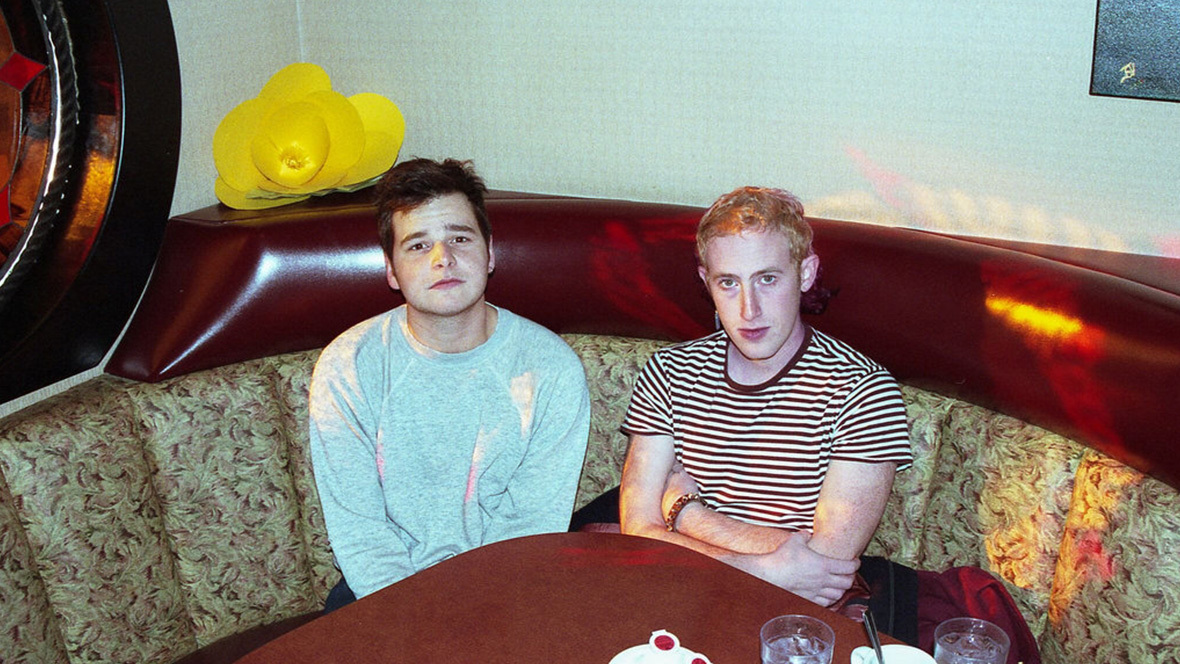
Portland DIY figures Little Star ,comprised of Julian Morris and Dan Byers, are returning next month with their sophomore, self-titled album. It’s said to depict the complicated melancholy of antidepressants—and somewhat depressingly, it’s clear in their music that this is one of the most relatable modern subject matters a musician could pursue.
“I find new ways to feel like I have something to offer,” Byers chirps on their new single “Calming Ritual #1” in a falsetto that feels almost satirical over the heart-sinking grunge guitars. In a press release, Byers explained his approach: “Some of my songs are meant to be hopeful and encouraging to people who struggle with that particular dilemma.” “Calming Ritual #1” sonically reflects its themes, with a serenely non-pretentious palette of guitar, bass, drums, and vocals. Byers speaks his defeated, yet optimistic truth over shuffling, Ringo-esque drumming that immediately tempers our appetite for the rest of the LP.
Cameron Avery is best known as bassist of Australian psych-rockers Tame Impala, as well as frontman of fellow Australian band The Growl. Over the last few years he’s been building up his very own solo career, doing some opening performances under his own name, including support for The Last Shadow Puppets tour last year .
On March 10th, Avery released his debut solo album “Ripe Dreams, Pipe Dreams” via Anti Records . He celebrated the release of the album one day early with a performance at Baby’s All Right in Brooklyn. The show actually almost didn’t happen, as Avery got held up at the airport until nearly 6pm due to an issue with U.S. customs (something that will sadly probably become a problem for many artists in the next four years). Thankfully, he made it work, and the show went on.
The lineup of his band had changed quite a bit since the last time I saw him, as his band The Growl had joined him to bring his songs to life. Avery expanded the setlist by included a few of The Growl’s songs (“Douse The Lamps” and “John the Revelator”) along with the soulful songs off his record. It was a nice mix that added a little bit of power to the show, and let his band enter their comfort zone for just a moment.
The show was nearly sold out, and based on the crossover appeal from Tame Impala and The Last Shadow Puppets, and the fact that he’s writing some really good songs, it’s only a matter of time until he breaks out on his own. There’s also the undeniable fact that the women at this show were loving him, making it clear that his fan base will be growing in no time at all.
On May 5th, Mike Hadreas’ aka Perfume Genius returns with a new album called “No Shape”. The album is Hadreas’ first since Too Bright in 2014. The album’s announcement was accompanied by the release of a music video for the first single, “Slip Away”.
Mike Hadreas’ said of his new album:
I pay my rent. I’m approaching health. The things that are bothering me personally now are less clear, more confusing. I don’t think I really figured them out with these songs. There’s something freeing about how I don’t have it figured out. Unpacking little morsels, magnifying my discomfort, wading through buried harm, laughing at or digging in to the embarrassing drama of it all. I may never come out the other side but it’s invigorating to try and hopefully, ultimately helpful. I think a lot of them are about trying to be happy in the face of whatever bullshit I created for myself or how horrible everything and everyone is.
Ola’s Kool Kitchen is a show on KCLA 99.3 FM in Los Angeles, 107.5 andhow.FM, Rock Velvet Radio, Maximum Threshold Radio, Rock Radio UK, Sword Radio UK, 365 Radio Network, Jammerstream One, Kor Radio, and Firebrand Radio and you can hear more shows here Ola’s Kool Kitchen
Show 320
Tracklist
1. Campag Velocet-Bon Chic Bon Genre
2. Butterfly Child-Drunk on Beauty
3. Furlong-Tell Me It’s Mutual-single-self release
4. The Oceans-So Long-single-self release
5. Shadowgraphs-Scarlet Tunic-Venomous Blossoms-Golden Brown
6. The Bloods-Button Up-single-Exit Records
7. Dawn Of The Replicants-Candlefire-One Head, Two Arms, Two Legs-Eastwest
8. Callum Pitt-You’d Better Sell It While You Can-single – Kaleidoscope
9. Tilia-Black Monday-Pattern-Ambulance Recordings
10. Tim Buckley-Get On Top-Greetings From LA-Straight Records
11. Bob Dylan-All The Tired Horses-Self Portrait-Columbia
12. Alyeska-Tilt-a-Whirl-Crush-self release
13. Ed Geater-If I’m Being Honest-Unseen-Music Mandi
Ola’s Kool Kitchen is a show on KCLA 99.3 FM in Los Angeles, 107.5 andhow.FM, Rock Velvet Radio, Maximum Threshold Radio, Rock Radio UK, Sword Radio UK, 365 Radio Network, Jammerstream One, Kor Radio, and Firebrand Radio and you can hear more shows here https://hearthis.at/olaskoolkitchen/
Show Tracklist
1. Veruca Salt-Seether
2. Adventures in Stereo-Attic Walk
3. Joel Gion-Tomorrow
4. Someone In a Tree-Blankets As Shades
5. Bad Flamingo-Valley Of Fire
6. The Fleshtones-Screaming Skull
7. DMZ-Busy Man-DMZ-Bomp!
8. Retro Kid-Kool Kids-single-self release
9. Trading Alaska – WTWCCD-We Miss You-self release
10. Eddie Jefferson-Psychedelic Sally-Body and Soul-Original Jazz Classics
11. The Daughters of Eve-He Cried-single-Spectra Sound
12. Jimmy Powell-Sugar Baby Part 2-Decca
13. Breathe Owl Breathe – Followin’ Ya- Passage of Pegasus-self release
14. Kevin Morby – I Have Been to the Mountain-Singing Saw-Dead Oceans
15. The Eagle Rock Gospel Singers-Lay Down Low-single
A darkness pervades John Paul Pitts’ lyrics on “Snowdonia”, the first Surfer Blood album since the death, by cancer, of guitarist Thomas Fekete, but the overall tenor is joyful. It’s a rebooted version of the band, with Pitts and original drummer Tyler Schwarz joined by guitarist Michael McCleary and bassist Lindsey Mills—the latter two the source of the breezy harmony vocals that sweetened the arrangements.
This is a zippy power-pop record, full of crunchy riffs and ringing leads, even as Pitts sings of mortality, aging and sacrifice. Pitts stretches out with multi part song structure on the title track and shifts “Instant Doppelgangers” into high gear with some judiciously placed distortion that hearkens back to 2010’s Astro Coast. But most of Snowdonia is immediate and direct, as bright and sharply defined as the weather in the band’s native Florida. At times reminiscent of the Lilys’ Better Can’t Make Your Life Better, Snowdonia works within formulas, but it does so with aplomb.
We are very excited to announce our new album ‘Snowdonia’ will be released February 3rd on Joyful NoiseRecordings!
Chuck Berry, who with his indelible guitar licks, brash self-confidence and memorable songs about cars, girls and wild dance parties did as much as anyone to define rock ’n’ roll’s potential and attitude in its early years, died on Saturday at his home near Wentzville, Mo. He was 90 years of age.
The St. Charles County Police Department confirmed his death . The department said that it responded to a medical emergency at the home, about 45 miles west of St. Louis, and that lifesaving measures were unsuccessful.
While Elvis Presley was rock’s first pop star and teenage heartthrob, Chuck Berry was its master theorist and conceptual genius, the songwriter who understood what the kids wanted before they knew themselves. With songs like “Johnny B. Goode” and “Roll Over Beethoven,” he gave his listeners more than they knew they were getting from jukebox entertainment.
His guitar lines wired the lean twang of country and the bite of the blues into phrases with both a streamlined trajectory and a long memory. And tucked into the lighthearted, telegraphic narratives that he sang with such clear enunciation was a sly defiance, upending convention to claim the pleasures of the moment.
In “Sweet Little Sixteen,” “You Can’t Catch Me” and other songs, Berry invented rock as a music of teenage wishes fulfilled and good times (even with cops in pursuit). In “Promised Land,” “Too Much Monkey Business” and “Brown Eyed Handsome Man,” he celebrated and satirized America’s opportunities and class tensions. His rock ’n’ roll was a music of joyful lusts, laughed-off tensions and gleefully shattered icons.
Chuck Berry was already well past his teens when he wrote mid-1950s manifestoes like “Roll Over Beethoven,”“Rock and Roll Music” and “School Day.” Born Charles Edward Anderson Berry on October. 18th, 1926, in St. Louis, he grew up in a segregated, middle-class neighborhood there, soaking up gospel, blues, and rhythm and blues, along with some country music.
He spent three years in reform school after a spree of car thefts and armed robbery. He received a degree in hairdressing and cosmetology and worked for a time as a beautician; he married Themetta Suggs in 1948 and started a family. She survives him, as do four children: Ingrid Berry, Melody Eskridge, Aloha Isa Leigh Berry and Charles Berry Jr.
By the early 1950s, he was playing guitar and singing blues, pop standards and an occasional country tune with local combos. Shortly after joining Sir John’s Trio, led by the pianist Johnnie Johnson, he reshaped the group’s music and took it over.
From the Texas guitarist T-Bone Walker , Berry picked up a technique of bending two strings at once that he would rough up and turn into a rock ’n’ roll talisman, the Chuck Berry lick, which would in turn be emulated by the Rolling Stones and countless others. He also recognized the popularity of country music and added some hillbilly twang to his guitar lines. Chuck Berry’s hybrid music, along with his charisma and showmanship, drew white as well as black listeners to the Cosmopolitan Club in St. Louis.
In 1955, Berry ventured to Chicago and asked one of his idols, the bluesman Muddy Waters, about making records. Waters directed him to the label he recorded for, Chess Records, where one of the owners, LeonardChess heard the potential in Berry’s song “Ida Red.”
A variant of an old country song by the same name, “Ida Red” had a 2/4 backbeat with a hillbilly oompah, while Berry’s lyrics sketched a car chase, the narrator “motorvatin’” after an elusive girl. Chess renamed the song “Maybellene,” and in a long session on May 21, 1955, Chess and the bassist Willie Dixon got the band to punch up the rhythm.
In one of the great musical clips ever Chuck Berry plays live his 58’ hit “Johnny B. Goode” and the 64’ hit “Nadine (is that you?). the HD clips from the 1964 “TAMI Show.” Backed by the Wrecking Crew who are off screen.
“The big beat, cars and young love,” Chess Records outlined. “It was a trend, and we jumped on it.” The music was bright and clear, a hard-swinging amalgam of country and blues. More than 60 years later, it still sounds reckless and audacious.
Chuck Berry articulated every word, with precise diction and no noticeable accent, leading some listeners and concert promoters, used to a different kind of rhythm-and-blues singer, to initially think that he was white. Teenagers didn’t care; they heard a rocker who was ready to take on the world.
In Chuck Berry’s groundbreaking early songs, his guitar twangs his famous two-stringed lick. It also punches like a horn section and sasses back at his own voice. The drummer eagerly socks the backbeat, and the pianist — usually either Johnson or Lafayette Leake — hurls fistfuls of tinkling anarchy all around him.
From 1955 to 1958, Chuck Berry knocked out classic after classic. Although he was in his late 20s and early 30s, he came up with high school chronicles and plugs for the newfangled music called rock ’n’ roll. No matter how calculated songs like “School Day” or “Rock and Roll Music” may have been, they reached the Top 10, caught the early rock ’n’ roll spirit and detailed its mythology. “Johnny B. Goode,” a Top 10 hit in 1958, told the archetypal story of a rocker who could “play the guitar just like ringin’ a bell.”
Berry toured with rock revues and performed in three movies with Alan Freed: “Rock, Rock, Rock,” “Mr. Rock and Roll” and “Go, Johnny, Go.” On film and in concert, he dazzled audiences with his duck walk, a guitar-thrusting strut that involved kicking one leg forward and hopping on the other.
Through the 1950s, Mr. Berry had pop hits with his songs about rock ’n’ roll and R&B hits with less teenage-oriented material. He spun surreal tall tales that Bob Dylan and John Lennon would learn from, like “Thirty Days” and “Jo Jo Gunne.” In “Brown Eyed Handsome Man,” from 1956, he offered a barely veiled racial pride. His pithiness and humor rarely failed him. In the early 1960s, Berry’s songs inspired both California rock and the British Invasion. The Beach Boys reworked his “Sweet Little Sixteen” into “Surfin’ U.S.A.” (Mr. Berry sued them and won a songwriting credit.) The Rolling Stones released a string of Berry songs, including their first single, “Come On,” and the Beatles remade “Roll Over Beethoven” and “Rock and Roll Music.”
But by the time his music started reaching a new audience, Berry was in jail.
He had been arrested in 1959 and charged with transporting a teenage girl — who briefly worked as a hatcheck girl at Club Bandstand — across state lines for immoral purposes. He was tried twice and found guilty both times; the first verdict was overturned because of racist remarks by the judge. When he emerged from 20 months in prison in 1964, his wife had left him (they later reconciled) and his songwriting spark had diminished.
He had not totally lost his touch, though, as demonstrated by the handful of hits he had in 1964 and 1965, notably “Nadine,” “No Particular Place to Go,” “You Never Can Tell” and “Promised Land.” He appeared in the celebrated all-star 1964 concert film “The TAMI Show,” along with James Brown, the Rolling Stones, Marvin Gaye, the Beach Boys and the Supremes.
While he toured steadily through the 1960s, headlining or sharing bills with bands that grew up on his songs, his recording career stalled after he moved from Chess to Mercury Records in 1966. He remade some of his old hits and tried to reach the new hippie audience, recording “Live at the Fillmore Auditorium” with the Steve MillerBand, billed as the Steve Miller Blues Band at the time. When he returned to Chess in 1970, he recorded new songs, like “Tulane” and “Have Mercy Judge,” that flashed his old wit .
In 1972, Berry had the biggest hit of his career with “My Ding-a-Ling,” a double-entendre novelty song that was included on the album “The London Chuck Berry Sessions” (even though he recorded the song not in London but at a concert in Coventry, England). It was a million-seller and Berry’s first and only No. 1 pop single. It was also his last hit. His 1973 follow-up album, “Bio,” was poorly received; “Rockit,” released by Atlantic in 1979, did not sell. But he stayed active: He appeared as himself in a 1979 movie about 1950s rock, “American Hot Wax,” and he continued to tour constantly.
In July 1979, he performed for President Jimmy Carter at the White House. Three days later, he was sentenced to 120 days in federal prison and four years’ probation for income tax evasion.
He had further legal troubles in 1990 when the police raided his home and found 62 grams of marijuana and videotapes from a camera in the women’s room of his restaurant. In a plea bargain, he agreed to a misdemeanor count of marijuana possession, with a suspended jail sentence and two years’ probation.
By the 1980s, Berry was recognized as a rock pioneer. He never won a Grammy Award in his prime, but the Recording Academy gave him a lifetime achievement award in 1984. He was in the first group of musicians inducted into the Rock and Roll Hall of Fame in 1986.
Around his 60th birthday that year, he allowed the director Taylor Hackford to film him at his home in Wentzville for the documentary “Hail! Hail! Rock ’n’ Roll,” which also included performances by Berry with a band led by Keith Richards of the Rolling Stones and special guests. Berry continued performing well into his 80s. He usually played with local pickup bands, as he had done for most of his career, but sometimes he played with fellow rock stars. When the Rock and Roll Hall of Fame and Museum opened in Cleveland in 1995, Berry performed at an inaugural concert, backed by Bruce Springsteen and the E Street Band.
From 1996 to 2014, Berry performed once a month atBlueberry Hill, a restaurant in St. Louis where he appeared regularly until October. 24th. He made a surprising announcement on his 90th birthday, October. 18th, 2016: He was planning to release his first studio album in almost 40 years. The album, called simply “Chuck” and scheduled for release in June, was to consist primarily of new compositions.
For more than a decade, singer-songwriter Sera Cahoone has specialized in a shy, introverted kind of folk music: She started her career at the back of the stage, playing drums for Band Of Horses, and the solo songs that followed reflected the gently unassuming nature of a singer who couldn’t showboat in the spotlight if she tried. Instead, Cahoone’s first three records — a self-titled 2006 debut, 2008’s Only As The Day Is Long and 2012’s Deer CreekCanyon, all great settle in as front-porch comfort music, with a lyrical and sonic emphasis on soothing the listener’s aches and woes.
But on “From Where I Started”, Cahoone’s first album in five years, something’s different, and it’s clear in the first words of the opening track. “First years I ever played my, my songs for anyone / My back was toward them and I sang down to the ground. / Got so tired of being nervous that I finally turned around.” That song, “Always TurnAround,” marks the beginning of a clear shift toward putting more of herself into each warm bit of storytelling.
Thankfully, Cahoone has lost none of her easygoing approachability along the way; her songs still amble sweetly and gently, propelled by a voice that radiates kindness. But, starting with “Always Turn Around,” From Where I Started tackles personal realities in ways its predecessors generally didn’t. In “Ladybug” she pays empathetic, finely detailed tribute to a cousin killed by a domestic partner — “All the signs were right there / We just couldn’t believe” — while “Up To Me” offers a bracingly grown-up take on lifetime love. (“I wanna be your lover / Like no other / But it’s not really up to me.”)
Still, Cahoone remains fascinated with contentment, and From Where I Started closes by painting a picture of domestic bliss undisturbed by the constant churn of the world around it. In “House Our Own,” amid a sweet haze of slide guitars, she examines and celebrates the way the right relationship can redefine our concept of home. For all the album’s detours into tragedy and self-doubt, it’s natural that Sera Cahoone would close the proceedings where her solo career started: in the pursuit of freedom from the prison of a worried mind.
Seattle post-punk female four piece return with their second album and their first for Sub Pop offshoot, Hardly Art.‘Time to Go Home’ sees Chastity Belt take the nights out and bad parties of their past to their stretching points, watch the world around them break apart in anticipatory haze, and rebuild it in their own image with stunning clarity before anyone gets hung over. Cool, twangy and languid guitars meet vocals dripping in melancholy.
Let yourself be swept away by this stunning, meditative clip for Chastity Belt’s “Lydia,” off of their widely-acclaimed 2015 album “Time to Go Home”.
Chastity Belt is a rock band consisting of four friends – guitarists Julia Shapiro and Lydia Lund, bassist AnnieTruscott, and drummer Gretchen Grimm. They met in a tiny college town in Eastern Washington, but their story begins for real in Seattle, that celebrated home of Macklemore and the Twelfth Man. Following a post-grad summer apart, a handful of shows and enthusiastic responses from the city’s DIY community led them, as it has countless others, into a cramped practice space. They emerged with a debut album, No Regerts, sold it out faster than anyone involved thought possible, and toured America, a country that embraced them with open-ish arms. Now they’re back and the tab is settled, the lights are out, the birds are making noise even though the sun isn’t really up yet: it’s Time to Go Home, their second long-player and first for Hardly Art.
In the outside world, they realized something crucial: they didn’t have to play party songs now that their audience didn’t consist exclusively of inebriated 18-22 year olds, as it did in that college town. Though still built on a foundation of post-post-punk energy, jagged rhythms, and instrumental moves that couldn’t be anyone else’s, the songs they grew into in the months that followed are equal parts street-level takedown and gray-skied melancholy. They embody the sensation of being caught in the center of a moment while floating directly above it; Shapiro’s world spins around her on “On The Floor,” grounded by Grimm and Truscott’s most commanding playing committed to tape. They pay tribute to writer Sheila Heti on “Drone” and John Carpenter with “The Thing,” and deliver a parallel-universe stoner anthem influenced by Electrelane with “Joke.”
Recorded by José Díaz Rohena at the Unknown, a deconsecrated church and former sail factory in Anacortes, and mixed with a cathedral’s worth of reverb by Matthew Simms (guitarist for legendary British post-punks and one-time tourmates Wire), Time to Go Home sees Chastity Belt take the nights out and bad parties of their past to their stretching points, watch the world around them break apart in anticipatory haze, and rebuild it in their own image with stunning clarity before anyone gets hung over.
TRACK LISTING
1. Drone
2. Trapped
3. Why Try
4. Cool Slut
5. On The Floor
6. The Thing
7. Joke
8. Lydia
9. IDC
10. Time To Go Home