The single is taken from the band’s forthcoming album ‘You’re Welcome’ which is set for release on May 19th via Ghost Ramp.
With its 90’s punk rock vibe, ‘Animal’ offers an eclectic alt-rock blend building up to a chorus that’s worth waiting for.This summer, Wavves will support Blink 182 on their North American tour alongside dates with Post Animal and Kino Kimino.
To coincide with the 30th anniversary of U2’s iconic album, The Joshua Tree, Island Records will release a 2017 mix of ‘Red Hill Mining Town’ on limited edition 12” picture disc, featuring the classic photography of Anton Corbijn in colour. The previously unreleased mix is by Steve Lillywhite, who produced the band’s critically acclaimed debut, ‘Boy’. ‘Red Hill Mining Town’ is famously “the single that never was”, originally discussed as the second single from The Joshua Tree but then put to one side at the last minute in favour of ‘I Still Haven’t Found What I’m Looking For’. The Joshua Tree went to number1 in the U.K, U.S., Ireland and around the world, selling in excess of 25 million albums, and catapulted Bono, The Edge, Adam Clayton and Larry Mullen Jr “… from heroes to superstars”
U2 has shared a preview video of the vinyl being cut alongside the updated version of the track.
Record Store Day has unveiled a long list of releases making it to your independent stores around the world with some specials and exclusives only releases. They include a Smiths 7″ featuring two unreleased takes of old songs, a couple Prince singles, a first-time vinyl release for André 3000’s Beatles cover made for a Nike ad in 2010, and a bunch more. Animal Collective are also releasing a new live EP, the War On Drugs also announced that they’ll put out their first song since 2014’s Lost In The Dream via a 12″ on RSD, the Flaming Lips are putting out a new live album, and Against Me! has two new songs on a 7″.
Also on the plate here and internationally are crowd-pleasers including a panoply of Prince single re-releases (including Batdance, Partyman, Sign ‘O’ The Times and more), exclusive action from the late David Bowie, the 10th-anniversary re-release of Alexisonfire‘s seminal Crisis, The Cure‘s Greatest Hits and Acoustic Hits, Santana‘s Live At Woodstock, Coheed & Cambria‘s third album, the ostentatiously titled Good Apollo, I’m Burning Star IV, Volume I: From Fear Through The Eyes Of Madness, Stevie Ray Vaughan & Double Trouble‘s Live At Carnegie Hall, a shaped picture disc of Toto‘s Africa and Rosanna, Ben Folds and the WA Symphony Orchestra‘s Live In Perth and even Johnny Cash‘s The Johnny Cash Children’s Album, among a pile of other appealing records.
Also pretty exciting is the news out of the UK that The The will be releasing their first single in 15 years with new cut You Can’t Stop What’s Comingcasually announced by long-time collaborator Johnny Marr on Twitter while, notably, American RSD stores will be stocking a vinyl pressing of the Space Jam soundtrack (OK fine, yes, and a bunch of other cool releases).
Record Store Day 2017 is Saturday 22nd April.
Both the UK and US have full lists of their releases available online (here and here, respectively), while Australia’s is a little less centralised but still easily searchable via the local Record Store Day website; we’ve done our best to compile the list as it stands at the time of writing.
In alphabetical order, you’ll be able to get your mitts on (probably among several other titles):
2016 Golden Era Cypher
A.B. Original — Reclaim Australia (Indigenous flag-coloured vinyl)
Alexisonfire — Crisis
Alice In Chains — Get Born Again/What The Hell Have I (double 7″ single)
Animal Collective — Meeting Of The Waters EP
Anna Calvi — Live At Meltdown
Anni-Frid Lyngstad — Frida
Auli’i Cravalho — How Far I’ll Go B/W You’re Welcome
Bastille — Comfort Of Strangers
Ben Folds & WASO — Live In Perth
Black Lips — Good Bad Not Evil, 200 Million Thousand, Arabia Mountain and Underneath The Rainbow
Blackstreet — No Diggity
Bruce Springsteen & The E Street Band — Hammersmith 1975
Catfish & The Bottlemen — The Balcony
Coheed & Cambria — Good Apollo, I’m Burning Star IV, Vol. I: From Fear Through The Eyes Of Madness
Curtis Knight ft. Jimi Hendrix — Live At George’s Club 20
Dave Alvin & Phil Alvin — Hard Travelin’
David Bowie — Cracked Actor
Dennis Wilson — Bambu (The Caribou Sessions)
Dirty Three — UFKUKO
Dolly Parton — Puppy Love
Elton John — 17/11/1970
Field Music — Tones Of Town
Filthy Friends — Any Kind Of Crowd
Flat Duo Jets — Wild Wild Love
Follakzoid ft. J Spaceman — London Sessions LP
Gerard Way — Into The Cave We Wander (12″ picture disc)
Prince — Little Red Corvette (7″ picture disc), Sign ‘O’ The Times, Batdance, I Could Never Take The Place Of Your Man, I Wish U Heaven, Partyman, Pop Life
Procol Harum — A Whiter Shade Of Pale (50th anniversary EP)
Ra Ra Riot — Ra Ra Riot EP
Robert Johnson — The Complete Recordings: The Centennial Collection
Santana — Live At The Woodstock Music & Art Fair, August 16, 1969
Sex Pistols — God Save Sex Pistols
Soul Assassins — Muggs Presents: The Soul Assassins Chapter 1
Stevie Ray Vaughan & Double Trouble — Live At Carnegie Hall
Sublime — Badfish EP
T Rex — Electric Warrior (gold vinyl)
The Black Angels — Death Song
The Chemical Brothers — C-H-E-M-I-C-A-L
The Cure — Greatest Hits and Acoustic Hits
The Gun Club — Live At Manila Club, Florence, Italy, 26 November 1983
The Lumineers — Seeds 1: Angela & Long Way From Home
The Veldt — Symmetry B/W Slowdown
The Who — Quadrophenia (green vinyl)
Tom Iansek — Small Town Hero, Top Of The Tree
Totally Unicorn — Horse Hugger
Toto — Africa/Rosanna picture disc
Townes Van Zandt — Live At Austin City Limits
Trevor Jones — The Dark Crystal: The Original Soundtrack
Australian only releases with a special-edition releases including a new vinyl release of A.B. Original‘s AMP-winning Reclaim Australia, pressed into the colours of the Indigenous flag, Totally Unicorn‘s Horse Hugger, Tom Iansek‘s Oz-exclusive Small Town Hero, Top Of The Tree, Methyl Ethel‘s Architecture Lecture/Lagotto Romagnolo, Dirty Three‘s UFKUKO EP and more.
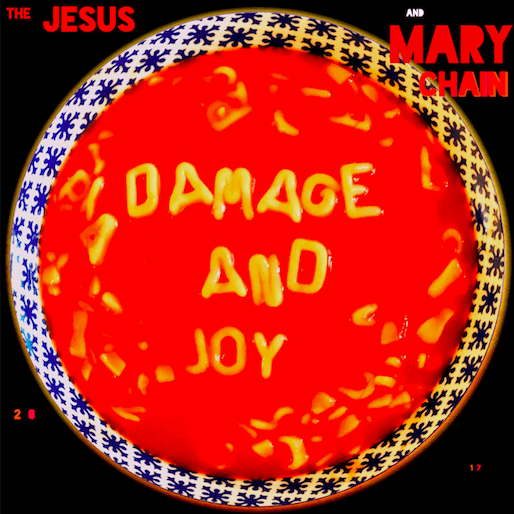
Listening to the Jesus and Mary Chain’s first album of new material in 19 years is like meeting up with an incorrigible old friend. Maybe there are a few more wrinkles and grey hairs but the original spirit is most definitely still there. Fuzzy, distorted guitars and a gallows humour may still predominate but maybe there is now also a certain maturity in the mix. Produced by Youth and featuring vocal contributions from Sky Ferreira, Isobel Campbell,Linda Reid and Bernadette Denning, as well as including a number of tunes that have been previously aired on Jim Reid solo projects, “Damage and Joy” sounds remarkably coherent and is a triumphant return to the fray.
There is always a slight nervy feeling when your favourite bands get back together and, given that the Reid Brothers’ long-standing assertions that it was never going to happen, but playing Damage and Joy for the first time is no different. However, by kicking off with waves of distorted guitar and the tambourine and drum machine-driven “Amputation”, the Mary Chain grab things by the scruff of the neck straightaway. Damage and Joy is no one-note wonder though, and sweet duets like “Always Sad” and “The Two of Us” and the down tempo track “Loz Feliz” add plenty of variety to the proceedings.
Nevertheless, it is the scuzzy rock’n’roll tracks like “Facing up to the Facts” and “Get on Home” where Jim declares “I spent a night with a blow-up girl and some LSD”, that make it crystal clear that the band have hit the ground running and have a good deal more than paying the bills in mind.
It’s inherently unfair to compare an iconic band’s most seminal work to anything it might produce 20 years later. Artists are people Just Like Us, and their lives shift and adjust with good years and bad. The passage of time can and will ultimately translate into new sonic directions that may or may not resemble their initial output. Yet, when it comes to William and Jim Reid of Scottish post-punk figureheads
Australian Post Rock band Sleepmakeswaves release their long awaited third studio full length album Made of Breath Only
Following on from 2014’s acclaimed LP Love Of Cartography, Made Of Breath Only is a wonderfully ambitious, sonically lush collection of world-class post-rock only hinted at through its lauded first single, Tundra.
The album which runs for just shy of an hour contains a wealth of engaging, imaginative soundscapes that defy lengthy runtimes (midpoint track The Edge Of Everything spans more than 10-and-a-half minutes) to remain captivating through peaks, troughs, dynamic shifts and all manner of other aural tricks over which the band has developed a formidable command through the years.
Sleepmakeswaves are a notoriously hard-working outfit, and have been on the road consistently this year; their 2017 got seriously under way with a support slot for US juggernauts Underoath in February and most recently saw them knock over an extensive tour of China earlier this month.
This is a band that has truly clawed their way from the underground to some seriously lofty heights over the course of their career, and you can make yourself a part of the adventure (if you haven’t already) at any one of their upcoming shows.
Bringing It All Back Home is the fifth studio album by American singer-songwriter Bob Dylan, released in March 1965 by Columbia Records. The album is divided into an electric and an acoustic side. On side one of the original LP, Dylan is backed by an electric rock and roll band—a move that further alienated him from some of his former peers in the folk song community. Likewise, on the acoustic second side of the album, he distanced himself from the protest songs with which he had become earlier identified (such as “Blowin’ in the Wind” and “A Hard Rain’s a-Gonna Fall”), as his lyrics continued their trend towards the abstract and personal. although the acoustic side included some tracks in which other instruments were backing up Dylan and his guitar, but no drums were used.
The album reached the top ten of the Billboad Albums chart, the first of Dylan’s LPs to break into the US top 10. It also topped the UK charts later that Spring. The lead-off track, “Subterranean Homesick Blues”, became Dylan’s first single to chart in the US, This is the point where Dylan eclipses any conventional sense of folk and rewrites the rules of rock, making it safe for personal expression and poetry, not only making words mean as much as the music, but making the music an extension of the words. A truly remarkable album.
“She Belongs To Me” extols the bohemian virtues of an artistic lover whose creativity must be constantly fed (“Bow down to her on Sunday / Salute her when her birthday comes. / For Halloween buy her a trumpet / And for Christmas, give her a drum.”)
“Maggies Farm” is Dylan’s declaration of independence from the protest folk movement. Punning on Silas McGee’s Farm, where he had performed “Only A Pawn In Their Game”at a civil rights protest in 1963 (featured in the film Dont Look Back), Maggie’s Farm recasts Dylan as the pawn and the folk music scene as the oppressor. Rejecting the expectations of that scene as he turns towards loud rock’n’roll, self-exploration, and surrealism, Dylan sings: “They say sing while you slave / I just get bored.”
“Love Minus Zero/No Limit” is a low-key love song, a “hallucinatory allegiance, a poetic turn that exposes the paradoxes of love (‘She knows there’s no success like failure / And that failure’s no success at all’)…[it] points toward the dual vulnerabilities that steer ‘Just Like A Woman.’ In both cases, a woman’s susceptibility is linked to the singer’s defenseless infatuation.” Among other things, Bringing It All Back Home had a substantial effect on the language of a generation.
“Outlaw Blues” explores Dylan’s desire to leave behind the pieties of political folk and explore a bohemian, “outlaw” lifestyle. Straining at his identity as a protest singer, Dylan knows he “might look like Robert Ford” (who assassinated Jesse James), but he feels “just like a Jesse James”.
“On The Road Again” catalogs the absurd affectations and degenerate living conditions of bohemia. The song concludes: “Then you ask why I don’t live here / Honey, how come you don’t move?”
“Bob Dylan’s 115th Dream” narrates a surreal experience involving the discovery of America, “Captain Arab” (a clear reference to Captain Ahab Of Moby Dick fame), and numerous bizarre encounters. It is the longest song in the electric section of the album, starting out as an acoustic ballad before being interrupted by laughter, and then starting back up again with an electric blues rhythm. The music is so similar in places to Another Side of Bob Dylan’s “Motorpsycho Nitemare” as to be indistinguishable from it but for the electric instrumentation. The song can be best read as a highly sardonic, non-linear (historically) dreamscape parallel cataloguing of the discovery, creation and merits (or lack thereof) of the United States.
“Gates Of Eden” builds on the developments made with “Chimes of Freedom” and “Mr. Tambourine Man”. “Of all the songs about sixties self-consciousness and generation-bound identity, none forecasts the lost innocence of an entire generation better than ‘Gates of Eden,’” “Sung with ever-forward motion, as though the words were carving their own quixotic phrasings, these images seem to tumble out of Dylan with a will all their own; he often chops off phrases to get to the next line.” (This is the only song on the album that is mono on the stereo release and all subsequent reissues.)
One of Dylan’s most ambitious compositions, “Its AlrightMa (I’m Only Bleeding) is arguably one of Dylan’s finest songs. Heylin wrote that it “opened up a whole new genre of finger-pointing song, not just for Dylan but for the entire panoply of pop”, A fair number of Dylan’s most famous lyrics can be found in this song: “He not busy being born / Is busy dying”; “It’s easy to see without looking too far / That not much is really sacred”; “Even the president of the United States / Sometimes must have to stand naked”; “Money doesn’t talk, it swears”; “If my thought-dreams could be seen / They’d probably put my head in a guillotine.” In the song Dylan is again giving his audience a road map to decode his confounding shift away from politics. Amidst a number of laments about the expectations of his audience (“I got nothing, Ma, to live up to”) and the futility of politics (“There is no sense in trying”; “You feel to moan but unlike before / You discover that you’d just be one more / Person crying”), Dylan tells his audience how to take his new direction: “So don’t fear if you hear / A foreign sound to your ear / It’s alright, Ma, I’m only sighing.”
The album closes with “Its All Over Now Baby Blue” described as “one of those saddened good-bye songs a lover sings when the separation happens long after the relationship is really over, when lovers know each other too well to bother hiding the truth from each other any longer … What shines through “Baby Blue” is a sadness that blots out past fondness, and a frustration at articulating that sadness at the expense of the leftover affection it springs from.” If Paul Clayton is indeed the Baby Blue he had in mind, as has been suggested, Dylan was digging away at the very foundation of Clayton’s self-esteem.” However, the lyric easily fits in with the main theme of the album, Dylan’s rejection of political folk, taking the form of a good-bye to his former, protest-folk self, according to the Rough Guide to Bob Dylan. According to this reading, Dylan sings to himself to “Leave your stepping stones [his political repertoire] behind, something calls for you. Forget the dead you’ve left [folkies], they will not follow you … Strike another match, go start anew.” The only musician besides Dylan to play on the song is Bill Lee on Bass guitar.
In a interview Dylan said, My thoughts, my personal needs have always been expressed through my songs; you can feel them there even in ‘Mr Tambourine Man’. When I write a song, when I make a record, I don’t think about whether it’ll sell millions of copies. I only think about making it, the musical end-product, the sound, and the rhythmic effect of the words. ~Bob Dylan (to Sandra Jones, June 1981)
A surrealist work heavily influenced by Rimbaud (most notably for the “magic swirlin’ ship” evoked in the lyrics), The album was hailed it as a leap “beyond the boundaries of folk song once and for all, with one of [Dylan’s] most inventive and original melodies.
“Mr. Tambourine Man” was “Dylan’s pied-piper anthem of creative living and open-mindedness…a lot of these lines are evocative without holding up to logic, even though they ring worldly.” called “rock’s most feeling paean to psychedelia, all the more compelling in that it’s done acoustically.”
One of Dylan’s most celebrated albums, “Bringing It All Back Home” was soon hailed as one of the greatest albums in rock history.
In a 1986 interview, film director John Hughes cited it as so influential on him as an artist that upon its release, “Thursday I was one person, and Friday I was another.”The album closes with “It’s All Over Now, Baby Blue“, However, the lyric easily fits in with the main theme of the album, Dylan’s rejection of political folk, taking the form of a good-bye to his former, protest-folk self, according to the Rough Guide to Bob Dylan. According to this reading, Dylan sings to himself to “Leave your stepping stones [his political repertoire] behind, something calls for you. Forget the dead you’ve left [folkies], they will not follow you…Strike another match, go start a new.” The only musician besides Dylan to play on the song Bill Lee on bass guitar.
Other songs and sketches recorded at this session: “Love Minus Zero/No Limit”, “It’s All Over Now, Baby Blue”, “She Belongs to Me”, “On the Road Again”, “If You Gotta Go, Go Now”, “You Don’t Have to Do That”, “California,” and “Outlaw Blues”, all of which were original compositions.
….when we recorded Bringing It All Back Home, that was like a break through point, it’s the kind of music I’ve been striving to make and I believe that in time people will see that. It’s hard to explain it, it’s that indefinable thing..
~Bob Dylan
Bob Dylan’s performance on the Letterman Show in 1984 is legendary… at least among fans & commentators. Live debuts of “Jokerman” and “License To Kill”, …..When it came to the performance itself, Letterman waved the cover of Dylan’s newest album “Infidels” in front of the camera, giving it a patronising but enthusiastic introductory spiel. and at the last minute Dylan sprang on them a gloriously grungy version of a 1955 Sonny Boy Williamson II song ‘Don’t Start Me to Talkin’’. Dylan revelled in the punk sound of the band—and was dressed accordingly, not in Latino mode but in the hip thin dark suit and super thin tie of UK punks like the members of, say, the Jam or Elvis Costello a` la 1980. Then came ‘License to Kill’ (not as good as at the TV-studio rehearsal, as it happened) and then a furiously fast, wondrous version of ‘Jokerman’, in the middle of which Dylan spent quite some time searching for a particular harmonica.
No-one else in the world would treat coast-to-coast high-ratings TV that way, and as a sampler of the album it was splendidly misleading.
Filmed at the Rockefeller Center, New York City, New York,22nd March 1984
Late Night with David Letterman.
Don’t Start Me To Talkin’ (Sonny Boy Williamson) is a witty comment on the fact that Dylan had agreed to sing on the show, but was refusing to be interviewed. This is then followed by “License To Kill” & “Jokerman,” both songs transformed, all freshness and immediacy and fire.
In spring 1984 Bob Dylan was invited to the Letterman Show in order to promote his new album “Infidels”, which he did in his very own way by hiring a young punk band from California called “The Plugz” and playing the songs in raw R&B arrangements that hardly resembled the polished versions from the album.
Fittingly for a TV talk show and surprisingly for both the audience and the band (who didn’t really know the setlist until the show started) they had kicked off with the old Chicago Blues classic “Don’t Start Me To Talking”, originally recorded by Sonny Boy Williamson in 1955. The band was clearly under rehearsed, the playing was dirty and loose but so full of energy that Dylan himself seemed to be electrified.
This was followed by a passionate version of “License To Kill” and then a glorious rocked-up “Jokerman”. During the last song Dylan had trouble finding the right harmonica and was wandering off stage for a while waving at the band to just keep on playing without him.
Certainly one of the most chaotic performances ever on national television, but also a milestone in Dylan’s career as a performer. Not until the start of the “Never Ending Tour” in 1988 would he sing and play again with such power and enthusiasm as on this historic late night in march 1984.
In some alternate universe, Bob Dylan hit the road with New Wave band The Plugz during the Reagan era and completely reinvigorated his career; in our universe, however, they simply backed him for three songs on Letterman in 1984. It’s a real tragedy, as this is, far and away, Dylan’s best TV performance to date, as well as one of his single best musical moments of the 1980s. When he went on tour later that year, he let Bill Graham pick the band and he wound up with Mick Taylor, Ian McLagan and other vets. Those guys are obviously great, but they lacked the Plugz’s raw power that night.
Opening with the subtle rumble of early morning Chinatown, hazy instrumental shape into focus with languid guitars, gently welcoming you into a dream . The Manchester-based multi-instrumentalist/producer Ryan Kennedy,and hisdream pop group Horsebeach. Based around chiming guitars and Kennedy’s downbeat croon, Horsebeach draw inspiration from classic jangle pop. Becoming critics’ favourites with the release of their eponymous debut album in 2014,
The summery groove and the pop majesty of ‘It’s Alright’ soon sends you spinning into infinity, cares eased by the warm tones of chiming guitars, while Beth de Cent’s smokey vocals come together in perfect harmony with Kennedy’s. ‘Andy’ treats you to a yearning tale of forbidden love, packed with erotic overtones so full blooded they’d make Morrissey blush , while the marbled melodies of ‘Broken Light’ come on in nostalgic ripples and waves of sepia-tinged beauty. ‘Let You Down’ finds Kennedy’s voice sounding better than ever, detailing visceral regret over a full bodied groove .
Opening the B-side with a masterful subtlety, synth led instrumental ‘Midnight Pt.2’ sees Kennedy taking us for a moonlit stroll by the ocean before ‘Dana’ ushers in the dawn with the greatest X-Files inspired song ever written (sorry Cerys). The antithesis of over-serious hipster cool, the earnestly emotional lyrics, anthemic chords and shimmering should be enough to prompt John Hughes to rise again and make a much needed sequel to The Breakfast Club. ‘Disappear’ finds Kennedy and drummer Matt Booth drinking in the cosmic vintage of Düsseldorf ’72, as their chiming West Coast guitars are joined by celestial keys, head nodding bass grooves and a motorik rhythm. ‘Clouds’ draws us back into the haze as Kennedy’s multi-tracked vocals gently melt into the swirl of flanged guitar, while ‘Avoid The Light’ closes the LP with a plea to stay in the dreamworld just a little longer.
Alive with lyrical depth, melodic intricacy and lush production, ‘II’ is the work of a confident and mature multi-instrumentalist and songwriter, and it’s your new favourite LP all of a sudden.
This video is from our third single ‘Baby I’m Blue’.
One of Liverpool’s most talked about new bands and one of the most tipped acts for 2017 by the national press, Trudy and the Romance play their adopted hometown in late March as part of their first headline tour.
Boasting an idiosyncratic sound that combines doo-wop, sea shanties and ramshackle rock n’ roll, the trio won almost instant praise from tastemaking local publications Bido Lito! and Getintothis.
Word about the group has spread quickly, The Independent stating the outfit are ‘…like a cross between Nick Cave and The Strokes’. Well crafted vintage indie pop songs, with the rough and readiness of garage rock. Self-described as mutant 50s pop . Described by the NME as ‘a band who sound unlike anyone else around at the moment and one who are hard not to love’, singles Baby I’m Blue and Sandman scored strong support from BBC Radio 1, BBC 6Music and Beats 1. This video is from our third single ‘Baby I’m Blue’.
A recent support stint with The Big Moon won the group considerable live acclaim to reinforce their accolades on record .
Wrecking Ball is the seventeenth studio album by American recording artist Bruce Springsteen, released March 5th, 2012, on Columbia Records . It was named best album of 2012 by Rolling Stone Magazine and along with the album’s first single, “We Take Care Of Our Own” which was nominated for three Grammy Awards.
Around the time of the 2008 economic collapse, Springsteen was working on a gospel music album. When he found that particular style of music didn’t suit his anger and frustration regarding what he was hearing in the news, and seeing happen to friends and relatives, he scrapped the entire record and started over.
The Boss began to write what started as “folk songs” about the current state of America and what he perceived as inequality, corruption and a lack of care. As a songwriter, Springsteen was about as angry as he’d ever been.
“You can never go wrong pissed off in rock ’n’ roll. The first half of [the album], particularly, is very angry,” Springsteen told a group of reportersin 2012, the year’s of the record’s release. “The genesis of the record was after 2008, when we had the huge financial crisis in the States, and there was really no accountability for years and years. People lost their homes, and I had friends who were losing their homes, and nobody went to jail. Nobody was responsible.”
Springsteen wrote “We Take Care of Our Own” as a question that could “gauge the distance between American reality and the American dream.” He penned “Easy Money” about a street thief taking inspiration from the crooks on Wall Street. He came up with “Death to My Hometown” about the havoc that was wreaked on the working class – not by wars or tyrants, but by greed.
As the new album began to take shape, Springsteen mostly eschewed the E.Street Band for the assistance of producer Ron Aniello, who helped flesh out the songs into bigger arrangements. Aniello brought some more contemporary touches – loops, hip-hop affectations – to Springsteen’s classic sound, although the tracks also included country influences, Irish folk constructs, gospel tinges and bedrock arena bombast. The diversity of sound wasn’t an accident, but something meaningful to Springsteen.
the only E Street Band members to appear on the album are Clemons, Steve Van Zandt, Max Weinberg , and Patti Scialtha. Patti Scialfa adjunct members Charlie Giordano and Soozie Tyrell are also heavily featured. The album features members of the Sessions Band including the horn section, and special guest appearances by Tom Morello and Matt Chamberlain .
“If you listen to the record, I use a lot of folk music. There’s some Civil War music. There’s gospel music,” he said of Wrecking Ball. “There are ’30s horns in ‘Jack of All Trades.’ That’s the way I used the music – the idea was that the music was going to contextualize historically that this has happened before: it happened in the 1970s, it happened in the ’30s, it happened in the 1800s … it’s cyclical. Over, and over, and over, and over again. So I try to pick up some of the continuity and the historical resonance through the music.”
Springsteen also brought in some songs he had previously written, because they fit the theme. “Wrecking Ball” was written for E Street’s final performances at Giants Stadium, but “Come on and take your best shot / Let me see what you’ve got / Bring on your wrecking ball” seemed to resonate with his idea of a resilient America. The song embodied a certain spirit and it gave the new album its title.
He also employed “Land of Hope and Dreams,” a tune Springsteen originally wrote for the E Street Band reunion tour in the late ’90s. Although the song had appeared on a live album, it had never shown up in a studio version.
“I wrote it before the tour as the band’s current manifesto. In other words, we have stood for these things in the past. This is our current statement of how we will try to stand for these things in the future,” said Springsteen , suggesting the song had roots in the past but also looked to the future. “It’s the train that keeps going when I’m gone, and when your music and these times are just a memory. … These ideas are something that I wanted at the end of this record.”
“Land of Hope and Dreams” also packed an emotional punch. It features a saxophone solo by Clarence Clemons the founding E Street Band member who had died the previous year. Other E Streeters like Steve Van Zandt and Max Weinberg and Patti Scialfa also contributed to what was mostly a Springsteen solo record.
Wrecking Ball, was Springsteen’s 17th studio album, was released on March 6th, 2012, and hit No. 1 in many countries around the world, including the U.S., the U.K. and New Zealand. The record earned mostly positive reviews in the music press, with many writers praising Springsteen’s passion, anger and musical versatility. The man himself saw the album as another installment in a decades-long “conversation” with listeners.
“The only thing I do keep in mind is that I’m in the midst of a lifetime conversation with my audience, and I’m trying to keep track of that conversation,” Springsteen said. “So if the artist loses track of the conversation he’s having with his audience, he may lose us forever. So I try to keep track of that conversation, while giving myself the musical freedom I need.”