Try to imagine the very best bands, combined with a decadent Victoriana carnival, with a heavy dose of outrageous sideshows, and you’ll begin to get a picture of what HOPE & GLORY festival is.
This brand new festival for Liverpool, taking place on 5th & 6th August, is set against the stunning Victorian backdrop of the World Museum, City Library and St. George’s Hall and Gardens.
With weekend tickets priced at just £89 (inclusive of booking fee), you can expect a glorious mix of incredible music, comedy and fun – all within a few hundred yards of Lime Street station.
The main stage music for the weekend will be on The Great Exhibition stage. The second stage will deliver different delights across the weekend and will be called The Wonders Of The Age stage on the Saturday and The Wonders of the Age stage on Sunday.
Seattle’s rock scene is experiencing an underground renaissance, and at the center of its close-knit collective of punk-inspired bands is Chastity Belt. The laconic, yet rebellious foursome singer and guitarist Julia Shapiro, guitarist Lydia Lund, bassist Annie Truscott, and drummer Gretchen Grimm have been growing an enthusiastic fan base since their days as a Walla Walla college band, thanks to two raucous albums .
Their tongue-in-cheek humor often belied incisive depth, whether the topic was the boredom of youth (“PussyWeed Beer”) or sex-positive gender dynamics (“Cool Slut”) and pointed feminist commentary (“Drone”) from 2015’s breakthrough, Time To Go Home. Now with its evocative third album, “I Used To Spend So Much Time Alone”, Chastity Belt further deepens its low-key, nonchalant persona by inviting us into their heads. And with less reliance on laughs to cloak its emotions, Chastity Belt has never felt this vulnerable, or as relatable.
From the very first lines of I Used To Spend So Much Time Alone’s brilliant opener, “Different Now,” we find Shapiro in a reflective headspace. “You’re hard on yourself, well you can’t always be right / All those little things that keep you up at night / You should take some time to figure out your life,” she sings, capturing the uncertainty that comes from getting older and still wondering who you want to be. As Chastity Belt’s guitarist and primary singer, Shapiro is our main entry point into the album’s introspective songs, which grapple with loneliness and depression, and confront the nagging anxieties that can sabotage aspirations, wreak havoc on relationships and friendships, and induce sleepless nights with your regrets and fears.
Throughout I Used To Spend So Much Time Alone, Chastity Belt’s characters nurse heartache (“What The Hell”), confront change (Gretchen Grimm’s song “Stuck”), and work through depression (“SomethingElse”), but the constant theme is a desire for normalcy. In one highlight, “Caught In A Lie” Shapiro worries she’ll be outed as a fraud, unsure if she’s pursuing what she really wants, or simply doing what others expect from her: “You’re caught in a lie, living someone else’s dream…Is this what you want? Is this who you want me to be?” she asks herself. Elsewhere, “It’s Obvious” portrays a chameleon-like need to adopt the qualities of a disinterested lover and losing herself in the process. “I can hold your interest, but only for a short time / and it feels freeing to lose,” she admits, in one puncturing phrase. And in “Used To Spend,” Shapiro seeks to reconcile her introverted and extroverted selves: “Out of the fog and finally feeling fine / My doubts are all gone and I’m having a pretty good time / Feeling like a real champ, but for how long?,” she asks with a muted resignation, atop loping and scuzzy guitar chords.
Recorded live last summer alongside producer Matthew Simms at Jackpot! studios in Portland, Ore., I Used To Spend So Much Time Alone doesn’t mess with the band’s signature fuzzy guitar rock, so much as refine it. The album’s instrumental depth allows the music to stretch, sway and gradually unfold to new places. That can be heard in the way Shapiro’s distorted, jangling strums entwine with Lydia Lund’s brightly chiming arpeggiated melodies, or when Annie Truscott’s repeating bass lines lock-in as a steadying backbone for Grimm’s kinetic drumming. It all helps propel the dynamic harmonies and resonating vocals of each singer: Where Grimm and Lund’s voices sound delicate and airy, Shapiro’s rich alto croon is capable of shifting from wistful warmth to guttural shouts in anxious songs like “This Time Of Night” and “Complain,” and especially in the fiery closer, “5am.” Depicting the end of a party, a woozy Shapiro seeks connection and conversation about heavy ideas, singing “Immediate urge to get everything all straight / Need to express it, but it’s not the time or place,” her frustrations personified by a cresting vamp of scorching noise and wiry riffs.
Three albums into its career, Chastity Belt showcase an emboldened musicality and matured songcraft that can only come from spending so much time together (rather ironic, given the title). I Used To Spend So Much Time Alone is a thoughtful, reflective album, constantly searching for direction to and questioning every solitary, restless feeling, yet it’s that intimacy that allows us to know a new, perhaps truer side to the artists. It takes an extraordinary amount of self-confidence to expose that process for all to hear.
On first listen , ‘Cigarette’ has far more in common with debut album Marika Hackman than anything else she’s shared from ‘I’m Not Your Man’ so far. Taking a hefty drag of delicately plucked acoustic guitar, and watching the melodies tumble away in wisps of smoke, it’s a thoughtful, reflective song.
Still, while ‘Cigarette’ might mark a step back from the bombast of the other tracks previewed so far in ‘Boyfriend,’ ‘My Lover Cindy’ and the climactic, crashing surge that ends ‘Violet,’ it’s actually got little in common with her debut ‘We Left At Last’. Lyrically it’s a stark affair, painting the scene of an argument in a carpark; with minimal brushstrokes. “Turn to the headlight glare, cry and pretend you care, I love it when we make a scene,” Marika sings, her verses thin on detail and letting the gaps do the talking. “Something to talk about, rather than fuck and shout, maybe we could go to sleep.” A brilliantly spare song, that captures all the frustration of two people who can’t quite spit their words out, ‘Cigarette’ might seem elusive at first, but it’s got all the welly of her other singles.
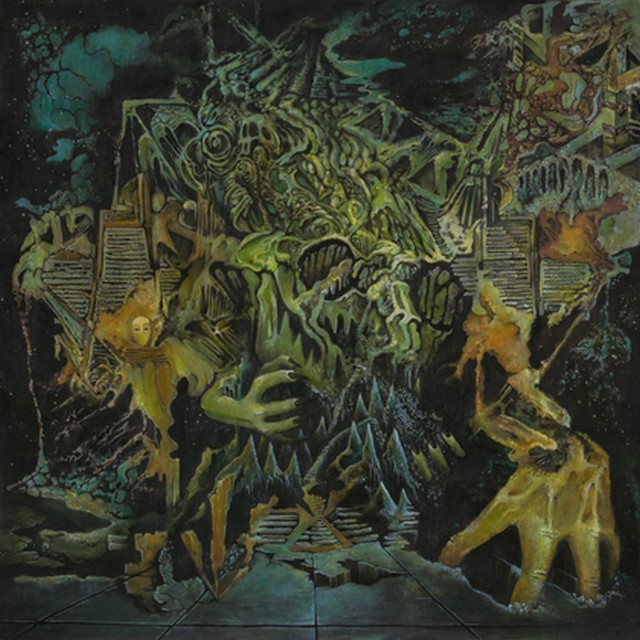
Australian psychedelic-rock squad King Gizzard & The Lizard Wizard are getting ready to murder the universe with their new LP “Murder Of The Universe” the second of an absurd quantity of five albums that they plan on releasing this year. It’s a sprawling, nigh-incomprehensible 21-track concept album about the apocalypse or something, and they’re sharing it in three 13-minute chunks that they’re referring to as “chapters.” The first was “Han Tyumi and The Murder Of The Universe” and now they’ve shared a new chapter called “The Lord OfLightning Vs Balrog,” which includes “The Lord Of Lightning,” the track that they performed on the Late Night With Conan O’Brien Show, last month. The whole thing comes with a massive video directed — sorry, created by frequent collaborator Jason Galea and Ben Jones, which finds the band performing in the middle of the woods while some freaky druidic ritual takes place. Experience that below.
The Tale of the Altered Beast 1. A New World 2. Altered Beast I 3. Alter Me I 4. Altered Beast II 5. Alter Me II 6. Altered Beast III 7. Alter Me III 8. Altered Beast IV 9. Life / Death The Lord of Lightning Vs. Balrog 1. Some Context 2. The Reticent Raconteur 3. The Lord of Lightning 4. The Balrog 5. The Floating Fire 6. The Acrid Corpse Han-Tyumi and the Murder of the Universe 1. Welcome to an Altered Future 2. Digital Black 3. Han-Tyumi, The Confused Cyborg 4. Soy-Protein Munt Machine 5. Vomit Coffin 6. Murder of the Universe
“Night Comes Down” continues RPM’s ongoing pedigree in creating bespoke Sixties compilations of rare British music aimed at discerning collectors.
This 3-CD box set follows previous collections Looking Back (2011) and Keep Lookin’ (2014), which ran the gamut of musical styles which emanated from the UK, diverse and yet united in their dance floor appeal, from the discotheques of the day to nouveau Mod clubs in the 21st century.
“Night Comes Down” charts the development of Beat music in the 60s, through 87 tracks across 3CDs! .Many tracks make their official debut on CD, including rarities, all housed in a beautiful clamshell box.
Including rarities by The Gnomes Of Zurich, Kevin ‘King’ Lear, Dominic Grant, The Shadrocks, The Reaction, Al Saxon, The Hammers, etc. In addition, ‘Cypress’ by The Truth is a previously unissued variant of Donovan’s ‘Hey Gyp’.
Familiar names (The Spencer Davis Group, Laurel Aitken, The Moody Blues, Arthur Brown) are joined by cult favourites (John’s Children, Mickey Finn, The Bo Street Runners) and relative unknowns (Five’s Company, The Second Thoughts).
Across the three CDs, NIGHT COMES DOWN charts the development of Beat music in its various guises, from the gutsy yet jazzy R&B which opens Disc 1 through to horn-laden Brit Soul (Norma Lee, The Brothers Grimm), fuzz-laden Freakbeat (Favourite Sons, The Tomcats, The In Crowd), Femme Pop (Twiggy,Twinkle), and groovy Loungecore (courtesy of Mark Wirtz and Les Reed’s British Lion Orchestra).
Disc 3 reflects the influence of Psychedelia, as Swinging London became multi-coloured, with assorted treats from The Alan Bown, The Mike Stuart Span and The Spectrum, with some unlikely Mod-ish discoveries by “hairy” bands such as The Deviants and Fat Mattress.
Anyone who tried to purchase every 45 captured on NIGHT COMES DOWN would have to set aside several thousand pounds!
DISC ONE:
1. MAMA (HE TREATS YOUR DAUGHTER MEAN) – Lita Roza
2. I NEED YOUR LOVING – Ronnie Jones & The Night-Timersv
3. BABY, DON’T DO IT – Laurel Aitken
4. TABOO MAN – Alexis Korner’s Blues Incorporated
5. PILLS – Mickey Finn & Blue Men
6. WORK SONG – James Royal
7. SEVENTH SON – The Second Thoughts
8. COMIN’ HOME BABY – The Mark Wirtz Orchestra & Chorus
9. IT’S A LIE – Philip Goodhand-Tait & The Stormsville Shakers
10. ANDIDOJUSTWHATIWANT – The Bo Street Runners
11. AND MY BABY’S GONE – The Moody Blues
12. LIKE THAT – Mike Cotton Sound
13. GONNA MAKE A WOMAN OF YOU – A Band Of Angels
14. SHE’S A GIRL – The Attraction
15. IT’S ALRIGHT – The Rocking Vickers
16. READY, STEADY – The Clockwork Oranges
17. CAN YOU HEAR ME – The Cymbaline
18. A TU VERA – The Tomcats
19. I AIN’T GOT YOU – Five’s Company
20. THE SNAKE – Kevin ‘King’ Lear
21. JUGGER TEA – Oliver Bone
22. DON’T THAT BEAT THEM ALL – Just Five
23. NO OTHER BABY – Chad & Jeremy
24. GOTTA GET THROUGH TO YOU – Eden Kane
25. BIG FAT SPIDER – Heinz
26. YOU’RE GONNA GET YOUR WAY – Glenda Collins
27. WHAT AM I DOING HERE WITH YOU – Twinkle
28. ROLLING ON – Norma Lee
29. THE OTHER SIDE OF LOVE – The Caravelles
30. TIMEISONMYSIDE-Four+OneDISC TWO:
1. NIGHT COMES DOWN – Mickey Finn
2. SHORT CHANGE – Spencer Davis Group
3. BIG BARE BEAT – The British Lion Orchestra
4. PHONE ME – Robb And Dean Douglas
5. MY LOVE – Ronnie Jones
6. THE SOCIETY FOR THE PROTECTION OF LOVE – The Stormsville Shakers
7. WHAT’S HER NAME – Guy Darrell
8. COUNT ME OUT – Kevin ‘King’ Lear
9. CAN’T STOP TALKIN’ ABOUT MY BABY – Mike Patto
10.SOUL SERENADE – The Mike Cotton Sound
11.KNOCK ON WOOD – Oliver Bone
12.JUST ONE MORE CHANCE – The Outer Limits
13.DON’T STOP GIRL – Dominic Grant
14.WHEN I THINK OF YOU – Twiggy
15.YEH YEH – The Mark Wirtz Orchestra & Chorus
16.THAT DRIVING BEAT – The Favourite Sons
17.BLOW UP – The In Crowd
18.PARTY LINE – The Attraction
19.ARTHUR GREEN – Andy Ellison
20.CYPRESS (PREVIOUSLY UNISSUED) – The Truth
21.SINK OR SWIM – Circus
22.SHE WAS REALLY SAYING SOMETHING – Doc Thomas Group
23.TAKE ME FOR A LITTLE WHILE – Rusty Harness
24.BABY AND ME – The Hammers
25.GOING GOING GONE – Mike Hurst & Mike D’abo
26.THERE IS – The Shadrocks
27.AFRODISIAC – The Web
28.FALLING IN LOVE WITH YOU – The Reaction
29.EAST SIDE 628 – Al Saxon
30.A MAN NEEDS LOVE – The Brothers GrimmDISC THREE:
1. GIRL ON A MOTORCYCLE – The British Lion Orchestra
2. THE EAGLE FLIES ON FRIDAY – The Exceptions
3. LONDON BRIDGE IS COMING DOWN – The Spectrum
4. ELEVATOR – Grapefruit
5. PEACOCK DRESS – Sun Dragon
6. LOOKING TOWARDS THE SKY – Davey Payne & The Medium Wave
7. VIOLIN SHOP – The Alan Bown
8. REMEMBER THE TIMES – Mike Stuart Span
9. HOLD ON – Rupert’s People
10. GIVE WHAT YOU TAKE (DEMO) – The Lomax Alliance
11. SECOND FIDDLE – The Gnomes Of Zurich
12. I’VE GOT MONEY – The Crazy World Of Arthur Brown
13. COME AND PLAY WITH ME IN THE GARDEN – John’s Children
14. FIRE IN THE CITY – The Deviants
15. SUNSHINE SUPERMAN – Big Jim Sullivan
16. TOMORROW NEVER KNOWS – The Mirage
17. FLOWERS ARE FLOWERING (DEMO) – The 23rd Turnoff
18. MR. UNIVERSE – Episode Six
19. I DON’T MIND – Fat Mattress
20. HOW DO YOU FEEL – Sounds Incorporated
21. INFATUATION – The Secrets
22. CALL ME LIGHTNING – The Good Vibrations
23. MAE WEST – Ken Moule’s London Jazz Chamber Group
24. PUMPKIN MINI – Katch 22
25. EINER KLEINER MISER MUSIK – Tony Rivers & The Castaways
26. THANK YOU BABY FOR COMING – The Matchmakers
27. THE MEANING OF LOVE – Putney Bridge
In 1976, Neil Young was hitting the tail end of a remarkable five-year streak which saw him release Harvest, the ‘Ditch Trilogy’ of Time Fades Away, Tonight’s the Night, and On The Beach, surprise success Zuma, and a collaborative album with Stephen Stills.
His 1977 album American Stars ‘N Bars was compiled from two-and-a-half years of disparate studio sessions, and was mostly considered a haphazard failure upon release. At the time nobody knew he was sitting on the excellent Hitchhiker, a nine-song album he recorded in one stoned evening at Indigo Ranch Studios in Malibu then shelved for close to forty years. Hearing him detailing it, he’d probably forgotten about it, too.
Hitchhiker was recorded in 1976 but never released. This long-lost Neil Young album, which was recorded at Malibu’s Indigo Ranch Studios in 1976, is set to be unearthed this summer. A few of the songs, such as ‘Powderfinger’ and ‘Lotta Love’ found homes on subsequent records, but it’ll nice being able to hear the “complete piece” as Neil intended it, when the album comes out. Neil Young fansite Thrashers Wheat stumbled across “Hitchhiker” listed on online with a release date of July 14th. Hitchhiker‘s title track was also officially released in 2010 on Young’sLe Noise album.
An album cover, created by Young’s long-time artistic collaborator Gary Burden and with a credit from art director Jenice Heo, has also been discovered. As Thrasher’s Wheat also points out, the Canadian legend wrote about Hitchhiker in his second memoir Special Deluxe, during which he recalled the recording process.
“I spent the night there with David and recorded nine solo acoustic songs, completing a tape I called Hitchhiker,” he said. “It was a complete piece, although I was pretty stony on it, and you can hear it in my performances.”
He continued: “Dean Stockwell, my friend and a great actor who I later worked on Human Highway as a co-director, was with us that night, sitting in the room with me as I laid down all the songs in a row, pausing only for weed, beer, or coke. Briggs was in the control room, mixing live on his favorite console.”
Tracklist:
01. ‘Powderfinger’
02. ‘Hold Back The tears’
03. ‘Human Highway’
04. ‘Hitchhiker’
05. ‘Ride My Llama’
06. ‘Lookout For My Love’
07. ‘Lotta Love’
08. ‘Fontainebleau’
09. ‘Campaigner’
The title track from Benjamin Booker new album Witness is a clarion call. “Right now we could use a little pick-me-up / Seems like the whole damn nation’s trying to take us down,” he sings. “They say you’re dangerous, cancerous, not to trust / Now everybody that’s brown can get the fuck on the ground.”
It’s a not-at-all-veiled analysis of the state of our union, both sensitive and outraged. Booker’s raspy voice is filled with hope but tinged with resignation, and it’s lifted out of the darkness by the legendary bellow of Mavis Staples , who duets on the track.
It would’ve been hard to imagine hearing a song quite like “Witness” from Booker in 2014, when his eponymous debut first thrust him into the public eye. Back then he was just making a name for himself as a gravelly voiced blues practitioner with a penchant for gritty punk. “Slow Coming,” from Benjamin Booker, expressed his general fatigue and frustration with modern society, proving that he had the chops for politically charged songwriting, though it might have lacked the sense of urgency needed to translate it into action.
“What I felt was the temporary peace that can come from looking away.”
But for both Booker and the United States, 2014 seems like eons ago:catalysts that brought larger social issues to the forefront of Booker’s mind. with spectacles of injustice in his life: “Am I going to be a witness?” Booker asks. “And in today’s world, is that enough?”
The album’s title track was written in a matter of minutes and was largely inspired by a trip to Mexico City in March of 2016. Feeling overwhelmed and uninspired by the state of the nation, he did what many people wished they could have done this last year—he left the US, flocking like a monarch butterfly to what he thought would be a more inviting climate. In a statement, Booker wrote, “I was almost entirely cut off from my home. Free from the news. Free from politics. Free from friends. What I felt was the temporary peace that can come from looking away.”
It wasn’t until he got caught in a physical altercation outside a bar in Condesa that he realized the discrimination and chaos he was running from had followed him. “It was just one of those moments where you realize, ‘I gotta take care of my house, my home, where I live,’” he says. “You know what I mean? The same thing is happening everywhere.”
Not that the last three years haven’t given him plenty of means for escape. Booker went from making $800 a month working for AmeriCorps to playing and wowing on the Letterman Show in a matter of months after the release of his album. “I didn’t start playing music until right before all of that happened,” he says. “So I didn’t even know how to set up my guitar amp.”
With one world tour under his belt, the former aspiring music journalist is more self-assured than ever. “It was pretty difficult at the beginning,” he says. “But I think that like any job, over time it becomes a lot easier, and maybe halfway into [the touring cycle] it started to feel comfortable.”
In an effort to avoid complacency—or worse, be pigeonholed like many a musician of color before him—Booker sought to expand his musical repertoire for Witness. “[I was] trying to break away from the things that I started with on the first record,” he says. “My taste from the last album has completely changed. I think I was very much into blues music and garage rock…[but] I’ve moved away to ’70s Afro-psych music. [Bands like] Sly and the Family Stone [were] a huge influence. I’m listening to more hip-hop, and I’m more interested in rhythm and how the other instruments work in and out of that. I’m allowing for more space this time.”
With the help of producer Sam Cohen , Booker was able to make Witness into a taut, polished product that’s more of a distant cousin to his reckless debut than a direct predecessor. “Going into this album, I just wanted to take the songs as far as they could go,” he says. “And I think that getting there, and working with new musicians and a new producer and everything, I really had to put my ego aside.”
The maturation that Booker underwent as a musician and as a person prepared him for the task of putting out an album like Witness, which he says is “about the things that I’d never wanted to talk about.” Perhaps that’s what it means to be a witness in 2017: to stare unflinchingly at that which terrifies us most and confront it head on, and to recognize all the flaws in the world around us and within ourselves. Sometimes all it takes is a voice like Booker’s to speak that unpleasant truth.
It’s that quote that Benjamin Booker cites in the piece about how his new album, Witness (out June 2 on ATORecords). After the acclaim surrounding Booker’s self-titled 2014 debut ebbed, he left the country for Mexico, seeking songwriting inspiration rather than a refuge from discrimination — or so he told himself. But after experiencing racialized violence in Mexico City — and looking on from abroad as reports of police shootings and Black Lives Matter protests peppered the news — Booker realized he was fleeing, not sight-seeing, and underwent a Baldwinesque crisis. Could he in good conscience stay away from the civilization that might very well need his voice?
With The Drums’ new Abysmal Thoughts, band founder Jonny Pierce is making the exact album he’s always held in his heart. Of course, this is The Drums, so that heart is broken—but there’s beauty and even bliss in this kind of heartbreak, as well as that special kind of glorious delirium that comes from taking everything life can throw at you and still walking away triumphant. If Abysmal Thoughts doesn’t sound at all abysmal—really, Pierce has rarely been this irresistibly pop—that’s because this is a story about how to figure out what happiness means once the worst has already happened. “Happiness can be confusing to me,” says Pierce. “It shows up out of nowhere, and before you can even get used to it, it’s vanished. But Abysmal Thoughts? I can rely on them—and with the political chaos that is raining down, who knows when these dark feelings will subside?”
As the last album cycle for the Drums finished and his long-term relationship with his former partner dissolved, Pierce took some time away from music altogether in hopes to reconnect with himself and find future inspiration. Determined to make a change, he ended up leaving his longtime home in New York and found himself isolated in a large empty apartment in Los Angeles, all his plans for life and love suddenly in shambles: “I said I wanted to let life happen?” he says. “Well, the universe listened and life began to fuck me real good! But honestly, I make the worst art when I’m comfortable. The stuff that resonates with me the longest—and that resonates with others—is always the stuff that comes out of my hardships and confusion.”
“Head Of The Horse” by The Drums from the album ‘Abysmal Thoughts,’ available June 16th
Christopher Paul Stelling is a troubadour in the truest sense. His songs find their roots in the storytelling methods of southern folk music. His meticulous finger plucking guitar playing couples well with his commanding vocal style as he weaves the two around stellar songwriting that encompasses subjects near and dear to early American folk artists.” Christopher Paul Stelling is a singer-songwriter and guitarist currently based in Brooklyn, New York. Stelling was born in Daytona Beach, Florida, and has also resided in Colorado, Washington
“Destitute” by Christopher Paul Stelling from the album ‘Itinerant Arias,’ available now
Saintseneca writes dark, rivetingly mysterious, painstakingly crafted songs that somehow retain a sense of mischief. Even when the Ohio band incorporates exotic instrumentation into moody ruminations on consciousness, the result can still convey all the pleasures of a three-minute power-pop anthem.
In the case of “Book Of The Dead On Sale” a new one-off single, Saintseneca barely needs two minutes. And yet it’s an intoxicating and fully formed little song, what with the way it rumbles and burbles through Zac Little’s deadpan thoughts on math, ancient texts and footage of kittens.
The accompanying video (directed by Little and Jon Washington) provides a perfect match for the song’s mystery, beauty and undercurrent of deep weirdness, as Saintseneca uses a fisheye lens to offer an appropriately twisted view of the world. “Imagine seeing in all directions all at once — 360-degree vision,” Little writes. “The video for ‘Book Of The Dead On Sale’ is a visual metaphor. We use footage captured in 360 degrees and display it flattened in one circular field of view.
“The visual reminds me of R. Crumb’s psychedelic cartoons,” he continues. “We riff off of that idea, aiming to create a cartoonish dreamscape. The loose story is told from the point of view of an apple — being eaten, then absorbed. The apple becomes the eater. The eater becomes the apple. 360 cameras, like other new technologies, create new possibilities. Perhaps they allow us to see in new ways? We see more at once than was ever before possible, and yet we find ourselves all the more disoriented by the new surreal world we create.”