Image of Spooky Two - 0 of 5

Spooky Tooth was formed in 1967. Among the players forming its heavy sound were organist Gary Wright, who in the mid-1970s had a massive hit, “Dream Weaver.” Spooky Tooth’s second album in 1969, “Spooky Two”, was their best album, full of deep cuts (i.e., “Lost In My Dream,” “Evil Woman,” “Better By You, Better By Me,” and “That Was Only Yesterday” among them) that still received FM radio in the early 1970s.

Spooky Two is the second studio album by the English rock band Spooky Tooth. It was originally released in March 1969, on the label Island Records in 1969 , “Spooky Two” is this British blues-rock band’s pièce de résistance. All eight of the tracks compound free-styled rock and loose-fitting guitar playing, resulting in some fantastic raw music … their smooth, relaxed tempos and riffs mirrored bands like Savoy Brown and, at times, even the Yardbirds … Although Spooky Tooth lasted about seven years, their other albums never really contained the same passion or talented collaborating by each individual musician as Spooky Two.

It was Spooky Tooth’s misfortune to be sandwiched between Led Zeppelin and Free’s turbo-charged, all-pervasive ascents. A couple of years later and the band’s thoughtful but solid style would have found room to grow. Keyboard player Gary Wright shares vocals with Mike Harrison, a strong, complementary pair of voices, and also writes most of the songs including the memorably catchy Better By You Better Than Me, later rescued from oblivion by Judas Priest. The tracks on their second album are an eclectic bunch, blending the blues with folk, country, gospel and even prog. And they sound better now than they did then.

Spooky Tooth’s lead vocalist, was Mike Harrison, was serviceable, although not in Rodgers’ league. His shortcomings were evident when he tried to hit high notes with a weak falsetto. Yet for most of the material, Harrison’s voice was just what their music needed. Subsequent to the release of the album, Greg Ridley left the group, to join Humble Pie

Everything goes back to Mott the Hoople. After Ralph’s departure, Hunter poached Luther Grosvenor (who left Spooky Tooth in 1970) from another fondly remembered British one-hit wonder Stealers Wheel (the hit was “Stuck in the Middle With You”), whose leader Gerry Rafferty quit and Grosvenor replaced him for a tour. Used to the fill-in role, Grosvenor adopted the “Ariel Bender” moniker for contractual reasons when Mott toured in 1973 and 1974 and recorded their seventh album The Hoople.

Mott the Hoople reformed in 2009 and 2013 for British tours with the original lineup. But in the summer of 2018, Hunter, now 79, brought back Ariel and Hoople keyboardist Morgan Fisher for a series of European dates.

  • Mike Harrison – keyboards, vocals
  • Luther Grosvenor – guitar
  • Gary Wright – keyboards, vocals
  • Greg Ridley – bass
  • Mike Kellie – drums

Image may contain: 4 people, people smiling, people standing, people sitting, mountain, outdoor and nature

Kurt Vile kicks back in the Catskills before the release of his seventh solo album, 'Bottle It In.'

Kurt Vile an American singer, songwriter, multi-instrumentalist and record producer. He is known for his solo work and as the former lead guitarist of the rock band The War on Drugs, both in the studio and during live performances, Vile is now accompanied by his backing band, The Violators, which currently includes Jesse Trbovich (bass, guitar, saxophone), Rob Laakso (guitar, bass) and Kyle Spence (drums).

Influenced by bands like Pavement, Neil Young, Tom Petty, and John Fahey.  Kurt Vile began his musical career creating lo-fi home recordings with frequent collaborator Adam Granduciel in Philadelphia, with whom he has participated in early work by The War on Drugs as well as various solo projects. Focusing on his solo career, Vile released two albums, “Constant Hitmaker” (2008) and “God Is Saying This to You..”. (2009), compiling various home recordings dating back to 2003. Vile signed to Matador Records in 2009, and released his third album, “Childish Prodigy”, that same year. The album was his first recorded in a studio and with the full participation of The Violators.  “I’ve always been prolific,” he says. “It just took me until I was 29 for someone to actually put my music out.”

In 2011, Vile released his fourth studio album, Smoke Ring for My Halo, which significantly increased his exposure. His fifth studio album, Wakin on a Pretty Daze, was released in 2013, with Laakso replacing Granduciel in his backing band. In 2015, Vile released his sixth studio album, b’lieve I’m goin down…. The lead single from the album was, “Pretty Pimpin”, Vile’s best performing song to date,  His project in 2017 saw him release “Lotta Sea Lice”, a collaboration with Australian singer and guitarist songwriter Courtney Barnett.

22072

The War on Drugs (2003–2008)

In 2003, after staying in “Boston” for two years, Vile moved back to Philadelphia and began collaborating with musician and songwriter Adam Granduciel The duo subsequently formed the Indie rock band “The War on Drugs  in 2005. Regarding his friendship with Granduciel, Vile noted, “We’re essentially best friends. He was backing me up in my band when he started working on his own music, so I thought I’d return the favor.” Granduciel and Vile released their debut studio album, “Wagonwheel Blues” in 2008 and embarked on a tour in support of its release.

Constanthitmaker.jpg

Constant Hitmaker (2008)

At this time, Vile’s debut solo album,“Constant Hitmaker” (2008), released on “Gulcher Records” Vile subsequently decided to leave The War on Drugs to concentrate on his solo career. The album was compiled from various home recordings and one studio recording of the song “Freeway”. In 2009, Vile noted, The War On Drugs got put out on a bigger label first, so, in the some claim that The War on Drugs was my first, main band. But that’s just the way it looks. I’ve made more music than Adam has, and have been doing my Kurt Vile thing for a little bit longer. And Constant Hitmaker came out around that same time. Right when that [War on Drugs] record came out, I went to Europe with them, and also opened as Kurt Vile. That was right when I decided I wanted to concentrate on doing my own thing. Despite Vile’s departure, Granduciel remained a member of his backing band, The Violators, with Granduciel noting, “There was never, despite what lazy journalists have assumed, any sort of falling out, or resentment.

Constant Hitmaker the debut studio album by American musician“Kurt Vile” released in 2008 on Gulcher Records”  and Woodsist. Self-produced, and recorded between 2003 and 2007, the album is primarily composed of lo-fi home recordings that Vile had previously issued on “CD-R”

Following the album’s release, Vile stated that Constant Hitmaker is “like a Best-of, sort of, but leaning toward the “Psychedelic pop”stuff, kind of my later material.”

Godissayingthistoyou.jpg

God Is Saying This to You. (2009)

In April 2009, Mexican Summer released “God Is Saying This to You..”.; a collection of Vile’s home recordings dating back to 2003 on vinyl only. Upon its release, Vile had already recorded a studio album, Childish Prodigy, which Vile described as “definitely not as lo-fi” as his previous releases, After shopping the record to various labels, Vile signed with Matador Records in May 2009. Vile noted, “It’s a perfect fit. They were my number one choice. I don’t really consider my music indie rock or think that Matador cater only to indie rock, but I still feel I can relate most to Matador, more than any other label. Not to mention the fact that they are way on top of their shit.”

33870


Childish Prodigy (2009)

Recorded with backing band The Violators, “Childish Prodigy” was released on October 6th, 2009, and increased Vile’s exposure significantly. Support slots with Dinosaur Jr, Thurston Moore and Fucked Up followed the album’s release. Regarding his new position, Vile stated, “Obviously there’s more touring, more press and more hype which I won’t say is not deserved. There’s like a faction of people, too, who like to talk shit, which is kind of new. When I was more independent, there were people who got really excited and there still are but once I got more press people started to comment on blogs. People like to talk shit. […] It’s like climbing a ladder. I like to climb it really slowly. I could probably get really professional right away, but I like to take baby steps and find my own way.”

Philadelphia guitarist / vocalist Kurt Vile first came to music enthusiasts’ attention with the release of 2008’s ‘Constant Hitmaker’ on the gulcher imprint. the homemade hitmaker (also reissued on vinyl through woodsist) was a psych pop gem. his debut Matador album, ‘Childish Prodigy’ ups the fidelity only a little. this absorbing, addictive and richly detailed album covers an immense amount of ground compared to its predecessor, from the pounding stomp of ‘Hunchback’ and the hypnotic beat of ‘Freak Train’ to the unexpected, soaring trumpet in ‘Amplifier.’

56382

Smoke Ring For My Halo (2011)

Vile released his fourth studio album, “Smoke Ring for My Halo”, in 2011. The album peaked midway in the charts and was placed highly on many end-of-year lists, and in 2013 it was named at number 475 in NME’s ‘500 Greatest Albums of All Time’  Later in 2011, Vile released a companion EP, So Outta Reach, and appeared on his former band The War on Drugs‘ second studio album, Slave Ambient. Shortly after the release of Smoke Ring for My Halo, longtime Violators guitarist Adam Granduciel departed from the band to fully focus on The War on Drugs, with Vile noting, “Adam, he plays in The War on Drugs, his record came out a little after mine did, so at first he toured, and now he’s obviously busy with that and now he’s working on his new record.

The deluxe double cd version of ‘Smoke Ring for My Halo’ comes with a new colour cover. the deluxe cd includes the ‘So Outta Reach’ ep on a second disc. the ep contains 5 original songs initially recorded during the sessions for ‘Smoke Ring for My Halo’ album but not used , which were reworked with producer John Agnello this summer. in addition, the ep contains a cover of Springsteen’s ‘Downbound Train.’ the Philadelphia singer / songwriter  returns with his second proper album (2008’s ‘Childish Prodigy’ was a compendium of sorts). It’s a gorgeously layered record. ranging from the tender breezy folk in ‘Jesus Fever’ to the tuff urban guitar riff of ‘Puppet to the Man’ Vile’s distinctive philly-accented vocal ties together a sweeping and evocative project – a true american psychedelic folk album. this is no pastoral listening experience however – when Vile sings, ‘society is my friend: he makes me lie down in a cool bloodbath’ he sounds both exhausted and distanced from the ringing harmonics of his guitar and Mike Zanghi’s pounding drums. even the gentler songs, such as ‘On Tour’ and ‘Baby’s Arms’ have a distinctly dark lyrical tone. the closest that Vile gets to some kind of acceptance is in the central track, the rueful ‘in my time’ “i know when we get older, i’m dying, but i got everything i need here now, and that’s fine, now… that’s fine. recorded at the Magic Shop , the album is a massive step forward for one of the country’s most beloved (not least by other musicians) rock songwriters.

71253

Wakin On A Pretty Daze (2013)

“Wakin on a Pretty Daze” was released on April 9th, 2013. Regarding the current line-up of his backing band, Vile noted, “I’m playing with Jesse [Trbovich] and Rob [Laakso]. […] Rob Laakso is the newest member and Jesse has been a member forever. They’re steady members. Our drummer is no longer with us, but other than that, different friends played drums on the record and we’re doing rehearsals with that right now. But other than that, the Violators are me, Jesse, and Rob and we’ll see how it evolves.” Priestess drummer Vince Nudo subsequently joined the band on drums and percussion, after performing on two of Wakin on a Pretty Daze‘s tracks.

Steve Gunn joined the band as an “auxiliary Violator“, during the band’s May 2013 tour dates, with Vile noting, “It’s impossible to just talk about Steve. He’s too good! He’s so good; just listen to him. What can I even say about him that touches that? I just want to listen to him.”

On September 24th, 2013, Vile announced the release of a new EP, “It’s a Big World Out There (And I Am Scared)”, and also a deluxe edition of “Wakin on a Pretty Daze”.

Kurt Vile is slowly, quietly becoming one of the great American guitarists and songwriters, of our time. This 69-minute double album is comprised of sweeping, expansive songs that are both very intimate and conversational. Wakin On A Pretty Daze is a timeless record that would have sounded great 30 years ago, sounds great today, and will still sound great in another 30 years’ from now. Beautifully produced by John Agnello, the record is filled with hazy, swooning guitar lines and dreamy, beatific, and occasionally sardonic vocals. It is summed up by the staggeringly gorgeous 9-minute opener, Wakin On A Pretty Day. The record has other connections to Kurt’s home town. Steve Powers (ESPO), the renowned Philly street artist, painted the cover mural on an abandoned building near the Northern Liberties. The album is being announced via a mini-doc of Powers creating the mural with Kurt’s commentary, and the two of them talking about Philadelphian music and visual arts. The mural will be re-created in London, Los Angeles and New York. First edition CD housed in a mini-gatefold like the LP cover,

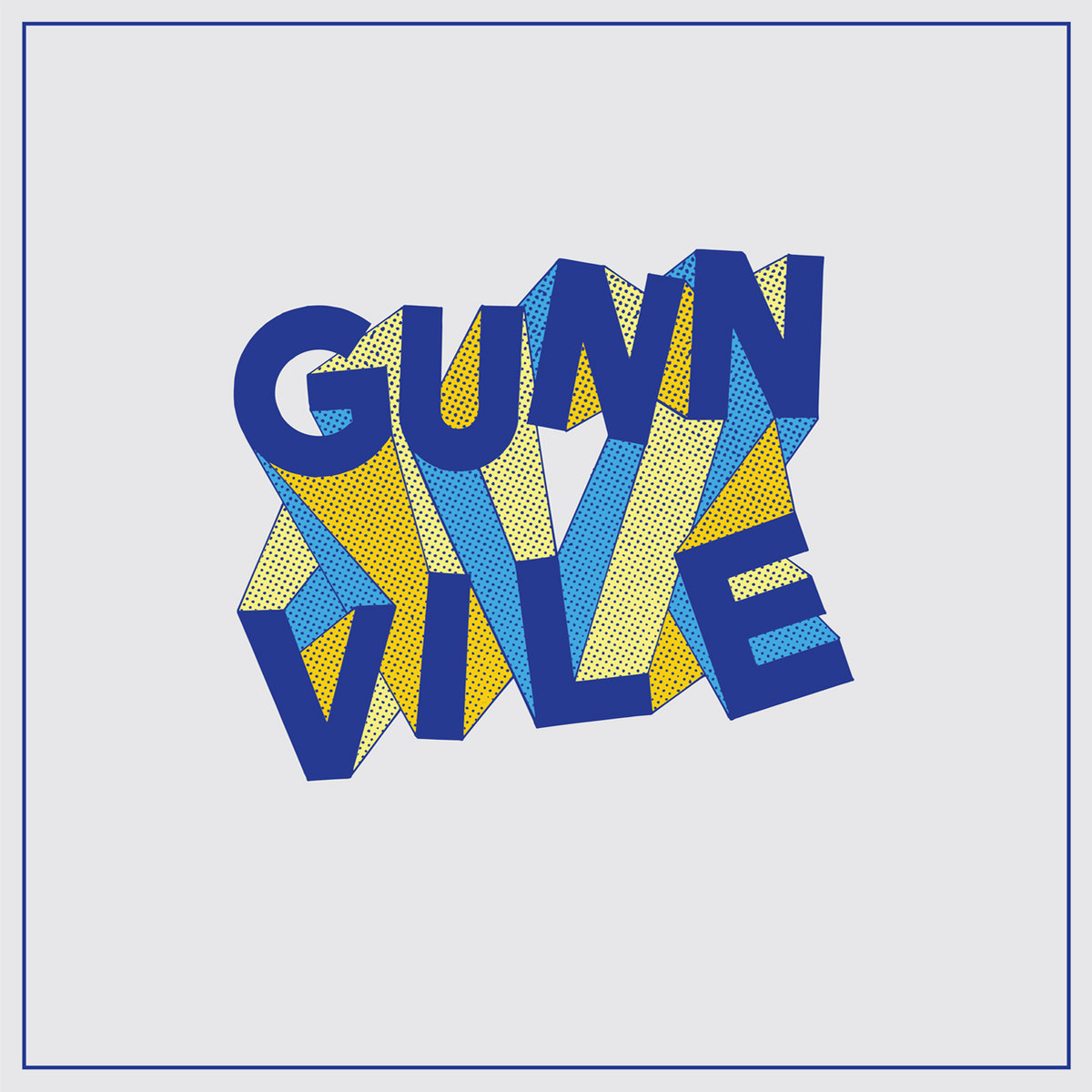
Kurt Vile | Steve Gunn (Released July 14th 2017)

Kurt Vile and Steve Gunn collaborated for their contributions to Three Lobed Recording’s Parallelogram series. The two artists, originally connected by mutual friends and geographic proximity, have long pushed the other’s continued artistic development. Despite sharing many live stages over the years, this installation of Parallelogram represents the first time that the two have worked together in the studio. Vile’s side sees him recast tracks by John Prine (“Way Back When”) and Randy Newman (“Pretty Boys,” featuring some truly electric guitar flourishes from Gunn) as if they were KV originals. The theme of reinvention continues with Vile tearing through a solo banjo rendition of his “Red Apples” (originally from his “God Is Saying This To You…” LP), retitled here as “Red Apples For Tom Scharpling.” Gunn takes on a late period Nico track, “60/40,” and pulls a lysergic rocker out of the track’s goth-ish roots. The bulk of Gunn’s contribution is the epically winding “Spring Garden,” a track in the vein of some of his other long-form guitar excursions. Featuring signature contributions from Vile and Mary Lattimore, this hypnotizing cut is unmistakably a new classic in Gunn’s catalog.

96046

b’lieve i’m goin down… (2015–2017)

On March 6th, 2015, Vile announced that he was working on his sixth studio album, with recording taking place across different locations in the United States. “b’lieve i’m goin down..”. was released September 25th, 2015, on Matador Records. Vile has described it as “All over the place. Everything you can imagine I’ve done… That’s where I’m at now, that I can sort of tap into every world and make it cohesive.

Cbkv packshot fin%283000x3000%29

Whole Lotta Sea Lice with Courtney Barnett

The new album’s writing and recording stretched out over many months, during which time he also made another full-length LP with his friend Courtney Barnett (2017’s delightful Whole Lotta Sea Lice) and attempted to finish a film score he’s since abandoned. About a year ago, feeling overwhelmed by all the demands on his time, Vile delayed the release of Bottle It In from spring 2018 to October 12th. If he hadn’t, he says, “I was prepared to have a serious breakdown. Pretty normal.”

Image001

Bottle It In  (2018)

On Bottle It In, Vile does his best to come back to earth. If his last solo record was a dark, lonely night of the soul, this one feels more like a friendly jam session with his longtime backing band, the Violators (multi-instrumentalists Rob Laakso and Jesse Trbovich, plus drummer Kyle Spence). Beneath the easygoing charm of its surface, though, Bottle It In is an album with serious ambitions. On highlights like “One Trick Ponies” and “Loading Zones,” he sounds like he’s simultaneously swinging for another modern-rock hit and searching for an inner peace that’s just beyond his grasp. Among the songs Vile recorded with Everett is Bottle It In‘s nine-minute-plus centerpiece, “Bassackwards,” a slow-burn psychedelic dream with an undercurrent of dread. In part, he tells me, it’s a song about his fears for the future in a time of global warming and skyrocketing hate. “The world is backwards as fuck right now,” he says.

Vile is also featured on the song “Let Me Get There” and Hope Sandoval & The Warm Inventions” released in 2016.

Vile sings lead vocals on The Sadies song “It’s Easy (Like Walking)” on their 2017 album Northern Passages.

In 2017, Vile and Courtney Barnett recorded the collaborative album “Lotta Sea Lice” , released on October 13th. The lead single “Over Everything” was released on August 30th, 2017 accompanied by the music video directed by Danny Cohen.

In 2018, Vile announced his seventh solo studio album, “Bottle It In”, due for release on October 12th, 2018.

Check out the these EP’s
The Hunchback
Square Shells
So Outta Reach
It’s a Big World Out There (And I Am Scared)

No automatic alt text available.

Much of the misery, suffering and exploitation that is so palpable to so many right now, relies on deception, hopelessness and complacency in order to maintain power. Only with hearts, minds and eyes wide open can we really find our way forward. Music helps us open, and we hope this song can help you as we find our collective way forward.

This song came to us by way of two brave women: Malvina Reynolds who wrote it, and Barbara Dane who made this arrangement. As they demonstrated on the front lines of past freedom struggles, working for freedom is not always seen as nice, convenient or even permissible by law. But we need to embrace it, otherwise we are working against our own humanity.

If freedom is the absence of subjugation to domination, we have a lot of work to do before we all truly have access to this fundamental ideal. And there are so many courageous examples of this work. This song means to move you into rebellion. To embrace your power to disrupt the viciousness that is permitted by complacency.

http://

JoanShelley_by_EbruYildiz_600

When Joan Shelley performed with Wilco at New York’s Beacon Theatre this March, she stood huddled on the corner of the massive stage alongside collaborator Nathan Salsburg. Beneath Wilco’s elaborate backdrop of trees and foliage, the pair might have even appeared, from certain angles, as one body, their instruments (Salsburg on guitar, Shelley alternating between guitar and banjo), overlapping both physically and sonically. And if their tight knit music and cozy positioning on stage didn’t already indicate a sense of intimacy, Shelley closed the set—which highlighted tracks from her extraordinary new self-titled album—with a traditional folk song, sans accompaniment and sans microphone. As Shelley stepped to the front of the stage to sing “Darling Don’t You Know That’s Wrong,” the audience became a part of her small circle.

It was a fitting gesture from an artist who describes her music as “the quickest way from me to another person,” whose every word seems to be chosen as a way to cut through the chaos of daily life. “It’s coming to the people instead of people coming to you,” she says of the a capella performance: “As a singer, it’s asking more from my body in order to physically do it—to turn up what you’re doing, and step outside the barrier of technology.” It makes sense that Shelley sees technology as a hurdle and not a tool. As she’s evolved as a songwriter, her songs have become more unadorned and powerful. Her two previous records on Philadelphia label No Quarter—2014’s Electric Ursa and the following year’s Over and Even—each represented massive steps forward through the deeper refinement of her craft. If you carve out a place to listen, her music fills the space around you.

Shelley’s latest record is no different. Produced by Jeff Tweedy at his Loft Studio in Chicago, Joan Shelley widens her scope, focusing on more spacious songcraft. The first single, “Wild Indifference,” is built on a series of sustained, open chords that sound like sighs of relief. But the album also marks Shelley’s starkest, simplest work to date. Early in the writing process, she found herself inspired by the most primitive of folk tunes: recordings in which performers simply sang in unison with their instrument. “I started trying to be a more playful guitarist,” she says, citing the jokey songs of cult favorite folk artist Michael Hurley as a guiding light.

The musicians who accompany her on the record, including Salsburg as well as multi-instrumentalist James Elkington and drummer Spencer Tweedy, took a similar approach. The recordings are mostly first and second takes, just after Shelley introduced her band to the music. “They’re all excellent musicians who can feel the their way through the dark the first time through a song,” Shelley says. You can hear the collaborative energy in the music. “Where I’ll Find You” is one of the album’s most upbeat numbers: a deceptively simple song that ambles with a jazzy lightness. But deeper listens reveal complexities in the performance: Tweedy’s brush-stroked drums never find a steady pattern, looking to the cadence of Shelley’s vocals instead of the rhythm for guidance.

JoanShelley_by_EbruYildiz_600-2

Shelley is quick to note the difference between “percussion” and “implied percussion,” meaning rhythms that are built into the music and not laid atop it. “I always hear percussion when we play,” Shelley says about her process with Salsburg, “The game is to just play the guitar while imagining the percussion, because spelling it out isn’t always the most interesting thing to me.” On the record, Tweedy seems to display an intuitive understanding of the concept as well; it might even take a few listens to the record before you start distinguishing which songs feature drums and which do not.

In this way, Shelley’s most collaborative album also stands as her subtlest and quietest. Like her performance at the Beacon Theatre, the process for writing these songs was one propelled by a sense of proximity and place. She had recently moved into a house in her native Louisville, Kentucky, just around the corner from Salsburg. Their closeness allowed their writing process to become more fruitful than ever, and Shelley found inspiration in her new home. “Certain houses, certain rooms,” she explains, “it’s the same way with instruments, you’re like ’There’s songs in this instrument.’ Even if it’s not the fanciest one.” The songs on Joan Shelley, while rarely making explicit references to her location, often take cues from the world around her. The opening number is called “We’d Be Home,” and it’s one of her most striking compositions. “See the morning light,” she sings, her warm fingerpicking intertwining seamlessly with Salsburg’s, “Gentle as it tries to make you new every morning.”

With its pensive tone and recurring themes of trust and self-preservation, Joan Shelley plays as a series of mantras whose power amplifies when put into practice. “How could you stand it,” she repeats in one of the album’s more ominous numbers, “if the storms never came?”  Shelley assures that all resemblances to the country’s political climate are coincidental. “It’s funny how some of it can be reread in that light now,” she says. “Our inner struggles are the same we’re playing out on a national level.”

http://

While Shelley’s inspirations are based on more insular anxieties, she remains attuned to the pulse of the world. Shortly after Leonard Cohen’s death, she shared a gorgeous cover of his Various Positions track, “Heart With No Companion.” “It seemed to really resonate with the times,” she says of his song, which warns of impending “days of shame” and “nights of wild distress.” But while Cohen’s version was featured on one of his most lavishly produced records, Shelley’s rendition is austere—even by her standards. “I wanted to cover that song so people could hear the words,” she explains, “And not be scared away by the crazy Casio keyboards.” In other words, she wanted to make it her own.

In the wake of Cohen’s final album, his death, and Trump’s election, Shelley found herself, like many Americans, in a state of—as Cohen might have put it—wild distress. “If that wasn’t the most dramatic record release, political event, and death of an artist,” she says sternly, “Then tell me another one.” She quietly shared her cover, and shortly after, considered abandoning the Internet all together. “It takes so much mental space once you’re in the feedback loop of posting and seeing and checking again,” she says, “It doesn’t make me feel good. The information’s not necessarily useful.” There’s something slightly anachronistic about hearing Shelley speak of the perils of social media, considering how the most modern technology referenced on her latest album might be a fireplace. But she sees in our times the same lesson she’s learned through her years of songwriting, the same hard-won serenity that her music reflects: to find the things that are most vital to you, to hold them close, and to know it’s enough.

Image may contain: people sitting, stripes and shoes

English five-piece Hookworms have followed up this year’s Microshift with a new remixes EP, Microshift Remixes EP, out on November. 23rd via Domino Recordings. The four-track EP features remixes from Nik Colk Void of Factory Floor, Luke Abbott, Free Love (fka Happy Meals) and XAM (with Hookworms’ own MB). The EP will be limited to 500 physical copies and they unveiled the first track from it this past week: “Ullswater (Luke Abbott Remix).” The new remix preserves the punchy, intricate electro-rock quality of the group’s album while drawing it out for a more hypnotic, rhythmic drone. The vocals cut out about halfway through, but they keep up the intrigue with mind-numbing synths and pulsing percussion, opening the sonic palette much wider than you thought they would, especially with the outro’s strange, waterfall-like percussive elements

Hookworms – “Ullswater (Luke Abbott Remix)”, taken from ‘Microshift Remixes EP‘ released 23rd November 2018 on Domino Recordings Co

On this day in 1990, Oxford, England shoegazers Ride unleashed their debut album, “Nowhere”, at the height of shoegaze, and it still stands up as one of the genre’s defining works.  The word “shoegaze”  became one of my favorite musical styles. “Nowhere” is the debut album by Ride, released 15th October 1990. Rolling Stone called the album “a masterpiece”,one of [shoegazing’s] enduring moments”. Ride had released three EPs, Ride, Play, and Fall, prior to the release of “Nowhere”  .

Before the ear-splitting beauty of My Bloody Valentine, the sugary noise-pop of The Jesus and Mary Chain or the washed-out soundscapes of Slowdive,

“Vapour Trail,” though this string-filled ballad wasn’t quite full-on shoegaze like the remainder of the record, its swirling, transcendent energy and chiming 12-string guitars left me wanting more. I previously knew of the band’s co-lead singer and guitarist Andy Bell as the bassist in Oasis, but after I heard him sing on “Vapour Trail” with soft-hearted conviction, At the time theybecame my new favorite band—Ride.

The opening track, “Seagull,” I was met by a guitar assault, an unrelenting drone-like groove, breakneck drums and the harmonized co-lead vocals of Mark Gardener and Bell. Sure,  This LP made me completely rethink the capabilities of musical transcendence.

I’d been exposed to uplifting romanticism and isolating sadness colliding in the same song before with artists like The Smiths and The Cure, but never with such extreme poles as Ride. On the eight tracks of “Nowhere”, Ride fired a distorted wash of piercing guitars, Loz Colbert’s vigorous percussion, bassist Steve Queralt’s clamoring melodies and Gardener and Bell’s angelic vocal harmonies. Songs shift from the soft wisp of “Dreams Burn Down” and “Vapour Trail” to the chugging chaos of “Decay” and “Kaleidoscope,” but more often than not, they incorporate both delicate allure and fierce annihilation within the same song.

Ride are a musical contradiction, and the best shoegaze music excels at contradiction. One of the things that kept pulling me back to Ride’s “Nowhere” and the rest of their discography and separated them from other shoegaze bands I love—was their refusal to obscure their harmonious vocals. If you were to transcribe the lyrics of bands like Cocteau Twins or My Bloody Valentine, you’d probably get a different set of words with each attempt due to their washed out sound mix. But with Ride, they preserved their distorted onslaught of instrumentals while allowing their shimmery pop vocals a la The Byrds or Teenage Fanclub to remain fully audible. Its opening cut, “Seagull,” is a stunning exploration of strung-out guitar notes and elongated vocal textures; a mission statement, for what would be one of shoegaze’s most pristine moments. “Definitions confine thoughts, they are a myth” Mark Gardener muses, The Songs like “Seagull” and “Polar Bear” display the perfect fusion of Gardener and Bell’s vocals with their discernible Oxford tongue and even those turned off by their wall of sound would admit to being charmed by their vocal match made in heaven.

The discourse around shoegaze seems mostly to be structured around a Holy Trinity dynamic, with Slowdive, Ride and My Bloody Valentine making up the trio of essential bands within the genre. Ride, though, were never quite as exclusive to reverb and hushed vocals as the other two, tailing off into Britpop, the total opposite of shoegaze, territory far too often to be considered their greatest. “Nowhere”, though, was arguably the highlight of their discography—a cohesively immersive, stunningly crafted shoegaze coup.

For a brief moment in 1990, Ride defied definition—crafting one of the most mind-bending and utterly stunning records of the era. Leaving “Nowhere” out of any record collection is totally inexcusable.

I’ve since come to know and love the overwhelming disarray of My Bloody Valentine, the hypnotic spirituality of early Verve, the sprightly, quiet firestorm of Lush and the intricate shoegaze-pop of DIIV, but it all began with Ride’s Nowhere. I’m not sure I would be able to come to grips with the harsh underbelly of bands like those along with the ambient work of Grouper or the atmospheric dream-pop of Galaxie 500 if it weren’t for the noisy, divine abyss of shoegaze via Ride’s Nowhere. I view Ride and Nowhere as the essential connecting tissue between the jangle pop of The Stone Roses, the dream-pop of The Ocean Blue, the discordant haze of My Bloody Valentine and the machine-like krautrock of Toy.

yowler-black-dog-in-my-path-1537460380

Maryn Jones will release her second album as Yowler, Black Dog In My Path, the follow-up to 2015’s excellent The Offer. We’ve heard two tracks from it already, “WTFK” and “Angel” and Jones says about the new album, and today she’s sharing a third single, “Where Is My Light?”

It’s a meditative storm cloud, with massive guitars and booming drums that make Jones’ anxieties feel even more insurmountable against the tempest. “Where is my joy among these pieces that we scream into space?” she asks to the void. “Where is my gentle reason, and the light within my cave? Where have you been?” It sort of serves a sequel to Jones’ solo track from last year, “The Light,” when the warmth exuded in that song feels hard to find.

Here’s what Jones had to say about the track in a statement:

‘Where Is My Light?’ is about feeling isolated after a big & unexpected life transition. During this time I had a lot of time to think about what was important to me, what served me and made me experience real joy, and what did not. It’s about being an artist under capitalism and all the mess that that can cause in your brain. It’s about missing the natural world and all the beauty you see when you’re on the road, and hating your stupid fucking phone.

Image may contain: grass and text

Singer-songwriter Gregory Alan Isakov’s new album, Evening Machines, showcases his emotionally evocative songwriting style; rich in narrative detail and beautifully contemplative.

Isakov was born in Johannesburg, South Africa. He and his family immigrated to the States in the mid-1980s and settled in Philadelphia. As a teenager, he began touring and moved to Colorado to study horticulture. He self-released his debut album in 2003, and he’s built a following on a series of lush, honest, ethereal songs that embody modern folk, influenced along the way by Leonard Cohen and blues-folk musician Kelly Joe Phelps. Over the years, Isakov’s songs have appeared in a number of television shows. His songs often have atmospheric, cinematic qualities and while placements in shows like Girls, Californication and Rectify have served his career well, the recent use of “If I Go, I’m Goin” (from 2009’s This Empty Northern Hemisphere) on the final episode of the new Netflix series The Haunting of Hill House is a perfect example of how Isakov’s sense of narrative and quiet intensity can elevate a visual medium.

The video for “San Luis,” a cut from Isakov’s newest album. It’s a mesmerizing, sprawling road video beautifully shot by director Andy Mann, who filmed it with his fellow video and photography colleagues, Keith Ladzinski and Chris Alstrin.

Isakov had this to say about the song:
“I started this song in the San Luis Valley in southern Colorado, a place I often draw from when writing. The song followed me around for about a year and finished itself in California, on the central coast. Andy called me soon after I had returned to Colorado and said he was shooting a short film about artists and wanted me to meet him at Great Sand Dunes National Park for a few days. Any chance I get to hang out with him, I’ll take. He, along with some other National Geographic photographers and friends were traveling the Southwest, documenting the artist’s process. We camped a couple nights and talked about writing, photography–and got caught in a gnarly sandstorm, our tents blowing away in the distance. It was a surreal and beautiful few days.

I reached out to Andy a few months back, to ask if we could use some of the footage for a video for the song. I wanted to make sure the landscape that we had experienced together made it in. I loved collaborating with him; he really is a master at what he does.”
The photography for “San Luis” is wondrously expansive and moody. It seductively captures the wide open sky above the Great Sand Dunes National Park, as well as the land and wildlife found there. The video opens on a shot of morning breaking, before following Isakov in his camper through the park. A campfire roars. A spectacular night sky twinkles brilliantly. As a banjo gently strums, Isakov’s pensive guitar pushes the song into stirring solitude.

“Weightlessness, no gravity. / Were we somewhere in-between? / I’m a ghost of you, you’re a ghost of me. / A bird’s-eye view of San Luis”
Simply put, the video for “San Luis” invites you in to a place that you never want to leave.

The Kinks Are The Village Green Preservation Society 50th anniversary super deluxe

BMG Records will issue a 50th anniversary edition of The Kinks‘ 1968 album The Kinks Are The Village Green Preservation Society in October. The Enormous 11-disc super deluxe edition • 2018 remasters • 174 tracks

The band’s sixth studio album was originally issued in November ’68 and would be the last album by the original line-up (bass player Pete Quaife departed in early 1969). Describing the album today, Ray Davies says it’s about “the ending of a time personally for me in my life. In my imaginary village. It’s the end of our innocence, our youth. Some people are quite old but in the Village Green, you’re never allowed to grow up. I feel the project itself as part of a life cycle.”

The super deluxe edition is an eleven-disc set, no less. It contains a double vinyl LP with stereo and mono versions (both 2018 remasters) and a 12-track ‘Continental’ (Swedish) version on vinyl.

In addition there are five CDs of content as described below:

  • CD1:
    2018 Stereo Remaster, from the original HD tape transfers + bonus tracks of singles, B sides and original album related tracks
  • CD2:
    2018 Mono Remaster, from the original HD tape transfers + bonus tracks of singles, B sides and original album related tracks
  • CD3:
    Village Green Sessions – Including alternate versions, mixes and backing tracks, many previously unreleased
  • CD4:
    Village Green At The BBC – TV performance track audio and band interviews, many previously unreleased
  • CD5:
    Preservation, Sessions, Live & Demos – including mid 70s recordings, previously unreleased home demos, Ray Davies live in Denmark 2010 and unreleased track ‘Time Song’.

The three remaining discs are a trio of replica seven-inch singles, reproduced in picture sleeves. They are:

  • Days / She’s Got Everything (1968)
  • Starstruck / Picture Book (1968)
  • The Village Green Preservation Society / Do You Remember Walter? (1969)

There are 174 tracks in total (see full track listing at the bottom of this post) with “many previously unreleased tracks and versions”, including the previously unreleased track ‘Time Song’ which was performed by The Kinks at the Theatre Royal, Drury Lane in January 1973. This track was Davies’ commentary on the UK joining what was then called The Common Market. Ray says “This song was recorded a few weeks later but never made the final cut on the Preservation Act I album. Oddly enough, the song seems quite poignant and appropriate to release at this time in British history, and like Europe itself the track is a rough mix which still has to be finessed.” This track features in the box set and the 2CD edition.

Check out the previously Unreleased track ‘Time Song’ :

The box set comes with a 52-page hardcover book with extensive sleeve notes and new band interviews and includes essays by Pete Townshend and other writers. It boasts “special packaging” with debossed box cover, foil & metallic text, linen cloth finish and a ‘bespoke accessories holder’.

It also comes with what we like to call ‘stuff’… broadly categorised as ‘memorabilia’. This includes a poster of Village Green LP inner gatefold; Empire Liverpool 1968 tour poster; glossy 10” x 8” photos from Hampstead Heath 1968 photoshoot; colour press photo with reproduced band signatures; Bournemouth 1968 gig ticket; PYE Records promo card; ‘Days’ sheet music etc.

The other three physical editions are a 2CD deluxe ‘art of the album’ which features the stereo and mono remasters and bonus tracks (49 tracks in total), plus single disc vinyl and CD versions with just the stereo remaster.

The Kinks “Are The Village Green Preservation Society” 50th anniversary editions are out on 26th October 2018. The UK box set price of £94 seems pretty good for all that content .

Image may contain: 4 people, people smiling, people standing and indoor

Click to view larger image

QUICKSILVER MESSENGER SERVICE – ” Live At The Old Mill Tavern ” March 29th 1970

QMS are/were a great guitar band, the first three albums are a guitarfest but 1970 QMS are not that band. While I accept Dino Valenti was a good singer here he definitely dominates the main parts of this set. A lot of this album is material which was still to be released but on the band’s standard track “Mona” Cippolina does not get enough chance to shine (the band was down to one guitarist). Nicky Hopkins plays as good as ever on keyboards.
The last tracks are two jams with James Cotton on harp which at 15 mins is a classic West Coast work out. It is worth it for that alone.

The Quicksilver line up during this era was: Dino Valenti, Gary Duncan, John Cipollina, David Freiberg, Greg Elmore and Nicky Hopkins. This is the line up that recorded “Just For Love” and “What About Me”.

The sound quality is actually rather good for a 40 year old soundboard reel to reel tape recording. It does take a few minutes for the bass to get dialed in the mix. There were a few audio gremlins happening that night on stage as well. These are discussed in the booklet accompanying the release. The recording could also use a bit more low end. Still, this is definitely one of the best sounding Quicksilver archive releases. It pretty much blows away the Bear label releases.

The total playing time is just over 65 minutes. The majority of songs are from the Dino era so if you don’t like those, you might want to look elsewhere. Most of the songs are very well played versions with the exception being the first version of Baby Baby. There is a reference to Edward during one of between song breaks. It’s a shame that something from Shady Grove isn’t among the song lists. Blues legend James Cotton joins in the the last two jams. There were three jams on the circulating copies. All in all, a cool performance from the Old Mill .

Click to view larger image

QUICKSILVER MESSENGER SERVICE –  Live At My Father’s Place Rosyln NY January 31st 1976

Click to view larger image

QUICKSILVER MESSENGER SERVICE – Fillmore Auditorium: 5th February 1967

One of the very earliest known live recordings by this psychedelic jam band, legends who conquered San Francisco and later the world, Quicksilver Messenger Service! 
Features the rare Jim Murphy-led 5 piece line-up laying down the acid blues grooves the band would follow throughout their career with tracks such as Suzy Q, Smokestack Lightnin, Babe I’m Gonna Leave You,Hoochie Coochie Man, and more! .  The performance is typically good from that period. QMS was like other bands (Steve Miller Blues Band, Santana Blues Band  as they were originally named) early on during that time–heavily indebted to the blues–but the blues songs are played with excitement with several good guitar solos/duels. Murray’s vocals and harp playing don’t distract from the performances. And Freiberg plays his viola on a couple of tunes. And with songs that appeared on their first album, this is a real time machine before the Dino Valenti era and the band’s sound changed.
Available on both CD and gorgeous 2LP vinyl set!

The band that became Quicksilver Messenger Service originally was conceived as a rock vehicle for folk singer/songwriter Dino Valenti, author of “Get Together.”” Living in San Francisco, Valenti had found guitarist John Cipollina and singer Jim Murray. Valenti’s friend David Freiberg (joined on bass, and the group was completed by the addition of drummer Greg Elmore and guitarist Gary Duncan As the band was being put together, Valenti was imprisoned on a drug charge and he didn’t re-join Quicksilver until later.

Click to view larger image

QUICKSILVER MESSENGER SERVICE  – Fillmore Auditorium:  5th November 1966

Nice package of good quality recording from 1966 of embyronic Quicksilver Messenger Service, then formed less than a year and already a bay area favourite.

This is absolutely terrific and a must for fans of Quicksilver Messenger Service especially their earlier pre-Dino Valenti days. There’s been a glut of live QMS CD’s lately, and a few have been “OK” but this is the best yet. Jim Murray’s excellent vocals really make you wonder what they would’ve been like if he stuck around. The songs are shorter than their later lengthy explorations, but there’s enough classic Cipollina guitar solos to satisfy his disciples. It comes is a nice digipak with an insert. There was a superb 2LP set back in the day called “Maiden Of The Cancer Moon” that was a terrific performance by the four piece line-up that recorded their first album, housed in a beautiful jacket with decent sound for the day. I had been hoping and praying that someone would release those tapes on CD one day. Well that day has come with the excellent 2CD digipak set “Live At The Fillmore June 7, 1968′” the best live document of that era since “Happy Trails” .Greatly expanded with far better sound, except for a rough “Pride Of Man” opener where the sound mixer was getting his bearings. Both of these recent archival releases are essential for any fan of QMS.

Jim Murray – vocals, percussion; John Cipollina – guitar, vocals; Gary Duncan – guitar, vocals; David Freiberg – bass, vocals; Greg Elmore – drums

Image may contain: 1 person, playing a musical instrument, on stage and guitar

Along with contemporaries Big Brother and the Holding Company, Jefferson Airplane and the Grateful Dead, Quicksilver Messenger Service were among the earliest of the San Francisco “Summer of Love” bands who frequented the Avalon, the Fillmore and other area venues. Originally conceived as a band to back San Fran folk-rocker Dino Valenti (best known for writing The Youngbloods’ classic “Get Together”), the band, Quicksilver Messenger Service, had to go on without their frontman in 1965, when Valenti got busted for drugs and sent away to prison. He was in and out of jail for the next two years, and after a failed attempt at forming a band called the Outlaws with Gary Duncan, Valenti officially rejoined Quicksilver in 1970. By then, the group had already built a sizeable following as one of the Bay Area’s hottest club bands.

This is probably the earliest known professional live recording of the band, made in 1966 at the Fillmore Auditorium. Less than a year old at the time of this recording (though some of their members had begun working together in 1963), the band was still finding its way through a maze of old blues tunes, early psychedelic drug influences and originals they were writing at the time.

Their musicianship is remarkably strong on this early recording, especially considering other popular bands breaking through the Bay Area club scene at the time could barely play. Quicksilver’s version of “Susie Q” was completely lifted almost note for note some years later by another Bay Area-based band: Creedence Clearwater Revival. There was an obvious interest in Muddy Waters‘ music, with the band performing two covers of his songs at this show: “I Got My Mojo Working” and “Hoochie Coochie Man.” But not everything here works. The band’s attempt at a pop ballad, “Stand By Me,” lacks cohesive direction and suffers from horribly off-key vocals and out of tune instruments.

Guitarist John Cipollina (whose younger brother would become the bassist in Huey Lewis and the News), spearheaded the band’s idea to use dual lead guitars and would eventually leave Quicksilver in 1970 to form his own band, Copperhead. In 1989, he died at the age of 45 from emphysema, aggravated by years of respiratory problems. Bassist David Freiberg eventually left to join his friends in the Jefferson Airplane in 1972, morphing into the Jefferson Starship around the same time.

During this unique time in the history of American rock music, there were few groups that played as prominent and formative a part in developing the “San Francisco sound.” Here’s a chance to experience the band in all their early, unvarnished glory – indispensable.

QUICKSILVER MESSENGER SERVICE  –  Live at the Fillmore: 7th June 1968

Songs from “Unreleased Gold and Silver” and the superiorly recorded “Maiden of the Cancer Moon – originally on Psycho Records. Also some from a bootleg called “Smokin Sound” its nice to hear “Pride of Man” despite the huge drop out in sound after Cipollina’s solo. All of this is pretty well recorded, I have to say. Not bad for tapes of the age they are. Duncan is too loud in the mix, as another viewer remarked. However one can appreciate this if one remembers how Duncan used to live in the shadow of Cipollina. Of course the reason that is was that Cipollina had “that sound” which distinguished him from so many other players of that time. Duncan, the great player that he was, could not compare to that. Its widely know too that Cipollina’s amplification live was a fearsome beast,

This recording, taken from a two-night, four-show run, with Quicksilver opening for Electric Flag and Steppenwolf, is essential concert listening. Fans of the quartet lineup that recorded the first QMS LP and Happy Trailswill love these sets, as they took place right between the production of those first two LPs.

On this set, the first LP material is represented both by their cover of Hamilton Camp’s “Pride Of Man” and their own “Dino’s Song.” These were both regional hits in California at the time, and easily accessible for new audiences, which New York City was for QMS in 1968. We’re also treated to a cover song, “Back Door Man,” that was recorded during the first album sessions, but rejected in favor of original material. Here it is played with aggressive enthusiasm. Even though the setlist is relatively tame, the band is obviously giving it their best in order to win over the NYC audience.

They return to the first album for their set closer, “Gold And Silver.” This number is one of the finest performances by the original band ever captured on tape. this song is just as infectious. With blazing guitar solos interweaving, powerful counterpoint bass playing and the unusually swinging drum rhythms, this tune truly smokes. If the audience wasn’t convinced of QMS’ originality prior to this song, this final number must have finished the job – and this recording stands as proof.

They close with another tour de force, Bo Diddley’s “Mona,” which includes some inspired jamming with hints of “Maiden Of The Cancer Moon” and “Calvary”, clocking in at twelve minutes altogether. This is not only another hot performance, but gives one great insight into where they would be heading musically on their next album, Happy Trails.

John Cipollina – guitar, vocals; Gary Duncan – guitar, vocals; David Freiberg – bass, vocals; Greg Elmore – drums

QUICKSILVER MESSENGER SERVICE   – Live At The Winterland Ballroom 1st December 1973

Previously unreleased live recording of a gig from around the band’s ‘Coming Thru’ album. The show clocks in at over an hour, as I soon there realized that I was definitely getting the most out of this disc’s four tracks (of a total of eight) that ran over the eight-minute mark. The suitable opener – the nine-minute “Losing Hand”, “Mojo”, [always like hearing QMS play this tune], one that I’m vaguely familiar with “The Hat” and the wailing “Who Do You Love”.

This performance was taken from a December 1st, 1973 concert at Winterland in San Francisco, which had Quicksilver Messenger Service headlining a bill that also included the Sons of Champlin and John Cipollina’s Columbia label recording group, Copperhead. There is some extant film footage of the Copperhead and QMS sets, which can be found on the expanded, two DVD reissue of the documentary John Cipollina: Electric Guitar Slinger. The film of QMS performing “Who Do You Love?” is also posted on Youtube.

The live performance itself is stunning. One of the complaints leveled by some reviewers of the Valenti QMS lineups, is that his frontman act reigned in the jamming facet of the band. Not so here. Perhaps it was the energy of the double drum kits, or the challenge of playing before a large Winterland audience with promoter Bill Graham cracking the whip, but Duncan and Cipollina take no prisoners here, pushing the music higher and higher. The band is tight and the playing is energetic and focused. The highlights include an excellent take on the blues standard, “Losing Hand”, done in a Latin jazz rock arrangement similar to “Fresh Air”, a scorching version of Valenti’s “Mojo”, and a 19 minute jam up on “Who Do You Love” that includes a spacy psychedelic section.

The Band of John Cipollina – guitar, Dino Valenti – lead guitar flute, congas, & vocals, David Freiburg – keyboards, Mark Ryan – bass and Greg Elmore – drums.  a tandem drum kit battery, and Harold Aceves in the drum seats. Gary Duncan – bass, guitar, vocals;

Headlining a bill that featured Sons Of Champlin and John Cipollina’s band, Copperhead, this Quicksilver Messenger Service recording proves that even at the tail end of their years on Capitol Records, this was a band that was far more compelling onstage than they ever were in the studio. Few QMS live recordings are known to exist from the 1972-’73 era and this one, recorded in December of ’73, captures the band just before they initially split up. By the early 1970s, Dino Valenti was essentially the bandleader and was providing the vast majority of their material. However, on this performance, the original members, Gary Duncan, John Cipollina, David Frieberg and Greg Elmore are all on board, maintaining a strong link to their past. The core band is augmented by a second drummer and a percussionist. Mark Ryan takes the bass responsibilities, allowing Frieberg to concentrate on piano and keyboards. Although Gary Duncan was often ill during this era, his distinctive guitar playing is often full of fire and John Cipollina is also in fine form. On many of these songs, they bring an improvisational approach to the instrumental sections that are quite captivating, lending a balance to the groups more song oriented sound. The band still has plenty of creativity here and this set is remarkable and surprising in a number of ways.

The first surprise is the opening number, where they apply a prototype Quicksilver-style arrangement to “Losing Hand,” a piano based blues written by Ray Charles. Never recorded by the band, this rarity is a very impressive performance that finds a nice balance between the raw aggressive feel of Happy Trails era material and the more polished rock oriented sound of the later albums. Another rarely performed tune, “Play My Guitar,” a song from the 1971 Quicksilver LP follows, featuring trademark psychedelic guitar from Duncan and Cipollina that smokes the studio version. At this point, everyone is fully warmed up, so they sink their teeth into “Mojo,” the strongest rocker on the band’s final Capitol album, Comin’ Thru. The sparks fly as they burn through this number for nearly 10 minutes, allowing Duncan and Cipollina to fully flex their impressive guitar chops. They may have been nearing the end, but onstage Quicksilver still had tremendous energy.

To close the set, they deliver a nearly 40 minute continuous sequence that begins by coupling one of their most beloved songs, “What About Me” with an intriguing take on the Just For Love album track, “The Hat.” The crowd roars its approval in all the obvious places during “What About Me,” which features plenty of Valenti’s penetrating vocals. Midway through its dreamy flow, the band drops way down while Valenti improvises. Although no recordings have ever surfaced of Valenti’s early years on the folk circuit, this little sequence gives one a fleeting glimpse of his root sound and style. Eventually the group transitions into “The Hat” – 10 delightful minutes revolving around a relaxed infectious groove. They might not be recognized for it, but this same groove and nearly identical guitar riffs fueled several mid-’70s hits by other artists. Just when one expects them to end this remarkable sequence, Duncan starts veering off, with the rest of the group following his lead. As they continue the familiar sound of “Who Do You Love” emerges and they are suddenly blazing into a ferocious jam.

After several minutes, Duncan takes the lead vocal and it sounds as if we have journeyed back to 1968. With two drummers, as well as a percussionist, the rhythm section provides a strong foundation so that Duncan and Cipollina can cut loose. And cut loose they do with blazing guitar solos and plenty of improvising for the next 5 or 6 minutes. This is a cosmic performance in every sense of the word, with blazing guitar solos and a pummeling rhythm that must have convinced any doubters that this band could still pull it off.

Following this initial onslaught, the band heads into a spacey vamp with the guitarists adding creepy processed guitar effects, which build into a barrage of controlled noise, before unexpectedly, they stop! However, they are not finished and begin slowly building back up. Right before the 15-minute mark, they rip back into “Who Do You Love” proper, still blazing with energy. They are playing so furiously, that Duncan forgoes singing on the reprise and instead lets the guitars do all the talking, before bringing the night to a close with a big crescendo-style ending. It’s a remarkable performance that shows this final incarnation of the original group in a most positive light.