Model, solo artist and singer, Rachel Trachtenburg, has been performing live since the age of just 6. Originally with The Trachtenburg Family Slideshow Players, best known for that song about Eggs, and then in Supercute!, her music has always felt on the verge of a breakthrough. Perhaps that will come with her latest project Wooing, who have this week shared one half of their new 7″ single, Could Have Been.
Could Have Been is the first track that Wooing have worked on collaboratively, guitarist JR Thomason, and drummer Rosie Slater contributing to what is their most exciting single to date. Could Have Been is a track of beautiful contrasts; there’s an intensity to the insistent guitar line and pounding tom-heavy rhythms, that perfectly juxtaposes the lightness of the vocals and the swirling, hazy quality of the production. It’s a trick equally matched in Rachel’s vocal, one second it’s bassy and mellow, the next it leaps to yelped shrieks, as she dissects, “the disappointment of shallow friendships and the need to move on from them”. It’s a song as good as their band name, and where Wooing are concerned, consider us completely wooed.
The Clouds 7″ is out November 9th via Kanine Records.
Hollie Fullbrook, the songwriter behind the Tiny Ruins moniker, is a songwriter who has for a long time seemed to be on the verge of break-through. Her early, almost entirely solo material has given way to a fuller sound, with a four-piece band, which is set to be showcased on upcoming third album, Olympic Girls, when it’s released early next year.
This week Hollie has shared her new single, and the album’s title track, Olympic Girls. It is a delightfully intimate performance, intricate guitar work, textural percussion and gorgeously simple vocal lines all draw your ear, revealing all their charms only on repeat listens. Like the video that accompanies, it’s a track that offers nowhere to hide; there’s an element of exposure, and an honesty to the songwriting that’s utterly refreshing. Tiny Ruins have never sounded better.
Olympics Girls is out February 1st via Ba Da Bing Records.
1969 was a tremulous year for the band Traffic. After a successful tour in the US following their second album, Steve Winwood left the band for the short-lived super group Blind Faith. In the meantime Island Records released the album “Last Exit”, a mishmash of leftover studio cuts and live performances Traffic recorded in 1968. Blind Faith recorded one excellent album but broke up shortlyafter, leaving Winwood then free to start working on a solo record suggested by Island Record’s manager Chris Blackwell.
The plan was for Winwood to play all the instruments using tape overdubbing techniques in the studio. Winwood is a fine multi instrumentalist who could certainly perform such a feat, but he found the process difficult: “I began trying to make music all on my own with tape machines and overdubbing and stuff. It was a very good way of writing, but it was a weird way of making music. The whole thing that makes music special is people. I was getting to the point that I needed the input of other people. It seemed inhuman to make records just by overdubbing.”
Steve Winwood started calling on his friends from Traffic to help him in the studio. First to join was Jim Capaldi who helped writing some of the songs and contributed drums and percussion tracks. Next was reed man Chris Wood who brought his jazz and folk influences, and the three worked for a few months on the album. It became clear that the solo album, with the planned title name of “Mad Shadows”, was really a Traffic record.
Chris Wood was influenced by the folk revival that swept the British Isles in the late 60s. One song he suggested to the group was John Barleycorn, which he heard on the 1965 Watersons record Frost and Fire. The Watersons’ version, like most of their material from that period, was an unaccompanied vocal group performance.
Winwood applied himself to the song and played a wonderful guitar part on it. Capaldi added tasteful and sparse percussion parts and more importantly a brilliant vocal harmony starting on the fifth verse. Wood’s flute accompaniment is the icing on the cake on this great take on the song, which has been performed by many British folk artists over the years including Martin Carthy and John Renbourn. The Mainly Norfolk site has a good page chronicling many of the song’s covers. It is interesting that amidst the great activity that took place at the time in the British folk rock scene by bands like Fairport Convention, Steeleye Span, Fotheringay and many others, one of the most memorable songs remains this performance of John Barleycorn by Traffic, wnot considered a folk rock band.
The album was engineered by Andy Johns, younger brother of Glynn Johns. Between them the two brothers recorded classic rock’s royalty. Before working with Traffic, Andy Johns recorded Jethro Tull (Stand Up, Living in the Past), Spooky Tooth and Blind Faith. After Traffic his career soared with Led Zeppelin (II, III, the legendary IV, Houses of the Holy, Physical Graffiti) and the Rolling Stones (Sticky Fingers, Exile on Main Street). Quite a resume, and this is just within a span of 4 years.
Johns had a deep respect for Steve Winwood. In an interview he mentioned an experience he had when working on the Blind Faith album: “I came back from a lunch break one day and the soundproof door was cracked a little bit, and I could hear him playing the Hammond. He’s playing both manuals and the bass pedals and he’s singing. I look at him and he’s looking at the ceiling. Not only is he playing the top manual, the lower manual, the bass pedals, and singing, but he’s also thinking about what his old lady’s going to make him for dinner. So he’s doing four or five things at once and the music was just stunning. I hate to use the word genius, because it’s bandied about so much, but that guy, in the end of his little finger, has more than a whole tribe of musicality— he really does. It’s just unfair.”
When you first listen to the song you may think that you landed in the midst of a Middle Ages inquisition session. The lyrics describe all kinds of brutal methods inflicted by three men upon a poor fellow named John Barleycorn. However a closer look reveals that the distressing lyrics are actually a metaphor to the process applied to barley in order to produce beer and whiskey. While it has its roots in old folklore tales about the Corn God and religious symbolism, it is really a satire on legally prohibiting the production of alcoholic beverages while still needing the drink to get on with everyday life, as revealed in the last verse:
The huntsman, he can’t hunt the fox,
Nor so loudly to blow his horn,
And the tinker he can’t mend kettle nor pot,
Without a little Barleycorn
In short, John Barleycorn is a drinking song. Maybe the best of them all.
Steve Winwood performs a solo acoustic version of Traffic’s John Barleycorn (Must Die).
Angelo De Augustin burst onto the scene at the back end of last year with his excellent second album, Swim InsideThe Moon, a charmingly lo-fi record that was quite literally recorded in a bathtub. This week Angelo has announced details of his upcoming third album, Tomb, released again on Sufjan Stevens’ Asthmatic Kitty Records, as well as sharing the first single from it, Time.
Tomb is the first time Angelo has worked in a proper studio, collaborating with renowned producer, Thomas Bartlett aka Doveman, and listening to Time, it seems to suit him. Time loses none of the gorgeous simplicity and minimalism of Angelo’s previous work, but in Thomas Bartlett’s hands this sounds lusher and more ambitious than ever before. Described by Angelo as, “a lovelorn examination of heartbreak and moving on”, the addition of muted piano, gentle electronics, and even whistling (!) all just work to highlight his enviable songwriting instinct.
Equally good as the recorded version is live version, where Sufjan Stevens joins Angelo on Grand Piano. An album about heartbreak that ends up as a prayer for love, Angelo might sound broken, but he’s still dreaming, still open, still ready for love. the live version of his new track “Time” with Sufjan Stevens on piano. Watch their performance live from Manhattan’s Reservoir Studios
Out January 18th via Asthmatic Kitty. From the album “Tomb,”
Everybody wants a story. Something to sell. I’m here to tell you that there isn’t one with this album, at least in the traditional sense, but ten. Perhaps each of them contain more stories, sitting inside each other like nesting dolls. I could sit here and tell you that some of the songs are about growing up in the Black Hills. Some of the songs are about my parents. Some of the songs are about sexuality. Some of the songs are about loss of youth, teenage parenthood, the lines of social disorder for women, or the terror of jealousy and suspicion. But what I write is borne of my own set of memories and ideas, and once they are released into the world, they do not belong to me anymore. The interpretation is all yours, therefore these stories are yours. What I can tell you is this: My name is Haley Bonar (rhymes with “honor”). I’m 33 years old, a Taurus, and I live in Saint Paul, MN with my daughter Clementine. I also sing in a band called Gramma’s Boyfriend.
“People are complicated, and I am no exception!” This was the crux of multi-instrumentalist Haley McCallum’s statement in regards to her latest album, Pleasureland an expectation-bucking, all-instrumental release she felt moved to do after the success of 2016’s Impossible Dream. A composer, producer, writer, guitarist, keyboard player, pianist, teacher, and mother, McCallum—formerly known to the music world as Haley Bonar—decided to shine a light on other aspects of her artistry, leaving the power-pop and barbed, lyrical observations she has become known for, behind.
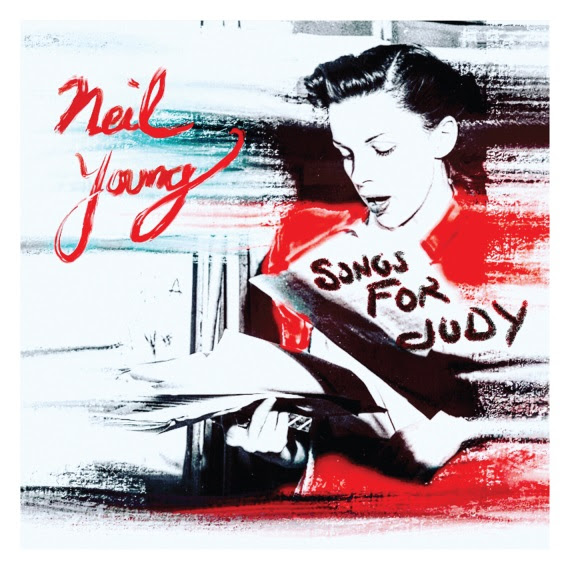
Neil Young announced his plan to release “Songs for Judy”, a live album drawn from his November 1976 U.S. tour. The 22-song LP includes solo acoustic performances of all-time classics like “Heart of Gold,” “After the Gold Rush” and “The Needle and the Damage Done” along with a number of rarer selections, including one song, “No One Seems to Know,” that has not appeared on any previous official release.
Neil Young spent the majority of 1976 on the road with Crazy Horse or on the ill-fated Stills-Young Band tour, which he famously dropped out of midway through that summer. He also found time to make “Hitchhiker”, the lost solo acoustic studio album that he recorded in the August 1976 — three months before the shows documented on Songs for Judy — but kept in the vault until last fall. At the November 1976 shows featured on “Songs for Judy”, Young performed a solo acoustic opening set before returning to the stage for a harder-rocking performance with Crazy Horse. These shows have been widely praised and discussed by Young fans for years, but this is their first official release.
Young released “Campaigner,” the first single from the album, Recorded at his November 22nd, 1976 show at Boston’s Music Hall, it’s a pristine performance of the politically puzzling ballad (“Even Richard Nixon has got soul”), which would see its first release the following year on his three-LP greatest hits set Decade.
“The tour had been so satisfying, and so different from all that rock would become in the ensuing years, something indelible was captured in our humble collection,” explains Cameron Crowe, who curated the compilation together with Joel Bernstein. “Listening to it today is a little like discovering postcards from home. It was a precious time in Neil Young’s journey, a breath of oxygen in between some of his biggest adventures.”
Songs for Judy is out November 30th on CD and digital platforms, and December 14th on vinyl.
Songs for Judy Track List (all dates are from 1976)
“Songs For Judy Intro” – Atlanta, GA – Nov 24 (late show)
“Too Far Gone” – Boulder, Colorado – Nov 06
“No One Seems To Know” – Boulder, Colorado – Nov 07
“Heart Of Gold” – Fort Worth, Texas – Nov 10
“White Line” – Fort Worth, Texas – Nov 10
“Love Is A Rose” – Houston – Nov 11
“After The Gold Rush” – Houston – Nov 11
“Human Highway” – Madison, Wisconsin – Nov 14
“Tell Me Why” – Chicago – Nov 15 (late show)
“Mr. Soul” – New York – Nov 20 (early show)
“Mellow My Mind” – New York – Nov 20 (early show)
“Give Me Strength” – New York – Nov 20 (late show)
“A Man Needs A Maid” – New York – Nov 20 (late show)
“Roll Another Number” – Boston – Nov 22 (late show)
“Journey Through The Past” – Boston – Nov 22 (late show)
“Harvest” – Boston – Nov 22 (late show)
“Campaigner” – Boston – Nov 22 (late show)
“Old Laughing Lady” – Atlanta – Nov 24 (early show)
“The Losing End” – Atlanta – Nov 24 (late show)
“Here We Are In The Years” – Atlanta – Nov 24 (late show)
“The Needle And The Damage Done” – Atlanta – Nov 24 (early show)
“Pocahontas” – Atlanta – Nov 24 (late show)
“Sugar Mountain” – Atlanta – Nov 24 (late show)
Katy Lied is the fourth album by Steely Dan, released in 1975 by ABC Records, Building from the jazz fusion foundation of Pretzel Logic Steely Dan created an alluringly sophisticated album of jazzy pop with Katy Lied. With this record,Walter Becker and Donald Fagen began relying solely on studio musicians, which is evident from the immaculate sound of the album. Usually, such a studied recording method would drain the life out of each song, but that’s not the case with Katy Lied, which actually benefits from the duo’s perfectionist tendencies.
Sandwiched between Pretzel Logic and The Royal Scam, Steely Dan’s 1975 release Katy Lied wasn’t about breaking new ground. It was about holding on to the territory they had staked out for themselves over the past few years as one of rock’s brightest, smartest and smart-assiest bands. Recorded over a three-month period in late 1974 and early 1975 in Los Angeles, the album can’t help but to absorb the sounds of the city where it was birthed. It’s cool, it’s laid back, it’s impeccably played and it’s kinda smarter than you, even though it may not come out and say it. Fagen and Becker played it that way from the start and were increasing these moods and feelings with each passing album.
Each song is given a glossy sheen, one that accentuates not only the stronger pop hooks, but also the precise technical skill of the professional musicians drafted to play the solos. Essentially,Katy Lied is a smoother version of Pretzel Logic, featuring the same cross-section of jazz-pop and blues-rock. The lack of innovations doesn’t hurt the record, since the songs are uniformly brilliant. Less overtly cynical than previous Dan albums, the album still has its share of lyrical stingers, but what’s really notable are the melodies, from the seductive jazzy soul of “Doctor Wu” and the lazy blues of “Chain Lightning” to the terse “Black Friday” and mock calypso of “Everyone’s Gone to the Movies.” It’s another excellent record in one of the most distinguished rock & roll catalogs of the ’70s.
Steely Dan were making their usual strides up the American album chart on 24th May 1975, as they paid another of their visits to the singles scene. As their fourth LP “Katy Lied” moved towards a No. 13 peak and eventual platinum certification in the US, the single “Black Friday” jumped onto the Hot 100. The phrase that the WalterBecker/Donald Fagen song was named after has come in recent years to denote a date on the retail calendar. It had traditionally denoted a day of collective crisis, particularly of a financial nature, as with Steely Dan’s fictitious tale — which, with typical inventiveness, was set in Australia.
Their story of a crooked speculator who makes off with his ill-gotten gains had him absconding to Muswellbrook, a town in New South Wales that lies some 150 miles north of Sydney. “Gonna wear no socks and shoes,” sings Fagen, “with nothing to do but feed all the kangaroos…when Black Friday comes I’ll be on that hill, you know I will.”
‘Black Friday’ entered the US chart, as the highest newcomer of the week, at No. 76, and garnered enough top 40 radio support to peak at No. 37. As Brian Sweet’s biography of the band, Reelin’ In The Years, recounts, that was “not bad for an act that wasn’t touring, wasn’t about to tour and wasn’t making any secret of it either.”
As for locating the song in Australia? “It was the place most far away from L.A. we could think of,” said Fagen
Best Song on ‘Katy Lied’ (1975): “Any World (That I’m Welcome To)”
One of Steely Dan’s most brilliant casting moments is also one of their best-written songs. “Any World (That I’m Welcome To)” immediately signals its intention to explore the depths of alienation, as Fagen sighs: “If I had my way, I would move to another lifetime.” Hal Blaine’s old-pro cadence draws us ever further in, as Becker and Fagen continued the practice of asking musical heroes over for guest appearances. (Jazz bassist Ray Brown appeared on the earlier “Razor Boy”; saxist Wayne Shorter later sat in on “Aja.”) Blaine, who played on a stunning 40 chart-topping songs, makes a wonderfully complex contribution – moving with ease from the low-key verses to more uptempo choruses and then into eruptive fills, and back again. That’s why Steely Dan asked the brilliant Jeff Porcaro, one of Blaine’s clearest heirs, to step aside.
Steely Dan – 1975 outtakes and demos from Katy Lied sessions Soundboard recordings, excellent quality Here’s some of their session outtakes, which is only appropriate because for most of their existence, they were exclusively a product of the painstaking studio sessions conducted by Fagen & Becker & a host of session musicians. Fagen, in particular was a perfectionist and spent hour after hour making sure that every sound on the record was just right. Here then are some of the earlier versions, Fagen’s piano demos, alternate versions, and outtakes from the Katy Lied sessions, which also includes a couple of very early versions of 2 songs that would eventually end up on Aja, ‘Black Cow’ and ‘I Got the News’. So, here, in particular, we can hear the precision and detail that went into the backing and rhythm track, before adding the finishing touches. So, enjoy some behind the scenes looks at Steely Dan in the Studio. (by BBKron)
00:00 Black Friday 03:28 Bad Sneakers 06:36 Rose Darling 09:36 Daddy Don’t Live In That New York City No More 12:30 Dr. Wu 15:59 Everyone’s Gone To The Movies 19:24 Your Gold Teeth II 23:10 Chain Lightning 25:46 Throw Back The Little Ones 28:49 Mr. Sam (unreleased song) 32:14 Gullywater (unreleased instrumental) 34:35 Black Cow [Take 1] (piano demo) 39:08 Black Cow [Take 2] 43:09 I Got The News (early version) 45:52 Black Friday 49:03 Rose Darling 52:11 Daddy Don’t Live In That New York City No More 55:17 Dr. Wu 59:18 Your Gold Teeth II 1:03:32 Chain Lightning 1:06:29 Throw Back The Little Ones
Written on a wurlitzer, the piano on the Grenades title track is the guiding light among mellowed guitar, syrupy bass, humble drums, mood-shifting pedal steel and Kater’s angelic vocals. “Rain heavy like carpet bombs, sweetgrass and lemonade / Fold the memory into your arms and whisper it away,” Kater sings in a tender and devastating foil. During the album’s creation, Kater sat down with her father to talk about his experience as a boy in a war-torn nation. “I wrote it [“Grenades”] after hearing his testimony of the U.S. invasion in 1983 … what that felt like as a child … hearing bombs and chaos,” she says. “I wrote it as this comparison of this beautiful landscape with ultimate terror.”
The record is a journey into scary despairing themes, but hopefully a way out of them also. Thanks to Erin Costelo for producing, Aaron Goldstein for engineering, and of course to all the fantastic musicians (Christine Bougie, Andrew Ryan, Anna Ruddick, Brad Kilpatrick and The O’Pears) for making the album what it is.
From Kaia Kater’s album Grenades (Smithsonian Folkways/acronym Records released on 26th October 2018 .
Kaia Kater – vocals Alyson McNamara – organ Aaron Goldstein – pedal steel Anna Ruddick – electric bass BradKilpatrick – drums
“Words I Heard” is a literary deep-dive into a world of sensory warmth that serves as a contrast to Julia Holter’s examination of what she called “the cacophony of the mind in a melting world.” The song’s orchestral accompaniment swirls like fog, a picturesque landscape for Holter to stroll through as she draws on sources from Dante to Lebanese-American poet Etel Adnan for lyrical inspiration.
“Tall trees of so many kinds, from redwoods to manzanitas, oaks, madrones, maples and elms, plants and bushes, flowers and seeds, acorns and grass, they all are the last chance of the earth and they all make a thick and permanent coat, a cover, a bath of perfume, a touch of healing, a royal procession, music and fanfare, they rise and talk to Tamalpais, and sing lullabies and songs of love.” – Etel Adnan, ‘Journey to Mount Tamalpais’ “When Julia told me that the title of her album was inspired by Etel Adnan, one of my favorite writers, I felt that I had to make a film for one of the songs on Mount Tamalpais, a recurring subject in both Adnan’s visual art and her writing. I filmed on a few hikes down the Dipsea trail, and in the last section of the song combine this with footage made during the studio sessions of the album.” – Dicky Bahto .
Directed by Dicky Bahto Devin Hoff – Double bass Julia Holter – Vocals, piano, synth Dina Maccabee – Violin, viola Andrew Tholl – Violin
Julia Holter – “Words I Heard” from ‘Aviary’, released 26th October 2018 on Domino Record Co.
Paul McCartney announced the latest installments of his ongoing Archive Collections, with a pair of deluxe reissues dedicated to the Wings-era LPs 1971’s Wild Life and 1973’s Red Rose Speedway. Both reissues arrive December 7th. For the 3CD/1DVD limited deluxe edition of Wild Life, the newly remastered original album will be paired with two discs worth of rough mixes, home recordings, b-sides, single edits and other unreleased material, including a minute-long home recording of “Indeed I Do.” The DVD for the set boasts rare footage of acoustic home videos, rehearsals and more.
With 1970’s McCartney a solo album and the following year’s RAM credited to Paul and Linda McCartney, WildLife (an album I have always called ‘Wings Wildlife’!) was effectively the long-playing debut from Wings. It was released only seven months after RAM in December ’71. There were no singles at all from this album, although in 1972 a series of non-album 45s were released: ‘Give Ireland Back To The Irish’, ‘Mary Had A Little Lamb’ and ‘Hi Hi Hi’ / ‘C-Moon’. All are included as bonus tracks (with their respective B-sides) on these new reissues.
“The Wild Life deluxe package includes a 128-page book written by David Fricke telling the story behind the album including track-by-track information and new interviews with Paul and key album personnel, a 48-page scrapbook of tour diaries, lyrics and set lists, unpublished Polaroids, lyrics, notes and memorabilia from the MPL archives,” MPL/Capitol/UMe said of the reissue.
Red Rose Speedway‘s massive 3CD/2DVD/1Blu-ray set enjoins the remastered 1973 LP with a reconstructed version of its originally conceived (but ultimately nixed) “double album,” as well as b-sides, alternate mixes and previously unreleased tracks from the era. The album reached number one on the US charts and is best known for its one and only single ‘My Love’, a UK top ten hit just before the release of the album. As many die hard fans will know, Red Rose Speedway was originally conceived as a double, but ultimately edited down to a single album for release. The reissue’s DVDs include the James Paul McCartney TV Special, interviews and music videos, and the never-before-seen film The Bruce McMouse Show.
“The package includes a folio containing 14 replica hand-drawn original character sketches by Paul and facsimile dialogue sheets for the film, a 128-page book containing many previously unpublished images by Linda McCartney, expanded album and single artwork from the archives and story behind the album – including new interviews with Paul McCartney, and key album personnel – and track-by-track information, written by Amanda Petrusich, five replica handwritten lyric sheets and photo print, a 64-page ‘Wings In Morocco’ photo book, all housed in a numbered outer slipcase,” MPL/Capitol/UMe said.
While both reissues will be sold separately and in double-CD and double-vinyl formats, the mammoth Wings 1971 – 1973box set pairs the super deluxe versions of Wild Life and Red Rose Speedway along with an exclusive new live album titled Wings Over Europe, a collection of 20 songs from the band’s European tours during the era.
“Every release in the on-going Paul McCartney Archive Collection is supervised by Paul himself, who oversees all aspects of each and every title from remastering to the curation of lost tracks, outtakes, artwork, photographs and video from his personal vaults, and much more,” McCartney’s site added of the reissues, the 10th and 11th installment in the ongoing series. “The result is one of the most ambitious and personal undertakings of its kind, one that encompasses more than 40 years of cherished, classic material from the most successful songwriter and recording artist in music history.”