Frightened Rabbit have announced the forthcoming release of “Tiny Changes: A Celebration Of The Midnight Organ Fight”, a re-imagining of their 2008 album, recorded last year by friends of the band to celebrate its 10th anniversary. Two lead singles, by Julien Baker and Scottish rock band Biffy Clyro’s renditions of the album’s opening track, “The Modern Leper.”
Scott Hutchison, who died last year, played a big role in piecing together the compilation. “This is a celebration of a record that connected thousands of people to Scott and connected thousands of people to each other and ten years on is still managing to do it,” the band wrote in the album announcement.
Our beloved brother and son Scott Hutchison was born in Edinburgh in 1981. He took his own life in Queensferry in 2018. In those 36 and a half years, Scott’s impact was far reaching and felt by many people. Through his music and art he made many thousands of tiny changes and encouraged other people around the world to do the same. The honesty of his lyrics and openness about his own mental health inspired people in all walks of life. It is a legacy that should be continued and nourished.
The album will include covers by the National’s Aaron Dessner, Chvrches’ Lauren Mayberry, the Hold Steady’sCraig Finn, Katie Harkin, Sarah Silverman, Manchester Orchestra, and Ben Gibbard. A portion of the proceeds from album sales will benefit Tiny Changes, the mental health charity launched last month in Hutchison’s honor.
The Allman Brothers Band an American rock band formed in Macon, Georgia, in 1969 by brothers DuaneAllman (founder, slide guitar and lead guitar) and Gregg Allman (vocals, keyboards, songwriting), as well as Dickey Betts (lead guitar, vocals, songwriting), Berry Oakley (bass guitar), Butch Trucks (drums), and Jai Johanny “Jaimoe” Johanson (drums). The band incorporated elements of blues, jazz, and country music, and their live shows featured jam band-style improvisation and instrumentals.
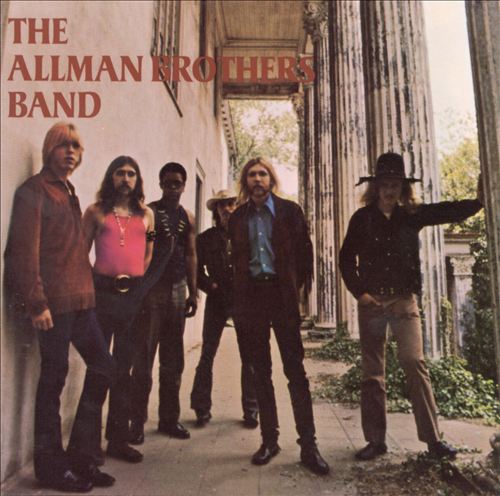
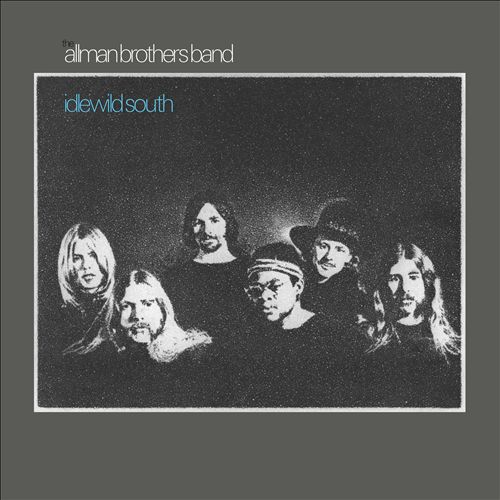
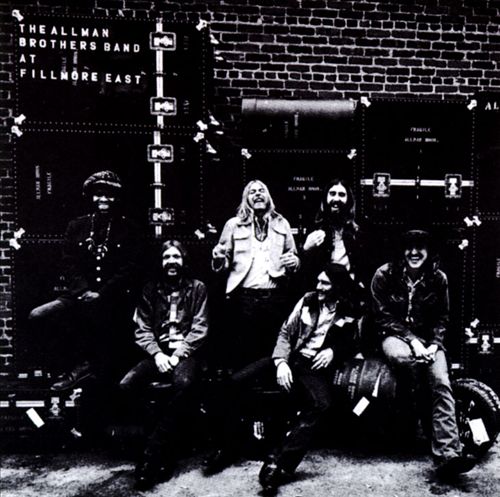
The group’s first two studio releases, The Allman Brothers Band (1969) and Idlewild South (1970) (both released by Capricorn Records), stalled commercially, but their 1971 live release, At Fillmore East, represented an artistic and commercial breakthrough. The album features extended renderings of their songs “In Memory of Elizabeth Reed”, “You Don’t Love Me” and “Whipping Post”, and is considered among one of the best live albums ever made.
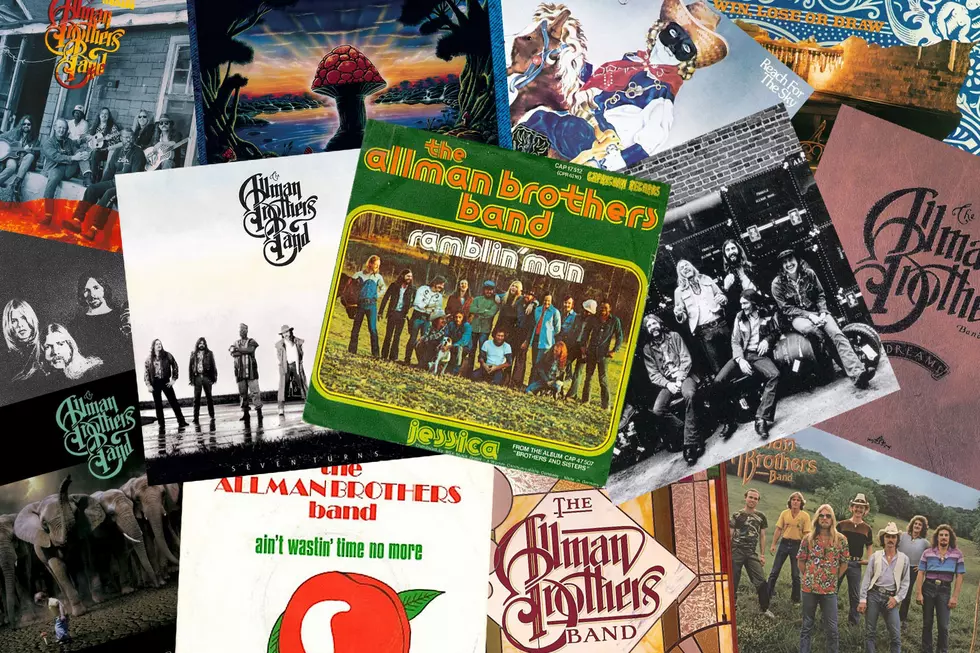
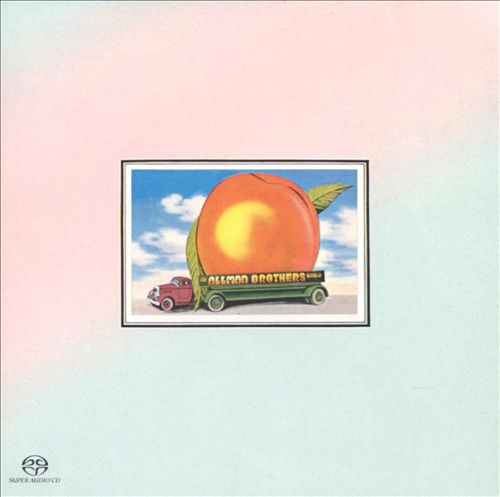
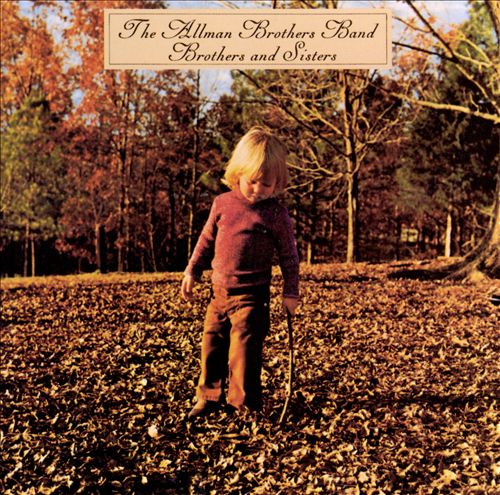
Group leader Duane Allman was killed in a motorcycle accident later that year – on October 29th, 1971, and the band dedicated Eat a Peach (1972) to his memory, a dual studio/live album that cemented the band’s popularity and featured Gregg Allman’s“Melissa” and Dickey Betts’s “Blue Sky”. Following the motorcycling death of bassist Berry Oakley exactly one year and 13 days later on November 11th, 1972, the group recruited keyboardist Chuck Leavell and bassist Lamar Williams for 1973’s Brothers and Sisters.This album included Betts’s hit single “Ramblin’ Man”. These tunes went on to become classic rock radio staples, and placed the group at the forefront of 1970s rock music.
Their career began slowly, before At Fillmore East finally showed what the band could do. A wonder of power, precision and improvisational genius, the album changed the Allman Brothers Band’s profile forever.
In fact, the Allman Brothers Band scored their first and only ever No. 1 hit in the years following that tragedy. But 1973’s Brothers and Sisters was also their last platinum-selling project. The group broke up once, got back together and then began a lengthy hiatus in the early ’80s.
The Allman Brothers Band (1969):
This might be the best debut album ever delivered by an American blues band, a bold, powerful, hard-edged, soulful essay in electric blues with a native Southern ambience. Some lingering elements of the psychedelic era then drawing to a close can be found in “Dreams,” along with the template for the group’s on-stage workouts with “Whipping Post,” and a solid cover of Muddy Waters’ “Trouble No More.” There isn’t a bad song here, and only the fact that the group did even better the next time out keeps this from getting the highest possible rating.
The group’s most overtly jazz-influenced song “Dreams” was part of a long string of early compositions Gregg Allman offered his fledgling bandmates . In fact, he was a dozen songs in before the Allman Brothersband decided “Dreams” would work. Unusually, GreggAllman composed the song on the Hammond organ, instead of the preferred guitar or piano. Drummer Jai Johanny “Jaimoe” Johanson’s library of old jazz records helped shape their approach, as they turned Allman’s blues haiku into a waltz-time meditation that traced the same musical lines as “All Blues” from Miles Davis’ groundbreaking Kind of Blue.
“When we were first putting a group together,” Duane Allman once said, “we were listening to Jefferson Airplane and the [Grateful] Dead’s records. We were all kicking around down South, buying records out of the Kmart and taking them home and digging them. And [Jaimoe] comes along and says, ‘Well that’s cool good, but check out what I got over here, this collection.’ They just turned us all around. We heard with them cats were doing. Knocked us out.” “Dreams” is also the rare classic-era Allmans song featuring just one guitarist, as Duane offered a pair of brilliant solos over the band’s two-chord vamp.
Idlewild South (1970)
If you’re going to listen to the Allman Brothers, make sure you have the first four records. The band made The Allman Brothers Band, Idlewild South, At Fillmore East, and three-fourths of Eat a Peach with its original lineup, before Duane Allman’s fatal motorcycle accident in 1971. The Tom Dowd-produced Idlewild South, their second album, comes off with a little less ferocity than their debut which is perhaps the result of reaching for new sounds the second time around. “Revival,” the album’s opener, introduces Dickey Betts as a composer. The countrified flavor of his songs gives an indication of where the band will head in the post-Duane era. Betts’ other contribution to Idlewild South is the instrumental “In Memory of Elizabeth Reed,” a centerpiece of the Fillmore East recordings. Gregg’s “Please Call Home” and “Midnight Rider” are built around piano and acoustic guitar, respectively, and have a different feel than the band’s usual twin Les Paul-and-Hammond sound. That sound is showcased in the balance of Gregg’s tunes, however: the funky blues of “Don’t Keep MeWonderin'” (with Thom Doucette on harmonica) and “Leave My Blues at Home.” The album is also notable for the rollicking version of Willie Dixon’s “Hoochie Coochie Man,” with the only vocal bassist BerryOakley (who died in a motorcycle accident one year after Duane) ever recorded with the group. Though overall it packs less punch than The Allman Brothers Band, Idlewild South is all the more impressive for its mixture of chunky grooves and sophisticated textures.
The first in a string of strikingly inventive instrumentals from Dickey Betts, “In Memory of Elizabeth Reed” quickly became one the group’s most recognizable songs. Betts was inspired by a doomed romance with a woman whom he was secretly meeting in a local graveyard. The guitarist liked to go there to compose, and that’s where he saw a headstone bearing the title of this moving, minor-key song. Betts had actually been playing in the same style for some time, working in a symbiotic fashion with the Allmans‘ late original bassist. “Berry Oakley and I inspired each other’s improvisational creativity while we were in Second Coming, the band that presaged the Allman Brothers,” Betts later told Guitar World. “One of our favorite things to do was to jam in minor keys, experimenting freely with the sounds of different minor modes. We allowed our ears to guide us, and this type of jamming served to inspire the writing of songs like ‘In Memory of Elizabeth Reed.'” The track is driven by these brilliantly harmonized guitar lines, a sound that came to define the Allman Brothers Band. Betts’ interest in that approach didn’t come from listening to jazz, but instead to the Western swing of Bob Wills. By the way, he wrote “Blue Sky” in the same cemetery.
At Fillmore East (1971)
Whereas most great live rock albums are about energy, At Fillmore East is like a great live jazz session, where the pleasure comes from the musicians’ interaction and playing. The great thing about that is, the original album that brought the Allmans so much acclaim is as notable for its clever studio editing as it is for its performances. Producer Tom Dowd skillfully trimmed some of the performances down to relatively concise running time (edits later restored on the double-disc set The Fillmore Concerts), at times condensing several performances into one track. Far from being a sacrilege, this tactic helps present the Allmans in their best light, since even if the music isn’t necessarily concise (three tracks run over ten minutes, with two in the 20-minute range), it does showcase the group’s terrific instrumental interplay, letting each member (but particularly guitarist Duane and keyboardist/vocalist Gregg) shine. Even after the release of the unedited concerts, this original double album remains the pinnacle of the Allmans and Southern rock at its most elastic, bluesy, and jazzy.
“Whipping Post,” like “In Memory of Elizabeth Reed,” had been earlier featured on Allman Brothers Band studio recordings but both found new meaning in this live setting. In fact, the 23-minute take from At Fillmore East is not only the definitive version, it’s the moment when Gregg Allman’s composing genius is confirmed. Still, this is truly a band triumph. Oakley completely rearranged the song which started out as another slow blues – into an unusual 11/8 meter that provides plenty of musical space for his bandmates to fill.
Dickey Betts and Duane then soar through another ribbon of harmonized, totally off-the-cuff guitar lines. (At one point late in the proceedings, Betts impishly quotes the children’s song “Frere Jacques.”) “We have rough arrangements, layouts of the songs, and then the solos are entirely up to each member of the band,” Duane once explained. “The naturalness of a spur-of-the-moment type of thing is what I consider the most valuable asset of our band.” And perhaps nowhere more so than on “Whipping Post,” which – quite fittingly – took up the entire closing side of the original Fillmore East vinyl release.
‘Eat a Peach’ (1972): “Ain’t Wastin’ Time No More”
Inspired by the tragic death of his brother, Gregg Allman’s album-opening “Ain’t Wastin’ Time No More” offered a sturdy paean to perseverance. Betts – who Duane once praised by saying, “I’m the famous guitar player, but Dickey is the good one” seemed to be of a similar mindset as he stepped in on Allman’s preferred slide. The idea on Eat a Peach was to mix newly recorded songs like this one with some of Duane’s final recordings, making it both tribute and last testament to his genius. And for awhile, it sustained his heartbroken bandmates. “The music brought life back to us all,” Gregg said in his 2012 autobiography My Cross to Bear, “and it was simultaneously realized by every one of us. We found strength, vitality, newness, reason and belonging as we worked on finishing Eat a Peach.” Still, the prospect of touring nearly broke the band. Ultimately, they decided to go out as a five-piece. No one could replace Duane. Gregg and Oakley introduced the songs, which had also been his role. “We were playing for him,” drummer Butch Trucks said in One Way Out: The Inside History of the Allman Brothers Band, “and that was the way to be closest to him.” Oakley, who never got over the loss, died in a similar motorcycle crash a year later.
A tribute to the dearly departed Duane, Eat a Peach rambles through two albums, running through a side of new songs, recorded post-Duane, spending a full album on live cuts from the Fillmore East sessions, then offering a round of studio tracks Duane completed before his death. On the first side, they do suggest the mellowness of the Dickey Betts-led Brothers and Sisters, particularly on the lovely “Melissa,” and this stands in direct contrast with the monumental live cuts that dominate the album. They’re at the best on the punchier covers of “One Way Out” and “Trouble No More,” both proof of the group’s exceptional talents as a roadhouse blues-rock band, but Duane does get his needed showcase on “Mountain Jam,” a sprawling 33-minute jam that may feature a lot of great playing, but is certainly a little hard for anyone outside of diehards to sit through. Apart from that cut, the record showcases the Allmans at their peak, and it’s hard not to feel sad as the acoustic guitars of “Little Martha” conclude the record, since this tribute isn’t just heartfelt, it offers proof of Duane Allman’s immense talents and contribution to the band.
Brothers and Sisters (1973)
Released a year after Eat a Peach, Brothers and Sisters shows off a leaner brand of musicianship, which, coupled with a pair of serious crowd-pleasers, “Ramblin’ Man” and “Jessica,” helped drive it to the top of the charts for a month and a half and to platinum record sales. This was the first album to feature the group’s new lineup, with Chuck Leavell on keyboards and Lamar Williams on bass, as well as Dickey Betts‘ emergence as a singer alongside Gregg Allman. The tracks appear on the album in the order in which they were recorded, and the first three, up through “Ramblin’ Man,” feature Berry Oakley their sound is rock-hard and crisp.
The subsequent songs with Williams have the bass buried in the mix, and an overall muddier sound. The interplay between Leavell and Betts is beautiful on some songs, and Betts‘ slide on “Pony Boy” is a dazzling showcase that surprised everybody. Despite its sales, Brothers and Sisters is not quite a classic album (although it was their best for the next 17 years), especially in the wake of the four that had appeared previously, but it served as a template for some killer stage performances, and it proved that the band could survive the deaths of two key members.
Dickey Betts had no intention of giving this country-rock gem to the Allman Brothers Band. But something about its searching narrative spoke to them in that moment. “I was going to send ‘Ramblin’ Man’ to Johnny Cash,” Betts told Guitar World. “I thought it was a great song for him. But everybody in our band liked that song.” Smart move: “Ramblin’ Man” became the only Allman Brothers Band single to reach the Billboard Top 10, streaking all the way to No. 2. The song also heralded a shift, both in leadership and musical style, toward Betts. The Allman Brothers Band somehow found a way to carry on, but not without help. Les Dudek guests on “Ramblin’ Man,” allowing the group to replicate their signature harmony leads. “We got into the studio and got into that big long jam at the end with all those guitar parts and everything, and we forgot about how country the song was,” Butch Trucks later said “then wouldn’t you know it — it becomes our only hit single.” That they would never be the same was reflected in the decision to expand their official lineup with pianist Chuck Leavell as a second soloist, rather than another guitarist. “Ramblin’ Man” was also the last song recorded with Berry Oakley.
Frankie Cosmos have announced a new record called “Close It Quietly” due out September 6 via Sub Pop Records. The lead single “Windows” arrives with a music video directed by Eliza Doyle and Frankie Cosmos frontperson Greta Kline. The visual captures a day in New York. Watch below.
“This song takes place during the waiting period of healing, not knowing how to proceed or how to find the path to forgiveness,” Greta Kline said of “Windows” in a statement. “The inner versus the outer—learning to see yourself as part of the whole. For me the lyrics cover some of the slow movements of relationships, the shifts that occur in ways of thinking over time.”
Frankie Cosmos—Greta Kline, Lauren Martin (synth), Luke Pyenson (drums), and Alex Bailey (bass)—recorded Close It Quietly in Brooklyn with engineer/co-producer Gabe Wax. It’s the band’s follow-up to 2018’s Vessel.
Close it Quietly (Release day: September 6th, 2019)
We have previously covered Cultdreams back when they went under the name Kamikaze Girls who released one of favourite albums of 2017. This week the band have announced their long awaited return, with their new album, Things That Hurt, will be coming in August. The band also shared the first new material from it, “We Never Rest”, which features Katie Dvorak and David F. Bello of The World Is A Beautiful Place & I Am No Longer Afraid To Die.
Discussing the upcoming record, vocalist and guitarist, Lucinda Livingstone has suggested it’s a record that is more political than it’s predecessor, a look at modern Britain, and how it can be hard to find a place in it. We Never Rest, in particular, looks at the difficulty of balancing life in a bubble, and the reality of the world outside it. As Lucinda explains, “I very much live in a bubble—people couldn’t care less about how I live, who I live with, how much money I do or don’t earn, what I look like, or how I choose to spend my time, but then it’s so easy to get used to the bubble, and once you’re out it’s not like that anymore.” If the record is taking on less personal themes, musically it’s as affecting as ever, drummer Conor still hits the drums harder than anyone we’ve ever heard, Lucinda’s guitar work and passionate vocal howl remain very much in place. A bold next step, from a band who remain one of the most exciting bands the UK has to offer.
Things That Hurt is out August 16th via Big Scary Monsters.
When Julia Shapiro flew home from a cancelled Chastity Belt tour in April 2018, everything in her life felt out of control. Dealing with health issues, freshly out of a relationship, and in the middle of an existential crisis, she realized halfway through a tour supporting her band’s third album I Used to Spend So Much Time Alone that she was going through too much to continue. “I was really struggling; I was really depressed. I felt like I couldn’t sing or be a person,” Shapiro recalls. “At that point I couldn’t even imagine playing a show again, I was so over it.”
Returning home to a newly empty Seattle one-bedroom apartment, Shapiro had wanted for a long time to learn how to record and mix her own music, and out of the uncertainty of the future of her music career and her health, she began to record the songs that would become Perfect Version, her solo debut for Hardly Art. What she created in the space of ten songs is an intimate and beautifully self-aware examination of feeling lost in the life you’ve created for yourself. It’s an album of shimmering guitars and layered vocals that feels vast in the emotional depth it conveys and masterful in the way each song is intentionally crafted and recorded.
Throughout the record Shapiro tries on different ways of living, all thematically centered around the idea of what it would be like to be a perfect version of yourself. “How can someone be so blindly confident/I wanna know that trick,” she wonders on “Natural,” the opening track that begins using another person as a mirror and then pans back to a bigger picture: what would it take to really love yourself? The album is peppered with ideas of what self-improvement could look like—whether it’s learning a skill and living out in the woods, going to bed at a reasonable hour, or even more playful, deeply relatable lines like “I should really delete my Instagram.”
Shapiro has a knack for turning simple images into something profound, drawing influence from songwriters like Elliott Smith to capture complicated moods. The everyday act of circling the block trying to find a parking spot becomes a metaphor for trying and feeling like you can’t quite get anything done. “All my problems feel like paper/I can finally rip them up,” she sings on the title track, describing a moment of lightness in hanging out with friends who can find humor in your failure “at least I have my friends to laugh at what I’ve done.”
Over the course of a tumultuous year of trying to find stability amidst depression and surgery, Shapiro ultimately rediscovered the parts of music that she loved through the process. Her perfectionist qualities create an album that shines in tiny lyrical moments and meticulous guitar parts. “When the rest of my life felt out of control, I felt like this was my chance to be in control of everything,” says Shapiro. She plays all the instruments (save for a mouth trumpet solo by Darren Hanlon and guest violin by Annie Truscott) and after recording and mixing the first batch of four songs at the Vault studio with Ian LeSage decided to record the final six tracks alone in her apartment, adding drums in the studio later and learning to mix them with the help of her friend David Hrivnak.
Perfect Version is a fully realized vision from a gifted songwriter finding a more intimate voice. “So what comes next?” she questions on the album closer “Empty Cup” which explores the quiet satisfaction of being alone with yourself and creating a blank slate. “A lasting sense of self,” she concludes.
Having already received support from Clash, BBC 6 Music’s Tom Robinson and M Magazine, Glaswegian five-piece Acrylic return with another melodic indie anthem ‘Post Punk For The Abyss’ bursting with jangling guitars and well-crafted vocals.
When asked about the inspiration behind the track, Acrylic’s lead vocalist Andreas stated “Post Punk For The Abyss was born out of a playlist of post-punk revival songs made for me by a friend, Joe, who features on the cover artwork for the single. I was quite down at the time and he thought it would cheer me up. The lyrics reference various songs and artists from the playlist; Iceage, Ought, New Order. It’s an homage to them and a toast to feeling good again”.
Warner Music will issue a limited edition 40th anniversary version coloured vinyl edition of Joy Division‘s debut studio album “Unknown Pleasures” next month.
The album will be pressed on ‘ruby red’ 180g vinyl and will come packaged in alternative artwork – a white sleeve that resembles the original Peter Saville design concept.
In June 1979, Joy Division released the bleak masterpiece that is ‘Unknown Pleasures’, a record so majestic it changed the face of music. There can’t be many people left in the civilised world who haven’t, at one time or another, sat down and discussed the influence of ‘Unknown Pleasures’ over the last few decades. But reeling off a list of indebted bands that’s longer than time itself is now only one facet of why Joy Division’s first album is so significant.
The story of how Bernard Sumner, Peter Hook, Stephen Morris and Ian Curtis teamed up with their peerlessly innovative producer Martin Hannett to make the album is so fascinating that it has provided for more books that most people will read in their lives. That’s to say nothing of the numerous documentaries which have provided a nice little earner on the talking head circuit for anyone who spent more than two weeks in Manchester during the late 1970s. Let’s not forget the two major motion pictures —24 Hour Party People and Control — that also depicted the album’s recording and which were widely celebrated for it.
This August will see Joy Division’s legendary bass player Peter Hook join forces with The Metropolitan Orchestra to bring his brand new project Joy Division Orchestrated to Australia. The shows will see classic tracks from the seminal UK post-punk outfit performed in a new light with a full orchestral arrangement. This is the first time that an original member of the group has taken part in such a project.
Ahead of the tour, we’ve decided to look back at the group’s 1979 seminal album Unknown Pleasures and the key players outside of the band – Hook, frontman Ian Curtis, drummer Stephen Morris, and guitarist Bernard Sumner – who helped shape the classic release.
Peter Saville – graphic designer
Even if you’re not familiar with the album itself, chances are you’ve seen its cover across someone’s t-shirt in Fitzroy, Newtown or anywhere else across the globe. Saville’s work goes much further than just Joy Division, and subsequently New Order, having gone on to produce artwork for the likes of Peter Gabriel (1986’s So), Martha & The Muffins (1980’s Metro Music), Wham! (1986’s Music From The Edge Of Heaven), Roxy Music (1980’s Flesh & Blood). He was a founding member of Factory Records, the label that would release Joy Division’s work. Last year, he redesigned Burberry’s logo and just this week, he walked the catwalk for Ferragamo.
Martin Hannett – producer
Hannett first met Hook, Curtis and Sumner between 1976 and 1977, when they first appeared as Warsaw and he was booking shows around Manchester; he added Warsaw to his roster soon after. In 1978, Hannett would first work with the group to produce their tracks Digital and Glass. Hannett would ultimately go on to record both Unknown Pleasures and their final work, Closer. He was tasked with producing U2’s debut album, Boy, but passed up the opportunity following the death of Curtis. Hannett work continues to influence long after his own death in 1991, at age 42, helping shape tracks from artists like Happy Mondays, Buzzcocks, Stone Roses and more in their formative years.
Rob Gretton – manager
Gretton met the group soon after they began booking shows with Hannett; it was during 1977 that they crossed paths at Rafters where Gretton was the venue’s resident DJ. He’d recently began managing local acts and the newly renamed Joy Division soon joined this roster. Gretton scored rights for the group’sIdeal For Living back from RCA Records early on and was fundamental in the transition from Joy Division to New Order. Following the dissolution of Factory Records in the ‘90s, he started his own Rob’s Records.
Tony Wilson & Alan Erasmus – Factory Records co-founders
Perhaps at the centre of the Joy Division world is the iconic, and infamous, Factory Records; the label that launched them. Founded in 1978, the label would go on to helm the Madchester music scene, in part through its influence with nightclub The Haçienda, which was co-owned by the members of New Order. Wilson would pass away in 2007, following a long career as a journalist in addition to his many music industry roles. Erasmus has kept a pretty low profile since the closure of Factory Records.
This new coloured vinyl edition of Unknown Pleasures will be released on 14th June 2019.
There is an entire sub-genre of poetry devoted to rivers and their persistent, meditative flow. Emily Dickinson’s “My River Runs to Thee” compares them to the cycle of life, while Alfred Tennyson’s “The Brook” deems them eternal and Kathleen Raine’s “The River” muses on the dream-state they evoke. For transcendent folk-pop artist Shannon Lay, the river is all of the above: It’s the metaphor driving her latest album, the exquisitely uplifting “August” (Sub Pop Records, out August, 23rd)—which doubles as an aural baptism renewing her purpose for making music. “I always picture music as this river. Everyone’s throwing things into this river, it’s a place you can go to and feed off of that energy,” she says, “and feel nourished by the fact that so many people are feeling what you’re feeling. It’s this beautiful exchange.”
The album’s name, August, refers to the month in 2017 when Lay quit her day job and fully gave herself over to music. This was her liberation as an artist, and the album is devoted to paying that forward to her listeners. “It’s a thank you to the universe,” says the L.A. artist. The title track is a mystical, folk-psych expression that builds into a gentle gallop. “Open the doors that you cannot,” she sings with a feathery lightness. Notes Lay: “Everyone is capable of so much, but we have a tendency to stand in our own way.” The steady movement of the song captures the rapids of a river. “I was thinking about creating something with momentum,” she continues. “I started out with just the guitar and Laena Geronimo came in and added that gorgeous drone and when NickMurray put his drum touch in there it was exactly what I never knew it would be.”
Shannon Lay may be the most chilled-out artist you’ll ever meet. Despite fronting her tranquil solo act and being a guitarist/singer in the indie-rock band Feels, she never pressures herself to overachieve. (Even though she regularly does—in a glowing review, Pitchfork anointed her last album, Living Water “captivating.”) “I learned to not beat myself up if I’m not writing all the time,” she says. “Music really does come in these waves of inspiration.” During the album’s graceful finale, “The Dream,” Lay addresses embracing uncertainty. “I’ve always felt like a lucky person, life is a dream and it is yours to manipulate. Create the world you want to live in, create your own reality, create your path. We have so much more control that we could ever imagine.”
With her life devoted to music, the artist often spends hours a day simply playing the guitar, challenging herself to become better “It just feels so good, doing something that is so much bigger than myself. I think so much of music is that, realizing that it’s coming from something beyond and you are just the messenger” says Lay, who took guitar lessons at age 13, which introduced her to Neil Young and The Beatles. After high school, she moved from Redondo Beach, Calif., to Hollywood and joined an indie-rock band. “It was an energy I needed to release,” she says. The exact type of energy may have changed, but her drive hasn’t. Her recent practice pays off transcendently in songs such as “Nowhere,” a wistful kindred spirit to “August” that evokes Nick Drake. “It’s about getting somewhere and not doing anything or meeting anyone,” Lay says, “the idea of just having a quieter journey, zero expectation.”
Jacco Gardner is a baroque pop multi instrumentalist. He creates a unique sound by combining the sounds of harpsichord, strings, flutes and other classical instruments with raw psychedelic effects.
“Fading Cosmos” and “Autumn In Lisbon” were both recorded in Lisbon during the Somnium recording sessions, but they were not included on the album. The reason for this is that they are while being thematically similar, significantly different in their approach. Somnium was intended as one 43-minute journey, while these two tracks respectively interpret the concept of transformation within 8 minutes of improvisation. The concept of a journey of exploration, mixing cinematic and electronic sounds with a more jazz and folk, live improvisation type of performance has been very inspiring while working on this EP. I’ve been listening to a lot more jazz and progressive than I had before, mainly because I was introduced to a lot of really inspiring stuff by my girlfriend María Pandiello, who is performing Somnium with me right now on synths. Her presence has been very influential, but also the sense of adventure and discovery she brings. Some influences I feel like were major inspirations on this EP are Popol Vuh, (early) Vangelis, Bo Hansson, (early) Patrick Cowley, Francis Bebey, Piero Umiliani, Silver Apples and of course some (mainly Saucerful Of Secrets era) Pink Floyd. All these artists come from different parts of the world, but I still see them very connected on a basic principle, creating a psychedelic progressive trip through the process of experimentation with electronics, a foundation of Synthedelia.
During the creative process, the line between what was calculated and what was a total “happy accident” became very blurry, and I just went with that, which resulted in the type of sound that it has. Live sequencing synthesisers while jamming to this on other instruments, like bass or electric piano, seems like a pretty basic concept, but I had not really explored this interaction and it’s full potential in depth before. I found it a very exciting and liberating feeling, to feel both focused and precise and totally free at the same time while working alone in the studio. I’ve always been able to immersive myself in something very intimate and personal, and to really escape to another place while I’m working alone. Also, the mood of Lisbon and the area where I live became very present, as I often went on solitary walks, mainly at night. To me, the city holds something almost mystical and very powerful, which can be very present in the area I live, and it undoubtedly found its way into these two tracks.
The first ideas for “Fading Cosmos” came after conversations I had with my brother, about the tragic reality that the endlessly rich cosmos around us is rapidly becoming invisible because of an increase of artificial light, leaving us in the solitary darkness of human progress. I wanted to offer some potential visibility into our cosmic neighbourhood with this track, but also to escape into a world of wonder and mystery.
“Autumn in Lisbon” was written after walking around on a beautiful but stormy autumn day in Lisbon, not long after I moved there. The air was full of changes and a mysterious future was showing her powerful presence while hiding her face.
Both tracks feature acoustic guitar, synths, bass, drums, percussion and electric piano, all greatly manipulated via analogue tape. It was mastered by Simon Heyworth, who did an amazing job on it. I felt the same about his work on Somnium, so I naturally asked him for this EP as well, and I’m very happy with it. Every time I can feel the immense experience he has in making otherworldly creations feel truly immersive. I’ll likely work more with him in the future if he’s up for it as well.
released June 14th, 2019 “Fading Cosmos” is released on 12″ vinyl on Full Time Hobby (ROTW) and Excelsior Recordings (BENELUX), and digitally on Polyvinyl Record Co. (US).
V.V. Lightbody (Vivian McConnell from Chicago bands Santah / Grandkids) is playing music that is self-described as nap-rock. V.V. released her debut LP, ‘Bathing Peach’, in June of 2018. Her songs have cocktail lounge vibes; layered with flutes & lyrics about dried fruit. Think of glitching mermaids with dozing and comfortable songs.
Just a few weeks when we last raved about Chicago’s V.V. Lightbody, yet with the release of her new single this week, we’re more than willing to do so again. The track, Car Alarm, is the latest taste of where V.V.’s music is going following last year’s Bathing Peach.
“Car Alarm” is a somewhat darker affair than the bossa nova shuffle of V.V.’s last single, Baby, Honestly. Discussing the track, V.V. has suggested it came to her in around 10 minutes, combining her, “humid nap rock”, with a more driving quality. There’s a nod to the more 1970’s leaning moments of Angel Olsen’s My Woman, as Car Alarm bounces on a chunky lead guitar riff, even finding room later for a twanging, beast of a solo. Lyrically, it finds V.V. pondering death, yet finding a quiet humour in it, “the thought of me hypothetically trying to contact everyone in my life to let them know that I’m dying made me laugh. The chorus pokes fun at being a selfishly dark artist, taking small human moments and exaggerating them into song”. Another thrilling trip into this songwriting mind, V.V. Light body is a musician on a roll.