Image may contain: 1 person, on stage, beard and closeup

Our hearts go out to the family of legendary songwriter John Prine, who passed away after being in a critical condition recently with coronovirus. The legendary singer-songwriter John Prine died Tuesday at Vanderbilt University Medical Center in Nashville, Tenn. He was 73 years of age. Part of John Prine’s brilliance was how easy he made it all seem. With some songwriters, you can hear the effort and strain put into every line, and it can become wearisome. But Prine seemed to come about it so humbly and naturally that you could believe, since you had access to the same language and the same chords on an acoustic guitar, that you could be as wise, as funny, as heart-rending as he could.

His road to that point wasn’t the typical one for music stardom. He was a soldier and a mailman before he emerged from Chicago with his debut album in 1971. That self-titled release cemented him as a fully-formed song-writing powerhouse.

Following his service in the army, John Prine seemed to spring forth as a fully formed multi-dimensional singer songwriter at the age of 24. Steve Goodman and Prine were running buddies and staples of Chicago’s hardscrabble folk scene during the late ‘60s and early ‘70s. It was Goodman who led Prine to Kris Kristofferson. An established star, Kristofferson brought the pair to New York, and on their first night in town, Prine sang three songs at The Bitter End in Greenwich Village. Legendary Atlantic Records producer and A&R executive Jerry Wexler was in the audience. Twenty-four hours later, he signed Prine to the famed label.

In 1971, Prine released one of the most impressive debut albums ever, proving himself capable of writing folk balladry, country, and rock songs laced with pathos, sensitivity, and sardonic humor that reflected on the human condition. A critical smash but a commercial disappointment, this remarkable album set the tone for the rest of his career. The next two albums, 1971’s Diamonds In The Rough and Sweet Revenge, released in 1973, proved that the first album was no fluke. His songs continued to have depth, compassion, and an understanding that belied his young age. The first three or four records, I would just write ‘em while walking down the street–just throw ‘em over my shoulder,” Prine says. “The best way to get away from the world was to go write a song.”

This solo acoustic performance, recorded at the Music Inn in Lenox during the summer of 1973, captures Prine performing the material from his first three albums stripped down to their bare essence. In almost every case, these songs are even more compelling with just the man’s voice and guitar. This audience, the vast majority of whom had come to see Bonnie Raitt, is immediately drawn in and responds with great enthusiasm, bringing out a most inspired choice of material from Prine. Taken as a whole, this remarkable set is overwhelming in its diversity and contains a wealth of Prine’s most memorable compositions.

Fans of Prine’s self-titled debut will be delighted to find that album extremely well represented. Early in the set, he delivers the counterculture songs “Spanish Pipe Dream” and “Illegal Smile,” setting an irreverent tone that resonates with the audience. These more humorous numbers are almost immediately balanced out by “Donald and Lydia” an achingly poignant song about a young couple separated by army life and “Sam Stone,” an anguished tale of a drug addicted Vietnam vet. With its disturbing and penetrating lyrics, including a chorus of “there’s a hole in daddy’s arm where all the money goes; Jesus Christ died for nothin’, I suppose,” There are few lyrics as sobering as this one from John Prine’s “Sam Stone” The track taken from his 1971 self-titled debut album, this acoustic song lays bare the horrors of war long after combat has ceased. The protagonist succumbs to a drug addiction after his severe wartime injuries, and his children’s innocent, simplistic view of their father’s darkest demon just hits you like a barreling train. Speaking of which, there’s another powerful, slightly more vivid allusion to locomotives when Prine describes the centre of his main character’s universe, the rush you get from taking heroin: “And the gold rolled through his veins / Like a thousand railroad trains.”

Prine’s insightful anti-war commentaries have a depth and substance that seemed to come from experience. As such, they have far more insight and resonance than most anti-war songs of the Vietnam era. That first album is also represented by the autobiographical “Paradise,” as well as the immeasurably sad songs, “Hello In There” and “Far From Me” Prine’s trademark wit and sense of humour also gets more time to shine on the rollicking anti-war song “Your Flag Decal Won’t Get You into Heaven Anymore” and “Pretty Good,” one of the most outrageously funny songs in Prine’s early cannon.

You won’t find very many 25-year-old male musicians writing from the perspective of an older woman, but John Prine had a gift for storytelling that knew no bounds. Singing with beautifully grizzled vocals over rousing organs, Prine pleads with angels on “Angel From Montgomery” to be saved from a loveless marriage, lost dreams and a life devoid of purpose. Various covers of this song by John Denver, Bonnie Raitt and Tanya Tucker helped popularize the song, and Raitt’s version, in particular, is an absolute knockout

Several tracks from Prine’s second album, Diamonds In The Rough are also performed, including “Rocky Mountain Time,” the hilarious sing-along encore of “Everybody” and a powerfully moving “Clocks and Spoons” However, what is possibly most delightful here is the appearance of the new songs that would be included on Prine’s third album, Sweet Revenge, including his classic “Grandpa Was A Carpenter.” On this album, Prine ventured into increasingly cryptic lyrical terrain. “Please Don’t Bury Me” and “The Accident (Things Could Be Worse)” are both brilliantly written songs that remain open to interpretation, while the overtly comical “Dear Abby” and the doleful holiday carol, “Christmas In Prison,” display Prine’s sharp wit and wry sense of humor.

For anyone interested in contemporary folk music and its history, John Prine is a required course and his first album is absolutely essential listening. This recording is a perfect overview of Prine’s early career containing many of the highlights from those first three albums and most of the songs that cemented his reputation. Prine is hysterically funny here, but he is always just as thought provoking, able to strike a nerve way down deep, often in the same song. Common Sense (1975), Bruised Orange (1978), Pink Cadillac (1979) and Storm Windows (1980) followed, as did more classic songs–“Come Back to Us Barbara Lewis,” “Hare Krishna Beauregard,” “That’s the Way the World Goes ‘Round” and “Crooked Piece of Time” Eventually, Prine discovered that his escape from the world had become a world unto itself.

Maybe you’ve never heard a John Prine song in your life. But if someone spun his 1978 album Bruised Orange for you, unprimed and unprepared, my bet is you’d be smitten within the first few seconds of that record’s first song, the jaunty “Fish and Whistle.” To the tune of one especially chirpy flute, Prine sings, “We’ll forgive each other ‘til we both turn blue.” It doesn’t matter how much beautiful nonsense he crams into his folk songs, John Prine always leaves a nugget of wisdom. Isn’t that a beautiful idea, that we’ll all just keep forgiving each other as long as we live, because that’s part of being a human? End your feuds; do it for John.

He enjoyed the early 90’s comeback album that many of his era who had flailed a bit during the 80s did, thanks to the Heartbreaker-filled The Missing Years in 1991. And he proved one of the world’s most charming duet partners on 1999’s In Spite Of Ourselves, as he and Iris DeMent turned the title track into one of most romantic warts-and-all songs of all time. His live performances constantly reminded everyone both of his incredible songbook and of his boundless charisma; contemporary and younger artists revered him; and awards and honours came in with regularity.

Prine returned with his first original album in 13 years a few years ago. The Tree Of Forgiveness included guests like Jason Isbell, Amanda Shires, Dan Auerbach, and Brandi Carlisle, but Prine still stole the show. The heartbreak of “Summer’s End” and the feistiness of “When I Get To Heaven” proved that he hadn’t lost anything.

Image may contain: 1 person, eyeglasses, possible text that says 'PEPST'

After making his way through the first part of a world tour, he had no idea that his Brussels show would be his last for the unforeseeable future. Pre-coronavirus, everything was in place for the release of Cavetown’s first studio album, Sleepyhead, which is out now via Sire Records. Art gallery pop-ups featuring his own paintings, U.S. press visits, and fan events were all locked in.

Despite this sudden halt, the singer is making the most of his down time since Sleepyhead was released on March 27th. “I’ve been looking forward to having some time off,” says Skinner. “It just kind of came earlier than I expected. I’m looking at it as an early break, even though it’s obviously terrible for so many people. But you gotta look for the good things in it—so at the moment, I’m relaxing and just being a person for a second.”

Robbie Skinner, now twenty-one, has connected with more than a million devout YouTube subscribers by performing from his bedroom since forming the experimental musical project Cavetown at the age of fourteen. Learning to play guitar from his father, director of music at Cambridge University, at the age of eight, and having a mother who was a professional flautist, Skinner was born into music. After releasing his self-titled debut in 2015, its follow-up 16/04/16 in 2016, and his 2018 breakthrough Lemon Boy—along with covers, digital mixtapes, and other reworked material—Cavetown’s fourth album is a new chapter in Skinner’s DIY art.

Recorded, produced, mixed, and mastered by Skinner in (where else) his bedroom, Sleepyhead was the result of constantly writing. There’s no structure to his lyrical madness—he just tends to write until there are enough tracks for another album. It’s another chapter in Skinner’s own book of life, something he’s already uncovered in Lemon Boys’ lo-fi tales of social anxieties, unrequited love, and other misanthrope adventures.

Sleepyhead is a continuation of Cavetown’s revelations in sexuality, awkwardness, and self-confidence drawn in by drifty vocals moving along a digi-melodic landscape only Skinner could manufacture, from its Weezer riff and swell on opener “Sweet Tooth” through the more delicate, acoustic-and-pop-steered reminiscences of “Things That Make It Warm” and “Wishing Well.” Sleepyhead reveals less naiveté and more self-assurance gained through life’s perplexities.

According to Skinner, he has no clear songwriting process. He first penned “Feb 14,” a tale of a special Valentine’s Day that he still thinks about, and the remainder of Sleepyhead unraveled from there. “I just write what’s in my head,” he says. “I don’t tend to write with an overarching theme, because I’ll lose interest too quickly. So the album’s kind of all over the place.”

He says that the songs that just fall out of him tend to be the better ones. “There’s an idea, and you just sit down, and before you know it, it’s 2:00 a.m., and I finished a song I’m really stoked about,” he shares. “Sometimes I have so many ideas that I will half start songs and just walk away from it. I get stuck with it and then come back to it later when I forgot how it goes, and then take a fresh stab at it again.”

An ode to his boyfriend, “Sweet Tooth” was written on a tour bus, and felt like an appropriate number to open Sleepyhead with. “Starting with a big song is a bold intro I thought worked,” he says. Sounds of a tape reel opens the more nostalgic closer “Empty Bed,” sending the record off on a more comforting, analog note with abstract beats around a childhood tale of parting ways with his stuffed animal at the age of eight, taking meds at thirteen, and a selfless love refrain of “take care of you for me” before the tape reel ends. “It just sounded like a closing track with some good comforting vibes,” says Skinner.

Sleepyhead is clearly set in place where Cavetown is now. Recently signed to Sire Records, he still retains control of his production and says the enhanced sound quality and added equipment gave Sleepyhead more depth. “I’ve definitely learned a lot,” he says. “I’ve tried to keep my process and my involvement with all of the songs pretty much the same. I’ve always produced and written everything myself and still do that.”

When choosing a label, Skinner wanted a company that would accept his music as is and not push him to do anything differently. “When I met with Sire, they basically just said ‘What you’re doing is working—it’s you,’” says Skinner. “‘You’re doing something right, so why should we change anything about your process?’” Over the years, Skinner has learned to stand up for himself more and has realized he’s lucky that he’s surrounded by people who care for him and continue to encourage him. “I know when to say, ‘This is the way I want to do it,’” he says. “‘You can tell me whatever you think is better, but I want to do it this way.’”

Collaborating with other artists is something he couldn’t tap into before, and when he does, he prefers working with friends. He mentions a friend who’s a filmmaker, who never watches films, and says he’s not much different when it comes to music. “He knows nothing about films,” says Skinner. “I feel like I’m like that with music. I’ll listen to my friends’ music, but I don’t really know anything about any other music, which I think surprises people sometimes.”

Skinner recently co-wrote and produced mxmtoon’s 2019 album The Masquerade, and has been working closely with Chloe Moriondo, who also duets with Skinner on Sleepyhead’s “Snail,” on her upcoming debut. Skinner recently held a recording session with Chicago-based video blogger and singer-songwriter Tessa Violet, who isn’t far behind Cavetown in the bedroom pop popularity realm with 1.5 million followers.

“I’m slowly opening up to working with more acquaintances, or people that I don’t know so well, just to see how that feels,” says Skinner. “As long as I like the music, I really don’t have any goals or specific people I want to work with.”

At the moment, he’s decompressing, self-isolating, and looking forward to finishing up his European dates when the time comes. Now that Sleepyhead is out, he wants to make more videos, have more listening parties and other virtual events on YouTube, and, perhaps most of all, perform the songs.

“I think because they are all such new tracks, I still love them all so much” he says. “I think after a bit of time, I will start to get sick of them. I’m actually starting to get sick of ‘Sweet Tooth,’ unfortunately, because I worked on that one the longest. But I’m going to try not to listen to it so I can forget how it sounds.”

Being confined has also given him time to think about his career and the oft-tumultuous trajectory of the music business. Right now, he’s living and creating in the moment, and not trying to visualize the next few years of Cavetown. “It’s not about an amount of time, because things have been changing so much for me in just a year recently,” says Skinner. “Either I’ll skyrocket, or I’ll just become a nobody again, which is fine. It seems like at this point those are the two paths. It’s good to not dwell on that too much and let it be, so I’m just going with the flow, and I’m fine with it.”

No photo description available.

Richard Hell has a new/old single out in New York. Around November of last year, Hell had disbanded his group, but not until he had recorded two new songs. This pair of tracks “Time” and “Don’t Die” have just been released on an EP paired up with some of Hell’s earliest-ever recordings. On the lip side is a primitive version of “Love Comes In Spurts” and “That’s All I Know(Right Now)”. Both songs are Neon Boys Recordings, from back in 1973 when Richard Hell was playing with future Television leader Tom Verlaine. The EP comes with a photo pic sleeve and was released on Shake Records.

The Neon Boys was an early 1970s New York City punk band, composed of Tom Verlaine, Richard Hell and Billy Ficca. The trio later went on to form the influential rock band Television in 1973; Richard Hell also went on to form the influential punk band Richard Hell and the Voidoids.

Two Neon Boys’ recordings, “That’s All I Know (Right Now)” and “Love Comes Spurts,” were released by Shake Records on a 1980 EP, backed with two songs by Richard Hell and the Voidoids

These days, Hell has been writing a column for the East Village Eye under the title “Slum Journal” and is also completing a short novelette called “The Voidoid”.

Thanks SONGS SMITHS.

Glen Frey (1948-2016)  Hailing from the Motor City, Frey kicked around the Detroit Rock scene from the mid-1960s playing in bands such as the Subterraneans, The Four of Us, the Mushrooms, and the Heavy Metal Kids. He nearly joined Bob Seger’s band, but Frey’s mother objected because she considered Seger a bad influence owing to his marijuana use. However, he did contribute acoustic guitar and backup vocals to Seger’s first hit in 1968 “Ramblin’ Gamblin’ Man.” His association with the Detroit rocker continued with Frey singing harmonies on “Fire Lake,’ and “Against the Wind.” in 1980. Through a girlfriend whose band moved to California, Frey relocated there meeting J. D. Souther and forming a duo named Longbranch Pennywhistle. During this period Frey also met Jackson Browne, a convergence if there ever was one.

Then in 1970, Frey met Don Henley and there was a tour with Linda Ronstadt, which included, for a spell, Randy Meisner and Bernie Leadon. it was during this time that Frey and Henley decided to form a band, and soon the Eagles were hatched with Frey (guitar, keyboards) Meisner (bass), Leadon (guitar, banjo, mandolin, and dobro) and Henley on drums. No one knew at the time that the Eagles would evolve into one of the biggest supergroups of all time. Frey was the front man and lead singer writing or co-writing the lion’s share of the band’s hits including “Take It Easy,” (co-written with Browne), “New Kid in Town,” “Tequila Sunrise,” and “Peaceful Easy Feeling,” among others. When the Eagles disbanded in 1980, Frey launched a successful solo career and was a consistent hit maker throughout the 1980s, scoring two Top 10 hits “The Heat is On,” (1984), and “You Belong to the City,” (1985) as well as “Smuggler’s Blues,’ (1985) and several lesser hits.

The Eagles had vowed that they wouldn’t reunite until “Hell Freezes Over,” which it miraculously did in 1994. The “Hell Freezes Over,” album followed with the hit single “Get over It.” Frey played on the Eagles’ “Long Road out of Eden in 2007 and joined the band on the tour that accompanied the album. Frey recorded five solo albums and one live long player in all, including “After Hours,’ in 2012. With the Eagles, he collected Six Grammy awards, five American Music Awards, and his band was inducted into the Rock and Roll Hall of Fame in 1998. Frey’s final appearance with the band was at the completion of the two-year History of the Eagles World Tour, which ended in Louisiana on July 29, 2015. Sadly, Glen Frey passed away on January 18th, 2016 from complications surrounding rheumatoid arthritis. The music world had lost another icon, but Frey will be remembered for his song writing and as the lead singer of the Eagles, with many classic hit records under his belt.

Universal Music will issue Above The Clouds: The Collection, a new four-disc deluxe box set that focuses on the solo career of Glenn Frey.

The 3CD+DVD set starts with a 15-track ‘best of’ disc which includes singles like The Heat Is On (from Beverly Hills Cop), Smuggler’s Blues and You Belong To The City. The second CD digs deeper into Frey’s back catalogue and includes tracks from his last studio album, 2012’s After Hours, 1985’s Allnighter, new tracks from 1995’s Solo Collection and more.

The one and only album (self-titled) by Frey’s and JD Souther’s Longbranch / Pennywhistle is officially released on CD for the first time on disc three. This was recorded in 1969 in California (after the pair had moved from Detroit to California) and issued on the Amos label. While the country rock/folk outfit were short-lived, JD Souther would go on to co-write loads of great Eagles songs, such as Best of My Love, New Kid in Town and Heartache Tonight.

The fourth and final disc is a DVD of a live show from Dublin in 1992 from the Strange Weather tour.

I would like to congratulate everyone involved in the creation of Above The Clouds, a beautiful and exceptional collection of Glenn Frey’s unique voice in music, here expressed in his solo career. It is an imposing body of work and just as rich and genuine as you would expect. It is also a fitting tribute to the man who flew front seat in that exceptional songwriting and harmony phenomenon called Eagles, the biggest band in American history. Glenn was my first songwriting partner in Los Angeles when we were pups and I’m a far better song writer for knowing him. He brought a spark to every thing he touched, lit up every room he entered, and brought a rock solid integrity to every song he worked on. Check out “Run Boy, Run” from Longbranch/Pennywhistle, our virgin album as singer/songwriters. It’s a good song, rock solid and a first look of what was to follow. I could go on and on about Glenn but there are simply too many good things to say and besides, you could be listening to him sing instead of reading about him. As Linda Ronstadt put it the day after Glenn left us; “What to say? It’s a little bit different world now”. Perfectly said, so here is a big box of his beautiful music to give life after Glenn some more groove, a few more tears, and a whole lot more light. Cheers Glenn, and thank you. JD Souther


Run, Boy, Run…You Gotta Move. The iconic track from Longbranch Pennywhistle is now available to download from Above The Clouds: The Collection. https://glennfrey.lnk.to/ATCTheCollection

Above The Clouds: The Collection was released on 11th May 2018.

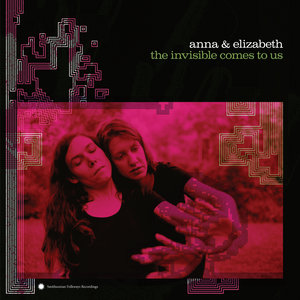
the invisible comes to us - out now

Anna & Elizabeth’s “The Invisible Comes to Us” taps into their imagination-fuelled arsenal to present an extraordinary work of unique, genre-bending storytelling and sonic exploration. Lauded by many well-known musicians and widely loved for their moving minimalist arrangements, Anna & Elizabeth’s partnership pioneers new ways of presenting old songs and stories to modern audiences. Co-producer Benjamin Lazar Davis (Cuddle Magic) and legendary avant-rock drummer Jim White (The Dirty Three, Xylouris White) assist in the duo’s vision of breathing life and new perspective into the crackling and disintegrating recordings and artifacts of the past. Rarely does an album based on traditional folk music resonate so strongly in modern times.

Official music video for “Mother in the Graveyard” from ‘The Invisible Comes to Us‘

“Mother In The Graveyard” was collected by Margaret MacArthur, recording Hildreth Brown in 1961 in Brattleboro Vermont. MacArthur recorded her own version for her Folkways Record ‘Folksongs of Vermont.’

Anna & Elizabeth is Anna Roberts-Gevalt and Elizabeth LaPrelle

Image may contain: 1 person, standing and outdoor

We’ve just released a collection of 26 demos/etc. from the making of Transangelic Exodus (2018) – we ask you to PAY WHAT YOU CAN/WANT for it to support us in a time of cancelled shows and lost income (we’ll divide the proceeds amongst the band and our teeny touring crew). It’s a kind of audio “making of” document for you if you are a fan of that record… thanks all…

Get it from https://ezrafurman.bandcamp.com/

Demos, Rehearsals and Shots in the Dark for Transangelic Exodus

Welcome to a collection of malformed reject recordings, the unpolished refuse of the process of making our 2018 LP, Transangelic Exodus. I’m proud of the final version of the record, but I always yearned to let people glimpse some of the strange process of making it.

We all knew that we wanted to approach making this record differently than we had our other albums. In the past we’d usually listen to my solo acoustic recording of a song, talk about what we might do with it, get the band all together in a room and go with our best instincts of how to bring it to life. This time, we wanted to abandon our first instincts. Tim’s idea was that I should get together one on one with each band member and see what we came up with together when the others weren’t watching. Try out different combinations of band members and think of ourselves as a different band, playing for a different audience, or no audience. We wanted to get weird. Then we’d pool our findings and try to make a record of maximal impact, maximal originality and excitement.

So what we have here are some of the more listenable or potentially interesting artifacts of that process, which began in 2016 and really got going in early 2017. The last recordings featured here are from around March 2017—after that point we were working on the actual tracks for the record, where (as you can hear on the album) we made all kind of other steps forward, toward what I consider the best thing I’ve ever made.

This is for fans of Transangelic Exodus who want to hear a little bit of the process of mutation along the way. There’s a lot more that I won’t ever show you. Also, I’ve only included versions of the songs that made it onto the final album; there were many more songs we left behind as we realized they wouldn’t be part of the best record we could make. I also left off most of the solo acoustic demos; I kept one or two that showed how much the songs progressed from my initial idea for them. But I wanted to keep the whole experience close to the average length of a feature film. One shouldn’t spend too much longer than that being this up close and personal with my psyche.

http://

I have catalogued the tracks with the personnel that appears on that track, plus my best guess at a date of the recording. The band members (The Visions) are: Ben Joseph, Jorgen Jorgensen, Sam Durkes and Tim Sandusky.

I’m very grateful that the weird passionate fictional-conceptual record we made has some fans that appreciate it. This is a little X-Ray of the process if you’re curious. The fact that you’ve let my dark hopeful dreams into your heart means so, so much to me. I hope those dreams are as useful to you as they have been to me.

Love, Ezra Furman

PLEASE BUY AND SUPPORT THIS SUPERB ARTIST

Everything changed for The Beths when they released their debut album, Future Me Hates Me, in 2018. The indie rock band had long been nurtured within Auckland, New Zealand’s tight-knit music scene, working full-time during the day and playing music with friends after hours. Full of uptempo pop rock songs with bright, indelible hooks, the LP garnered them critical acclaim from outlets like Pitchfork and Rolling Stone, and they set out for their first string of shows overseas. They quit their jobs, said goodbye to their hometown, and devoted themselves entirely to performing across North America and Europe. They found themselves playing to crowds of devoted fans and opening for acts like Pixies and Death Cab for Cutie. Almost instantly, The Beths turned from a passion project into a full-time career in music.

Songwriter and lead vocalist Elizabeth Stokes worked on what would become The Beths’ second LP, “Jump Rope Gazers”, in between these intense periods of touring. Like the group’s earlier music, the album tackles themes of anxiety and self-doubt with effervescent power pop choruses and rousing backup vocals, zeroing in on the communality and catharsis that can come from sharing stressful situations with some of your best friends. Stokes’s writing on Jump Rope Gazers grapples with the uneasy proposition of leaving everything and everyone you know behind on another continent, chasing your dreams while struggling to stay close with loved ones back home.

“If you’re at a certain age, all your friends scatter to the four winds,” Stokes says. “We did the same thing. When you’re home, you miss everybody, and when you’re away, you miss everybody. We were just missing people all the time.”

With songs like the rambunctious “Dying To Believe” and the tender, shoegazey “Out of Sight,” The Beths reckon with the distance that life necessarily drives between people over time. People who love each other inevitably fail each other. “I’m sorry for the way that I can’t hold conversations/They’re such a fragile thing to try to support the weight of,” Stokes sings on “Dying to Believe.” The best way to repair that failure, in The Beths’ view, is with abundant and unconditional love, no matter how far it has to travel. On “Out of Sight,” she pledges devotion to a dearly missed friend: “If your world collapses/I’ll be down in the rubble/I’d build you another,” she sings.

“It was a rough year in general, and I found myself saying the words, ‘wish you were here, wish I was there,’ over and over again,” she says of the time period in which the album was written. Touring far from home, The Beths committed themselves to taking care of each other as they were trying at the same time to take care of friends living thousands of miles away. They encouraged each other to communicate whenever things got hard, and to pay forward acts of kindness whenever they could. That care and attention shines through on Jump Rope Gazers, where the quartet sounds more locked in than ever. Their most emotive and heartfelt work to date, Jump Rope Gazers stares down all the hard parts of living in communion with other people, even at a distance, while celebrating the ferocious joy that makes it all worth it–a sentiment we need now more than ever.

releases July 10th, 2020

The Beths
Guitar: Elizabeth Stokes, Jonathan Pearce
Bass Guitar: Benjamin Sinclair
Drums: Tristan Deck
Vocals, Percussion: All

Image may contain: text, outdoor and nature

Image may contain: 1 person, tree and outdoor

“Sometimes I feel like we’re just sleepwalking through our lives. We’re not really present.” Hazel English wants us to open our eyes. Through her shimmering, daydream-pop, the California based singer-songwriter is on a mission to rattle the cages of our very existence, asking us to dig deep and ask challenging questions of ourselves. “Wake UP!”, her debut album, is a call to arms: an attempt to “make people become more aware and mindful,” she says.

Since debuting with bittersweet single ‘Never Going Home’ in 2016, the Sydney-born artist has felt the urge to connect with her listeners in a meaningful way. Blending wistful, candid lyricism with jangling psych and beach-pop sounds, English’s compelling song-writing has earned her over 25 million streams, airplay on BBC Radio 1, 6Music and Beats, praise from Lauren Laverne and Annie Mac, and press acclaim with double EP Just Give In/Never Going Home labelled by The 405 as “one of the strongest records of the year”. 2019 saw her gain an even wider audience after touring with Lord Huron and Death Cab For Cutie.

Where the double EP was very much a lo-fi, bedroom-produced record, English left her home setup behind in favour of roomy recording studios and tapped up session players for her debut album. Bigger, lusher, and more live-sounding, the LP shows a new side to English: one that conveys the joy and excitement of collaboration. Drawing from a more grandiose sonic palette while pulling on the same sun-kissed thread of her previous work, half of the record was made in LA with super-producer Justin Raisen (Sky Ferreira, Charli XCX, Angel Olsen), while English flew to Atlanta to work with Ben H. Allen (Deerhunter, M.I.A, Animal Collective) on the other half.

Listening to the record, it should come as no surprise that ‘Revolver’-era Beatles, The Mamas & The Papas, The Zombies and Jefferson Airplane were all at the forefront of her mind while recording. “Radical messages need a raw and vibrant backdrop to pop,” she says, and she’s kept her trademark sunshine-filled sound that fits her Los Angeles dwelling, but with bigger, stirring choruses. It’s a testament to English’s writing style and ear for a hook that she won’t make anything that she couldn’t play stripped back to its bones, refusing to rely on production to carry a song. Standouts like the infectious ‘Off My Mind’ and ‘Like A Drug’, with its swirling hypnosis, find English’s songcraft at its most accomplished.

Lead single ‘Shaking’ wears its ‘60s psych influences on its paisley patterned sleeve. Written by Hazel and frequent collaborator Blake Stranathan (Lana Del Rey), it was a painstaking effort: “I just couldn’t rest until I had gotten it to a place where it felt like I could sleep at night. And I’m really glad I did,” she says. Tackling themes of power, lust, manipulation, pleasure, and control, its Erin S. Murray-directed video strikes right at the heart of this idea, finding English as the charismatic ringleader of her own Manson-esque cult, manipulating her subjects in a baby doll dress and beehive hairstyle. “It presents the promise of a spiritual awakening as a kind of seduction,” she says.

An open sufferer of anxiety, English wrote the record following something of an existential crisis. Stuck and isolated, she felt like life was becoming a series of mundane objectives. She began asking herself: “am I happy? Do I like the direction I’m going in life? Am I engaged with my community? Do I feel connected to others?” English realised that the answers to all these questions were, for her, resounding nos. The album’s title became a kind of personal mantra to her – “a reminder to wake up and be present in a time where we are used to switching off and looking for constant entertainment,” she says. “[‘Wake UP!] will mean something different to everyone. Like, oh yeah, I’ve been sleeping on this goal of mine, or I need to spend more time with my kids. It’s for whatever people need to confront.”

http://

Obsessing over old movies and vintage clothing since the age of 15, English took cues from surrealism, dadaism and the writings of sci-fi novelist Philip K. Dick for the record. She wrote words before she became a musician – before a student exchange programme prompted her San Francisco move, English was studying creative writing in Melbourne and writing poetry prolifically. After reading Guy Debord’s 1967 book The Society of the Spectacle, English began pondering our obsession with self-image. In it, Debord considers how we get caught up in the ‘spectacle’: How am I perceived by others? How can I make it seem like I’m successful? English draws parallels from the ‘60s text with our social media-crazed present as “essentially creating a fabricated version of yourself and making sure it seems like you’re living this amazing life. It’s not a true experience. That just makes us unhappy, I think.”

Confronting issues with the rampant, consumerist nature of capitalism and “our human propensity for dissatisfaction,” Wake UP! also explores power struggles, with English looking at how shifting dynamics affect relationships, be it in the music industry or in romantic life. The record dives into unbalanced power dynamics, be it “feeling stuck in a one-sided relationship where the other person cares less,” “needing space in order to seek power within myself, or feeling like I’m the one holding all the cards in a relationship.”

Wake UP! is a rallying call to our 2020 selves; a reminder of what our core values are, packaged up in a glorious, sparkling record. “I hope I can inspire others to also search for their inner truths and find their own inner strength in the process,” English says. “I wanted to create something really dynamic, and kinda wild.”

releases April 24th 2020

Esoteric Recordings is proud to announce the release of a new re-mastered four-disc deluxe expanded boxed set limited edition (comprising 3 CDs and a DVD) of Axe Victim the legendary 1974 debut album by Be Bop Deluxe.

Recorded in the Spring of 1974 at several studios in London, AXE VICTIM was released by EMI’s Harvest label in June 1974 to much critical praise and introduced Be Bop Deluxe to the record buying public. The album featured the band’s first line-up of Bill Nelson (vocals, lead guitar, acoustic guitar, piano), Ian Parkin (rhythm & acoustic guitars, organ), Rob Bryan (bass guitar, vocals) and Nicholas Chatterton-Dew (drums).

Axe Victim was a fine debut and was championed by DJ John Peel (who had been an advocate of Bill Nelson’s work since the release of the rudimentary self-released album “Northern Dream” in 1971) as one of his favourite releases of 1974. Although Bill Nelson was still finding his creative feet, Axe Victim featured some fine material including the classic ‘Adventures in a Yorkshire Landscape’, along with other fine material such as ‘Night Creatures’, ‘Third Floor Heaven’ (which featured Babe Ruth vocalist Jenny Haan guesting), ‘Jets at Dawn’ and the superb ‘Darkness (L’Immoraliste)’.

This expanded reissue has been newly re-mastered from the original master tapes and features an additional 41 bonus tracks drawn from stunning new 5.1 surround sound & stereo mixes of the album from the original multi-track tapes by award winning engineer Stephen W. Tayler, along with two complete BBC Radio One sessions from November 1973 and May 1974 (including the previously unreleased “lost” John Peel session from November 1973), both sides of the rare Smile Records single ‘Teenage Archangel’ b/w ‘Jets at Dawn’ released by the band in 1973 prior to being signed to EMI. Also included is the complete previously unreleased Be Bop Deluxe audition session for Decca Records from December 1973 (mixed from the original 16 track tapes by Stephen W Tayler) & previously unreleased out-takes from the original album sessions.

Another highlight of this limited-edition boxed set is the lavishly illustrated 68-page book with many previously unseen photographs and an essay of recollections by Bill Nelson. Additionally, the set includes a facsimile Record Store poster and postcards. This special deluxe limited edition boxed set of Axe Victim is a fitting celebration of a wonderful debut album and a tribute to the creative vision of Bill Nelson.

• A DELUXE 4 DISC LIMITED EDITION BOXED SET OF THE CLASSIC 1974 DEBUT ALBUM BY BE BOP DELUXE COMPRISING
3 CDs and A DVD (NTSC / REGION FREE)
• NEWLY REMASTERED FROM THE ORIGINAL MASTER TAPES
• FEATURING AN ADDITIONAL 41 BONUS TRACKS DRAWN FROM NEW 5.1 SURROUND SOUND & STEREO MIXES FROM THE ORIGINAL MULTI-TRACK MASTER TAPES, BBC RADIO SESSIONS FROM 1973 / 1974, INCLUDING THE PREVIOUSLY UNRELEASED “LOST” BBC JOHN PEEL SESSION FROM NOVEMBER 1973, BOTH SIDES OF THE RARE SMILE RECORDS ‘TEENAGE ARCHANGEL’ SINGLE FROM 1973, COMPLETE (& NEWLY RE-MIXED) PREVIOUSLY UNRELEASED BE BOP DELUXE DECCA SESSION FROM DECEMBER 1973 & PREVIOUSLY UNRELEASED OUT-TAKES FROM THE ALBUM SESSIONS
• INCLUDES A LAVISHLY ILLUSTRATED 68 PAGE BOOK WITH MANY PREVIOUSLY UNSEEN PHOTOGRAPHS &
NEW ESSAY BY BILL NELSON / ALSO INCLUDES A REPLICA RECORD STORE POSTER & POSTCARDS

Fathers of psychedelic rock reuniting in Virginia City

If ever there was a San Francisco Sound, The Charlatans likely are the author’s of it. Cutting their teeth at the Red Dog Saloon in Virginia City in the mid-1960s, the band can rightfully claim to be the first San Francisco group. Only the pop-rock group the Beau Brummels might challenge that title.

But the Charlatans were on the cutting edge of the dramatic rise in bands spawned in San Francisco and the Bay Area around mid-decade. If nothing else the band – Dan Hicks, Mike Ferguson, Mike Wilhelm Richard Olsen, and George Hunter – had a major impact on the nascent hippie culture, with their unconventional attire, a throwback to the Wild West, The Charlatans were known for clothing themselves in late 19th-century attire, as if they were Victorian dandies or Wild West gunslingers. This unconventional choice of clothing was influential on the emerging hippie counter-culture, with many young San Franciscans dressing in similarly late Victorian and early Edwardian era clothing.

Two members of the group, Hunter and Ferguson designed what many consider to be the first Psychedelic Rock poster promoting the bands residency at the Red Dog Saloon.  This poster—known as “The Seed”. Difficulties in getting a debut single “Codine,” In fact, the tune—penned by folk artist Buffy Sainte-Marie spoke of the dangers of drugs, rather than promoting their use, but Kama Sutra was adamant and refused to release the song.

Instead, two other songs from the Kama Sutra sessions, “The Shadow Knows” and “32-20”, were released by Kapp Records in 1966 as the band’s first single, with some copies being housed in a rare promotional-only picture sleeve. Kapp Records failed to adequately promote the release and, as a result, the single was commercially unsuccessful. When the song failed because of poor promotion it caused turmoil in the band. Personnel changes also sabotaged the band at a critical moment of their career. The remaining songs recorded during the Kama Sutra sessions for the Charlatans‘ debut album remained unreleased until they were officially issued for the first time by Big Beat Records in 1996, on The Amazing Charlatans album.

By the end of the year, the Charlatans had broken up, and any hope of stardom comparable to the big four San Francisco bands: the Jefferson Airplane, Big Brother and the Holding Company, Quicksilver Messenger Service and the Grateful Dead, were dashed.

Original drummer Dan Hicks went on to form Dan Hicks & His Hot Licks, a more commercially successful ensemble that amalgamated elements of country, folk and jazz in a predominantly acoustic setting. Wilhelm went on to front the band Loose Gravel from 1969 until 1976, before becoming a member of the Flamin’ Groovies during the late 1970s and early 1980s

There were reunions over the years, and the band remained beloved by the Bay Area, but they never attained the degree of success that always seemed to elude them.