Tokyo Police Club are back and keeping it simple with their fifth studio album TPC through Dine Alone Records. They’ve captured the sound that saved them within the walls of a church and by the hands of producer Rob Schnapf. These are hymns for the young at heart. The single, Simple Dude, vocalist David Monks sings about sensations and simple pleasures as if they are new discoveries, “my skin to your skin, I can feel it coming.” In Can’t Stay Here he asserts “ I don’t know how to grow up/I don’t know how to stay young/ I just know that I can’t stay here” over Josh Hook’s rousing guitar and Greg Alsop’s free-spirited drums. It’s the perfect song for leaving home, a relationship, or your twenties while Ready to Win is a genius ode to failure, which is a lifelong experience, and just as important as success.
TPC is proof that an album can be casual but not careless. There is value in simplicity, and some of the best art isn’t complicated. TPC has a fast tempo swagger, anxious but proud. This an album you can bounce to while you find your way through too many beers and one night stands. These fast times may be fleeting, but they’re worth it.
This is another great hit from one of my favorite groups on the planet at the moment…The Death Valley Girls. Just listen to “Electric High”and you’ll know why I rant on about them so much, the vocals!!, the guitars!!, the drums!! they got it all going on, scorching rock ‘n’ roll that demands to be on every playlist you need….Death Valley Girls feels less like a band and more like a travelling caravan. At their core, vocalist/multi-instrumentalist Bonnie Bloomgarden and guitarist Larry Schemel channel Death Valley Girls’ modern spin on Fun House’s sonic exorcisms, early ZZ Top’s desert-blasted riffage, and Sabbath’s occult menace.
The 1st time I listened to The Death Valley Girls, I was hooked. Driving and pounding blues spilling all over the place and that voice is killer . Rock n Roll at its primeval explosion. This debut is mandatory listening to anyone who digs music. Simply superb. and…they got into answering the questions so there are a few videos for you to watch but don’t forget to listen to this excellent debut album for fans of Bo Diddley, Iggy/Stooges, Black Sabbath, MC5, Velvets, Little Eva, Godzilla, Alice Cooper, Mississippi Fred McDowell, 1977, 1966 , Roky Erickson, Seeds, Electric Eels, Lester Bangs…
Their record is out now! on Lolipop Records,
Death Valley Girls – “Electric High” (7″) Only 50 Pressed on Cherry Red wax !!!. www.lolipoprecords.com
Can someone learn from their past without being beleaguered by it? Is change something measured in footsteps, days sober, or something less tangible? These are all questions that Jason Isbell poses, and some of which he answers, on his latest album with The 400 Unit, “Reunions”.
The Nashville-based, Alabama-native singer-songwriter has traced a long and storied path to get to this, his seventh studio record and fourth alongside The Unit. From cutting his teeth with Drive-By Truckers in the late 2000s, to his departure from that group, hitting rock bottom, and finding salvation on 2013’s Southeastern, Isbell has seen quite a bit. One of the things that made him such an attractive songwriter was his ability to bring listeners in on that arc of rise, fall, and redemption. Now, with the release of Reunions, he begins to tell a new story.
Reunions, featuring 10 new songs, is a grab bag of material from Isbell. Some of it is the tried-and-true storytelling of his turbulent past, while some looks to his bright present of family life and critical acclaim, and still more look to realities completely bereft of Isbell himself. Reunions marks the evolution of an artist uncomplacent with doing what’s easy and restless enough to risk making some mistakes.
The album’s opening track, “What’ve I Done to Help”, finds Isbell still wrestling with his past and the resulting life it has created. While this isn’t the down-and-out Isbell to which audiences are privy, this is a much more cogent singer who acknowledges that all of these long-standing problems won’t go away just because “I kept my head down and showed up to work on time.”
Then, take a song like “Dreamsicle”, which again looks to the past but goes back a little further. From a turbulent childhood filled with cross country moves and frequent goodbyes to friends, “Dreamsicle” lays the emotional groundwork for songs closer to Isbell’s present self. With lines like, “I’ll be 18 four years from now/ with different friends in a different town/ I’ll finally be free,” Isbell offers a tender glimpse into a troubled childhood paramount to his adult formation.
Obviously, the lyrics are the focal point of Isbell’s music, but Reunions sets itself apart musically as well as lyrically. Take a song like “Overseas”, for example, with an opening guitar solo that comes roaring in like it’s a Tom Petty track. Isbell even poked fun at his musical maturation on Twitter the day the album was released, revealing that he wrote and recorded all of Reunions without using a capo. “How’s that for a folksinger and songwriter?” he asked.
Then, on Reunions, there’s a mysterious song-writing element that ties itself to Isbell as well as non-literal characters. “River” focuses on a protagonist who finds his saviour in the form of a river. The river tends to Isbell, hears his secrets, “wash my head when I’ve been sinning/wash my knuckles when they bleed.” As our character is saved by the dutiful protection of the river, the final stanza ends with the line, “and last night I woke up screaming at my wife.” This is immediately proceeded by a fiddle run from none other than Amanda Shires, Isbell’s wife.
This is not the lone reference to Isbell’s better half, for the song “St. Peter’s Autograph” is about Shires grieving over the passing offriend Neal Casal. Isbell said of the song in a recent New York Times profile, “I was trying to say, ‘It’s all right to grieve the parts of your relationship you might think I’d be upset or jealous about.’”
The role that Isbell and Shires’ domestic life plays in Reunions is unavoidable and unmistakable. It also represents the side of Isbell that looks optimistically toward the future, with a wife and a child, rather than constantly back at his destructive past. While Jason Isbell is not ready to give up that past just yet, Reunions shows the progress of a man who has learned from his mistakes, but is not defined by them.
The Texas-born, L.A.-based singer and songwriter Jess Williamson makes deeply felt songs that orbit around her powerful voice, a voice that’s strong and vulnerable, big room flawless, quietly ecstatic, and next-to-you intimate. In her most recent work, “Sorceress”, that voice is surrounded by a deep-hued kaleidoscope of dusty ‘70s cinema, ‘90s country music, and breezy West Coast psychedelia.
While attending the University of Texas, Williamson began to find her footing as an artist in the DIY and student-run art and music spaces of Austin. A photojournalism major, she interviewed and photographed bands for the school newspaper and hosted a radio show on KVRX, the student-run radio station. But quietly, she had an insistent pull to pursue music herself. In her last year of school, following an impulse after seeing Austin’s Ralph White play the banjo at a house show in her friends’ basement, Williamson took up banjo lessons at South Austin Music, and soon after was writing songs and making home recordings. After graduating, she moved to NYC to attend an MFA Photography program at Parsons. But after a couple semesters, she realized the call to pursue a career in music was too big to ignore, and she dropped out. She started a band in NYC called Rattlesnake with another friend from Texas: Williamson played banjo, her friend played electric guitar, and they both sang. They played their first show at the now defunct venue, Death by Audio, in March of 2010. A few months later, drawn to her larger hometown community, she moved back to Austin to focus on her solo project.
Her fourth album, “Sorceress”, also with Mexican Summer, arrives 2020. It was written in Los Angeles, recorded at Gary’s Electric in Brooklyn, and finished at Dandy Sounds in Dripping Springs, where she recorded Cosmic Wink. While she’s stayed true to her deep country roots, the music has grown in its ambitions. It’s her biggest, most assured collection to date, and a true document of the hard work paying off. About two-thirds of the way through the title track on her new album, Jess Williamson sings, “Yes, there’s a little magic in my hat / But I’m no sorceress.” Agree to disagree. Williamson is, at the very least, bewitching on Sorceress, her fourth album. It’s a blend of folk and country, with a dash of psychedelic rock, that brings together the strongest elements of her previous work—all the hints and glimpses of something deeper musically, and vocally, that never felt completely explored—into a fully realized collection of 11 songs that are at once polished, precise and visceral.
Jess Williamson – from the album ‘Sorceress’ out May 15th on Mexican Summer.
PunkRock/goth four piece Siouxsie and the Banshees were formed in 1976: Siouxsie Sioux (nee Susan Ballion) (vocals) and Steve Severin (bass) were the constant members of an aggregation that in its best-remembered line-up included John McKay (guitar) and Kenny Morris (drums). Siouxsie had been one of the hangers-on present during the Sex Pistols interview with Bill Grundy. Into this abnormally chaotic adolescence came the Sex Pistols. She latched on to the nascent punk movement and was one of the most visible members of the Bromley Contingent (along with future collaborator Steve Severin) and one of the first people visibly affected by the wave of energy emanating from punk.
Just a few months before this notorious TV appearance, Malcolm Maclaren prompted her to get The Banshees together with Severin on bass, Marco Pirroni (soon to be an Ant) on guitars and a young, John Ritchie (soon to be Sid Vicious) on drums. Apart from Pirroni, who was already a competent song writer and a good guitarist, it was a case of ‘God help us if there’s a war’ as they played a 20-minute improvised version of the Lord’s Prayer at the 100 Club. But 12 months after the Today appearance, everything had changed. With Pirroni departed to join Merrick, Terry, Lee, Gary Tibbs and his truly and Vicious already enjoying short tenure with the Pistols, the line-up settled around Sioux/Severin and John McKay on guitar and Kenny Morris on drums.
In a matter of months they’d gone from being the kind of band who “didn’t know which way up to hold a guitar or how to plug it in” to being a serrated yet sensuous attack unit. Their first PeelSession (‘Love In A Void’, ‘Mirage’, ‘Metal Postcard’, ‘Suburban Relapse’) shows a band who still had trace elements of glam rock, were strangely psychedelic, tribal and stentorian. This was assured, self-contained, original, startling and lots of other things that you would never normally associate with scenesterism.
Siouxsie said of the process like of recording a Peel Session back then, I think for us especially, we worked very quickly, mainly because we’d only played live before and partially it was dependant on who you had doing the session and some of it was about trying out different instruments and different sounds but they were all sessions that were done during the day and I really like them for that. And we always approached our B-sides like that and for me they are a side of the band that a lot of people don’t really get. But this is my favourite side of the band. I like seeing us working in a more spontaneous environment.
The Banshees changed musical direction in the early 80s after recruiting Budgie (drums) and one guitarist was the Cure’s Robert Smith. Siouxsie’s spiky hairdo and black make-up fixed the image of what a gothic band should be years ahead of its time, and album and single releases proved equally successful. John Peel was instrumental in kick-starting their career after producer John Walters had seen them at the Greyhound in Croydon. He gave them a session prior to their even having a recording contract, Peel played their debut release, “Hong Kong Garden”, at the top of his show every night for a week, and shamelessly plugged their first two LPs. Eventually, he tired of their material, the first signs of this being a luke warm response to the mid 1980 release of Kaleidoscope. He later stated a clear dislike for their cover of the Beatles “Dear Prudence”, and said on Peeling Back The Years in 1987 that “the stuff the Banshees do now doesn’t please me as much as the first things they did…I think the Banshees have become, not exactly predictable, but at the same time, you’ve got a pretty good idea of what it’s going to sound like.”
In a 1982 Smash Hits Radio 1 feature Peel cited Siouxsie & The Banshees as being an example of a group he championed, but who then, turn their backs on him. They did two sessions for the programme before they had a recording contract and now Siouxsie says her favourite DJ’s is Kid Jensen, he added. Siouxsie sat in as guest presenter on the Peel show on 20th October 2004, when Peel was on holiday in Peru.
The complete session recorded by Siouxsie and the Banshees on 29th November 1977 for the John Peel show and broadcast on 5th December 1977. Recorded at the BBC Studios in Maida Vale, London, England . None of the songs had been released prior to the broadcast.
Tracklist:
1. Love In A Void
2. Mirage
3. Metal Postcard
4. Suburban Relapse
The complete session recorded by Siouxsie and the Banshees on 6th February 1978 for the John Peel show on BBC Radio 1 and broadcast on the 23rd of that month. recorded at the BBC Studios in Maida Vale.
None of the songs had been released prior to the broadcast. The version of “Hong Kong Garden” is the only early studio recording on which the oriental hook is played on glockenspiel. The session also includes a version of “Overground” featuring a Hammond organ motif.
Tracklist:
1. Hong Kong Garden
2. Overground
3. Carcass
4. Helter Skelter
The complete session recorded by Siouxsie and the Banshees on 9th April 1979 for the John Peel show on BBC Radio 1 and broadcast on the 16th of that month.
Tracklist:
1. Placebo Effect
2. Playground Twist
3. Regal Zone
4. Poppy Day
The complete session recorded by Siouxsie and the Banshees on 10th February 1981 for the John Peel show on BBC Radio 1 and broadcast on the 18th of that month.
Tracklist:
1. Halloween
2. Voodoo Dolly
3. But Not Them
4. Into The Light
The complete session recorded by Siouxsie and the Banshees on 28th January 1986 for the John Peel show on BBC Radio 1 and broadcast on 3rd February 1986.
Tracklist:
1. Candy Man
2. Cannons
3. Land’s End
All Five sessions. All are available on “Voices On The Air” – The Peel Sessions and “At The BBC” CD set.
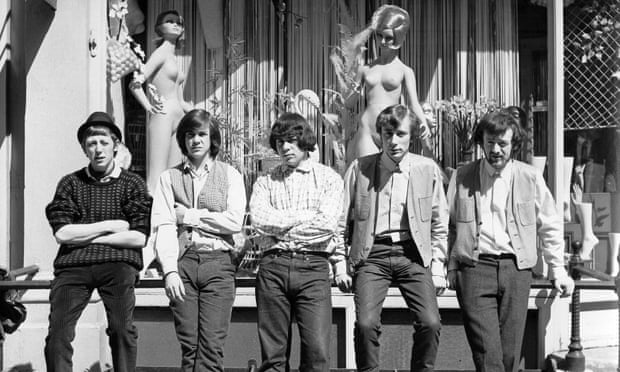
Phil May, frontman of the riotous band the Pretty Things who were acclaimed peers of David Bowie and the Rolling Stones, The Lead singer with legendary, cult, first-wave, British, R&B band The Pretty Things died following tragic accident. It is with very deep sadness that the management of the Pretty Things have to announce the death of the band’s lead singer.
Phil May passed away at 7.05am on Friday 15 May at the Queen Elizabeth hospital, Kings Lynn, Norfolk. He was 75 years of Age. He had been locked down in Norfolk with his family and, during the week Phil had suffered a fall from his bike and had undergone emergency hip surgery, after which complications set in.
The Pretty Things first came to prominence in the 1960s when they caused great controversy because of the length of their hair and outrageous behaviour. Fights at shows were commonplace and questions were even asked in parliament. But over the years the band retained their uncanny relevance across generations of rock music.
Born in Dartford, Kent, May formed the Pretty Things in 1963 with guitarist Dick Taylor, who had recently left the nascent Rolling Stones. The band’s line-up coalesced with John Stax, Brian Pendleton and Viv Andrews, with May as frontman.
The Pretty Things were fundamental in the development of British music. They enjoyed much critical success and were a huge influence on artists as diverse as David Bowie, Aerosmith, The Ramones, Bob Dylan, The Sex Pistols, The White Stripes, Kasabian, The Lightning Seeds and countless more. The Pretty Things seem to have existed in a state of chaos from the moment they began. They were a genuinely ground breaking band. At a time when most British R&B artists treated their US source material reverentially – “as if it were written in stone and you can’t fuck with the Bible”, says May – the Pretty Things tended to charge at old Willie Dixon and Jimmy Reed songs head on, with thrillingly explosive results. “We were incompetent reprobates,” chuckles Taylor. “It was thrash R&B.” At least part of the Pretty Things’ nonpareil ability to attract trouble was linked to May’s appearance: he had grown his hair down to his shoulders while at art school, a remarkable move in early 60s Britain. “By the time the Pretty Things hit the TV screens, I was used to being abused and spat at and getting into punch ups, because it had happened when we were art students. We’d done our apprenticeship at being outsiders.
They signed to Fontana Records and released a string of hit singles: “Rosalyn”, “Don’t Bring Me Down”, “Midnight to Six Man”, the latter a paean to the life of a jobbing musician so evocative you can almost smell the sweat, cigarette smoke and chip fat in the Blue Boar service station as it plays.
But they also attracted trouble: May and Taylor are full of tales about touring that begin with the band gamely setting off in their van “with some sandwiches Dick’s mum made us” and end with them causing a riot, or being run out of town by the police, or discovering that a guitarist has vanished without trace, unable to cope with the bedlam, only to reappear years later, having opted for a quieter life selling insurance. Should anyone think these stories are exaggerated, there is some footage of them performing in the Netherlands in 1965: they don’t seem to be playing a gig so much as providing the soundtrack to a public disturbance, the music getting more and more chaotic as the crowd fights. Then there was their drummer Viv Prince, a typical anecdote about whom begins: “He was drinking a bottle of whisky a day and there were a number of incidents with a tear-gas gun he’d got hold of in Germany.” A 1965 tour of New Zealand would have gone badly anyway – the press were upset by the band’s appearance, the chaotic nature of their performances and May’s loud questioning of the country’s treatment of its Maori population – but it was Prince who managed to cause so much trouble that the band were deported and the New Zealand parliament barred them from the country for life.
A clip exists of them performing Private Sorrow on French TV that gives you a flavour of what it might have been like: drummer John “Twink” Alder does a mime in white face and Napoleon hat, while May shoots him a succession of furious glares. He looks as if he wants to kill him. “Oh God, yeah,” nods May. “We all did. He got completely carried away. It was like: what are you fucking doing? It was his Marcel Marceau period.
There was also their penchant for what Taylor calls “musical anarchy” on stage – their performances degenerating into improvised noise – and their fondness for drugs. They obviously were not the only mid-60s rock band who fell under the influence of acid, but they may have been the most blatant. Other artists wrote subtly coded songs, wreathed in metaphor, that tipped the wink to listeners in the know: White Rabbit, I Can See for Miles, Tomorrow Never Knows. The Pretty Things wrote songs called LSD and Tripping. “I don’t think we were trying to be surreptitious about anything at that time,” shrugs May.
Radio was equally disinclined to play their astonishing 1967 single Defecting Grey, a saga of cruising in a park while on acid. If May was at least a little more circumspect about his bisexuality than his drug use, he was still fond of swapping the gender pronouns around in old R&B songs, enlivening one mid-60s BBC performance by singing, “I’m in love with your little girl, and your little boy’s in love with me” during a version of Mama, Keep Your Big Mouth Shut.
The group became a key part of the London blues-rock scene who were in thrall to US blues players but were also bringing in new elements of pop and psychedelia. They had an early Top 10 hit in “Don’t Bring Me Down” and other moderately successful songs like “Honey I Need” and “Cry to Me”, and became known for their drug-taking and raucous on-stage behaviour.
May was bisexual, wore his hair long and marked himself out as a countercultural figure. He remembered in “By the time the Pretty Things hit the TV screens, I was used to being abused and spat at and getting into punch-ups, because it had happened when we were art students. We’d done our apprenticeship at being outsiders.”
The band earned their most enduring fame for their 1968 concept album SF Sorrow. It is regarded as the first rock opera album, a tale of the life of the fictional Sebastian F Sorrow, ahead of similar experiments like the Who’s album Tommy. The record was released by Motown offshoot Rare Earth, making them Motown’s first ever UK signing, though it was a flop on release and only later became a cult favourite.
The band created a rich music catalogue including top-level albums such as The Pretty Things, S.F. Sorrow & Parachute, and remained a significant artistic and creative force throughout their entire 55+ year career.
They were revered by artists as diverse as Jimi Hendrix, Aerosmith, the Ramones and Kasabian, and while there were spells of inactivity, the band never split up, enjoying a 55-year career. They played their final concert in 2018, with guest appearances by David Gilmour and Van Morrison.
May and Taylor have a lot of stories like this. They have spent 55 years, on and off, as frontman and guitarist of the Pretty Things, with no end in sight to their career, although the was to be their last as an electric band. May had emphysema, which makes touring tough, although they planed to continue performing acoustically. It is a life that has left them with an apparently bottomless fund of anecdotes about everything from the snobbery of the south London blues scene from which they and the Rolling Stones emerged – “they kind of dismissed me and Keith Richards as punks; they wouldn’t allow us onstage,” says May – to microdosing LSD, a practice May thinks may have been invented by a keyboard player who performed with the band in the 70s. “He used to have a little lick of acid every morning while standing on his head, doing his yoga exercises.” And did it help him psychologically, as latter day devotees of microdosing claim it can? “Well, no, not really,” sighs May. “He went pretty loony, to be honest.”
May also released a solo blues-rock album as Phil May & the Fallen Angels in 1976, which had a fraught gestation – half the album was written and performed with band members from Fleetwood Mac and Humble Pie, who later quit, leaving May to finish it with a fresh set of personnel.
In 2014, he was diagnosed with chronic obstructive pulmonary disease and emphysema, and took a break from touring. He recovered, and the following year the band released their most recent album, The Sweet Pretty Things (Are in Bed Now, of Course…). An album of new material is also slated for release this year.
They continued to release iconic and influential recordings, right up to the present day, with a new album due for release this year. Phil had been in poor health for some time when the Pretty Things played their last live concert, ‘The Final Bow’, on 13th December 2018,
Phil May leaves behind his son, Paris May, his daughter, Sorrel May and his partner, Colin Graham.
The Lemon Twigs “LIVE”:
Compiled from recordings of The Lemon Twigs’ live performances in late 2018, early 2019 on the “Go To School” tour, here is The Lemon Twigs LIVE. If you close your eyes while you listen, you’ll experience EXACTLY what it would be like to go to a Lemon Twigs show wearing a blindfold. This live record is so good. The brothers are a whole different beast live.
The album is available exclusively on bandcamp. All of the proceeds will go to Coalition for the Homeless, who are helping NYC’s most vulnerable during this trying time and have been since 1981. For more information on them go to their website: www.coalitionforthehomeless.org
Recorded live to tape during shows in Pawtucket RI, Northampton MA, and Los Angeles CA.
Brian: I really wanted to release it when we first got off the road, but I don’t know if our label was that interested. But yeah, I’m happy with it. It was such a weird time after we released Go to School. I felt we should come off of an album like that by getting some string players together and trying to do this orchestral/theatrical thing. And Michael’s headspace was really not there; he wanted to do the opposite of that album, practically. And we had these musicians with us that were so great, who came from the jazz world. It ended up being a lot of jamming, which I never expected to do in my life—a lot more soloing than I ever thought I would want to do. [Laughs.] It’s cool to look back on, even though it was relatively recently. I don’t think we’ll ever be able to get that side of us across on a studio record; and when we do tour for this record, I think it will be a lot different than how we sounded on that tour.
Michael: We recorded it on a little cassette machine; we didn’t know if we were going to put it out with our label or if we’d slip it out like a bootleg, but we wanted to make it something interesting, not just put out a live album that’s really boring. The live albums that are cool are the ones where they completely transform the songs, or the ones where they just talk—or maybe they do the songs really intimately. And this gave us the opportunity to document that period. It was very intense to do that kind of stuff every night; it was hard work, and I really wanted a snapshot of it. Because I don’t know if I always want to be that intense, you know what I mean?
The Group:
Brian D’Addario – guitar, keyboards, vocals
Michael D’Addario -guitar, vocals
Tommaso Taddonio – keyboards
Daryl Johns – bass, vocals
Andres Valbuena – drums, vocals
In 2016 the indie rock band Big Thief, comprised of former students of Boston’s prestigious Berklee College of Music, released their first album. They’ve since released two more albums, including their latest, “Two Hands,” and they’re beginning a world tour. James Krivchenia, Adrianne Lenker, Buck Meek and Max Oleartchik joined “CBS This Morning: Saturday” to perform the song “Not.”
Big Thief’s fourth studio album Two Hands was released earlier this year, and following a stretch of recent tour dates throughout North America the band stopped by CBS This Morning to play as part of the show’s ongoing “Saturday Sessions” performance series.
As with other CBS This Morning performances, the group played a short three-song set, which here included the songs “Two Hands,” “Not,” and “Forgotten Eyes,” all of which appear on their latest album. While “Not” and “Forgotten Eyes” were both released as singles, the title track was later released as a standard track on the album. Two Hands is the second Big Thief album in less than a year following the excellent U.F.O.F. which was released this past May. “It has been two years [since their second album], and in that time Adrianne [Lenker] had just written so many songs,” guitarist and vocalist Buck Meek said in a recent interview with Stereogum “For a month we went through every song and built arrangements and hashed them out.”
The indie rock band Big Thief, James Krivchenia, Adrianne Lenker, Buck Meek and Max Oleartchik joined “CBS This Morning: Saturday” to perform the song “Forgotten Eyes.”
The “Seattle” EP was created in (you guessed it) Seattle; the city without a doubt most synonymous with the 90s; the era undeniably pulsating through Bloods’ DNA. Pouring through rock mags and staying up late watching music videos on Rage, trying to catch a glimpse of her flannel-clad rock heroes, it would’ve seemed unthinkable to teenage MC that one day she’d be standing in a studio in Seattle about to record with her own band.
But here is where MC and her bandmates Dirk Jonker (drums) and Mike Morgan (guitar, bass and backing vocals) found themselves – recording at Jack Endino’s Sound House (y’know just the guy who recorded Nirvana’s Bleach, no biggie), with Steve Fisk on production and mixing duties (yep, the dude who’s worked with Soundgarden and Mudhoney) and using the very amp Kurt Cobain played through on his band’s debut record.
Bloodsh have dedicated their free-spirited new EP to that very place – Seattle is out May 15. Along with the infectious lead track “U & M E” (premiered recently by FLOOD Magazine), Seattle also boasts the middle finger waving kiss-off of “The New Guy”, the buzzsaw sugar rush of “Waste Of Time”, and the Ten Things I Hate About You (set in Seattle btw) homage “I Hate It”, to the EP’s biggest blow “Girls Are Just Fucking Cool Like That”, Seattle’s six tracks are dripping in a wry, couldn’t-care-less attitude that would have been right at home in the Seattle of the 90s.
Rhino, the label that manages the catalogue of the Warner family of labels, has announced its upcoming Record Store Day releases. A mouth-watering 29 titles will hit shops , available exclusively at brick-and-mortar locations. These include the previously announced David Bowie titles; a rare live set from Alice Cooper; rarities from Jethro Tull; a box of John Prine’s early albums; a set of core Notorious BIG records; BBC sessions from The Pogues, New Order, and Hawkwind; a sought-after live album by The Pretenders; and so much more!
This year’s Rhino’s Record Store Day collection features limited edition releases from music’s most celebrated artists. Some highlights include vinyl and CD releases from David Bowie, picture discs from The Cure, boxed sets from the Grateful Dead and The Notorious B.I.G and Warren Zevon’s Greatest Hits (According To Judd Apatow). Full details on all titles. All releases will be available exclusively at select independent music retailers on June 1st.