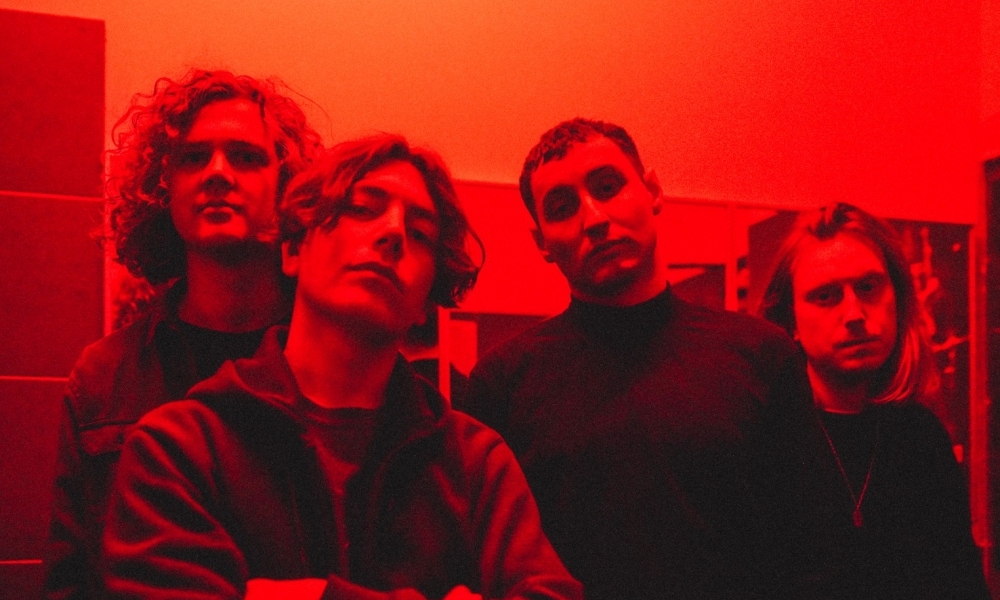
Big Thief have released a standalone track, ‘Love In Mine‘. The song originally appeared as a b-side of a 7” mailed to fans ahead of the announcement of 2019’s acclaimed Two Hands. It follows their recently released EP Demos Vol. 1 – Topanga Canyon, CA – Feb 2018, which benefits Big Thief’s road crew,
‘Love In Mine’ shuffles with delicate finger pickings, soft percussion, and Lenker’s tender, hushed voice. As the track ends, the band’s multiple voices blend together into a gentle invocation: “Whatever comes // When it calls // Whatever leaves.”
Last week Big Thief announced the rescheduling of their Australian tour dates to March 2021. Big Thief’s latest album ‘Two Hands’ is out now:
Born out of a union of club bands on the burgeoning Austin, Texas bohemian scene and a pronounced taste for hallucinogens, the 13th Floor Elevators were formed in late 1965 when lyricist Tommy Hall asked a local singer named Roky Erickson to join up with his new rock outfit along with guitarist Stacy Sutherland. Four years, three official albums and countless acid trips later, it was over: the Elevators‘ pioneering first run ended in a dizzying jumble of professional mismanagement, internal arguments, drug busts and forced psychiatric imprisonments. In their short existence, however, the group succeeded in blowing the lid off the budding musical underground, logging early salvos in the countercultural struggle against state authorities, and turning their deeply hallucinogenic take on jug-band garage rock into a new American institution called psychedelic music.
Before the hippies, before the punks, there were the 13th Floor Elevators: an unlikely crew of outcast weirdo geniuses who changed culture. Paul Drummond has spent years documenting every aspect of the history of this amazing band and amassing an unprecedented archive of primary materials, resulting in this comprehensive visual history. The book recounts the story not just of the Elevators as a band–wild and remarkable though it is–but that of the American counterculture itself: the hallucinogens, the rebellion and the truly profound music that resulted. The 13th Floor Elevators: A Visual History places the band finally and undeniably in the pantheon of innovators of American rock music to which they have always belonged. The band was together from 1965 to 1969, and during that period released four albums and seven singles for the International Artists record label who signed the Elevators to a record contract and released the album The Psychedelic Sounds of the 13th Floor Elevators in November 1966, which became popular among the burgeoning counterculture Tommy Hall’s sleeve-notes for the album, which advocated chemical agents (such as LSD) as a gateway to a higher, ‘non-Aristotelian’ state of consciousness, has also contributed to the album’s cult status.
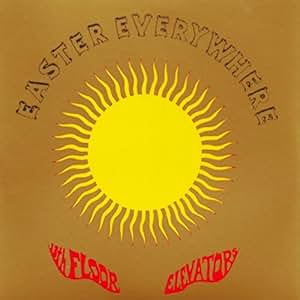
In November 1967, the band released a second album, “Easter Everywhere”. The album featured a cover of Bob Dylan’s “It’s All Over Now, Baby Blue”. However, shortly before work began on Easter Everywhere, Walton and Leatherman left the band and were replaced by Danny Thomas on drums and Dan Galindo on bass, because of disputes over mismanagement of the band’s career by International Artists and a fundamental disagreement between Walton and Hall over the latter’s advocacy of the use of LSD in the pursuit of achieving a higher state of human consciousness. As a result, they were not credited in the Easter Everywhere sleeve-notes, despite having appeared on “(I’ve Got) Levitation” and “She Lives (In a Time of Her Own)”. Despite the lengthy studio work and resources utilized, Easter Everywhere was not the success the band and International Artists had hoped for. Lacking a hit single and released too late in the year, it sold out its original run, but was never reprinted, suggesting somewhat disappointing sales. Record label paperwork indicate that the band’s debut album sold upwards of 40,000 copies during its original run, while Easter Everywhere may have sold around 10,000 copies. As documented in a lengthy interview and article in the Texas underground music magazine Mother No. 3, the band worked all Spring of 1968 on their new album, which at one point was to be called Beauty and the Beast. However, because of an unstable member line-up and the increasingly erratic behaviour of the psychedelicized Tommy Hall and mentally fragile Roky Erickson, little of value came out of these sessions. The live shows had lost their original energy, and often the band would perform without their lead singer Erickson, due to his recurring hospital treatments at the time. The last concert featuring the “real” Elevators occurred in April 1968.
A special aspect of the Elevators’ sound came from Tommy Hall’s innovative electric jug. The jug, a crock-jug with a microphone held up to it while it was being blown, sounded somewhat like a cross between a minimoog and cuica drum. In contrast to traditional musical jug technique, Hall did not blow into the jug to produce a tuba-like sound. Instead, he vocalized musical runs into the mouth of the jug, using the jug to create echo and distortion of his voice. When playing live, he held the microphone up to the mouth of the jug, but when recording the Easter Everywhere album, the recording engineer placed a microphone inside the jug to enhance the sound.
At Tommy Hall’s urging, the band often played their live shows and recorded their albums while under the influence of LSD, and built their lifestyle and music around the psychedelic experience. Intellectual and esoteric influences helped shape their work,
Around this time, the original 13th Floor Elevators disbanded, as the nucleus of Erickson-Hall-Sutherland had been reduced to guitarist Stacy Sutherland only. Sutherland brought some of his own songs for a final set of studio sessions, which led to the dark, intense posthumous album Bull of the Woods. Initially disliked by many Elevators fans, it has found a substantial fan-base today, with some even rating it the band’s best LP. These final sessions consisted of Sutherland on guitar, Ronnie Leatherman on bass, and Danny Thomas on drums.
Hall remained the band’s primary lyricist and philosopher, with Sutherland and Erickson both contributing lyrics as well as writing music, and, later, working with Danny Thomas to arrange the group’s more challenging music. In addition to Erickson’s powerful vocals, Hall’s “electric jug” became the band’s signature sound. Later, Ronnie Leatherman returned for the third and final studio album, Bull of the Woods along with Thomas, and Sutherland.
A few live gigs were played around Texas during the second half of 1968, until an article in Rolling Stone magazine in December 1968 declared the band gone. International Artists pulled together the various studio recordings from 1968 and, with the assistance of drummer Danny Thomas, added some horn arrangements, which became the Bull of the Woods album, released in March 1969. Drug overuse and related legal problems left the band in a state of constant turmoil, which took its toll, both physically and mentally, on the members. In 1969, facing a felony marijuana possession charge, Roky Erickson chose to be admitted to a psychiatric hospital rather than serve a prison term, thus signaling the end of the band’s career.
Bull of the Woods, was released in 1969, was the 13th Floor Elevators’ last released album on which they worked as a group, and was largely the work of Stacy Sutherland. Erickson, due to health and legal problems, and Tommy Hall were only involved with a few tracks, including “Livin’ On”, “Never Another”, “Dear Doctor Doom”, and “May the Circle Remain Unbroken”.
Today, the 13th Floor Elevators continue to influence new generations of musicians. In 1990, 21 contemporary bands—including R.E.M., Richard Lloyd, David Leonard,the Jesus and Mary Chain, and Primal Scream who all recorded covers of Elevators songs “Slip Inside This House” was covered by Scottish alternative rock band on their album Screamadelica album. 1980s drone/space-rock band Spacemen 3 were influenced by the 13th Floor Elevators, covering “Roller Coaster” twice, for their debut album, Sound of Confusion, and as a 17-minute version for their debut EP Walkin’ With Jesus. Vocalist/guitarist Pete Kember also covered “Thru the Rhythm” with his post-Spacemen 3 project Spectrum. Radio Birdman, features a song titled “Lunatics at the Edge of the World”, which Tek described as “An ode to Syd Barrett and Roky Erickson.”
Studio albums
The Psychedelic Sounds of the 13th Floor Elevators, (October 1966)
Easter Everywhere, (November 1967)
Bull of the Woods, (March 1969)
Noted Hollywood actor/Musician Johnny Depp praised the Elevators in a 2005 magazine interview “Roky Erickson and the 13th Floor Elevators, a band out of Texas. They were basically the first psychedelic-rock band. 1965. And if you listen to old 13th Floor Elevators stuff—Roky Erickson especially, his voice—and then go back and listen to early Led Zeppelin, you know that RobertPlant absolutely copped everything from Roky Erickson. And it’s amazing. And Roky Erickson is sitting in Austin, Texas; he’s just there. And Robert Plant had a huge hit. It always goes back to those guys, you know? I love those guys.”
If listening to Beach House’s Teen Dream felt like throwing open the shades and letting light into a dusty sunroom, Bloom revisited that same space at twilight, still opulent and opaque but with new scope. Alex Scally’s sparkling guitar leads and Victoria Legrand’s cyclone of a voice are instantly recognizable, but they’re distorted in mystery. Bloom is a seductive album that has little to do with romance or sexual gratification; its characters feel the tug of adventure, of sensations and phenomena they can’t quite describe.
And while Bloom boasts some of the most indelible melodies in Beach House’s discography—the twinkling “Lazuli,” the extended sigh of “Other People”—it’s most notable as a collection of remarkable sounds. “Myth” opens with that plonking bell, cracked like an egg after two stiff shakes; the drums on “Wild” foam and splash like the ocean around your ankles; “The Hours” clocks you with that sneering riff, a slow-motion punk moment. These little moments may not sound like much, but they end up feeling like dashes of spice added to a favourite home-cooked meal. There’s something unexpected lurking in every familiar bite.
Bloom is presented as an album which transcends the boundaries of genre, taste or subjectivity. It is described as a work of religious mission, opening the eyes of any who venture into it. But I’m indifferent to the quality of the music . Many claim that no indie or mainstream music released by the turn of the decade a few months ago was left untouched musically by Bloom’s dream pop, which epitomizes the sound of Beach House it’s synth arpeggios, fuzzy yet discreetly mixed guitars and ethereal, psychedelic vocals layered upon dreamy atmospheric sounds.
Dream pop is not just a genre. It’s an all-encompassing description: Bloom truly sounds like a dream feels. The duo behind the album created a psychedelic, half-conscious atmosphere shoegazed (a production style which tries to merge and effect the instruments until the different instruments on a mix are almost indistinguishable) to the point that the texture feels barely there, and yet impenetrable as a solid wall of sound; an enormous, slow moving, audible cloud. Unusually, the album benefits from each song sounding similar enough that each track fades into another seamlessly, which only adds to the unavoidable dream comparison: as a dream is an ambiguous, surreal montage of faded events and ideas, as is Bloom.
The influence of this album is hard to deny. Just a few tracks in, the poppy, synth arpeggios which are ever present. Then the ethereal, contralto female vocals, The trippy, heavily reverberated instrumentation and vocals the jangly guitars on Wherever You Go.
On the other hand, there are certainly arguments suggesting that the influence of Bloom has been exaggerated. The album cover for Bloom, its prime visual representation, is instantly evocative of that of the self-titled album by The XX, released in 2009, or Turn on the Bright Lightsby Interpol, released 2002.
So, did Beach House simply steal their sound and aesthetic? Of course not. For the most part, Beach House reinvented dream pop for a new generation, with adding a new, even more ethereal touch which has placed its hand on every indie pop or rock record released since. Late 2000s psych-pop may belong in the same category of music as Bloom,but it’s no coincidence that Beach House are immediately distinct from their contemporaries, no matter the similarities.
The title of “Opening Night,” the introductory song on Quiet Signs, Jessica Pratt’s third album, is a reference to Gena Rowlands‘ harrowing, haunted performance in the John Cassavetes film of the same name. It’s also an emblem of where this spare, mysterious collection of songs falls in the course of Pratt’s career. “On some level I considered an audience while making the last record,” she writes, “but my creative world was still very private then and I analyzed the process less. This was the first time I approached writing with the idea of a cohesive record in mind.”
After a collection of demos and early studio recordings earned her a small, dedicated audience, Pratt moved from San Francisco to Los Angeles and recorded her first intentional album in her bedroom in a matter of months. That album, On Your Own Love Again (Drag City, 2015), would bring her around the world many times, leading many to fall under the spell of Jessica Pratt the performer, the songwriter, the singer with the heavy-lidded voice that feels alien and familiar at the same time.
Her first album fully recorded in a professional studio setting, Pratt’s songwriting and accompanying guitar work are refined on Quiet Signs, more distinct and direct. Songs like “Fare Thee Well” and “Poly Blue” retain glimmers of OYOLA‘s hazy day afternoon spells, yet delicate flute, strings sustained by organ arrangements, and rehearsal room piano now gesture towards the lush chamber pop and longing of The Left Banke. On the album’s first single, “This Time Around,” Pratt hits on a profound, late-night clarity over just a couple of deep chords, evoking Caetano Veloso‘s casual seaside brilliance. And before the curtain drops Quiet Signs, Pratt provides a show-stopping closer, “Aeroplane.”
In the world of Quiet Signs, the black of night usually represents fear, despair, resignation; finally at home descending towards the illuminated city, she sings over black leather drone and tambourine shuffle with a newfound resolve. Quiet Signs is the journey of an artist emerging from the darkened wings, growing comfortable as a solitary figure on a sprawling stage.
The album was written in Los Angeles and recorded at Gary’s Electric in Brooklyn, NY over 2017 and 2018. It was co-produced by Al Carlson. He plays flute, organ and piano on some songs. Matt McDermott also played piano and string synthesizer. It will be released on Mexican Summer in the US and City Slang in Europe .
Fresh off the back of their Under Exit Lights EP, Sea Girls are treating us with even more new music, starting with new single Do You Really Wanna Know? The new single arrives alongside the announcement of the band’s debut album, Open Up Your Head, out August 14th via PolydorRecords.
With bragging rights as the next generation of British sing-along maestros, Sea Girls seem under no pressure to release another anthemic tune to their repertoire. Do You Really Wanna Know? is a 3 minute bop about spoiling precious moments with questions.
One of their more upbeat tunes, it’s chorus has a firm boyband feel and a rhythm reminiscent of an obscure 90’s TV show credits which I can’t quite place. It doesn’t feel like the instant classic some of their older songs have upon release, yet Caville’s vocals carry enough power that you can already hear this being sung back to them during one of their raucous live shows.
One thing is certain, Sea Girls have found the magic potion for writing feel-good indie pop with incessantly catchy choruses and don’t intend stopping any time soon. For this reason, we’re psyched for the release of their long-awaited debut album Open Up Your Head in August.
Band Members:
Henry Camamile, Rory Young, Andrew Dawson & Oli Khan
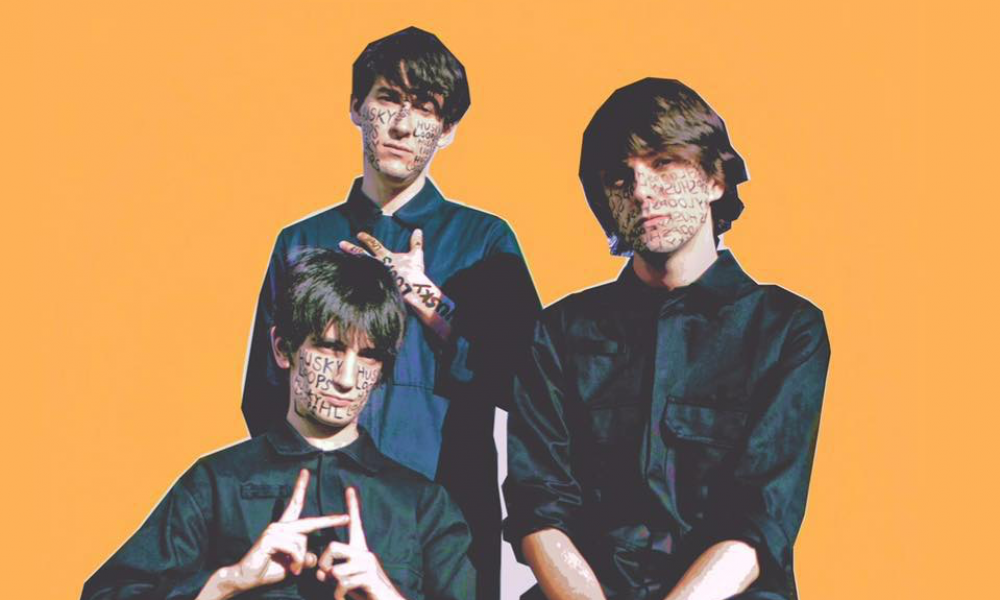
Husky Loops are winning the battle against quarantine with their brand new release “You Bore Me”, which involved the trio altering their music process in order to adapt to our current way of life. The music video that accompanies this track is shot entirely by the band’s bassist Tommaso Medico on his phone, and is a nice reminder that we are all in the same position, as he describes it by saying ‘we can only show our truth, our creepy, bored, weird and simple sides’.
You Bore Me is a track that, despite being recorded for their debut album I Can’t Even Speak English, is completely and utterly relevant to our time as millions of us stay at home. The rock track strikes common to their previous songs in the sense that it is completely innovative and unique. Whilst an edgy guitar plays rough riffs, the track is a hybridity of old rock and newer inventions thanks to the completed sound of experimental synths. The chorus is made up of frontman Danio Forni exclaiming ‘I drink cos you bore me’, making it easy to imagine crowds shouting it back in a live show.
You Bore Me couldn’t have been released at a better time, and will stop us from being bored for the next couple of weeks.
Band Members:
Pier Danio Forni, Pietro Garrone, Tommaso Medica
I Can’t Even Speak English, our debut album out now: 30th Century Records.
My new album ‘Good Bones’ will be out June 19th! Pre-save it at the link below and check out my new store for some sweet pre-order bundles. This album is comprised of stripped down versions of songs off my first two albums and a new tune thrown in there. The first track is out today! Listen to the acoustic version of ‘Mama Said’
Cat Clyde is a new artist out of Stratford, Ontario. A fresh take on the classic sounds of yesteryear. She breathes new life into the velvety vocal, tack-piano, slide-guitar-style that can instantly walk you through the swinging doors of a packed saloon. With influences ranging from Etta James to Kevin Morby to Lead Belly; hers is a mix that goes down smoother than a neat glass of mellow Kentucky bourbon. No longer do you need to reach for your trusty sifting pan and river boots to find gold. You just need to know one name.
Her hit single “Mama Said” has over 9 million streams on Spotify alone. Cat’s debut album, Ivory Castanets, came out May of 2017. Since releasing her debut album, Cat has been on a roll. She just got off a sold out tour with JS Ondara and has also wrapped tours supporting ZZ Ward and Paul Kelly across North America.
‘Mama Said (Acoustic)’ from the new album ‘Good Bones’ – out June 19th
Last week the band released Demos Vol. 1 – Topanga Canyon, CA – Feb 2018, a collection of unreleased songs from the sessions that spurred “U.F.O.F.” and “Two Hands” Albums. The demos are available to purchase with all proceeds benefiting Big Thief’s touring crew. Available to stream now, ‘Live Young Demo’ offers a taste of the collection. It opens with hypnotically repeating percussion and guitar, quietly blooming with Adrianne Lenker’s magnetic voice. Towards the track’s close, an interplay begins between the song and ambient drones and noises of unplaceable origin.
“We spent the month of February 2018 in a cabin in Topanga Canyon, California, recording 34 demos that were boiled down to become UFOF and Two Hands, and we’re bringing a handful into light now to share with everyone. We chose 5 of our favourites – none of which appear on any Big Thief records and a couple of which appear in different forms on Adrianne’s “abysskiss”. 100% of the funds we make from this release will go to our faithful road crew, whose income has been impacted by the disruption in our touring schedule. They are the lifeblood of the Big Thief shows and we care so deeply for each and every one of them.”
The 13th Floor Elevators burned bright—so boldly that little filmed footage was made of the titanic Texan ensemble. Having created spacey psychedelia from a dusty, Austin garage rock vibe—a prestigious tag in the annals of rock history—Roky Erickson, Tommy Hall, Stacy Sutherland, John Ike Walton, and Benny Thurman would have all but disappeared if not for the late Erickson’s tale of woe (2005’s You’re Gonna Miss Me), their brand of psilocybin-laced influence (best heard on the 1990 tribute LP, Where the Pyramid Meets the Eye, starring R.E.M., Julian Cope, and ZZ Top) and copious records from the Austin Police Department.
Paul Drummond. The author and Elevators historian will make sure you don’t forget what you never realized you’d remembered when it comes to the haunted, hunted-down sound of vocalist-guitarist Erickson and his band. He’s a one-man army, what with having written Eye Mind: The Saga of Roky Erickson and the 13th Floor Elevators, The Pioneers of Psychedelic Sound in 2007 and digging deep through Texas archives and Austinians bottom drawers and musty closets for his brand new coffee table book, The 13th Floor Elevators: A Visual History.
Most of the big mythology around who the Elevators were, and what their friends and followers (including Hall’s wife Clementine, who helped the band come up with a name; Mother magazine editor Larry Sepulvado; Texas music figurehead Powell St. John) felt, is given rare visual aids. Sepia-toned studio session and live gig photographs, crinkled ticket stubs and colorful DayGlo poster art all set the stage for the story of how scraggly lyricist Hall invited Erickson to join forces to engulf themselves in the space-time-mantras, inner-outer monologues, and electric wiry wheeze of The Psychedelic Sounds of the 13th Floor Elevators (1966), Easter Everywhere (1967) and the 1968-recorded, but post-break-up-released, Bull of the Woods (1969).
The only print interview they did as an outfit (so they say) and given to Mother magazine in 1967 is reproduced in full in the coffee table tome for the first time, and the text from Drummond—plus a forward by expert witness/historian Lenny Kaye—says as much as can be said about the Elevators beyond hyperbole and exaggeration. Despite the fascination with all things acidic, beyond, and other-realm oriented, the Elevators come across as no-nonsense and matter-of-fact musicians on a trip to the outer limits.
It is the totems and tokens of The 13th Floor Elevators—the yellowed, blistered family photographs, the childhood etchings, and the adult-age, Aquarian-Aged (by way of the gritty Texas panhandle, and not the fussy, flowery San Francisco scene) poster art and gig announcements—that make this creeping vine of a volume a caffeinated epic. Like imagining Flower Power as a dried weed with a silvery, halcyon cloud above, the images of The 13th Floor Elevators are as grungy and gorgeous as the musky, mystic music itself.
The Murder Capital release their new EP, “Live From Maida Vale”, which features their full live session for Annie Mac at Radio 1. The EP opens with a heart-wrenching cover of FKA Twigs’Cellophane, and also features gorgeous takes of fan favourites Green & Blue and Don’t Cling To Life.
Speaking about the EP, the band state:
When Annie Mac asked us to do a live session at Maida Vale, covering FKA Twigs was an easy decision. “Cellophane” especially encapsulates such a poignant landmark of heartbreak, and its innately exposed nature further allowed us to really connect with it.’
The band have always been open about their love of FKA Twigs, featuring her tracks on their lockdown playlist, ‘Staying Home For Now’.
The release follows the completion of the bands sold out UK and Europe tour, which included a date at London’s iconic Electric Ballroom. Their critically acclaimed debut album, “When I Have Fears,” released last August, reached number 2 in the Irish charts and received a top 20 spot in the UK.
The band’s live show at The Dome, Live From London: The Dome, Tufnell Park, will be released on limited edition vinyl on Record Store Day (Saturday 29th August, Saturday 26th September and Saturday 24th October). Limited copies will be available in record stores across the UK. The band are currently writing material for the highly anticipated second album.