Surprise-release and “personally selected and sequenced to celebrate artists and songs that inspired him,” the new Chris Cornell album of cover versions is truly the gift that continues to give. A passionate vocalist with a famed four-octave range and a super alt-rock pedigree of time spent in Soundgarden and Audioslave (to say nothing of a series of solo albums invested in acoustic pop and nu-soul), having Cornell tracing over familiar lines such as those laid down by songwriters like John Lennon or interpreters such as Janis Joplin is to work the magic of true transformation.
What’s nice about “No One Sings Like You Anymore” is that this is not a portrait of the vein-popping Cornell screeching his way through a rager such as “Spoonman.” The ten tunes here are subtly sung numbers soft and poignant—focused on often-unsuspectingly melodic gems (like Guns N’ Roses’ “Patience,” done here as a dramatic mid-tempo ballad) with a quieter ensemble as backing. Not that he ever had to fight to be heard over Kim Thayil’s guitar army of lace and metal, Cornell could always sing loud enough to beat the band. On No One Sings Like You Anymore it’s clear—he doesn’t have to tangle in battle, and he sounded as if he was loving that ease of motion.
While Prince’s “Nothing Compares 2 U” is played and sung like the grooviest chamber soul with a few twists and turns for rapt theatricality, Lennon’s latter-day “Watching the Wheels” is done humbly and straight, reverent to the ex-Beatle’s longing for normalcy, with just a supple kick to remind you of Cornell’s heft. Harry Nilsson’s riff-happy “Jump Into the Fire,” a favourite rocking cover of Cornell’s Temple of the Dog, is given an oddball, epic French horn break in its bridge.
If you want more epic, Lorraine Ellison’s “Stay With Me Baby,” done here with a souped-up organ whirring below him, allows Cornell to dip, dive, swoop, and soar without screeching. This is the true high point of the package, and one familiar to those (few) fans of Martin Scorsese’s HBO show Vinyl. If you want another epic with a sympathetic horn line, “You Don’t Know Nothing About Love” from songwriter/producer Jerry Ragovoy and nearly forgotten R&B vocalist Carl Hall—is Cornell’s passionate passageway into ragged vocal display.
Ragovoy and Mort Shuman’s bluesy “Get It While You Can,” scuffed up and scowled over by Janis Joplin, is made into a synth-pop track for Cornell to do his own gruff and soulful thing over. Same with Jeff Lynne’s slick, bluesy “Showdown.” Cornell and his band give the track an electro sheen and rhythmic tick, along with some noisy guitar. With so many colours and moods for Cornell to rise through, it’s such a damned shame he didn’t stick around to see this arc of his life, particulary this chapter and verse of his career.
Although the concept of B-sides has largely disappeared in this digital day and age when Spotify rules listening habits (while also refusing to adequately compensate artists), when Alison Mosshart and Jamie Hince started The Kills in 2000 things were very different. The release of physical singles with B-sides was much more commonplace. It was also incredibly prevalent among the punk rock scene in which Mosshart first cut her teeth as a teenager in Florida with punks Discount (still the best band she’s ever been in, but that’s also a story for another day). It’s little surprise, then, that The Kills were big purveyors of the B-side, and have compiled theirs, along with a bunch of other rarities that spans the band’s two-decade career to date, for Little Bastards. While the very nature of a B-side might imply it wasn’t good enough to be released on an album or as a single, that’s not always the case, so to dismiss this as a collection of offcuts for dedicated fans of the band would be harsh.
Indeed, there are some tracks here that are definitely good enough to warrant their inclusion on actual Kills albums—the scuzzy gloom of “Kiss the Wrong Side” for instance, or the dour celebration of miserablism that is “London Hates You,” which sounds more like Yeah Yeah Yeahs than The Kills. Is that why it’s one of the better tracks here? Quite possibly. That problem with The Kills is the one-dimensionality of their sound. While that other famous male-female bluesy-rock duo The White Stripes—to whom comparisons were rife when The Kills first started, and for valid reasons—found a way to swell and evolve their sound over time (even as they became a parody of themselves), The Kills, on the whole, never quite managed to do the same.
Certainly, the spooky, made-for-a-Tim-Burton-movie stylings of “I Call It Art” and the electronic strains of “Blue Moon” are examples of the band at its best and most interesting, but they’re offset by the anemic chug of blues standard “Forty Four”—which removes most of the soul of the original—and the band’s rather basic, unsubtle, and emotionless version of “I Put a Spell on You.” Granted, both of those are covers, but both “Weed Killer” and “The Search for Cherry Red”—not to mention the inane “Magazine”—demonstrate the duo’s reliance on affectation and the one-dimensionality at the heart of what they do. Yes, this is a rarities compilation, but unlike the best rarities compilations it doesn’t really offer any insight into the band or their music-making processes. Which means, on the whole, this is best served for those who are already fans of the band. Others probably won’t find much of interest here.
from the collection of b-sides and rarities ‘Little Bastards’, out now on Domino Recordings .
Monica Sottile, co-lead singer and songwriter in Brisbane trio Sweater Curse, describes Australian indie rock as “an extension of domestic life.” There’s certainly truth to that assessment, as the country has a great tradition of guitar pop songs about charming, comforting scenes. The Go-Betweens sang about “fireplaces and rocking chairs” and “showering for an hour,” while contemporary acts like Rolling Blackouts Coastal Fever and Courtney Barnett write about things like “satin sheets” and “Vegemite crumbs.”
Sweater Curse don’t write songs with that kind of precision, but they do write about the haunting thoughts that exist in those spaces—when you’re tossing and turning at night, making French press coffee in the morning or leaving a house party more lonely than when you arrived. This trio’s debut EP “See You” was down in the dumps even if its tunes had an inspired zip. It was packed with emotional distance, bitterness and regret. Sottile sang about how these feelings can make someone feel invisible to you (“Hear You”) or make one exhausted in a one-sided relationship (“Mon’s Song”)—it’s not a physical loneliness, but an emotional one, and Sweater Curse paired these sentiments with sweet, wistful indie rock (“Can’t See You Anymore,”“Mon’s Song”) and pummeling, fuzzy guitars (“Z9,” “Ponyo”). It’s no wonder they cite Interpol, Yuck and Pity Sex as influences, particularly the latter band with their male-female vocals, though Sweater Curse’s sounds are decidedly less dreamy and crunchy.
For their second EP Push/Pull, Sweater Curse really come out of their shell, amplifying their faint post-punk tinges and sky-high pop hooks. “Wish I Was a Better Person Sometimes” heightens the contrasts between Sottile’s gauzy, soft voice and guitarist Chris Langenberg’s low, levelled pipes, and “All The Same” is an even bigger juxtaposition, with Langenberg’s voice veering into unbothered punk and Sottile sounding more expressive and dynamic than ever.
The EP was promoted with singles “All The Same” and “Close,” the band’s two best songs to date. “All The Same” is their most ambitious and explosive track, as Langenberg kicks things off with a monochrome post-punk intro and Sottile tears into an expansive indie rock chorus to die for. Sottile’s vocal climbs are invigorating and transportive, and Langenberg’s dreary, more subdued verses store momentum to harness full power in the next refrain. While “All The Same” is a peek into their dynamic, sharper side, “Close” features tried-and-true, big-hearted indie rock. This is the meat and potatoes of any melancholy Australian indie rock band. But for a promising group like Sweater Curse, this is their victory lap. It’s a stunningly pretty, widescreen tune (written with the help of fellow Aussie indie rocker Alex Lahey), begging to be played a hundred times over, no matter how up or down you’re feeling. Vocally, Sottile goes the extra mile, framing not just each line, but every word with the perfect, affecting cadence.
Push/Pull might simply be remembered as that early EP with “All The Same” and “Close,” since those tracks have so much immediacy and staying power, but the remaining two songs are still compelling inclusions. The muffled vocals and spring-loaded drums in the “Best Interest” chorus prove they have more tricks up their sleeves, and “Wish I Was a Better Person Sometimes” affirms that they don’t need a huge melodic lift to grab listeners.
Much like See You, Push/Pull describes the inner turmoil when people aren’t on the same page. “Close” cleverly nods to the opening line of “Mon Song” (“I had a dream that we cut your head in half”) with the lyric “I can finally sleep without seeing something that shocks me awake,” teeming with the fears of a current relationship and what ifs concerning a past bond. “All The Same” is also about disconnect, but more so due to restless routines than unsatisfactory relationships, channeling the indecisive glory of “Nobody Really Cares If You Don’t Go to the Party” (“I want to leave, I want to stay, I want to leave, I want”). Exemplified best by the emotional toil of “Best Interest,” Push/Pull yearns for effortless, untethered and uncomplicated connection, and though it’s not clear if they believe in such a thing, they search for “nice things” anyway. If Sweater Curse write an entire album of songs with the similarly stirring spirit and unforgettable melodies of “Close” or “All The Same,” they’ll find more of the wholesome connection they’re seeking.
“Flower of Devotion”, recorded in Chicago in April and August of 2019 (their acclaimed sophomore album “Water” was released that May), and produced by Jason Balla, wastes no time in blossoming. Its first two tracks, the sunny and lovesick “Desire,” followed by antisocial lead single “Loner,” showcase Dehd’s surging dynamism by way of layered arrangements that swirl around conflicted feelings, as conveyed via Emily Kempf and Balla’s complex vocal interplay. “Desire” finds the duo debilitated by romantic longing (“When will this hoping feel like a wing? / For now I’m soaking, weak in my knees”), swapping bittersweet lyrics over warm, washed-out guitar chords, thrumming bass and Eric McGrady’s insistent beat, which hammers like a heart racing as the song crescendos. “Desire, let me out,” Kempf and Balla beg in unison at its apex, their voices multiplying along with their helplessness to resist that eponymous emotion, even in light of its high price.
From Dehd’s new album “Flower of Devotion” out July 17th on Fire TalkRecords.
When Steve Winwood entered the studio in February 1970, time and technology were poised for his graduation from front man in a rock band to full-fledged solo artist. At 21, the Birmingham native was already a seasoned veteran who had played pub gigs at 8, taken center stage with the Spencer Davis Group at 15 and helped pioneer rock’s progressive wing with Traffic before joining Eric Clapton and Ginger Baker in Blind Faith. His soul-drenched vocals had reaped hits for all three groups, while his frontline prowess on organ and piano were matched by solid chops as a guitarist, bassist and percussionist. The evolution of multi-track studio recording would enable him to roll his own songs by layering instrumental performances as a one-man band.
Accompanying him to his first sessions was producer and Island Records A&R director Guy Stevens, whose confidence in Winwood was assured by the artist’s role in establishing Island as a preeminent British independent label. Founded in 1958 by Chris Blackwell, Island’s growth relied upon Blackwell’s embrace of Jamaican music, nurtured from his childhood on the island. While promoting his first major hit act, ska pioneer Millie Small, Blackwell witnessed the Spencer Davis Group at a Birmingham television taping and saw a fresh direction in its teenage lead singer and organist.
“He was really the cornerstone of Island Records,” Blackwell would later assert. “He’s a musical genius and because he was with Island all the other talent really wanted to be with Island.” Island’s founder would bankroll Winwood’s departure to form Traffic and would prove an ardent supporter for decades to come.
Blackwell and Stevens were confident that Winwood was ready to stand alone and suggested an album title, Mad Shadows. Initial studio sessions followed the original one-man band premise for the first completed song, “Stranger to Himself.” Written by Winwood with lyrics from Traffic’s Jim Capaldi, the track featured Winwood on piano, acoustic and electric guitars, bass, drums and percussion. His instincts as an arranger had already been honed extensively with Traffic, enabling him to craft a satisfying dialogue between guitars and keyboards, anchored by in-the-pocket bass and drums.
Next up was “Every Mother’s Son,” with Winwood again covering keyboards, guitars and bass, and Capaldi sitting in on drums and percussion. If producer Stevens was happy with the results, however, Steve Winwood chafed at the isolation of self-contained performances. With Capaldi onboard as drummer and vocal partner, Winwood invited fellow Traffic alumnus Chris Wood to join in on reeds, percussion and organ, effectively reuniting the core trio that had been Traffic’s more durable configuration during an initial two-year run in which guitarist, vocalist and songwriter Dave Mason had proven a fickle partner in his on-again, off-again ties to the band.
At this juncture, Stevens departed the project, presumably on good terms, while taking the tentative album title with him, which he would recycle for Mott the Hoople’s second album, produced and released that same year. Blackwell, meanwhile, stepped in as nominal co-producer while clearly allowing Winwood to retain a dominant role in shaping the material, which still showcased his versatility while reveling in the trio’s interplay. That focus was punctuated by “Glad,” a Winwood instrumental that would open the album with a full-throttle keyboard romp reflecting his enduring affection for jazz and R&B in a hard-driving, uptempo workout with echoes of ’60s soul jazz classics from Jimmy Smith, Jack McDuff and Les McCann as Winwood traded rippling piano flourishes against textured Hammond B-3 organ. Wood’s tenor sax deepens the groove and adds a prescient funk element by using a wah-wah pedal to electronically mute his horn lines.
Apart from the saxophone and flute parts that signified Traffic’s jazz elements, Wood also brought the band vital exposure to material it might otherwise have missed. Winwood would credit the reed player with turning them on to jazz, world music and classical pieces that opened their ears to new directions, but for this album, Wood’s gift would come from deep British roots—the renascent interest in British folk music that emerged during the ’60s. Wood’s interest in the movement had led him to the Watersons’ a cappella recording of “John Barleycorn,” a ballad that can be traced to its earliest Scottish incarnations in the 16th century, its title character linked both to pagan Anglo-Saxon myths and a personification of the hardy grain used in producing whiskey.
Traffic’s arrangement of the song jettisons keyboards, electric guitars and bass in favour of a haunting lattice work of acoustic guitar, flute and spare hand percussion. Winwood’s vocal is by turns hushed and mournful as he presents the allegorical fate of its title protagonist “ploughed,” “sown” and “harrowed in” by efforts to kill him. As men continue to harvest, dry, mill and process their victim, they carry him toward reincarnation and revenge—by the song’s end, “little sir John with his nut-brown bowl proved the strongest man at last,” mortal men now dependent on its distilled essence.
Winwood’s delicate performance was both dark and sardonic, ancient in its source yet timely in its allusion to addiction—an inevitable nod to a countercultural subculture which Traffic had once romanticized with a psychedelic palette. With its timeless minor-keyed melody, spare setting and Winwood’s pure English vocal intonation, the track is the album’s most distinctive, yet Traffic would otherwise revert to its prior jazz, blues and rock influences, leaving a deeper excavation of British folk rock for Pentangle, Fairport Convention, Steeleye Span, the Incredible String Band and other homeland folk-rock pioneers to explore. It’s fascinating to contemplate how Traffic’s stature as a major rock act might have elevated and influenced Britain’s spin on fusing folk tradition with rock innovation had Winwood and his partners committed more fully to the style.
As Traffic’s lyricist, Capaldi alternates between emotional impressionism and oblique romantic salutes, the latter yielding the album’s lone single, “Empty Pages,” released only in the U.S. By the time of the album’s early July 1970 release, the rise of FM radio and rock’s evolving focus on albums over singles vindicated the trio’s disinterest in mainstream single hits, eventually carrying John Barleycorn Must Die to No5 on Billboard’s album chart, the highest position in the band’s career.
Critics were more divided over the album’s emphasis on loose-limbed jamming, with Robert Christgau complaining that Mason’s exit had weakened their songcraft, leaving them to depend on Winwood’s “feckless improvised rock.” Fans, however, were kinder: Beyond its album chart ranking, John Barleycorn Must Die would earn gold record status, teeing up the band for even greater success with The Low Spark of High-Heeled Boys the following year.
‘FLEETWOOD MAC 1973-1974’ follows on from 2013’s 1969-1972 vinyl boxset that continues to bring the band’s early albums back into print. The vinyl collection includes three remastered studio albums: ‘Penguin’ (1973), ‘Mystery To Me’ (1973), and ‘Heroes Are Hard To Find’ (1974). The box set concludes with an unreleased recording of the band’s December 15th, 1974 concert at The Record Plant in Sausalito, California. The performance captures the band – Fleetwood, Welch and the McVies – on tour supporting their latest album, ‘Heroes Are Hard To Find’.
Originally, the show was simulcast on the legendary rock radio station KSAN-FM in San Francisco. For the vinyl version of this release, to ensure superb sound quality, Chris Bellman at Bernie Grundman Mastering cut the lacquers for all the albums from the original analogue masters, which are pressed on 140-gram vinyl and presented in replica sleeves made to look like the original pressings. As a final touch, the set also includes a 7” single with “For Your Love” (Mono Promo Edit) on one side, and the previously unreleased “Good Things (Come To Those Who Wait)” on the flipside.
The collection covers a five-year timeframe that encompasses several different band line-ups, from founding members MickFleetwood, Peter Green, John McVie and Jeremy Spencer; to later additions like Danny Kirwan, Christine McVie, Dave Walker, Bob Welch, and Bob Weston.
ORIGINAL BLUES MASTERPIECES HAND-PICKED AND CURATED IN COLLABORATION WITH THE ROLLING STONES. DONATION TO WILLIE DIXON’S BLUES HEAVEN FOUNDATION
COVER ARTWORK BY RONNIE WOOD
`If you don’t know the blues… there’s no point in picking up the guitar and playing rock and roll or any other form of popular music’ – Keith Richards
As well as being the biggest band in the world, The Rolling Stones are also the biggest champions of the blues, so who better to curate a compilation in collaboration with BMG and Universal, of the music that inspired them throughout their career?. “Confessin’ The Blues” collects together the greatest bluesmen ever and provides a perfect education to the genre. The track-listing on the various formats have been chosen by The Rolling Stones in collaboration with BMG and Universal and will be released on BMG on 9th November.
The Rolling Stones have long been supporters of the Blues from before the start of their career right through to their latest album, Blue & Lonesome which featured their interpretations of the classics, many of which appear in their original versions here on Confessin’ The Blues. Mick Jagger was an early fan of the Blues: “The first Muddy Waters album that was really popular was Muddy Waters at Newport, which was the first album I ever bought”. As such big supporters of the genre, the band and BMG/Universal have decided that 10% of BMG’s net receipts* from the sale of this album will be donated to Willie Dixon’s Blues Heaven Foundation non-profit organisation in the United States).
Confessin’ The Blues includes tracks by the biggest Blues pioneers including Howlin’ Wolf, John Lee Hooker, Elmore James, Muddy Waters, Chuck Berry, Big Bill Broonzy and Robert Johnson. All of these artists had an impact on the nascent Rolling Stones, be they influencing Keith’s guitar licks or Mick’s vocals and lyrics. As Ronnie Wood says: “That’s how Mick and Keith first got close as well, on the train coming back from college. They noticed each other’s record collection and it was, “Hey, you’ve got Muddy Waters. You must be a good guy, let’s form a band”.
The Book Pack version contains 5 x 10’’ vinyls and an extended essay by music journalist Colin Larkin. It also contains 4 removeable art card prints by noted blues illustrator Christoph Mueller. The album cover artwork comes courtesy of Stones guitarist Ronnie Wood who has added his own personal twist to the project by painting his interpretation of a Bluesman.
Confessin’ The Blues is a real musical education from those who know the genre best, the greatest living band on the planet, The Rolling Stones.
Touché Amoré recently held a livestream to celebrate the release of their new album “Lament”, seeing as how touring behind the album is put on hold until it’s safe to have live music indoors again (and presumably everyone’s vaccinated). If you happened to miss the stream when it happened, however, you’re in luck: Touché Amoré have archived the performance in its entirety, so you can watch the whole thing. It’s a full, 40-minute set performed inside of an empty venue, with a light show. The set includes the entirety of Lament, as well as non-album singles and a few highlights from their 2016 album Stage Four. It’s just the blistering post-hardcore performance you need, but almost certainly haven’t had the chance to see all year.
As part of the GRAMMY Museum’s Programs at Home series, Moderator Scott Goldman talks with Los Angeles post hardcore band Touché Amoré about the recent release of their fifth studio album, “Lament”. Since their formation in 2007, Touché Amoré has been burrowing through angst, alienation, cancer, and death throughout four adored studio albums. After over a decade of working through darkness, Lament, finds the light at the end of the tunnel. The album arrives as the follow-up to the band’s critically acclaimed 2016 release, Stage Four, which found vocalist Jeremy Bolm mourning and paying tribute to his late mother. Lament shines a light on what life for the band has been like since then, tackling themes of fragility, empathy, politics, and love while pushing forward a newfound sense of hope.
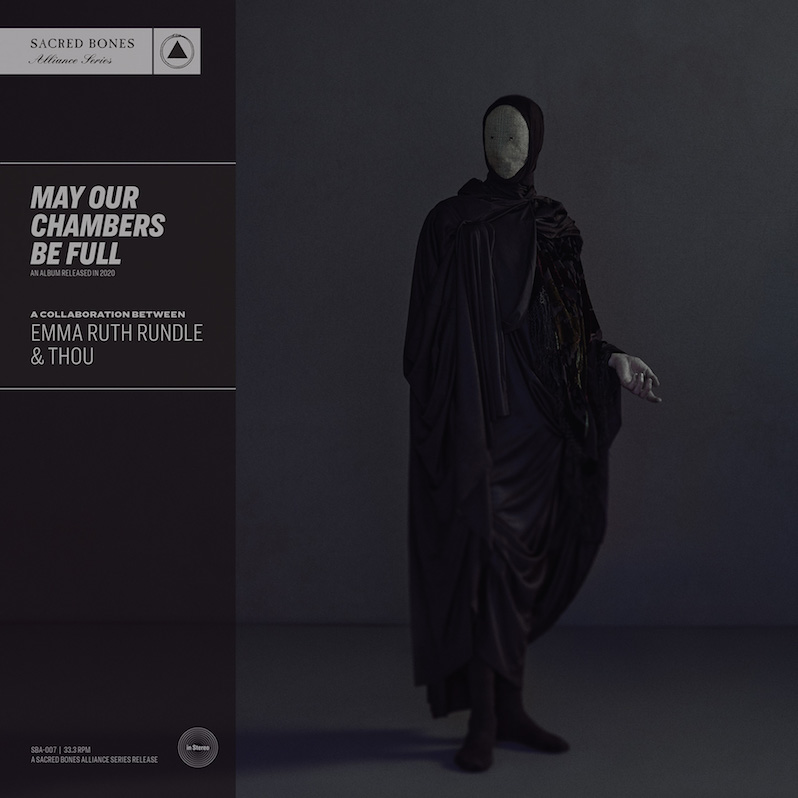
Given our previous adoration both of Emma Ruth Rundle’s immaculate On Dark Horses it seemed inevitable that this record would rate with us . Each artist has a hybrid tendency, the capacity to remain in the realm of hyperemotive dreamstates, a space induced by both heavy atmospherics and a keen post-psychedelic sense of melody. On paper, this pairing makes tremendous sense; each seems to sit on either side of a divide, one slightly heavier than the other while one sits more in dreamy shoegaze than the other, but each containing traces of the other. What you would hope, on seeing this dual-headline pairing on a record sleeve, is that each of them would pull those hidden elements out of the other, not just gifting Emma a greater weight but revealing in retrospect that weight as it existed in her earlier material, just as Thou has their evocative colours and dreamy post-psychedelia laid bare in their earlier works. And, thank god, that’s precisely what they did.
There’s something soothing, of course, with the highest rated record among us being a collaborative record in a period where human connection feels desperately, painfully needed. COVID has worn on all of us; it can be hard to convince yourself of the necessity of writing about music when people are getting sick and dying, easy to let deadlines for columns careen off the rails as you worry about aging family and distant friends. That sense of communalism at work, the implicit hope of the title, certainly struck a chord. But the most potent aspect of the record was, inevitably, its fullness. This is the trait, ultimately, that is most richly satisfying about each of these artists on their own. Emma Ruth Rundle nearly won a Best Song nod a few years back precisely for this reason, her songs billowing out into clouds of drama and history that feels so often more like stepping into another psyche, the voice inside of your head composing a new universe.
Thou, especially over the past three or so years, have been much the same, radically expanding their scope and sonic vision such that they feel like a limitless group no longer purely defined by heavy metal. These two in unison not only drew out hidden or obscured elements of each other; they intensified those obvious and shared elements as well, producing a record that is both at once the best record of the year and among the best of either artist’s bodies of work.
May Our Chambers Be Full straddles a similar, very fine line both musically and thematically. While Emma Ruth Rundle’s standard fare is a blend of post-rock-infused folk music, and Thou is typically known for its down-tuned, doomy sludge, the conjoining of the two artists has created a record more in the vein of the early ’90s Seattle sound and later ’90s episodes of Alternative Nation, while still retaining much of the artists’ core identities. Likewise, the lyrical content of the album is a marriage of mental trauma, existential crises, and the ecstatic tradition of the expressionist dance movement. “Excessive sorrow laughs. Excessive joy weeps.” Melodic, melancholic, heavy, visceral.
There’s a palpable sense of dread throughout Just Look At That Sky, the breathtaking LP from Chicago post-punks Ganser. Bassist Alicia Gaines and keyboardist Nadia Garofalo swap lead vocal duties and anchor these abrasive and stunning songs with divergent approaches between Garofalo’s biting punk delivery and Gaines’ ethereal alto. Tracks like “Shadowcasting” boast brooding atmospherics and foreboding lyrics from Gaines, where she sings, “The more I look at it / the worse it gets.” Elsewhere, the vibe gets more aggressive on the jagged single “Lucky,” where Garofalo shrieks, “You thought you’d be more than this / Thought you’d be OK” over screeching riffs. It’s everything you’d want in a post-punk LP.
Ganser understand tension better than most. The eight post-punk anthems that comprise their new album Just Look at That Sky (and one jazz/spoken word interlude) eschew the easy formula of build-and-release in favour of settling into moments of discomfort that mirror the uneasy narrators of their songs, drinking away their anxious existence and prepping for air disasters. Their rhythms are so taut they’re ready to snap, their guitar riffs caustic and unpredictable, so that when there is a moment of climax—like the surprising burst of horns on closer “Bags of Life”—it’s more than earned. I probably don’t have to explain why an album of aestheticized discomfort resonated as much as it did this year—anxiety loves company—but it’s more than a healthy outlet for nervous energy. It’s pure headphone catharsis.
Our new album ‘Just Look at That Sky’ is out now on Felte! Check out the videos from the album on their channel and stream the record on all platforms. Vinyl, CDs and merch available at Bandcamp.


:format(jpeg):mode_rgb():quality(90)/discogs-images/R-5564640-1396696869-6073.jpeg.jpg)



 The Fat Angel Sings