On the morning of February 4th, 2007,The producers woke up that morning and looked out their windows, they feared the worst. A torrential rainstorm had overtaken Miami in the middle of Florida’s dry season and, not only were the Chicago Bears set to face off against the Indianapolis Colts a few hours later, one of the greatest performers on Earth was scheduled to take the stage at halftime. We will be hard-pressed to find a Super Bowl performance as dramatic or breath-taking, as the night the man known for “Purple Rain” used a whole lot of Florida rain to his advantage.
Prince, a music icon who had literally never appeared onstage without high heels on, was set to perform on a slippery tile surface — with not one, but four electric guitars — in the middle of a subtropical downpour. Sitting in a production truck outside the stadium, Super Bowl XLI halftime show producer Don Mischer called Prince to gauge the situation. “I want you to know it’s raining,” he told the star. “Are you okay?”, Then after a moment, to the surprise and excitement of everyone in the vehicle, Prince responded, “Can you make it rain harder?”
Rather than rattling off a long list of his tried and true hits or seizing the opportunity of such a huge national audience to promote a new single, Prince surprised people everywhere by covering a number of other artists’ songs.
So, in addition to “Let’s Go Crazy,” “Baby I’m a Star,” a “1999” interlude, and “Purple Rain,” he performed renditions of Bob Dylan’s “All Along the Watchtower,” Creedance Clearwater Revival’s “Proud Mary,” Queen’s “We Will Rock You,” and Foo Fighters’ “Best of You.”
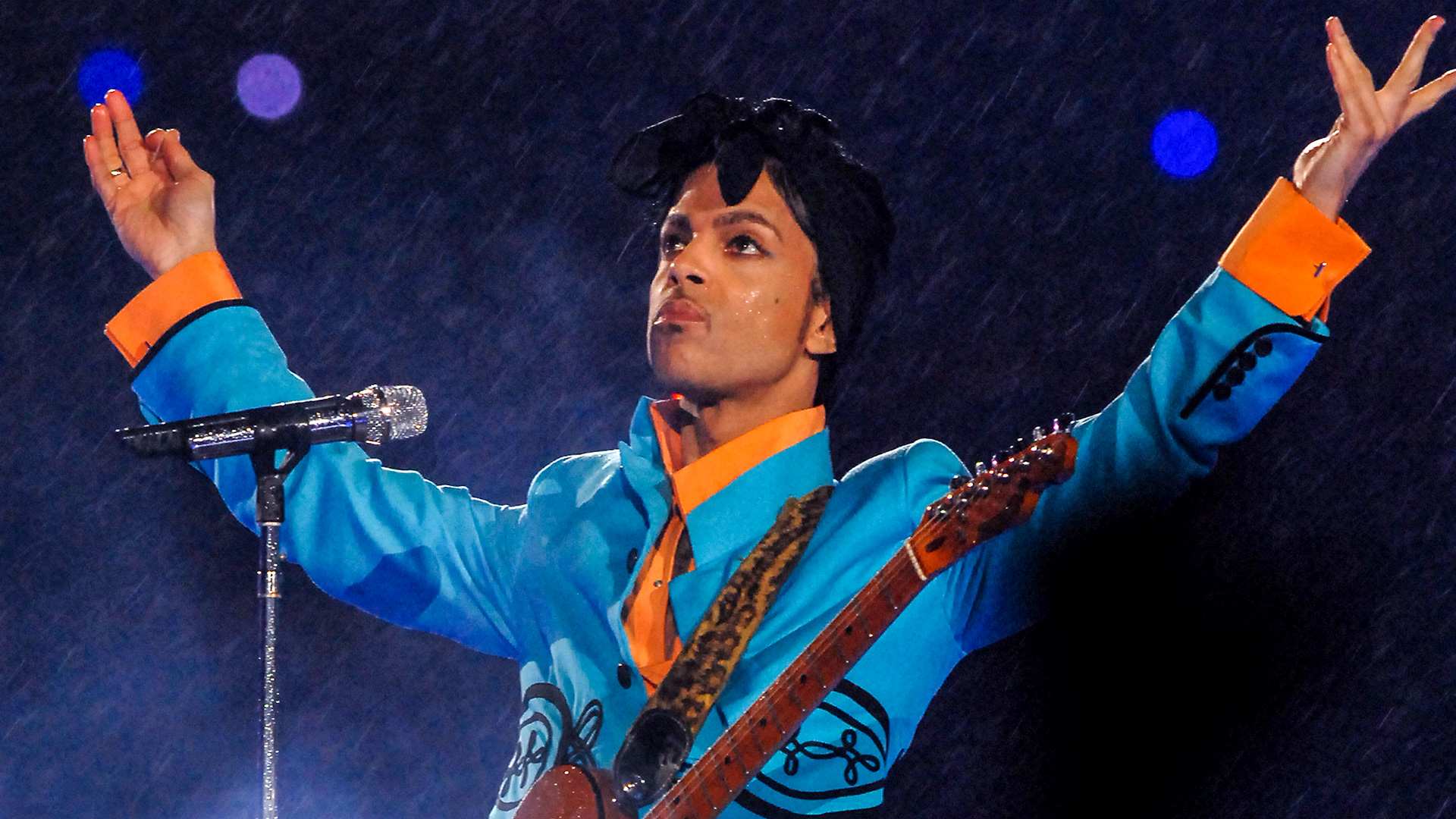
Rising up from the ground, out of the unpronounceable “Love Symbol” that had replaced his name in 1993 amid a spat with Warner Bros., Prince appeared in a bell-bottomed aqua suit with a halfway unbuttoned orange blouse underneath. At the end of Prince’s set, when he finally played “Purple Rain,” a billowing backdrop rose from the ground and created a larger than life silhouette of the artist performing one of the most beloved guitar solos in rock music history.
in 2015, Billboard named Prince’s 2007 performance the best Super Bowl halftime show of all time.
February 4th, 2007, Miami Gardens, FL Featuring Florida A&M University Marching 100
Setlist: We Will Rock You Let’s Go Crazy Baby, I’m a Star Proud Mary (Creedence Clearwater Revival cover) All Along the Watchtower (Bob Dylan cover) Best of You (Foo Fighters cover) Purple Rain
If there’s one word that describes Hüsker Dü it’s speed, whether that’s found in the ferocity of their earliest songs, the amphetamines charging through their veins, or the fact that their whole body of work including seven albums from the live freakout Land Speed Record through to their swansong Warehouse: Songs and Stories – was released between 1981 and 1987.
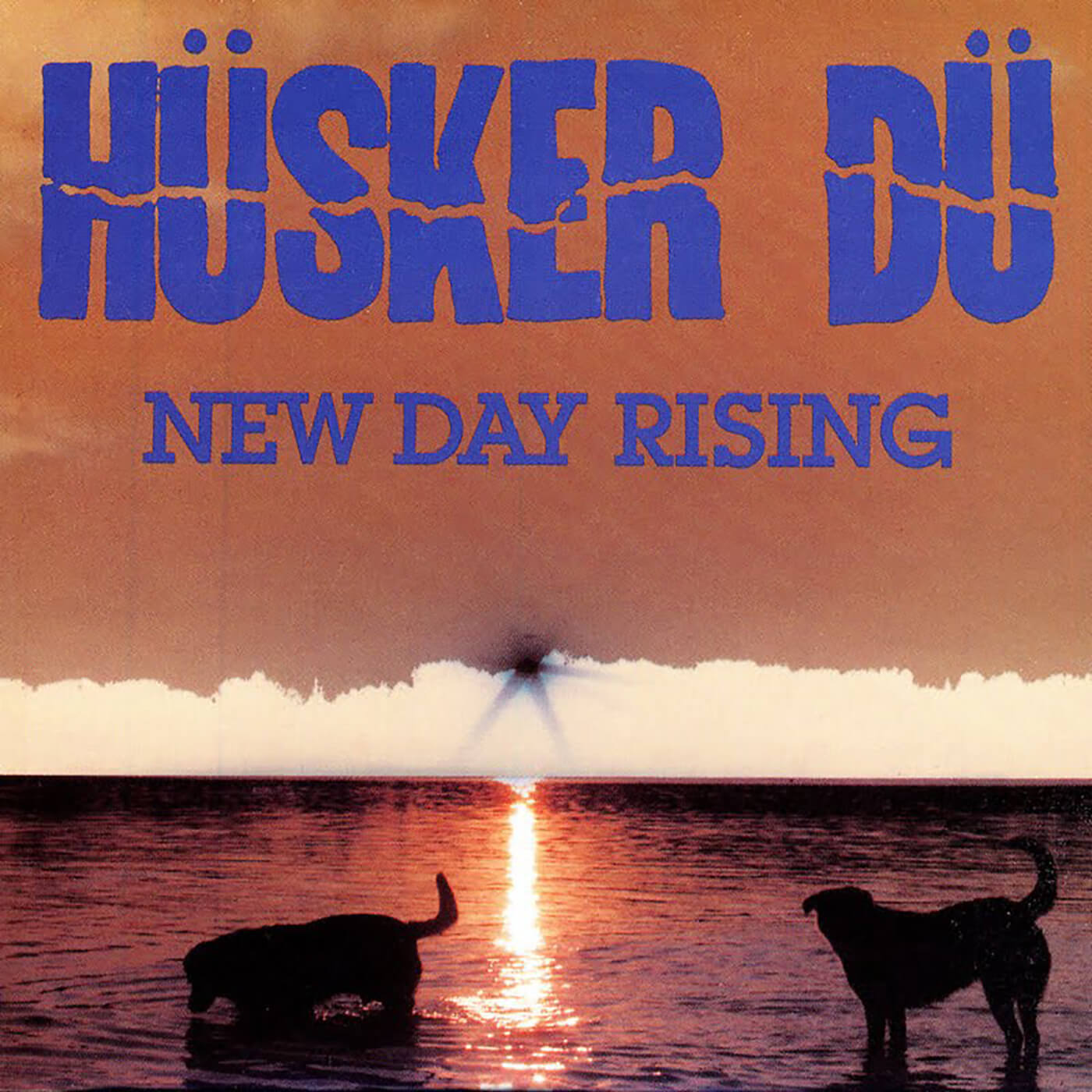
But amid this breakneck charge, one flex perhaps best sums up their power as a group: “New Day Rising” emerging blinking into the light in January 1985, only six months after Zen Arcade had blown hardcore up from the inside.
Zen Arcade was an album with a sense of scope that bled beyond its borders, a blockbuster nightmarescape that pushed Bob Mould, Grant Hart and Greg Norton as artists—not just punk kids out of the Twin Cities across four sides of vinyl. Shifting perspective again, New Day Rising was about refinement, and drilling down into the melodic smarts that allow us to view Hüsker Dü as a cornerstone of modern indie-rock. “I’m really glad New Day Rising was done and dusted before Zen Arcade really started to resonate,” guitarist-vocalist Mould wrote in his autobiography. “Can you imagine if we hadn’t had another record ready? We’d have been sitting around with the earth shaking underneath us, trying to get settled and centred enough to make another strong album but instead we struck while the iron is hot.”
Hüsker Dü’s music was always driven by tension – between Mould and drummer-vocalist Hart as songwriters, between the band and their label, SST Records, between the band and their hardcore purist fans, who were always one step away from crying sellout – and New Day Rising was no different.
With a power struggle ongoing between the trio, who sought to self-produce the LP, and SST’s in-house engineer Spot, who was forced upon them by the cash-conscious label, that tension is welded to the presentation of the songs. They’re scratchy and raw, washed out at times. They’re imperfect, just as Mould and Hart began to reach for pop-punk perfection with cast-iron classics such as “I Apologize” and “The Girl Who Lives on Heaven Hill”.
“They were kind of working from within a classic pop structure,” Spot told Michael Azerrad in Our Band Could Be Your Life. “And doing something else with it. Kind of like they broke into it with a coat hanger and got the keys out and went on a joy ride. And then wore the tires out.”
It’s entirely thrilling to see Mould, in particular, figure out what he’s capable of almost in real time. Celebrated Summer, from its coruscating, infinitely catchy riff through to its runaway train of a hook and pensive acoustic break, is close to a perfect encapsulation of the elements that would sustain a 40-year career. But Hart’s “Terms of Psychic Warfare” – a wonderfully wonky, quasi-Stones styled pop-rocker – is just around the bend and shows him in lockstep with his bandmate.
The garbled jangle of Perfect Example is Mould finding the willingness to take his foot off the pedal, and also a snapshot of the drinking habit he carried throughout recording. “I was coming to the end of my drinking time and was realising I wasn’t the easiest person to be around at times,” . “I could be a fully functioning yet contrary alcoholic at 23 or 24. So songs like “I Apologize” are clearly me feeling like a bad young man, like I should apologise globally for something I probably did but was not fully aware of because I was drunk a lot.”
At this point Mould was playing Ibanez Flying Vs, with his graduation to Fender Strats still a few years down the road at the start of his solo career. A relic from this era also turned up on his searing 13th solo record Blue Hearts: a reissue ‘65 silverface Fender Deluxe. “That adds a lot of the constant, upper-mid saturation that you’re hearing on the record,” he told us last autumn.
New Day Rising was another outsider hit, and a line in the sand for Hüsker Dü. They’d put out three more records in their last two years together, with the (finally) self-produced Flip Your Wig released in September ’85. An almost faultless missive from the nascent indie-rock scene, it pushed the melodic envelope even further and set the table for their divisive decision to jump to a major for 1986’s Candy Apple Grey.
Eventually, addiction and infighting swallowed Hüsker Dü whole and they folded with more acrimony than ceremony in 1987. Mould got into acoustic writing with Workbook and ignited a power-pop renaissance with his band Sugar as the 80s ticked over into the 90s. In 1994, he came out as gay in a article. “The army’s credo was ‘don’t ask, don’t tell,’” he told the Guardian last year. “In hardcore, it was ‘don’t advertise, don’t worry.’ I had a handful of casual encounters with guys on the road. But it was a community of misfits, and mostly no one cared what you did behind closed doors.
Grant Hart and Norton also pursued their own careers, with Hart’s 1988 2541 EP tracing its roots back to writing sessions for New Day Rising. He’d later play with the underrated Nova Mob and release a run of solo records. After years of animosity and backbiting, Hüsker Dü’s three members patched things up long enough to work on the exceptional early years archive release Savage Young Dü, which was released only weeks after Hart’s death from liver cancer in September 2017.
The Danish four-piece Yung is back with a new 7” Progress via PNKSLM Recordings. After the release of their debut LP A Youthful Dream through Fat Possum Records in 2016, which followed a series of acclaimed EP’s that brought them the attention of Pitchfork, Stereogum, NPR, The FADER and more, and years of touring heavily, the Aarhus based quartet Yung decided to take a step back.
After some time spent reassessing themselves and finding common ground to push forward, the band returned to the studio to work on a follow-up to their debut record, and now, four years after the release of the debut, the band is set to share the first fruits of that labour in the shape of the new single “Progress”, which is to be released digitally and on 7” vinyl alongside the B-side “New Fast Song”.
Having refined their sound while embracing a wider palette of inspiration, Progress is also a taste of Yung’s new full-length album and their first release with new label partner PNKSLM Recordings.
Fans of The Band celebrated the 50th anniversary of the band’s 1970 Stage Fright studio album in 2020, and to mark the ongoing celebration, Universal Music Enterprises has shared a previously-unreleased live version of the band performing their most well-known hit, “The Weight”.
This live take on the celebrated Music From Big Pink track was recorded during The Band’s June 3rd, 1971 show at London’s famed Royal Albert Hall. The previously-unreleased concert is set to be included in full on The Band’s upcoming Stage Fright 50th Anniversary Edition box set, due out on February 12th.
The song that perfectly encapsulates The Band’s deep arsenal of talented singers in Levon Helm, Rick Danko, and Richard Manuel came in at the three slot of the show as the group explodes out of the starting gate. Coming into London hot on the tail end of a 1971 European tour, this two-night run at the Royal Albert Hall was The Band’s first time back at the famous venue since backing Bob Dylan in 1966. Given the crowd’s vitriolic reaction to the newly-electrified demeanor of the iconic singer-songwriter five years prior, the group’s 1971 return was justifiably much more rewarding.
“Everybody was on their game. And it was such a great relief to come back to Albert Hall from the last experience of playing with Bob there, [Laughs]” Robertson said “When we played with Bob, we were on a ridiculous schedule on tour. I’m amazed that Bob, you know, could even pull it off physically. This time, the crowd was just over the top on enthusiasm and we were trying to give it back to them.”
Just when you think “The Weight” has reached peak exposure in the culture, Robbie Robertson’s 1968 song and its original recording by the Band — always manages to stage a comeback. During the past five decades, it’s repeatedly popped up in soundtracks, from Easy Rider to The Big Chill to the recent Dawn of the Planet of the Apes. In 2019, an all-star remake featuring Robertson, Ringo Starr and musicians from around the world generated millions of views. And next week, a new Band box set will revive “The Weight” again, this time by way of an excavated live version.
Starting with Music From Big Pink, Robertson has started the process of digging through master tapes and archives of each of the Band’s albums in time for their five-decade anniversaries. This year, the time has come for an upgrade of their third LP, Stage Fright. A 50th-anniversary edition of the album, out February 12th, will include a new stereo mix of the album, a few alternate takes, and a collection of hotel-room jams featuring Robertson, bassist Rick Danko, and pianist-drummer Richard Manuel.
Also included is the never-before-released Live at Royal Albert Hall, June 1971, which carries additional significance. The previous time the Band had played at that austere venue, in 1966, they were known as the Hawks and were backing Bob Dylan on his controversial European tour. The last two shows of the tour took place at the hall, where, as at other shows, some in the audience were less than thrilled by the sound of Dylan backed by a plugged-in band — and let their frustrations be known by way of booing and yelling.
By 1971, though, things had changed: “The Hawks had been booed there last time out,” wrote Levon Helm in his memoir This Wheel’s on Fire. “Not this time. Take my word for it — pandemonium. They were on their feet and dancing from the first notes.”
Naturally, Live at Royal Albert Hall, June 1971, includes a version of “The Weight.” The song was also in the news last December when Dylan sold his song catalogue to UniversalMusic Publishing for a reported $400 million — a deal that, to the bafflement of some, included all the original Band songs from Music From Big Pink. (The Band had signed with Dylan’s publishing company, Dwarf Music, back in 1968.)
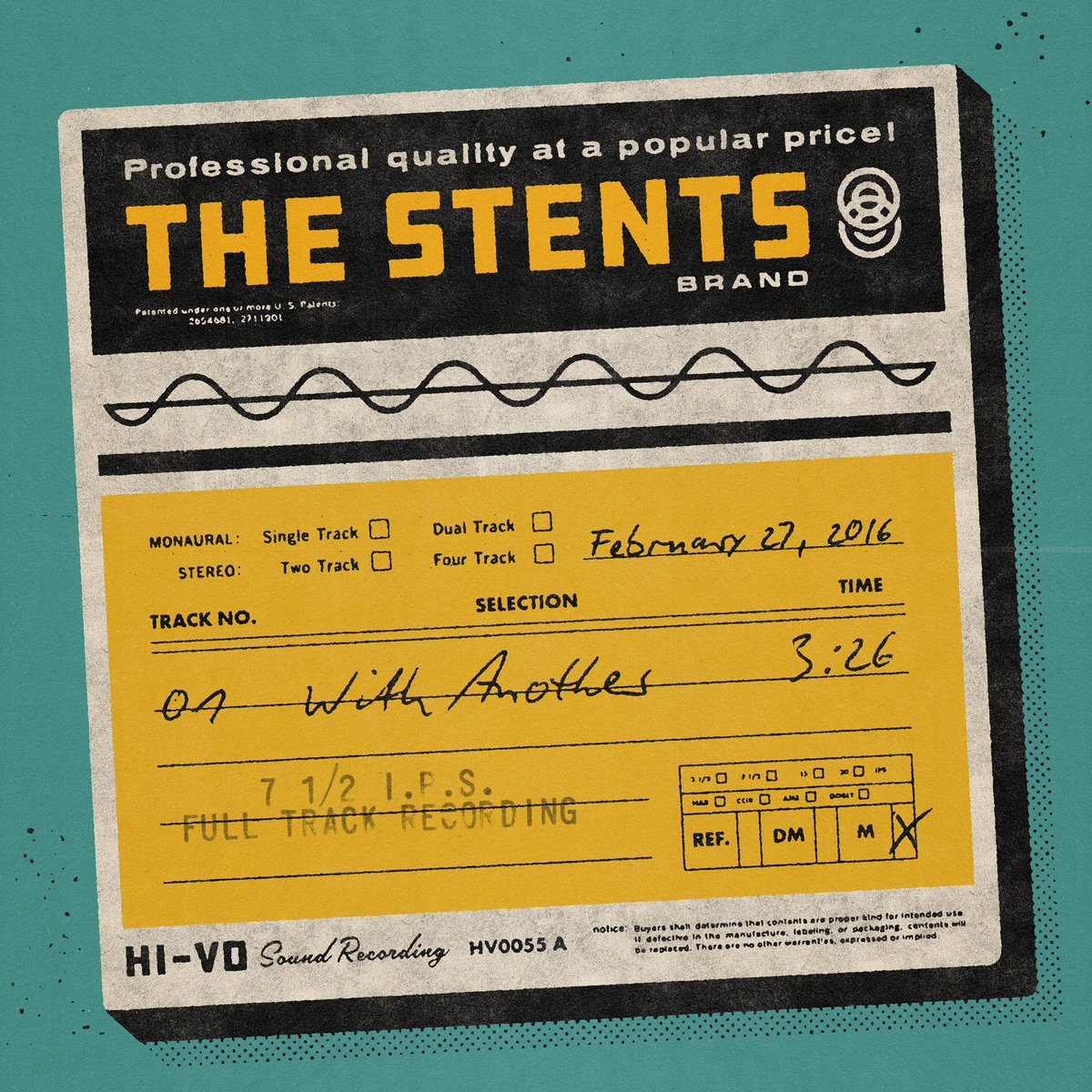
“With Another” is the first of several “lost tracks” recorded back in 2016 at late the lamented Invisible Sound Studios, Baltimore. The second digital release from 2016’s “Lost Sessions” from The Stents “Alone Again” is a 2:39 second hook-riddled ripper that will pull your earholes out.
Featuring the Pat/Steve/Scott/Sean/Ken line-up of the band in February of 2016, these were recently mixed and mastered by Simon “Woolly Bushman” Palombi in deluxe caveman stereo under the watchful ear of Pat & Steve.
Brian Setzer, vocalist and guitarist of the Stray Cats, was born in 1959, the year that many of the earth-shaking first-generation rock ’n’ roll stars were seemingly plucked from the public consciousness. Elvis Presley had been shipped overseas, Buddy Holly had boarded his final plane journey, Little Richard had became an evangelist, Chuck Berry had been arrested—soon after to be thrown in jail—and Eddie Cochran was unknowingly concluding his life and career. Luckily, despite its downfall, the vast influence of the subgenre later to be dubbed rockabilly persevered, discovering its place within the new rock ’n’ roll of each subsequent generation, shaping the music that was just starting to emerge from the Beatles and many others.
But It wasn’t until the early 1980s that rockabilly itself would be revived in a big way–by a trio from Long Island.
Initially impacted by the rhythmic guitars rooted within several of the earliest Beatles records, Setzer began playing guitar at age 8 in hopes of successfully mimicking the music of his idols. It wasn’t until his father informed him that his beloved Beatles’ tune “Honey Don’t” was in fact a Carl Perkins number that Setzer began to delve into rockabilly’s bountiful past, recognizing the 1950s pioneers of the music that would become such an influential pillar in his life.
By the time Setzer started high school, disco had erupted throughout the United States, making his admiration for rockabilly a unique trait to possess. Once he began playing in clubs, sporting an exaggerated pompadour, leather jacket and bowling shirts, he received a mixed reaction from audiences. Many celebrated Setzer’s throwback tunes and nostalgic appearance, while others felt he was outrageously outdated and awkwardly behind the times. Regardless of the opinions of onlookers, Setzer remained true to his intent. Eventually his aesthetic attracted two hopeful musicians, friends of Setzer’s brother, who became avid fans and supporters of this surprising, yet intriguing, nascent rockabilly revival.
Jim McDonnell, drummer, and Leon Drucker, upright bassist–calling themselves Lee Rocker and Slim Jim Phantom, respectively–were close friends and bandmates prior to joining Setzer on stage. Once key openings within Setzer’s band became available, Phantom and Rocker wasted no time in securing their positions. In 1979, the trio officially adopted its iconic name, the Stray Cats, and began performing together within their home town of Massapequa, Long Island. Sadly, despite acquiring the beginning stages of a fandom, the Stray Cats couldn’t compete with the popularity of disco and local rock clubs’ adversity to their distinctively 1950s aesthetic.
After receiving a tip from friend, bartender, old-school British rocker and soon-to-be-manager Tony Bidgood that British rock fans would rally behind this authentic rockabilly, the Stray Cats bought one-way tickets to London. rockabilly too appeared to have never truly died within the United Kingdom. Bill Haley, Gene Vincent and many other 1950s rockers had successfully toured throughout England long past what was considered their American prime. This admiration for the sound and appearance of rockabilly musicians, especially those prepared to craft fresh tunes, provided the Stray Cats with an enthusiastic fan base from the very moment their boots hit the British pavement.
Shortly after their first English gig, the Stray Cats signed with Arista Records, a deal that would allow their music to be released in all countries with the exclusion of the United States. The next massive step on the Stray Cats’ walkway to stardom was meeting musician and noted rockabilly expert Dave Edmunds. Edmunds approached the Stray Cats as a hopeful producer and collaborator whose intention was to ensure that their sound and musical identity would remain intact. Intrigued by the proposal and prepared to record, the Stray Cats, with Edmunds’ guidance, released their self-titled debut album in February 1981.
Peaking at #6 on the U.K. albums chart, “Stray Cats” debut solidified what the band had been attempting to prove since its late 1970s inception, that rockabilly music was exceedingly cool, impressively innovative and forever timeless. Stray Cats was an accurate representation of the band’s live excitement, granting younger audiences the rare opportunity for an authentic glimpse into the past.
Stray Cats debut album produced three U.K. top 40 hits, including the band’s first single, “Runaway Boys,” driven by thumping upright bass, anchored by heavily grounded drums and dressed in vibrant guitar licks. With lyrics that harkened back to misunderstood teenage days, “Runaway Boys” provided listeners with the ability to transport to a simpler, more carefree time. “Runaway Boys” would hit #9 on the U.K. charts and is considered one of the Stray Cats’ signature tunes.
“Rock This Town,” the second single off Stray Cats, accelerated the band’s popularity and heightened their status as a genuine neo-rockabilly band. The single reached #9 on the U.K. charts. Lyrically, the tune spoke of the early frustration the band faced when attempting to promote rockabilly . Turning struggle into triumph, “Rock This Town” proved rock ’n’ roll music to be a danceable, upbeat genre that was, and is, entirely jukebox-worthy.
The third and final smash hit off Stray Cats was the velvety smooth and ultra-catchy “Stray Cat Strut.” A contrast to “Rock This Town,” “Stray Cat Strut” mellowed the trio’s signature beat, but remained true to their back-to-basics tone. “Stray Cat Strut” rounded off the Stray Cats’ first album, providing them with a third single that would inevitably aid in their eventual success within the United States.
After the release of their second and less commercially successful album, Gonna Ball, the Stray Cats headed back to their homeland and signed a deal with EMI America Records. The label assembled Built for Speed, which included six of the most popular tunes from Stray Cats. Now equipped with the perfect recipe of material and solid live performance experience, as well as copious video play–thanks in no small part to their unique look and visual appeal–on the nascent MTV cable network, the Stray Cats became a sensation in the U.S. too.
The exquisitely voiced Tamara Lindeman returns as The Weather Station with new LP Ignorance, her first in partnership with Fat Possum. We’ve long adored her work (she is a Sea Change alumna you know), but there is something very special about this one, beautifully delivered and fascinating.
“Ignorance”, is the fifth album from The Weather Station and their first on Mississippi’s Fat Possum Records, finds Toronto songwriter Tamara Lindeman continuing to move beyond her project’s folk beginnings, like a rocket that’s left the launchpad. The more rock-oriented arc of her 2017 self-titled curves even further on Ignorance, as Lindeman gracefully embraces art-pop sounds, setting the record’s propulsive, enigmatic tone with opener “Robber”—Max Freedman called that track “a welcome left turn for Lindeman” and “a bold reintroduction” in highlighting it as one of this last year 2020’s best songs.
Through Ignorance, Lindeman has remade what The Weather Station sounds like, using the occasion of a new record to create a novel sonic landscape, tailor-made to express an emotional idea. Ignorance is sensuous, ravishing, as hi-fi a record as Lindeman has ever made, breaking into pure pop at moments, at others a dense wilderness of notes; a deeply rhythmic and painful record that feels more urgent and clear than her work ever has. Ignorance began when Lindeman became obsessed with rhythm; specifically straight rhythm, dance rhythm, those achingly simple beats that had never showed up on a Weather Station album before. The album marks Lindeman’s first experience writing on keyboard, not guitar, and her first time building out arrangements before bringing them to a band. Montreal producer Marcus Paquin (Arcade Fire) co-produced, with Lindeman, and also mixed the record. The lyrics across Ignorance roil with conflict.
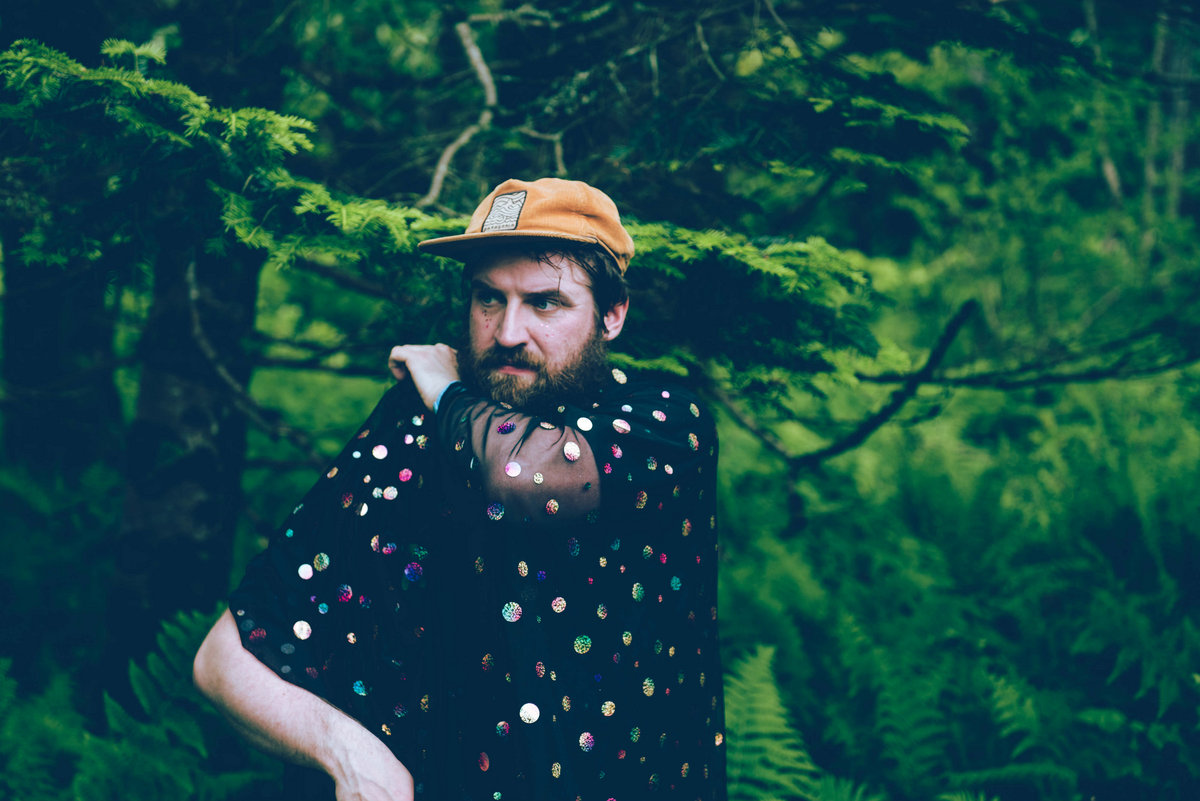
The narrator confronts characters who turn away from love. “I used to be an actor, now I’m a performer,” Lindeman says. In those roles she often finds herself to be the subject of projection, reflecting back the ideas and emotions of others. In turn, the album cover shows Lindeman laying in the woods, wearing a hand made suit covered in mirrors. Throughout Ignorance, she sings of trying to wear the world as a kind of ill fitting, torn garment, dangerously cold; “it does not keep me warm / I cannot ever seem to fasten it” and of walking the streets in it, so disguised and exposed.
Elsewhere on the record, Lindeman imbues her surprisingly dancefloor-friendly tracks with nimble poise and unknowable intrigue, wielding strings, synths and keys with equal ease. She named her album for the French verb ignorer, which “connotes a humble, unashamed not knowing,” per the LP’s bio. Here in early 2021, what could be more important?
Glasgow indie band Nightshift (featuring members of Spinning Coin, 2 Ply and Robert Sotelo) are shrewd in their sonic choices. On their new LP, “Zöe”, avant-garde and no wave tendencies mingle with classic indie-pop influences, resulting in an alluring push and pull. For an album that thrives on their rhythmic interplay and colourful chemistry, it’s surprising that these songs were recorded remotely during lockdown, but they’re still able to lock into grooves with ease. The extended breakdown on the blissful “Power Cut,” for example, finds them riffing over each other like it’s a rapturous jam session—synths, bells, and guitars flutter and glow, until a screeching flute solo invades and takes the track into wonderfully freakish territory. Other tracks like “Make Kin” and “Infinity Winner” thrive on their spacious, hair-raising qualities, with a palpable gloom brought on by jazzy post-punk. Whether it’s an offbeat drum passage or charming shared pop vocals, Nightshift have plenty of curveballs and plenty of heart
Initially formed by guitarist David Campbell and bassist Andrew Doig as a “No Wave/No New York/ early Sonic Youth/This Heat-esque” group, the addition of Eothen Stern (keyboards/vocals) and Chris White (drums) instantaneously transformed their approach (guitarist / vocalist/clarinetist Georgia Harris joined as the band was writing “Zöe”). The band self-released a full-length tape on CUSP Recordings in early 2020, laying the foundation of their sound; hypnotic, melodic, understated indie post-punk with hooks that stick around long after you’ve heard them. “Zöe” is the band’s newest effort, and first for Trouble In Mind. Unlike the band’s previous album, the songs on “Zöe” weren’t conceived live in the band’s practice space, but rather pieced together and recorded remotely during quarantine lockdown, with each member composing or improvising their parts in homes/home studios, layering ideas over loops someone made and passing it on. The isolation actually allowed for an openness and creativity to flow and many of the songs took on radically different forms from when they were originally envisioned.
From the album “Zöe”, released on February 26th, 2021 via Trouble In Mind Records
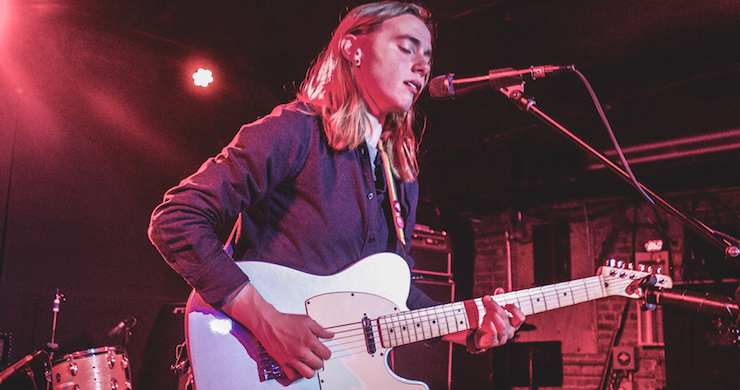
The third album from Julien Baker is nearly here, and ahead of “Little Oblivions” Matador Records, Baker shared its third single, “Favor,” featuring her boygenius bandmates Phoebe Bridgers and Lucy Dacus, and a lyric video created by Sabrina Nichols.
“Favor” finds Baker looking backwards and inwards over shuffling drums and winding guitars, singing, “I used to think about myself / like I was a talented liar / Turns out that all my friends were / trying to do me a favor.” It’s there Baker’s friends come in, with Bridgers and Dacus joining their voices to hers on the cathartic choruses as they collectively stretch towards redemption.
“Julien is one of those people whose opinion you want to hear about everything. A true critical thinker with an ever-changing and ridiculously articulate worldview,” says Bridgers in a statement. “Her music changes in the same way, and this record is my favourite thing she’s ever done. I’m sure I’ll think the same about the next one.”
“We sang on ‘Favor’ in Nashville the same day we recorded vocals for ‘Graceland Too’ [off Bridgers’ album Punisher] and a song of mine. That day had the same atmosphere as when we recorded the boygenius EP,” Dacus recalls. “Making music was just a natural result of being together, easy as can be but also rare in a way that feels irreplicable.”
“I love the song for its stark but sensitive picture of friendship, what it looks like to recover from broken trust,” Dacus says of “Favor” itself. “Makes me think about how truth only ever breaks what should be broken, and how love is never one of those things. I’m always honoured to be brought into Julien’s life and music.”
“Favor” follows previous Little Oblivions singles “Hardline” and “Faith Healer,” the new album “Little Oblivions” is released this weekend.
Johnny Lynch is a Scottish musician who performs under the pseudonym The Pictish Trail. After graduation from the University of St Andrews, Lynch ran Fence Records from 2003 until 2013 and has since been running Lost Map Records. Lynch has attended and played every Green Man Festival since its inception in 2003.




:format(jpeg):mode_rgb():quality(90)/discogs-images/R-3541142-1334509324.jpeg.jpg)



 The Fat Angel Sings