Purveyor of left-field pop music Ariel Pink follows up the release of “Another Weekend” with another cut from his forthcoming eleventh album “Dedicated to Bobby Jameson”. Entitled “Time to Live,” the song finds ArielPink returning to his more lo-fi roots, with the Los Angeles artist – who earlier this year teamed up with another outsider icon, Weyes Blood, on the collaborative EP Myths 002 submerging an 80s-style synth pop gem beneath tornadic waves of fuzz, noise, and distortion.
Lets look at Ariel “Pink” Rosenberg and his band with the depth and breadth of his musical scholarship to date.
The period spanning from this Los Angeles native’s mid-1990s recordings through to just before the studio sessions for 2010’s Before Today are vast— what we might think of as Ariel Pink’s Haunted Graffiti Mach 1.0 the man’s whole trip thrived on confusion. His incessantly re-upped catalogue where recording dates strayed further from the time of creation with each new label and each re-issue, Here limited to the highest-profile releases.) The hit or miss live sets. Oh, and the actual music: some irresistible tunes seemingly held together with scotch tape and twine, sometimes a burnt, inexhaustible shock’n’awe of blurted keyboards, mashed guitar chords, schizophrenic vocals, and mouth percussion standing in for actual drums.
The appeal isn’t difficult to suss out, of course: At its finest, Rosenberg’s catalogue gets by on no-filter candor, adolescent gross-out humor, and grand-slam hooks that will rattle endlessly around in your mind, sometimes triggering odd associations. For listeners of a certain age “Are You Gonna LookAfter My Boys?” from Scared Famous, For musos and hipsters alike, here was a chance to have their cake and eat it, too: the muffled cool of cult pop married to national indie-store distribution through (for a while) Animal Collective’s Paw Tracks imprint.
If Before Today kicked off Ariel Pink’s Haunted Graffiti Mach 2.0, which found Rosenberg and his cohort working in actual studios, 2012’s Mature Themes appears to have capped it. The difference? Actual drums, less murk, sharper song construction, and an apparent awareness that the world beyond the bloggerati might be tuning in: Today’s creamy “Can’t Hear My Eyes” and Themes’ sultry baby swung for the fences hard enough to excuse the surrounding hijinks. With Pom Pom — Mach 3.0 — Rosenberg had delivered what was for all intents and purposes a twisted children’s album for adults while ratcheting his media trolling up to the level, in the words of a friend, of “an indie-rock Ann Coulter.”He was rumored to be contributing to Madonna’s Rebel Heart then he put his foot in his mouth. He slagged off Grimes. With every passing month, as the man’s profile expands and his persona becomes less defensible even as the song craft that brought him to our collective attention in the first place
Thrash & Burn (2006)
While listening to his output. I compared 1998’s Thrash & Burn to the Silver Jews’ Arizona Record, Pavement’s Westing (By Musket And Sextant), and Beck’s Stereopathetic Soulmanure — stripped down, amniotic marginalia that barely hinted at what those artists would later be capable of. Now I’m not sure if that’s fully accurate. Those albums I mentioned before? They’re dry runs. Thrash & Burn is a pre-dry run — the loose, tentative stretches you do before you really stretch and before you really exercise. It is two CDs of Rosenberg dipping the skin on his big toe into the songwriting pool. So, sketches: guitar noodling, keyboard drift, tossed-off vocals, self-conscious babbling, field recordings, long stretches of noise. The secret to enjoying this is to remove it from the context of what Ariel Pink’s Haunted Graffiti traditionally represent.
Lover Boy (2002)
With the exception of the cover of its John Maus-penned title track and the smirk-y bleep-core of “I Don’t NeedEnemies,” Lover Boy is mostly forgettable — a sort of parade of serviceable C-sides that passes by pleasantly but you won’t miss even a little. If this feature were an evolutionary chart pictograph, this album would be a single step up from Thrash & Burn, . On the plus side, be glad he reserved most of his best stuff for better albums. But, you know, if you need more reasons to spend time with it, “Blue Straws” plays like an experimental radio serial and “Phoebus Palast” flouts a sick slide whistle. If this was anyone’s first exposure to Ariel Pink’s Haunted Graffiti, it would very likely be their last.
Ku Klux Glam (2012)
Early in Rosenberg’s career, R. Stevie Moore’s name popped up often in media coverage. A prolific, macabre underground icon with hundreds of outsider releases to his credit, Moore was the Bob Dylan to Rosenberg’s Beck. On Ku Klux Glam the duo make their mutual admiration society official. (Unless you’re a diehard fan of either or both, do yourself a huge favor and stay far away from the 63-track edition, which is a nightmare of eye-rolling in-jokes and fucking off that dilutes the actual rock these two get up to. It’s a gas on first listen, then interminable.) “NoZipper” is primo, untucked bar-band sludge; “Lo-Fi No Cry” transitions to skeletal beat programming to drug-trip Northern Lights gazing in a way, achieving a mad brilliance that Rosenberg’s solo journeys into wordless ponderous rarely achieve; “Sacred Snow” personifies tuneful insanity; “Stevepink Javascript” laughingly sends up the idea that weirdos of different generations would find working together a complete nightmare. A head-trip respite from Rosenberg’s more palatable records, Ku Klux Glam is nonetheless a bleary, unkempt good time in all the best possible ways.
pom pom (2014)
In 2013 and 2014, Kim Deal staged an unlikely, non-Breeders singles campaign, quietly issuing a single or two every couple months. Some singles were astonishing, and some were just passable, but this approach allowed the former Pixies bassist to subvert the idea of a “comeback” while remaining within (if only on the outer margins of) the larger popular music conversation. Rosenberg doesn’t need to engineer a comeback; given the present state of the industry, his Q rating is reasonably sizable. But from an artistic perspective, pom pom should’ve been a similarly piecemeal thing,
As a collection of songs, it does itself a disservice, flat out failing to gel on any level. And that’s a shame, because on an individual level its pieces are dinky, Romper Room marvels: no-meds un-jingle “Jell-o,” the Detroit punk snarl of “Goth Bomb,” the black hole kiss-off “Picture Me Gone.” That there’s less tape hiss, less distortion, and less instrumentation than ever on this two-disc set may be its downfall — the result being that each song is very much separate from its neighbors.
The late Kim Fowley penned the lyrics to a few tunes, including “Nude Beach A- Go-Go,” where Rosenberg collaborated with rapper Azealia Banks. Everything and anything here will absolutely slay on any mixtape or self-made CD-80 of Ariel Pinks you care to put togrther; just don’t bother listening to pom pom from start to finish.
Worn Copy (2003)
Maybe it’s the variegated purple crowding the turntable on the cover, or maybe it’s down to the resin-caked squeal and haze of “Trepanated Earth” and the scribbled out-drift of “Foilly Foibles/GOLD,” but Worn Copy always surfaces in my memory as Rosenberg’s prog-rock opus. Upon revisits, pop gems that rank among his best spill out all over the place: the curdled, po’faced “Immune to Emotion,” white trucker funk number “Jules Lost His Jewels,” drugged vamp “Creepshow,” the fake English folk lilt of “Artifact.” And though on its face, “Credit” scans as dizzy disco camp, a song that’s catchier than most advertising jingles itself stands apart as an oddly sincere, anti-capitalist carol.
So why isn’t this one ranked higher on the list? Because in context, Worn Copy — the final album included here committed to tape pre-Before Today, between 2002 and 2003. It doesn’t cohere quite as solidly as some of the releases above it, and a muted insularity colors its highlights; there’s nothing here anyone would feel compelled to murder in the shower or scream at a bro who’s screaming it back in your face at night on a long road trip. (“Interesting Results” from House Arrest? “Don’t Talk to Strangers” from Lover Boy? .) That said, this release covers some fascinating Haunted Graffiti territory and very effectively simulates a deep-dive into the darkest corners of, well, one gifted misfit’s complicated psyche.
Mature Themes (2012)
In retrospect — in some ways Mature Themes feels like a warm-up for the contoured directness of pom pom. The instrumentation bears a real crispness (mostly), and Rosenberg’s vocals ring out relatively clear and sharp (sometimes), all the better to slime, cajole, or bewilder listeners’ eardrums.
The painfully hummable “KinskiAssassin” and “Live It Up” exemplify this upgrade. Wistful “Only in My Dreams” and aching “Baby,” a cover of the Donnie and Joe Emerson original, kept the Haunted Graffiti torch song dream alive. Curiously, though, the most thrilling tunes here revert to near dog-shit fidelity: nonsensically gross “Symphony of the Nymph,” knuckle- dragging nosh anthem “Schnitzel Boogie,” twinkle-bop gem “Live It Up.”
Production schizophrenia aside, more than predecessor Before Today, Mature Themes is just flat out funnier, even if the yuks are droll: Rosenberg’s exchange with the server on “Schnitzel Boogie,” “I’m not real and I won’t call you” as a parting shot on the title track,” pretty much every verse sung on “Kinski Assassin.”
Before Today (2010)
This marked the point where shit got real, or less unreal, anyway. Recorded in various studios and grave-robbed from earlier EPs and singles, Before Today stands second only to The Doldrums in terms of sequencing acumen; it screams “rock album” in a way that no other entry on this list does, the production is sharper by a matter of degrees. There’s a deliberateness and seriousness of intent at work here separating it from funnier, ickier successor Mature Themes: one doesn’t giggle at or with, say, “Round and Round” one marvels at its melting street-lamp tonalities and the seductive arrangements.
One thrills to the roadhouse ivory stomp of “Little Wig,” which would nicely complement a capsule of trucker speed, or to the deep shag-rug swirl cover of The Ramrods’ “Bright Lit Blue Skies.” Wood-paneled “Can’t Hear My Eyes” is deployed with such pop acuity that’s easy to overlook how oddly angled its lyrical conceit is. (Did you know that members of Cryptacize sing backing vocals on that song? Now you do.) “Fright Night” delivers grade-A horror schlock, but actual ribaldry/misandry is confined to the pile driving (in more ways than one) “Butt-House Blondies” and no-tempo dirge “Menopause Man.”.
Scared Famous (2002)
Recorded between September 2000 and July 2001, Scared Famous is a characteristically scattered puzzle where every piece has at least the kernel of a hit single buried inside. Perennial fan favorite “Are You Gonna Look After My Boys?” steals the show, but the everywhere the Technicolor cartoon glory’s in full effects, with guitars exploding like fireworks all around. “Howling at the Moon” is white falsetto funk with the Mega Man soundtrack pulsating beneath it. “The Kitchen Club” about holing up in the kitchen at a house party flaunts a see-sawing series of keyboard chords that change colors from moment to moment, like a mood ring; one instant they’re hot pink, the next they’re viscera red. Alternating between high and low registers, Rosenberg frames “Politely Declined” as a surrealist pick-up scene dialogue; dutiful guitars face off against synth effects that always make me think of strangled cats. Were “Beefbud” boiled down to two unmitigated minutes of chorus, it would be dunderheaded perfection. On some days, this is Rosenberg’s best album.
The Doldrums (2000)
For a lot of Ariel Pink fans, this is where it all began. Self-released in 2000 and reissued by Paw Tracks in 2004, The Doldrums is singular in Rosenberg’s catalogue for several reasons: it presented as a depressive break-up album; it found Rosenberg restraining his compositional fireworks without hog-tying them; and lyrically it was bashful in a way that pretty much every other Ariel Pink album issued (or relentlessly reissued) wouldn’t be, and even when it wasn’t so bashful ( “Among Dreams”) the fidelity was so poor that nobody could tell. These songs belong and fit together thematically.
This was outsider pop on a handful of downers, and since the world outside clued-in hipsters and L.A. weirdoes didn’t know who Rosenberg was yet, it was easy to assume that The Doldrums represented a modified Reynols or Jandek scenario — some mystery caveman with a great ear for bygone pop, a yen for home-recording, and access to his parents’ vinyl stash. There’s so much to treasure here: the skiffle-shriek of “Haunted Graffiti,” loose-strung sing-along “Let’s Build a Campfire There,” the teary synth-pop yearning of “Until the Night Dies,” how “Good Kids Make Bad Grown Ups” asphyxiates a panic attack with a pity party.
The mouth drumming was in full effect, the instrumentation flailed around in a loose but determined approximation of pro songwriting, everything sounded like a 20-generation dub of a 20-generation dub, and half the time Rosenberg seemed on the verge of tumbling down a well, literally and figuratively speaking; on no other album has the man sounded this totally lost and alone, or been able to draw a listener so fully into his headspace. Go listen to The Doldrums again, right now; it remains as alien and forlorn and unfathomable as it did way back in 2004.
House Arrest (2002)
Rosenberg’s dad must love the title track to House Arrest, a flicking pop glow-stick yoked to a voicemail where he lambasts the singer for an utter lack of responsibility, then urges him to “call me when you have a chance.” There’s something deeply oxymoronic about this, so it’s fitting that “House Arrest” surfaces on the album that best demonstrates that for all his failing, Rosenberg gives a fuck about something. The toughest aspect of this feature turned out to be deciding which album would top it. For a long time — from the moment of pitching to a couple days ago The Doldrums seemed to the one to beat, it hung together best as a collection songs. For a day or two the mania of Scared Famous seemed like a shoo-in. Throughout, House Arrest lingered in the second spot. Fact is, though, this record is what I reach for whenever I’m wanting some Ariel Pink’s Haunted Graffiti fix.
Recorded between October 2001 and July 2002, House Arrest doubles down on everything that’s ecstatic about Rosenberg’s songwriting. For acid-dipped majesty, “Gettin’ High in The Morning” can’t be beat; the sheer irresistibility of chicken-fried “West Coast Calamities” is almost enough to overcome the fact that you’ll never think about Girl Scouts the same after hearing it. “Almost Waiting” suggests some weird garage-country doo-wop hybrid. The eminently perennial “Interesting Results” is a killer song about how it’s impossible to know whether any song you write will ultimately kill. “Alisa” and “Helen,” two of Rosenberg’s earliest stabs at balladry, are genuinely affecting if lyrically over the top, House Arrest is undeniably, almost obscenely accessible.
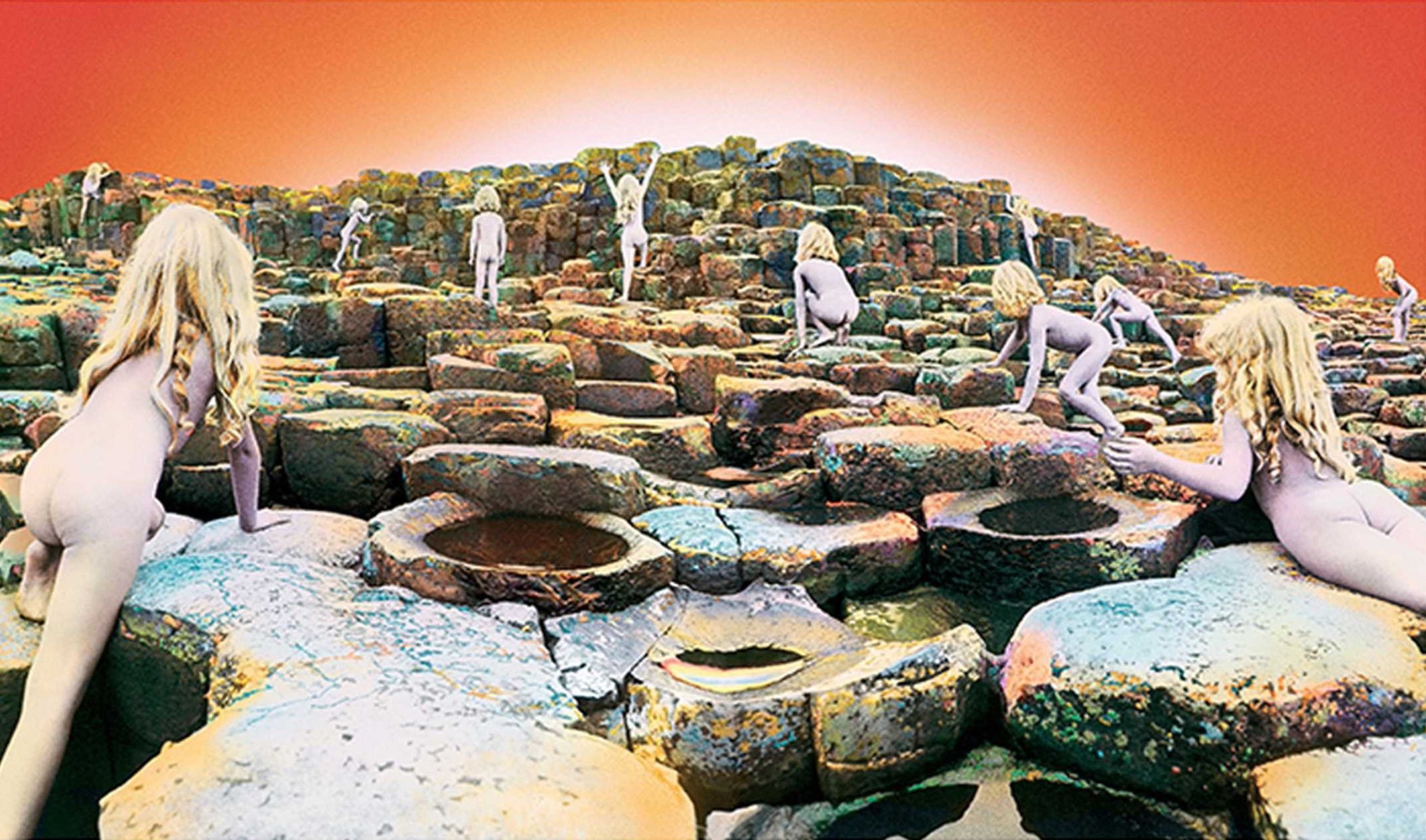
Led Zeppelin released their 5th album titled “Houses of the Holy” on 28th March 1973. It is their first album composed of entirely original material, and represents a musical turning point for the band, who had begun to record songs with more layering and production techniques.
Containing some of the band’s most famous songs, including “The Song Remains the Same”, “The Rain Song” and “No Quarter”, Houses of the Holy became a huge success.
One interesting fact about this LP is that the title track was recorded for the album, but was delayed until the band’s next release, Physical Graffiti, two years later. Recorded between January–August 1972, Stargroves and Headley Grange with the Rolling Stones Mobile Studio, and Island Studios, London; Mixed at Olympic Studios, London and Electric Lady Studios, New York
“The Rain Song” is one of Zep’s finest moments, featuring a soaring string arrangement and a gentle, aching melody. “The Ocean” is just as good, starting with a heavy, funky guitar groove before slamming into an a cappella section and ending with a swinging, doo wop-flavored rave-up. With the exception of the rampaging opening number, “The Song Remains the Same,” the rest of Houses of the Holy is fairly straightforward, ranging from the foreboding “No Quarter” and the strutting hard rock of “Dancing Days” to the epic folk/metal fusion “Over the Hills and Far Away.” Throughout the record, the band’s playing is excellent, making the eclecticism of Page and Robert Plant’s songwriting sound coherent and natural.”
Upon its release, the album received some mixed reviews, with much criticism from the music press being directed at the off-beat nature of tracks such as “The Crunge” and “D’yer Mak’er”. However, the album was very successful commercially, entering the UK chart at number one, while in America its 39-week run (2 of them spent at number one) on the Billboard Top 40 was their longest since their third album.
For 1973’s Houses of the Holy, the band and their management turned to the accomplished English design studio, Hipgnosis, for inspiration. Co-founder Aubrey Powell, inspired by Arthur C. Clarke’s 1953 science fiction novel, Childhood’s End, selected the remote area in Northern Ireland called Giant’s Causeway, a natural series of rock and columns which attracts over one million visitors each year, for the location of a photo shoot.
Siblings Stefan Gates—just five at the time—and his slightly older sister, Samantha, were selected for what proved to be a treacherous assignment. The children were pictured on the cover as they ascended the rocky terrain. Both are unclothed.
Houses of the Holy was released on March 28th, 1973. The album, featuring such Led Zeppelin favourites as “Over the Hills and Far Away,” “Dy’er Maker” and “The Song Remains the Same”—but not, ironically, the song “Houses of the Holy”—was another enormous success, reaching #1 in both the U.K. and U.S.
The rare and estimable ability to create both catchy, bite size singles that sounded great on the radio, and sophisticated, ambitious album content, That was never better illustrated than in the hands of 10cc. By the time they reached their third long player, ‘The Original Soundtrack,’ that skill had become second nature to these four innovative British musicians. The album is marking the 40th anniversary of its debut, on March 22, 1975.
Produced as usual by 10cc themselves, the record would soon have the calling card of a typically amusing and irreverent hit single, ‘Life Is A Minestrone.’ Within a few weeks of that reaching No. 7 in the UK, clamour for ‘I’m Not In Love’ to be released as a swift follow-up led to that extraordinary ballad racing to No. 1.
The album itself showed 10cc in their most confident and expansive form to date, opening with the episodic Kevin Godley and Lol Crème composition ‘Une Nuit A Paris,’ all eight minutes and 40 seconds of it. For all of the band’s pop sensibilities, ‘The Original Soundtrack’ contained some dark lyrical themes, addressing the pornography trade on Graham Gouldman and Eric Stewart’s ‘Blackmail’ and the drug trafficking industry on their ‘Flying Junk.’
‘Soundtrack’ debuted on the British album survey at No. 6 and spent its first ten weeks inside the top ten, peaking at No. 3 in the ninth of those, in May. It stayed in the top 40 all the way into October, reappearing intermittently until well over a year after its release. The LP’s aggregate of 40 weeks on the bestsellers remained the best tally of 10cc’s career.
The New Musical Express critic Charles Shaar Murray, notoriously ascerbic in much of his writing, was fulsome in his praise, marveling at 10cc’s creative autonomy on ‘The Original Soundtrack.’ “Once they scuttle into Strawberry Studios,” he wrote, “and get stuck into their composing, arranging, producing, engineering, overdubbing, compressing, mixing and so on and so forth, they mess your mind around a treat.”
Like his contemporary, friend, rival and peer David Bowie, Marc Bolan’s journey from ace face Mod in the London of the Swinging ‘60s to ground-breaking megastar in the early-‘70s was a fascinating one. Having progressed through noise-heavy protro-Psychedelia with his first band John’s Children,Bolan transitioned into a mystical hippy poet with the John Peel-endorsed Tyrannosaurus Rex before shortening the name, going electric and officially kicking off the 1970s (whilst inventing Glam Rock in the process) with his band T.Rex. This box set tells that incredible journey via every surviving BBC Session we could get our hands on. As we know the BBC wiped and lost many sessions and concerts from the late-‘60s and early-‘70s. Via an incredible amount of sleuthing work from within the Bolan community, Bolan At The BBC combines all of the surviving BBC recordings with sessions taken from BBC Transcription Discs, off air recordings made on reel-to-reel tape recorders and, in one or two instances, cassette tapes. Easily the most ambitious and complete collection of BBC recordings so far, it’s a fascinating alternative journey through a megastar’s entire relationship with the nation’s broadcasting institution.
TRACKS
1
1
Jagged Time Lapse (BBC Radio One/ Saturday Club: TX 17/6/1968)
00:02:35
2
Interview With John Hewlett (BBC Radio One/ Saturday Club: TX 17/6/1968)
00:00:49
3
The Perfumed Garden Of Gulliver Smith (BBC Radio One/ Saturday Club: TX 17/6/1968)
00:02:43
4
Daddy Rolling Stone (BBC Radio One/ Saturday Club: TX 17/6/1968)
00:02:09
5
Hot Rod Mama (BBC Radio One/ Saturday Club: TX 17/6/1968)
00:03:07
6
Top Gear Jingle (Broadcast 27/10/68 On ‘Top Gear’)
00:00:12
7
Highways (With Chat) (BBC Radio One Top Gear : Recorded 30/10/67)
00:01:50
8
Dwarfish Trumpet Blues (With Chat ) (BBC Radio One Top Gear : Recorded 30/10/67)
00:02:32
9
Scenescof (With Interview) (BBC Radio One Top Gear : Recorded 30/10/67)
00:02:18
11
Pictures Of Purple People (With Interview) (BBC Radio One Top Gear : Recorded 30/10/67)
00:02:50
12
Hot Rod Mama (With Interview) (BBC Radio One Top Gear : Recorded 30/10/67)
00:03:17
13
Knight (With Chat) (BBC Radio One Top Gear : Transmitted 24/3/68)
00:02:26
14
Frowning Atahuallpa (With Chat) (BBC Radio One Top Gear : Transmitted 24/3/68)
00:04:35
16
Afghan Woman (With Chat) (BBC Radio One Top Gear : Transmitted 5/5/68)
00:02:03
17
Deborah (With Chat) (BBC Radio One Top Gear : Transmitted 5/5/68 1)
00:03:16
18
Mustang Ford (With Chat) (BBC Radio One Top Gear : Transmitted 5/5/68)
00:03:16
19
Stacey Grove (With Chat) (BBC Radio One Top Gear : Transmitted 14/7/68)
00:01:51
20
One Inch Rock (With Chat) (BBC Radio One Top Gear : Transmitted 14/7/68)
00:01:37
21
Salamanda Palaganda (With Chat) (BBC Radio One Top Gear : Transmitted 14/7/68)
00:02:06
23
Wind Quartets (With Chat) (BBC Radio One Top Gear : Transmitted 25/8/68)
00:02:53
24
Juniper Suction (Poem) (BBC Radio One – Voice Of Pop : Transmitted 21/9/68)
00:00:31
25
Juniper Suction (With Interview) (BBC Radio One – Voice Of Pop : Transmitted 21/9/68)
00:01:42
26
The Friends (With Chat) (BBC Radio One Top Gear : Transmitted 10/11/68)
00:01:21
27
Consuela (With Chat) (BBC Radio One Top Gear : Transmitted 10/11/68)
00:02:29
28
The Seal Of Seasons (With Chat) (BBC Radio One Top Gear : Transmitted 10/11/68)
00:01:41
29
Evenings Of Damask (With Chat) (BBC Radio One Top Gear : Transmitted 10/11/68)
00:02:22
30
The Travelling Tragition (BBC Radio One Top Gear : Transmitted 22/12/68)
00:01:46
2
1
Pewter Suitor (With Chat) (BBC Radio One Top Gear : Transmitted 16/2/69)
00:01:19
2
Interview With Brian Matthew (BBC Radio One Top Gear : Transmitted 11/5/69)
00:01:32
3
Chariots Of Silk (BBC Live – Top Gear 11/5/69)
00:02:30
4
Once Upon The Seas of Abyssinia (With Chat) (BBC Radio One Top Gear : Transmitted 11/5/69)
00:02:26
5
Nijinsky Hind (With Chat) (BBC Radio One Top Gear : Transmitted 11/5/69)
00:02:21
6
The Misty Coast of Albany (With Chat) (BBC Radio One Top Gear : Transmitted 11/5/69)
00:02:23
7
Iscariot (With Chat) (BBC Radio One – Top Gear : Recorded 5/5/1969)
00:02:01
8
A Star of Youth – Poem With Chat (BBC Radio One – Night Ride: Recorded 11/6/1969)
00:01:04
9
A Ship Of Rhythm – Poem With Chat (BBC Radio One – Night Ride: Recorded 11/6/1969)
00:01:36
10
The Winged Man With Eyes Downcast To The Moon – Poem With Chat (BBC Radio One – Night Ride : Recorded 11/6/1969)
00:00:54
11
Interview With Brian Matthew (BBC Radio One – Top Gear: Recorded 17/11/1969)
00:00:57
12
Fist Heart Mighty Dawn Dart (BBC Live – Top Gear 17/11/69)
00:02:42
13
Pavilions Of Sun (BBC Live – Top Gear 17/11/69)
00:02:50
14
A Day Laye (BBC Live – Top Gear 17/11/69)
00:02:00
15
By The Light Of A Magical Moon (BBC Live/ Top Gear/ London/ 1969)
00:02:46
16
Wind Cheetah (BBC Live – Top Gear 17/11/69)
00:02:31
17
Hot Rod Mama (BBC Radio One/ In Concert/ Recorded Live 1/1/1970 (Complete With Chat))
00:02:17
18
Deborah (BBC Radio One/ In Concert/ Recorded Live 1/1/1970 (Complete With Chat))
00:03:44
19
Pavilions Of Sun (BBC Radio One/ In Concert/ Recorded Live 1/1/1970 (Complete With Chat))
00:03:36
20
Dove (BBC Radio One/ In Concert/ Recorded Live 1/1/1970 (Complete With Chat))
00:04:27
21
By The Light Of The Magical Moon (BBC Radio One/ In Concert/ Recorded Live 1/1/1970 (Complete With Chat))
00:03:49
22
Elemental Child (BBC Radio One/ In Concert/ Recorded Live 1/1/1970 (Complete With Chat))
00:07:05
23
The Wizard (BBC Radio One/ In Concert/ Recorded Live 1/1/1970 (Complete With Chat))
00:09:21
3
1
Ride A White Swan (BBC Live/ Top Gear/ London, 1970)
00:02:03
2
Jewel (BBC Live/ Top Gear/ London/ 1970)
00:03:32
3
Elemental Child (BBC Live – Top Gear 26/10/70)
00:07:44
4
Sun Eye (BBC Live/ Top Gear, London/ 1970)
00:02:00
5
My Baby’s Like A Cloudform (Bob Harris Show – Broadcast 16/11/70)
00:01:25
6
Funk Music (Bob Harris Show – Broadcast 16/11/70)
00:01:46
7
Summertime Blues (BBC Live – Dave Lee Travis 9/12/70)
00:03:33
8
Jewel (BBC Live – Dave Lee Travis 9/12/70)
00:03:20
9
Hot Love (BBC Live – Dave Lee Travis 9/12/70)
00:03:09
10
Debora (BBC Radio One – In Concert: Transmitted 20/12/1970 (Complete And Different))
00:05:36
11
Elemental Child (BBC Radio One – In Concert: Transmitted 20/12/1970 (Complete And Different))
00:09:06
12
Woodland Bop Medley: Woodland Bop/ Consuela / The King Of The Mountain Cometh / Woodland Bop (BBC Radio One – In Concert: Transmitted 20/12/1970 (Complete And Different))
00:07:33
13
Ride A White Swan (BBC Radio One – In Concert: Transmitted 20/12/1970 (Complete And Different))
00:03:13
14
Jewel (BBC Radio One – In Concert: Transmitted 20/12/1970 (Complete And Different))
00:08:01
4
1
Woodland Rock (BBC Live – Radio 1 Club 9/3/71)
00:02:27
2
Beltane Walk (BBC Live – Radio 1 Club 9/3/71)
00:02:22
3
Seagull Woman (Backing Track)
00:02:20
4
Hot Love (BBC Live – Radio 1 Club 9/3/71)
00:02:48
5
Interview With Keith Altham (BBC Radio One Interview: Recorded 16/4/1971)
00:03:53
6
Jeepster (BBC Live – 20/07/1971)
00:03:09
7
Get It On (BBC Live – 20/07/1971)
00:04:39
8
Electric Boogie (BBC Live – 20/07/71)
00:01:47
9
Bob Harris Jingle (BBC Live – Bob Harris 1971)
00:00:19
10
Sailors Of The Highway (BBC Live – Bob Harris 3/08/71)
00:02:46
11
Girl (BBC Live – Bob Harris 03/08/71)
00:02:13
12
Cadillac (BBC Live – Bob Harris 3/08/71)
00:03:30
13
Jeepster (BBC Live – Bob Harris 03/08/71)
00:03:30
14
Life’s A Gas (BBC Live – Bob Harris 03/08/71)
00:02:18
15
Christmas Jingle (BBC Live – Bob Harris Dec 1971)
00:00:17
16
Interview with Tony Norman (BBC Radio One Interview: Recorded 4/12/1971)
00:09:41
17
Telegram Sam (BBC Radio One – Peter Powell Show: Broadcast 29/1/1972)
00:02:50
18
Interview With Keith Altham (BBC Radio One Interview: Recorded 5/2/1972)
00:15:39
5
1
Metal Guru
00:02:05
2
Interview With Andrew Salkey (BBC Interview: Broadcast 13/5/1972)
00:07:10
3
The Slider (BBC Mix)
00:03:29
4
Mystic Lady (BBC Mix)
00:03:07
5
Rock On (BBC Mix)
00:03:18
6
Main Man (Live, London/ 1972/ BBC Mix)
00:04:14
7
Interview With Johnny Moran (BBC Interview: Broadcast 26/8/1972)
00:14:34
8
Children Of The Revolution
00:02:29
9
Solid Gold Easy Action (BBC Mix)
00:02:06
10
20 th Century Boy
00:03:37
11
Free Angel (BBC Mix)
00:02:12
12
Interview With Nicky Horne (BBC Interview: Broadcast 10/3/1973)
00:07:35
13
Rapids (BBC Mix)
00:02:47
14
Mad Donna (BBC Mix)
00:02:16
15
The Groover (David Hamilton Show – June 1973)
00:03:00
16
Midnight (BBC Mix)
00:03:04
6
1
Interview With Annie Nightingale (BBC Radio One Interview: Broadcast 28/6/1973)
00:04:50
2
Blackjack (Big Carrot) (BBC Mix)
00:03:21
3
Truck On (Tyke) (BBC Mix)
00:03:11
4
Sitting Here (BBC Mix)
00:02:19
5
Teenage Dream
00:05:18
6
Interview With Michael Wale (Rockspeak: Broadcast 11/1/1974)
00:12:22
7
Light Of Love (BBC Mix)
00:03:29
8
Explosive Mouth (BBC Mix)
00:02:32
9
Zip Gun Boogie (BBC Mix)
00:03:21
10
Space Boss (BBC Mix)
00:02:56
11
New York City
00:03:31
12
Dreamy Lady (David Hamilton Show: Recorded 23/9/1975)
00:03:09
13
Do You Wanna Dance (Transcription: Recorded 23/9/1975)
00:02:34
14
Interview (Insight: 1975)
00:03:34
15
Interview (Insight: 30/5/1976)
00:05:49
16
I Love To Boogie
00:02:15
17
Celebrate Summer (David Hamilton Show: Recorded 19/8/1977)
00:02:11
10
Child Star (With Interview) (BBC Radio One Top Gear : Recorded 30/10/67)
00:03:01
15
Strange Orchestras (BBC Radio One Top Gear : Transmitted 5/5/68)
00:01:54
22
Eastern Spell (With Chat) (BBC Radio One Top Gear : Transmitted 14/7/68)
Released this week, watch our unboxing of the new ‘Sparkle In The Rain’ box set (Super Deluxe Edition) from Simple Minds. “Sparkle in the Rain” is the sixth studio album released by Simple Minds, originally on 6th February 1984. A breakthrough commercial success for the band, the record peaked at number one in the UK Albums Chart on 18th February 1984, and reached the top 20 in numerous other countries around the world, including New Zealand, Netherlands, Sweden, Canada,Switzerland, Germany,Norway, and Australia. Receiving mostly positive reviews in the United Kingdom and the United States, Sparkle in the Rain was ultimately certified double platinum in the UK by the British Phonographic Industry, and significantly increased media interest in the band.
Signs of a possible change to a musical direction into a more stadium-oriented sound first became apparent during a series of live performances in the summer months of 1983 by Simple Minds to huge European crowds. Lead singer Jim Kerrreturned to a natural, style, as “whatever they would have to say would be in the music. “Those gigs brought us back to the rawest kind of state, I think,” Kerr said. “In places like that, 50,000 people, there’s just no room for subtlety, This saw the band coming into direct contact with U2 for the first time at the Belgian rock festival Torhout-Werchter; upon meeting the two bands immediately developed a strong liking for each other. Jim Kerr remarked, “we saw a lot of ourselves in them and vice versa,” and refuted the accusation that Simple Minds were merely joining the “new rock” led by U2. We get this thing levelled at us of being influenced by them, but they’re equally influenced by us. It might be in a much subtler sense, in dynamics or some of the sounds.
A new song, “Waterfront“, was performed by the band when selected as “special guests” of headline acts U2 at Dublin‘s Phoenix Park in August 1983. “The song’s throbbing pulse and enormous sense of space suggested the way the band were thinking,” Adam Sweeting commented, “the elaborate, almost ornate arrangements of New Gold Dream (81/82/83/84) were receding into the distance. Simple Minds were making bigger music for bigger occasions. Shortly afterwards, the band were looking for a producer for their forthcoming sixth album; initially Alex Sadkin, of the Compass Point All Stars, was sought after due to his work with Grace Jones, but his schedule was incompatible with that of Simple Minds.Steve Lillywhitehowever, had wanted to produce for the band for a long time, and ultimately Simple Minds completed a three-way Celtic grouping along with U2’s Warand Big Country‘s The Crossing under Lillywhite
In September 1983, Simple Minds travelled to Monnow Valley Studio in Rockfield, near Monmouthin Wales, for three weeks to work on some new material; Steve Lillywhite accompanied them for the last two weeks to meet the musicians and suggest some modifications to their music. This material consisted of around six tracks developed during a session the band had spent at a recording studio called The Chapel in Lincolnshire in January, and other initial samples recorded inLondon‘s Nomis Studios before their performance at Phoenix Park. At Rockfield, most of the tracks were dramatically changed, as they had begun as demos consisting only of work byMick MacNeil and Charlie Burchill, with some drum and bass machine sounds overlapping. With drummer Mel Gaynornow having fully integrated himself into the band, the songwriting was beginning to be influenced consistently from all group members.
The group relocated toTownhouse Studios in London by October, by which time their updated material retained “only a bassline or keyboard melody from the original four-track demo”. As a producer, Lillywhite differed from Peter Walsh on the previous album by going with “the feel of the moment” rather than following “any preconceptions about he wanted the album to turn out”. He tried to emphasize musical unity between the band members; for instance, he pressed Jim Kerr to write lyrics for songs as soon as he could, such that his vocal melodies were influenced by the instrumentation. “On their earlier records, everyone’s parts didn’t really bear much resemblance to everyone else’s,” discussed Lillywhite. “Mick would be fiddling away like this, Charlie would be going like this, then Jim would come in and sing something completely different to what the other two were doing. Whereas I now think Jim is taking some of the melodies from the guitar and the keyboards, which he didn’t use to, which makes it more like a song. Burchill likened Lillywhite’s producing style and manner to that of the film director Werner Herzog. Generally starting studio work at eleven o’clock in the morning, the band found the recording process repetitive, as each track was meticulously refined and sharpened through multiple iterations. With this leading to the group becoming tense and distracted, Lillywhite occasionally asked the band members to vacate the studio while he worked on mixing. The album’s working title was Quiet Night of the White Hot Day, which eventually survived as a lyric in the complete album’s seventh track “White Hot Day”. The recording process drew to a completion with Lillywhite and the band adding some finishing touches to “Up on the Catwalk“; Jim Kerr sang some additional lines that had been stored in his notebook instead of name-dropping some extra famous people towards the song’s end. Minor imperfections in phasing and pitch were then corrected to complete the album.
Sparkle in the Rain is a generally rock-oriented album, a departure from the new wave aesthetic of its critically acclaimed predecessor New Gold Dream (81/82/83/84). Jim Kerr, before its release, described the forthcoming Sparkle in the Rain as an “art record . without tears with masses of muscle”. The band’s new drummer Mel Gaynor, who had contributed for some tracks on the previous record, agreed on the album’s aggressiveness: “On this album I’m getting a few of my ideas across, not only in the drumming field but in other fields as well. It’s a lot different from New Gold Dream, both sound-wise and material-wise. The last one was very smooth, very polished. This album’s got a bit more dirt in it.” Regarding the role of producer Steve Lillywhite, Brian Hogg wrote that Sparkle in the Rain “captured the bravura of their in-concert sound” and Lillywhite “introduced a dynamic, often contrasting, perspective quite unlike the panoramic standpoint of its predecessor, but there was no denying the resultant brash excitement.”The recording process of “Up on the Catwalk”, “Forbes and Gaynor had combined to create a steamrolling rhythm track which came hammering out of the opening chorus like a runaway train.
The album’s musical style thus: “Synth-beats throb over Charlie Burchill’s new wave third-chord guitars and swooning basslines…Piano vibes are pinch-hitting and Kerr’s songwriting thrives on celebrity and the falling grace that coincides that.” The overall effect of the instrumentation is a “densely packed juggernaut of an LP”, the “big, spacey feel” of “Waterfront” and Other slower tracks include the instrumental “Shake Off the Ghosts” and the “pensive” “‘C’ Moon Cry Like a Baby”, while the punk-revivalist “The Kick Inside of Me”, “straining vocal and stinging guitar” of “Speed Your Love to Me“, and “pounding percussion and keyboards” of “Up on the Catwalk” and “Book of Brilliant Things” emphasize the album’s more intense sound. the guitar now having won the battle of dominant instrument.
Due to a desire to release the album worldwide simultaneously, Simple Minds decided not to put the record out for sale before Christmas 1983, releasing Sparkle in the Rain on 6th February 1984. The first UK pressing was issued on white vinyl;Sparkle in the Rain produced three UK Top 40 singles. The first was “Waterfront”, It remains one of the band’s signature songs to this day.The album was also preceded by the release of “Speed Your Love to Me” and “Up on the Catwalk” .
Virgin Recordsreissued Sparkle in the Rain as a remastered edition on 21st October 2002; this edition features improved sound quality and faithfully reproduced artwork and packaging from the original record. Around 2006, a set of eight demos for the album from 1983 were leaked to the internet. The drumming for “Speed Your Love To Me” is less dramatic, while “Book of Brilliant Things” is driven by a much stronger bass line than the album version. “White Hot Day” is at a slower tempo, and “Shake Off the Ghosts” sounds more related to the instrumental B-side “Brass Band in Africa” at this stage.
On 16th March 2015, a new 4CD/DVD deluxe remastered boxset of Sparkle In the Rain is to be released, containing B-sides and remixes on Disc 2, and live performances and radio sessions on Disc 3 and 4. The DVD will contain a 5.1 DTS Surround Sound Mix of the album, a 5.1 Dolby Surround Sound mix, and a stereo mix, as well as the promotional videos for the singles and various live performances. The album was remastered in 2014 at Abbey Road Studios by Steve Wilson.
“Sitting on a park bench…” It’s one of the iconic opening lines in rock music, set against one of its most distinctive riffs, the listener’s introduction to the world of Jethro Tull’s “Aqualung“, released on March 19th, 1971.
Jethro Tull’s, “Aqualung” most famous sound Dun dah-dah, dah DUN DUN, allowed Ian Anderson and company to make an album that was two concepts in one. Side A is about some perv street person and Side B is a rumination on organized religion. This split is also reflective of the accompanying music: one part hard rock and one part British folk. Dun dah-dah, dah DUN DUN. “Aqualung” features Ian Anderson on his distinctive flute, acoustic guitar and vocals; Martin Barre on electric guitar; and Clive Bunker on drums and percussion for what would be his final album with the band. Rounding out the line-up were newer recruits John Evan on keyboards and Jeffrey Hammond,
Jethro Tull had already hit the top spot on the U.K. album charts with their 1969 release, “Stand Up“, Their third album, 1970’s “Benefit”, came close to the U.S. Top 10, but stopped one mark short, landing at No. 11. It wasn’t until the band issued their landmark album “Aqualung” in 1971 mainstream acceptance flung open in a big way. The album, a deft mix of pastoral folk-rock, thundering proto-metal and nascent prog, is generally regarded as Jethro Tull’s undisputed masterpiece. But as Ian Anderson wasn’t initially sure that the record’s broad blend of styles was a slam-dunk.
“We were getting quite esoteric on the album, and I felt that we might have pushed things too far in that regard,” he says. “What gets you noticed in one territory might not have the same appeal elsewhere. The record had a lot of more acoustic singer-songwriter material on it, and Jethro Tull had become thought of as more of a rock band. The riffy rock material had a pretty immediate appeal to live audiences, so I felt reasonably confident and gratified. But you never know until you put it out, and then the record did very well, so it all worked.”
It was never a concept album in my eyes said Anderson. Yes, it certainly set out with the idea that there would be a few songs that kind of hung together, but there were a whole bunch of songs that didn’t have anything to do with the others. When it came to the artwork for the album cover, which I rather left in terms of the pictorial images to our then manager, Terry Ellis, I thought that that would be best illustrated in terms of text by trying to give it some sense of order, by making it hang together a little bit more as a package. I guess that’s what made people think it was a concept album.
There were just a few songs as I say that were in a similar vein and on a general topic of, I suppose, religion and growing up, and I still to this day would not call it a concept album by any means. Of course, speaking to the concept album question, I said, “I’m going to get my comeuppance next time around,” and we did with “Thick as a Brick“, something quite surreal and preposterous—and we got away with it. [Laughs]
‘Aqualung’ has some incredible riffs, like the title track, “Hymn 43″, “Cross-Eyed Mary” and “Locomotive Breath“. They all began very much on the acoustic guitar, and then you try to imagine taking them into the world of large-scale rock rather than hearing them as singer-songwriter acoustic-y things.
This was the first album with keyboardist John Evan as a full-time member, the first with bassist Jeffrey Hammond, and it was the last album with drummer Clive Bunker. Anderson commented It was a rather dark mood, actually, and it was a bit frustrating for me because the recording was being done in the then new Basing Street Studios, which was a converted church that Island Records had bought and turned into a pair of studios. Led Zeppelin were working in the smaller studio downstairs, which is a much nicer acoustic room, much cosier and more like a proper recording studio. Upstairs it was the big, cavernous church hall, which had a rather spooky and threatening atmosphere. It was quite difficult acoustically and technically there were problems and shakedown issues with the equipment and wiring. It was a real struggle.
The contrast between the tramp’s socially unacceptable behaviour and the descriptions of his condition—his “leg hurting bad as he bends to pick a dog-end” and his reliance on the Salvation Army for comfort—is mirrored by the musical complexity. Anderson’s vocals are at once grisly and howling, then delicate and soft. Meanwhile, the band channels heavy rock, with Barre delivering searing riffs and solos. They point to their blues roots, then alternate to folksy intimacy. That’s not to mention the stark contrast between heavy rock instrumentation and Anderson’s flute. As an opener, it’s an introduction to the revitalized Jethro Tull, to their story-based songs, and to the themes that would carry on through the album.
The beginning tells the story of the character “Aqualung”. It’s an unforgettable Jethro Tull song as is “Cross-Eyed Mary”, kicking off the album on a strong note. There are many primarily acoustic tracks like “Cheap Day Return”, “Wand’ring Aloud”, “Slipstream” which are short and sweet and act as “bridges” between the main songs.
Some personal favourites include “Mother Goose” (actually one of my all time favourite Jethro Tull songs), “My God” and the adrenaline releasing “Locomotive Breath”, with their great folky melodies and arrangements.
It’s followed by perhaps the most personal song on the album, a love ballad called “Wond’ring Aloud.” “We are our own saviours as we start both our hearts beating life into each other,” Anderson sings against his acoustic strumming, punctuated by orchestral swells and the occasional weaving piano line. The song was originally recorded as a seven-minute epic, leftover pieces of which can be heard on “Wond’ring Again” on the 1972 compilation album “Living in the Past”. A complete alternate version of the suite turned up as “Wond’ring Aloud, Again” on a 2011 expanded reissue of “Aqualung“.
The side closes with “Up To Me.” It’s a riff-heavy blues-rock burner featuring winding electric guitar leads against Anderson’s gentle acoustic guitar and snaky flute lines, a perfect contrast to the breezier songs that precede it and a primer for the heavier material to come.
All of which makes it more difficult when you’re trying to convey to other musicians what you’re driving at. We had stepped away from the early Jethro Tull sort of music, and Clive Bunker found it sometimes beyond his points of reference. For Jeffrey Hammond, it was his very first album, so he was kind of just being given a list of notes and told how to play them. I was confident he would get it, but it was a little nerve-racking for him. Here, too, it was a little frustrating for me, trying to convey things to the other guys, which is why I just recorded some things on my own and then they came and overdubbed their bits afterwards.
The brief “Cheap Day Return,” clocking in at just over a minute, shows off Jansch-like guitar figures, along with complementary orchestrations by Dee Palmer. “[It’s] about a day I went to visit my father in hospital in Blackpool,” said Anderson in 1971. “I caught a train at nine, spent four hours traveling, four hours with my father, and four hours to get back again. It was a long song mainly concerned with the railway journey, but the section on the record is about visiting my father.
“Locomotive Breath” was a particularly hard song to record because we just couldn’t get a metronomic, solid feel. It just kept being kind of a bit scrappy and whatever, so I went out and played tambourine or something, or maybe I clicked two drumsticks together or something. I played bass drum and hi-hat all the way through the song, and everybody overdubbed their parts to that. I think I played one of the electric guitar parts as well, just to try and get something that would convey the feel of the song to the other guys. Then John went out and recorded the introduction part, which we edited onto the body of the song. But yeah, it wasn’t a great atmosphere. By the end of it, I was quite relieved to get out of there.
When you were working on the record, did members of Zeppelin ever drop by? Did you pop into their sessions at all?. I think I might have popped my head downstairs. Some people quite like it when they get visitors, and they rather enjoy the camaraderie, but I felt like it would be very intrusive to go in while somebody else is doing a session, whether they’re working on a backing track or doing overdubs or whatever.
Once or twice we did manage to get some work done in the studio downstairs when Zeppelin weren’t in. The only time I remember seeing anybody from that band is when Jimmy Page came in when MartinBarre was recording the guitar solo for “Aqualung,” and Jimmy sort of was standing behind me in the control room and waving some support to Martin.
‘Aqualung’ has gone on to be the band’s biggest seller. Are you OK with that, or do you wish that distinction were for a different record? Well, I’m glad it was that album and not some other ones. It was at a time when there was kind of a maturity coming about in terms of my writing and my understanding of music, so for me it was a very important album. It marked my move towards a more dynamic range in music, my understanding of creating more tension between loud and quiet passages, between simple and more complex pieces. Anderson says I’m very happy how successful ‘Aqualung’ has been. It wasn’t a huge hit out of the box, but it was a steady seller over the years, and that continues to this day. It’s clocked up a lot of mileage, which has put it in that sort of top echelon of rock albums from that era. I’m quite happy with how it’s regarded.
The album was inspired by photographs of homeless people on the Thames Embankment taken by singer Ian Anderson’s wife Jennie.
A great classic album. Like Ian Anderson said, this isn’t a concept album (like the follow up was) but just a bunch of songs. What an excellent bunch of songs though! Overall, it’s much more engaging than “Benefit” and although the song writing is just as good, the music has a different feel to it. “Aqualung” is much fresher, more inspiring and heartsome.
“Aqualung” has sold more than 7 million units worldwide according to Anderson, and is thus Jethro Tull’s best selling album. The album was generally well-received critically, and has been included on several music magazine best of lists. The album spawned one single, “Hymn 43”.
“Aqualung” explodes like “Jesus Christ Superstar” sitting on a keg of dynamite, here starring IanAnderson as our self-appointed conscience. The light and dark tones of “Benefit” are put into sharper relief this time by alternating disarming acoustic songs with a theosophical din of diabolical intent. The addition of Jeffery Hammond-Hammond on bass (yes, the very same “JEFFREY” chronicled on their earlier albums) doesn’t change the sound of Tull much, nor does the full-time addition of John Evan, who gets buried in the band’s sonic onslaught most of the time. Ian Anderson the performer and “Aqualung” the character may be alarming to some, but wasn’t it just a natural outcropping of the rock opera movement? Music fans proved they were interested in the persona as much as the player, and Anderson gave them something to think about: a composite sketch of a demigod drawn from Jesus, Loki, and Merlin among others. It’s just that songs like “Aqualung”, “Cross-Eyed Mary, “Hymn #43” and “Locomotive Breath” are such epic clashes of morality and reality that “Aqualung” assumes the scale of a Greek tragedy. The acoustic breaks are sometimes no more than lovely little bits of fluff (“Cheap Day Return”, “Wond’ring Aloud”) and sometimes a mortal analysis of the world around us (“Mother Goose”, “Wind-Up”).
The closing track, “Wind Up,” is the culmination of all the ideas that had run thorough the album so far, but more directly a condemnation of organized religion as a charade and its influence on youth. As Anderson recalled in a February 1971 interview, “[My parents] sent me to Sunday school when I was young but I rebelled after the first visit and I was never forced back. I think my parents are the exception, though, and there is so much religion today forced onto children simply by virtue of their parents’ race or creed—and that in itself is inherently wrong.” Here, he describes religion as an action done to erase sins, something that becomes a performative ritual, but is never truly embraced as a pathway to enlightenment. “To me, religion is something that you grow up to find in your own way,” he said to NME in March 1971. “I am sure that a lot of other people believe in God the same as I do, that faith is a form of goodness around which you relate your life.”
“Aqualung” is a great leap from songwriter to storyteller, though some felt Tull slipped too far into the fabled woods for the inscrutable “Thick As ABrick” and “Passion Play”.
Jethro Tull released their 4th LP titled “Aqualung” on March 18th, 1971. Many people have thought that it was a concept album, but the band strongly disagrees with the thought. The records success marked a turning point in the band’s career, who went on to become a major radio and touring act.
“Aqualung” would be a very memorable addition to your collection. 5 shining stars.
Chelsea Wolfe and her spectral, stygian brand of ambient-doom-folk-pop sounds even more divine crackling off my turntable . my Favorite track is Kings. This is a far more polished album than “Apokalypsis” and does not have the raw feel of that album. That’s not being critical though it just reflects the progress Chelsea Wolfe has made. It still has the energy, catchy beats and original vocals with a wider range of instruments on show. Don’t think there’s a boring bone in her body Chelsea…love it!. This is Chelsea Wolfe’s fourth studio album, Pain Is Beauty, was released September 3, 2013. An album trailer was released alongside this announcement, as well as a North American headlining tour in the fall. The song “Feral Love” was featured in the trailers for Game of Thronesseason 4 and the television adaption of 12 Monkeys.
The War On Drugs – Lost in the Dream (Secretly Canadian)
To deduce the overarching themes of this Philadelphia band’s third album, just scan the track list, which almost reads like a cry for help, given that War on Drugs mastermind Adam Granduciel is evidently “Under the Pressure” with “Red Eyes,” “Suffering” while crossing “An Ocean in Between the Waves,” “Burning” and on the way to “Disappearing” “In Reverse.”
All of which is to say that, yeah, “Lost in the Dream” is less than a merry affair. Between the songs’ obsessively recurring lyrical images (pain, darkness, disappearance, broken hearts) and the real-life backstory — Adam Granduciel reportedly split with his girlfriend in the early stages of putting the record together — it’s tempting to take this as a breakup album focused more on the Lost than the Dream.
He’s known as a perfectionist, particularly when he’s making an album, and no doubt this intense attention to detail is an essential building block of his music, but watching his band live, you don’t look at the stage and see a control freak. You see someone channeling the music in a way that few others could ever approach, and the magnitude of it all necessarily makes everything else look minor by comparison. There’s something unchained about it all, as though his talent gives him the freedom to let the music run wild. It’s all perception, but genius has that way of erasing the middle steps between idea and execution, so that while the others are painting by numbers, with someone like Granduciel it seems to flow unchanged from an origin you’d never be able to find by simply re-tracing his steps
If 2011’s Slave Ambient represented a breakthrough, this one is an out-and-out star-maker that should rank among the year’s best albums. Simultaneously spare and just as fully fleshed out as it needs to be, Dream is a perfect distillation of Granduciel’s wide-open claustrophobia. The sound is more expansive than ever, even as its maker’s songs seem more personal and less universal.
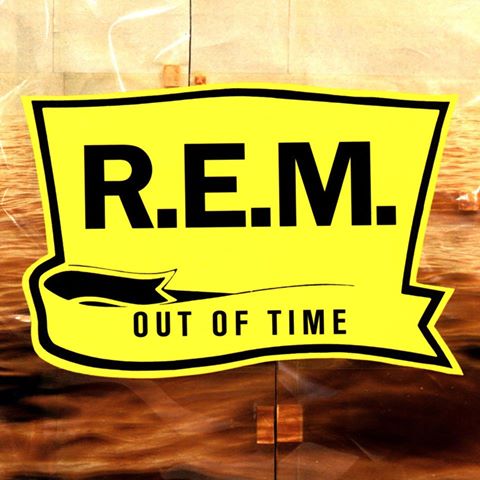
On this day in 1991, R.E.M. released its seventh album, ‘Out of Time,’ featuring the singles “Losing My Religion,”“Shiny Happy People,” “Near Wild Heaven” and “Radio Song”
“Out of Time” was the seventh studio album by the American alternative rock band R.E.M., released on Warner Bros. Records in 1991. R.E.M.’s status grew from that of a cult band to a massive international act. The record topped the album sales charts in both the U.S. and the UK, spending 109 weeks on American album charts and enjoying two separate spells at the summit, and 183 weeks on the British charts, and spending a single week at the top. The album has sold over four and a half million copies in the US and over 18 million copies worldwide. The album won three Grammy Awards in 1992: one as Best Alternative Music Album, and two for the first single, “Losing My Religion.”
“Out of Time” combines elements of pop, folk and classical music as heard on their previous album “Green“, with a new concentration on country elements that would continue on 1992’s “Automatic for the People“.
Preceded by the release of “Losing My Religion“, which became R.E.M.’s biggest U.S. hit, Out of Time gave them their first U.S. and UK #1 album. The band did not tour to support the release. In Germany, it is the band’s best-selling album, selling more than 1,250,000 copies,it was also the first R.E.M. album to have an alternative expanded release on compact disc, including expanded liner notes and postcards. Check out this different demo for the song ” Near Wild Heaven
The third single from 1991’s Out Of Time chronicles a relationship at loose ends: “Whenever we hold each other, we hold each other/ There’s a feeling that’s gone/ Something has gone wrong.” Despite the gloomy outlook, “Near Wild Heaven” sounds surprisingly upbeat. (Consider it the musical equivalent of winter’s chilly sunshine.) Chiming guitars, daybreak piano and lead vocals from Mike Mills provide graceful levity, while the chorus boasts Beach Boys-caliber harmonies dotted with longing falsetto and gorgeous counter-melodies. “Near Wild Heaven” both exemplifies Out Of Time’s plush instrumental palette and illuminates R.E.M.’s inventive perspective.
The supporting tour for “Green“ had exhausted R.E.M., and they spent nearly a year recuperating before reconvening for the recording session for “Out of Time“. Where previous R.E.M. records captured a stripped-down, live sound, “Out of Time“ was lush with sonic detail, featuring string sections, keyboards, mandolins, and cameos from everyone from rapper KRS-One to the B-52’s‘ Kate Pierson. The scope of R.E.M.‘s ambitions is impressive, and the record sounds impeccable, its sunny array of pop and folk songs as refreshing as Michael Stipe‘s decision to abandon explicitly political lyrics for the personal. Several R.E.M. classics — including Mike Mills‘Byrds-y“Near Wild Heaven,” the haunting “Country Feedback,” and the masterpiece “Losing My Religion” — are present, but the album is more notable for its production than its songwriting.
In the hands of many bands, “Half a World Away” — a song about the persistent ache of distance, in both the romantic and traveling sense — would sound far too busy. R.E.M.’s lush arrangements, however, have the perfect balance of texture and velocity. “Half a World Away” is dominated by harpsichord and mandolin, which are braided together to create an ornate melodic foundation, and Michael Stipe’s conspiratorial vocal tone. Swaying organ provides oceanic swells underneath. And, near the end of the song, proud strings jump into the fray to underscore the music’s sweet melancholy.
Along with many other people, I had hoped that the addition of Neil Young to Crosby, Stills, and Nash would give their music the guts and substance which the first album lacked. Live performances of the group suggested that this had happened. Neil Young’s voice, guitar, compositions and stage presence added elements of darkness and mystery to songs which had previously dripped a kind of saccharine sweetness. Unfortunately, little of this influence carried over into the recording sessions for Déjà Vu. Despite Young’s formidable job on many of the cuts, the basic sound hasn’t changed a whit. It’s still sweet, too soothing, too perfect, and too good to be true at times.
Take for example all of side two. Here we have a splendid showcase of all the Crosby, Stills, Nash, and Young strong points — precision playing, glittering harmonies, a relaxed but forceful rhythm, and impeccable twelve-string guitars. David Crosby’s “Deja Vu” fails totally to capture the eerie feeling that accompanies a real deja vu experience. “Our House” by Graham Nash is a flyweight ditty with nothing to say and makes this clear through its simpering melody. Steve Stills’ “4+20” conjures up some quiet enigmas, but with such tepid questions at stake, who really cares? Neil Young’s “Country Girl” continues his tradition of massive production numbers which includes the masterful “Broken Arrow” and “Down By The River.” But compared to his earlier work, the piece is sadly undistinguished. In both this song and the next one, “Everybody I Love You,” Young’s voice is absorbed in the major key barbershop harmonizing of the other singers. C, S, N and Y
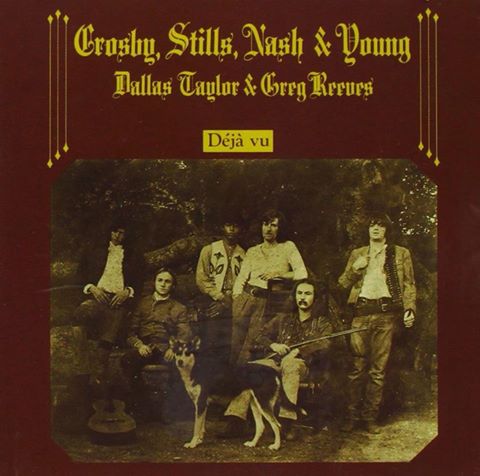
The heralded leather cover turns out to be nothing more than crimpled cardboard. fake leatherette! The grainy portrait of the “Old West” characters on the cover looks less like Billy the Kid, the James Gang and Buffalo Bill than the waiting room for unemployed extras for Frontier Atmosphere Inc. “Now then, which of you desperados is next?”
There is much on this album of real merit. “Helpless,” “Carry On” and “Teach Your Children” are excellent songs,and really well performed. Crosby, Stills and Nash — plus or minus Neil Young — will probably remain the band that asks the question, “What can we do that would be really heavy?” And then answers, “How about something by Joni Mitchell?”
Déjà vu was greatly anticipated after the popularity of the first CSN album and given the addition of Young to the group. Stills estimates that the album took around 800 hours of studio time to record; this figure may be exaggerated, even though the individual tracks display meticulous attention to detail. The songs, except for “Woodstock”, were recorded as individual sessions by each member, with each contributing whatever was needed that could be agreed upon. Young does not appear on all of the tracks, and drummer Dallas Taylor and bassist Greg Reevesare credited on the cover with their names in slightly smaller typeface. Jerry Garcia played pedal steel on “Teach Your Children” and John Sebastian plays harmonica on the title track.
Four singles were released from the album with all but the last, “Carry On,” charting . The popularity of the album contributed to the success of the four albums released by each of the members in the wake of Déjà vu — NeilYoung’s “After the Gold Rush2, Stephen Stills’ self-titled solo debut, David Crosby’s “If I Could Only Remember My Name“, and Graham Nash’s “Songs for Beginners“.
The album ranked at No14 for the Top 100 Albums of 1970 The album was reissued on compact disc on September 6,th 1994 after being remastered from the original tapes at Ocean View Digital by Joe Gastwirt.