Archive for the ‘CLASSIC ALBUMS’ Category

Led Zeppelin were enduring a period meant to be spent celebrating their mid-’70s successes that instead had turned into a maze of tax issues, injury and drug use.

The band pushed forward, writing and recording an emotion-packed seventh album that returned the group to its hard-blues roots. This focus on urgency ran counter to the sense of experimentalism that drove their more recent albums, but there didn’t seem to be any other way. In some ways, nothing was going right. They wrote in Malibu and recorded in Germany, since the group had become tax exiles from their native U.K. Robert Plant arrived for the sessions in a wheelchair, while still recovering from a scary automobile crash in Greece. When time grew short, Jimmy Page was forced into a marathon of dubbing and mixing.

“Nobody else really came up with song ideas,” the guitarist said in “Light & Shade: Conversations With Jimmy Page”. “It was really up to me to come up with all the riffs, which is probably why [the songs were] guitar-heavy. But I don’t blame anybody. We were all kind of down.”

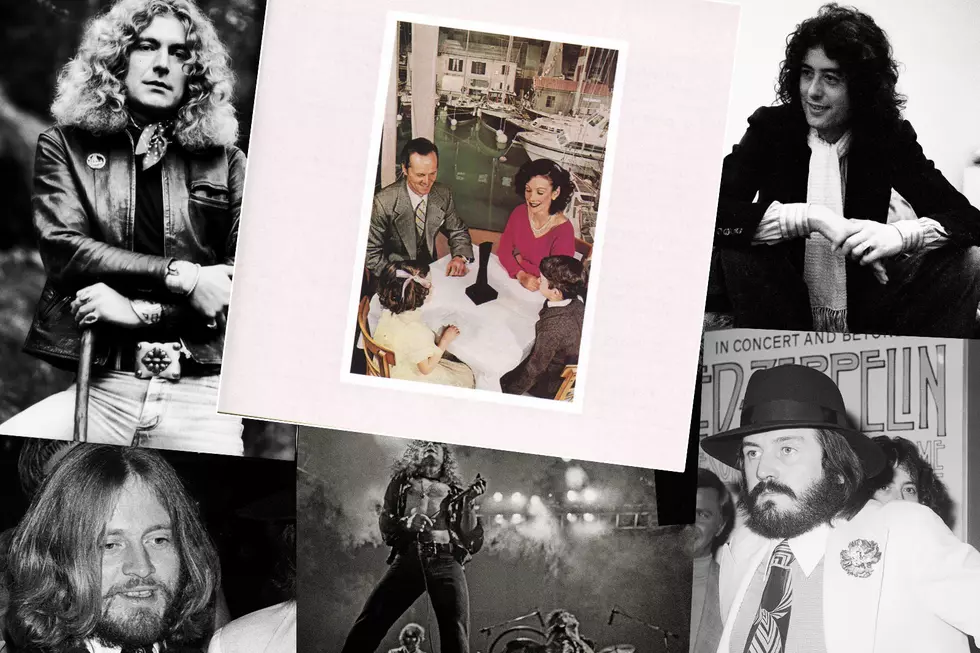
“Presence” was the seventh studio album by the English rock band Led Zeppelin , released by Swan Song Records on 31st March 1976. The album was a commercial success, reaching the top of both the British and American album charts, and achieving a triple-platinum certification in the United States, despite receiving mixed reviews from critics and being the slowest-selling studio album by the band

“It was taken from the balls, you know,” Plant said of Presence. “It was a cry from the depths, the only thing that we could do.” It’s Led Zeppelin’s most tightly focused record: seven tracks, no acoustic songs, no keyboards, just jewel-hard power – from the frantically charging “Achilles Last Stand” to “Nobody’s Fault but Mine,” a variation on a Blind Willie Johnson song where the band turns its firepower on itself.

“Presence was pure anxiety and emotion,” said Page in 2006. “We didn’t know if we’d ever be able to play in the same way again. It might have been a very dramatic change, if the worst had happened to Robert. Presence is our best in terms of uninterrupted emotion. Along the way, however, John Paul Jones receded into the musical background. He was moving toward a breakthrough on the Yamaha GX-1 synth, something that would define the next Zeppelin album, 1979’s In Through the Out Door. But in the meantime, his quieter demeanor served to hardened the album’s edges.

They had reason to be frustrated. After the August 1975 car accident that confined Plant to a wheelchair for months, Led Zeppelin had to cancel an American tour. Unable to return to England for tax reasons, they developed the core of the album “Presence” in rehearsals at Los Angeles’ SIR Studio in October, then headed to chilly Munich, Germany, to record in the hotel-basement studio Musicland. From the start, the group knew they wouldn’t have long (the Rolling Stones had already reserved Musicland to add overdubs to their forthcoming Black and Blue album in early December). So they blasted through the recording process in 18 days, with Plant often singing from his wheelchair.

Page asked the Stones if he could have a little more time to finish guitar overdubs; he reportedly stayed up around the clock for two days to get them done, with “Achilles Last Stand” occupying the first day and everything else the next. Though it didn’t come with any major hits, Page called it Zeppelin’s “most important album”: bleak, bruised and crackling with electric fury.

Like In Through The Out Door, Presence was recorded during a period of time when Robert Plant was recovering from a car accident, with the normally charismatic frontman recording his vocals from the confines of a wheelchair. Despite this, the record still sounds like classic Led Zeppelin, though its sales ended up being some of the worst the group had seen during their career.

Due to the strong presence of Jimmy Page throughout the recording of the record, the record sounds less like a group effort, and more of a bluesy solo record from the guitarist. With John Bonham throwing down some stunning rhythmic answers to Page’s blistering guitar-work on tracks like ‘Achilles’ Last Stand’ and ‘Nobody’s Fault But Mine’, Presence still shows Led Zeppelin as the dominant force they always were.

Here’s a deeper dive into those tracks, as well as the five additional songs that make up “Presence”.

“Achilles Last Stand”

Plant alluded to Zeppelin’s tax-exile status in the song’s opening line, the first hint at how autobiographical Presence would become: “It was an April morning when they told us we should go, and as I turned to you, you smiled at me, how could we say no.”

He and Page had traveled to Morocco in the summer of 1975, drinking in exotic local settings and music that inspired the guitar parts – and some of Plant’s more esoteric musings on this track. But Plant’s working name for it (“The Wheelchair Song”) served as a sad admission. He also ultimately chose a title that winked at his car accident, which severely injured his ankle: Achilles, a hero of the Trojan War, was brought down by an arrow to the heel.

A one-of-a-kind Led Zeppelin studio project was underway. “There won’t be another album like it, put it like that,” Plant told Circus magazine at the time. “It was a cry from the depths, the only thing that we could do.”

Part of Page’s brisk post-production work included piling up no less than six guitars on “Achilles Last Stand.” “It was so focused,” Page said of the sessions in a 2015 talk with the Toronto Sun. “And it was defiant, if you like, to the set of circumstances.”

Jones, in a rare spotlight moment, added a distinctive alembic eight-string bass line. But they were no match for John Bonham, whose eruptive drum work serves as the lead instrument for roughly the first half of “Achilles Last Stand.” It’s a crowning musical achievement that opened the door for the kind of shifting time signatures that would dominate the next wave of British heavy metal.

“For Your Life”

Bonham was still front and center, unleashing monstrous but surprisingly limber polyrhythms on this heavy studio improv. With little unused material in hand, the narrative also dealt in the here and now. In fact, “For Your Life” was mostly arranged at Musicland, though it remained a furious attack on the now-empty excesses of the Los Angeles-era setting where Plant and Page composed the bulk of Presence. Plant darkly references plasticine relationships and rampant drug use that were so widespread in the “city of the damned.” He later described “For Your Life” as “a bitter treaty with rock ‘n’ roll.” Page matches Plant’s venomous attitude strum for angry strum.

“Royal Orleans”

Six of the seven songs on Presence were composed by Plant and Page, while the rumbling stop-start “Royal Orleans” is credited to all four members. In Led Zeppelin: The ‘Tight but Loose’ Files, Page said moments like this “proved to us once and for all that there was no reason for us to split up. I can’t think of many groups who have been going as long as we have, [and] who still have that spontaneity about them.”

Lyrically, Plant returns to raucous times out on the concert trail, with a title that references a signature French Quarter inn and a narrative that recounts a particularly salacious road story. “We rolled a joint or two, and I fell asleep and set fire to the hotel room, as you do,” Jones told Mojo in 2007, with a laugh. “And when I woke up, it was full of firemen!” Still, there’s something almost wistful in the retelling by a hobbled and homebound Plant.

“Nobody’s Fault but Mine”

In the 1928 original, Blind Willie Johnson worried that his sightlessness would draw the wrath of God, since he’d been rendered unable to read the Bible. Plant and Page transformed “Nobody’s Fault but Mine” into the stammering retelling of their own fall from grace.

If all of this sounds rather nostalgic, too, there’s no indication in the music: Plant’s positively vitriolic harmonica solo is anything but introspective. “‘Nobody’s Fault but Mine,'” he admitted in Jon Bream’s Whole Lotta Led Zeppelin, “was very spiky – a lot of clinched teeth.”

Meanwhile, Page seemed to have based this new arrangement on an acoustic version released in the late-’60s by the late John Renbourn. But he took things up a notch – actually several notches – by triple-tracking the intro, using a phaser while playing one guitar an octave higher. A song that can came off at times like a loose jam was actually a carefully constructed bit of choreography.

“Candy Store Rock”

Led Zeppelin had been carrying around the seeds of this song since their Houses of the Holy dates. Back then, they’d dabble in an improvisation during “Over the Hills and Far Away” that now found a home as the middle section of the ’50s-influenced “Candy Store Rock.”

Plant’s echo-heavy rockabilly approach is in tribute to Ral Donner, an unabashed Elvis Presley clone, and a needed moment of levity on such a serrated, brutally honest album. For Plant, it represented another kind of push back against the fates.

“Against the odds, sitting in a fucking chair, pushed everywhere for months and months, we were still able to look the devil in the eye and say: ‘We’re as strong as you and stronger, and we should not only write, we should record,'” Plant told Creem at the time. “I took a very good, close scrutiny of myself and transcended the death vibe – and now I’m here again.”

Though clearly an odd man out, “Candy Store Rock” ultimately points to the throwback sensibility that powered succeeding post-Zeppelin projects like 1984’s The Honeydrippers: Volume One and 2002’s Dreamland.

“Hots On for Nowhere”

One of the most hooky Led Zeppelin moments ever, “Hots On for Nowhere” also developed from an earlier scrap of an idea. Page’s riff appeared on the then-unreleased “Walter’s Walk,” but otherwise the track was the product – both literally and figuratively – of time spent in Malibu.

Plant clearly felt abandoned during his time of convalescence, mentioning friends who “give me their shoulder” or (worse) “who will give me fuck all.” No surprise that he’d subsequently describe Presence as “really like a cry of survival.”

Page then quickly crafted a tough, if customary, solo – that is, until he unleashed an eye-popping twang in the middle, courtesy of the tremolo arm on a Lake Placid Stratocaster that was reportedly borrowed from Gene Parsons of the Byrds. The song’s odd time signature was later refashioned for “Pride and Joy,” from 1993’s Coverdale/Page collaboration. Page also returned to “Hots On for Nowhere” during U.S. tour dates with the Black Crowes in 2000.

“Tea for One”

Led Zeppelin’s self-titled debut found Page in firm control, as the band rekindled the purpose and fire of blues without resorting to the genre’s basic structures. Same here, as Led Zeppelin end a hard-charging album in the only way they could: with a harrowing exploration into the depths of alienation while separated from family.

“I was just sitting in that wheelchair and getting morose,” Plant later admitted. “‘Tea for One’ was very personal. I couldn’t get back to the woman and children I loved. It was like, Is this rock ’n’ roll thing really anything at all?”

Loose early tries found Plant quoting Willie Dixon and Cab Calloway, before the band leveled it up into a menacing blues. That meant a return to brutally honest autobiographical themes, while a double-tracked Page amplified every anguished cry.

“All our pent-up energy and passion went into making it,” Page said of Presence in Led Zeppelin: The ‘Tight but Loose’ Files. “That’s why there was no acoustic material there. The mechanism was perfectly oiled. We started screaming in rehearsals and never stopped.”
The Band: 

'Led Zeppelin'

48 years ago today, on January. 12th, 1969, music changed for many people. It was on this day that Led Zeppelin released their debut LP . Of course, critics panned the record, but to the record buying public, well they never listened to critics anyway. It only takes the first two seconds of the first song on their first record for Led Zeppelin to make crystal clear exactly what they intend to do – and exactly what they intend to do to you. In the opening to “Good Times Bad Times,” the band drops a two-note attack that falls like a cartoon safe, clearing the air for John Bonham’s syncopated groove, Jimmy Page’s swift-sword guitar and Robert Plant’s high-end howling about sex so loud it gets the neighbors talking. “It really wasn’t a pretty thing,” Plant later said. “It wasn’t supposed to be a pretty thing. It was just an unleashing of energy.”

just a few weeks before their album’s release — opening for Vanilla Fudge and Spirit. Although booking agent Ron Terry had to beg promoter Barry Fey to add Led Zeppelin to the already-sold out show, the band did not disappoint. “You didn’t have to be a genius to know that Zeppelin was going to be a smash,” he later said. “Oh, my God. People were going crazy!” Rock station KLZ was so jammed with calls the next day that Fey had to run a copy of the unreleased self titled album to them, where it played for an entire day.

We could go on for days on the impact that this record had at the time and still has to this day, but you all know that. Just 3 of the songs “Your Time is Gonna Come”, “Good Times Bad Times” and “Communication Breakdown” were Led Zeppelin originals. When Led Zeppelin debut album was released in January 1969, it went to the Top 10 in the U.S. and the U.K. charts, despite lukewarm reviews. The enormity of Zeppelin’s innovation wasn’t entirely easy to recognize. In an era of spiritual transcendence and tales of brave Ulysses, they’d flipped teenage rock & roll’s sex-zonked mania into something huge and seething and mythic- bestial. Eastern mysticism and Mordor and prom-ruling radio gold would all come later.

Page’s vision for the album was so clear that they recorded the entire thing in just 30 hours. “I financed and completely recorded the first album before going to Atlantic,” he later said . “It wasn’t your typical story where you get an advance to make an album: We arrived at Atlantic with tapes in hand.” The result was a new, uncompromising sound and unabashed rock star lifestyle, paving the way for everything from prog-rock to heavy metal.

Led Zeppelin was born from the ashes of the Yardbirds. They had disintegrated in the summer of 1968, leaving guitarist Jimmy Page with the rights to the name — and a series of shows in Scandinavia he was contractually obligated to complete .So he recruited Robert Plant, John Paul Jones and John Bonham, and the four toured as the New Yardbirds. But by the time they entered Olympic Studios in London in late september 1968 , they had moved their sound away from English folk-rock, into the blues-influenced band Page had always wanted, and soon had a new name, Led Zeppelin, as well.

As with so many great records, when it first came out the critics didn’t care for it. Therefore many people knew it would be good.

On January. 12th, 1969, Led Zeppelin released their self-titled debut LP “Led Zeppelin” in the US. It wouldn’t be released in the UK until March 31st. The LP combined Blues and Rock and was very well received by music fans. A number of the songs were ‘borrowed’ from older Blues musicians who at first were not given any credit.

It was an incredible record that changed the way many looked at Rock music.

Robert Plant (vocals/production); Jimmy Page (guitar); John Paul Jones (bass); John Bonham (drums)

This was show Number 5 in as many days, at the start of a six-week tour that took us in a circle around the US, with a few stints into Canada as well. The trip ended up being about 13,000 miles total. Day 5 and we had already traveled from Durham to Asheville to Nashville to Atlanta to New Orleans to Austin. “Honkin’ down the gosh darn highway,” visiting these cities quickly, almost rushed, stopping long enough to preach the gospel of Heart Like A Levee to those who were hip, those who were ready. Heart Like A Levee hadn’t yet been out in the world for two weeks, so the eagerness to preach was strong. We were anxious for people to hear it.

We were tired, understandably, but excited. Morale was high.  We were on an adventure.
I was just happy to be included on the team, a newbie on my first tour, away from my fiance (now wife) for the longest stretch of our entire relationship, forging a new, personal relationship with one of my longtime favorite bands – dudes who, aside from a few shows we’d worked together in previous years and a small handful of email exchanges, existed mostly through speakers & on vinyl records. Lucky me to be in the presence of such talent, such inspiration, such GOODness. I loved every damn second of that tour.

Hiss Golden Messenger turned a corner at The Parish and it was obvious. To me, at least, but I like to think the crowd knew something special was happening too. They were attentive and appreciative. The energy on stage during HGM’s set was gelling very nicely and it was noticeable early in the show, within the first few songs. It felt different than the four previous nights. Looser, but tighter, if that makes any sense. Mike even makes a comment about that during the set. “Finding the rhythm.” Listen to the show and you’ll get it, you’ll hear it.

Scott was celebrating another trip around the sun, so there was a pep in the step because of that. HB brother Scott!
We were brought Torchy’s Tacos for dinner by a friend of the band. We were fueled up!
We had a couple earned days off following this show before the next gig in Phoenix, with fun stops planned in the cosmic West Texas town of Marfa, and the beautiful White Sands National Monument in New Mexico. We were looking forward to visiting these places and to have some down time.
But we were looking forward to the gig that night at The Parish even more and it showed. Goddammit it showed.
Like I said, morale was high, and it stayed that way.

http://

Hiss Golden Messenger Live October 18th, 2016 At The Parish Austin, TX
Setlist
01: As The Crow Flies
02: Biloxi
03: Saturday’s Song
04: Mahogany Dread
05: Day O Day (Love So Free)
06: Tell Her I’m Just Dancing
07: Heart Like A Levee
08: Happy Day (Sister My Sister)
09: Like A Mirror Loves A Hammer
10: Drum /// I’ve Got A Name For The Newborn Child
11: Red Rose Nantahala
12: O Little Light
13: Say It Like You Mean It
14: Cracked Windshield
15: Lucia
16: MC Speaks
17: Southern Grammar
18: John The Gun
–ENCORE–
19: Brother, Do You Know The Road?

MC Taylor – vocals, guitar
Phil Cook – keys, guitar, vocals
Ryan Gustafson – guitar, banjo, mandolin, vocals
Scott Hirsch – bass
Darren Jessee – drums

Recorded by Luc Suer & Warren Parker
Mixed by BJ Pendleton & Warren Parker
Artwork – Jonas Britt

FIRST LISTEN: BAD COMPANY - RUN WITH THE PACK & BURNING SKY

We’re gearing up to run with the pack, the Bad Company pack that is! We’ve got a pair of deluxe editions of the bands “Run With The Pack” and “Burnin’ Sky” coming down the line this May. Both feature the remastered original album along with rare and unreleased recordings like this previously unissued version of “Young Blood” (Alternate Version 2) recorded in Grasse, France and engineered by Ron Nevison (Led Zeppelin, UFO, Hear) and “Morning Sun” (Take 3, Early Version) recorded by Chris Kimsey at Le Chateau Studios, Herouville, France, in the summer of 1976.

Bad Company recorded four classic albums in as many years, giving rise to some of the most recognisable rock songs of the seventies, like “Rock Steady”, “Run With The Pack” and the who can forget the date night favourite “Feel Like Makin’ Love”.

After releasing expanded and remastered versions of their first two albums a couple of years ago, the band have announced the May 26th release of souped-up deluxe editions of their next two albums from that incredible run – 1976’s Run With The Pack and 1977’s Burnin Sky . Both albums have been remastered from the original production tapes and expanded with rare and unreleased recordings taken from the original album sessions. For fans, there is plenty that they will not have heard before.

During a rare break from touring, Paul Rodgers, Mick Ralphs, Simon Kirke and Boz Burrell got together in France to record new songs using the Rolling Stones’ mobile recording studio. Those sessions produced Run With The Pack, a 10-song album that came out in early 1976 in America, where it sold three million copies. Radio stations pumped out the title track along with a cover of The Coasters’ “Young Blood”, while “Silver, Blue & Gold” became one of the band’s signature tracks, even though it was never officially released as a single.

The bonus disc that accompanies “Run With The Pack” Deluxe Edition includes unreleased early mixes for “Honey Child” and “Simple Man”, as well as an extended version of the title track. There’s also the previously unreleased “Let There Be Love”, an outtake from the recording sessions. In fact, the acoustic version of “Do Right By Your Woman”, previously only available as the B-Side of the single release of Run With The Pack, is the only song on the bonus disc that has ever been previously released.

During 1976, the band returned to France again to record 12 songs for what would become Burnin’ Sky. They chose Château d’Hérouville as the studio, which is where David Bowie would record Low later that same year. Burnin’ Sky was released in March 1977, and broke into the Top 20 in both the U.K. and U.S.

The “Burnin’ Sky – Deluxe Edition bonus disc features unreleased versions of nearly every song on the album, including alternative takes and mixes of “Man Needs A Woman” and “Morning Sun”, plus the full version of “Too Bad”. The session tapes also unearthed “Unfinished Story”, a song that was completed, but never released.

The CD versions of these Deluxe Editions each have a second disc of new bonus tracks, while their vinyl counterparts offer a selection of the bonus material.

Toronto-based artist, composer and producer Lydia Ainsworth writes orchestral pop songs that register as otherworldly yet personal. It’s a unique knack she has, “for making grand sweeping gestures feel human,” . To record Darling Of The Afterglow—the follow-up to her Juno-nominated 2014 debut—Ainsworth, who has a background in classical music and film scores, worked with a team of local Toronto musicians, fusing instrumentation with synthetic sound design. The album’s exploratory and emotional themes are informed by her studies of surrealist and philosophical works. These disparate elements all coalesce in music sophisticated, approachable, and glowing extraordinarily bright.

Afterglow is taken from Lydia Ainsworth’s new album ‘Darling Of The Afterglow’ out March 31st

The Road is taken from Lydia Ainsworth’s new album ‘Darling Of The Afterglow’ out March 31st.

As the clanging keyboard chords that open ‘The Road’ ring out like sinister church bells, it’s clear that Canadian composer and songwriter Lydia Ainsworth’s second album is going to be something very special indeed.

“Astral mirrors guide the fall /Let’s go on and on and on once more,” murmurs Ainsworth, oozing sensuality, strength and supernatural sass over dark, unctuous beats. There are hints of Bat For Lashes’ gloom and Chvrches’ wondrous way with a synth-driven melody here, but Ainsworth’s voice is indelibly her own. ‘Afterglow’ plugs into the same moody, mystical vibe, while lyrics about “the queen of angels” pitch this as a deeply female record.

Image may contain: camera

Dead Horse One is the wonderful French band led by singer/guitarist Olivier Debard. Hailing from the southern French town of Valence, they formed in 2012 and released the well-received EP “Heavenly Choir Of Jet Engines” In 2014, they released the marvelous “Without Love We Perish”, produced by Mark Gardener of Ride. The band cites influences ranging from The Telescopes to John Barry soundtracks, and it’s somewhat evident in the grooves of this new release. The band has always favored the poppier end of the psych gaze spectrum, and seem less involved with regurgitating the same old tired MBV effects. With a high focus on swooning psychedelia and heavenly layers of sound, Dead Horse One have another winner on their hands.

The album was mixed and produced by John Loring from Fleeting Joys,  and also features musical contributions from John and Rorika Loring (also from Fleeting Joys). John also co-wrote two songs (“Disconnected” and “Today”).

Opening track “Insight” is truly stunning, and I really dig the somewhat warped sounding keyboard that starts it off. It morphs quickly into a full blown psych stomp with gauzy textures, the perfect synthesis between shoegaze and psychedelia. And before I expound further, let me state for the record that I have always considered shoegaze to be a sub-genre of psych, so the two fit together neatly. The vocals are wonderful here too, as are the guitars soaring into the stratosphere.

“Season of Mist” is equally gorgeous, and it reminds me the most of A Storm in Heaven era Verve. Especially with the curls of feedback surrounding the entire mix. If ever a song deserved to be a hit, it’s this one.  “Mesmerise Me” is a graceful and sublimely trippy slice of decadent psych, and is truly swoonworthy. You will find yourself floating on golden clouds, raised up by the grandeur of this music.  The guitar work by Olivier Debard is fantastic here, but that is the case throughout the record.

Order “Season Of Mist” LP/ CD – https://deadhorseone1.bandcamp.com/al…

Party

On 19th May 2017, Aldous Harding releases her second album, “Party”.

Party was produced with the award-winning John Parish (PJ Harvey, Sparklehorse) in Bristol, a world away from Harding’s New Zealand home.  As well as contributions from Parish, Perfume Genius’s Mike Hadreas lends vocals to ‘Imagining My Man’ and “Party” closer ‘Swell Does The Skull’.

Igniting interest with her eponymous debut album released just two years ago, Aldous Harding quickly became a name murmured on many lips.  She’s known for her sinister torch songs, gentle laments and eerie odes delivered with a charismatic combination of hubris, shrewd wit and quiet horror.  Party introduces a new talent to the stark and unpopulated dramatic realm where Kate Bush and Scott Walker reside.

‘Imagining My Man’ by Aldous Harding, from forthcoming album ‘Party’. Released 19th May on 4AD/Flying Nun:

There are inescapable feel-good encounters and there are others which lead you into energetic engagements but there are very few which has the body and spirit engaged in a full on party mode “Whiplash Splash” is one of the few.

Uncaged by Californian duo The Dollyrots, its the band’s sixth studio album, Its a new wave of bubblegum flavoured pop infested punk ‘n’ roll. A year ago, the pair invaded a new plateau in their sound with the “Mama’s Gonna Knock You Out” EP, itself continuing the new bloom of growth started by the bands previous album “Barefoot and Pregnant” two years before that.

Now the ‘invader’ has become the conqueror, Whiplash Splash owning the new level of creative maturity in the pair’s sound leaving the body exhausted and emotions flying in its wake.

If last year was a truly busy time for the couple of vocalist/bassist Kelly Ogden and vocalist/guitarist Luis Cabezas, with the release of the EP and a sold out UK tour with Bowling For Soup backing up the birth of their child, 2017 has the potential of being even hungrier on their time and virulent revelry with Whiplash Splash leading the way. As Mama’s Gonna Knock You Out, the crowd funded album was produced by John Fields with the duo.

With the album’s title, imagery, and writing spun from Ogden’s passion for and longing to be a mermaid, as well as working as a metaphor for the band’s spilt time living in downtown Los Angeles and coastal Florida, Whiplash Splash just rips itself from the speakers with opener “I Do”. A squeal and coaxing beats hit ears before a swaggering stroll of Ramones like riffs and further tenacious rhythmic exploit punk instincts led by the catchy vocal lures of Ogden and the equally enticing throb of her bass. Feet and hips are just as quickly involved as too voice and appetite, the song simply punk pop devilry.

The following Babbling Idiot is just as virulent, Ogden’s harmonic romancing warming the angular surge of guitar and the sparking of solitary rhythmic seduction before it all boils up into another seriously addictive and physically persuasive chorus. The song has a slim seventies/eighties scent to it, occasionally bringing thoughts of bands like The Photos and The Waitresses, but roars with a punk ‘n’ roll .

Next up is Mermaid, the song is pure seduction from its harmonic caresses and flirtatious hooks to a sonic blaze fuelled by just as forceful bait. It is a creative collusion built for the listener’s slavish captivation, success captured within a handful of breaths with similar rewards sought and found by Just Because I’m Blonde straight after. With Cabezas’ guitar jangle the first chain of temptation, Ogden’s probing bassline the second, the track quickly prowls the senses with a lively confident swagger and a throbbing almost salacious backbone. Again hooks escape from each creative twist with B52s inspired keys just adding to the drama.

From its first breath, continuing its manipulation in fine style with Squeeze Me. Its initial rockabilly hued bass groove is alone enough to tempt submission, an almost taunting tempting soon fondled by sonic invention and subsequently joined by Ogden’s vocal saunter.  As words and song make an increasingly pop punk proposal no red blooded rocker can refuse, kinetic dynamics ensure class ‘A’ catchiness before This Addiction serenades ears with its own boisterously infectious swing and harmonic invention; its croon sliding melodic caresses across the senses like a sultry lover inflamed with lust borne energy.

Dance Like a Maniac more than lives up to its title as a persuasion, its bold and bruising punk rock a bully for feet and body swerves driving song and listener into zealous union while Saturday Morning with a great opening bass groan offers its own headstrong physical temptation. Riffs and rhythms alone are sparks for instinctive compliance and only assisted by the blend of hard and pop rock surging through the song’s tapestry of sound.

Both tracks leave lungs gasping for breath and pleasure over flowing, yet still get slightly eclipsed by the hip swinging incitement that is City of Angels; imagine The Runaways and Bikini Kill mixing with The Go-Gos and you have a sense of its mighty romp before things mellow out with the graceful Jump Start This Heart, a song lined with an electro pop shimmer and bound in melancholic beauty as a sonic fire burns in its heart.

The rawer pop ‘n’ roll of Pack of Smokes steps forward next, bouncing along as a caustic air hugs its fiercely catchy enterprise and energy, and though it does not quite match those before it, the song leaves satisfaction pumped before the outstanding Other Trucker with its reggae hinted, attitude soaked summer canter again has pleasure brimming over. As throughout, Cabezas’ vocal backing and unity with Ogden’s is superb, often understated but always a complimentary hue to her almost siren-esque presence, especially on this treat.

The album closes with Walking on Sunshine, The Dollyrots giving the Katrina and the Waves classic their distinctive craft and energy. To be honest, it is a song which has never lit our fires but that does not stop the twosome causing bodies to bounce in the office as the album ends in fine style.

Ogden and Cabezas have hit another high with Whiplash Splash, their loftiest yet in all aspects and fair to say, when put together by The Dollyrots pop and punk has never been more tempting.

Saturday, April 22nd marks the tenth annual Record Store Day 2017. If you’ll be getting up early and hitting up your local record shop, keep your eyes peeled for Suuns‘ Hold/Still Remixes. Almost a year to the day from the release of the Montreal band’s third album, Hold/Still, the LPs of remixes twist and turn the original tracks into something else entirely. The source material lends itself perfectly to a remix project given its layers of experimental complexity, and the remixes on the forthcoming LP vary from dance floor fillers to ambient.

http://

Suuns’s deliver an Record Store Day 2017 exclusive album of remixes of thier most-far reaching and creative record to date, features 9 tracks across 2LP’s and comes with an MP3 download card.

Hold/Still Remixes is a limited-edition pressing exclusively for Record Store Day 2017 and pressed on red vinyl.

Image may contain: text

One of the most acclaimed British rockers from the 1980’s, this legendary band formed in Liverpool in 1978 and were forefathers of the neo-psychedelic movement. Their line up consisted of vocalist Ian McCulloch, guitarist Will Sergeant, bass player Les Pattinson and drummer Pete de Freitas, eventually replacing the original drum machine. The band’s cult status eventually waned with mainstream success in 1983 after they scored a UK top 10 hit with “The Cutter” and attendant album “Porcupine” which hit second spot in the UK.  1984’s classic album “Ocean Rain” is considered a landmark post-punk release, featuring the lead single “Killing Moon.” The band split in 1988 but regrouped in 1997, releasing an album in 2014 . The band’s popularity never quite made the same impact in the US as it did in Europe so they are ripe for rediscovery for anyone interested in bands such as Suede, Radiohead, Arcade Fire, Blur, Interpol and Oasis.

Track Listing:

Side A

  1. She Cracked (Live April 1985)
  2. It’s All Over Now Baby Blue (Live April 1985)
  3. Soul Kitchen (Live April 1985)
  4. Action Woman (Live April 1985)
  5. Paint it Black (Live April 1985)

Side B

  1. Run, Run, Run (Live April 1985)
  2. Friction (Live April 1985)
  3. Crocodiles (Live April 1985)
  4. Heroin (Live July 1983)
  5. Do It Clean (Live July 1983)
  • Brand new collection of their legendary live material recorded in Sweden in 1985. Includes classic Rock N Roll covers of legendary tunes by the Doors, Rolling Stones, Velvet Underground, Television and more available on vinyl for the first time. Many of the tracks from Sweden were recorded live for Swedish National Radio at the Karen Club. Also included here is a legendary extended version of “Do It Clean” recorded live in concert at the Royal Albert Hall in 1983.
  • Each LP is individually numbered and strictly limited based on pre orders
  • 1LP, 180g, black vinyl pressed at Record Industry comes in a single sleeve aqueous-gloss, old school tip-on Stoughton sleeve with brand new artwork and hard stock insert with never before seen photos and liner notes by guitarist, Will Sergeant.