Because the music is beautiful to me. Reminds me of Honey Tongue quite a bit, yet it is still a unique acoustic experience that rewards from repeated listening from beginning to end. I am basing my review on the White label that Joyful Noise Recordings released which contained several of the songs on this release.
On her deeply moving debut album At Weddings, Sarah Beth Tomberlin writes with the clarity and wisdom of an artist well beyond her years. Immeasurable space circulates within the album’s ten songs, which set Tomberlin’s searching voice against lush backdrops of piano and guitar. Like Julien Baker and Sufjan Stevens, she has a knack for transforming the personal into parable.
Sarah Beth comments, When I wrote a lot of these songs I never thought they would leave my bedroom. These songs are personal, but I think their themes are easily felt from person to person. I hope these songs can be there for you like they were for me when I was writing them. I am extremely excited to finally be able to share this record with you. My first full length record, ‘At Weddings,’ will be out on Saddle Creek Records on 8/10/18.
Credits: Music + lyrics by Sarah Beth Tomberlin Sarah Beth Tomberlin – guitar, Wurlitzer, vocals Owen Pallett – guitar, Prophet 6, and background vocals
Produced, recorded, and mixed by Owen Pallett at M’s House + Owen’s House
New from London singer-songwriter Carmody is Singing Your Love, an uptempo love song that represents a further string to the bow of this versatile new artist.
Of the inspiration behind the song, Carmody says: “‘Singing Your Love’ feels like my first love song. I read somewhere that songwriters are always documenting each phase of their lives through their music. I had never thought of it like that before, but it felt important to write about a moment beyond the battles that can exist when you fall in love. I’ve always struggled to write about happiness without stumbling into cliché, but it felt like something worth celebrating, something worth dancing about, beyond the scrutiny that I usually put my relationships under.
“It also came from a conversation I had on the Are We Live podcast, where I started talking about how there are no songs that objectify men, no videos with men washing cars in little cute boxers. So it also stemmed from a desire to see and write about the male form as a muse and sexual object.”
Carmody has recently appeared at festivals including The Great Escape in Brighton and Liverpool’s Sound City, with appearances at Barn on the Farm and Wilderness still to come this summer.
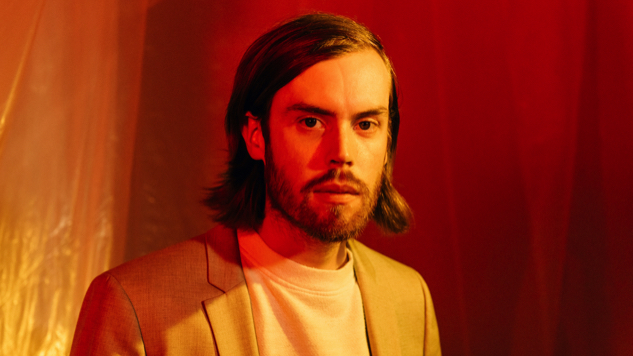
Jack Tatum has announced a new Wild Nothing album. Indigo is scheduled for release on August. 31st via Captured Tracks.
Tatum has also shared the album’s first single, “Letting Go.” The single features sweeping synths and light vocal distortion, staying true to the ‘80s origins of the dream-pop sound. Its chiming guitar and Tatum’s sweet falsetto in the chorus bring you to a pastel-painted room where there’s a slow-motion pillow fight going on. Listen to the track down below.
Indigo is Wild Nothing’s fourth album and the follow-up to 2016’s Life of Pause. The album, produced by Jorge Elbrecht, features Cam Allen on drums and Benji Lysaght on guitar. The album is a culmination of almost a decade’s worth of Tatum’s music as Wild Nothing. Indigo is in it’s “own cyborg world, utilizing the artful mechanisms of human touch with the precision of technology to create the classic, pristine sound Tatum has been seeking his entire career,” per a press release.
Tatum has also said that he thinks about how his music will age and that “ideas of ‘timeless’ are going to be different—so if Indigo is not timeless then it’s at least ‘out of time.’”
Wild Nothing has announced a fall North American tour to support Indigo.
This is one of the few Seattle groups that I could see making it far. They are a legitimate rock band that will always leave you wanting more. seventies-tinged, danceable, fuzzed-out and driving tunes quickly dismiss the notion that these gals are just goofing off. They’re definitely not.
The ladies of Thunderpussy – Molly Sides [vocals], Whitney Petty [guitar], Leah Julius [bass], and Ruby Dunphy [drums] – are not subtle in their approach. They’re here to rock and chew gum. And it looks like they’re all out of chewing gum.
Looking and sounding like they just stepped out on to Sunset Blvd in the late 80s as opposed to Seattle in 2018, these ladies should not be taken lightly. I heard someone dismiss them as a gimmick or shtick act down at SXSW. After thoroughly enjoying their set on the opening night of SXSW, I was offended by that. I cannot stress this enough. These ladies are legit and wicked good musicians. If you’re still left with any doubt, check out this cover of Fleetwood Mac’s The Chain.
The album mixes in some flat-out rockers like Speed Queen, Velvet Noose, Fever and the title track and namesake of the band that will get your blood pumping. They mix in some solid mid-tempo stuff and lower tunes like – Torpedo Love, The Cloud and Utero Tango – to give you a chance to catch your breath.
This album has only grown that appreciation. These ladies are special musicians and I’m happy to be along for the ride.
Not only will Thunderpussy make you question your life choices, they will teach you life lessons like, “A hard man is good to find,” and “Booty is in the eye of the beholder.” They may be rock n roll’s new diamond in the muff, but they’re not selling sex like a Carl’s Jr. commercial– They are literally whipping you with it, like 80’s Madonna, or dry humping you you like a tranced-out Prince. Poweful, sultry vocals tear at your chest while guitar riffs tower over you like a leather clad dominatrix… Salty tears to stream down your cheeks in a pleasureful pain as the bass and drums lock in tight to move you, groove you, and wash over you in a hot sweaty bath of sweet, sweet, blues-rock soul.
The first thing mentioned when discussing Starcrawler is the band’s live show. Their music is fierce, their records explosive – but their outrageous live shows define them. The drama, the surprise, the danger, the command. From singer Arrow de Wilde’s physical abandon to Henri Cash’s slash ‘n’ burn guitar antics, the LA outfit is a group you need to see in action to fully appreciate. Ozzy Osbourne fiend de Wilde takes her voice to all kinds of places; she’s a mesmerizing front person whose vocal attack drags you deeper into Starcrawler’s songs.
Starcrawler’s “Chicken Woman” an exclusive live performance for Vevo DSCVR, the channel for the best in new music.
“Chicken Woman” is a track from their new self-titled album, produced by Ryan Adams (who has said listening to the band is like “being hit by four trains at once.”) Kinda glam, kinda punk, they’ve perfected a way of imploding and exploding at the same time. With a sense of humor. for a glimpse of their don’t-care attitude. For a glimpse of their don’t-care attitude, check their “I Love LA” video, which finds them rocking the hell out of a Silver Lake donut shop. And share “Chicken Woman” with a friend. The buzz around Starcrawler is getting louder by the minute.
Hailing from the excellent named Orangeville in Ontario, Falcon Jane are the musical vehicle for the songwriting of front-woman Sara May. They describe their music as, “plez rock”, a genre inspired by nature, truth, peace and magic. On new single, The News, released this week, thankfully there’s enough quality to go without the need for musical tags.
The accompanying press release for The News starts with a simple pronouncement, “grief is so complicated.”The News explores that in stunning depth, from the fear, emptiness and anguish through to the moving on and the healing; as the song runs you can almost feel Sara healing. The track was inspired, at least in part, by a news story local to Falcon Jane, where a young boy was washed out of his mother’s arms by the flood waters, an event that deeply affected Sara and all in the local community. Musically, there’s a blurring of the sweet indie-pop of Camera Obscura or Squirrel Flower, fused with twanging country guitars and stirring, minimal production. Throughout the lyrics there’s a sense of searching, of longing for a way back to what was, yet somehow trying to find a path to a future where the pain isn’t quite so all-encompassing. Moving and rather wonderful, Falcon Jane might not make a loud noise, yet they leave a very strong impression.
The News is out now is the second single from Falcon Jane’s album, “Feelin’ Freaky” out in August 2018. falconjane.bandcamp.com
On June 2nd, 1978, Bruce Springsteen released the album Darkness on the Edge of Town his first since 1975’s Born to Run had made him a big draw, it arrived after a lengthy lawsuit with his former manager Mike Appel where he was unable to enter a recording studio.
With three years on the sidelines because of the lawsuit with Appel an eternity at that time for a musician – Springsteen has said that he felt he needed to reintroduce himself. To make another dense record rooted in rock’s past, In the three years between Born to Run and Darkness, he’d simply learned a lot and during this time he played some of the best live shows of his career. He spent a great deal of time in court, for one thing; he began listening to Hank Williams and old-time, class-conscious country music. He’d seen the films of John Ford and Howard Hawks and John Huston, and read the novels of John Steinbeck and John Dos Passos that Jon Landau had given him. The concerns of the lower-middle class became the concerns about which he began feeling most passionate, and those things are reflected in his writing, and his writing became more compact and direct as a result.
Although the lyrics didn’t directly reference the suit, his bitterness showed in the songwriting. Gone was the cinematic romanticism of his first three albums, replaced by stark portraits of blue-collar American life that would form the basis of Springsteen’s writing for the next decade.
Darkness On The Edge reached No. 5 on the Billboard albums chart, and the tour, where he and the E Street Band made their first ventures into headlining arenas, The tour solidified his reputation as one of the most exciting live acts in rock n’ roll. Many of its tracks, including “Badlands,” “The Promised Land” and “Prove It All Night” as well as the outtake “Because the Night” have still to this day continued to play an important role in his concerts to this day.
But the 10 songs released on Darkness represented a fraction of the music recorded for the album, with 57 song known titles recorded during the sessions, . Is “Darkness on the Edge of Town” Bruce Springsteen’s best album?.
Several other artists wound up benefiting from his surplus; Southside Johnny, Robert Gordon, Greg Kihn and Gary U.S. Bonds all recorded songs from this period that Springsteen felt didn’t jibe with the album’s bleak mood. But while “Prove It All Night” was the only single , two artists enjoyed massive hit smashes with his Darkness castoffs: The Pointer Sisters went all the way to Number Two with their recording of “Fire” – a song Springsteen claimed to have originally written in 1977 for Elvis Presley and Patti Smith scored the biggest hit single of her career with “Because the Night,” which reached Number Five in the U.K charts.
Smith, who was recording her album Easter with Jimmy Iovine at the same time the latter was working on Darkness, took the unfinished “Because the Night” and added a verse inspired by her long-distance relationship with future husband Fred “Sonic” Smith. “I knew that I wasn’t going to finish the song, because it was a love song, and I really felt like I didn’t know how to write them at the time,” Springsteen recalled in The Promise, explaining his decision to give the song to Smith. “A real love song like ‘Because the Night,’ I was reticent to write; I think I was too cowardly to write at the time. But she was very brave. She had the courage.”
Darkness is the first Springsteen album where he sounds like the Springsteen whose legend was secured around this time. Springsteen finally found a way to match the yearning of youth with a grounded sense of adult experience, and it happened toward the end of a period of broad excess when the genre so badly needed it. The production is a wonder of amalgamation, too: He melded the West Coast’s spacious, very polished style with the power and force of Middle American and punk rock.
By the summer of 1977, the E Street Band – then consisting of guitarist Miami Steve Van Zandt, saxophonist Clarence Clemons, pianist Roy Bittan, organist Danny Federici, bassist Garry Tallent and drummer Max Weinberg had become a road-hardened unit capable of bending almost telepathically to any of Springsteen’s musical whims, so it made perfect sense for Springsteen to record the songs for Darkness live in the studio with his band. Unfortunately, Springsteen’s endless search for the ultimate sound completely counteracted any efficiency that might have otherwise resulted from such an arrangement. Unhappy with the sounds they were getting at New York’s Atlantic Studios, Springsteen moved the recording sessions to the Record Plant, where he, co-producer Jon Landau and engineer Jimmy Iovine spent interminable weeks trying to capture the perfect drum sound.
Every song on the first side has a corresponding track on the second in the same sequence. “Badlands” and “The Promised Land” are about America, “Adam Raised a Cain” and “Factory” are about father-son relationships and so on.
Darkness on the Edge of Town is consistently among my top album from Springsteen’s catalog. I think the excruciating editing process he went through with this album speaks volumes about the focus and quality of the story he was telling at that time. What is the best song on the record?
As the opening song, “Badlands” not only sets the tone for everything that follows, it’s also a hell of an introduction to the album with those massive drums barreling into the picture. Every song on the album, more or less, stems from “Badlands.”
“Racing in the Street,” because it turns the bombast of what came before completely inside out. If Born to Run was about the desperate desire to be free of your old life, your hometown and every preconceived notion, this album – and, my goodness, this song – was about what happens to those who were left behind. Even the expected early-career “car songs” tend to feature people lost in a cul-de-sac of regret. “Racing in the Street” is my favorite song by anybody. it was the perfect anthem cruising around town, only realizing later that it had this other meaning. How anyone can comprehend how Springsteen wrote that last verse, given that he hadn’t yet been in a serious relationship. “Racing in the Street” and “Darkness on the Edge of Town.” The story he tells in the former is so specific and evocative that it really haunts the listener. That’s why it’s not even surprising when the couple from “Racing” ages a decade or two, and reappears, as I see it, in “Darkness.” Springsteen couldn’t get them out of his head any more than I could, and the stunning outro gives the listener time to contemplate their fate. It also remains phenomenal to me that early versions of the song didn’t even include the little girl he drove away.
“Racing in the Street” is a great narrative and a great song. The lyrics speak of desolation, lost chances and the things the desperate do just to live, both in the world and with themselves. Springsteen gives those words life and breath, and puts his voice in the middle of it all; there’s no separating it from either the story or the telling of it. The music is stark and brooding — it’s a keyboard song on a guitar album, and Roy Bittan and Danny Federici refuse to leaven the mood as they might on other songs. Bittan’s piano figure that runs through the song is every bit the match for the lyrics, and then Federici wraps an organ countermelody around the piano. … God, it gives me chills to this day.
The outtakes found on Tracks and The Promise show him writing very different material than what was released on the final album, the best tracks, sound like more chapters to the Darkness story. While the outtakes were informative, in particular for completists, they only confirmed Bruce Springsteen’s brilliance as an editor Darkness on the Edge of Town still sounds perfectly balanced. He was writing all these great songs rooted in ’60s pop and R&B like “Talk to Me,”“Save My Love” and “Ain’t Good Enough for You.” The finished product only reflected one side of him. And I like the idea of Jon Landau whispering in one ear about the art of the rock album and Steven Van Zandt in the other about more hit singles. It gave me an even greater appreciation for his creative vision. He went through an agonizing period of writing and editing to arrive at the final product that was true to the feelings he wanted to evoke. He writes fantastic songs, and there are quite a few in those outtakes, but they didn’t fit the theme. When you have so many songs, and great ones at that, those are tough decisions to make. Dilute the album’s message or let the songs languish in the vault? But I’ve always felt that one of Springsteen’s gifts to his fans is that he has allowed us to look back at his editing process. I’ve always appreciated a peak at his rewriting, and how he’s not afraid to hold onto a a piece of music or lyric when he doesn’t think he’s done justice to it yet.
I’d read interviews with him in the past talking about how he’d write something like “Fire” or “Rendezvous” or “Bring on the Night” and have to set them aside, because they didn’t fit the tone of the work he was recording. To hear some of those songs on Tracks and The Promise was great, The overarching thing I take away from them (and from the outtakes from The River) was just how mind-blowingly prolific a songwriter he was at the time. Like, two-albums-a-year prolific.
Almost every other song on Darkness sounds epic, both in the lyrics and the music. “Factory” is a quiet, personal ode to his father that scales down the album’s bigger themes. If replaced with “The Promise” which is way closer to what Darkness is all about. Plus, they’re both slower cuts, so it would fit into that missing slot perfectly.
The other songs tend to feel like they were left off for a reason because of differences in production values, because they are clearly unfinished or (quite often, actually) because upbeat tracks like “Save My Love” and “Gotta Get That Feeling” just don’t fit thematically. That said, the brilliantly ambiguous “Breakaway” might just have made the cut.
“The Promise” belongs on there, but you couldn’t find anything better that’s thematically similar to go in its place (“The Brokenhearted,” “City of Night”?). It could have another kinda love song, “Don’t Look Back.”
I do think “The Promise” would have made a great addition. It’s among his most heartbreaking, and fits well with the tone of the record. In addition “Racing in the Street” I’d surely go with the one he chose for Darkness, but the sped up recording on The Promise really hits the spot sometimes.
“Hearts of Stone,” is another great song which Springsteen gave to Southside Johnny, but which also was a standout cut on the Tracks box.
The follow-up to Melody Prochet’s 2012 breakthrough as Melody’s Echo Chamber has seen its share of setbacks: An earlier sophomore effort made with Tame Impala frontman (and Prochet’s former partner) Kevin Parker was abandoned after years of work, with some tracks making it to the 2016 EP From Pink They Fell Into Blue, and just when Prochet announced Bon Voyage a year ago, the 31-year-old French singer took a serious fall that left her in the hospital for months. The anything-goes escapism of Bon Voyage makes for a potent, well-earned return, then, where tracks like “Cross My Heart” and “Desert Horse” freely and confidently indulge in the every musical whim of Prochet and her collaborators, Swedish psych musicians Fredrik Swahn (The Amazing) and Reine Fiske (Dungen). Sun-bleached psych pop, funky hip-hop breakdowns, and sprawling rock experimentalism all coexist here—and usually in the same, mind-bending song.
San Francisco’s Pllush have mastered the art of hazy harmony, as evidenced by their forthcoming debut record, Stranger to the Pain. The band ( were formerly known as Plush) have released three singles: including the sprawling sentimental rock ballad “Shannon” the wailing and screeching track “Ortega,” and “Big Train” which continues in the same dreamy shoegaze vein— with bolder guitars and even bigger drama
Stranger to the Pain, will be the San Francisco foursome’s debut full-length, It surges with this kind of heaving, inspired song craft, its downcast indie-pop core awash in gauzy static. Pllush, for years a standout among the BayArea indie set, has recently drawn praise from national outlets such as The Fader and NPR ahead of the release of the album,
Pllush formed in 2014 after Helm mentioned wanting to start a band to Eva Treadway and Dylan Lockey, With the addition of Sinclair Riley, who also plays with Treadway in The She’s, then going by Plush they released a three-song demo, Pale,
by the end of the year. Pllush appeared on those few songs with its sauntering gait and teardrop melodies already intact, a sound that’s only grown more booming and confident. The demo also includes that very first composition, which is titled like a statement of intent: “Soft in the Dark.” Helm, made a series of key music connections: her short-lived garage-pop group The Sweethearts played with Duterte’s pre-Jay Som group Summer Peaks, who were then still high schoolers. A couple years later, Pllush performed one of its first club gigs in San Francisco, opening for Jay Som.
‘Stranger to the Pain’ out June 8th, 2018. Released by: Father/Daughter Records
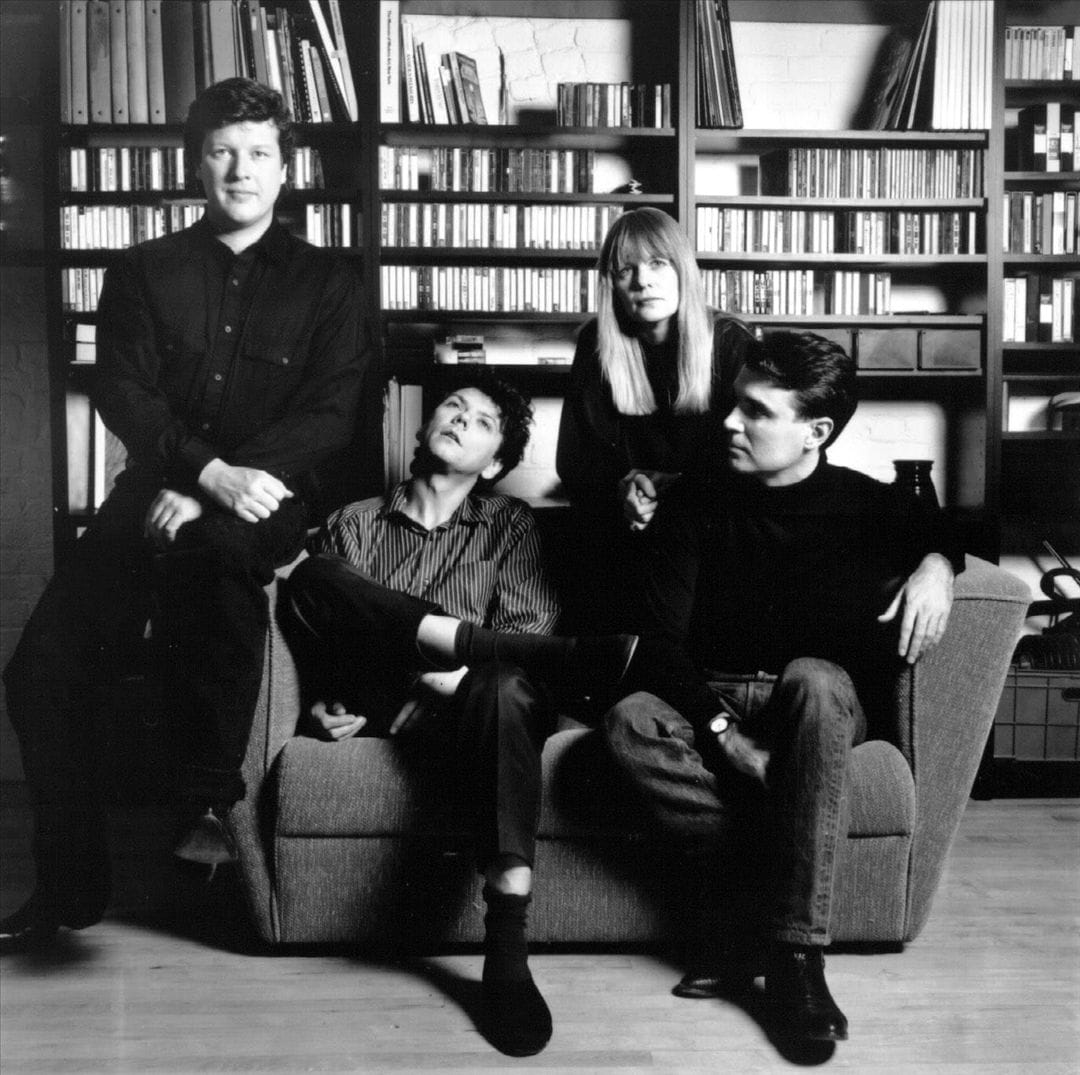
“This Must Be the Place (Naive Melody)” is a song by the band Talking Heads, released in November 1983 as the second single from their fifth album Speaking in Tongues. The lyrics were written by David Byrne, and the music was written by Byrne and the other members of the band, Chris Frantz, Tina Weymouth and Jerry Harrison.
Here are three different covers of a beloved song “different” because part of the fun is showcasing how artists that, in theory, are very different nonetheless share the same influences. three pretty slick covers of Talking Heads’ “This Must Be The Place (Naive Melody)” . It’s a song that David Byrne has described as a long song:
“That’s a love song made up almost completely of non sequiturs, phrases that may have a strong emotional resonance but don’t have any narrative qualities. It’s a real honest kind of love song. I don’t think I’ve ever done a real love song before. Mine always had a sort of reservation, or a twist. I tried to write one that wasn’t corny, that didn’t sound stupid or lame the way many do. I think I succeeded; I was pretty happy with that.”
it was a full-blown love song. [..] With “This Must Be the Place”, the band simplified their sound dramatically, condensing their sonic palette to the level of small EKG blips (having switched instruments for a lark, this was nearly all they were able to reliably deliver chops-wise) and wringing out only a few chords.”
Throughout the Stop Making Sense version, Byrne and his bandmates perform by a standard lamp, while close-up images of various body parts are projected onto a screen behind them. As revealed on the commentary to the film, the body parts belong to Byrne and his girlfriend (later wife) Adelle Lutz who was also known as Bonnie. When the song reaches a bridge, the musicians step back and Byrne dances with the lamp, a reference to Fred Astaire’s similar dance with a coat-rack in the film Royal Wedding. During the song, Weymouth is seen playing a rare Fender Swinger electric guitar, instead of her usual bass.
We have different studio recorded versions of the tune including a somewhat orchestral take on the tune by KishiBashi; a shuffling, playful version by Sure Sure; and A stirring cover of Talking Heads’ “This Must Be The Place (Naïve Melody)” a sweeping, pensive version by The Lumineers.
And, if you’re looking for even more Naive Melody you can check out a few live versions of the tune by Car SeatHeadrest & Naked Giants , Arcade Fire, Iron & Wine, and MGMT. Honestly, so many people have tackled this tune that this collection just scratches the surface. Enjoy!
The song was covered live by the Montreal-based band Arcade Fire, and is featured as the B-side to their single “Neighborhood #3 (Power Out)”. Their version features David Byrne on guest vocals.
Iron & Wine and Ben Bridwell of Band of Horses performed the song on their covers album Sing into My Mouth. The album’s title is from a lyric in the song.
And finally a nice cover from the excellent Scottish band Admiral Fallow
Released 35 years ago this month, Talking Heads’ SPEAKING IN TONGUES was the group’s commercial breakthrough following a trio of acclaimed albums with producer Brian Eno. The collection includes the quartet’s first Top Ten hit, “Burning Down The House,” the follow-up single “This Must Be the Place (Naive Melody)” is noteworthy. Atypically for the band, “it’s a real honest kind of love song,” said lyricist David Byrne. “I don’t think I’ve ever done a real love song before.” The melody is purposefully simple, with group members switching from their usual instruments to play it, and that simplicity may explain its popularity in soundtracks and cover versions. Cited by Pitchfork as one of the 50 best songs of the 1980s,