The good news is that Adeline Hotel is back with a brand new album. Due for release at the end of October, “Away Together is a collection of ten songs that might signal a change in outlook, at least if lead single ‘Habits’ is anything to go by. It’s probably the happiest, most positive Adeline Hotel song to date, a fact which Knishkowy readily admits in an interview with our pals over at The Grey Estates. “‘Habits’ might be the first unabashedly joyful Adeline Hotel song,” he says, “one for windows down driving as summer fades to fall.”
This is true from the song’s very beginning, the whole thing suffused with a sense of golden sunlight, languorous percussion and dreamy guitar providing the perfect foil to Knishkowy’s smooth and earnest vocals.
Dan Knishkowy – words and guitars
Will Stratton – piano (1,2,4,5,6,8,9,10), electric guitar (1,2,4), bass (10)
Andrew Stocker – bass (1-9)
Ben Seretan – electric guitar (1-9)
Sean Mullins – drums and percussion (1-9)
Cassandra Jenkins – vocals (1,2,9,10)
Johanna Samuels – vocals (8)
Mike “Slo-Mo” Brenner – lap steel (2), pedal steel (9,10), bass lap steel (10)
Winston Cook-Wilson – keyboards (3,4,7)
Emily Brown is a Californian singer-songwriter and poet. Drawing comparisons to Joan Baez and Joni Mitchell, her clear voice, and carefully crafted lyrics draw from personal experience and literature.
‘Unseen Girl’ possesses the type of chords and indie girl vocals that beat a path to our door on a daily basis. This time however it comes fitted with an urgency that suggests an artist up for the fight and in the process cuts a fine Sharon Van Etten dash. On this evidence Emily Brown could well be on her way, a soft edged juggernaut at full tilt where nobody but the bad guys get hurt. It grows and it blooms, if only falling in love with somebody was this easy. Emily Brown’s new album ‘Bee Eater’ is out at the end of August.
Toast is the living breathing music project of Claudia Mintz and frendz
Recorded out of our dorm rooms at Syracuse University, “Onetwothree” came together seamlessly. Josh and I (Claudia) have been best friends since our first day of college, so not only does he understand me as a person, he understands my writing and knows exactly how to compliment it with production. We work really well together. We’re a perfect musical match.
The song is dedicated to this very precarious time in our lives- moving out of our childhood homes and the start of college, where everything is a ‘first.’ The lyrics came out of me (Claud) immediately after hearing the track that Josh sent me. “Onetwothree” basically became our anthem for the rest of the semester. It’s about figuring out how to cope with feeling like you’re being misunderstood or not heard. As a queer person, I deal with this a lot, especially at such a big university. It’s so difficult to find your voice.
Josh and I met Max at a Sassy 009 show this past spring at SXSW. We definitely had the same music taste and started chatting. It all felt very natural, and Max immediately understood Toast and really believed in us from the start… We’re extremely thankful to be working with Terrible Records; some of our biggest influences have been/are artists on Terrible and has allowed us feel to feel like we can be honest and free with our art.
Everything and anything that has to do with Toast has been a dream so far. Josh and I have been releasing and performing music separately since we were both really young, but as soon as we started working together everything clicked. We are just having So much fun with it and are so ready to share with anyone who will listen.
Since 1993, Alan Sparhawk and Mimi Parker the married couple whose heaven-and-earth harmonies have always held the band’s center—have pioneered a subgenre, shrugged off its strictures, recorded a Christmas classic, become a magnetic onstage force, and emerged as one of music’s most steadfast and vital vehicles for pulling light from our darkest emotional recesses. But Low will not commemorate its first quarter-century with mawkish nostalgia or safe runs through songbook favorites. Instead, in faithfully defiant fashion, Low will release its most brazen, abrasive (and, paradoxically, most empowering) album ever: Double Negative, an unflinching eleven-song quest through snarling static and shattering beats that somehow culminates in the brightest pop song of Low’s career.
To make Double Negative, Low reenlisted B.J. Burton, the quietly energetic and adventurous producer who has made records with James Blake, Sylvan Esso, and The Tallest Man on Earth in recent years while working as one of the go-to figures at Bon Iver’s home studio, April Base. Burton recorded Low’s last album, 2015’s Ones and Sixes, at April Base, adding might to many of its beats and squelch and frisson beneath many of its melodies.
This time, though, Sparhawk, Parker, and bassist Steve Garrington knew they wanted to go further with Burton and his palette of sounds, to see what someone who is, as Sparhawk puts it, “a hip-hop guy” could truly do to their music. Band and producer became collaborative cowriters, building the pieces up and breaking them down and building them again until their purpose and force felt clear.
‘Double Negative’ (Release date: September 14, 2018)
Low have shared a new video for “Rome (Always in the Dark)” which was directed by Aaron Anderson and Eric Timothy Carlson. The collage-like video accentuates the intense nature of the track, an insistent march forcing its way through the din of the album with a damn-the-torpedoes tenacity. “Let’s turn this thing up before they take us out…”
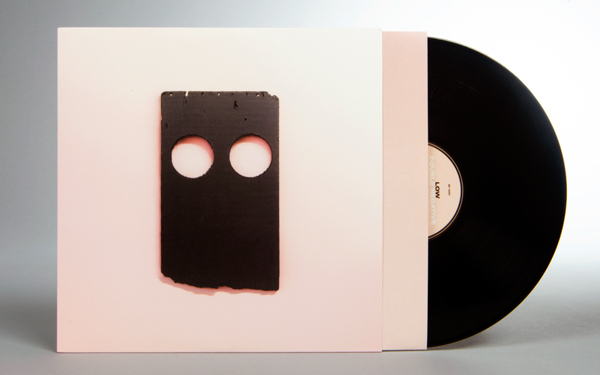
The album cover for Double Negative was created by longtime collaborator, English artist, Peter Liversidge.
The highly anticipated new album by Slothrust is finally here! The Pact is officially out today, The band just kicked off their fall North American tour with support from Summer Cannibals and Mannequin Pussy! They will also be crossing the pond to the UK & Europe in the new year!
Slothrust is principal songwriter, guitar player and unrepentant aesthete Leah Wellbaum, with drummer Will Gorin and bassist Kyle Bann. On their fourth full-length album The Pact, Slothrust constructs a luscious, ethereal cosmos perforated with wormy portals and magic wardrobes, demonstrating more clearly than ever the band’s deft shaping of contrasting sonic elements to forge a muscular sound that’s uniquely their own. Bizarre and mundane, tender and confident.
The awkward duality of the forever outsider, rightly reclaimed as power. This is The Pact. Produced and engineered by Billy Bush in Los Angeles (the band’s new home base), Slothrust’s new album is a confident journey across 12 songs that oscillate between a quietly reflective tenderness and a slick, sleek confidence; balancing playful innocence with ballsy swagger.
Fred Thomas had been making music nonstop for years when a seismic shift in his creative process happened in 2013. Something mystical opened up in the fall of that year and the prolific songwriter moved from his already emotionally open style into an unprecedentedly direct and vulnerable lyrical approach as well as new levels of detail-fixated production. The songs took on a new urgency, inspired by a feeling that life was beginning afresh while at the same time a lifetime of experiences were cementing into worlds of memory. The results of that creatively eruptive time began with 2015’s critically hailed album All Are Saved, continued into the turbulent pop of 2017’s Changer and now float into Aftering, a record that feels like the final chapter of an unofficial trilogy.
Just as the two before it, Aftering was produced, mixed and assembled on location in a close collaboration between Thomas and Athens, Georgia based engineer Drew Vandenberg. All cut from the same cloth, Aftering ties the knots that connect all three records. Where both All Are Saved and Changer flitted nervously between moments of jangly power pop, electronic interludes and experimental acoustic weirdness, Aftering maps out a far more intentional arc, burning through a first act of speedy, hook-heavy guitar rock before taking a sharp, brutal dive into an abyss on the album’s second half.
Modeled loosely after Neil Young’s On The Beach, the nine songs here move from jumpy two minute blasts into a suite of four protracted and moody interconnected pieces. At first, Thomas‘ signature mesh of soaring melodies and experimental pop keeps things upbeat even when burying intense topics on songs like “Alcohol Poisoning” or in the post-election unrest of “Good Times Are Gone Again.” Beginning with 8-minute fever dream “House Show, Late December,” the ache that sits in the core of the album comes to the surface completely. From here guitars almost vanish from the instrumentation and the focus shifts to tightly arranged strings, ominous synths, ambient waves and spoken lyrics somewhere between poetry and desperate confession. These longer songs drift in and out of each other slowly, drowning into their own lush darkness and heavy observations on anxiety, family and emotional abuse.
Connecting all three albums to an even deeper degree, Aftering finally realizes loose threads that began on earlier records, and calls on special guests from all phases of Thomas’ life. Anna Burch returns to sing on buoyant single “Altar” and longtime friend and collaborator Elliot Bergman helps sculpt the crystalline vibe of album closer “What The Sermon Said.” Newer friends show up as well, with members of Bonny Doon, Common Holly, Deadbeat Beat and other artists Thomas connected with through years of touring showing up in supporting roles over the course of the record. Wolf Eyes member and noted memelord John Olson even contributes some fried horns and electronics.
More than anything, Aftering calmly sets down the restless questioning and turmoil of the trilogy. Instead of landing on any tidy conclusion or neatly wrapping up a thesis, the album illuminates the themes of observation and acceptance that have run throughout Thomas’ work for the last five years. Aftering reflects on an answerless and uncertain future, trying to make sense of it through scattered memories that flash like mental postcards. A sense of larger, universal dread refracts through these moments of searching. Ultimately, it’s not the dark times or bleakness that lingers, but a sense of connection and hope that comes from trying to communicate them as honestly as possible. Aftering, like the chapters that came just before, can feel sometimes painful, but there’s a clarity and beauty that’s always there as well, equally bright in even the darkest moments.
In early 2016, Howe Gelb announced that, three decades after the release of Giant Sand’s first album, he decided the time had come to retire his long-running alt-country band, issuing a statement in which he declared, “30 years seems an adequate number to aptly utter ‘I kinda quit.'” Apparently, that qualifying “kinda” was included for a good reason, and in the fall of 2018, Gelb revealed he had put together a new lineup of Giant Sand and was returning to duty.
But where to start over? From the beginning, obviously, and the first album from Gelb’s new incarnation of the group, Returns to Valley of Rain, finds him re-recording the 11 tunes from Giant Sand’s 1985 debut, Valley of Rain. Exactly why Gelb would make a fresh start by revisiting a handful of songs he cut in the mid-’80s is hard to fathom, especially since he and his bandmates attack these songs in a manner that’s noticeably different than the original recordings but not so much that it qualifies as reinvention.
If the production on Valley of Rain marks it as a product of the era of too much digital reverb, Returns boasts a cleaner and more direct sound, and the vague jangle of the 1985 recordings is replaced by a harder, buzzier guitar attack; remarkably, Giant Sand sound more like a rough-and-tumble garage band in 2018 than they did the first time they cut these tunes. The guitar attack of Gelb, Gabriel Sullivan, and Annie Dolan is scrappy but full-bodied, and drummer Winston Watson and bassistsThøger T. Lund and Scott Garber hit hard enough without overpowering the natural dynamics of the performances. And there’s a welcome spontaneity to the sessions that flatters the dusty introspection of Gelb’s lyrics and the determined drift of the melodies. Figuring out the why of Returns to Valley of Rain is probably fruitless, but if Gelb wants to move forward into the past with Giant Sand, at least he’s doing so with style and swagger.
Though technically the band’s third full-length, Out of the Garden is Tancred’s first truly cohesive record: a mission statement that underscores the “power” in power-pop and is punctuated by lyrics as razor-sharp as the hooks.
Written over a two-year period during a break from touring, the album’s emphasis on re-defining feminine expectations was shaped by primary songwriter Jess Abbott’s experiences living in Minneapolis and working at a liquor store in a rough part of town.
“I learned how to speak up when I needed to and how to truly be myself without reservation,” Abbott recalls. “I felt afraid walking home at night, and after a couple of months I just got sick of it and started getting into self-defense and self-empowerment as a means of coping. Finding my own strength changed everything.”
After writing and tracking every song in her apartment, Abbott (also of beloved Minneapolis trio Now, Now) enlisted Kevin Medina and Terrence Vitali to add drums and bass to her demos. The band then traveled to LA to record with OFF! bassist Steven McDonald and That Dog vocalist/guitarist Anna Waronker.
Both producers proved to be the perfect collaborators, with each elevating the final takes via their specific areas of expertise — Waronker helped Abbott achieve the raw vocal attitude exhibited on songs like the seething “Hang Me,” while McDonald orchestrated the tailor-made guitar tones and trashy drum sounds highlighted on standouts like “Joey.”
As a result, Out of the Garden showcases Tancred shedding its former skin in favor of a bolder and infinitely more confident sound.
Opener “Bed Case” bolts off the starting block with a guitar salvo straight from the ‘90s before “The Glow” ups the amperage with crunching riffs and pummeling distortion. Soon after, smooth as silk “Sell My Head” serves up a chorus so intrinsically catchy you’ll already be singing along the second time around.
As Abbott reveals, “I wanted these songs to sound sickly sweet, with a looming, gory shadow behind them. Sugary, but when listening closely, unsettling.”
This juxtaposition is presented flawlessly during the chorus of “Pens” when Abbott sings “I’m insanely healthy in my head / It’s crazy how stable I am” amidst a background refrain of “oohs” and “aahs.” While your head reflexively bobs along to the melody, your brain is compelled to decode the ominous double meanings embedded in her cleverly chosen adjectives.
Her fearlessness to discuss these and other personal topics is referenced in the album’s title, an allusion to exiting Eden and leaving behind all the restrictive cultural norms ingrained in the Biblical “paradise”: tradition, purity, holiness, binary gender, heterosexuality, and the idea that anything is forbidden (especially for women).
Says Abbott, “Out of the Garden represents doing what you want, what you need, without letting anything or anyone stop you — and smiling while you do it.”
It was on September 23rd, 2008 that Blitzen Trapper, after putting out three albums on its own label, released its fourth full-length album, ‘Furr’, via Sub Pop. At that time, it was a record that captured exactly where the band’s frontman, Eric Earley, found himself, both literally and metaphorically, geographically and existentially. Not that the Portland-based musician actually remembers much about the creation of the record’s 13 intriguing, spellbinding songs. Or, more specifically, what its songs actually mean, either now or then. Instead, ‘Furr’, stands as a kind of tribute and elegy to the city that inspired it, but that, a decade later, no longer exists.
“What I was trying to do with those recordings,” explains Earley, “was capture this kind of atmosphere that I was feeling and which pervaded the city at that time. I think I was attempting to capture what Portland was at the time and what it felt like to me. That city is gone now. Old Portland, we call it, but Old Portland has disappeared. But this record gives me the feeling of those times and this city when it was poor and dumpy and really drug-addled. And it also captures the magic of the outlying rural areas that has slowly changed as well.”
That magic can be heard in each of these songs, and while the city may have vanished from sight – replaced by a newer, richer, shinier and bigger version of itself – its elegance and fractured beauty is preserved within the bones of this record. These songs exist as vivid snapshots of that time, ones that recall the city as it was. At the same time – and while Earley insists he was only trying to capture what Portland was at the time – there’s a mythology within the lyrics and the music, an imagined, semi-fictional vision of Portland and the Pacific Northwest, a kind of parallel universe to the one that actually exists.
“Scream Thy Last Scream” is a song by Pink Floyd, written by frontman Syd Barrett and scheduled to be the band’s next single after “See Emily Play” , Its first official release was on The Early Years 1965-1972 box set in November 2016. The song features several changes in tempo, a sped-up double-tracked vocal part by Barrett, while drummer Nick Mason simultaneously sings the normal part (one of only 4 moments he ever sang on a Floyd record),a range of bells, crowd noises, an instrumental section that continually increases in speed featuring wah-wah guitar solos and keyboards, and surreal lyrics. Barrett is only clearly audible on one line in the song, “she’ll be scrubbing bubbles on all fours”
“Scream Thy Last Scream’ has lead vocals by Nick Mason,” noted David Gilmour in 2002. “We did actually perform that one a few times in my very early years with Pink Floyd. I don’t know if they ‘Scream Thy Last Scream’ and ‘Vegetable Man’ were ever finally mixed.
Nick Mason – lead vocals, drums
Syd Barrett – guitar, sped-up double-tracked vocals, vocals (one line)