The diligence of Reddening West cannot be overstated. this Austin-based quartet has toiled for the past couple of years over their self-released debut full-length, “Deltas”, its vibrant swaths of americana a sprawling, existential treatise on the inherently transitory nature of life, honing a particularly fastidious approach to their songwriting and cinematic arrangements in the process.
Anchored by the lead single, “Even if” and its opening number,“Marjorie,” Deltas finds Reddening West picking right up where their 2016 extended play, where we started, left off, with spacious vistas punctuated by Niamh Fahey’s swooning fiddle textures and Matt Evans’ soaring vocal melodies. on the early standout “Holding Hours,”Evans paints a bucolic backdrop for his pondering, with syncopated guitar lines and back-beats rolled together, in search of an apex never quite discovered. “different now” finds Evans waist-deep in reverb, again weaving observations of personal change through pristine turns of phrase and beautiful imagery.
The majesty of Deltasis contained in its sweeping gestures as much as it is in its most minute intricacies; the palate-cleansing instrumental “Inverness” is doused in nuance and contrapuntal wonders, a perfect segue to the album’s extended third act. the penultimate cut “Diffuse” is especially affecting and tender, its propulsive nature the perfect foil for the album’s finale, “Late Summer Grass,” itself a vivid and measured punctuation mark on Reddening West’s rich, slow-burning debut. full of nooks and crannies ripe for exploration and vast canyons of elegiac introspection,Deltas is a perfect autumnal vessel, a fine companion for changing times.
Fresh off a two-record stint with Asylum, Bob Dylan returned to Columbia Records in 1975 with one of the most acclaimed records of his career. Blood on the Tracks found Dylan reinvigorating the “confessional” singer-songwriter genre, even as he repeatedly insisted that the album’s songs had no relation to his own life and then-recent marital turmoil. Whatever the truth, Blood on the Tracks was painfully raw, vulnerable, and altogether exquisite, boasting such all-time classic compositions as “Tangled Up in Blue,” “Simple Twist of Fate,” and “Shelter from the Storm.” The making of the album was anything but smooth, however – and now, the full story can be told on the fourteenth volume of Dylan’s long-running Bootleg Series. More Blood, More Tracks will be available on November 2nd as a 6-CD box set or 2-LP/1-CD highlights editions, chronicling the album’s original New York sessions and subsequent Minnesota rebirth via all of the extant session material including 75 previously unreleased tracks.
Dylan began recording at New York’s A&R Studios with producer-engineer Phil Ramone on September 16th, 1974. The first group of musicians including Eric Weissberg and his band, Deliverance, only lasted a couple of days before the artist brought in Paul Griffin on organ and Buddy Cage on steel guitar. (Tony Brown was retained from Weissberg’s group.) After ten days and four sessions with this group, Dylan had assembled an entire 10-song album which Columbia took to the test pressing stage in November. But the restless Dylan had second thoughts. With a new set of musicians, he entered Minneapolis’ Sound 80 studios in December. In a couple of days, he re-recorded five of the ten songs, and the raw, stark, and powerful Blood on the Tracks as we know it was finished.
Over the years, session material has trickled out. Only one of the five tracks from the test pressing, “You’re a Big Girl Now,” has ever been officially reissued. It appeared on the Biograph box set along with a version of the outtake “Up to Me.” Subsequently, The Bootleg Series Vols. 1-3featured New York alternate takes of “Tangled Up in Blue,” “Idiot Wind,” and “If You See Her, Say Hello.” “Call Letter Blues,” an embryonic version of “Meet Me in the Morning,” was also included on that set. An alternate of “Shelter from the Storm” was released on the Jerry Maguire soundtrack, and in 2012, an alternate “Meet Me in the Morning” appeared as the B-side of “Duquesne Whistle” on a Record Store Day single. That left “Lily, Rosemary, and the Jack of Hearts” as the only song from the New York sessions which had not been released in any take.
More Blood, More Tracks follows the format of The Bootleg Series Vol. 12: The Cutting Edge 1965-1966 in presenting all of the available studio material in chronological order and so every song is heard in multiple versions. (Alas, it seems much of the Minnesota session material no longer exists.) The leadoff “single” is the first take of “If You See Her, Say Hello.”The 6-CD box set boasts a lengthy hardcover book featuring new liner notes as well as high-quality reproductions of pages from Dylan’s original notebooks used during the Blood on the Tracks sessions. A 1-CD or 2-LP version will have one alternate version of each song plus one take of “Up to Me.”
The Bootleg Series Vol. 14: More Blood, More Tracks arrives from Columbia/Legacy on November 2nd.
The earlier album sessions that went down in New York City left many more demos and alternate versions on the cutting room than most anyone outside the innermost Dylan camp imagined.
Disc 1 consists entirely of Dylan alone in the studio, accompanying himself on guitar and harmonica, at the very beginning of the process. None of these appeared on the original album. The second disc is made up of Dylan’s initial band sessions with the group Eric Weissberg & Deliverance, whom he quickly grew dissatisfied with and replaced. Only one of those made the finished album. It’s these two discs that may represent the greatest treasure trove for serious fans.
But the remaining four discs are hardly fool’s gold themselves. Disc 3 finds him continuing to work in New York with a mostly different band that was more to his liking and produced more of the eventual album. On Discs 4 and 5 and the first part of Disc 6, he ditches that band and performs the songs solo once again, or with just a bass player, ending the New York portion of the proceedings as intimately as they started, in the creation of what many consider his most intimate album.
Bob Dylan, More Blood, More Tracks: The Bootleg Series Vol. 14(Columbia/Legacy, 2018)
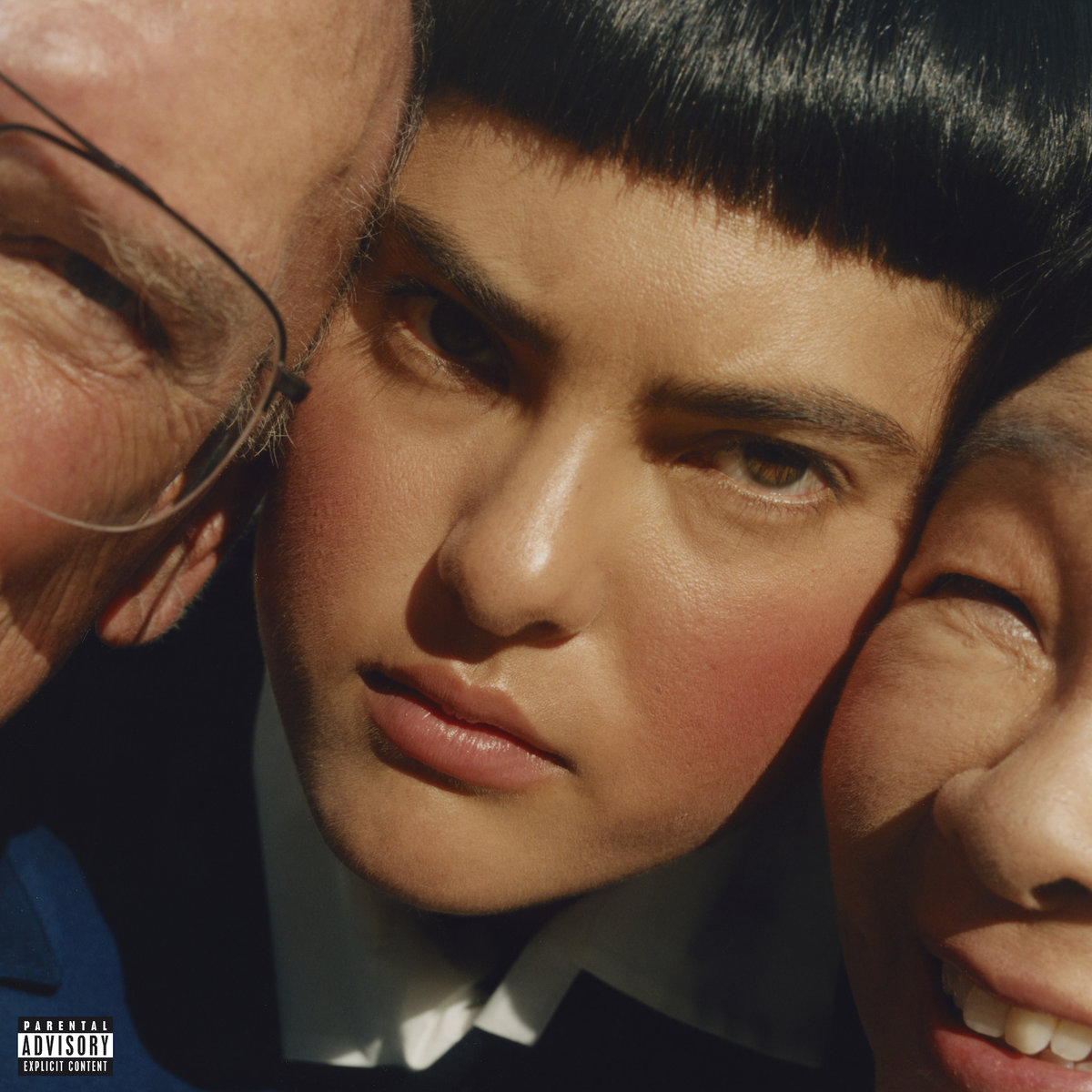
Premonitions begins with “Thingamajig” something you can’t quite recall the name of, but you know exactly what it means and what it feels like. Like the pull of desire that comes with not quite remembering fully. The magnetism of something just on the tip of your tongue. I wanted the album to feel like that thing.
I think a lot about about memory-making as an act of creation, the words we use to describe a memory give shape to and sometimes mutate the memory itself. I believe that the way we choose to describe the events of our lives is not only a means of creative fulfillment, but an absolutely vital part of creating the world we want to live in. When we are dishonest in the present, we create a dishonest future. When we are honest in the present, we create a more honest future. I wanted this album to be the vehicle for a hopeful, truthful, generous, and loving world. I tried not to posture or pretend. I wrote about my life as I’ve seen it and how I’d like to see it, as both memory and premonition.
The producers, Justin Raisen and Yves Rothman, and I spent months collecting organic sounds to fill the world of this record. We threw away everything that felt false and tried to keep the soul of each song alive. I hope Premonitions gives you comfort and joy. I hope it feels like all the mysterious details of your lives, all your massive and mundane glories. I hope it reminds you that there is beauty in the details. Rainbows in your sprinklers. Drinking water from a hose. The way it felt to make a friend for the first time. Locking yourself in a bathroom to avoid everyone. Dancing until your shins burn. Leaving your phone in an Uber and making your best friend drive you an hour away to knock on a stranger’s door after locating it on Find My Phone. Losing a friend. Losing yourself. Remembering.
On his follow Up album, Kyle Craft continues to cement his place as one of the top songwriters around. His musical inspirations are rooted in the music of the 70s and his ability to spin a good yarns stems from his love of the folk, “I’m really just into that ’60s folk rock stuff. That’s where my heart is.”
“Full Circle Nightmare” is a rock ‘n’ roll album that tells rock ‘n’ stories. It is the type of music that lit up the airwaves during the 70s. Unlike Dolls Of Highland, Craft mines his own life on the autobiographical Full Circle Nightmare. Exile Rag mashes up a Southern twang riff with a boogie-woogie piano that The Stones mastered in the 70s as he sings of a femme fatale that leave him in the dust.
It’s a subject that he hits often, such as Heartbreak Junky & Fake Magic Angel. Slick & Delta Queen puts a nice spin on it, as he measures an ex’s current relationship with the relationship he once had. The tune features a horn that conveys a mournful, almost wistful sound as he longs for the times that were.
For the Kyle Craft experience I’d also suggest checking out “Girl Crazy“, an album where he covered only female artists. If he’s on the road . I strongly suggest you take in a set.
Grouper’s Grid of Points is bent toward seeing traditional songwriting forms through the process of careful decomposition. The “ruins” of the album aren’t the semiotic representations of homes and personal spaces of its predecessor, but instead fragmented versions of broader cultural comforts: piano ballads, hymnals, and lullabies, all abbreviated, compressed, or otherwise in a state of decay. Grid of Points sees human memory and emotion tied inextricably to that classical musical framework, and it captures both the wonder those forms evoke and their limitations in equal measure. So ephemeral and haunting, by the time it ends you won’t know if it was something you were listening to, or some long-forgotten memory welling up in your head.
At the age of 32, Mark Hollis had achieved commercial success with his band Talk Talk’s first three albums, which combined the new wave synthpop of the 1980s with subtle art rock arrangements. This was not the style of music that had always influenced him nor were these albums the album Mark Hollis had always wanted to create. After entering his 30s, Mark Hollis was ready to wipe the musical slate clean and start over. Because of his band’s commercial success, they were given carte blanche by EMI/Parlophone to record with complete creative control. The band moved into Wessex Studios in Highbury and kept all company executives out of their sessions. These sessions were laborious and long, lasting over a year in duration (from 1987-1988.)
During that year, sessions were recorded with guitarist, songwriter, and vocalist Mark Hollis; his two bandmates (Paul Webb on bass and Lee Harris on drums); his producer Tim Friese-Greene; his engineer Phill Brown; and 12 guest musicians (Martin Ditcham on percussion, Robbie McIntosh on dobro and 12-string guitar, Mark Feltham on harmonica, Simon Edwards on Mexican bass, Danny Thompson on double bass, Henry Lowther on trumpet, Nigel Kennedy on violin, Hugh Davies on shozygs, Andrew Stowell on bassoon, Michael Jeans on oboe, Andrew Marriner on clarinet, Christopher Hooker on cor anglais).
When Spirit of Eden was released on September 16th, 1988, it was considered commercial suicide. The lyrics too obscure, the instrumentation too odd, the tempos too slow, the vocals too soft for the tastes of the majority of music listeners in 1988. This was not Mark Hollis‘ concern. He was no longer interested in releasing music with any commercial potential whatsoever. His was a more ambitious concern: creating an album that would encompass genres, heal the listener’s wounds, and transcend its time. Spirit of Eden masterfully accomplishes all three of MarkHollis‘ goals.
It is appropriate that the band released the album in September. The first track “The Rainbow” opens the album with abstract jazz and the droning haze of insects murmuring. It sounds like the final days of summer, autumn around the corner. The influences of Miles Davis and Alice Coltrane breathe and expand in “The Rainbow” with the contemplative, cosmic jazz emerging out of the silence. The mysterious horns are then undercut several minutes into the track with a stark guitar and harmonica. It is an ancient blues. The first lyric is “The world’s turned upside down.” The lyrics then mention corruption, the jailer, the lawyer, and the trial. The lyrics lament “Our nation’s wrong.” Humanity’s injustices led to the loss of paradise.
“Eden” counters this darkness with divine light. “Everybody needs someone to live by. Rage on omnipotent.” “Eden” is the ambient echoes of Brian Eno melded to the atmospheric mysticism of Popol Vuh. “Desire” returns to the blues but breaks the chains. The guitars scrape like the Velvet Underground and the drums crash and thunder like Led Zeppelin. “Desire” is the one moment on the album that could be considered earthy, visceral rock ‘n’ roll.
“Inheritance” opens the second side of the album with complex and drifting textures as Mark Hollis intones his pantheistic lyrics (“Lilac glistening foal.” “On the breeze they flow.”) The song’s atmosphere floats on glowing organs (“Nature’s son.”) The middle section of this song is a classical impressionist interlude with woodwinds, reminiscent of Debussy and Ravel. The song’s last lines are another benediction, another meditation, another prayer. “Heaven bless you in your calm. My gentle friend. Heaven bless you.”
“I Believe in You” is the cathartic climax of the album. The lyrics of “I Believe in You” are the depths of depression and despair. “On a street so young laying wasted. Enough ain’t it enough. Crippled world.” The melancholy sadness is soon transfigured by the soaring organ and the swelling voices from the Choir of Chelmsford Cathedral. The church hall of St. Augustine’s in Highbury was converted into the Wessex Sound Studios in the 1960s. The celestial, ethereal environment had a deep effect on the recording sessions for Spirit of Eden. Mark Hollis experienced epiphanies similar to those of Florian Fricke when he recorded In Den Garten Pharaos and Hosianna Mantra. Engineer Phill Brown assisted Mark Hollis in constructing his painstaking vision not only through different recording techniques, yet also through altering the consciousness of the band and the guest musicians. “It was very, very psychedelic. We had candles and oil wheels, strobes going, sometimes just total darkness in the studio. You’d get totally disorientated, no daylight, no time frame.”
“Wealth” is ambient gospel. “Wealth” is the closing denouement of the album. “Wealth” is a peaceful and quiet funeral. “Bear me a witness to the years. Create a home within my head. Take my freedom for giving me a sacred love.”
At the age of 33 (the same age as Blind Willie Johnson when he finished recording his 30 timeless spiritual blues songs), Mark Hollis completed Spirit of Eden, a cycle of music that was equally spiritual and timeless. Spirit of Edenis similar to Van Morrison’sAstral Weeksin its method of surrounding a poetic singer-songwriter with genre-defying guest musicians who embark on exploratory improvisations. Spirit of Eden influenced and inspired the three most experimental and innovative albums of the 1990s: Lazer Guided Melodies (Spiritualized), A Storm in Heaven (Verve), and Hex (Bark Psychosis). All three albums followed its patterns of dynamic intensity, free jazz improvisations, and spaces of silence.
“The Spirit of Eden was definitely the album where I thought, ‘This is it. This is what we’ve been reaching for.’ Two things came together. First, because we’d previously sold so many records, we had a very large recording budget, which we decided to use to give us freedom to experiment. And second, digital recording had just come in.” – MarkHollis, The Sunday Times 1998
Spirit of Eden is still as stunning and sublime in 2018 as it was in 1988.
thanks for the word the ever excellent popmatters blog
The Eagles arouse more mixed feelings in me than any other band I can think of. Emerging in the early 1970s, initially as Linda Ronstadt’s backing band for her album “Silk Purse”, the Californian-based band were massively successfully, with a string of chart topping singles and albums; in particular their first Greatest Hits record is one of the biggest selling albums of all time.
The band’s early sound was a watered-down, commercialised take on the sound of country-rock pioneers like Gram Parsons. – the band’s two leaders both had significant weaknesses. Don Henley was an excellent vocalist, with his distinctive vocal sound, and a thoughtful lyricist, but a boring drummer. Glenn Frey was a good tune-smith and utility musician, but his vacuous Californian persona is in the forefront on irritating tracks like ‘Chug All Night’ and ‘Heartache Tonight’. The band had excellent supporting parts – Don Felder and Joe Walsh are excellent guitarists, and Randy Meisner and Timothy B. Schmitt strong bassists and vocalists. Early member Bernie Leadon could play country licks on anything with strings. They had excellent harmonies – Henley and Frey sang together beautifully.
With some of their singles which hold up very well – in particular ‘One of These Nights’, ‘New Kid in Town’, ‘Desperado’, or Felder and Walsh’s guitar duel at the conclusion of ‘Hotel California’.
So lets have a look at the Eagles six studio albums from the 1970s Albums Ranked From Worst To Best
Both of the band’s live albums, 1980’s Eagles Live and 1994’s Hell Freezes Over, and they’re both fun for fans, but not particularly essential.
The Long Run
1979 The Eagles had run out of steam by their last 1970s album, and The Long Run has filler like ‘The Disco Strangler’ and ‘The Greeks Don’t Want No Freaks’. It also sounds bland, with the last vestiges of their country sound gone. The Long Run does contain one of the band’s very best songs though new bassist Timothy B. Schmitt sweetly croons his way through the R&B flavoured ‘I Can’t Tell You Why’, Bassist and singer Schmit didn’t hesitate to make his presence known on his very first Eagles album. Replacing Randy Meisner, the musician brought in this lush ballad ‘I Can’t Tell You Why,’ which he finished with Frey and Henley. Schmit sang the track in a beautiful falsetto that added a new dimension to the group, topped off with yet another perfectly melodic guitar solo from Felder.
In many ways,’The Sad Cafe’ sets a template for Don Henley’s subsequent solo career, as he offers a darkly ruminative examination of love lost. But it wouldn’t be such a fitting finale, on what for some 14 years looked to be the Eagles‘ last studio recording, without Felder’s understated, elegiac, utterly virtuosic turn on guitar.
While the Eagles’ last studio effort of the ‘70’s didn’t attain the blockbuster status that ‘Hotel California’ did, the record still had its bright spots including the record’s title track. Eagle Don Henley takes lead vocals on the song “The Long Run’. He had been one of the group’s most reliable songwriters when it came to some of their biggest hits and snagged nine co-writing credits on this record in total.
When you hear the opening line of “Somebody’s gonna hurt someone before the night is through/Somebody’s gonna come undone there’s nothin’ we can do” to this 1979 Eagles hit, one has to wonder whether the Eagles sensed the end was nigh. Given the multi-plantinum group’s acrimonious split just a few years later, there is a very good possibility that this Glenn Frey-sung track was foreshadowing things to come.
Schmit had been in Poco in 1969, replacing Meisner for the first of two times, but that critically acclaimed band remained largely ignored. Schmit then took over for Meisner in the Eagles seven years later, just as the band was coming off a tour in support of the career-making Hotel Californiaalbum. It took a year and half for the Eagles to complete The Long Run, then they promptly broke up.
Eagles
1972
The band’s debut album effectively melds the soft-rock and country-rock trends of the early 1970s, spawning the mellow hits ‘Take It Easy’ and ‘Peaceful Easy Feeling’. The former song was the Eagles’ debut single and what a debut it was. Written by Jackson Browne and with some help from Eagles member Glenn Frey, the song was an immediate hit and a hint of things to come from a group whose 1976 hits retrospective has sold an astonishing 29 million copies in the U.S. alone.
At their core, the Eagles were undeniably a country rock band early on, and ‘Most of Us Are Sad’ is a lost classic that brought together all of the elements that made that period special. Written by Glenn Frey and sung by bassist Randy Meisner, the song is a hardcore country lament, but produced in the trademark Eagles style featuring crystalline vocal harmonies and clean instrumentation. The lyric reads like prose poetry: Most of us are sad / No one lets it show / I’ve been shadows of myself / How was I to know?”.
The band’s at their most democratic here, as the dominant axis of Don Henley and Glenn Frey wasn’t yet established, and all four members share equal billing. It’s their least coherent album – the Bernie Leadon and Don Henley composition ‘Witchy Woman’ is spooky and excellent, but Frey’s ‘Chug All Night’ is perhaps the most horrendous song the band ever released.
Desperado
1973
The band’s sophomore effort was a concept album, equating the Eagles with wild west outlaws. Henley stated later that “the metaphor was probably a little bullshit. We were in L.A. staying up all night, smoking dope, living the California life, and I suppose we thought it was as radical as cowboys in the old West.” . The centrepiece to the Eagles‘ 1973 record of the same name Desperado, it is interesting to note that this sweeping ballad was never formally released as a single. But given the song’s majestic strings and a truly superb vocal performance by Don Henley, there’s no doubt that it remains a favorite of Eagles fans to this day.
It failed to meet the moderate success of its predecessor, although Henley and Frey’s first compositions, ‘Tequila Sunrise’ and the title track, are among the band’s best loved tracks. Another early country hit from the pens of Frey and Henley, ‘Tequila Sunrise’ started because of the drink that was popular at the time. Glenn Frey was hesitant about the song, feeling that reference might limit it to a specific time and place, until Henley argued that the lyric was really about waking up the morning after drinking tequila all night. Bernie Leadon’s guitar work and mandolin contributions to the track provide a perfect bed for Frey’s deceptively easy vocal delivery.
It’s still inconsistent, but Leadon’s mournful ‘Bitter Creek’ is one of the band’s best deep cuts.
‘Doolin-Dalton’ Written by Frey and Henley, with a little help from their friends in this case Jackson Browne and J.D. Souther — this song told the story of outlaw Bill Doolin and the Dalton Gang. It kicked off the cycle of songs that became ‘Desperado,’ a concept album steeped in Western mythology. The track is typically precise, with an evocative lyric: “Well the towns led across the dusty plains / Like graveyard filled with tombstones waiting for the names .”.
One Of These Nights
1975 The Eagles were mega-stars by 1975, and some of Henley’s lyrics were beginning to wrestle with questions of fame. The band take on disco on the excellent title track, while Leadon’s instrumental ‘Journey of the Sorcerer’ was later used as the theme music for The Hitchhikers Guide To The Galaxy. Title track “One Of These Nights” Felder arranged the unforgettable bass and guitar signature for this chart-topping smash composed by Henley and Frey. Then Felder launches into a searing solo – one that perfectly underscores the song’s bitter sense of missed opportunities. The Eagles took a turn in a different direction with ‘One of These Nights,’ fusing elements of disco and hard rock to create something that had little to do with most of the group’s recorded output. The funky track exploited the more soulful side of Don Henley’s voice. “It is a breakthrough song,” Glenn Frey stated in the liner notes to ‘The Very Best of the Eagles.’ “It is my favorite Eagles record.” Don Felder contributed a blazing electric solo that’s a perfect example of his trademark blend of tone, phrasing and melody.
But while most of the individual songs are strong, the album gets bogged down in slow tempos and long running times after the first couple of tracks – the singles ‘Lyin’ Eyes’ and Meisner’s showpiece ‘Take It To The Limit” It could be argued that their vocal harmonies were always a central piece to the success of the Eagles. And though other Eagles songs may have proved to be more popular on the charts, this track is one of the group’s strongest showcases of their remarkable ability to blend their voices together in an arguably unparalleled way.
The Eagles returned to their country rock roots with ‘After the Thrill Is Gone’ this plaintive ballad from Frey and Henley, which they not only wrote together, they also alternated lead vocals. The lyric perfectly captures both the fading thrill of the ’70s club scene, and the malaise that had begun to creep into the band: “Same dancers in the same old shoes / Some habits that you just can’t lose / There’s no telling what a man might use / After the thrill is gone.” The track also captures some of Henley and Frey’s best close harmony singing.
Randy Meisner’s ageless waltz made all kinds of band history, becoming the first single to feature someone other than Henley or Frey on lead vocals – and the last to include founder Bernie Leadon. Buried somewhere in all of that are a few tasty little asides from Don Felder. Especially “Visions” Written by the guitarist with an assist from Henley, this riffy, Southern rock-informed rocker is the only Eagles song to feature Don Felder on lead vocals. He’ll never be confused with the group’s better-known singers, but Felder’s scorching runs on his main instrument provide plenty of gritty distractions.
Hotel California
1976
The Eagles best known album is similar in shape to One Of These Nights, with long-winded songs wrestling with questions of fame and debauchery. Bernie Leadon had now left the band, and was replaced by James Gang guitarist Joe Walsh, who supplied the muscular guitar riff for ‘Life In The Fast Lane’ and moved the band further away from their country roots.
Written by the dominant songwriting duo of Frey and Don Henley, ‘Wasted Time’ is a superb showcase for the grittier, soulful side of Henley’s voice. Constructed with simple, intersecting piano chords, string lines and a trademark clean, straightforward melody, the track demonstrates that sometimes the magic of theEagles wasn’t in what they played; it was in the taste and restraint they showed in not overplaying, letting the chords, melody and vocal deliver the true intent of a song.
The three big hits are all at the start, and the rest of the album is more mellow – even the rocker ‘Victim Of Love’ is slow, Featuring an intro from Felder that stutters and snarls, “Victim of Love” paints a dim portrait of a desperate search for late-night companionship – propelled by a series of nasty retorts courtesy of Felder. The guitarist also co-wrote this track, . Speaking of ‘Victim Of Love’, there’s a charming story where the song’s main writer, Don Felder, was scheduled to sing lead vocals, but was taken out to lunch by the group’s manager, while Henley completed the lead vocal behind his back.
The Eagles closed out their most classic album with ‘The Last Resort,’ an epic track that presented the entire world as a resort being destroyed by the greedy, self-serving and short-sighted machinations of the human race. A classic Henley rant, the song was a true ballad with no chorus, centered around a solo Henley vocal. Any track that manages to combine Henley’s extreme misanthropy with such an alluring pop arrangement amply deserves to close out
On The Border
1974
On The Border is my favourite Eagles record because it captures the band in a state of flux between their early country sound and the more mainstream rock of their later work. It’s their most energetic work, and if there are throwaways like the Jackson Browne written ‘James Dean’, there are charming album cuts like the almost power-pop of Meisner’s ‘Is It True?’, Leadon’s Gram Parson’s tribute ‘My Man’, and the country/rock hybrid ‘Midnight Flyer’. New guitarist Don Felder adds punch to ‘Already Gone’ No other moment on this album arguably captures guitarist Don Felder’s debut as an Eagle so powerfully . ‘Good Day In Hell’, A key moment in Eagles history arrives, as Felder is asked to join in as a sessions guest on slide guitar for a Glenn Frey-sung album cut. After this sizzling, Allman Brothers-inspired performance in fact, the very next day Felder was asked to join the Eagles. while the Henley sung ‘The Best Of My Love’ took the group to mega-stardom.
The energetic, “James Dean” a guitar-driven rock track follows along the same lines as more prominent hits like ‘Already Gone,’ with its shuffle pattern rhythms and trade off lead guitars. Written by Frey, Henley, Jackson Browneand J.D. Souther — whose contributions to the Eagles were so large that he should be credited as an additional member — the song pays tribute to the movie icon, describing him as “Too fast to live, too young to die.”
‘Best of My Love’ A song that serves as a reflection upon what should have been, the track and namely its vocalist Don Henley also shares an optimistic view of what could be in the future if the parties involved are willing to put in the time. This contrite ballad would give the Eagles their first No. 1 single.
The track ‘Ol’ 55′ is one dramatic example of the Eagles taking the work of another writer and delivering it in its highest form. Written by Tom Waits, ‘Ol’ 55′ was a fan favorite, but the Eagles’ recording surpassed his version vocally and instrumentally, using simple piano chords, pedal steel, alternating Frey and Henley lead vocals, and trademark big harmony stacks that make the song into an instant Eagles classic .
The Line Up changes
Late in Glenn Frey’s life, the Eagles revolved around the axis of his partnership with Don Henley. This complete guide to Eagles lineup changes makes clear, however, that the band didn’t start that way – and it won’t end that way either.
Their self-titled, 10-song debut featured eight songs that were written or co-written by others. In fact, Frey and Henley didn’t collaborate on an Eagles song until 1973’s Desperado LP. Fast forward more than four decades, and the Eagles could be found continuing after Frey’s sudden passing, with his son Deacon taking over alongside stalwart members Henley, Joe Walsh and Timothy B. Schmit.
In between, Bernie Leadon and Don Felder made important contributions. For the country rock-leaning Leadon, that meant playing a key role in their earliest albums, where he co-wrote songs like “Witchy Woman,” “SaturdayNight” and the title track from 1974’s On the Border. Felder’s arrival helped the Eagles transition from those rootsy sounds toward the more rock-oriented era with Walsh and Randy Meisner, and then Schmit added a touch of soaring romanticism: Meisner was the voice behind “Take It to the Limit” and “Try and Love Again,” while Schmit voiced “I Can’t Tell You Why” and “Love Will Keep Us Alive.”
When Felder was fired in 2001, only two members of the Eagles – Frey and Henley – had enjoyed longer tenures in the band, and they dominated the next era. Long Road Out of Eden arrived six years later as the Eagles‘ first LP of all-new material since 1979, and the duo wrote or co-wrote 14 of its 19 tracks. That made it all the more surprising when the Eagles decided to go on following Frey’s death in 2016.
1971-74: Glenn Frey, Don Henley, Bernie Leadon, Randy Meisner
The Eagles found early fame as the epitome of California’s new country-rock movement. Ironically enough, they were nothing of the sort. Frey and Henley were transplants from Michigan and Texas, respectively. Meisner and Leadon were from Minnesota and Nebraska. (Only Timothy B. Schmit, who arrived later, grew up in California. He’s an Oakland native.)
1974-75: Don Felder, Glenn Frey, Don Henley, Bernie Leadon, Randy Meisner
Felder was introduced as a full-fledged member on 1975’s ‘One of These Nights,’ but his Eagles debut actually came a year earlier, on “Good Day in Hell” from 1974’s ‘On the Border.’ Felder also took over for his lone vocal (on the song “Visions”) during this period, as the Eagles moved determinedly away from their countrified early style.
1975-77: Don Felder, Glenn Frey, Don Henley, Randy Meisner, Joe Walsh
Joe Walsh was the Eagles’ rock-chart rocket fuel. He completed the band’s musical restructuring, bringing a gritty rock edge to a group best known for peaceful, easy music. Something clicked. His first album with the Eagles, 1976’s ‘Hotel California,’ became one of the best-selling in history.
1978-80: Don Felder, Glenn Frey, Don Henley, Timothy B. Schmit, Joe Walsh Asylum
The Eagles not only spent three years but also a then-amazing $800,000 trying to complete a follow up to ‘Hotel California,’ often finding that sessions for the album that would become ‘The Long Run’ would break down over a single word. By the time it was over, the Eagles were headed for a long break.
1994–2001: Don Felder, Glenn Frey, Don Henley, Timothy B. Schmit, Joe Walsh
After almost 15 years apart, the Eagles reunited for the appropriately titled ‘Hell Freezes Over.’ This celebrated homecoming was actually sparked by a gutsy request from country star Travis Tritt, who asked the original Eagles to portray his backing band in a video for his early ’90s remake of ‘Take It Easy.’ Trouble, unfortunately, was brewing once more.
2001-12: Glenn Frey, Don Henley, Timothy B. Schmit, Joe Walsh
They’d previously divided all band revenue equally, but the Eagles reunion reportedly saw Frey and Henley demanding a new structure favoring their chart-proven partnership. Don Felder initially signed off, but in the ensuing years, arguments over money only worsened. His dismissal pared the Eagles down to a foursome.
2013-16: Glenn Frey, Don Henley, Bernie Leadon, Timothy B. Schmit, Joe Walsh
Early member Bernie Leadon returned for a series of well-received tours in celebration of ‘The History of the Eagles’ documentary. (Leadon’s feature moment was “Train Leaves Here This Morning,” which he co-wrote with Gene Clark of the Byrds.) Those shows lasted until the death of Glenn Frey, who’d suffered for years with serious stomach issues. His death appeared to mark the end of the journey for the Eagles, but then something surprising happened.
2016: Jackson Browne, Don Henley, Bernie Leadon, Timothy B. Schmit, Joe Walsh
The Eagles and Jackson Browne remembered their late former songwriting partner Glenn Frey at the 2016 Grammys, performing a reverent take on “Take It Easy.” Browne and Frey composed the song, which later became the opening track for the Eagles’ 1972 self-titled debut – and the band’s first hit single. Henley said at the time that this would be the Eagles’ last-ever performance.
2017: Deacon Frey, Don Henley, Timothy B. Schmit, Joe Walsh
After some initial waffling, the Eagles finally confirmed in early 2017 that Glenn Frey’s son would replace his late father when they take the stage for a pair of summer festival dates. Deacon Frey was set to make his Eagles debut at the Classic East and Classic West music festivals that July. The remaining Eagles earlier sang “Peaceful Easy Feeling” with him at a private memorial service for Glenn Frey in February 2016.
2017-Present: Deacon Frey, Vince Gill, Don Henley, Timothy B. Schmit, Joe Walsh
Veteran country artist Vince Gill joined the Eagles in June 2017. He was set to split vocal duties with the younger Frey on the late Glenn Frey’s songs. Eagles co-founder Don Henley hinted that this version of the Eagles could continue past their appearances at the Classic East and Classic West festivals in the summer of 2017.
‘History of the Eagles’ DVD
The three-hour ‘History of the Eagles’ documentary is an entertaining if slightly sanitized trip through the career of one of rock’s most popular groups.
The first two hours, is a focus on the group’s formation, rise to super-stardom and dramatic breakup, while the following one-hour episode picks the story up with the band’s 1994 reunion and continues to the present day.
We see how a surprising range of stars — Kenny Rogers, Bob Seger, Linda Ronstadt — helped the group during their early years, and how Glenn Frey learned to write songs partially by hearing Jackson Browne toil endlessly on songs like ‘Doctor My Eyes’ day after day in the apartment above his own.
It isn’t long till the Eagles have conquered the world, and we’re off into the “third encore” rock and roll excess portion of the tale. It’s also here that the first sign of inner-band conflict turns up, as Joe Walsh is brought in to replace original guitarist Bernie Leadon as Frey and Don Henley seek to add more of a rock edge to the band’s sound.
The eventual departures of bassist Randy Meisner and guitarist Don Felder are addressed in much harsher terms, with the former essentially dismissed as a crybaby and the latter icily referred to as “Mr. Felder” by Henley. We learn about the fight over who should sing ‘Victim of Love,’ and even get to hear actual on-stage audio recordings of the threats between Felder and Frey from the famous 1980 Long Beach concert that essentially ended the group.
It’s obviously a current lineup-sanctioned documentary, but Leadon and Felder (who gets touchingly emotional) are allowed to state their side of the story in present-day interviews, and Henley and Frey are pretty open about their desire to control the band and the effect that had on the relationships with their departed band mates.
There are entertaining backstage and studio video clips from throughout the band’s history and a smattering of vintage live footage. If this collection ever makes it to the home video market it would be nice to see more songs played live in full, especially from the old shows. But in general ‘History of the Eagles’ accomplishes its modest goals in a completely satisfactory manner.
Darlingside – “Futures”
-Have you ever heard of these guys? Say… two songs ago? Anyways, I really like Darlingside .This particular track has their characteristic harmonies while also echoing this sort of Beatles-esque complexity in the string and backing track as well. I genuinely feel that if the Beatles were making music today, it would be along these lines. This is a great album .
Massachusetts in the winter is the perfect place to lock yourself in a living room next to a roaring fire, and Extralife, is the latest album by folk quartet Darlingside, is the perfect album to take with you. It’s crackling and warm like a hearth, soft and faint like the crooning of a breeze. But, it’s also an album that undoubtedly drives its own path, led by the earnest ardour of Dave Senft, Don Mitchell, Auyon Mukharji, and Harris Paseltiner. Each time you listen you will hear something new, as this inventive quartet gives us plenty to mull.
In Extralife you may recognize the characteristic roots of the modern folk sound. Inklings of Bon Iver, Lord Huron, and The Lumineers permeate this indie folk album. Extralife doles out low and rich vocal harmonies, humble acoustic guitar, and reverb-a-plenty. But wedged between these genre staples you might find something. unexpected
Extralife is a record infused with apocalyptic dread, a collection of campfire sing-alongs for the end of days. As well, it’s an oddly beautiful record, comfortable in its unsettling contemplations and rapturous.
They’re lovers, not fighters — four unrelated brothers whose friendship makes the music happen. History has certainly taught us that close friendships make some of the best music (think Lennon and McCartney), but when a band’s sound is forged in fraternity, they are left with the responsibility of creating a connection to make all listeners feel like a part of their brotherhood. To do this, Darlingside attempts to create a sense of place, a tangible mood manifested in hollow, dramatic, room-filling harmonies. Their nouveau “wall of sound” is a vehicle which draws in all those who can’t help but overhear.
Though working within the boundaries of the folk form, Darlingside is musically distinct, crafting a memorable brand of indie alt-folk. They are educated musicians with a sophisticated understanding of songwriting, consequently able to employ unconventional sounds and rhythmic tricks to pique interest in unexpected ways. In their lyrics, Darlingside are wordsmiths in the most literal form, collecting and assembling words into images that reflect the wildest wanderings of their imaginations, even inventing words that exist only in their futuristic, apocalyptic playground. Like fantasy-philes or astrologers, they peel back the layers of dreams with deft lyrical ambiguity. They sing these lyrics with the timbre of a tenor chorus in chant — not just one voice, but a symphony of voices. They sing for the sake of anyone who treasures uncovering meaning in their clouded surroundings.
The Beatles released their 12th and final LP “Let It Be” on May 8th, 1970. It was released almost a month after the group had broke-up.
The album started out being named “Get Back” where the band was hoping to return to their earlier, less complicated approach to music. It was recorded and projected for release before their album “Abbey Road,” which came out in 1969. Paul McCartney said a new edit of the Beatles movie Let It Be could enter production in the near future.
The original 1970 documentary hasn’t been available in home formats since 1982 as a result of scenes that showed the band in a negative light as the members moved toward their split.
McCartney had been asked about the movie during a recent radio interview. “We keep talking about that,” he said. “We have meetings. … People have been looking at the footage.” He added that he’d been told that a great deal of the unused material showed “a bunch of guys making music and enjoying it.” “Who knows, that may be happening in a year or two,” he noted.
The report also quoted Let It Be cinematographer Tony Richmond, who’d previously said a proposed DVD remaster had been blocked “by George’s Harrison’s estate and his wife and Yoko Ono, because they don’t want the acrimony shown.” In 2007, Apple Corps boss Neil Aspinall said “the film was so controversial when it first came out. When we got halfway through restoring it, we looked at the outtakes and realized: this stuff is still controversial. It raised a lot of old issues.”
Discussing a potential re-release in 2018, McCartney said that he’d had no objection to the idea, though he added that the “objection should be me. I don’t come off well.” He went on to explain that he was “one of the votes” on the board of Apple Corps, and that Ringo Starr, Ono and Olivia Harrison counted as much as he did.
“That’s the secret of the Beatles – can’t do three to one,” he said. “During the breakup was when it got screwed up – we did three against one. But now it has to be unanimous. The two girls are Beatles.”
Because “Let It Be” was supposed to be released before “Abbey Road”, there are those who say that some Abbey Road should be considered the group’s final album.
Happy 46th Birthday to The Beatles’ LP “Let It Be”!!!
Father John Misty has announced a new live album, Father John Misty: Live At Third Man Records, out September. 28th through Third Man Records.
Recorded in September of last year, the record features a smattering of tracks that span the career of the psych-pop provocateur, all performed in a stripped-down solo acoustic setting in the tiny Blue Room venue at JackWhite’s Third Man Records in Nashville. The performance included a debut performance of the then-unreleased “Mr. Tillman,” as well as an impromptu recording of “Now I’m Learning to Love the War” that was pressed to a 12” and given to a lucky fan in the audience.
Third Man has hosted multiple notable performances in the Blue Room, and the concerts are all recorded direct to acetate for vinyl pressings.
check out FJM’s performance of “Chateau Lobby #4” at Third Man headquarters in Nashville, in which he delivers a stripped-down rendition of I Love You, Honeybear standout track “Chateau Lobby #4 (in C for Two Virgins).”
Stripped of its layered percussion and mariachi horns, the song feels far more somber than celebratory, transforming its spirit of over-the-moon infatuation into something more like sadness. The video, lensed by Dan Newman, intersperses shots of Third Man’s packed Blue Room with close-ups on a scruffy and serious Misty.
Side A:
1. I Love You, Honeybear
2. I’m Writing a Novel
3. Hollywood Forever Cemetery Sings
4. Chateau Lobby #4 (In C for Two Virgins)
Side B:
5. So I’m Growing Old on Magic Mountain
6. Holy Shit
7. Everyman Needs a Companion
Misty also recently shared an outtake from this very same Third Man performance, in which he cuts “I Love You, Honeybear” short after realizing he’s begun his set with the wrong song. The Pure Comedy mastermind continues to tour in support of his magnum opus, sharing numerous live videos from those shows.





 1979
 1972
 1973
 1975
 1976
 1974


