Archive for the ‘CLASSIC ALBUMS’ Category

I already knew about Page and Keith and Clapton but…?! ,Those were the questions going through my head when I discovered this record. I was blown away. I picked this record up on recommendation in my local record shop because the guy who owned the shop—the older, wiser, connoisseur of rock ‘n’ roll vinyl—told me that I must have it.

Put on “Let Me Love You” at a loud volume, and you are instantly a cooler person. It’s just true. I don’t know the science, but it adds up, And Jeff Beck’s solo in that tune… still one of the very best.

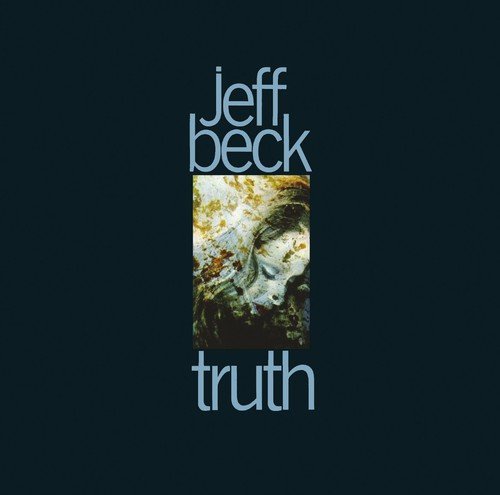
Beck, fresh out of the Yardbirds, released his first solo album in 1968 with help from Rod Stewart and Ronnie Wood. They weren’t yet christened the Jeff Beck Group, but they were clearly a band at this point. (Other luminaries like Jimmy Page, John Paul Jones and Keith Moon also help out.) But most of the flash is provided by Beck, who slings his guitar into some new territory on ‘Truth,’ firing up old traditional and blues numbers with instrumental tricks.

By 1968, Jeff Beck had become a major pioneering force on the electric guitar, following Eric Clapton in the Yardbirds, before clocking up two pop hits with Tallyman and Hi-Ho Silver Lining. By the time he was assembling the band for “Truth” he determined to make an album for himself.

With Beck having established himself as a guitar player of the first degree on a quartet of bold and wickedly wonderful Yardbirds albums in 1965 and 1966 (For Your Love, Having A Rave Up With The Yardbirds, The Yardbirds [Roger The Engineer] and Over Under Sideways Down), producer/manager Mickie Most, thinking to capitalise on the guitarist’s visibility, conceived the notion of turning Beck into a pop crooner. All but forgetting that Beck was first and foremost an instrumentalist, Most shackled him with a series of less-than-guitar-focused songs.

“I always kept my fingers on players,” Beck commented in the 70s. “Every musician around London always knew what the other one was doing. All groups used to come and see each other play, and it was really nice. There seemed to be a purpose. It was like a competition: ‘They’re doing that in their act, so we’ll have to cut that out’. It was great fun; nice, hot competition. I really liked the scene then.

“I had to round up a singer,” he continued. “I couldn’t think of who to get. I always liked Rod [Stewart], I dug him, with the teased hair and all the rest of it. “He was out of work at the time. He was hanging around a [London] club called The Cromwellian. I asked him if he wanted a job and [thinking Beck was drunk] he said: ‘Yeah, but I don’t believe you. Ring me tomorrow’. And I was more sober than I’ve ever been that night. And I couldn’t believe that he said yeah, because I thought he was a snob.”

With a singer in tow, Beck then set out to look for a bass player. Ronnie Wood continues the story: “I knew Jeff, but I’d never had a chance to go and sit through a whole show. I’d just heard little bits of him when he used to play with a band called The Tridents [Beck’s pre-Yardbirds band]. I suppose Jeff was one of my best friends, even though he was in another band.”

After the relative ease of getting the first two band members, finding a drummer was a nightmare. Beck went through Ray Cook, his former bandmate in The Tridents, the Pretty Things’ Viv Prince, ex-John Mayall drummer Mickey Waller (we’ll come back to him), Rod Coombes (later of The Strawbs), and another former Mayall graduate, Aynsley Dunbar. Although the last named held real promise, it resulted in yet another drum debacle. “I played with Jeff for four months,”.

“He was a bastard,” Dunbar complained of Beck. “He was so loud I couldn’t hear. I didn’t have any mics on my drums; the band had 100-watt Marshall amplifiers blaring; no monitors. With drummer Mickey Waller re-hired, and after several months of gigs, the quartet went into Abbey Road Studios on May 14, 1968, to begin recording an album. The material the group recorded was a combination of the live set, reworkings and some odds and ends. The album opens with a devastating slow version of the Yardbirds’ hit Shapes Of Things, with Beck turning in a virtuoso performance. Let Me Love You was part of the stage set and one of the few self-written pieces, setting up the call-and-response sequence between guitar and voice that Beck and Stewart had perfected live.

On July 29, 1968, Jeff Beck, along with a kick-around vocalist, a future Rolling Stone, and a drummer with a lot of bash released Truth. The album was a miracle of fury and berserk beauty, a testament to the jaw-dropping chops of a 24- year old guitarist who, over the course of 10 tracks and around 40 minutes, ran the gamut from electric blues and modified R&B to psychedelically influenced rock, classical, and even a little heavy-metal instrumentalism. With Truth, released just months before Led Zeppelin’s debut  album release – and with songs and personnel in common.  Jeff Beck, vocalist Rod Stewart, bassist Ronnie Wood, and drummer Mickey Waller (the core band) made an album that would become every guitar player’s bible and every hard rock band’s Holy Grail.
null

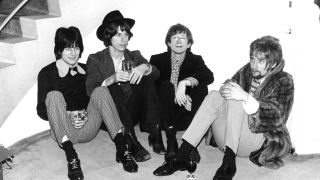
With Ronnie Wood on bass, Rod Stewart on vocals and guests like Jimmy Page, John Paul Jones and Keith Moon Nicky Hopkins, Aynsley Dunbar and Madeline Bell.  popping up for guest spots on Beck’s Bolero, it was an album that not only helped establish the British blues rock sound, but featured many of its best exponents. Audacious and experimental, it smashes genre conventions at every turn.

Morning Dew, another song from the touring circuit, is a pulsating interpretation of Tim Rose’s classic, and it’s given a dirge-like solemnity from Beck’s breathtaking mastery of the wah-wah pedal. Here (and on closer I Ain’t Superstitious), Beck demonstrates amazing prowess with the then-new effects pedal.

Then there is the great catastrophe of You Shook Me, the old blues chestnut written by Willie Dixon and originally recorded by Muddy Waters. The song was on Truth, and was then re-fashioned by Led Zeppelin for their debut album some months later.

Ol’ Man River, the Oscar Hammerstein II/Jerome Kern standard is an odd little creature. With Beck on bass, John Paul Jones on Hammond organ, and tympani by ‘You Know Who’ – actually Keith Moon – it is one of the album’s lesser moments. But it did prompt Truth engineer Ken Scott to recall The Who’s drummer living up to his ‘Loon’ nickname. “One has to remember Mr Moon playing tymps.

On vinyl, side two of Truth opens with Beck having picked up an acoustic for a shaky but stirring version of the classical… er, classic Greensleeves. “It was just an idle mess around in the studio while I was waiting for Mickie,” he said. “Why not? It was the vital last track of the album, and nobody could think of what to play, so I just played it. That’s why there’s all the plinking and plonking and bad notes in it. I can’t play acoustic guitar very well.”

Rock My Plimsoul is a track Beck recorded back during his Mickie Most/solo career period. That staggered little drum lick from Aynsley Dunbar (who is uncredited) sets the song in motion, and provides a rhythmic trampoline on which Beck’s guitar jumps and twirls.

Willie Dixon’s You Shook Me and I Ain’t Superstitious are masterfully reinvented, even Broadway hit Ol’ Man River and the Henry VIII-authored Greensleeves are dragged into Beck’s musical vision.

And then there is the timeless and epic instrumental Beck’s Bolero. Recorded in May 1966, this rendition of Ravel’s famous Bolero was the B-side of Hi Ho Silver Lining and was meant to serve as the launching pad for Beck’s idealised supergroup. Players include Jimmy Page on electric 12-string, Keith Moon on drums, John Paul Jones on bass, and Nicky Hopkins on piano.

‘Truth’ is surely one album to consider as a forward thinking, Blues Rock to Rock Metal template for the future of guitar music. Some of the tracks were written as early as 1966, which just makes you realise how cutting this album is for something released in 1968.

Patience-by-cara-robbins-1244-1

Eight tracks into Patience’s debut synth-pop LP, Dizzy Spells, singer/producer Roxanne Clifford is suddenly joined by a second voice, one that complements her airy choruses and misty-eyed melodies with cloudy French phrases. Fans of Clifford’s former band, Veronica Falls, may recognize the guest’s name if they take a look at the liner notes: Marion Herbain, who was the former Veronica Falls bassist. While the band essentially ceased to exist in 2014—when their social media accounts went silent—the two stayed in touch and are still very close friends.

“She has a great voice,” says Clifford. “I intend to persuade her to sing more songs with me, and hope she’ll join me on tour in the U.K. this June.”

There’s a reason for this. Unlike other projects that start in a home studio and get lost in translation onstage, Patience’s shows aren’t limited to a laptop and a mic stand. They’re an ever-evolving affair, involving a reel-to-reel player, live synths, and clean guitar chords, and often rounded out by guests who can help bring Clifford’s layered harmonies and head-circling hooks to life. Smoke machines, proper lighting, and a decent sound system certainly don’t hurt, either.

“Having a couple friends sing backup with me is wonderful,” says Clifford. “It adds to the energy of the show, sounds great, and I have people to dance with.”

Therein lies the contradiction with Patience. Though it’s her face and hers alone on the album cover, Clifford isn’t looking to hide out solo in a bedroom, surrounded by drum machines, keyboards, and samplers. She misses “the gang mentality of being in a band and the confidence that brings,” as well as the immediacy of being able to just pick up a guitar and play.

“I long for the magical organic excitement that comes from playing in a fully live band,” she admits. “When it comes together, it’s a feeling I can’t really get any other way. But I also don’t feel ready to recruit band members or start hauling a backline around with me just yet.”

As for how she went from writing guitar-centric goth songs with Veronica Falls (“Beachy “Found Love in a Graveyard,” “Beachy Head”) to embracing the dancing-while-crying electronics of Patience, Clifford credits a simple Korg Micro Preset synth from the late ’70s. A key element in some of her favorite songs—including ones by OMD and the cult Belgian act Bernthøler—it provided the foundation for her early solo experiments, along with a Roland TR-505 drum machine. While it took her some time to create a compelling and cohesive vision with such “time-consuming and infuriating” equipment, Clifford found the creative process surrounding her new sonic palette liberating. Doubly so, given the time that passed between Veronica Falls’ last album (2013’s Waiting For Something to Happen) and Patience’s early singles (2016’s “The Church,” “The Pressure,” and 2017’s “White of an Eye”). Pursuing a new sound removed the weight of expectations from the equation. The trickiest part of putting Dizzy Spells together was technical obstacles—hangups indie rock acts don’t really have to deal with.

“It doesn’t feel hugely rewarding for me to get wrapped up in the nuances of an oscillator,” says Clifford. “Or to figure out how to program a sequencer properly; I’m too impatient. I usually have a very clear [idea] of how I want something to sound, yet getting to that point can be a different story.

She continues, “I’m learning more as I go, and it’s been important to have people help me with that side of things where possible. I’m also trying to embrace a more experimental approach to songwriting; letting happy accidents lead me somewhere new has felt freeing…. One element alone can be the tiny piece to make everything fit together in a pleasing way.”

And that’s what Dizzy Spells is: an avant-pop and Italo disco-inspired puzzle that fits together perfectly, despite being developed over several years and countless recording sessions. Clifford also worked with such welcome collaborators as U.K. garage icon Todd Edwards (see also: several Daft Punk singles), Free Love co-founder Lewis Cook, and engineer Misha Hering (Virginia Wing), although the end result is distinctly hers

http://

“I chose the title Dizzy Spells because it suggests these disparate events acting as a whole,” she explains, “telling the story so far and mapping the ebbs and flows. There’s something special about that in and of itself, but I wanted the listening experience to feel immersive, the way an album should.”

Patience’s next round of material is poised to further their narrative, taking her “Gemini tendencies” to new heights without having to wait for the approval of other parties—especially since she now has her own label called Winona Records. Impromptu collabs may emerge on the imprint in the near future, but a Veronica Falls reunion is off the table after the passing of drummer Patrick Doyle last year. Forming another group with Herbain and former Veronica Falls guitarist James Hoare isn’t likely either, despite the creative spark they all share.

“Patrick’s death hit us all very hard,” says Clifford. “It’s something that I am still coming to terms with. It’s impossible not to have a spiral of regrets in moments like this. But we’ve all tried to focus on the brilliant times we had together and how cherished they feel in retrospect…. Sharing the memory of someone helps to come to terms with the immense loss that you feel.”

Dizzy Spells will be available in the U.S.A. from Winona Records,

Image may contain: 1 person, playing a musical instrument, on stage and guitar

Washington, DC power poppers Dot Dash have announced a series of shows with The Undertones, The Minus 5, and The Vibrators. The trio is still flying high on the momentum created from their excellent LP – ‘Proto Retro’, released last July. Reminiscent of the greatest jangle pop music ever, yet unique and original. Along the way, Dot Dash has played shows with The Brian Jonestown Massacre, Richard Lloyd (ex-Television), The B-52s, The Monochrome Set, Rolling Blackouts Coastal Fever, The Psychedelic Furs, The Chameleons, The Dickies, Ash, Hugh Cornwell (ex-Stranglers), Stiff Little Fingers, Tommy Keene, The Fleshtones, Glen Matlock (ex-Sex Pistols), The Drums, Urge Overkill, The Bats, Ultimate Painting,

http://

Dot Dash is  — Terry Banks (guitar & vocals), Hunter Bennett (bass), and Danny Ingram (drums.) Ex-bands within the Dot Dash orbit include power-poppy indie rockers Julie Ocean; hardcore pioneers Youth Brigade and The Untouchables; indie poppers The Saturday People, Tree Fort Angst, Glo-Worm, and St. Christopher; plus Swervedriver and Strange Boutique.

Dot Dash’s new album Proto Retro, the band’s sixth long player, is out now on The Beautiful Music. It’s the label’s 42nd release and was recorded at Inner Ear and The Bastille and produced by Geoff Sanoff.

An Obelisk is the sixth album from Titus Andronicus, which finds the noted rock band under the stewardship of producer and legendary rocker Bob Mould (Hüsker Dü, Sugar, et al.). This trans-generational meeting of the minds has yielded the most immediate, intense, and unadorned Titus Andronicus record to date. Clocking in at a brisk 38 minutes and change, it is also the shortest. Recorded over six breathless days at Steve Albini’s world-renowned Electrical Audio studio in Chicago, An Obelisk presents the sound of Titus Andronicus, rock band, at its most irreducible, as monolithic as the album’s titular monument.

The official audio for “Tumult Around The World” by Titus Andronicus, off the new album ‘An Obelisk’ available June 21st from Merge Records.

Image may contain: 1 person, close-up

The follow-up to 2017’s “Abysmal Thoughts,” which marked the band’s first release as a solo project from front man Jonny Pierce, “Brutalism” is quite possibly the best collection of songs in the band’s ten-year career.

Listen to the latest album single “Loner”. Pierce describes the track below:

Being a bit of a loner is sort of like being gay for me. When I was a kid, I would pray to be anything but gay – and now as an adult, I treasure the fact that I’m gay. I celebrate it daily. Being gay forced me to think differently, develop my creative side, and to carry a punk attitude. It also helped me define my values and find empathy for those who are marginalized. Being a loner is very similar to that. I don’t like hanging out in groups because I feel real connection is often sacrificed in those settings. Since most people seem to disagree and love a group hangout, that means I spend a lot of time along and listen to my heart. It helps me navigate my life, but it still offers sadness that is always there. You can’t be sensitive without carrying some sadness, and that’s okay.

Like Jonny Pierce, who co-produced the album, Brutalism is a bicoastal record – written and recorded between Upstate New York and a studio in Stinson Beach. Following a painful divorce and an incredibly difficult stint living solely in Los Angeles, Pierce decided it was time to face his demons, and the making of this record is a part of that process. “I was exhausted, depleted and sabotaging myself, partying so much but in reality running away from pain. It was a downward spiral.” Pierce knew it was time to go to therapy, and begin to reckon with his depression. “It was do or die,” he says. While he focused on his mental health, the making of Brutalism became an extension of self-care for Pierce, and makes for some of his most honest and relatable music to date.

On Brutalism, a lot is different. The album is defined by growth, transformation and questions, but it doesn’t provide all the answers. It’s rooted in an emotional rawness, but its layers are soft, intricate and warm, full of exquisitely crafted pop songs that blast sunlight and high energy in the face of anxiety, solitude and crippling self-doubt.  Pierce was more open than ever, keeping his control freakery at bay while working with others to produce and record the album. He brought in Chris Coady (Beach House, Future Islands, Amen Dunes) to mix it.  If there was a guitar part he wanted to write but couldn’t play, he brought in a guitarist. It’s also the first Drums record with a live drummer. Delegating freed up Pierce’s time to produce a more specific vision.

The past year has been transformative for Pierce, who may a permanent rain cloud above his head but is working towards a better, healthier headspace. “I don’t think I’ll ever really find myself,” he says. “I don’t think people do. I don’t think there’s a day that you wake up and you go, Now I know who I am. The best way for me to be an artist is by taking a goddamn minute, being still and listening to what it is that I want and need.” It was a real year of growth for him, but growth towards what? “I don’t really know, and that’s OK.”

Foxwarren’s backstory reads like a page torn from the manual of rock & roll authenticity, as this group of siblings and childhood friends originally formed more than a decade ago. Growing up in scattered small towns across the Canadian prairies, Andy Shauf (guitars/keys/vocals), Dallas Bryson (guitar/vocals), and brothers Darryl Kissick (bass) and Avery Kissick (drums & percussion) eventually found themselves in Regina, Saskatchewan. The initial sessions for their self-titled debut began in the Kissicks’ parents’ farmhouse while they were away on vacation. Upon their return, Foxwarren were forced to relocate and recording resumed back in Regina in a rented house where the members lived as roommates. The band’s name comes from the Kissick brothers’ family home in Foxwarren, Manitoba.

Foxwarren initially bonded over Pedro the Lion and drew influence from The Band and Paul Simon. Now a decade in to the project, Shauf reflects on their debut release: “So much time and effort went into making this album; it’s something I think we’re all really proud of. My touring and recording schedule got pretty wild over the past three or four years, so it put the Foxwarren album on the backburner. Making the album was such an enjoyable time – the collaboration and frustration of it all. All of us trying to make something better than we previously had. I’m excited to get it out into the world and have other people listen to it. We’ve been a band for 10 years or so and never properly released an album, so this is special for the four of us.” The self-titled album will be released on November 30th, 2018 via ANTI- Records.

The infectious first single “Everything Apart” is built around a robotic bass line and came together very quickly. “We wrote it late one night,” remembers Darryl, “Andy was home between tours, and the skeleton of the song came together really quickly. This one felt like a real experiment and was almost left off the album; it seemed like an outlier.”

In contrast, the second single “To Be” was one of the first songs written for the project. “We tinkered with it for ages and ended up drastically reworking it the weekend it was recorded. We knew early on that it was going to be the opening song on the record,” states Darryl.

“It was a guitar riff that I’d been playing for a few years at least, trying to figure out what to do with it,”adds Shauf. “It went through quite a few versions if I remember correctly. Foxwarren have a bad habit of never finishing vocal melodies and lyrics before we finish the music, so it made it a bit tricky and ended up being overhauled at the last minute.”

Subtle and thoughtful, it draws parallels to frontman Andy Shauf’s solo work while leaning on collaboration and looseness rather than Shauf’s meticulous arrangements. Where Shauf leaves space for orchestration, Foxwarren take time to ruminate on passages and themes. Propped up by warm driving rhythms and a familiar voice, and coloured with soft electronics and coarse guitars, it’s a record that ultimately hinges on sincerity. It captures the feeling of friends pushing each other, of a band looking inward for inspiration instead of outward for influence.

The Band : Andy Shauf / D.A. Kissick / Avery Koissick / Dallas Bryson

“Sunset Canyon” by Foxwarren from the self-titled album, available now on Anti- and Arts & Crafts

The first releases from Filthy Friends, the scorchingly melodic rock group whose membership consists of some of the most original musical voices of the past three decades, came as a small, delightful shock to the system. Not only because of the names associated with the project, including Sleater-Kinney co-founder Corin Tucker, R.E.M. guitarist Peter Buck and indie stalwarts Scott McCaughey and Kurt Bloch, but also because of how ably they were able to mesh their individual sounds into a crackling melodic whole on debut album Invitation.

Now, with their follow-up—Emerald Valley, out on Kill Rock Stars on May 3rd—the Friends have proven their collective mettle, crafting a thematic suite of songs that finds the quintet digging deeper into their bag of musical tricks and giving Tucker room to rage about and mourn the fate of our planet and the people who inhabit it.

The core idea came from a demo Buck shared with Tucker for a grinding blues song that eventually turned into this new album’s title track. The minute she heard it, Tucker says, it sparked something within her: “I had this long poem growing in my brain,” she says. “It turned into a sort of manifesto about the kind of place we are at as a country but also as a region. Just taking stock of where we’re at and feeling like I can’t believe we let things get this bad.”

While Emerald Valley starts off with idyllic imagery (“Rolling fields, they speak your name/vibrant green is here again”), the album and its title track slowly reveal the ugly underneath, with human arrogance and hubris hurting the Earth and the people who take on “backbreaking work for little pay.”

From there, the Friends address growing concerns over oil production and distribution (“Pipeline”), gentrification and income inequality within the band’s hometown of Portland, Oregon (“One Flew East”), and taking on the voice of the desperate souls that are getting crushed under the wheels of capitalism (“Last Chance County”). The band paints these themes with many different shades of the rock palette, nestling a snapping punk tune between a bit of jangly pop and an almost-shoegaze ballad, with stops along the way for songs that burn as hot and move as slow as lava and tunes that stay steady and fast as a rocket launch.

Emerald Valley is also a testament the indefatigable spirit of the Filthy Friends themselves. Scott McCaughey bounced back from a stroke he suffered in late 2017, which curtailed the band’s tour plans and is playing with more fire than ever. As well, Corin Tucker and Peter Buck were able to devise some amazing work even as their creative energies were being pulled toward other projects like Arthur Buck and Sleater-Kinney. Too, the band was able to bring a new member into the fold with drummer Linda Pitmon coming on board to replace Bill Rieflin without losing an ounce of their power.

We could all take a lesson from Filthy Friends. As proven by Emerald Valley, when a group of like-minded people gather their individual strengths together and point them toward a singular goal, there’s no telling how powerful they can become and what an impact they can make on the world at large.

Released May 3rd, 2019

Image may contain: 1 person, text and outdoor

We are very pleased to introduce you all to Daughter of Swords, the solo project from Mountain Man’s Alexandra Sauser-Monnig. Listen to the beautiful first single “Gem” now + stay tuned for more news.

Mountain Man’s Alexandra Sauser-Monnig is stepping out on her own with her debut solo album, titled Dawnbreaker(out June 28th on Nonesuch Records), also her first full-length under the Daughter of Swords name. “Dawnbreaker” is an airy acoustic dream track with rumbling chords so warm and inviting you’ll want to sink into them like a bath. Sauser-Monnig, who wrote many of Dawnbreaker’s 10 tracks while anticipating the dissolution of a relationship, sees life mirrored in nature, likening herself to “a white rose,” “red hawk,” “hollow reed” or even “just a leaf” at different points in the song.

“Dawnbreaker” is on the debut album from Daughter of Swords, out 28th june via Nonesuch Records.

Image may contain: plant, tree, text, nature and outdoor

Image may contain: 1 person, beard, sunglasses, ocean, outdoor, nature and water

Singer/songwriter Matt Kivel shared a new single, “Radiance,” taken from his forthcoming album, Last Night In America, out on May 10th via Cascine Records. Kivel has been releasing music under his own name since 2012. He’s put out four solo albums over the years—Double Exposure in 2013 on Olde English Spelling Bee, Days of Being Wildin 2014 on Woodsist, and Janus and Fires on the Plain, both released in 2016 on Driftless Records. With a minimalist foundation of hushed vocals, a gentle drum machine and gusty synths, “Radiance” pairs ambient folk-pop with the good-natured acceptance of life’s inevitable yet resplendent gear-turning.

“Radiance” comes from ‘Last Night in America’ by Matt Kivel, out on Cascine Records

Image may contain: one or more people, people sitting, hat and shoes

Welsh singer/songwriter/guitarist Cate Le Bon is releasing a new album, “Reward”, on May 24th via Mexican Summer. This week she shared another song from the album, “The Light.”

Previously Le Bon shared Reward’s first single, “Daylight Matters,” as well as a video for “Daylight Matters.” Then she shared another new song from the album, “Home to You,” via a video for the track. Le Bon doesn’t feature in the video directed by Phil Collins (no, not that Phil Collins). It was filmed in Lunik IX neighborhood of Košice (Eastern Slovakia), which houses a Roma community who, as a press release states, “due to successive governmental and municipal policies, often live in slums and on isolated, dilapidated estates.

In terms of her solo work, “Reward” is the follow-up to 2016’s Crab Day, although last year she released Hippo Lite, as her second album with DRINKS, a collaboration with Tim Presley of White Fence. Le Bon also produced Deerhunter’s recent album.

Le Bon spent a year living in isolation in the Lake District in the UK, by day making wood furniture and by night playing piano and writing songs. “There’s a strange romanticism to going a little bit crazy and playing the piano to yourself and singing into the night,” Le Bon said in a previous press release.

Of the album title, Le Bon said: “People hear the word ‘reward’ and they think that it’s a positive word, and to me it’s quite a sinister word in that it depends on the relationship between the giver and the receiver. I feel like it’s really indicative of the times we’re living in where words are used as slogans, and everything is slowly losing its meaning.”

The album features Stella Mozgawa of Warpaint, H. Hawkline, and Samur Khouja. The latter co-produced Reward with Le Bon.

Image may contain: one or more people, outdoor and nature