Few singer-songwriters embodied the late-’70s California sound as much as Jackson Browne. He started out writing for others in the previous decade, but broke onto the scene as a solo artist with his 1972 self-titled debut (sometimes referred to as Saturate Before Using). Five years later, he made waves with Running On Empty, a collection of 10 new songs recorded live during his 1977 tour. Several tracks were taken from the band’s performance at Merriweather Post Pavilion in Maryland and the Garden State Arts Center in Holmdel, New Jersey. But further tracks were recorded in more intimate spaces — various hotel rooms, rehearsal spaces, or “on a bus (a Continental Silver Eagle) somewhere in New Jersey.”
It takes awhile for your ears to acclimate to what you’re hearing when you drop the needle on Jackson Browne’s“Running On Empty”. It’s just the droning roar of people, a crowd – something that, in the year and a half the world has been living with COVID-19, isn’t as common as it used to be. Then, like a rocket, Browne and his band kick into high gear with the title track. Browne, with that golden voice that was, at the time, a staple of rock radio waves for a decade, sings with clarity and conviction:
Looking out at the road rushing under my wheels Looking back at the years gone by like so many summer fields ’65, I was 17 and running up 101 I don’t know where I’m running now, I’m just running on
It’s as classic as his type of rock and roll gets: instantly relatable, meshing the everlasting promise of youth with the vaguer realities of adulthood, hurtling toward a future that has no guarantees.
No matter the space, Browne and his band (featuring David Lindley on lap steel and fiddle, along with members of The Section) delivered stellar performances that have been lauded by critics since the album’s original release more than four decades ago. Running On Empty became Browne’s best-selling album, peaking at No. 3 on the Billboard Albums chart and eventually achieving a 7x Platinum certification from the RIAA.
Now, that legendary album – featuring such classics as “Running On Empty” and “The Load-Out / Stay” – will be re-released on CD, vinyl, and through digital download and streaming providers. Arriving on July 5th from Asylum/Rhino, the new edition of Running On Empty features a fresh remaster by Gavin Lurssen of Lurssen Mastering. The vinyl edition, meanwhile, was mastered by Ron McMaster and will be presented on 180-gram vinyl pressed at Pallas.
Running on Empty is not a typical live album. None of the songs took hold on other LPs beforehand. Not all of them were recorded in concert. Some, yes – including album bookends from a rousing show at the Merriweather Post Pavilion in Columbia, MD on August 27th, 1977 – but others were taped in spacious rehearsals, behind the thin walls of motel rooms, and even on a tour bus somewhere down the highways of New Jersey.
But its polish is considerable; for that, you can thank the all-star band backing him up, including session legends like guitarists Danny Kortchmar and David Lindley, keyboardist Craig Doerge, bassist Leland Sklar and drummer RussKunkel. (They were the House band for Browne’s label Asylum, playing on albums for Linda Ronstadt and WarrenZevon as well as Carole King’s“Tapesty” and James Taylor’s“Sweet Baby James” .
Moreover, it’s a live document that transcends its typical mission – a souvenir of what it was like to see the singer-songwriter in concert – and becomes a heartfelt commentary of life on the road.
Second track “The Road” offers a powerful confessional to the mundanity of a touring artist’s life, spliced brilliantly between a close-quarters version in a motel room and a version in front of a crowd. “Rosie” is a forlorn song about a girl with a backstage pass – told with none of the salaciousness you might expect of such a tune in the ’70s, with weary harmonies supplied by Browne’s tour photographer. Some songs sound like they could fit into any of Browne’s studio LPs of powerful Everyman observations (“You Love the Thunder,” “Love Needs a Heart”). Others – a cover of J.J. Cale’s “Cocaine,” the original “Nothing But Time” featuring a bus’ shifting gears and Kunkel’s box-tapped percussion – are one-of-a-kind sparks that could only happen here.
The album’s penultimate tune, “The Load-Out,” is a real gut-punch: over his piano and Lindley’s lap steel, Browne sings a tender tune about the people and scenes that make such a tour possible – opening a window to the audience about what goes on when the lights come up and everyone heads out of the parking lot and into the night. More than 40 years later – long after the album spent nearly a year on the USA chart, outsold all of Browne’s other albums and picked up a Grammy Award nomination for Album of the Year – it hits just as hard, in a year marred by illness, death, financial hardships, uncertainty and the wish that, just for a minute, things could go back to something approaching normal and we could go back to enjoying concerts like the ones we hear here.
Then, just as the emotions reach their peak and the song seems ready to come to an emotional end, Browne and the band have one more trick up their sleeves: a cheeky cover of Maurice Williams and The Zodiacs’ “Stay,” rewritten to reflect the thrill of chasing “one more song.” Rosemary Butler’s soaring co-lead vocals – and Lindley’s falsetto, Frankie Valli-esque last chorus – bring the listeners and the players together in one, brilliant truth: the show doesn’t ever have to end, and the needle never has to leave the record.
Jackson Browne caught the attention of fans with a notable single track, “Doctor My Eyes” from his debut release, often referred to as Saturate Before Using (1972). From there, Jackson Browne became an essential staple of Southern California Rock alongside such artists as Poco, The Eagles, Linda Ronstadt, David Lindley, and Warren Zevon. He released several more classic studio sets, including The Pretender album before issuing a live set that would elevate him to a higher status as a recording artist.
The Section featuring Craig Doerge, Danny Kortchmar, Leland Sklar and Russ Kunkel reunite with Jackson Browne at the 2018 NAMM TEC Awards held at the NAMM Show in Anaheim, CA., to perform “Running On Empty”.
On July 12, Elektra will reissue Running On Empty on CD, and vinyl LP and present the classic album with new remastering. However, there are no other adds to this set. The ten songs from the original were tracks performed in various live settings like hotel rooms, tour bus, stages, and a rehearsal room. A DD version will arrive sooner for the remastered classic on July 5.
A single reissue of newly remastered “The Load Out”/”Stay” was released on June 21st digitally.
While some fans may want to hold onto their long-out-of-print previous editions, the newly remastered CD, vinyl, and digital versions that arrive on July 5th will no doubt be essential listening for those who might be new to Browne’s music.
Pinky Pinky have good gut instincts. During an era of limitless distractions,societal pressures and sonic trends, the three best friends are focused on being happy and blissfully on the outside of all that noise. The trio grew up together in Los Angeles and there’s a shared understanding of what makes them all tick. Together with her punk cohorts Anastasia Sanchez (vocalist/ drummer, 20), guitarist Isabelle Fields (19), and bassist Eva Chambers (19) have a clear understanding that Pinky Pinky’s modus operandi is in not overthinking their decisions. You can hear that on their debut album, ‘Turkey Dinner’ due on Innovative Leisure. It follows their two prior EPs, most recently 2018’s ‘Hot Tears’. Their first full-length, however, is even freer than their previous efforts. It’s a patchwork quilt of garage rock and oddball indie. It’s rooted in classic bass, drums, guitar, but it’s bolstered by the perspectives of a trio of LA youths writing about their everyday observations, anxieties and passions.
For instance, “My Friend Sean” is a young fantasy about the dreamiest boy in class, “Mystery Sedan” is an LA story about a car being the only thing there in times of distress, “Lady Dancer” is about a stripper at a bikini bar in Los Feliz. When lead lyricist Sanchez met Chambers in the girls’ locker room in High School they knew that they’d be in a band together (Chambers and Fields had already met in Middle School). All three of them had always dabbled in bands. Originally born in New York but moving to LA during childhood, Chambers began life in a band with her three older sisters, playing keys. She picked up a bass at the age of 13 after their endeavors had died a death. Fields, on the other hand, trained as a violinist but rebelled and taught herself guitar from the age of 12, while rearing herself on the Sex Pistols and riot grrrl bands.
Sanchez’s father put sticks in her hands as a little girl. She was a prodigy in classical violin but also wanted to get back to the sheer pleasure of playing and so canned the anxiety-ridden music studies for her DIY drumming. She became a singer by necessity for Pinky Pinky, referring back to her love of Fiona Apple and even Heart for vocal chops. PinkyPinky itself had a few iterations before settling on its three core members. “We were really trying to be punk at first then psychedelic then blues,” recalls Fields. “Finally we got to a point where we knew we didn’t need to focus on just one thing. Growing up you think you only should listen to one type of music but we got to a certain age and realized we don’t need to do that.”
During their High School years they flew beneath the radar. “Nobody cared I was in a band,” says Field. Their first gig was at the MOCA museum in Downtown. To date it’s the most nervous they’ve ever been. “I’d still be scared to do that,” laughs Sanchez, admitting to almost having a full-on panic attack due to the swathes of cool teenagers that turned up to watch them. Only recently have they hired a booking agent after already building a solid reputation on the LA scene hustling by themselves. When they played Dave Grohl’s inaugural CalJam festival in 2017 they didn’t even have a manager. “I got a call from someone who works with Dave Grohl: ‘Dave really likes your band’,” recalls Sanchez. “And I was laughing like, ‘Weird? But cool?! It was a little
surreal’.”
“It took a long time for our EPs to come out,” explains Chambers. “And by the time they did we’d grown a lot.” Indeed, by the time this album arrives it’ll be the most accurate representation of where Pinky Pinky is currently at live onstage and off it. They aimed to make a live-sounding record that didn’t feel too shiny in its production. As a result, ‘Turkey Dinner’ is unpretentious, raw and unpredictably zany.
hi hi hi!!! okay wow, so much exciting stuff coming to you today. first off, our new single, and the video for our single, ‘i dare you’ is out now!!! second, WE ARE DROPPING OUR ALBUM ON AUGUST 9th. go pre-order ‘how do you love?’ now!!! lastly, we added more tour dates and can’t wait to come party with y’all. see you soon:)
love you all, lyd
New album ‘How Do You Love?’ coming August 9th, 2019
Chelsea Wolfe announced her new album “Birth of Violence”, which will be released September 13th via Sargent House Records. You can hear the first song “The Mother Road”
I offer these songs like flowers in violent bloom, and I look forward to sharing more with you this summer.
This fall, I’ll head out on an acoustic tour of North America. I’m very excited to have Ioanna Gika as support on all the dates.
An excerpt of “The Mother Road” from the forthcoming album “Birth of Violence,” out September 13th, 2019 on Sargent House.
On August 31st, my band and I will be playing the Pasadena Daydream Festival, curated by Robert Smith, alongside The Cure, Emma Ruth Rundle, Deftones, The Pixies,and many more great bands.
Alex Cameron has just announced his new album, Miami Memory, set for release September. 13th on Secretly Canadian. Can’t wait until September? Luckily for you, the Sydney-born indie-pop rocker has also shared a new single, “Divorce,” with an accompanying music video. Alex tweeted Miami Memory is here. My new single. I want your eyes glued to your screen, and your ear buds jammed deep inside your ear holes. I want you trembling. Thumbs aching from sharing. This one’s for my girl. Lotsa love. Alex
With a knack for donning the masks of a wide array of oddball characters in his previous, Cameron finds a new character in Miami Memory—himself. Facing the threat of a bitter breakup, Cameron sings, “I’ve killed little baby rabbits. I’ve killed microscopic crabs / But I never killed a feeling like the one you and me had.”
Inspired by the empty threats of leaving that lovers make in the heat of a moment, “Divorce” is an impassioned exclamation of misery at the thought of losing a relationship. In the video, Cameron’s shadowed face calls out from the darkness as a heart necklace drapes over his shoulders. He asks us where his love went because he can’t find it in his hands. Then, grief turns to frustration as Cameron offers to crash on a friend’s “motherfuckin’ futon couch if that’s how you wanna play it.”
In the end, Cameron finds himself “drinkin’ in the dark” with his battery “all ran out.”
His third album, Miami Memory finally features Cameron, rather than a wacky, made-up character, as its main narrator. The album is a vulnerable, tender and at times lustful love letter to his partner.
“When you listen to these songs, and you’re waiting for the twist, or the joke, or any kind of discomfort, I can assure you none of those things were there when I wrote them,” Cameron said in a statement, clearly differentiating this album from his tongue-in-cheek, gleefully uncomfortable work of the past.
Instead of writing the imagined narratives that makes up most of his discography, Cameron turns instead to true stories plucked from his own life in a heartfelt gift to his girlfriend. Miami Memory also promises to be Cameron’s most musically expansive work yet. While pulling in the synth-driven tones of his early work, the new album harnesses the drive of classic rock, with anthemic lyrics layered with warm sax, bass, guitar and organ.
‘Divorce’ off the new album ‘Miami Memory’ by Alex Cameron, out 9/13/19 on Secretly Canadian.
Sometimes you need an amazingly crafted Swedegaze pop album, and sometimes that album will kick in your door, shower you with kisses, then proceed to back its time capsule steamroller over your face. Set your picnic blanket ablaze. Eat flowers while skydiving. Sleep beneath the waterfall. Absolutely gorgeous.
Vocalist Julia Bjernelind going solo on vocal duties, adding a new sense of linearity contrasting with Last Forever’s male-female dialogues. From the previously mentioned burners to the relatively slow numbers like “Daylight”—still pretty fast, not to mention unbelievably dense—their self-titled works as a posthumous debut introducing themselves as a collective held together with friendship, as Bjernelind claims, and marked by an aptly floral cover design. Their beach-friendly riffs seem less an act of provocation and more one of pure optimism—a welcome disposition any time of year.
Remind Me Tomorrow was written in stolen time. In the four years since Are We There, Van Etten guest-starred in The OA, performed in David Lynch’s Twin Peaks revival, and wrote her first film score and song for TV – for Kathering Dieckmann’s Strange Weather Tig Notaro’s show Tig, respectively. Van Etten also had a child, and began studying psychology. In the scraps of hours between these endeavors, Remind Me Tomorrow was born.
Working with producer John Congleton, Remind Me Tomorrow reveals piano keys that churn, deep drones, distinctive sharp drums. Originally a piano ballad, “Comeback Kid” evolved into a dark, menacing anthem. “Seventeen” began as a Lucinda Williams-esque dirge, but winds up a star-spangled nod to Springsteen, exploring gentrification and generational patience. The breadth of Van Etten’s new passions have inflected Remind Me Tomorrow with a wise, warped-time perspective. She explains, “I want to be a mom, a singer, an actress, go to school, but yeah, I have a stain on my shirt, oatmeal in my hair. I feel like a mess, but I’m here. Doing it. This record is about pursuing your passions.” This is Remind Me Tomorrow, fusing a pained attentive realism and radiant lightness about new loves.
“No One’s Easy To Love” off Sharon Van Etten’s newest album “Remind Me Tomorrow” out now on Jagjaguwar Records
Kyle Craft & Showboat Honey has shared a very sweet video for “Deathwish Blue,” a highlight from Showboat Honey, the group’s forthcoming album, out July 12th worldwide from Sub Pop Reords and directed by Eleanor Petry .
Craft had this to say of the visual, “I can’t dance and my fiancée Lydia isn’t the biggest fan of it either…we’d actually never danced together before the shoot. We wanted to have fun and aim for a Pulp Fiction vibe. So, I just slicked back the mop, cranked Spirit in the Sky over the bar speakers, and we went for it.”
Showboat Honey was recorded and produced by Kyle Craft, Kevin Clark, and Billy Slater at their own Moonbase Studios in Portland over 2018. The album was mixed by Trevor Spencer and mastered by April Golden at Golden Mastering.
Frightened Rabbit have announced the forthcoming release of “Tiny Changes: A Celebration Of The Midnight Organ Fight”, a re-imagining of their 2008 album, recorded last year by friends of the band to celebrate its 10th anniversary. Two lead singles, by Julien Baker and Scottish rock band Biffy Clyro’s renditions of the album’s opening track, “The Modern Leper.”
Scott Hutchison, who died last year, played a big role in piecing together the compilation. “This is a celebration of a record that connected thousands of people to Scott and connected thousands of people to each other and ten years on is still managing to do it,” the band wrote in the album announcement.
Our beloved brother and son Scott Hutchison was born in Edinburgh in 1981. He took his own life in Queensferry in 2018. In those 36 and a half years, Scott’s impact was far reaching and felt by many people. Through his music and art he made many thousands of tiny changes and encouraged other people around the world to do the same. The honesty of his lyrics and openness about his own mental health inspired people in all walks of life. It is a legacy that should be continued and nourished.
The album will include covers by the National’s Aaron Dessner, Chvrches’ Lauren Mayberry, the Hold Steady’sCraig Finn, Katie Harkin, Sarah Silverman, Manchester Orchestra, and Ben Gibbard. A portion of the proceeds from album sales will benefit Tiny Changes, the mental health charity launched last month in Hutchison’s honor.
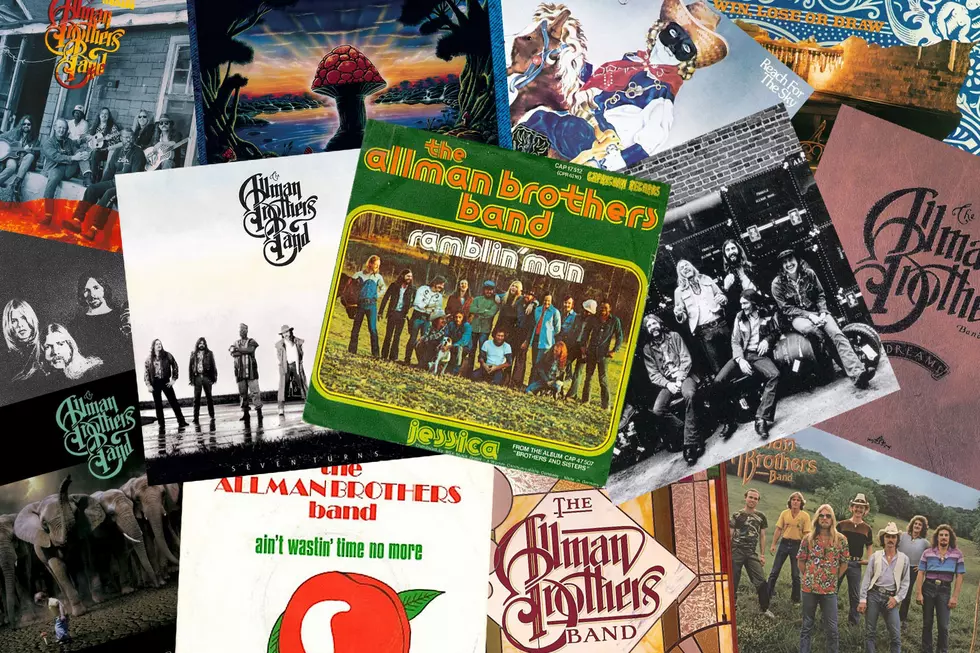
The Allman Brothers Band an American rock band formed in Macon, Georgia, in 1969 by brothers DuaneAllman (founder, slide guitar and lead guitar) and Gregg Allman (vocals, keyboards, songwriting), as well as Dickey Betts (lead guitar, vocals, songwriting), Berry Oakley (bass guitar), Butch Trucks (drums), and Jai Johanny “Jaimoe” Johanson (drums). The band incorporated elements of blues, jazz, and country music, and their live shows featured jam band-style improvisation and instrumentals.
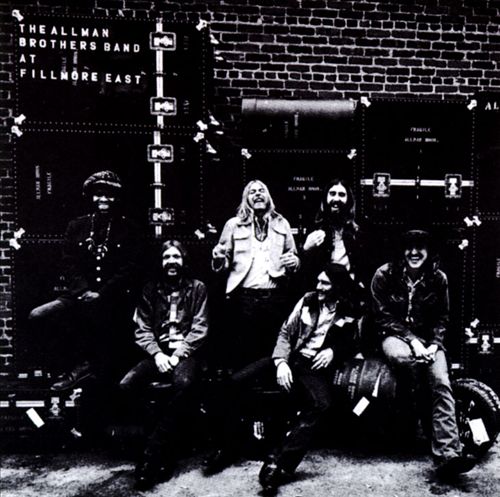
The group’s first two studio releases, The Allman Brothers Band (1969) and Idlewild South (1970) (both released by Capricorn Records), stalled commercially, but their 1971 live release, At Fillmore East, represented an artistic and commercial breakthrough. The album features extended renderings of their songs “In Memory of Elizabeth Reed”, “You Don’t Love Me” and “Whipping Post”, and is considered among one of the best live albums ever made.
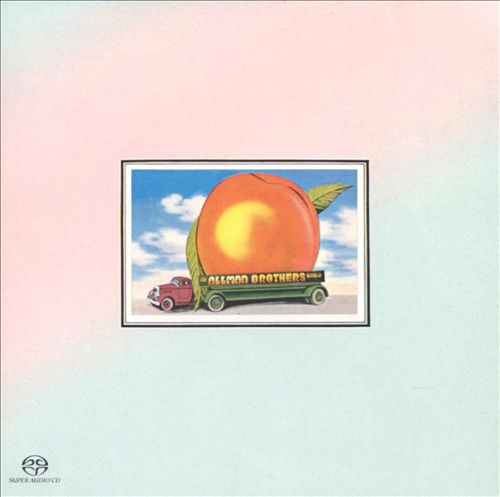
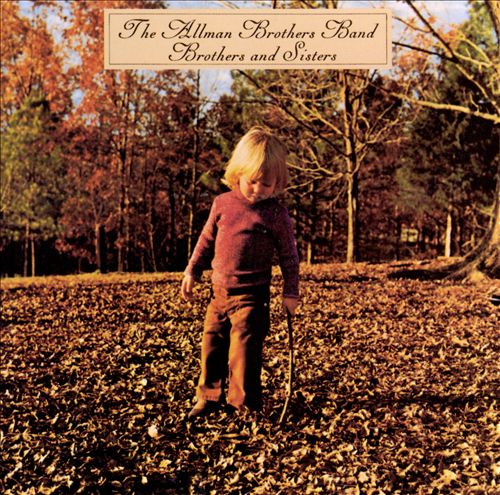
Group leader Duane Allman was killed in a motorcycle accident later that year – on October 29th, 1971, and the band dedicated Eat a Peach (1972) to his memory, a dual studio/live album that cemented the band’s popularity and featured Gregg Allman’s“Melissa” and Dickey Betts’s “Blue Sky”. Following the motorcycling death of bassist Berry Oakley exactly one year and 13 days later on November 11th, 1972, the group recruited keyboardist Chuck Leavell and bassist Lamar Williams for 1973’s Brothers and Sisters.This album included Betts’s hit single “Ramblin’ Man”. These tunes went on to become classic rock radio staples, and placed the group at the forefront of 1970s rock music.
Their career began slowly, before At Fillmore East finally showed what the band could do. A wonder of power, precision and improvisational genius, the album changed the Allman Brothers Band’s profile forever.
In fact, the Allman Brothers Band scored their first and only ever No. 1 hit in the years following that tragedy. But 1973’s Brothers and Sisters was also their last platinum-selling project. The group broke up once, got back together and then began a lengthy hiatus in the early ’80s.
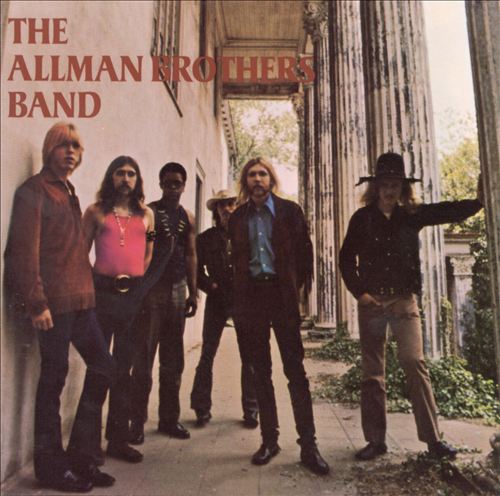
The Allman Brothers Band (1969):
This might be the best debut album ever delivered by an American blues band, a bold, powerful, hard-edged, soulful essay in electric blues with a native Southern ambience. Some lingering elements of the psychedelic era then drawing to a close can be found in “Dreams,” along with the template for the group’s on-stage workouts with “Whipping Post,” and a solid cover of Muddy Waters’ “Trouble No More.” There isn’t a bad song here, and only the fact that the group did even better the next time out keeps this from getting the highest possible rating.
The group’s most overtly jazz-influenced song “Dreams” was part of a long string of early compositions Gregg Allman offered his fledgling bandmates . In fact, he was a dozen songs in before the Allman Brothersband decided “Dreams” would work. Unusually, GreggAllman composed the song on the Hammond organ, instead of the preferred guitar or piano. Drummer Jai Johanny “Jaimoe” Johanson’s library of old jazz records helped shape their approach, as they turned Allman’s blues haiku into a waltz-time meditation that traced the same musical lines as “All Blues” from Miles Davis’ groundbreaking Kind of Blue.
“When we were first putting a group together,” Duane Allman once said, “we were listening to Jefferson Airplane and the [Grateful] Dead’s records. We were all kicking around down South, buying records out of the Kmart and taking them home and digging them. And [Jaimoe] comes along and says, ‘Well that’s cool good, but check out what I got over here, this collection.’ They just turned us all around. We heard with them cats were doing. Knocked us out.” “Dreams” is also the rare classic-era Allmans song featuring just one guitarist, as Duane offered a pair of brilliant solos over the band’s two-chord vamp.
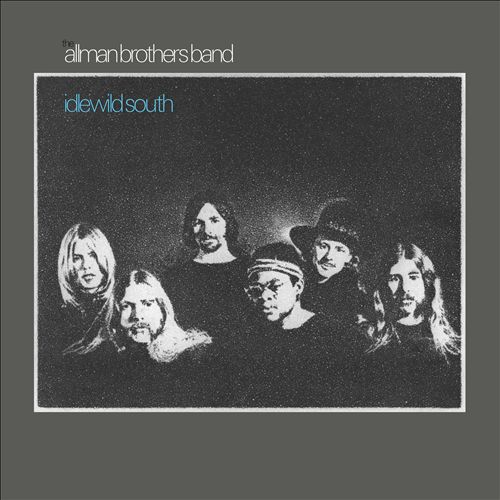
Idlewild South (1970)
If you’re going to listen to the Allman Brothers, make sure you have the first four records. The band made The Allman Brothers Band, Idlewild South, At Fillmore East, and three-fourths of Eat a Peach with its original lineup, before Duane Allman’s fatal motorcycle accident in 1971. The Tom Dowd-produced Idlewild South, their second album, comes off with a little less ferocity than their debut which is perhaps the result of reaching for new sounds the second time around. “Revival,” the album’s opener, introduces Dickey Betts as a composer. The countrified flavor of his songs gives an indication of where the band will head in the post-Duane era. Betts’ other contribution to Idlewild South is the instrumental “In Memory of Elizabeth Reed,” a centerpiece of the Fillmore East recordings. Gregg’s “Please Call Home” and “Midnight Rider” are built around piano and acoustic guitar, respectively, and have a different feel than the band’s usual twin Les Paul-and-Hammond sound. That sound is showcased in the balance of Gregg’s tunes, however: the funky blues of “Don’t Keep MeWonderin'” (with Thom Doucette on harmonica) and “Leave My Blues at Home.” The album is also notable for the rollicking version of Willie Dixon’s “Hoochie Coochie Man,” with the only vocal bassist BerryOakley (who died in a motorcycle accident one year after Duane) ever recorded with the group. Though overall it packs less punch than The Allman Brothers Band, Idlewild South is all the more impressive for its mixture of chunky grooves and sophisticated textures.
The first in a string of strikingly inventive instrumentals from Dickey Betts, “In Memory of Elizabeth Reed” quickly became one the group’s most recognizable songs. Betts was inspired by a doomed romance with a woman whom he was secretly meeting in a local graveyard. The guitarist liked to go there to compose, and that’s where he saw a headstone bearing the title of this moving, minor-key song. Betts had actually been playing in the same style for some time, working in a symbiotic fashion with the Allmans‘ late original bassist. “Berry Oakley and I inspired each other’s improvisational creativity while we were in Second Coming, the band that presaged the Allman Brothers,” Betts later told Guitar World. “One of our favorite things to do was to jam in minor keys, experimenting freely with the sounds of different minor modes. We allowed our ears to guide us, and this type of jamming served to inspire the writing of songs like ‘In Memory of Elizabeth Reed.'” The track is driven by these brilliantly harmonized guitar lines, a sound that came to define the Allman Brothers Band. Betts’ interest in that approach didn’t come from listening to jazz, but instead to the Western swing of Bob Wills. By the way, he wrote “Blue Sky” in the same cemetery.
At Fillmore East (1971)
Whereas most great live rock albums are about energy, At Fillmore East is like a great live jazz session, where the pleasure comes from the musicians’ interaction and playing. The great thing about that is, the original album that brought the Allmans so much acclaim is as notable for its clever studio editing as it is for its performances. Producer Tom Dowd skillfully trimmed some of the performances down to relatively concise running time (edits later restored on the double-disc set The Fillmore Concerts), at times condensing several performances into one track. Far from being a sacrilege, this tactic helps present the Allmans in their best light, since even if the music isn’t necessarily concise (three tracks run over ten minutes, with two in the 20-minute range), it does showcase the group’s terrific instrumental interplay, letting each member (but particularly guitarist Duane and keyboardist/vocalist Gregg) shine. Even after the release of the unedited concerts, this original double album remains the pinnacle of the Allmans and Southern rock at its most elastic, bluesy, and jazzy.
“Whipping Post,” like “In Memory of Elizabeth Reed,” had been earlier featured on Allman Brothers Band studio recordings but both found new meaning in this live setting. In fact, the 23-minute take from At Fillmore East is not only the definitive version, it’s the moment when Gregg Allman’s composing genius is confirmed. Still, this is truly a band triumph. Oakley completely rearranged the song which started out as another slow blues – into an unusual 11/8 meter that provides plenty of musical space for his bandmates to fill.
Dickey Betts and Duane then soar through another ribbon of harmonized, totally off-the-cuff guitar lines. (At one point late in the proceedings, Betts impishly quotes the children’s song “Frere Jacques.”) “We have rough arrangements, layouts of the songs, and then the solos are entirely up to each member of the band,” Duane once explained. “The naturalness of a spur-of-the-moment type of thing is what I consider the most valuable asset of our band.” And perhaps nowhere more so than on “Whipping Post,” which – quite fittingly – took up the entire closing side of the original Fillmore East vinyl release.
‘Eat a Peach’ (1972): “Ain’t Wastin’ Time No More”
Inspired by the tragic death of his brother, Gregg Allman’s album-opening “Ain’t Wastin’ Time No More” offered a sturdy paean to perseverance. Betts – who Duane once praised by saying, “I’m the famous guitar player, but Dickey is the good one” seemed to be of a similar mindset as he stepped in on Allman’s preferred slide. The idea on Eat a Peach was to mix newly recorded songs like this one with some of Duane’s final recordings, making it both tribute and last testament to his genius. And for awhile, it sustained his heartbroken bandmates. “The music brought life back to us all,” Gregg said in his 2012 autobiography My Cross to Bear, “and it was simultaneously realized by every one of us. We found strength, vitality, newness, reason and belonging as we worked on finishing Eat a Peach.” Still, the prospect of touring nearly broke the band. Ultimately, they decided to go out as a five-piece. No one could replace Duane. Gregg and Oakley introduced the songs, which had also been his role. “We were playing for him,” drummer Butch Trucks said in One Way Out: The Inside History of the Allman Brothers Band, “and that was the way to be closest to him.” Oakley, who never got over the loss, died in a similar motorcycle crash a year later.
A tribute to the dearly departed Duane, Eat a Peach rambles through two albums, running through a side of new songs, recorded post-Duane, spending a full album on live cuts from the Fillmore East sessions, then offering a round of studio tracks Duane completed before his death. On the first side, they do suggest the mellowness of the Dickey Betts-led Brothers and Sisters, particularly on the lovely “Melissa,” and this stands in direct contrast with the monumental live cuts that dominate the album. They’re at the best on the punchier covers of “One Way Out” and “Trouble No More,” both proof of the group’s exceptional talents as a roadhouse blues-rock band, but Duane does get his needed showcase on “Mountain Jam,” a sprawling 33-minute jam that may feature a lot of great playing, but is certainly a little hard for anyone outside of diehards to sit through. Apart from that cut, the record showcases the Allmans at their peak, and it’s hard not to feel sad as the acoustic guitars of “Little Martha” conclude the record, since this tribute isn’t just heartfelt, it offers proof of Duane Allman’s immense talents and contribution to the band.
Brothers and Sisters (1973)
Released a year after Eat a Peach, Brothers and Sisters shows off a leaner brand of musicianship, which, coupled with a pair of serious crowd-pleasers, “Ramblin’ Man” and “Jessica,” helped drive it to the top of the charts for a month and a half and to platinum record sales. This was the first album to feature the group’s new lineup, with Chuck Leavell on keyboards and Lamar Williams on bass, as well as Dickey Betts‘ emergence as a singer alongside Gregg Allman. The tracks appear on the album in the order in which they were recorded, and the first three, up through “Ramblin’ Man,” feature Berry Oakley their sound is rock-hard and crisp.
The subsequent songs with Williams have the bass buried in the mix, and an overall muddier sound. The interplay between Leavell and Betts is beautiful on some songs, and Betts‘ slide on “Pony Boy” is a dazzling showcase that surprised everybody. Despite its sales, Brothers and Sisters is not quite a classic album (although it was their best for the next 17 years), especially in the wake of the four that had appeared previously, but it served as a template for some killer stage performances, and it proved that the band could survive the deaths of two key members.
Dickey Betts had no intention of giving this country-rock gem to the Allman Brothers Band. But something about its searching narrative spoke to them in that moment. “I was going to send ‘Ramblin’ Man’ to Johnny Cash,” Betts told Guitar World. “I thought it was a great song for him. But everybody in our band liked that song.” Smart move: “Ramblin’ Man” became the only Allman Brothers Band single to reach the Billboard Top 10, streaking all the way to No. 2. The song also heralded a shift, both in leadership and musical style, toward Betts. The Allman Brothers Band somehow found a way to carry on, but not without help. Les Dudek guests on “Ramblin’ Man,” allowing the group to replicate their signature harmony leads. “We got into the studio and got into that big long jam at the end with all those guitar parts and everything, and we forgot about how country the song was,” Butch Trucks later said “then wouldn’t you know it — it becomes our only hit single.” That they would never be the same was reflected in the decision to expand their official lineup with pianist Chuck Leavell as a second soloist, rather than another guitarist. “Ramblin’ Man” was also the last song recorded with Berry Oakley.