London-based psychedelic stalwarts Josefin Öhrn + The Liberation are proud to reveal their third album ‘Sacred Dreams’ for Rocket Recordings. Continuing to dive into the deeper waters of experimentation, ‘Sacred Dreams’ is both a musically hefty amalgamation of reverb drenched space-rock and retro centric electronics, as well as an emotionally cathartic release for the band, marking a new direction and fresh approach.
Since their critically acclaimed album ‘Mirage’ was released, Josefin and writing partner Fredrik have relocated from Stockholm to London and have created a new Liberation around them – this new band consists of the powerful and intuitive assemblage of musicians; Maki (Go Team), Patrick C Smith (Eskimo Chain), Matt Loft (Lola Colt) and Ben Ellis, who’s worked with both Iggy Pop and Swervedriver. ‘Sacred Dreams’ was largely recorded at Press Play Studios (King Krule, Fat White Family, Yves Tumor, Stereolab, High Llamas and many others) run by Andy Ramsay of Stereolab, who also produced and even programmed his non synced drum machines adding a lot of inspiration to the album.
‘Scared Dreams’ invites you into the bands own dimensional soundscape, a world built with transcendental guitars, driving grooves and otherworldly, enchanting vocals, altogether seeped in layers of blissfully produced synths. Opener and lead single ‘Feel The Sun’ encapsulates this new direction perfectly before the anthemic ‘I Can Feel It’ makes the bands intentions known. Elsewhere playful 80s electronics sit alongside a shoegaze sensibility effortlessly and amongst the textured flow of the LP emerge pop hooks like the infectiously bluesy ‘Baby Come On’.
Josefin tells us “This album comes out of a period of heartbreak, loss and dissolution, but also of deep love, warmth and beauty unveiled in the middle of it. A sacred dream, the way we see it, is not necessarily a golden fluffy cloud river, but instead also contains all the shadows that need to be seen and felt in order to drop what has to go in order to truly live. And the dissonance of such a dream may not be immediately apparent, let alone the meaning of it. In a way all of these tracks seem to emanate from that place where we have almost reached a new shore, or maybe we missed it and are headed somewhere else entirely, but there’s no way of telling until afterwards.”
Earlier this summer, something remarkable happened. In the middle of Post Malone’s blockbuster genre-blurred album Hollywood’s Bleeding, Ozzy Osbourne, iconic metal wailer showed up on what was basically an old-school lighters-up power ballad. And he sounded incredible. This guy was out here looking like shambling death on American television 17 years ago, but that voice still just came ripping out of him. (If studio trickery was involved, then it was some beautifully executed studio trickery.) With that appearance on “Take What You Want,” Osbourne reduced Travis Scott, also on the song, to atoms, he scored his first top-10 hit in 30 years.
Osbourne has been talking about a new LP since “Take What You Want” landed, and he’s been enthusing about how much he loves that song. So it’s not particularly surprising to learn that Osbourne made the album with producer and Posty collaborator Andrew Watt on the new album “Ordinary Man”, which is set to come out early next year. Watt played guitar on the album, and he’s got some ringers with him. The LP also features Guns N’ Roses’ Duff McKagan on bass and the Red Hot Chili Peppers’ Chad Smith on drums. Longtime Osbourne sideman Zakk Wylde does not appear.
Ordinary Man will be Osbourne’s first studio album in a decade — his big return after 2010’s Scream. Osbourne also sang on the surprisingly robust Black Sabbath reunion album 13 in 2013, but that’s still a long time ago! Ozzy Osbourne is now 70, and he has survived the kind of debauchery that would’ve killed most of us 15 times over. For him to be making music at all is pretty amazing. For him to be sounding good is even crazier.
And “Under The Graveyard,” Osbourne’s new single, is pretty good! It’s some real studio-rock, with echo effects all over Osbourne’s voice and ultra-processed guitar crunch. But if you grew up with this guy, it’s still satisfying to hear him yowling about “we all die alone” over delicate filigrees that turn into big riffage. Osbourne co-wrote the song with Andrew Watt, Chad Smith, and — huh — BTS collaborator Ali Tamposi. Below, listen to the song and read Osbourne’s delightful press-release quote about the new album.
It all started when [my daughter] Kelly comes in and says, “Do you want to work on a Post Malone song?” My first thing was “Who the fuck is Post Malone?!” I went to Andrew [Watt]’s house and he said, “We will work really quick.” After we finished that song, he said, “Would you be interested in starting an album?” I said, “That would be fucking great,” but now I am thinking I don’t want to be working in a basement studio for six months! And in just a short time, we had the album done.
Duff [McKagan] and Chad [Smith] came in, and we would go in and jam during the day, and I would go work out the songs in the evenings. I previously had said to Sharon I should be doing an album, but in the back of my mind I was going, “I haven’t got the fucking strength…” But Andrew pulled it out of me. I really hope people listen to it and enjoy it because I put my heart and soul into this album.”
“Under The Graveyard” is out now on the streaming services. Ordinary Man doesn’t have a release date yet, but it’s coming early next year. Also next year, Osbourne will play a character in the animated movie Trolls World Tour,
With music occupying a triangle between jangly indie pop, British 80s classics (like The Smiths and The Wedding Present) and 90s college rock, the collective are ready to unleash the track ‘Crying All The Time’. This brilliant offering delightfully foreshadows their new ‘Brilliant Failures’ album, which is slated for release in late January. This music is impeccable, it’s uplifting feeling and clever lyrics recalling so much great music from decades past while feeling fresh and actual today.
‘Crying All the Time’ addresses the cathartic and empathic consolations of crying. The accompanying video was filmed and directed by renowned American director Steve Hanft (The Stone Roses, Beck, Mercury Rev, L7) and stars beautiful actress Katlyn Rodriguez. The theme of this video is inspired by My Bloody Valentine ‘Soon’.
the first single from Brilliant Failures LP on Germany’s legendary A Turntable Friend Records. coming January 2020.
“On Your Own Love Again” opened what was destined to be a very lonely year for me, so I can personally attest to its comforting properties. Listening to this album is healing, like a hug or a cup of tea is; it’s outwardly simple but deeply complex when examined further. Pratt has a voice that exists outside of time — and I’m convinced it always has — a scratchy soprano hiccup that floats and fills each song like a gentle ghost. The standout is “Back, Baby,” a reflection on time and loss that listens easy as an old Dylan song. Though there’s plenty of comparisons to be made between Jessica and Bob, she’s far more mystical than he was, even when he tried. And her mysticism comes all on her own.
On Your Own Love Again released through Drag City Records 27th January 2015.
Expanded 40th anniversary edition, featuring newly discovered live tracks and notes from Pentangle bandmate (and Avocet collaborator) Danny Thompson. Bert Jansch was often quoted as saying “I’m not playing for anyone, just myself” and this feels no more apparent than on 1979’s ‘Avocet’, his beautifully meditative paean to British birds. This isn’t to say that Jansch was throwing commercial success to the wind, or was unaware of his audience, more that this album feels like a uniquely personal reflection of him. (The subject of British birds is one that Jansch held close to his heart. Indeed, just preceding this album was his 1978 split 7” single with Shirley Collins – with proceeds in aid of the RSPB.)
For fans of Jansch this is often the album that is singled out as his best work. The freedoms of a post-Pentangle career are much in evidence; folk rock and even trad folk give way to an album that is not only without lyrical accompaniment but really quite orchestral, classical even, in its composition. There are surprises in particular in ‘Lapwing’ (a dirge-like waltz that wouldn’t be out of place on a Nils Frahm album) and ‘Bittern’ (which speaks of Arthur Russell’s more experimental pieces).
Featuring ex-bandmate Danny Thompson, alongside Martin Jenkins (Dando Shaft, amongst others) with sleeve notes by Jansch aficionado Colin Harper (author of ‘Dazzling Stranger: Bert Jansch and the British Folk and Blues revival’). This new edition also comprises three never-before heard tracks, recorded live in Italy in 1977 with Martin Jenkins (‘Bittern’; ‘Kingfisher’; ‘Avocet’), as well as Danny Thompson’s recollections of the making of ‘Avocet’, recorded by Dave Thompson (Mojo Magazine) in typical style. Remastered by Brian Pyle from original tapes.
It’s the 40th Anniversary of “Joe’s Garage Acts II & III” – released On this day in 1979!, The album features the incredible “Watermelon In Easter Hay” -a song that Zappa identified as one of his 3 signature tunes. It’s the official FZ Release No#29. What’s your favorite track from Joe’s Garage Acts II & III?.
Two months after the release of Act I, Frank Zappa completed Joe’s Garage with the two-LP set Joe’s Garage: Acts II & III, meaning that, counting the two contractual albums Sleep Dirt and Orchestral Favorites, he released seven LPs’ worth of new material in 1979. Maybe that’s why Joe’s Garage seems so thin and thrown together, musically and dramatically, especially on its second and third sides.
“Joe’s Garage is a stupid story about how the government is going to do away with music (a prime cause of unwanted mass behavior). The album features Ike Willis as the voice of “Joe”, a stereotypical garage band youth who unwittingly journeys through the miasma of the music business. Zappa provides the voice of the “Central Scrutinizer” character—a mechanical voice that narrates the story and haunts Joe’s psyche
It’s sort of like a really cheap kind of high school play . . . the way it might have been done 20 years ago, with all the sets made out of cardboard boxes and poster paint. It’s also like those lectures that local narks used to give (where they show the pills leading to the weed leading to the needle, etc., etc.). If the plot of the story seems just a little bit preposterous, and if the idea of The Central Scruntinizer enforcing laws that haven’t been passed yet makes you giggle, just be glad you don’t live in one of the cheerful little countries where, at this very moment, music is either severely restricted . . . or, as it is in Iran, totally illegal.”.
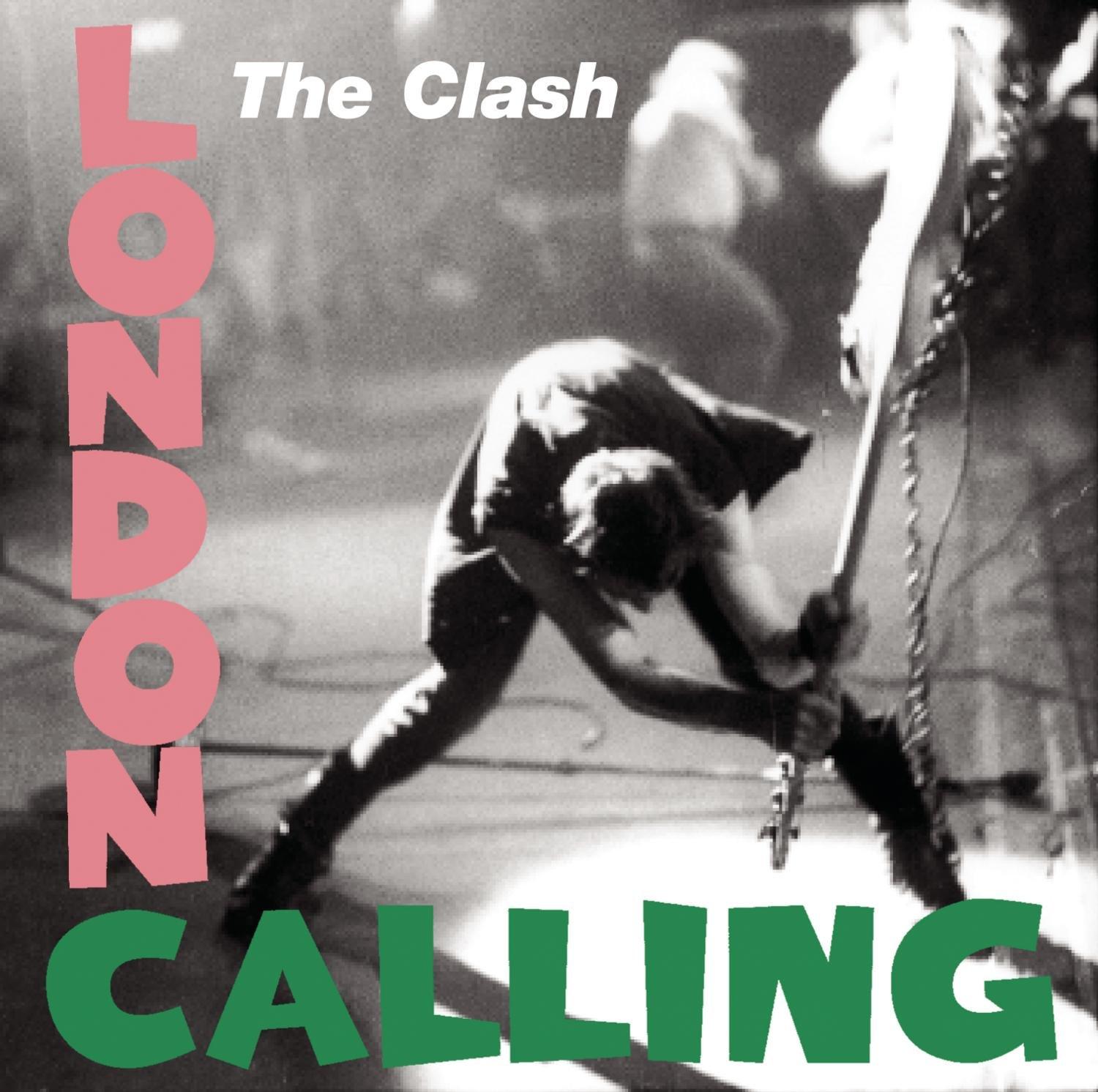
Martin Scorsese once described “Janie Jones” by The Clash as the greatest British rock’n’roll song. One of the many wonderful things about that statement, not lost on Clash fans, is that however charged-up-and-ready-to-blow the opening track of the band’s eponymous 1977 debut album is, it’s not even the greatest Clash song; hell, it’s not even the greatest opening track on a Clash album. There’s serious competition for that accolade on each of their studio albums, but the title track of London Calling fights off all comers. Its ringing apocalyptic alarm announced the most extraordinary album of the late Seventies, which, almost unbelievably, was released 40 years ago next month on 14th December. It’s even being celebrated in its own exhibition at the Museum of London.
London Calling landed at the close of an extraordinary year in Britain. In 1979, Margaret Thatcher had won her first Tory majority, ending the era of post-war consensus politics, and replacing it with a no-compromise, anti-protectionist, monetarist regime that would preside over denationalisation and the decimation of Britain’s traditional industries. The class warfare that had simmered below the surface of British society since 1945 would be openly waged by the Thatcher government, which would mobilise the state against its people and let free-market economics do what it would. The echo of its mantra – “a price to be paid” (three million unemployed) – can still be heard today in talk of “short-term pain” (watch this space). In 1977, The Clash had demanded “a riot of our own”; Thatcher was ready to respond with mounted police, truncheons, and the army if necessary. “Where there is discord, may we bring harmony” indeed.
But all that was still to come (as was The Clash’s musical response to it): 1979 was aberrant in other ways. A sitting MP – Airey Neave – was blown up and killed by an Irish republican bomb as he drove out of the Houses of Parliament; another, the former leader of the Liberal Party, Jeremy Thorpe, was on trial for incitement to murder. The Yorkshire Ripper was at large. Sid Vicious, on bail awaiting trial for the murder of his girlfriend Nancy Spungen, died of a heroin overdose. Had punk’s promise come to this?
The Clash, meanwhile, had lost their standing as the movement’s most resolutely anti-commercialistic band when they had Blue Öyster Cult producer Sandy Pearlman drape their second album Give ‘Em Enough Rope in the power-chord sheen of American rock. Whether or not it was an attempt to crack America, it was a long way from “we’re a garage band” and “I’m so bored with the USA”. The band felt “bruised by the experience” and by the criticism they had faced, says filmmaker Don Letts, who documented what happened next in his compelling The Last Testament – The Making of London Calling (2004). Singer Joe Strummer himself said “We’ve had our fill of bullshit, and now we’re back to the drawing board. We’re really f***ed, but I don’t think we’re f***ed enough to quit. We’re way beyond that!”.
“Their backs were against the wall,” says Letts. There was a sense, he adds, that they needed to “hunker down” and redefine what The Clash should sound like. The result was “London Calling” which would prove beyond doubt that trying to sound like a big US rock band was a waste of time, because, in 1979, the greatest rock’n’roll band in the world sounded like The Clash.c
“London Calling” celebrates the romance of rock’n’roll rebellion in grand, epic terms…” wrote Rolling Stone, “…it digs deeply into rock legend, history, politics and myth for its images and themes. Everything has been brought together into a single, vast, stirring story.”
It was a double album: 19 tracks. Not all were classics (does anyone really love “Lover’s Rock” or “Wrong ’em Boyo”?), but almost all demanded to be included. And from track two, the deranged psychobilly cover of Fifties British rock’n’roller Vince Taylor’s “Brand New Cadillac”, it was clear that London Calling wasn’t going to be quite like anything else. By the time you reached the jazz guitar and whistling that leads into track three, “Jimmy Jazz”, all bets were off. That side one ended with the exuberant ska pop of “Rudie Can’t Fail” showed that this wasn’t an album that opened with its one great song; they were just going to keep on coming.
Side two signalled a step change in Strummer’s lyrical concerns. “Spanish Bombs” introduced spotty teenagers across the world to the Spanish Civil War: “The freedom fighters died upon the hill/ They sang the red flag/ They wore the black one”. “Lost in the Supermarket”, sung by guitarist Mick Jones, showcased one of The Clash’s secret weapons, that high, girlish, heartfelt voice of Jones, which mixes ardour with the pang of something lost. It gave The Clash a soulful instrument other punk bands didn’t have. And, ironically, it helped The Clash break America, when it was put to use on “Train in Vain” – not listed on the album, except for where it was scratched on the run-off groove – which had a run at the US Billboard chart.
For Letts, though, the album isn’t about the greatness of individual tracks, though he has a place in his heart for “London Calling” and bassist Paul Simonon’s “The Guns of Brixton”. It’s about the juxtaposition of musical styles from far and wide.
Letts had first come into contact with the band in west London in the mid Seventies, when he noticed two lone skinny white boys [Simonon and Strummer] in a basement reggae club. He recalls thinking it was pretty brave at the time. He recognised them later when they wandered into the clothes shop he ran on the King’s Road in Chelsea, Acme Attractions, but it was his then girlfriend Jeanette Lee – later to join PiL – who first took him to see them play at an out-of-the-way venue in northwest London. The energy of the band on stage was like nothing he had ever seen before.
From then on, their careers would be intertwined. Letts was the DJ at the Roxy in Covent Garden, where The Clash played on New Year’s Day 1977, and was an early chronicler of the band on Super-8. He shot the videos for “White Riot”, “Tommy Gun” and, in 1979, the famous promo for the “London Calling” single (which went to No 11 in the UK).
The album, Letts notes, was a rejection of what other people thought the band should play or sound like, and signalled they were just going to play what they liked, whether that was rock or reggae, pop or blues. This was no three-chord wonder. There was piano, acoustic guitar, many different drum signatures. “They couldn’t have made that album without [drummer] Topper Headon,” says Letts. “He could play anything.”
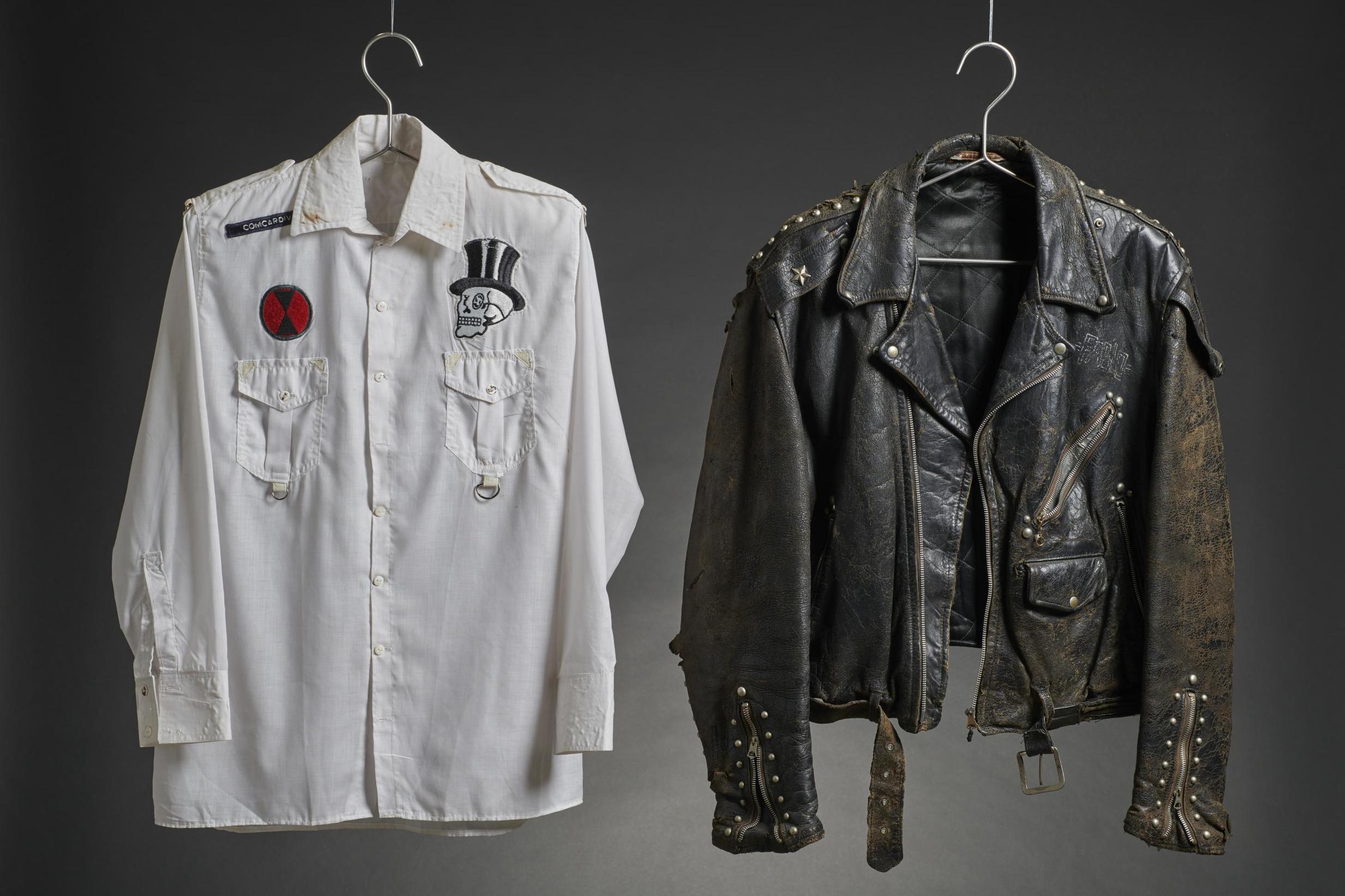
White shirt and leather jacket worn by The Clash, on display at the Museum of London (The Clash)
In some ways, London Calling was not even the most radical UK album of 1979. The Slits released Cut, PiL’s experimental Metal Box ,The Pop Group set off a post-punk chain reaction with Y, while Joy Division subtly tilted rock on its axis with Unknown Pleasures. London Calling only just made the top 10 albums of the year, at number eight. Meanwhile, in Coventry, the 2-Tone movement was producing multiracial bands that did more than just pay homage to Jamaican music like the punks.
But London Calling had something unique. It was lightning in a bottle. All the shades of The Clash’s music – anger, passion, swagger, political fury, romantic heroism, anguish, dread, hope, innocence, humour and exhilaration – had been caught by producer Guy Stevens. It had street smarts and grandeur. In The Last Testament, Clash guitarist Mick Jones was at pains to point out that the songs had already been written, the arrangements already worked out, during a sustained period of intense writing and rehearsing at Vanilla Studios, behind a garage in Pimlico, before Stevens arrived on the scene. But the producer, a famously erratic alcoholic, whose techniques, as Letts’ film shows, were unconventional to say the least, wanted something more. Smashing chairs, pouring wine over a piano as Strummer played, swinging a ladder violently around his head, Stevens captured the spirit of The Clash. As the band’s former manager Kosmo Vinyl puts it in a quote from the Museum of London exhibition: “Guy Stevens wanted to make a record that sounded like scoring a goal at a Wembley Cup Final.”
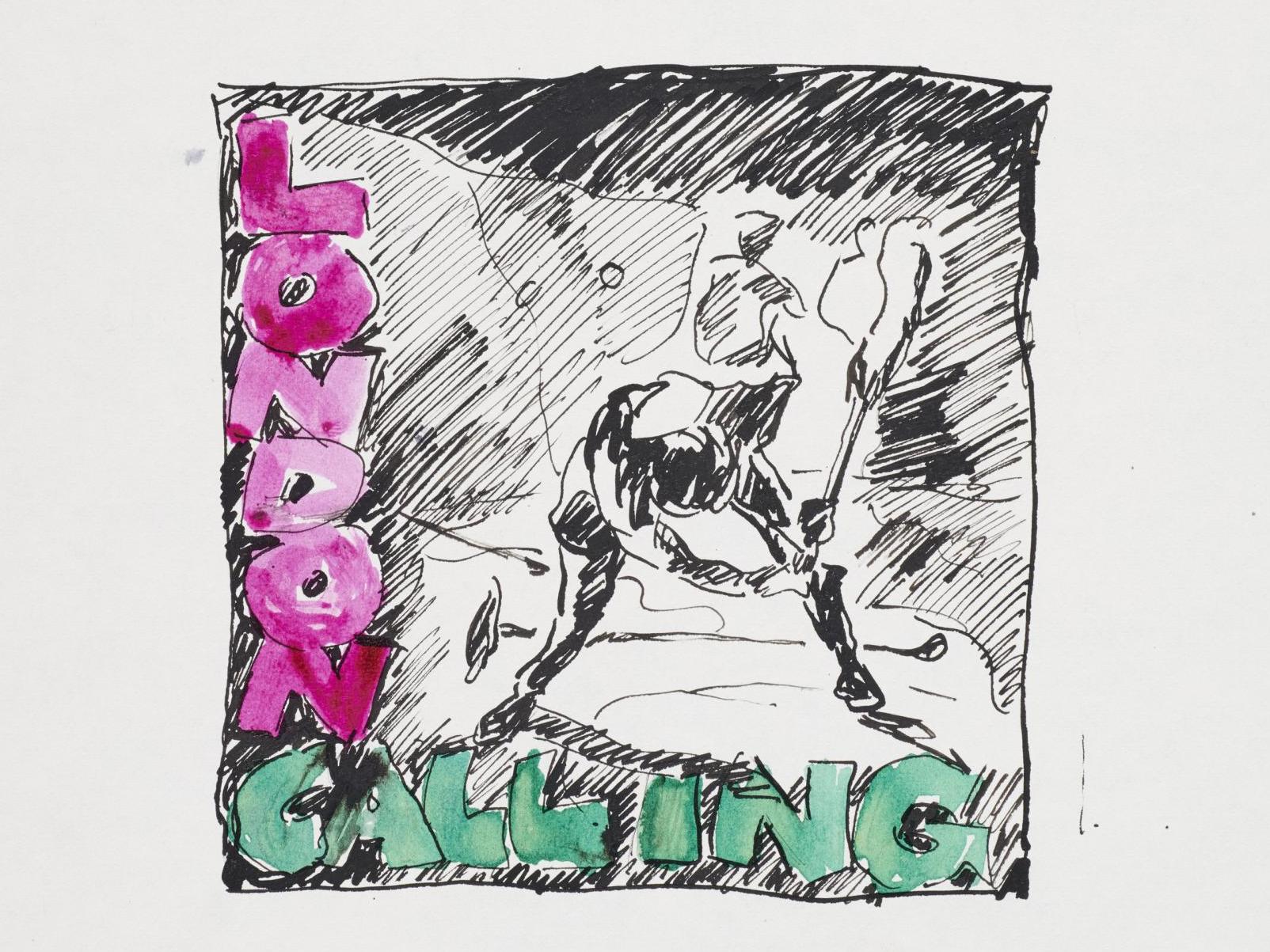
The curator of The Clash: London Calling exhibition, Robert Gordon McHarg III, remembers hearing the album as a teenager growing up in Canada. The track that spoke loudest to him then was “Clampdown”, with its anti-establishment, anti-nine-to-five ethos, although these days, he says, he is drawn to “The Card Cheat” from side three. McHarg moved to London in 1983, met Simonon at the Notting Hill Carnival in 1989, and Strummer shortly after. He now looks after the 20,000 items in the Joe Strummer archive, from which treasures such as the original lyrics written for “Ice Age” before it became “London Calling” will be on display, alongside items such as Simonon’s smashed bass from the album cover shot by Pennie Smith. The cover’s graphic design, incidentally, based on Elvis’s debut album from 1956 was the last straw for some punks, who had taken the “no Elvis, Beatles or The Rolling Stones” line from the B-side of “White Riot” to heart.
The photos chosen by designer Ray Lowry for the sheet inside the original sleeve have been blown up so they can be viewed properly for the first time – they were sourced, says McHarg, from the negatives of nearly 40 rolls of film. “Those alone, I think, would make it worth coming to the exhibition,” agrees senior curator Beatrice Behlen. There are 150 artefacts, she tells me, confiding that it was a stipulation that none of the labelling could be construed as bragging, as “The Clash don’t brag”.
A 1979 preliminary sketch by Ray Lowry for the ‘London Calling’ album art, on display at the Museum of London (Samuel Lowry)
The exhibition, McHarg adds, “is a pretty fun experience”, and includes a mixing desk where you can listen to the individual guitar, bass, drum and vocal tracks that make up the songs.
Does he feel that punk became restrictive for the band – and Strummer in particular, who adopted its speech mannerisms and attitude in a way that completely belied his son-of-a-diplomat, boarding-school upbringing, and even his years as a hippie squatter? “I’ve worked so much with Joe’s archives,” he says, “that [I can tell] there was never a change in attitude within his spirit. His sense of integrity was [the same] throughout, whatever music he was into. If you listen to his lyrics throughout his lifetime, he was always a passionate rebel.
I ask Letts if he thinks Strummer, who died in 2002 at the age of 50, had a sense of his own musical legacy and whether he had a favourite album. “Joe was very hard on himself,” he says, softly. “I don’t think he was ever satisfied with anything he’d done.”
The Clash: London Calling, Museum of London, 15th November – 19th April 2020, admission free. The London Calling Scrapbook, released to mark the 40th Anniversary of the album, is available now
Don Walker is one of the greatest chroniclers of the Australian music experience. His vast catalogue of lyrics was recently set out in book form like the poetry it always was, while his tales of complicated love and downtrodden battlers still ring out from every RSL jukebox and bad covers act. But every few laps of the sun, Walker decides he just wants to write a fun song, tongue firmly in cheek, metaphors left on the shelf. Getting the Band Back Together is one such song. With a chugging rhythm section, plonking bar piano, and Mossy and Barnesy trading lead vocals, this is vintage Cold Chisel, just without the urban decay or wide expanse of the country. Walker has promised a lot more depth on the forthcoming album – dark songs and ballads aplenty. With Cold Chisel recently announcing a huge run of 2020 dates, this playful slab of rock is a perfect first single, and marks a very welcome return.
Touring nationally in 2020. Cold Chisel Blood Moon Tour ‘Getting The Band Back Together’ is the first single from Cold Chisel’s new album Blood Moon.
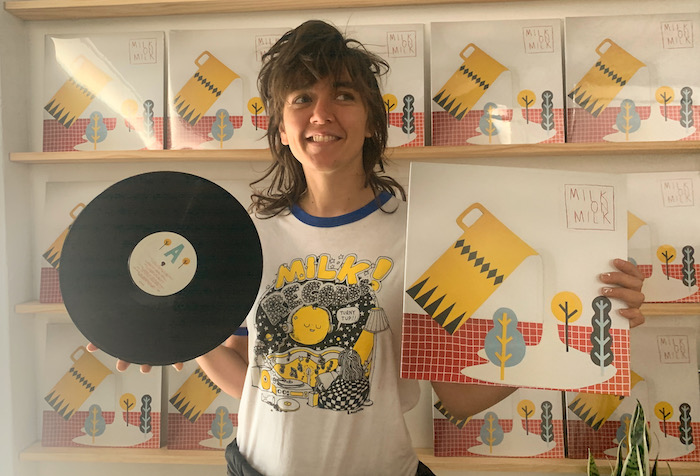
On Friday a new Milk! Records compilation called “Milk On Milk”. It features my version of “Keep On” (written by my friends Loose Tooth) n playing with me on that recording is Jen Sholakis (drums), Dave Mudie (bass) and some extra vocals by Anika (Hachiku).
This is the third compilation we have made as a label (the first two featured my tracks ‘Pickles From The Jar’ and ‘Three Packs A Day’). Barnett and Jen Cloher asked every artist to pick their favourite song by a label-mate and record their own version of it.
It includes some truly amazing tracks from Tiny Ruins, Jade Imagine, Jen Cloher (ft. The Letter String Quartet), Hachiku, Evelyn Ida Morris, East Brunswick All Girls Choir, The Finks, and Loose Tooth. It was (mostly) produced, engineered & mixed by Anna Laverty at (mostly) Audrey Studios in Coburg!
It’s getting harder to draw a common thread through the music coming from Jack River, with chugging indie tunes, bubblegum pop and crunching grunge all receiving even billing on her debut album, “Sugar Mountain”. But while that record was fixated on the past and dreaming of the future, Later Flight steps into the present, marrying bright, dance-pop production from Styalz Fuego with lyrics that espouse the giddy rush of falling in love. The drums seem to be shamelessly nicked from the Yeah Yeah Yeahs indie classic Gold Lion, but that only makes Later Flight all that much better.