In which indie rock’s king of sleaze drops the character of his two previous albums and makes an album devoted to his new girlfriend, delivering warped tales of love, ass-eating, and debauchery in Miami. It feels like the response to Miami Memory was muted, and that’s understandable: People are cynical toward other people’s new loves. But here Cameron takes great strides with his songwriting, delivering his best album yet.
This year Australia’s Alex Cameron shared a new song, “Miami Memory,” via a video for the track. The video stars actress Jemima Kirke (Girls) and sax player Roy Molloy. The song is his first new music since his 2017 album Forced Witness. Kirke is Cameron’s real life romantic partner and he has dedicated the song to her. Perhaps the explicit lyrics are about their sex life? “Eating your ass like an oyster/The way you came like a tsunami,” sings Cameron at one point. Earlier in the song he sings: “Making love in your momma’s bed/Making love on the floor/Making love in the hotel room/We forgot to shut the door.” If it is about Kirke, let’s hope her mom doesn’t hear it!
Cameron had this to say about the song in a press release: “‘Miami Memory’ is a story about how we audition in the present for our future selves to enjoy in retrospect. In that way, tender memories that we share together are captured in thought and stored with the same electricity that keeps our heart beating. It’s a gift for my girlfriend Jemima, and it is dedicated to the artist Greer Lankton and her partner Paul Monroe. I am lucky to have learned that a group of people can be a shining light.”
Alex Cameron new single titled “Miami Memory,” a steamy bit of baroque pop that explores Cameron’s relationship with the city of Miami and his girlfriend Jemima Kirke. It comes with a vibrant, lustful new video directed by Cameron himself that also stars Kirke and Cameron’s sax player Roy Molloy.
Alex Cameron new single titled “Miami Memory,” a steamy bit of baroque pop that explores Cameron’s relationship with the city of Miami and his girlfriend Jemima Kirke. It comes with a vibrant, lustful new video directed by Cameron himself that also stars Kirke and Cameron’s sax player Roy Molloy.
‘Miami Memory’ by Alex Cameron, out now on Secretly Canadian Records.
Within each of their records, the Australian duo creates a universe of its own. It has always been hard to pinpoint a word that describes the sound of Jonnine Standish and Nigel Yang without losing their mysterious charm. Their fourth album “Venus in Leo” was inspired by the Melbourne indie scene and shows the duo in a better state of mind than 2014’s Psychic 9-5 Club, which was heavily marked by the suicide of original band member Sean Stewart. On Venus in Leo, HTRK approach the topics of our digitalized society. The lyrics focus on longing, intimacy and failed love within the age of social media. Similar to its predecessor, the interplay between Standish’s unique vocals and Yang’s guitar play is unlike any other electronic/ indie duo.
There’s a certain level of intimacy and warmth delivered in both lyrics and melody, that will draw the listener into the world of this album immediately. The duo discovers its underground rock past on the nine tracks of the album, delicately mixing electronic productions with post-punk references.
Even though you can sense a certain degree of romantic denial and shattered hopes, there’s a bit of hope peeping out of the overall melancholic atmosphere that lies within the tracks. In a wonderful and decelerated manner, Venus In Leo explores the abysses of desire, obsession and intimacy.
Every once in a while a new recording comes along with a line-up that makes your spine tingle, and here it is; “Attitude” by Lonerider. Not only does this quintet feature Steve Overland (FM, Solo, Shadowman), Steve Morris (Heartland, Shadowman) and Chris Childs (Thunder) but legendary drummer Simon Kirke of Free and Bad Company fame. With Brain J Anthony finishing the line-up we have a real force to be reckoned with. What are we to expect from this group of musicians? If you like Bad Company then this is going to be a treat for you. We have the feel of that classic Bad Company that we know and love, yet the songs are modern, fresh and vibrant. Simon has a drumming style that is unmistakeable and this shines through on all of the tracks (and an extra four on the LP version!).
Some old friends with a new band, Lonerider brings together FM vocalist Steve Overland, Heartland guitarist Steve Morris and Bad Company drummer Simon Kirke. The result, very much as you’d expect, sounds like a hybrid of FM and Bad Co, but a few cracking choruses really hit the mark, despite a predictable mood. Melodic rock and AOR has always remained an important backbone of Real Gone and this album was streets ahead of the competition
Lonerider with “Fast Train”.
The Band is: Steve Overland: All vocals (FM / Shadowman / Solo artist) Simon Kirke: Drums (Free / Bad Company) Steve Morris: All Guitars and keyboards (Ian Gillan / Heartland) Chris Childs: Bass (Thunder / Tyketto) Brian J Anthony: Acoustic Guitars, mandolin and percussions (Steve Walsh / Overland)
Next up in the Grapefruit psychedelia collection and due for release January 31st is ‘A Slight Disturbance In My Mind – The British Proto-Psychedelic Sounds of 1966’!
This 3CD collection features 84 tracks examining the ‘experimental pop’ element of the British music scene during that epochal year with a dazzling mix of nascent psychedelia, introspective pop & freakbeat!
Housed in a clamshell box containing a 52-page booklet crammed with biographical information and priceless period photos and memorabilia.
While the likes of “Rubber Soul”, ‘See My Friends’ and ‘Still I’m Sad’ had served notice in 1965 of British pop’s heightened level of ambition, 1966 would prove to be an even more tumultuous twelve-month period as experimentation and innovation grew to new levels.
• The release that August of “Revolver” – whose cataclysmic closing track ‘Tomorrow Never Knows’ landed amongst the record-buying public like an impenetrable missile from outer space – brought the concept of psychedelic music out of the margins and into the mainstream.
• However, psychedelia – condemned by national newspaper The Sun as “the new and dangerous sound in pop music” – had been percolating throughout the year. The word was already in subterranean use in America, adapted by the likes of The 13th Floor Elevators and Hollywood hustler Kim Fowley, who in late 1965 had become the first person to promote a record with the term “psychedelic”.
• Arriving in London in March 1966, Fowley became a proselytising influence for the new sound, instructing bemused young British bands to “act psychedelically”. His sojourn coincided with the relocation of Californian band The Misunderstood, whose incendiary sound and stage act was a major influence on a new generation of British acts.
• Meanwhile, serial pioneers The Yardbirds were making increasingly audacious music, their new manager Simon Napier-Bell instructed the young John’s Children to become “the first psychedelic group”, while mod band The Creation developed an intriguing pop-art approach.
• Featuring 84 tracks, A Slight Disturbance In My Mind: The British Proto-Psychedelic Sounds Of 1966 examines the “experimental pop” element of the British music scene during that epochal twelve-month period with a dizzying, dazzling mix of nascent psychedelia, introspective pop and what’s been retrospectively labelled freakbeat.
• We feature vital contributions from some of the era’s biggest names (The Kinks, The Yardbirds, The Hollies, The Animals etc), a bunch of highly collectable cult classics, a huge stash of unissued-at-the-time nuggets and early outings for such future legends as Bowie, Bolan, Slade and The Bee Gees.
• Housed in a clamshell box containing a 52-page booklet crammed with biographical information and priceless period photos and memorabilia, A Slight Disturbance In My Mind is a glorious snapshot of British pop storming the gates of a new, strange and wonderful dawn.
The Mike Kinsella-led group’s third full-length album “American Football” (LP3) is a beautiful return to form, brimming with the band’s signature sonic elements while also shedding and reinventing so many aspects of their sound. It’s a wonderful step forward for them creatively.
By rights we should hate this album. It’s an incessant moan, flips the math-rock-lite thing which gotten boring last decade and is stuffed to the brim with whiny Yank vocals. But the songs are undeniable good. And it doesn’t stick around long enough for you to get pissed off yourself.
LP3’s most defining quality is how expansive it feels. On the sweeping seven-minute opener “Silhouettes,” gentle bells and chimes greet lush dueling guitars and pulsating drums as Kinsella’s voice floats into the track’s misty corners. Whispery reverb draws out each note as he ponders the “muscle memory” of love, and whether or not romantic strife is just the result of simply going through motions.
The swelling ballad “Every Wave To Ever Rise” is pensive and cavernous, contemplating love’s inevitable heartbreak over wandering guitars and longing atmospheres. “Love is the cross you bear/ You’re every wave to ever rise/ Your slow retreat is no surprise,” Kinsella croons poetically, full of bittersweet acceptance over love’s ebb-and-flow. Buoyed by a trifecta of stunning features from guest vocalists Hayley Williams, Rachel Goswell and Elizabeth Powell, American Football (LP3) is 2019’s most endearing journey of melancholy, and another high point in the Midwestern band’s dazzling career.
Not long after Polyvinyl Records released American Football’s self-titled debut album in 1999, the band called it quits, having only played a smattering of Champaign-Urbana college house parties and sets at small clubs like Chicago’s legendary Fireside Bowl. Such an inauspicious turn of events made what followed all the more incredible. Over time, the record went on to become one of Polyvinyl’s bestselling releases to date, and ended up serving as “one of the single most influential rock records of its time” according to Noisey and many others.
Album #2 from Melbourne surf, soul, garage punk rock band Money For Rope is called “Picture Us” and was recorded, produced, mixed and mastered by the band themselves in a house by the sea in Victoria, Australia over the summer of 2016. Spawned from the same fertile Melbourne music scene which has fostered not only Courtney Barnett, but also other friends including King Gizzard And The Lizard Wizard, The Goon Sax and Rolling Coastal Blackouts Fever, Money For Rope released ‘Picture Us’ off the back of a dogged touring habit which has kept them on the road near constantly for the last four years.
The psych-tinged garage rock of Money For Rope is right up my alley and not only because the opening track of Picture Us sounds like the younger sibling of The Doors’ epic ‘The End’.
Hold’ might not be the song I would have chosen to open the LP because it feels more like a noisily melancholic show-closing track, however the ‘Actually’ seems the perfect single to set the tone for the following journey. ‘Have you ever slept this close to a killer?’ lead singer Jules McKenzie snarls with a mean grin before the untamed guitars crash down. It conveys the band’s signature wild and careless attitude towards songwriting (and their listener’s eardrums). This track, “Actually”, was the first track written for this record. We started it staying in a small Air BnB flat in Berlin owned by someone who worked for a music products company; there was an upright piano in a beautiful first floor apartment in an old building. We could spend our evenings in the middle of a hot summer heat wave playing battery amps and piano with the windows wide open listening to the sounds of Kruezberg below. We would wander around the city late at night, wondering how we became fortunate enough to be here, when the secret to ourselves was, just that we had always wanted to.”
‘Earl Grey’ is built on the mellower side of the river, while ‘Stretched my Neck’ beats down with more heavy guitar riffs.‘Trashtown ironically light mood and groovy riff reminds like something born by the Californian Coast line mid-sixties.
The fuzzy haze that draws itself through Picture Us should come as no surprise considering the band’s base in seaside town, Melbourne. While the instrumentation is beautifully noisy and untamed, the vocals form the epicenter of the compositions. Punchy lyrics and punky snarls remind of The Talking Head’s David Bryne and we all know they go just too well with groovy instrumentation.
The closing track might come as a surprise to many. Only voice and guitar it almost sounds like an intimate campfire setting with friends. Somewhere strolling along the beach that connects the present with the past are where Money For Rope’s winds blow from.
Band Members
Julian Mckenzie – Vox/Guitar/Sax
Rick Parnaby – Keys/Telephone
Erik Scerba – Drums/Tambourine
Chris Loftis – Kazoo/Drums
Ted Dempsey – Bass/Laser Printing
“Picture Us” is set to be released March 2019 on German label Haldern Pop Recordings and Australian label Cheersquad Records & Tapes, with distribution in the UK by Forte & in the US by Cobraside.
Elizabeth’s debut solo album, “The Wonderful World Of Nature”, is everything. It. Is. Everything. She sings of desire, infatuation, and heartache with unnerving honesty and openness. The language Elizabeth uses is straight-forward and unembellished, and it’s exactly this which makes her songs so poetic and affecting.
The first time I heard Elizabeth sing “I want you in every way. You don’t treat me nicely and I’m scared I’m gonna stay,” on “I Want You,” I doubled over, both physically and emotionally. In 2018, the frontwoman of Australian rock outlet Totally Mild released Her, an album that brilliantly unpacks the bittersweet, socially convoluted journey of domesticity and the lack of a blueprint for it within the context of queerness.
Her debut solo album, The Wonderful World of Nature, is its crushingly honest divorce counterpart. In a world that’s lacking many queer divorce albums at all, to hear one as honest and mind-bogglingly raw as this is a transformative treasure everyone should experience.
The Wonderful World Of Nature plays like a 11-stage gauntlet of post-breakup emotional grief; the path to moving on isn’t a straight line and might never end. Song-to-song, and often verse to verse, the winding line of grief makes its presence felt. “If not with you, then with who?” Elizabeth nearly howls on “Beautiful Baby,” the gently rocking first track, which gives way to “Parties,” a song about how distracting yourself with partying leads you to wondering if your ex is out doing the same, which, in turn, makes you miss them more. “Death Toll” is a slow march about the ways a break-up can leave you devastated, but also finds Elizabeth lamenting, “I will never be the same happy” after saying “It’s over baby, there’s nothing more to say.” The next track, “I Want You,” has Elizabeth softly singing over a piano, “You don’t treat me nicely, and I’m scared I’m gonna stay,” capturing layers of self-loathing, lust, and regret in a single line. The Wonderful World isn’t a bible for how to get over a breakup, but it feels more honest than breakup albums usually are; it’s never just a “fuck you” and it’s never just an “I wish we were still together.” When two people collide, they break up in unpredictable, awful, restorative ways.
The Wonderful World of Nature released Universal Music Australia
All three Vivian Girls miss the rain. “It replenishes,” says Cassie Ramone, singer, songwriter, and guitarist. “It nourishes life!”
The band, who grew up and made their name on the East Coast, live in Los Angeles now. It’s far from the New Jersey basement shows, the 24-hour diners they frequented together as teens, and the tattoos they got to commemorate it all. Ramone, now 33, singer-bassist Katy Goodman, 34, and drummer Ali Koehler, 32, have been secretly rehearsing for months. They were recording “Memory”, their first album in eight years — and the first since they announced their break-up in 2014. “When we broke up, we broke up for real,” says Goodman . “We had been going hard for a long time, and we were exhausted. But we always knew we had something special, and even when we broke up, we knew there was a strong chance we would reunite some day.”
“Vivian Girls are back and they haven’t forgotten what they went through,” reads the band’s press release for “Memory”. Their fans haven’t forgotten either; more than any other buzzing indie band that emerged in the 2000s, Vivian Girls saw the worst of what an intensely misogynistic music community was capable of. Social media had come into its own as a constantly brawling free-for-all, and many still recall the chauvinist thunderdome that was Brooklyn Vegan’s unmoderated comments section, which finally shuttered in 2016 — and all the hate it housed for the band. Kathleen Hanna said that the comments left on Vivian Girls’ posts made her cry; “Vivian Girls reuniting has me reflecting on how terrible it was to be a ‘female musician’ in 2009,” wrote singer-songwriter Hether Fortune.
“I remember crying a lot!” says Goodman. “I would look out into the crowd [at shows] and see the one person who looked bored or mad. Being an anonymous internet troll was still a new thing to us… We felt like if we could just meet them, they wouldn’t hate us.”
At the time, the Vivian Girls easily stood out amid the lo-fi garage rock boom of the aughts: they revived the jangly fuzz-rock sound of Slumberland bands à la Black Tambourine; infused it with the cherubic, girl-group harmonies of the Ronettes; then knocked it all off-kilter, like proto-grunge punks the Wipers. It was a winning combination, and would spawn a decade of imitators. But that wouldn’t stop the trolls, who incessantly took swings at the band over their 12-year career, for what is now best explained as a poorly masked hatred of women coinciding with the boom of blog-fueled indie rock. The hate wore on the band, even after their break-up.
“We’re coming out swinging,” says Koehler. Vivian Girls played their first show in 2007, opening for Bikini Kill drummer Tobi Vail’s band, Old Haunts. “[Vivian Girls] sound like C86” — a 1986 indie pop compilation — “Because they are a pop band who listens to punk. Or maybe they are a punk band who happen to write pop songs,” Vail wrote in her zine, Jigsaw. Indie rock critics would later describe Vivian Girls’ music as “unschooled,” “amateur charm” and “rustic instrumentation,” but most listeners are likelier to call it what it is: “punk.” “We were intentionally lo-fi because we were a punk band,” says Ramone. “We did not want a highly-produced sound.”
“The first practice we ever had, our band goals were recording a record and going on tour,” says Goodman. “And being in Maximum Rocknroll,” adds Koehler, referring to the influential punk zine.
Goodman studied physics and education at Rutgers, and Ramone studied art at the Pratt Institute. Between them, the two friends managed to forge a stellar network of indie rock musicians between New Brunswick, New Jersey, and Brooklyn. “It was this frenzy of creative energy going on amongst our peers at the same time,” says Goodman. They counted Screaming Females, Matt and Kim, and Titus Andronicus as their peers in the scene. “They were our high school friends,” she says of Titus Andronicus. “They were touring America! They were putting out real records on labels! So we thought, ‘We should do that too!’”
“The band was starting to take off my senior year of college,” says Ramone. “I basically pulled a Cher from Clueless total bullshittery and excused myself for going to SXSW one year to play shows. I was turning in Vivian Girls art for all my art classes ’cause I didn’t have enough time to do my homework. But it worked out! I was able to graduate.”
By the time Vivian Girls released their self-titled debut in 2008, they had also graduated from the basement shows that served as the genesis of their sound. They were opening shows for Jay Reatard, Black Lips, Sonic Youth, and Yo La Tengo. The band then invited Koehler, Goodman’s friend at Rutgers, to replace former drummer Frankie Rose; within a matter of months, they found themselves touring Puerto Rico, Europe, Japan, Australia, and New Zealand. “I’d just finished college,” said Koehler, who majored in German language and literature. “I said to my mom, ‘Katy and Cassie asked me [to] join Vivian Girls full-time, but I’d be gone a lot.’ And my mom was like, ‘What else are you gonna do? Sit at home all summer?’”
As Vivian Girls’ star began to shine well outside the sanctum of their local punk scene, the space that used to insulate artists from their critics had all but disintegrated, thanks to the increasing ubiquity of blogs and social media. “We wanted to produce music that would resonate with people in the [D.I.Y.] scene, and maybe elsewhere,” says Ramone. “Once we weren’t in our general circle of friends anymore, the misogyny jumped out.”
“People Had No Fucking Clue What to Do with Vivian Girls,” wrote critic Annie Fell for Vice just last year. Ten years prior, though, the same outlet openly indulged in rating women on their appearances. Hipster Runoff, the now-defunct cesspool of countercultural crit, referred to Vivian Girls as “slutwave” and titled a post, “The Vivian Girls show off their banging bikini bodies . The comments section of Brooklyn Vegan, the de facto media hub for the indie scene at the time, had already united against the band. Though it should have been a net good that women were tipping the scales and starting more rock bands of their own — such as Best Coast and Dum Dum Girls — men on the internet insisted on framing Vivian Girls as foils to other women in the genre, placing special emphasis on their appearances.
“My poor dad didn’t have to read all that,” says Koehler, whose father created a Brooklyn Vegan account to spar with anonymous naysayers. “I will always remember one comment: ‘Oh, look. It’s too fat, too skinny, and too tall.’ I think it’s funny now, but it’s really not. We’re all straight, cis white women — and it still sucked! What hope is there for anyone else?”
The band eventually found their own crafty ways of coping with negative attention: “We played a college show one Halloween in Connecticut,” says Koehler. “We saw some kid tweeting mean stuff about us. When we found out he was going to write about [our] show for the school newspaper, we reached out and told him he could interview us if he wanted.”
“We just killed him with kindness,” she continues. “Someone was being shitty about us so we sat down with him face to face and and disarmed him, ’cause he saw us as people and not some buzz band to troll.” It’s rare, though — and hardly recommended — to meet every detractor face-to-face.
The Compa-NY Studios in Glendale, California, is littered with shakers, tambourines, and a red Fisher-Price xylophone — which producer Rob Barbato will later filter through a delay pedal. In the booth, Goodman tries out harmonies in front of the microphone. “Baby angel voice,” she sings, jazz-like, before the reverb sets in. “Haaaah!“
Babies are the topic du jour in the studio. Koehler is seven months pregnant with her daughter Wendy at the time of the recording, but only complains about her shortness of breath. Otherwise, she powers through drum fills and harmonies with ease. The last time Koehler had been in a recording studio was in 2014 with Upset, her project with ex-Hole drummer Patty Schemel; before that, she drummed in Best Coast. Koehler pats her belly. “I’m gonna see how being a parent goes, before we think about touring again.”
Goodman, who parents a toddler with Todd Wisenbaker — her husband and counterpart in the indie-pop band La Sera — imparts the occasional bit of wisdom. In the early days of Vivian Girls, she taught high-school science full-time in Princeton, then commuted to Brooklyn to play shows. She now develops programs for fellow STEM educators. “I’m such a Virgo,” says Goodman. “I love to know the rules of the game. But then I found out that having a baby is not a game!”
Ramone doesn’t do baby talk, unless it’s about the Babies, her project with singer-songwriter Kevin Morby. She wanders in and out of the studio, often tending to her journal and checking the time during every step of the recording process. By night, long after Goodman and Koehler return to their families, Ramone leaves her journal open and lets her guitar unwind, cranking out rambling solos and feedback into the wee hours of the morning.
“There’s a Day Cassie and a Night Cassie,” explains Barbato. He first came into contact with the Vivian Girls’ universe producing La Sera’s 2012 LP, Sees the Light, then later produced the Babies’ 2012 record, Our House on the Hill. “Day Cassie is pretty pragmatic. She keeps a list, checks it off and moves everyone forward. Night Cassie is freer, and more vulnerable.”
Although Koehler and Goodman relocated to Los Angeles years ago, Ramone stayed behind in the Northeast, volleying between Brooklyn and her parents’ home in New Jersey. D.I.Y. venues began shutting down left and right, and the people she knew in the scene were leaving New York. She used to churn out new songs on the road with Vivian Girls — often teaching the band their parts during sound checks — but Ramone had grown increasingly secluded and focused on her visual-art practice. It was during a regular phone call one day that Goodman said, apropos of nothing, “Let’s do the band again!”
“I was originally trying to recruit a backing band for my next solo album,” Ramone says. “It sounded cool, but it just wasn’t going as smoothly as it did with [Vivian Girls]. I tried so hard to fit a square peg into a round hole with other people. So when Katy called me up, I was relieved. Once I got to L.A., I wrote most of the [Memory] songs in two weeks.”
“You don’t see too many bands with a bond like Vivian Girls,” says Barbato. “You usually see a one-person project, then they [hire] people to play with them. Cassie, Ali, and Katy have been friends since they were kids. But I think when it comes time to express stuff, it’s still hard for Cassie to maybe say things in front of them sometimes. It was easier for me to turn the lights down in the studio and let her go.”
“I’m a big [Burt] Bacharach fan,” says Cassie Ramone. “But I also love grit and punk simplicity. When I write, I try to merge those two ideals.”
From the very beginning, all Vivian Girls songs were written in conversation with the pop legacy built by titans like Brian Wilson, Burt Bacharach and Phil Spector. In their 2008 seven-inch, featuring the jangle-punk title track “Wild Eyes,” the Vivians conjure the hormone-fueled melodrama of the Crystals: “Say you’ll hold me till I die/Wild, wild eyes.” Flip the record and you get its chilling companion song, “My Baby Wants Me Dead” — a slow-cooked, escalated update on Carole King’s “He Hit Me (And It Felt Like a Kiss)” — eerily relevant in a time of surging mass gun violence.
“Since I was a child I was analyzing pop song structures,” says Ramone. “Even with Disney music. That’s why I’m such a big Bacharach fan. But I also love grit and punk simplicity, so when I write, I try to merge those two ideals. People can dislike my music if they want, but it bothers me when they’ve said it’s not thought-out or ‘lazy.’”
In writing the overcast surf-rock track, “Something to Do,” Ramone calls to mind Bacharach’s “I Just Don’t Know What to Do” as she roves between New Jersey diners and beaches. And in the listless, psychedelic march that is “Sludge,” she cites Jimmy Webb’s baroque pop masterpiece, “MacArthur Park” — filtered through a X-Vex Fuzz Factory pedal. But much like the architects of pop’s golden age, Ramone harbors an impenetrable melancholy beneath the sanded-down, bubblegum shellac of Vivian Girls’ music.
Drowsy with reverb, her verses ricochet between walls of static; her lyrics, more intelligible in Memory than in most releases, recall both the sighing theatrics of an embattled Brönte heroine and the blunt force of Minor Threat. “I lost it all/My final brain cell banged against the wall,” Ramone sings in the shoegazing lead single off Memory, “Sick.” As usual, her bleak visions are softened by Goodman and Koehler’s harmonies. “Tomorrow maybe I’ll wake up and say/Enough.”
“The main themes are poor mental health — a classic,” Ramone says with a laugh. “And love lost. For the first few records I only shared the lyrics where I wanted harmonies on, but with [Memory] I was like, ‘Whatever.’ If you’re gonna go there, you might as well just go there all the way.”
While 2011’s Share the Joy sardonically basked in the bubblegum (case in point: the Shangri-Las pastiche “Take It As It Comes“), 2019’s Memory shares both sonic and thematic D.N.A. with their 2009 LP, Everything Goes Wrong. The album came out during the advent of the glossy synth-pop sound known as chillwave (think: Washed Out, Toro Y Moi), when music critics already began foretelling the waning relevance of indie rock at large, as electronic-based music began to saturate the market. But instead of capitulating to the demands of any trend, Vivian Girls leaned harder into their punk-pop roots.
In Everything Goes Wrong — the only other album featuring Koehler — Vivian Girls first crash through the gates with brackish opening track “Walking Alone at Night.” They ramp up the energy with the hardcore push-and-shove of “I Have No Fun,” then go darker in “You’re My Guy” — a satirical jab at the band’s male antagonists and their warped fantasies. (“You’re my guy/You fuck me all the time/I’m lonely every night,” hisses Ramone, “Love ya’ though you love to see me fall.”)
Altogether, their 2009 album painted a grittier picture of the scene they’d come to occupy: a wilderness of faces they weren’t sure they trusted anymore. Yet Vivian Girls maintained their sense of humor, even as they continued to be publicly vivisected in the indie blogosphere. While touring in support of the album, all three members of Vivian Girls got matching tattoos that read COOL DUDE ATTITUDE.
Those days still sting, 10 years later. Writing and recording a new album also meant bracing themselves for another wave of sexist backlash. “Doing our press shots for this album, at one point I asked the photographer, ‘Can we shoot one that’s just our faces?’” recounts Koehler over the phone. “When we left, Katy said, ‘Thanks for saying that. I fucking hate taking pictures of my body.’ I was like, ‘I do too!’”
The misogyny leveled at the band was inextricable from their narrative. But now, the story of Vivian Girls no longer belongs to their detractors, most of whom remain as nameless as they are unremarkable. “Every day that came before is just an empty shell,” sings Ramone on the title track; with Memory, the band is committed to writing new stories together.
“Back when Vivian Girls started, we weren’t in control of the narrative,” says Goodman, who recently established the band’s first Instagram account. “We were a lot more reliant on blogs and music publications. They would take the art we make, process it themselves, and people would rely on those sources to form their opinions on things. Now you can just follow all your favorite artists on social media. Which is powerful!”
“It took a lot for me to just like leave the comfortable little hole that I had dug for myself in Brooklyn,” says Ramone. “But no risk, no reward, you know what I mean? To come out and do something like this — I have a feeling it’s going to be worth it.”
Memory is set for release September 20th via Polyvinyl Records.
Vivian Girls — CassieRamone, now 33, singer-bassist Katy Goodman, 34, and drummer Ali Koehler, 32 — will release ‘Memory, their first album in eight years, later this fall.
You know when you get to that time, I suddenly found myself saying such infamous quotes like ‘they don’t make music like this anymore’ and trust me – it scares me quite a bit. But on the bright side of things that can also work as a compliment, right? There’s something about the sound of Liverpool-based combo The Night Café that instantly clicked with me and I simply forgot to recommend it here , For me personally there’s a sense of old-fashioned beauty and nostalgia in their melody-driven indie-rock, something that reminds me of the heydays of the early 00s, I must say. From old Britpop heroes like Elbow and Doves, to the more melodic side of bands like Maximo Park – 0151, is the debut album of The Night Café is packed with plenty of reminiscences and ingredients of Britain’s long-lasting legacy of melody-driven guitar pop
‘Turn’ is taken from The Night Café, from their debut album ‘0151’ out 23rd August.
Songs like Turn and Finders Keepersare carried by a warm honesty and this really rare talent for melody and composition. In-between the album the Brits experiment with electronic and slightly more psychedelic elements as well but are eager to keep the focus on the songs. You can literally sense how they enjoy playing together; how they love to compose new songs, even if that results in a slightly overloaded album (it contains 18 tracks although lots of them are interludes). Maybe that’s what I love most about this little indie music gem called 0151 – it represents the youthful hunger for adventure, one that isn’t as saturated and worldly-wise as I might sometimes appear. It’s a reminder of music’s energy and power and I really hope it reaches out to the young at heart out there as well.
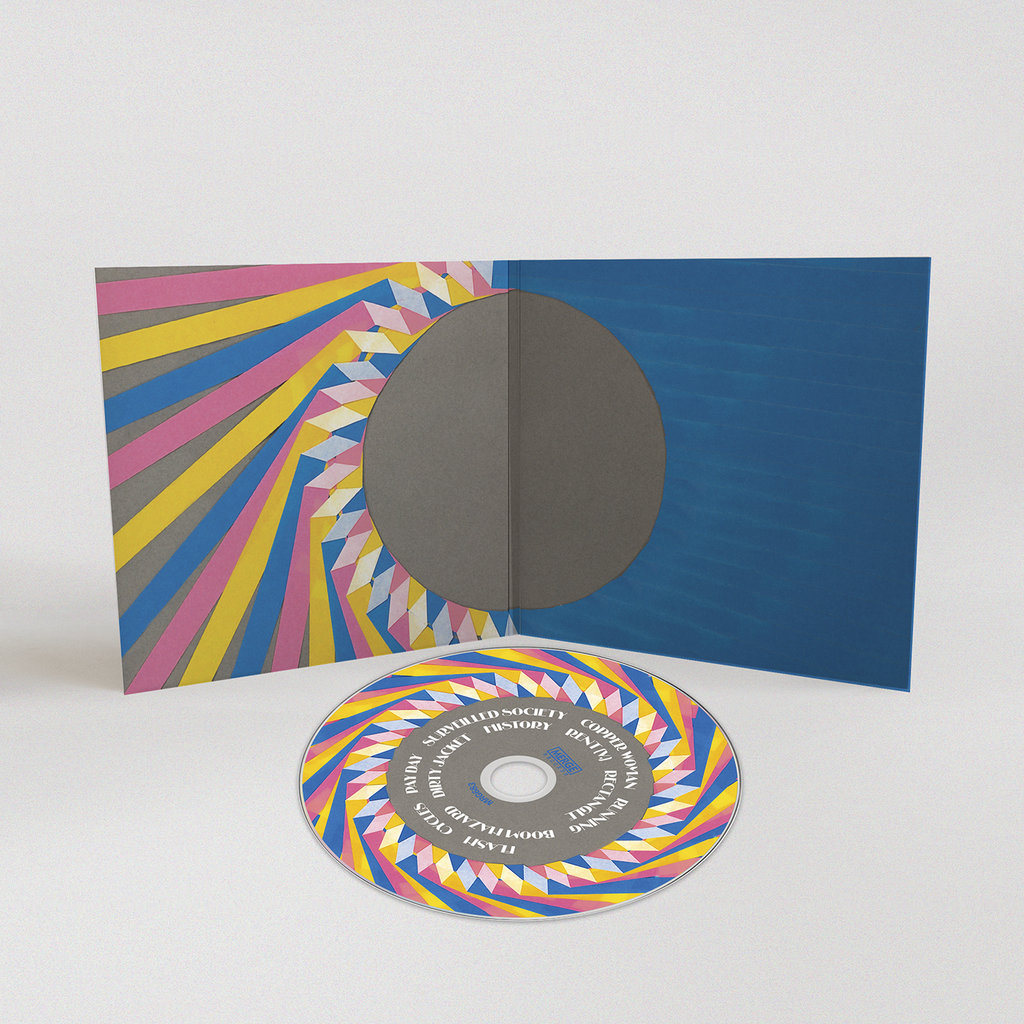
A product of the burgeoning Washington, D.C. punk scene, Gauche fill their songs with the kind of biting political commentary you’d expect from a group making music in the shadow of the White House. “Pay Day” is an unsparing look at wage inequality; on “History,” Mary Jane Regalado vents her rage at seeing her accomplishments stolen by men who take the credit. But like the equally political post-punk groups of the late ’70s, Gauche also know that dancing can itself be a weapon. Accordingly, the group employs bouncy sax, tense bass lines, and riotous yelps—conjuring the B-52s, Le Tigre, and Essential Logic in one manic package.