It takes roughly 10 seconds to fall in love with Australian band U-Bahn. If you miss early Devo, then you’ll adore U-Bahn. as they come stomping into 2019 with a collage of glam-pop and new wave. Describing their music as ‘nostalgia for futures that never came to pass; suburban boredom and sexual dystopias’, this Melbourne 5-piece will thrill and baffle audiences alike with their debut LP, teeming with futurist art-punk.
Originating from singer Lachlan Kenny’s bedroom recordings, a chance meeting between him and Zoe Monk over the purchase of a vintage drum machine, followed by the recruitment of Leland Buckle, Jordan Oakley and Mitch Campleman, the band quickly honed their live show before taking their ideas to the stages of the Melbourne DIY circuit. Kenny was eager to set down their ideas on vinyl; crafting a suite of self-recorded and mixed songs that’s charm lies in their lo-fi production values. Bubblegum centrepiece “Right Swipe” is draped in reverb, analogue synths and off-beats – while their clear penchant for melody and memorable hooks shines through the bizarro aesthetics. Its addictive chorus shows the band can leave you humming despite their abstract thinking; the synths and bass swirl around Kenny’s ironic/serious lyrics, ‘baby you can’t resist the manipulation’.
The band approaches song writing like children at play; open to anything, delighted with results that seem weird or amusing. This methodology, along with their clear love for outsider art, Devo and R. Stevie Moore – the aristocratic glamour of Brain Eno combined with the icy robotics of Kraftwerk; the wild ride of genres and ideas that define U-Bahn’s style is steeped in a heritage of music’s strange and unforgettable mavericks.
Second single from U-Bahn’s S/T debut album, released through Future Folklore records.
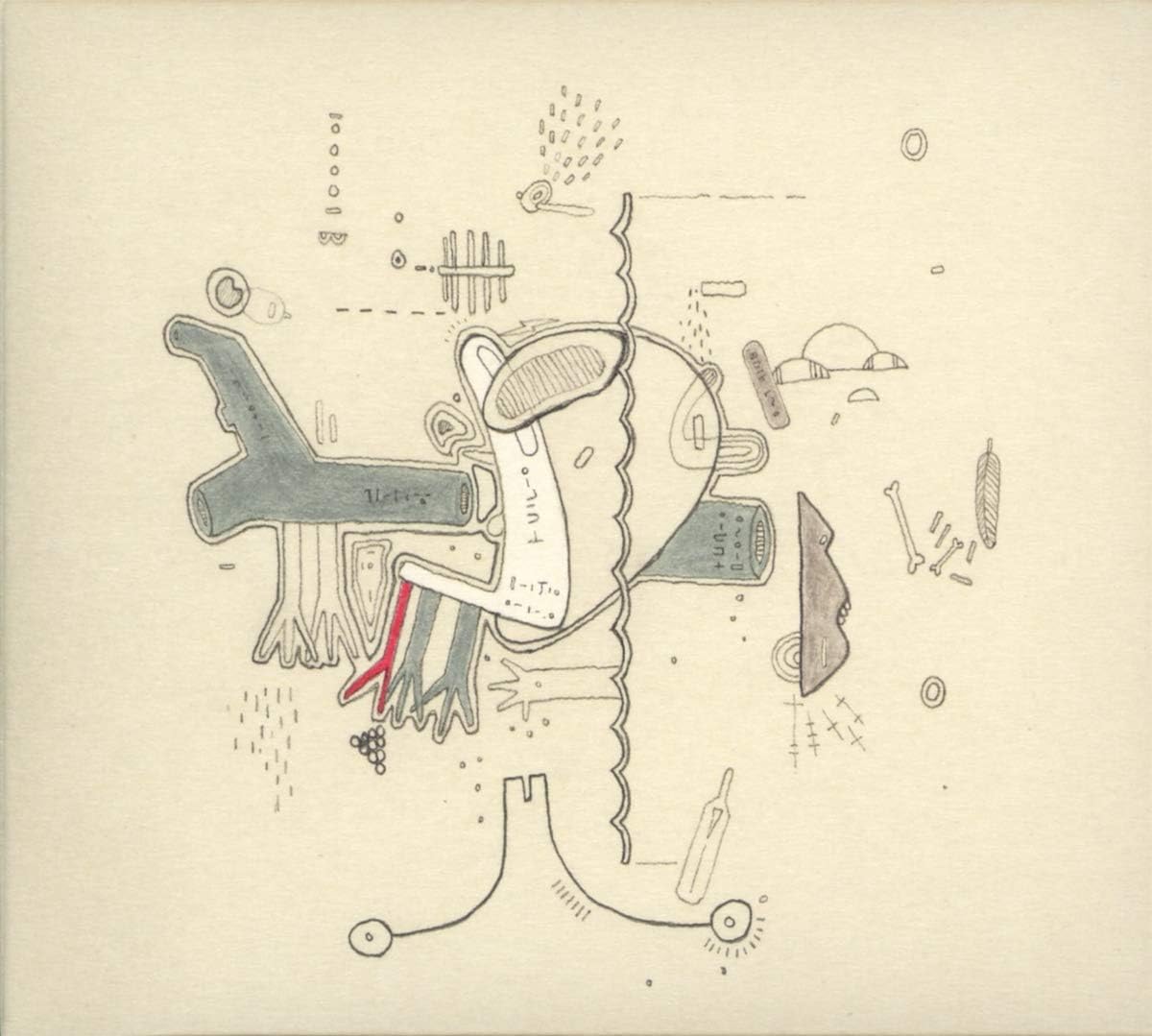
Undoubtedly the highlight on the “Tiny Changes” Frightened Rabbit tribute album—a record that was almost finished before lead singer Scott Hutchison’s tragic death and one that took on a completely different meaning by the time of its release about a year later—Julien Baker slows down the Midnight Organ Fight album opener, turning the upbeat rock song into something much more her own. Beginning with the guitar atmospherics that dot the entirety of her own material, it proceeds to build to a huge crescendo, only to completely lose almost all the instrumentals for the final chorus. Where the original’s finale seems hopeful that maybe, just maybe, Hutchison’s ex will give him one more chance (“You should sit with me and we’ll start again / And you can tell me all about what you did today”), Baker’s version knows the answer and you can hear it in her voice, distant and longing.
Taken from Tiny Changes: A Celebration of Frightened Rabbit’s ‘The Midnight Organ Fight’
If Winona Ryder’s Beetlejuice character Lydia Deetz formed a band, that band would be Secret Shame. The North Carolina-based group’s sophomore LP Dark Syntheticsdraws on ’80s goth and post-punk, but brings it into faster and brighter territory. Singer Lena Machina’s dramatically melancholy vocals roar over layers of reverb and swirling, slashing guitar riffs, creating a sonic vortex that swallows everything in its path.
“There’s a rage trembling under the group’s chiming post-punk, which winds itself around an ultimatum about self-preservation…” – The New York Times
“Secret Shame channel both the tragic beauty and spooky ambience of a graveyard.” – Paste Magazine
“Secret Shame’s new album Dark Synthetics is a seven-song tempest of guitar-driven dark post-punk in the vein of Skeletal Family, Rubella Ballet, and Look Back in Anger.” – post-punk.com
“The band thunder around Lena like a horde of bats…” – bandcamp.com
“I can’t get over the vocals – they soar high above many out there right now. Not only am I transfixed by the vocal tone, but also the driving and intense music that the whole band creates.” – CVLT Nation
“Secret Shame make gloomy, melodic rock steeped in ’80s goth and post-punk.” – BrooklynVegan
David Berman, the former head of Silver Jews, spent his entire 40s rarely leaving the house, barely doing more than reading and sleeping. If it’d been any other artist, I would’ve been suspicious towards those kind of press infos. But not with Berman. For everyone not familiar with his work yet: Silver Jews were the epitome of brilliant, literate, freak americana solitude – a legend for the outsider music scene in America. In 2009, Berman decided to end all that. He quit music alltogether and celebrated his retreat as relentlessly as he created his music before. The reason for him to pick up the guitar again was the death of his mother. And it culminated in one of the essential tracks of this comeback record as Purple Mountains: I Loved Being My Mother’s Son. A sparse but still pars-pro-toto-track for Purple Mountains. Backed by indie rock band Woods, Berman crafted some of his best songs ever on this record and imprinted them with a new-found wisdom of the finite.
David Berman died by suicide only a month after Purple Mountains was released and it’s actually pretty devastating, that he had to remember us first how much he and his music will be missed. But then again, it feels appropriate for the way Berman approached his artistic life with. His songs have always been stubborn, sardonic observations of his own complicated depression and the havoc it wreaked regarding his relationships. Purple Mountains develops that. At the heart of it: I Loved Being My Mother’s Son: A crushing statement of helplessness in light of death.
Apart from all the witty, tattoable one-liners (if no one’s fond of fucking me, maybe no one’s fucking fond of me – a line that mirrors the dialectics of 2008s My Pillow is The Threshold: first life takes time than time takes life), Purple Mountains is Berman at his most vulnerable and can’t be unread as a final statement now that he’s dead.
When the dying’s finally done and the suffering subsides/All the suffering gets done by the ones we leave behind“. But, and that’s the last lines David Berman gifted us: „I’ll put my dreams high on a shelf/I’ll have to learn to like myself/Maybe I’m the only one for me/on holidays“. It is that time of the year to reflect on that. Putting on Purple Mountains once in a while might help learning.
London-based Yak, who has been touring their full-length album “Pursuit Of Momentary Happiness”. There has always been an element of chaos to Yak and their approach that they took to a new level with their recent album. The result is a rare white-knuckle ride of an album in which an extreme commitment pulsates through every moment much like Spiritualised’s Ladies And Gentlemen We Are Floating In Spaceand Tame Impala’s Innerspeaker, both of whosecreators had a part to play in the album’s genesis – ranging from the gonzo-fuzz chaos oftracks like “White Male Carnivore” and “Bellyache” through to the Roy Orbison-inspiredheartbreak of “Words Fail Me”.
Performed live at ENDLESS DAZE FESTIVAL SILWERSTROOM RESORT, SOUTH AFRICA 1st-3rd November 2019
Minnesota’s Remo Drive picked up a lot of buzz for their 2017 debut album “Greatest Hits”, which was self-released and soon became the talk of many emo-friendly online music circles. How many more bands with strained, nasally vocals, pop punk chord progressions, and silly song titles do we need? — but Remo Drive quickly caught on, signed to Epitaph Records, and continued to expand their fanbase. And now I’d say the many people who saw potential in them were right all along. Their recently-released second album is — in my humble opinion — much better than Greatest Hits and a pretty huge step forward.
“Natural, Everyday Degradation” has much cleaner production than Greatest Hits (it was produced by HopAlong’sJoe Reinhart and mixed by The National/Interpol collaborator Peter Katis), and the band’s singing and songwriting is a lot stronger than it was two years ago. The album is still under the umbrella of indie rock-friendly emo and pop punk, but these songs aren’t really written like emo or pop punk songs. Erik Paulson’s voice sounds a lot more pristine, and his melodies hearken back to classic pop like pre-acid Beatles or early power pop like Elvis Costello. His voice has evolved from a punky yelp into a matured croon, and he’s developed a real knack for songcraft that was only hinted at on Greatest Hits, and that you don’t hear everyday in the punk/emo scene. Also, Saves the Day and Joyce Manor are touring together later this year, and if you’re excited for that tour, Natural, Everyday Degradation is probably right up your alley.)
Natural, Everyday Degradation is the kind of creative, artistic progression that you usually don’t hear this early on in a band’s career, so it already has me excited to hear where Remo Drive go next. If there are still some setbacks, the songs could be a little more musically diverse and Remo Drive could use a really strong chorus or two — the new album may remind me of Stay What You Are but they haven’t written their “At Your Funeral” yet — but at the rate they’re going, I wouldn’t be surprised if they churn out a modern classic one of these days.
As one of the most quintessentially ’80s-sounding bands, Soft Cell aren’t the easiest artist to cover. On their recent covers EP, “Songs of Consumption”, English psych outfit Toy decided to give it the old college try with the 1982 Soft Cell b-side “Fun City.” Frontman Tom Dougall’s layered vocals are far more ghostly than the earnest pop of Marc Almond. In Toy’s version, the keyboards are more robotic and twinkly than Soft Cell’s wonky new wave, plus the hopping guitar pulses are more pronounced. While the Soft Cell’s cut is more danceable, Toy’s version is far more icy, atmospheric and expansive and—dare I say—far superior to the original.
Following the announcement earlier this month of their forthcoming covers album ‘Songs Of Consumption’, Toy
have shared a further track ‘Down On The Street’, the classic Stooges track – here given a synth makeover – taken from the self-produced 8-song collection, released on November 15th via Tough Love Records.
The band have also announced a run of UK shows early next year as part of the Independent Venue Week 2020. These follow a couple of special shows next month.
Titled ‘Hollowed Out – A night of strange sighting and unhabitual ritual’, the shows will see them re-imagining songs from ‘Happy In The Hollow’, their fourth studio album released in January.
Taken from the album, Songs of Consumption, out 15th November.
KEXP finally unveiled boygenius‘ 2018 performance this spring, and with it came the proper recording their radio- and tour-only rendition of “Cowboy Take Me Away.” Julien Baker, Phoebe Bridgers and Lucy Dacus’ tribute to fellow trifecta Dixie Chicks is full of a melancholy yearning that makes it feel like a spiritual companion to boygenius closer “Ketchum, ID.” Trading verses about longing to be held under the stars and to stand alone under sublime skyscraper-free skies, the trio share the same conflicting desires that made them want to “dissolve the band” and “move to Idaho”: to find solitude and to find belonging, for stability and for freedom. With twinkly mandolin and violin from frequent Baker collaborator Camille Faulkner, boygenius’ “Cowboy Take Me Away” is rustic and wistful, but with an overarching sweetness, purity and even delight.
From Baker’s first infectious, irrepressible grin to the giggles the moment the song ends, it seems the peace the three are searching for isn’t so far out of reach. Baker, Bridgers and Dacus are each formidable forces as cover artists in their own right, as this list attests. Together, they sound completely free—and completely at home.
Spirit were a highly regarded rock band that achieved modest commercial success, charting 11 albums in the U.S. between 1968 and 1977. Founded in Los Angeles in 1967 by musicians who had a mixture of rock, pop, folk, blues, classical, and jazz backgrounds, and who ranged in age from 16 to 44, the group had an eclectic musical style in keeping with the early days of progressive rock; they were as likely to play a folk ballad featuring finger picked acoustic guitar, a jazz instrumental full of imaginative improvisation, or a driving rhythm tune dominated by acid rock electric guitar playing.
Most people got to know the band Spirit because of their belated and ultimately unsuccessful lawsuit alleging that Led Zeppelin plagiarized part of “Stairway to Heaven” from their tune “Taurus”. That’s a very sad legacy for a quirky crew of visionaries whose guitarist was mentored by Jimi Hendrix and who created an original sound that embraced everything from psychedelia to jazz rock. They deserve to be remembered as more than a legal anecdote. Spirit is almost certainly the only band of the psychedelic era whose story actually starts in the 1930s. That’s when their oldest member, drummer Ed Cassidy (born 1923), began his musical career. By the mid ’60s, he had played everything from big-band music to country, and had backed up jazz giants like Gerry Mulligan, Roland Kirk, and Cannonball Adderley. After playing with a young Ry Cooder and Taj Mahal in pioneering L.A. blues-rock band The Rising Sons, Cassidy looked closer to home for musical mates. It turned out that his girlfriend Bernice Pearl (whom he would marry in 1965) had a teenage son who was something of a guitar prodigy.
Randy Wolfe was just 13 when he started playing with his future stepfather in The Red Roosters. Pearl’s brother Ed was the owner of the Ash Grove, the legendary Los Angeles club where some of the greatest folk and blues figures appeared on a regular basis, so Wolfe had gotten guitar tips from the likes of Sleepy John Estes and Mance Lipscomb early days. Two other founding members of Spirit were from the Red Roosters too: singer Jay Ferguson and bassist Mark Andes. But the band abruptly ended when Cassidy, Pearl, and Wolfe moved across the country to Queens, New York in 1966.
Wolfe, then just 15 but already showing signs of greatness, ended up performing with Jimmy James & The Blue Flames, led by an unknown but wildly gifted guitarist making a name for himself on the Greenwich Village scene. The man the world would soon come to know as Jimi Hendrix took Wolfe under his wing, teaching him some tricks of the trade and even giving him his stage name: Randy California, to distinguish him from another Randy in the band.
It was pretty heady stuff for a kid California’s age. And when he wasn’t playing in the Village, he was giving guitar lessons to his neighbor Walter Becker, who would go on to form Steely Dan. But the egocentric behavior that would come to plague California in years to come is said to have started in his days as a Blue Flame. Depending on which story you believe, California stayed behind when Hendrix made the trip to England that would eventually lead to stardom One night at the Café Au Go Go, California starts playing slide using the neck of a sawn-off 7-Up bottle while James/Hendrix guns down a fat riff. Suddenly the kid reaches across to his boss’s guitar and spins the volume control down to zero. Hendrix throws a fit, flings his Stratocaster across the room and walks out on to the street. A tentative invitation from Jimi for Randy to join him on his maiden visit to London is withdrawn.
In either case, Cassidy, his wife, and his stepson moved back to L.A. in 1967, where the Red Roosters regrouped as Spirits Rebellious, bringing jazz keyboardist John Locke into the fold as well. Shortening that name to Spirit, they delineated their new, ambitious agenda to forge a free-flowing sound that could incorporate jazz, rock, folk, and anything else they cared to explore. Southern California in 1967 was about as hospitable an environment for such ambitions as one could want.
Like a lot of bands in those days, Spirit lived communally, sharing a house in Topanga Canyon. One of their housemates happened to be a young record collector named Barry Hansen, who would find fame in the ’70s as radio personality Dr. Demento. But at the time, his deep musical knowledge made him a guiding light for the band, and he oversaw the demo that got them signed to Ode Records, the imprint of producer Lou Adler.
Spirit (1968)
Adler, who had recently become a key architect of the era’s West coast sound through his work with The Mamas & The Papas, produced Spirit’s self-titled 1968 debut album, Though the band was unhappy with the orchestral arrangements Adler gave some of the tunes, the record would eventually come to be regarded as one of the great sonic statements of its day. From the very first track, the album exploded with eclecticism and offbeat inspiration.
The lead-off track to Spirit’s 1968 debut album comes out of nowhere and sounds like nothing else out there at the time. The closest relatives to the style of the song would probably be Love or the Doors, but with a touch of Frank Zappa and the Mothers Of Invention thrown in. Even that doesn’t quite tell the story of the sound here.
It’s psychedelic to be sure, Fresh Garbage is a quirky, almost comedic variant on the ecological themes of the time, and it shifts organically from Latinate rhythms to distorted rock riffs to straight-ahead jazz and back again, with California’s liquid but larger-than-life guitar lines leading the way. From the moody, orchestrated art-rock landscape of Mechanical World to the hooky psych pop of Uncle Jack ‘Spirit’ is pretty much a perfect debut, with Ferguson and California seamlessly sharing lead vocal duties and the band establishing a singular sonic fingerprint. Though no real hits emerged from the record, it did manage to make its way to No. 31 on the U.S. album chart.
‘Girl in Your Eye’ Very much of its era, lets loose with a flood of sitar-laced sounds. The song, however, is strong enough to hold its own and conquer any ‘period piece’ daggers you want to throw at it. A beautiful melody carries this one along while the sitar gives way to a biting guitar solo from unsung six-stringer Randy California who drives this deeper into lysergic territory. Come along for the ride, the weather’s fine.
The Family That Plays Together (1968)
The second album, The Family That Plays Together, followed in December 1968.
One of the album’s deeper cuts, the shimmering instrumental “Taurus,” would make headlines more than four decades later. On December 26th, 1968, an unknown Led Zeppelin, preparing for the release of their own debut album, played their first American show, opening up for Spirit. In 1971, Zeppelin, who had been known to insert the riff from “Fresh Garbage” into their early shows and would eventually become notorious for appropriating other artists’ material without credit or compensation, released a little tune called “Stairway to Heaven” bearing an acoustic guitar intro uncannily similar to “Taurus.” But the copyright infringement suit that was finally filed in 2014 failed.
Spirit’s innovations continued apace on The Family That Plays Together released at the end of ’68. Besides encompassing everything from Jewish —California’s nod to his background based on a Hebrew hymn—to the delicate chamber pop of Drunkard the album contained the band’s only real brush with mainstream fame. I Got a Line on You is probably the most straightforward rocker in the Spirit catalog, and undeniably among the most infectious, with its surging momentum and stinging guitar. It became the band’s only Top 40 single and helped the album make it to No. 22, a career peak.
Unlike the vocal-free atmospherics of “Taurus,” “I Got a Line on You” featured harmony galore, straddling the line between the soulful hard rock that was on the rise at the end of the Sixties and the lingering traces of peace-and-love trippiness that still informed California’s supple guitar work. California’s voice is gutsy and melodic, helping to propel the single to success.
‘Dream Within a Dream’ from the second album is one of the few that retains the more psychedelic overtones from their debut disc. showcasing the incredible guitar work of Randy California. Perfectly produced by the legendary Lou Adler, this Jay Ferguson composition has it all — a great arrangement, stellar instrumental interplay and beautiful lyrics. The harmonies have an almost Association-like feel to them, but California’s piercing guitar running throughout makes it unique.
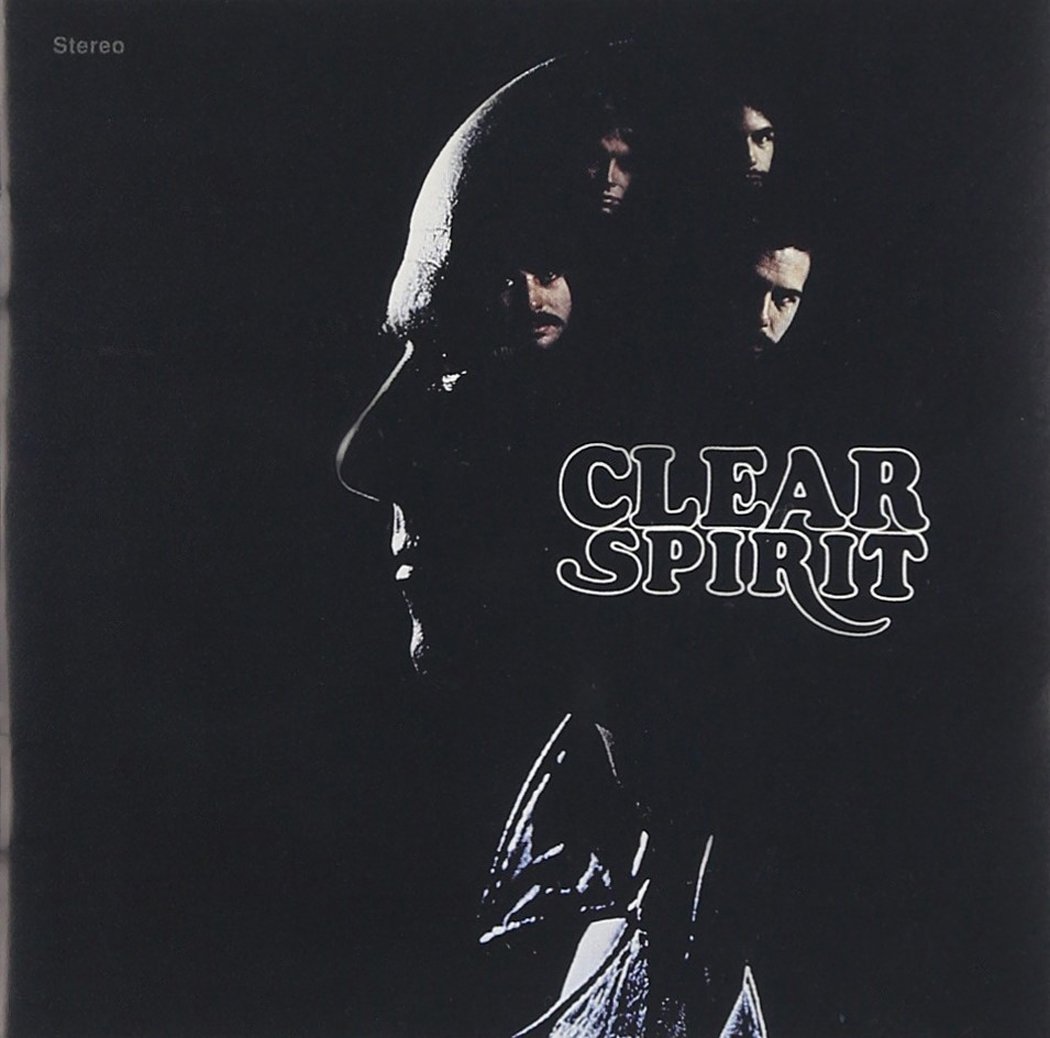
Clear Spirit (1969)
In 1969, the band made its foray into the film world, scoring Model Shop for French New Wave director Jacques Demy of Umbrellas of Cherbourg fame. Spirit made an appearance in the movie as well, and Ferguson was even given a few lines. But the film was a flop and the soundtrack album didn’t see the light of day until 2005.The work Spirit did on the score wasn’t a total loss at the time, though; a number of tracks were re-purposed for the band’s third album, “Clear” which consequently ended up being the most intriguingly atmospheric of their releases. In retrospect it also paved the way for Spirit’s true tour de force.
Spirit flaunted California’s parallel love of sci-fi. The song was named after George Orwell’s dystopian classic, and in its own way, the music is just as chilling. “1984/Knocking on your door,” California intones at the start of the track before it segues into an angular, almost mechanical bass line that sounds totally New Wave – more than a decade ahead of its time, as if the year 1984 really were knocking at Spirit’s door.
Not included on the band’s third album, ‘Clear,’ ‘1984’ was released as a single in late-1969 and tried to warn us of a future that may have seemed distant then, but was obviously not too far off. Another killer Randy California guitar solo makes this one a home run and its catchy-as-can-be chorus should have made this a hit. It didn’t and it wasn’t, but it’s still one of the band’s finest moments
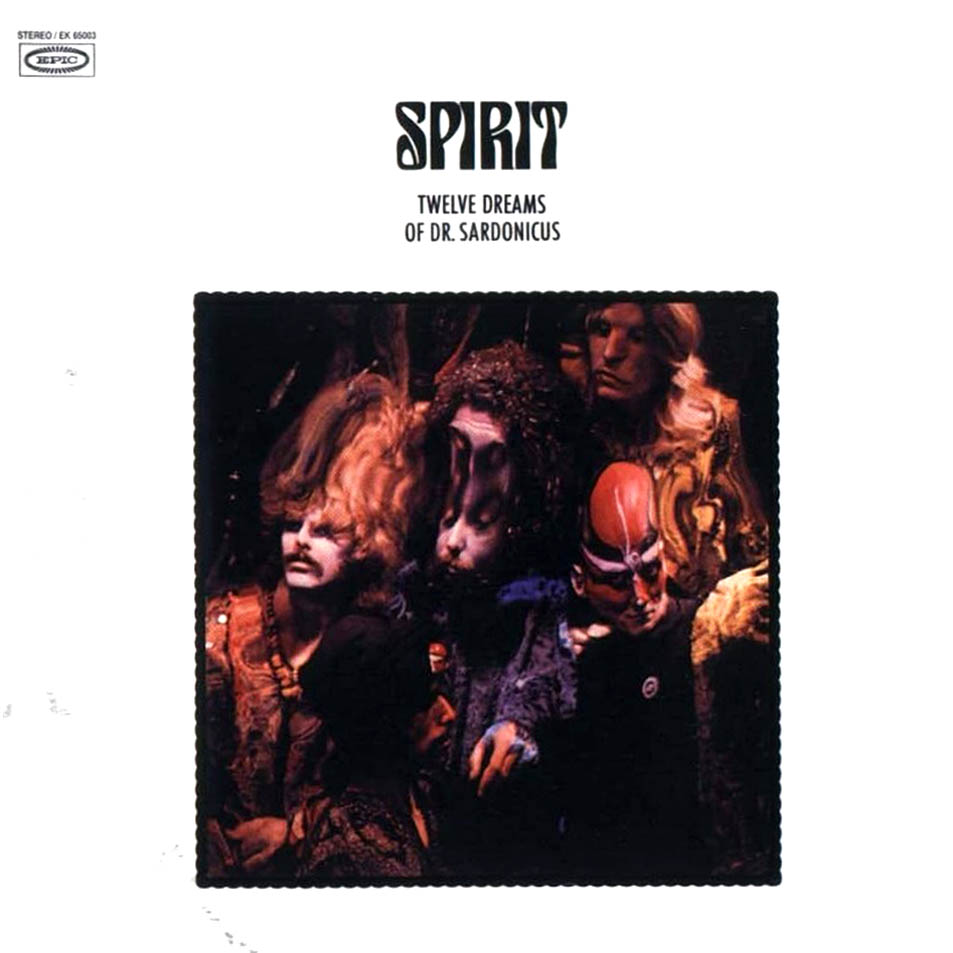
Twelve Dreams of Dr. Sardonicus (1970)
The band hired David Briggs, who had worked on Neil Young’s albums, to produce its fourth LP. Sessions for that album commenced in April 1970, but they were interrupted when California suffered a fractured skull due to a fall from a horse and spent a month in the hospital. A single, Ferguson’s “Animal Zoo,” emerged in July and grazed the bottom of the charts, Another great track from the band’s fourth LP, a pretty straight ahead pop-rock and roll, at times coming off like a cross between the Kinks and Paul Revere and the Raiders, of all things. That’s a compliment by the way! This gem from the pen of Jay Ferguson has an ultra-catchy chorus that should have made this a big hit, but it ultimately took six months to complete the LP, released as Twelve Dreams of Dr. Sardonicus in November.
Twelve Dreams of Dr. Sardonicus can justifiably be considered Spirit’s Neil Young’s producer David Briggs, the band really strutted its stuff, tapping more fully than ever into California’s six-string bag of tricks, his and Ferguson’s complementary songwriting gifts, and the whole ensemble’s empathetic interplay.
The case for California’s as a guitar-hero status requires no more substantiation than his work on ‘Sardonicus’. Harnessing feedback, overdrive, slide, and sustain with the precision of a master jeweler while investing it all with his left-field psychedelic shaman vibe, California creates a guitar language that’s informed by the innovations of his old mentor Hendrix but exists in a self-created space all its own. And on tunes like the folkish environmental lament “Nature’s Way” and horn-punctuated, (named for Cassidy’s clean-shaved cranium), California and Ferguson were pushing their compositional powers to their peak. Toss in forward-looking excursions like John Locke’s cosmic electro-jazz journey Space Child and it all adds up to the brightest moment in Spirit’s career, not to mention hippie-era rock in general.
The year, the band released its magnum opus, “Twelve Dreams of Dr. Sardonicus”. Ambitious, multi-layered and sprawling – at the time, Rolling Stone raved that the album “lay languidly upon the very steps to Parnassus” – it produced the single “Nature’s Way,” which became a Spirit staple. It’s not hard to see why. Over a driving acoustic guitar, California pleads, “It’s nature’s way of telling you something’s wrong” – sounding favorably like fellow Angeleno Arthur Lee of Love, one of Spirit’s closest contemporaries. The coughing at the end of the song is reminiscent of the coughing at the start of Black Sabbath’s “Sweet Leaf,” released a year later,
Mr. Skin – which became the title of the b-side of “Nature’s Way.” Starting with a staccato organ-and-guitar salvo, the song eases into a brass-punctuated, cowbell-happy jam that mythologizes Cassidy’s alter ego. The song proved to be so popular among fans,
In between the recording and release of ‘Sardonicus’, Randy California fall from a horse, fracturing his skull. He was down for the count for a while, and during that time, he started snorting epic amounts of cocaine and going a bit crazy (or crazier) to boot. Mark Andes has stated that California was forever changed by this period, and not for the better. There had already been friction between the guitarist and his bandmates before, but after the accident things worsened drastically, almost coming to the point of an onstage punch-up before Andes and Ferguson finally quit to start the much more conventional-sounding (and briefly successful) Jo Jo Gunne.
Feedback (1972)
California found his way into a rehab program. Cassidy and Locke, suddenly finding themselves without a band, hooked up with singer/bassist Al Staehely and his guitar-playing brother Chris in a band that released 1972’s extremely mediocre “Feedback” as a Spirit album but resembled that band in name only. When California was match fit once more, he set to work on his first solo album, the weirdly wonderful Kapt. Kopter and the (Fabulous) Twirly Birds which reunited him with his stepfather.
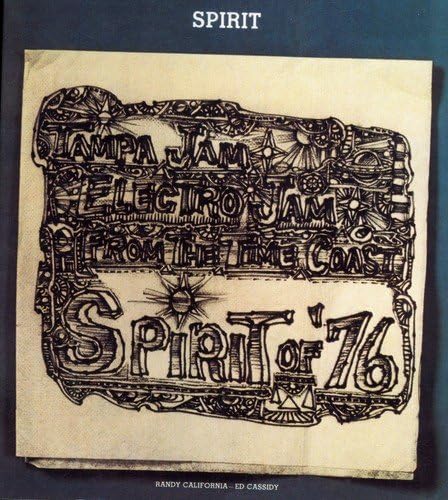
“Spirit of ’76” (1975)
After the dissolution of that unit, Cassidy traveled to Hawaii and got back in touch with California. Joined by Mark Andes, who had left Jo Jo Gunne, they began playing dates by September 1974; Locke also performed with them at the start of 1975, but neither he nor Andes stayed permanently. Instead, California and Cassidy hired another bass player, Barry Keene, and carried on. They recorded an album that they shopped, signing to Mercury Records, which released the double-LP “Spirit of ’76” in May 1975. It made the lower reaches of the charts.
When the stepdad/stepson team returned for the 1975 album Spirit of ’76, and like The Grateful Dead, Spirit decided to snub the trends of the decade and stick with what it knew best: psychedelia. While “Lady of the Lakes,” a single and standout track from Spirit of ’76, didn’t help Spirit become psychedelic standard-bearers like the Dead, the song’s easygoing vibe and swirling Americana weren’t that far from the concurrent work of Garcia and company.
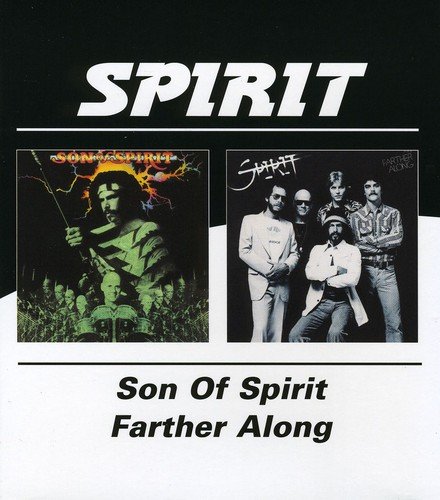
They quickly followed in October with Son of Spirit, another modest seller. For Farther Along, released in June 1976,
Son Of Spirit (1976)
The following year, California and Cassidy toured Europe with ‘Kapt. Kopter’ bassist Larry “Fuzzy” Knight as Spirit, but California’s behavior was still disturbingly erratic and his drug problems seemed undiminished. He ended up in rehab again, and didn’t play music for two years. He dropped out of sight, seeking sanctuary in Hawaii, but Cassidy managed to reconnect with him eventually. With a new bassist in Barry Keane, they reemerged as Spirit in 1975.
The mid-’70s version of Spirit released two odd but excellent albums, ‘Spirit of ’76’ and ‘Son of Spirit’. It was a distinctly different band from the ’60s iteration, bearing a casual, stoner approach more in line with California’s solo album, but unlike the ‘Feedback’-era band, this was a lineup fully worthy of operating under the Spirit moniker.
Son of Spirit and Farther Along (1976)
All the original members of Spirit mended their fences and reunited for the 1976 album ‘Farther Along’, adding Andes‘ guitarist brother Matt to the roster for good measure. Unfortunately, the magic was missing. The production was too ’70s-slick, and the songs seemed to be courting commercial success more than answering the call of the muse as Spirit had done in the past. The public rightly turned a deaf ear, and the reunion didn’t last past the one album.
Future Games (1977)
Randy righted the ship somewhat with 1977’s ‘Future Games’, a trippy, homemade sounding album that was really more of a solo session than a Spirit record, despite the name on the album cover. Spirit released Future Games, it was a safe bet the album was going to be weird. And it was. His interest in science fiction took an obsessive turn, with several of the songs even having pronounced Star Trek themes, including “Gorn Attack,” “The Romulan Experience” and, even more blatantly, “Star Trek Dreaming.”
Future Games (A Magical Kahauna Dream), the fourth Spirit album on Mercury, released in January 1977, found California standing alone and bare-chested on the front and back covers, and he played all the instruments on the record.
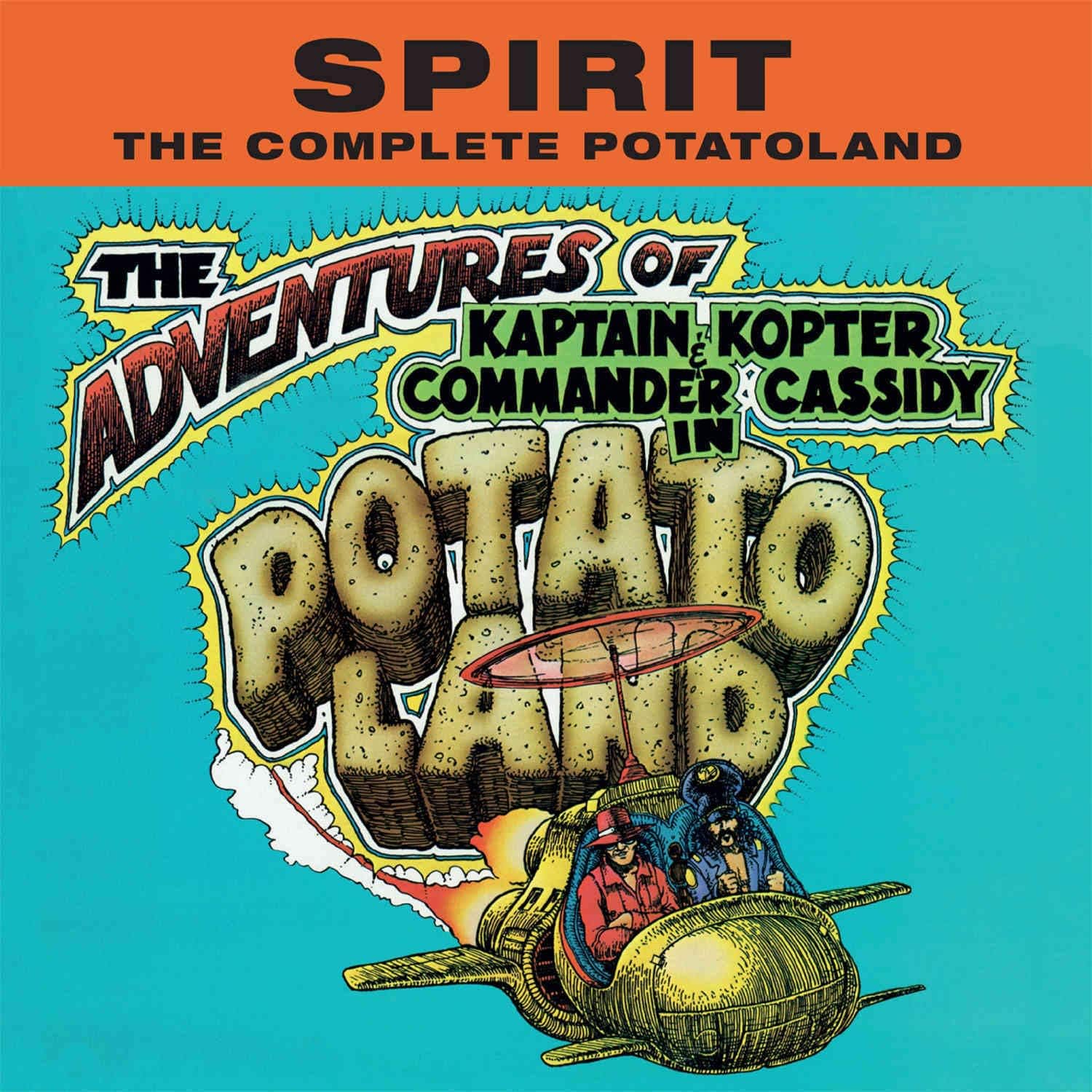
Potatoland (1981)
Randy California and his stepfather, Ed Cassidy, became the touring Spirit who kept the tradition alive until California’s untimely passing in 1997. The strengths and the weaknesses of creative freedom are evident on “Potatoland: Adventures of Kaptain Kopter & Commander Cassidy in Potato Land”, a concept album with a theme that is far removed from the intuitive cool that was The Twelve Dreams of Dr. Sardonicus. The material by California and drummer Cassidy is somewhat tremendous – “Open Up Your Heart” has wonderful Beach Boys/Beatles harmonies, there is some elegant playing, and a trippy melody. The production is also first-rate.
The music, however, is for the most part exemplary: at times a terrific listening experience resplendent in Randy California’s trademark guitar-oriented pop. Spirit needed a bit of discipline and direction at this juncture; but the zany nature of California’s Kaptain Kopter and potato obsessions inhibiting this stellar music from reaching a wider audience.
Other Albums
But another ill-advised reunion occurred on 1984’s ‘The 13th Dream’, on which all the original members convened one last time to desecrate the memory of the classic tunes they’d crafted together years before. The record consisted mostly of generic-sounding AOR-style versions of early Spirit material. The fact that members of The Doobie Brothers contributed to the tracks should offer some idea of the overall vibe. 1989’s ‘Rapture in the Chambers’, featuring everybody but Ferguson, suffered from similar problems, and lacked worthwhile material to boot.
California and the ageless, ever-faithful Cassidy kept Spirit going through the ’90s with a variety of bandmates, touring extensively and releasing a couple more unexceptional albums. But the Spirit story came crashing to an abrupt end on January 2nd, 1997. California, then 45, was swimming in the ocean with his 12-year-old son near their Hawaii home, when a tidal wave took them by surprise. Guitar hero California died a real-life hero, pushing his son to safety before being overtaken by the ocean. His body was never recovered, but in a strange way that’s probably fitting for a man who spent much of his life pushing the boundaries of his world to see what lay on the other side.
Cassidy died of cancer in 2012
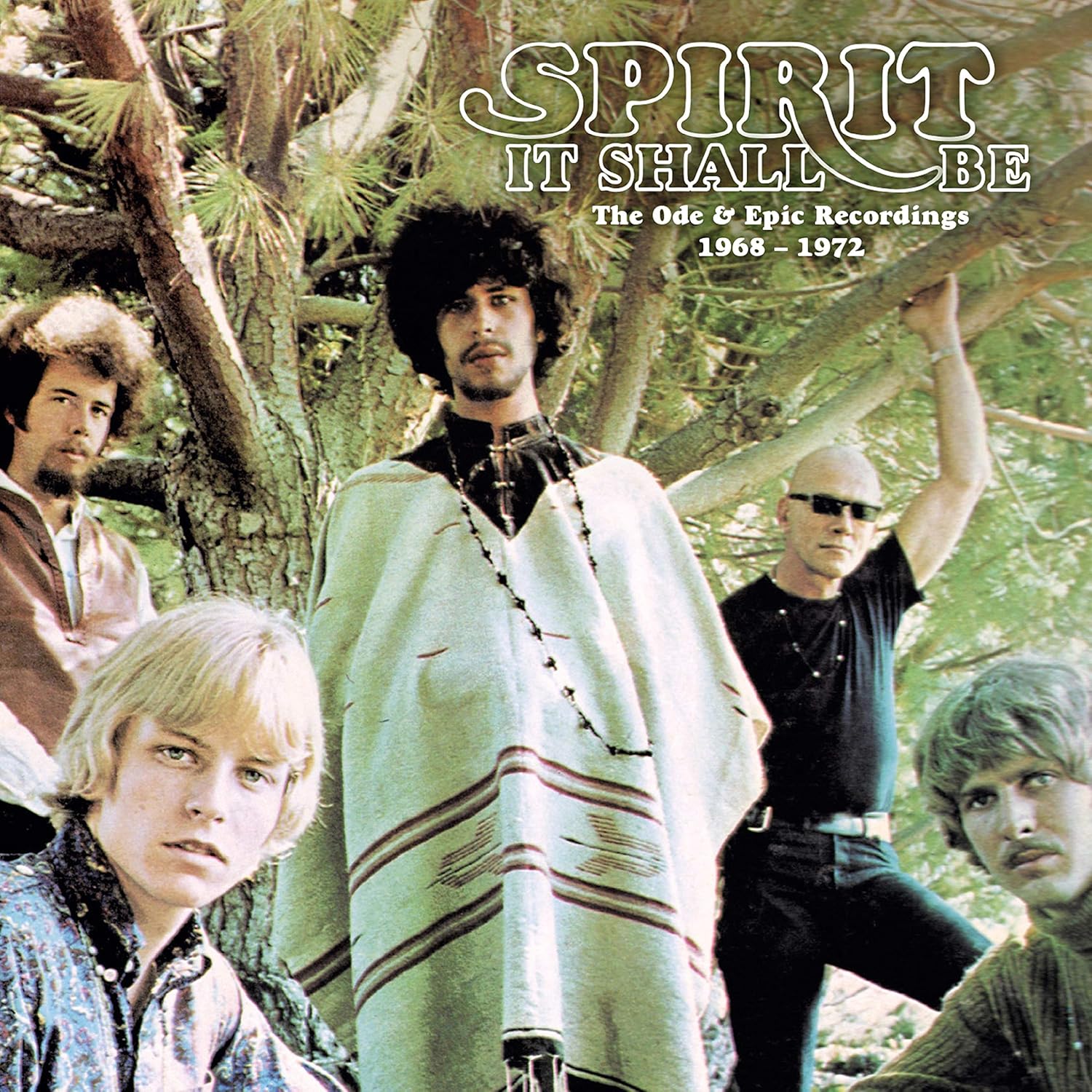
Compilations, It Shall Be: The Ode & Epic Recordings 1968-1972; and Time Circle
Spirit’s catalog was regularly reissued in various editions over the first decade of the 21st century, but it wasn’t until 2018 that they received a proper box set treatment. In March, Esoteric Recordings released It Shall Be: The Ode & Epic Recordings 1968-1972; The five-disc set gathered their first five albums (including both mono and stereo mixes of their self-titled debut), and the soundtrack to the 1968 film The Model Shop. Each disc was packed with outtakes, demos, and alternative mixes from 1991’s Time Circle compilation. It also included a booklet with a critical and historical essay by Malcolm Dome, as well as archival interviews with California and Cassidy.
Like the forest breeze this album blew right past us. Stratford, Ontario singer songwriter Cat Clyde’s sophomore record is building on the solid foundation of folky ballads and bluesy riffs but goes beyond the simplicity. The southern gothic vibe of ‘Bird Bone’ sets the tone for an emotional and soulful ride that Hunters Trance is.
Over all, the singer’s achingly beautiful vocals form a silver lining. She croons and howls like an old soul diva, with the kind of richness in her voice that usually only comes with maturity. And she knows how to cherish the special ring with stripped back instrumentation.
Hunters Trance is digging at the core, pushing all the unnecessary musical gravel aside to get to the deeply rooted rawness that is inherent to the swinging of vocal chords and steely guitar strings. Equally earthy are the lyrical poems Cat Clyde sings. From bird bones, to rocks and stones, to the ever-flowing river, the LP feels like a stroll through a forest. ‘All the Black’ and ‘Not Like You’ are melancholic ballads, situated somewhere between soul and folk that tug right at the heartstrings. The noir-style soul is dripping of emotion embedded in the slow dragging guitar melody as Cat Clyde mourns ‘this may be killing us but at least it kills the pain’.
Cat Clyde is a brand new artist out of Stratford, Ontario. A fresh take on the classic sounds of yesteryear; breathing new life into the velvety vocal, tack-piano, slide-guitar-style that can instantly walk you through the swinging doors of a packed saloon.






:format(jpeg):mode_rgb():quality(90)/discogs-images/R-2436399-1349224581-5230.jpeg.jpg)