Dana Gavanski today announces her debut album Yesterday Is Gone, out 27th March. To mark the announce, and following on from her BBC 6Music A-listed single ‘Catch’, Dana is sharing her new single ‘Good Instead of Bad’.
Speaking about the meaning of the song, Dana explains “it’s about reflecting on the end of a relationship and how quickly things change. The desire to make up for everything that wasn’t done or wasn’t done right. The muddiness of breaking up, and not knowing if it’s the right decision. Not saying the right things, not being able to express the complexity of what we’re feeling. Things change and that’s that – not being able to turn back and undo a bad move. It’s an attempt to see from the other’s perspective and understand how hard it is for them as well. Reflecting on the intractability of certain decisions.”
Yesterday Is Gone is a co-production between Dana, Toronto-based musician Sam Gleason, and Mike Lindsay of Tunng and LUMP. On the title track, Dana Gavanski sings ‘I’m learning how to say goodbye / to let you go and face the tide / to wrap my feelings in a song’. To wrap her feelings in a song: this is the task Dana has dedicated herself to with this record. By turns break-up album, project of curiosity, and, as Dana puts it, “a reckoning with myself”, Yesterday Is Gone is her attempt to “learn to say what I feel and feel what I say” – an album of longing and devotion to longing, and of the uncertainty that arises from learning about oneself, of pushing boundaries, falling hard, and getting back up.
“Often we have to go a little far in one direction to learn something about ourselves,” Dana says. The months of solitary writing and self-doubt testify to this, but they’ve led to Yesterday Is Gone: an optimistic, steely-eyed gaze into the future.
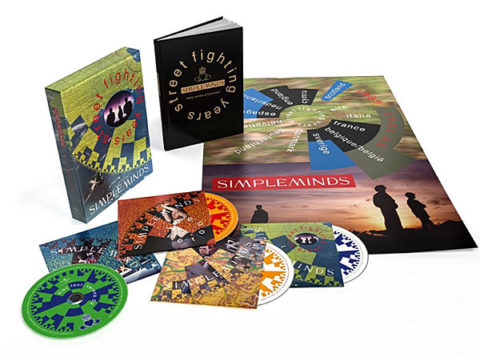
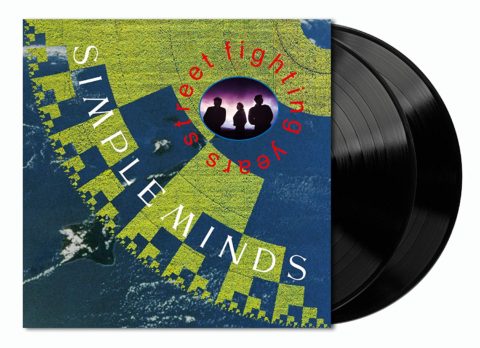
On 6th March Simple Minds will release a brand new deluxe version of the classic album ‘Street Fighting Years’ as a 4-CD box set, including the original album remastered at Abbey Road plus a host of B-sides, edits and 12″ remixes. “Street Fighting Years” is the eighth studio album by Scottish rock band Simple Minds, released in May 1989. It was notably the last of the band’s albums to feature keyboard player/composer/founder member MickMacNeil. MacNeil has subsequently mentioned that “Jim (Kerr) had already started talking about making changes” and the credits for the album suggested that Simple Minds had officially become a trio of the only three remaining founder members, It also includes a previously unissued Verona live show from 1989 plus brand new book including a new interview with Trevor Horn. Also available as 2-LP, 2-CD or remastered single CD.
Produced by Trevor Horn and Stephen Lipson (fresh from their work on Paul McCartney’s Flowers in the Dirt) the record ended up sounding very different from the previous album (1985’s Once Upon A Time).
The band were initially expecting the producing duo to deliver what Charlie Burchill describes as “their thing” (meaning synths, sequencers etc.) but Horn and Lipson didn’t think that was the right approach, with Trevor saying (in the excellent Daryl Easlea sleeve note interviews) that “I don’t think the Frankie thing would have suited them. I wouldn’t impose something on someone”. Jim Kerr says “We thought Trevor and Steve would be the answer to everything. We thought we’d hitch our wagon to them. It turned out that they likewise thought they had taken their whole thing to a max and thought it would be great to work with a band who could just knock it out.”
They ended up exploring atmospheric soundscapes and incorporating slide guitars, accordions and in general exuding a more celtic/folk rock vibe (the album was recorded in the Highlands of Scotland). Street Fighting Years delivered the band’s first and only UK number one single ‘Belfast Child’ (which was the lead track on the ‘Ballad of the Streets EP). Three further singles were all top 20 UK hits.
The four-CD box is packaged like the previous Simple Minds super deluxe sets and comes with a hardcover book with photos and interviews with the band and Trevor Horn and a Simple Minds poster. It offers a remastered version of the original album on the first disc (by Andrew Walter), a selection of 15 edits, B-sides and remixes on disc two and then two CDs featuring a previously unissued live concert from L’Arena in Verona, Italy (recorded on 15 September 1989). Sadly, there are no demos and or a surround sound mix of the album as part of this offering.
Pearl Jam has shared their first new music since 2018 and it comes in the form of a new single, “Dance Of The Clairvoyants”. This single is the first release from their forthcoming 11th studio album, Gigaton.
Pearl Jam bassist Jeff Ament described his excitement in a statement following the single’s release, saying, “I can’t tell you how proud I am about this group of songs. ‘Dance’ was a perfect storm of experimentation and real collaboration, mixing up the instrumentation and building a great song, and Ed [Vedder] writing some of my favorite words yet, around Matt‘s [Cameron] killer drum pattern.”
The Gigaton album is out on March 27th via Monkeywrench/Republic Records. The 12-song LP is a follow-up to their 2013 release Lightning Bolt. Guitarist Mike McCready described the journey of making the record in a statement saying, “It was emotionally dark and confusing at times, but also an exciting and experimental road map to musical redemption.” McCready goes on to say that working on the album gave him “greater love, awareness, and knowledge of the need for human connection in these times.”
The band has recently announced a tour in support of Gigaton,
Melbourne singer Anna Cordell plays tender yet deceptively complex folk music that belies a
childhood spent her childhood learning the piano, guitar and musical theory. Her voice is rich and warm yet lyrically her music is filled with angst and conflict, a emotional impact heightened by her penchant for the minor key.
Next month will see the Melbourne based artist Anna Cordell release her long awaited and much anticipated debut album “Nobody Knows Us”. Having shared its first two singles, the subtle drama of ‘You’and the spiritual title track late last year, she now shares the earnest and vexed third, ‘Tried So Hard’. Musically, a delicate underlying drift carries the song’s slow burning dynamic forward tracing both its contemplative subject matter and Cordell’s intimate and emotively inflected vocal as it oscillates between the breathily philosophical to the angelically quizzical. She explains the meaning behind of the track thus;
“It’s (about) asking for love in the face of different ways of seeing the world, a song that grapples with the insecurities so many of us have in understanding our capacity to love and be loved.”
As far as debut album’s go, Nobody Knows Us comes via rather unconventional means. It’s one where Cordell’s lived experiences and long, albeit fragmented, symbiotic relationship with music palpably shines. Few artists releasing their debut album would have a backstory that involved quitting music for a decade, having and raising five children, and forging out a career and successful boutique label in another artistic endeavour — fashion design. At the same time, few artists could end up making a debut this thematically mature and delicately nuanced with such an un-guardedly honest self awareness.
Listen to ‘Tried so Hard’ will be self released on February 14th. the forthcoming album, ‘Nobody Knows Us’,
In the late summer of 1978, Bad Company’s Paul Rodgers, Mick Ralphs, Simon Kirke and Boz Burrell spent several weeks recording songs for the British supergroup’s fifth studio album at Ridge Farm Studio in Surrey, England. “Desolation Angels” – recording their fifth album named after Jack Kerouac’s 1965 novel – was released in March 1979, and became a double-platinum hit, peaking at #3 on the U.S. album charts.
The 1979 album features the single ‘Rock ‘n’ Roll Fantasy’ and the new deluxe edition features the 2019 remaster (used for The Swan Song Years box set) along with a bonus disc of previously unreleased versions of album tracks and outtakes.
The collection introduced fan favorites like “Evil Wind” and “Rhythm Machine” and spawned two singles: “Gone, Gone, Gone” and “Rock ’n’ Roll Fantasy,” which took radio by storm and became the best-selling single of the band’s career. The new double-disc “Desolation Angels”: 40th Anniversary Edition boasts 19 unreleased songs taken from the album’s recording sessions, including versions of seven album tracks as well as outtakes “Smokin’ 45” and “Rock Fever.”
Soccer Mommy is announcing her sophomore album and follow-up to 2018’s groundbreaking “Clean”. “Color Theory” will arrive February 28th via Loma Vista Recordings, and along with the previously shared “Yellow Is The Color Of Her Eyes,” we’re getting a sunny new track today called “Circle The Drain.”
Where “Yellow” was defined by overcast reverb, the sound of longing on “Circle The Drain.” feels more playfully nostalgic. “I wanted the experience of listening to Color Theory to feel like finding a dusty old cassette tape that has become messed up over time, because that’s what this album is: an expression of all the things that have slowly degraded me personally,” Allison shared in a press release. “The production warps, the guitar solos occasionally glitch, the melodies can be poppy and deceptively cheerful. To me, it sounds like the music of my childhood distressed and, in some instances, decaying.”
“Circle the Drain” arrives with a video brandishing a dusty-old-cassette aesthetic courtesy of director Atiba Jefferson (you may know him as a character in the Tony Hawk’s Pro Skater universe—or, you know, as a professional photographer).
Magnolia Electric Co’s ‘Trials & Errors’ was released 15 years ago today on January 18th, 2005. A live album originally recorded in April 2003 at Club Ancienne Belgique in Brussels, the record is the first to bear the Magnolia Electric Co moniker despite the band having been touring as Songs: Ohia over that period, and was met with comparisons to the live recordings of Neil Young & Crazy Horse.
Recorded only a few months after they had formed, “Trials & Errors” captures Jason Molina’s new band Magnolia Electric Co. on one magical night in Brussels in 2003. It is a scintillating audio document of one of America’s most important contemporary live acts evolving into something really special and doing what it does best – whipping an audience into a frenzy. This set captures Molina & Co right after Molina had retired the Songs: Ohia machine in favor of this powerful new vision of his.
Two years in the planning process, the new project took its name from the last Songs: Ohia full-length album. Composed of a nucleus of four members, this particular show captures the newly christened band on its first tour in its earliest state. Still a four-piece with Pete Schreiner providing the back beat drum pulse, Mike Kapinus on bass and melancholic trumpet, and the two Jason’s dueling over guitar solo space: Molina’s down-tuned guitar matching his now settled tenor voice, and Groth’s Creedence-channeling rhythm guitar and solos filling out the upper register. With Molina as the principal songwriter, the songs are as classic as his fans have come to expect over the course of seven Songs: Ohia full-lengths (all released between ’96 and ’03). With his new band, however, fans can finally enjoy a stable & more-than-able rhythm section that just gets tougher and tougher with each performance. Like a juggernaut that simply chews up everything in its path, on Trials & Errors, the new Magnolia grinds through three old Molina favorites (two from Songs: Ohia’s Didn’t It Rain and one from the Songs: Ohia album Magnolia Electric Co), three songs which will be released on the upcoming Magnolia Electric Co studio album (out Spring 2005) as well as four songs that will only exist on record in their live form as presented here.
Fans may recognize that Trials & Errors comes peppered with an homage or two to Neil Young. One could, in fact, argue that the album is an existential response to Tonight’s the Night. While from the songwriting perspective Molina is often pegged as the perennial downer, this is not, like Young’s, a record born out of a series of sudden tragedies, but rather out of a whole life of growing up & out in the Midwest, surrounded by a small town mentality in a wide open space. The bastard second of three children, the Midwest is a funny place, often patted on the head and doled out placations of “Oh that’s nice – now go run along while the East & West do their business.” It is an album about finally accepting one’s place in this world; about standing ground and owning up to it with confidence. These are familiar themes that run through some of the greatest literary works of our last great century. Join Magnolia Electric Co as they play their part in a long-standing tradition of touring musical artists (Lynyrd Skynyrd, Creedence Clearwater Revival, Bruce Springsteen & the E-Street Band) that capture the spirit of their own homes, traditions and principles and communicate those through the chooglin’ rock of ages on stage for rooms full of empassioned audiences 150 nights a year. This is all about that wandering spirit, and the longing to wrangle it into place every now & again.
In subsequent tours, this core line-up would soon shift to find Mark Rice (the Impossible Shapes, John Wilkes Booze) replace Schreiner on drums, with Schreiner (the Panoply Academy, Scout Niblett, the Coke Dares) moving to bass guitar, and Kapinus (Okkervil River sideman) shifting to keyboards/piano & trumpet while Groth (the Impossible Shapes, John Wilkes Booze, the Coke Dares) and Molina remain constant on guitar.
Esoteric Recordings are pleased to announce the release of a newly re-mastered and expanded 50th anniversary edition of the first solo album by the legendary Peter Green.
Peter’s work with Fleetwood Mac needs no introduction. His acclaimed guitar playing and writing graced several albums and a succession of hit singles before he departed the group in 1970. He embarked on the recording of his first solo album only a month after leaving Fleetwood Mac,
The End of the Game would be an entirely instrumental affair, quite different in feel from Green’s work with Fleetwood Mac. Released to very little fanfare, unjustly so as it was an imaginative work with Green’s instantly recog-nisable guitar playing. “The End Of The Game” and it was as much a departure from “The Green Manalishi” as that same track had been from the rest of Fleetwood Mac’s entire output. Through three tracks per side, Green pursued a far looser strand of improvisational rock comprised of wholly instrumental outings that were entirely un-bluesy, extemporaneous free rock borne on the wings of Green’s guitar with its expansive tone evoking the loosest of feels, often drenched with emotional wah-wah pedal use of hair triggered sensitivity. The rhythm section of Bluesbreaker and ex-Anysley Dunbar Retaliation bassist Alex Dmochowski and Geoffrey Maclean on percussion allow Green all the room to explore through distended lines of fragile but strongly poetic counterpoint as the addition of twin keyboardists Zoot Money (grand piano) and future Hot Tuna keyboardist Nick Buck (organ, electric piano) sporadically appear only to colour in a clutch of fine points which Green has left wide open as he is in a constant state of unhurried transit and always onto the next subtly-turned phrase.
The album rises up to a slow fade and into the raucous nine minute wah-wah led jam of “Bottoms Up.” As the title suggests, it’s carried along by a heavy bass line that sallies forth unswervingly to provide Green with a woody and thriving backdrop to begin the odyssey of successive circular wah-wah guitar configurations. Electric piano lines twinkle and fall like stars once Green lets up to recollect before another sweet and extensive wah-wah outpouring and the band is solidly back to stabilise Green’s ever-migrating wah-wah guitar textures. “Timeless Time” passes by silently like a gentle current under the land bridge that links the two jamming continents of side one together. The elongated “Descending Scale” opens with jumpy off-beats of piano clusters and busy though sensitively played drums like a send up of a jazzbo warm up until Green throws the whole discordant array into a high pitched wah-wah crescendo that reverberates into another unresolved conclusion that soon all but quietly slips away but for the accompanying half-erased instrumentation.
Side two begins with “Burnt Foot” and Dmochowski’s over-recorded, punctuation bass pummeling over the taking care of bizniz jazz drums that cascade all around Green’s riffing quietly traipsing in the background until it breaks down into a drum solo of sizzling cymbals with no drum skin spared from a multitude of lightning quick flourishes. Dmochowski’s bass returns to erratically shift gear into a gritty jam with Green’s churning wah-wah fanning out into a 359 degree arc of groove before its premature breakdown and subsequent fade. “Hidden Depth” opens with strategically played and watery-echoed wah-wah, with the returning piano and organ choppy in the intro and then straightening out with interplaying tones as emotions and riffs that suggest the breaking of a new dawn. Nick Buck’s organ colourations take on the same role of melancholy as Rick Wright’s from “Mudmen” or Tom Constanten’s emerging springtime renewal in “Quadlibet For Tenderfeet” off side one of “Anthem Of The Sun.” And all the while, Green’s restrained guitar of reversed pick-ups rings out truly unheard of tones with a natural delight for spaciousness and innuendo. All is peaceful until broken by a quick cut into the screeching wah-wah opening of the title track, ”The End Of The Game” which closes the album aggressively hectic and free form — loosely strung together not by rhythms but phrasing and a requited, unspoken understanding between the players.
The following year saw the release of a single ‘Heavy Heart’ b/w ‘No Way Out’, which received some airplay and saw Green perform ‘Heavy Heart’ on Top of the Pops. A collaboration with Nigel Watson followed early in 1972 for Green’s final single for Reprise Records, ‘Beasts of Burden’ b/w ‘Uganda Woman’.
This new and expanded Esoteric Recordings edition has been newly remastered from the original Reprise master tapes, features four bonus tracks (drawn from the two non-album singles) which appear on CD for the first time. It also features a booklet with new essay and an exclusive interview with Zoot Money on the making of the album.
This month the New Jersey alt-country outfit Pinegrove will share “Marigold”, the group’s debut on their new label, Rough Trade Records, and the announcement arrived with a single and video for one of its tracks, “Phase.”“Phase” feels like a return to the Pinegrove’ former sound on their acclaimed record, Cardinal. In it, there’s a driving drum beat and palm-muted guitar setting the stage for frontman Evan Stephens Hall’s ardent yelps. The restrained verse builds to a chorus where everything comes to a crescendo at Hall’s cry of “I’m torn right through / Divided right in two.” There’s some fantastic slide guitar fills within, giving the track Pinegrove’s signature almost-country feeling. Pinegrove took a year-long hiatus after Hall issued a statement in response to an allegation of “sexual coercion” made against him in 2017. Since then, their self-release of Skylight in 2018 and new record deal with Rough Trade have shown the group attempting to put those events behind them.
Taken from Pinegrove’s new album ‘Marigold’, coming January 17, 2020 on Rough Trade Records.
Danish singer-songwriter Agnes Obel specialises in otherworldly folk, the kind best suited to solo journeys and hours spent alone, creating a fort and shutting the curtains. It’s apt, then, that her next album should be titled ‘Myopia’, meaning nearsightedness. “The albums I’ve worked on have all required that I build a bubble of some kind, in which everything becomes about the album,” she says.“I need to create my own myopia to make music,” Obel adds of an album that sees the avant-folk performer experimenting with obscure instrumentation (cello pizzicato, celesta, luthéal piano) and different production techniques.
“For me ‘Myopia’ is an album about trust and doubt. Can you trust yourself or not? Can you trust your own judgments? Can you trust that you will do the right thing? Can you trust your instincts and what you are feeling? Or are your feelings skewed?”
Although Obel’s music can often curate a monologue of modern-day dystopian-esque news stories that we are all now subject to, the contents of Island Of Doom are much more personal, as she explains: “The song is made up of pitched-down piano and cello pizzicato and vocals, all choirs are pitched down and up… In my experience when someone close to you dies it is simply impossible to comprehend that you can’t ever talk to them or reach them somehow ever again. They are in many ways still alive because in your consciousness nothing has changed, they’re still there with everyone else you know.”
Agnes Obel’s single ‘Island Of Doom’ taken from her album ‘Myopia’. the new album now ahead of it’s release on February 21st 2020