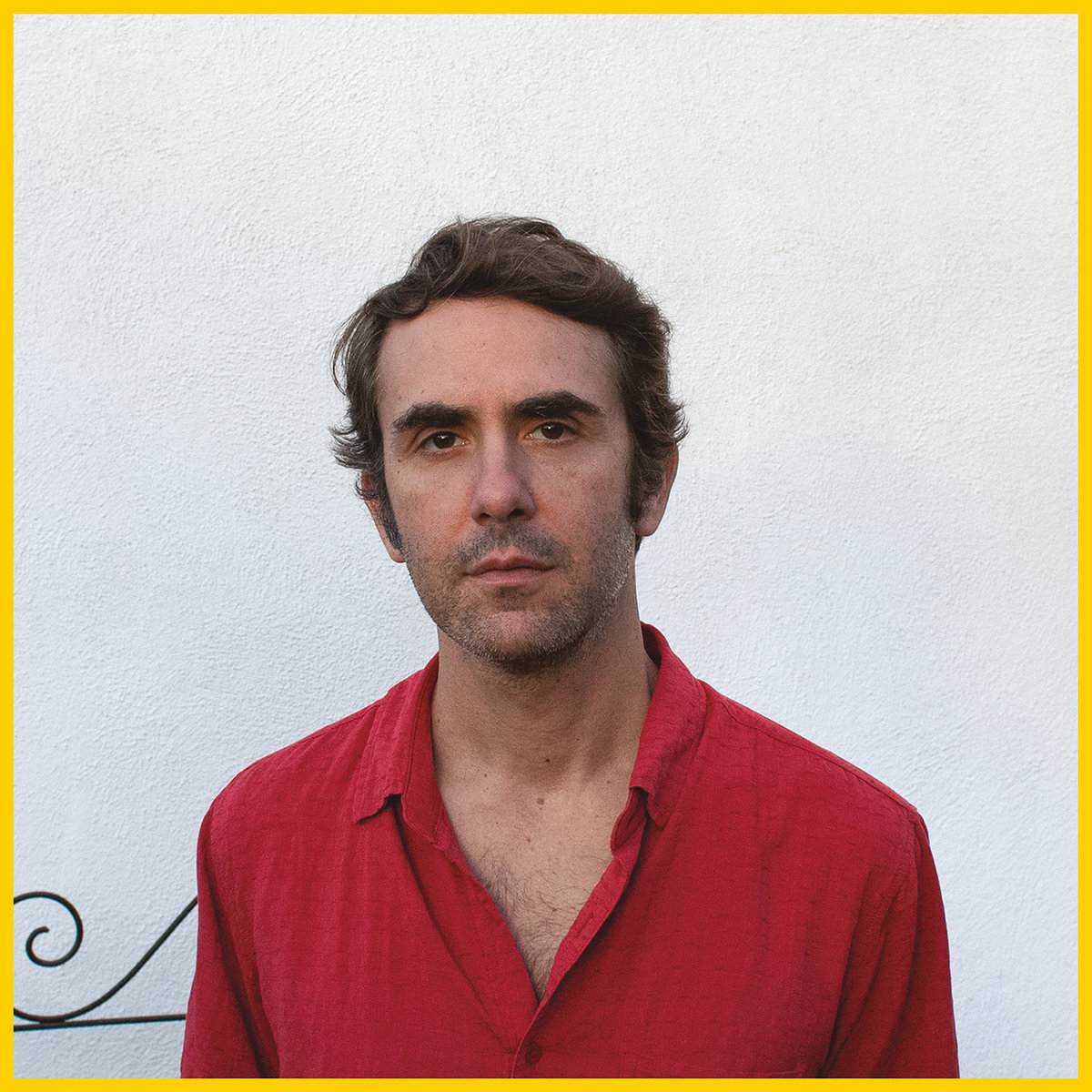
Chris Cohen has plied the inside and outside folds of pop musical possibility since at least 1978, when he first set infant drumstick to skin at the tender age of three, initiating decades of sonic experimentation across multiple bands and nearly a dozen recordings. Chris Cohen’s songs initially sound easy. They’re each tiny jewels that unfurl at a leisurely pace, but dig a little deeper and you’ll reach a melancholy core
Chris Cohen, releases his third solo album, it was written and recorded in his Lincoln Heights studio and at Tropico Beauties in Glendale, California over the course of the last two years. Cohen would sing melodies into his phone, fleshing them out on piano, then constructing songs around the melodies, and later, adding lyrics and other instrumentation with the help of Katy Davidson (Dear Nora), Luke Csehak (Happy Jawbone Family Band), Zach Phillips, and saxophonist Kasey Knudsen, among others. It is his most straightforward album yet, but it is also the conclusion of an unofficial cycle that began with Overgrown Path.
CC is my favourite. His songwriting and voice and arrangements are so delicate. The drumming is so pure and jazzy, and it has some very fun lyrics and themes. ‘Making grilled cheese for dinner in an RV by the sea’.
“Sweet William” is the third single from Chris’s Cohen self-titled album, out March 29th, 2019.
New project from Ripley from Wooden Ships / Moon Duo. Jean Sandwich Records is pleased to announce the first, self-titled, album from Oregon’s Rose City Band. Born of the back roads, rivers, and quiet city streets of Oregon, the music captures the feeling of living and loving, riding and crashing and being, in the Pacific Northwest, circa 2019. It’s the sound of Sunday morning strums and Saturday night choogle.
Produced and recorded by Ripley Johnson in Portland, and mixed by Chris Cohen, the album finds its niche in the hazy sonic landscape of private press country and psych records, and alongside artists like Relatively Clean Rivers, Jim Sullivan, Kenny Knight, and countless other explorers of the pastoral underground
Rose City Band, led by Erik “Ripley” Johnson of Wooden Shjips, excels in reproducing for his own composition, seven wide open easy-going tracks as close to instrumental were it not for the whispering lyrics punctuated by Neil Young harmonica solos or downright ethereal guitar lines- cooing your mind to the waving lengths of ceiling textures and wallpaper patterns.
Jean Sandwich Records is pleased to announce the first, self-titled, album from Oregon’s Rose City Band, along with the album’s first single, “Rip City,” Born of the back roads, rivers, and quiet city streets of Oregon, the music captures the feeling of living and loving, riding and crashing and being, in the Pacific Northwest, circa 2019. It’s the sound of Sunday morning strums and Saturday night choogle.
Ripley describes the album this way:
“The band was aiming to capture a timeless, natural sound, not quite of the present, past, or future, but phasing in between the consciousness of now and the stoned dream-state of the eternal. Sort of a back porch jam just as the shrooms are starting to kick in. Handmade and human, but also cosmic and transcendental. But the goal is to let the music speak for itself and hopefully find a weird and wonderful audience somewhere out there.”
The fourth album from HTRK, the duo of Jonnine Standish and Nigel Yang, arrives five years on from 2014’s Psychic 9-5 Club. While some much-loved HTRK hallmarks remain—the combination of space and intimacy, the unmistakable interplay between Yang’s guitars and Standish’s vocals—“Venus in Leo” differs markedly in its energy, returning to HTRK’s underground rock past with the stylistic playfulness and variety of a modern mixtape.
Over the soft strums of acoustic guitar, the album’s introduction, “Into the Drama,” posits a theory that “what was once considered self-sabotage could be revisited as being under the influence of Venus in Leo,” Standish explains. Finger-picked guitar loops rise slowly and fall over a cold, brittle beat. Previously released lovesong “Mentions” finds Standish exploring the lack of physical intimacy in the social media age. Elsewhere, there are emotional highs, like on the kaleidoscopic single “You Know How to Make Me Happy,” which details a suspended state of ecstasy, Standish commending her partner’s conscious efforts to prop her up with compliments. “New Year’s Day” traces a flimsy resolution to get healthier, instantly busted by an evening of debauchery, recalling “the worst possible start to the year with bad friends and bad behavior.” The silver lining is the sunrise: “pink, red, orange, white, peach” Standish repeats as the track laps with a velvety, hypnotic refrain.
Archetypal themes emerge as the band explore the makings of personality. Standish revisits her childhood home in a recurring dream (“Dream Symbol”), a doomed first kiss (“New Year’s Eve”) and high drama (“Venus in Leo”). Recorded more or less live in HTRK’s home studio in the Dandenong Ranges outside of Melbourne, the album’s simple production reveals gorgeous, toned-back arrangements and an evolving, idiosyncratic songcraft.
It’s been ten years since HTRK released their breakthrough first album, Marry Me Tonight. The band has undergone profound changes, with the first two albums released amid the deaths of close friend and collaborator Rowland S. Howard and HTRK co-founder Sean Stewart. Psychic 9-5 Club set them on a path of self-discovery, and Venus in Leo marks a spirited new chapter by one of the most distinctive bands of the past decade.
Mega Bog is the fluid musical moniker of songwriter Erin Elizabeth Birgy, who has spent the last ten years channeling, capturing, and releasing her unique bouquet of fragrant, sci-fi pop experiments with a handful of bicoastal collaborators. She is joined on her fifth and finest album (and first for PoB) by members of Big Thief, Hand Habits, and iji, who help her spin a manic web of emotions into beautiful, abstract future poems and thrilling genre perversions.
With echoes of Laurie Anderson, Slapp Happy, Kevin Ayers, Bridget St John, Beefheart, Bowie, Cate Le Bon, Ursula K. Le Guin Prismatic. It’s avant-pop that balances warbling melodies with unexpected bursts of frenetic energy. ‘Diary of a Rose’ is a lush representation of Birgy’s ability to evoke warmth and nostalgia while keeping her gaze to the future.
It joins Weyes Blood’s Titanic Rising and Big Thief’s UFOF as one of 2019’s left field pop gems, a record created with no detectable consciousness of a wider scene but with a bedroom-wide sense of possibility. Birgy’s songs are tangles, unconcerned with hooks, verses, choruses, while floating melodic ideas are addictive precisely because they don’t repeat but play themselves out then disappear. Part prog, part easy listening, warm and engulfing… a shimmering chiaroscuro [of] fully fledged delicious pop. “Dolphine” pulls off the trick of making the small scale feel all-encompassing.
Sonic fantasia from a poetic mind… a whimsical and devastating cosmic journey through loss and healing. It’s part folk-rock fantasy, part avant-pop mind trip, and all gorgeous. With lush sonic layers that are alternately raw and delicate, Dolphine translates as a series of dream worlds where the confessional meets the fantastical, and lost ones live forever.
The weirding way got weirder,” Erin Birgy sings, sounding like Nico at her spookiest, a lovely summation of her beguilingly crooked guitar playing. Fans of Cate Le Bon, look sharp. Somewhere between the mystical landscapes of prog rock and the familiar breeze of easy-listening radio… It sounds something like the ‘energize’ effect on Star Trek as transposed for a jazz band … the music is vast and refined, hinting at chaos but never quite losing control. The band is equally adept at sweeping you away and pulling you in. A lounge track for the lobby of a passenger ship floating through space, Mega Bog’s ‘Truth in the Wild’ toys with the earthly and the cosmic.
Frontwoman and multi-instrumentalist Erin Birgy guides listeners on a mystical adventure. It’s Absurdly good.
She blurs the lines between the surreal and the profound in a way that she seems able to do like none other… “Diary of a Rose” is a stunning introduction to the new record, a jazzy/breezy gem with vaguely sinister undertones, teeming with Birgy’s unforgettably peculiar and vivid lyrical phrasing and the kind of deceptively labyrinthine melodies and slithering guitar lines that made the band’s last LP Happy Together such a compelling, unsung masterpiece and one of the best records of the last half-decade.It’s spectral, at times suave and smooth, and baroque. She’s not quite like anybody else.
Mega Bog’s “Dolphine” was released June 28th, 2019 on Paradise of Bachelors.
Mark Lanegan, the former Screaming Trees frontman and monumental voice has a new
solo album ready called “Straight Songs Of Sorrow”. Here’s the excellent lead single ‘Skeleton Key’. An extended, haunting ballad with an instant hypnotic effect. It’s a self-blaming, melancholic and heavy-hearted reflection. “Ugly, I’m so very ugly inside and out, there’ no denying, why should you love me”. Even after all these years when I hear Lanegan’s vocal I get goosebumps. Strangely enough, the darkness he always creates feels comfortable and inspiring. Another stunning achievement by the genuine troubadour.
When considering any great work of art, be it a painting, a novel, or a piece of music, it’s natural to wonder what might have inspired it: ‘the story behind the song’. Mark Lanegan’s new album flips that equation. Here are 15 songs inspired by a story :Lanegan will be issuing his book of memoir’s called ‘Sing Backwards And Weep’ out this spring.
Following the success of last year’s ‘Somebody’s Knocking’ LP, Mark Lanegan has announced the news of his new solo album, ‘Straight Songs Of Sorrow’, released 8th May via Heavenly Recordings. The album, which is closely aligned to his forthcoming memoir, “Sing Backwards And Weep”, features guest appearances from Greg Dulli, Warren Ellis, John Paul Jones, Ed Harcourt and others.
Straight Songs Of Sorrow combines musical trace elements from early Mark Lanegan albums with the synthesized constructs of later work. The meditative acoustic guitar fingerpicking – provided by Lamb Of God’s Mark Morton – on Apples From A Tree and Hanging On (For DRC) echo 1994’s Whiskey For The Holy Ghost. Yet one of that record’s touchstones was Van Morrison’s Astral Weeks, echoed in the new album’s openerI Wouldn’t Want To Say, where Lanegan extemporises *à la Ballerina over musique concrète wave patterns generated by his latest favourite compositional tool, a miniature computer-synth called the Organelle.
Recorded in the aftermath of King Crimson’s implosion in 1969, when two of its founding members unexpectedly quit the band, “In the Wake Of Poseidon” is an eclectic and experimental mix of bone-crunching riffs, Beatles-ish pop, tender ballads, soaring mellotron-drenched anthems and inscrutable atonal episodes. Highlights include Fripp’s savage guitar throughout Pictures Of A City and Greg Lake’s stunning vocal on the title track – his last with the group before his departure to form ELP. Thanks to the success of their 1969 debut, when In The Wake Of Poseidon was released in May 1970 it peaked at No.4 in the UK charts with one journalist proclaiming “If Wagner were alive today he’d work with King Crimson.”
47 years ago this album was, King Crimson’s second album, In The Wake Of Poseidon was released. Recorded in the aftermath of King Crimson’s implosion during their US tour in 1969, In The Wake Of Poseidon is the sound of an idea that simply refused to quit in the teeth of extreme adversity and apparently insurmountable odds. Understandably, the shock departure of half of the group had dented the confidence that had characterised King Crimson’s demeanour during much of the previous 12 months. Yet in a remarkable display of personal and artistic determination, Poseidon meets the challenge of retaining and developing the fierce originality of ideas that helped fuel King Crimson’s debut album. Whilst Court Of The Crimson King had been a truly collective endeavour, it was undeniably moulded to a large degree around Ian McDonald’s writing and musicality. With Fripp now in sole command of King Crimson’s musical direction, there’s a move into harder-edged, less rock orientated territories which would be expanded upon further in later Crimson records. Despite a superficial resemblance to Court, caused largely by a decision to sequencing the tracks in a way which mirrors the dynamics of side one of Crimson’s debut, In The Wake Of Poseidon deserves to be judged on its own merits and not merely as an adjunct of its more famous predecessor.
Without a working band, Fripp asked Greg Lake, then biding his time until the newly formed ELP could start work, to stay on as guest vocalist whilst also recruiting drummer Michael Giles (along with his bass playing brother, Peter) to return as session musicians. This was a solution that was practical as it was pragmatic. Having lived and worked together as Giles, Giles & Fripp during most of 1968, the core team responsible for laying down the tracks for the album had a proven track record of working quickly and efficiently. The pressure to maintain the commercial momentum of In The Court Of The Crimson King produced a surprise single release. Cat Food (backed with Groon) was issued in March 1970 was about as far removed from the debut album as it was possible to get. The anarchic mood of the song occasioned by Keith Tippett’s freewheeling piano and Greg’s mid-song laughter (caused by Fripp dropping his trousers whilst Lake was singing) made this one of the most unlikely single releases of the year.
Despite these factors, not to mention Peter Sinfield’s satirical lyrics, King Crimson’s profile at the time was such that the band were asked to lip-sync a performance of the song for the BBC’s prime time TV show, Top of the Pops. Perhaps unsurprisingly it failed to catch the ear of mainstream pop-pickers. Nevertheless, it signalled to critics and fans that Crimson was a going concern, and just as importantly, their ability to turn heads remained undiminished.
The haunting melody of Peace – A Theme (whose music dates back to 1968) opening and closing the album, provides a delicate and simple frame into which all kinds of stunning musicianship, dramatic themes and turbulent motifs, jostle and compete for attention. Pictures of a City is brimming with numerous guitar overdubs, a tour de force of densely- wrought picking. Here Fripp gathers the implications of Schizoid Man’s fast running lines, and constructs them into hurtling force in with his trademark dexterity and love of bone-crunching power chords is brilliantly harnessed. The heavyweight nature of Pictures is enhanced still further by guest sax player Mel Collins’ additional firepower. At the time of recording, Mel was still a member of Cirkus – a band which had shared the bill with Crimson and Keith Tippett’s group as part of the Marquee’s New Directions series of gigs the previous year. His work on this track, and in particular the sublime flute on Cadence and Cascade, ensured his recruitment to a new incarnation of King Crimson.
One of the last songs to be completed in the sessions, Cadence and Cascade like POAC, dated from 1969. Substantially revised in the Poseidon sessions, it quickly becomes one of Fripp and Sinfield’s most memorable collaborations. With Lake now off to ELP, he was unavailable for the final recording and his place on this track was taken by Fripp’s old friend, Gordon Haskell. Echoing both the sombre aspect of Epitaph and the hymnal qualities of Court, In The Wake of Poseidon is nevertheless an outstanding track in its own right. Its magnificent mellotron-driven chorus, inspired acoustic guitar interventions, astonishing drumming throughout, and the fragile beauty of Libra’s Theme contained within, is one of Fripp’s most heartfelt melodies every bit as equal to the yearning romanticism found in Peacock’s Tale (Lizard), the title track from Islands and the main instrumental melody from Starless.
When the album was released in May 1970 it was well received in the press, giving rise to the classic Melody Maker headline “If Wagner were alive he’d work with King Crimson”. Thanks to an irresistible combination of anticipation sparked by the runaway success of the debut, along with an overwhelming curiosity to find out what King Crimson would do next, Poseidon actually outsold Court in the UK album charts where it reached No.4. Poseidon was one of the King Crimson albums Steven Wilson was especially looking forward to remixing for 5.1. However, he was disappointed to discover that the multi-tracks for the Devil’s Triangle no longer existed. “Because it’s a bit of a soup, being able to go in and bring out some clarity and detail might have really helped it. As with so much other Crimson stuff, it has got a sense of ‘otherness’ that transcends so many of the other experimental pieces of the same era which haven’t dated well. Harmonically it’s very bizarre but it’s also a kind of prototype of the kind of thing they would try on Lizard in terms of its density and use of free-jazz piano. So there’s basically 12 minutes in the second half of the record where we’re having to rely upon the original stereo master. I think we have to count our blessings that we’ve been able to do what we’ve done so far because to go back and hope to find and work with tapes that are 40 years old is a tall order.”
Robert Fripp guitars & Mellotron, Michael Giles drums, Peter Giles bass Greg Lake vocals with guests MelCollins saxes & flute, Keith Tippett piano, Gordon Haskell vocals. Appears on In The Wake of Poseidon
“All this time I thought you were a leader. It turns out you’re only a deleter.” The lead single off Grouplove’s upcoming fourth album “Healer” is a raucous boost of energy . I don’t even care who or what “Deleter” is about: With its heavy pulse and unrelenting beat, the song is a much-needed injection of sonic fuel. Lead singer Christian Zucconi belts a fierce, pointed, yet relatively vague critique on the failures of leadership without calling out any one “leader” in particular; rather, the portrait he paints is one that we, “the people,” may use for our redress:
There’s no two ways about “Deleter”: Grouplove’s first song of the decade is an explosive protest packed with passion and zeal, the kind of invigorating music that just might get folks up, out of their collective funk,
In the meantime, I’ll be patiently awaiting the full-on intensity of Grouplove’s new album Healer, out this March. With over a decade under their belt, it’s clear this band still has so much to say, and so many ways left to say it.
Band Members
Christian Zucconi, Ryan Rabin, Hannah Hooper, Andrew Wessen
This new reissued Collector’s Edition includes Bonus Disc of Unreleased Material (17 minute jam of Rock Steady plus 3 new Rock Steady remixes) and brand new Cover Painting by John Rummen. Recorded at the Rising Sun Celebrity Jazz Club in Montreal, Quebec, on May 5th, 1977. “Black Night Is Falling” finds John Lee Hooker in fine voice and backed by a driving band composed of John Garcia on guitar, Steve Jones on bass, and Larry ‘Wild Man’ Martin on drums, with the end result being an excellent example of Hooker at his best.
Highlights include impressive romps through Hooker’s signature tunes, Boom Boom, which simply blazes with raw energy here, and One Bourbon, One Scotch, One Beer, which is delivered as a wonderfully paced barroom cautionary tale. This is what the live Hooker sounded like with a sympathetic band behind him, a band that luckily wasn’t afraid to push him a little.
Wye Oak’s special Join tour, which begins next week, will see the duo expand to a quintet and perform music across not only their catalog but songs from Andy Stack’s and Jenn Wasner’s respective solo projects, Joyero and Flock of Dimes. The Wye Oak Join band will include Buke and Gase’s Arone Dyer, Landlady’s Adam Schatz, and Pinson Chanselle from Richmond’s Spacebomb collective, all accomplished multi-instrumentalists in their own regard.
Adam Schatz leads the band Landlady and produces records out of his Ditmas Park studio The Chamber of Commerce. Whenever able and not too hungry or tired, he’s playing assorted instruments with the likes of Sylvan Esso, Japanese Breakfast, Hand Habits, This Is The Kit & others.
“Walk Soft” delves into trepidation and risk. When I was younger I used to work at a stable taking care of horses. I thought they were the most beautiful animals on earth, and seemingly so gentle, so it took me a while to learn that they could also be dangerous, if only because they were so much bigger than I was. Love is like this, too—the bigger it feels, the more power it holds. True beauty should be frightening.
In anticipation of these exciting shows, Wye Oak is sharing a soaring new song titled “Walk Soft.” Lyrically, it picks up right where preceding standalone single “Fear of Heights” left off by asking a string of questions: “What is the view?/ Does it belong to you?/ Do you see the same blue as I think I do?” From there, themes of trepidation and risk are escalated by the band’s sonic prowess until a satisfying coda of closure is reached.
Also arriving today is a short documentary about the band featuring interviews with Wasner and Stack as they discuss their history, their dynamic as performers and collaborators, how that has been perceived by their audience over the years, and how their upcoming Join shows will differ from any previous Wye Oak performance.
In addition to our new single, there’s also a new Wye Oak mini-doc out today! In it, you can hear us talk about our history, explain our dynamic as performers and collaborators, and share a bit about what you can expect from our upcoming Join shows.
The Wye Oak JOIN singles are out now on Merge Records
Australian trio Cable Ties recently shared “Self-Made Man,” another thrilling preview from their second album and Merge Records debut, “Far Enough”, out March 27th. The track arrived alongside an Oscar O’Shea-directed music video featuring performances from the band and their community.
Cable Ties are a fierce, tense rock’n’roll trio. They take the three-minute punk burner and stretch it past breaking point to deliver smouldering feminist anthems. Post-punk and garage rock hammered together by a relentless rhythmic pulse. Jenny McKechnie channels her struggles into songs that resonate deeply, giving voice to feelings often buried in modern life. Shauna Boyle and Nick Brown are a rhythm section anchored in Stooges primitivism—relentlessly hammering out a bedrock for McKechnie’s guitar pyrotechnics and vocal wallop. Three friends summoning a rhythmic tide to deliver anthems that turn latent anxieties into a rallying cry.
Renowned for their incendiary live shows, Cable Ties make their American debut next month with dates in LA (including the recently announced Burgerama 2020), NYC, and at South by Southwest, followed by a European tour in April. Stay tuned for the band’s full SXSW schedule.
In case you missed it, watch Cable Ties’ previous equally potent Far Enough single “Sandcastles” and order the album today on CD, LP, and translucent amber and black swirl Peak Vinyl in the Merge Records store,