Archive for the ‘CLASSIC ALBUMS’ Category

You could say that 2013’s “Honky Tonk” was Son Volt’s “country” album, and the group’s latest is its “blues” album. Reality is rarely that cut and dried, however. So it’s probably best to say that the new “Notes Of Blue” on Thirty Tigers  toys with the achy bluster of ’90s Son Volt—though within an intermittent blues framework. “Overall, the end result winds up being more of an exploration of how various styles intersect with the blues,” says Jay Farrar of the band’s eighth studio release.

Twenty-two years ago, Son Volt kicked off Farrar’s post-Uncle Tupelo run with a definitive bang. Equal to or greater than anything his former group could muster, Trace has been a tough act to follow and it doesn’t help that the album sounds as wrenchingly relevant now as it did in 1995.

As if to simultaneously acknowledge and contain Trace’s considerable shadow, Farrar embarked on a series of subdued shows in 2015 to promote an expanded 20th-anniversary reissue. This was not the Son Volt of old. “It was a good opportunity to reassess those songs and present them in a different way,” says Jay Farrar of his last tour.

Self-produced with help from the revered John Agnello, Notes Of Blue actually benefits from some bait-and-switch tactics. After opening with a pair of tunes—“Promise The World” and “Back Against The Wall”—that wouldn’t have sounded out of place on Trace, Farrar abruptly puts on his blues big-boy pants for a series of songs that are as much a departure from the SV formula as you’re likely to hear. On “Cherokee Street,” “Midnight” and the skull-rattling “Static” and “Lost Souls,” Farrar’s sheer determination to work within the limitations of the idiom—the alternate tunings; the simple, succinct lyrics addressing sin, struggle, escape and redemption—actually frees him up to explore new instrumental textures and vocal approaches. Nothing dramatic, mind you just enough to signal growth and evolution for a guy who just turned 50.

To keep things honest, Farrar adhered to the tunings of Mississippi Fred McDowell and Skip James, even cribbing lyrical snippets from old blues numbers as starting points. For further inspiration, he turned to the ragged rural beauty witnessed in the field recordings of music historian George Mitchell (think R.L. Burnside). “The guys at Fat Possum gave me that box set years ago,” says Farrar. “It’s that cross-pollination over centuries that sparks such creativity in music.”

On Notes Of Blue, it all comes together with ferocious perfection on “Sinking Down,” courtesy of Farrar’s darkly orchestral slide guitar and a relief valve of a bridge that emerges with all the beauty of an unexpected vista on a long, unrelenting drive through our country’s Trump-crazed midsection. “After doing those acoustic Trace shows, I definitely wanted to get back to playing some electric guitar,” says Farrar. “I even brought out the Webster Chicago amp used in the photograph for Trace, and this is also the first time I’ve played lead since Trace. So there’s a thread of continuity there.”


The National's Bryan Devendorf. Credit: Graham MacIndoe

Although The National are not slated to be releasing music in 2020, the members have been keeping more than busy. Aaron Dessner has worked with Taylor Swift on Folklore, Matt Berninger has a new solo album out in October, and now the band’s drummer Bryan Devendorf has released his debut solo album under the name Royal Green. The album takes on a more electronic, experimental approach, and features contributions from Aaron Dessner and Muzz’s Josh Kaufman. The eight-song effort showcases Devendorf’s individual strength as a songwriter, with each track containing multitudes of instrumental and lyrical depth.

Considering that The National are taking some time off, you’ve probably seen their name mentioned a lot lately – what with frontman Matt Berninger‘s anticipated solo record and guitarist Aaron Dessner having a big hand in Taylor Swift‘s latest release, drummer Bryan Devendorf arrives with the surprise release of his new project Royal Green, but he’s not here for any headlines or glory!

“I’m trying to keep it low-key,” before the record is due to drop. “I’m just the drummer checking in!”. The self-titled album consists of four originals and three covers of the likes of The Beatles, Bob Dylan and Fleetwood Mac. The lyrics were written by a friend, and I adapted them. I definitely relate to them. It’s quite introspective. It’s trying to not take itself too seriously, but be serious about it! There’s a nostalgia theme to the whole album. I’m taking stock of my life and memories and putting them to song.” ‘Dreams’ by Fleetwood Mac is one of those songs I heard on the radio when I was three or four. It blew me away – her voice, the drumming, it was all so appealing. As for The Beatles song, well, all my life I’ve been accosted by people saying, ‘Hey man – you look like John Lennon!’ I liked The Beatles as a kid and thought this song was cool so I set it to different chords. The Dylan song reminds me of a transitional time in my life when I was trying to develop a more permanent relationship with my current spouse.”

Royal Green, the debut album from Bryan Devendorf (The National, LNZNDRF) with sound designer Nate Martinez.

Told Slant is Felix Walworth’s dark and evil band, Told Slant, the solo project of Brooklyn songwriter Felix Walworth, has announced a new album “Point the Flashlight and Walk”, out on November 13th via Double Double Whammy. It’s the follow-up to 2016’s Going By. Told Slant also unveiled two singles from the new album— “Family Still” and “No Backpack”—which come with lyric videos shot by Emily Sprague (Florist).

“Family Still” is a poetic exploration of interpersonal dynamics. “Power isn’t taking / It’s making you give in freely / And I hope you don’t come home / and think it’s enough to be near me,” Walworth sings in a gentle tone. This layered acoustic track excels in its dissection of the complicated shades of intimacy: “What can be said of desire / when every longing instilled in my heart was instilled in such a violent world?”

“No Backpack” also delves into closeness, mixing in both cynicism and romanticism. There’s cherished imagery of angled zippers on a leather jacket and a life packed inside a Honda, which plays into the song’s core conflict—its competing views of love: cautious and self-protective or idealized and reckless. “I don’t want to run with you / when there’s someone you’re devoted to / You’re always living with a trapdoor under you,” Walworth sings.

Walworth said of the new songs:

“Family Still” and “No Backpack” are meant to be listened to in succession. They explore the concepts of devotion and togetherness as both liberatory and self-negating, and mount these explorations from a place of sober reflection and indulgent fantasy.

http://

Releases November 13th, 2020

instruments and words by Felix Walworth
arranged, performed, and recorded by Felix Walworth

Dawes a group of road warriors who’ve carved out their blend of amplified folk-rock, the music is nuanced and collaborative, with no single instrument dominating the track list. “We’ve learned so much over the years about what it means to be A Band” says drummer/free range dog farmer Griffin Goldsmith, “I used to want all our records to be Only drums, but I’m finally starting to realize, maybe a lil’ bass, keys, guitars and vocals ain’t so bad after all.”

“It feels very natural to outsource our problems. Telling ourselves “once I have this job, this partner, this amount of money, etc, I will be happy” is really effective and convenient. Unfortunately no one’s life actually works that way. I’m sure we all know plenty of miserable people who seem to have it all and plenty of blissful people that seem to have close to nothing. This song is about the efforts one makes to find some easy fix, unable to recognize that it will never work that way, that we are in the end our own responsibility.”

‘Didn’t Fix Me’ is here!.
‘We wanted to make a video that felt like all our old favourite children’s books. We thought the song’s simplicity and subject matter could withstand a more direct telling of the lyrics within a video and we love the way it came out. Art by Joshua Swallow

Over the past few years, A Swayze & The Ghosts have certainly built themselves a solid fanbase based on their live shows and some catchy as hell singles.

There’s been rave reviews from BIGSOUND and The Great Escape Festival Appearances, and they’ve also earned themselves the attention of some big names, like director Edgar Wright, Ivy League and Rough Trade Records, and of course, there’s the Tony Hawk’s Pro Skater soundtrack.

Now, five years after forming, it’s finally time for the group’s debut album.

Dubbed Paid Salvation – by frontman Andrew Swayze, guitarist Hendrik Wipprecht, bass player Ben Simms and drummer Zackary Blain – the album tackles everything from ecocide to social media addiction to religion, with no punches pulled. “Funnily enough, we’d actually recorded a record – a full length – when we first started playing together, back when we were a three-piece. And it was really bad. We were just super high and drunk the entire time, and it turned out to be rubbish. We ended up toughing it out, and then re-evaluating what it meant to be in a band I think, and we took things seriously from then on.”

“When you’re talking about sensitive subjects in a subjective manner, you’ve got to be sensitive to people and, you know, I respect the people’s opinion – I don’t just hold my opinion above everybody else’s – and I like to know what I’m talking about if I’m going to talk about it, so all of that is taken into account while writing tracks, like, ‘Ok, this line may come across offensive to the wrong person,’ or like, ‘You know, this might not be what I’m trying to say.’ I never really get nervous about releasing a track because I’ve definitely thought about it a lot.”

“We’re a live band and we thought that we’ve got to try and capture that energy and conviction on our record so we did that, and then I did my vocals separately. Pretty much everything was tracked within those few days, but it just took about another six months for me to finish my vocals because we tracked it all in Melbourne, and we all live in Tassie. We all worked full-time at that point, we had to sneak in whenever we could to get my vocals done. I’d just go up for a couple days at a time and then come home and go back the next weekend. It was a slow process, but a quality process, and I think we kind of discovered ourselves as a band, even more so. I think we sort of just reaffirmed who we want to be as a band and how we want to sound recorded.”

‘Cancer’ is the brand new single from A. Swayze & the Ghosts, lifted from their debut album “Paid Salvation” – out Friday 18 September.

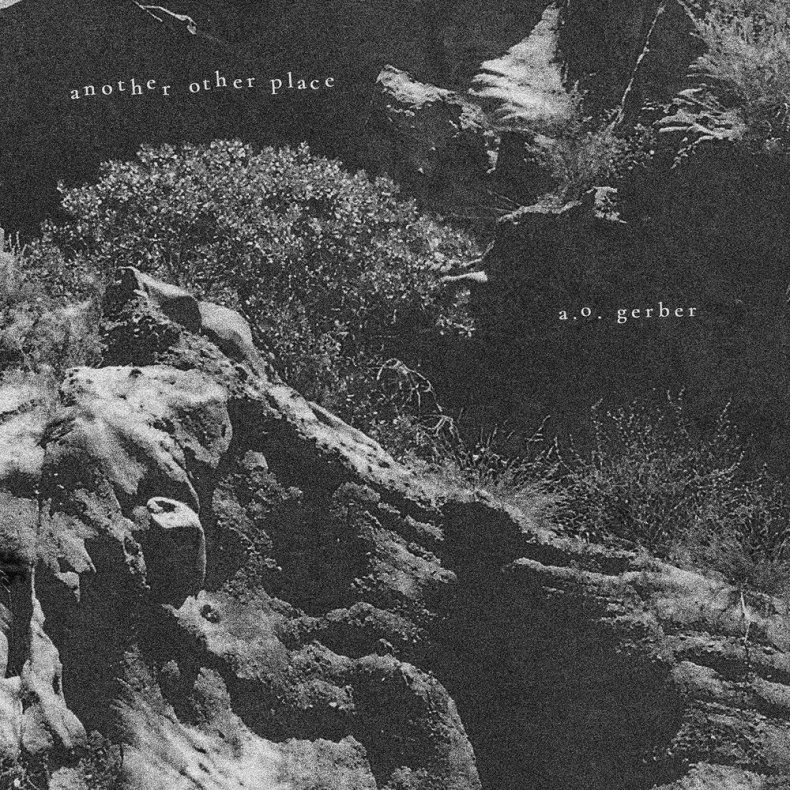
another other place

To our minds at least, A.O. Gerber has been one of the break-out artists of 2020. The Los Angeles-based songwriter released her debut album, Another Place To Need, back in May on Hand In Hive, drawing acclaim from the likes of NPR, Gold Flake Paint and The Line Of Best Fit. The result of three years of recording, the album’s release should have brought with it a host of exciting tour dates, instead A.O. has found herself balancing a full-time job, while debating the importance of sharing music in a turbulent world. With that in mind, today marks the release of A.O’s new stripped back EP, Another Other Place, featuring three re-workings of tracks from her debut album, previewed earlier this week by the wonderful Bleeders (stripped).

While these recordings are new, the inspiration behind them actually dates back to when the tracks were first written, as A.O. explains, “there was a spooky quality to the original demo of “Strangers” that I loved and I almost released it that way initially“. Inspired by the sound of that demo, A.O. sought to capture the same quality in Bleeders, a track that, “came from very dark moments in my life“. While the album version of Bleeders stands out for it’s processed beat and wobbly synth bed, here A.O. seems to channel a different world. Her voice is raw and crackling, the only adornment coming from the reverberating piano, sounding like she’s alone in some cavernous hall, almost absent mindedly plucking out chords as her minds runs circles, trying to make sense of it all, “blue eyes tearing their way through my heart all your true lies I sentence myself, it’s the darkest part of your holy grip on me”. Peeling back the layers of the track seems to somehow get down it’s very core, the troubled tenderness, the quiet longing, the perfect escapism, it’s really rather magical.

Another Other Place is out today via Hand In Hive.

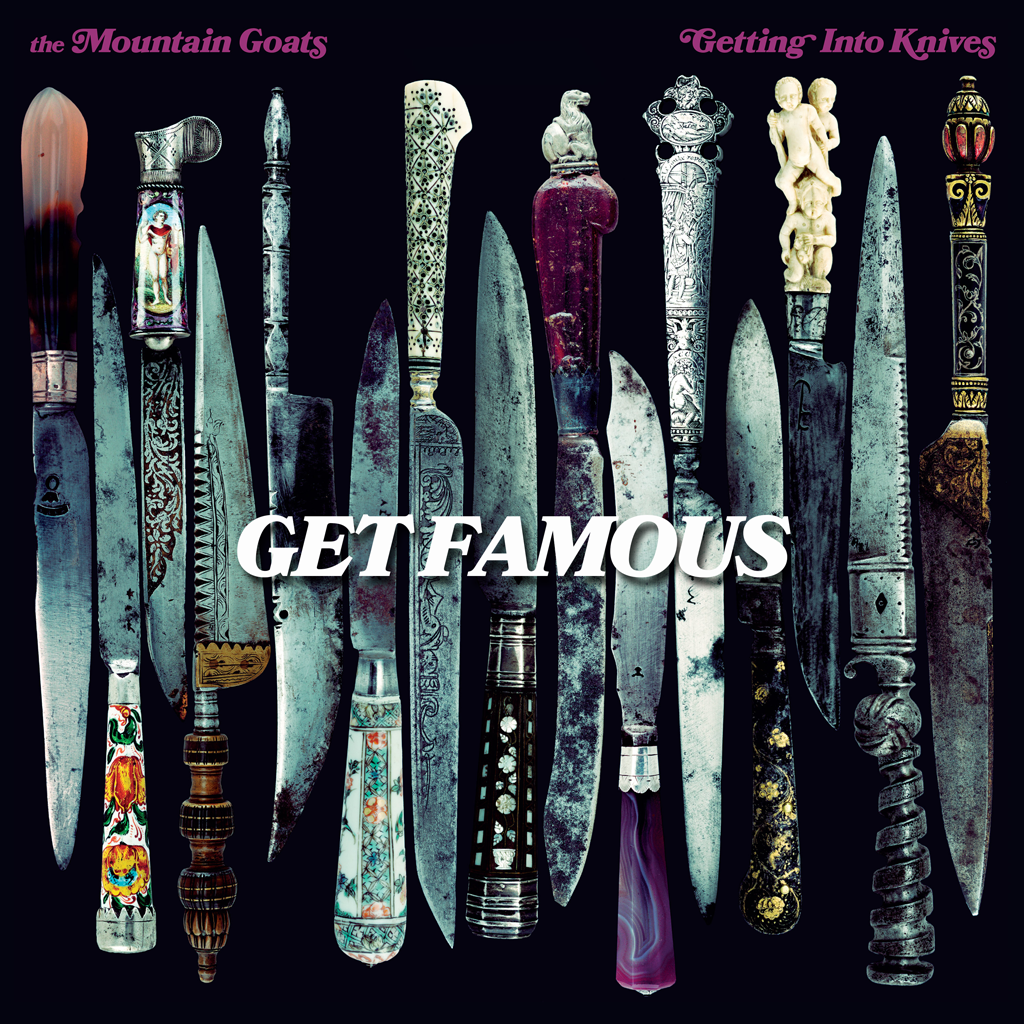
For nearly three decades under the Mountain Goats moniker, John Darnielle has been honing his craft as a songwriter and story-teller, shifting from those early direct-to-boombox recordings to elaborate concept albums about Professional Wrestling and Dungeons & Dragons, and generally finding a way to do whatever he wants. His latest project manifests in the new album, Getting Into Knives, “the perfect album for the millions of us who have spent many idle hours contemplating whether we ought to be honest with ourselves and just get massively into knives”. The album was laid to tape in the legendary Sam Phillips Recordings studio, an attempt to capture the spirit of the touring show that has blossomed with their current four-piece band.

The album will arrive on Merge at the end of next month, and this week they’ve shared the latest single from it, Get Famous.

While anyone who has even cast a flitting eye in the direction of The Mountain Goats’ music will probably realise, the thought of actually getting famous has never been top of their to-do-list. Instead here the idea is presented like acid in John’s mouth, spitting out his words at fame hungry stars, “light up the sky like a comet, make yourself want to vomit, shine like a cursed star, show everybody exactly who you are”. He even throws in a reference to Wesley Willis, the cult singer-songwriter, diagnosed with schizophrenia who was in some ways the antithesis of fame itself, to the point he was noted for greeting his fans with a headbutt. Like most of the best moments of The Mountain Goats, the playful lyricism is combined with some genuinely fabulous music, here they seem to channel the spirit of The Swampers or the Spacebomb House Band, combining virtuoso musical talent with a sense of undeniable fun, from the howling organ to the bright brass flourishes, surely destined for choreographed performances once you’re allowed enough people on a stage at one time. A band who know exactly what they’re doing and are at the top of their game, The Mountain Goats might never have sounded better, let’s just hope for their sake they don’t get famous because of it.

The day I wrote this song I knew the wait to share it would be excruciating AND IT HAS BEEN but today! is! the! day! across all platforms right now! Get Famous!. John Darnielle has written almost 600 songs now, and some of them are very sad, dealing with hard drugs and tragic ends, hurting yourself and others, sicknesses of both body and brain, off-brand alcohols. They are told in beautiful, unnerving, specific detail because he is a very good writer, and also some of them are just true stories about his own life.

“That kinetic rush of the record’s creation can be felt in first single ‘As Many Candles as Possible,’ which features Al Green’s organist Charles Hodges.” – Brooklyn Vegan

“The track opens with a bristling twist of guitars and rumbling drums before settling into a steady groove. A distorted crunch underpins the primarily acoustic proceedings, helping the song build to a pitch-perfect freakout, featuring Al Green’s organist Charles Hodges.” – Rolling Stone

“The album news arrives with the release of dark, squally lead single “As Many Candles As Possible,” which features Al Green organist Charles Hodges and builds to a churning catharsis.” – Indy Week

“Recorded across a single week in Memphis, the album trades between piano-driven intimacy and stormy bombast, the latter of which is on display in its lead single, ‘As Many Candles As Possible.’ Featuring Al Green’s organist Charles Hodges, the dark and swampy track reflects the Deep South milieu in which it was recorded.” – A.V. Club

Limited Edition salmon vinyl, tapes, and pins are almost sold out,

http://

releases October 23, 2020

RECORDED AT
Sam Phillips Recording, Memphis, Tennessee March 1–6th, 2020

John Darnielle: vocals, guitars, piano
Peter Hughes: electric and upright bass
Matt Douglas: keyboards, woodwinds, guitars, accordion, backing vocals
Jon Wurster: drums and percussion

JOINED FOR THE OCCASION BY
Bram Gielen: piano, guitars, keyboards
Chris Boerner: guitars
Charles Hodges: Hammond B-3
Sam Shoup: Mellotron
Tom Clary: horns
Reba Russell: backing vocals
Susan Marshall: backing vocals

CLT DRP

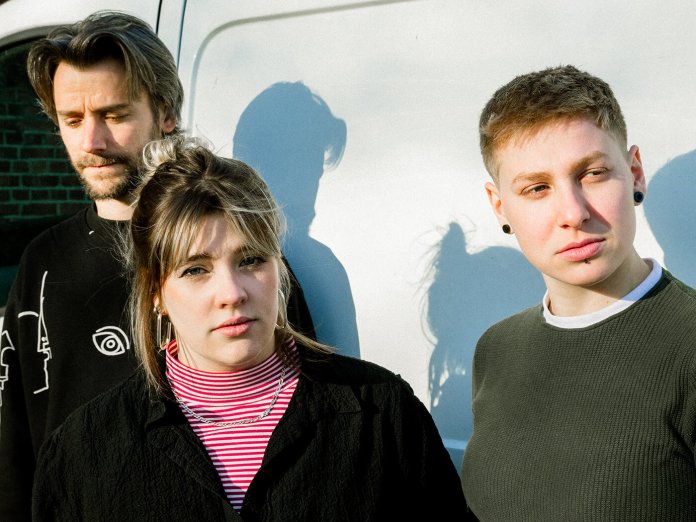
It seems every time guitar music is at risk of getting stale, somebody comes along to give it a much-needed shot in the arm. Innovators like Hendrix, Tony Iommi, The Edge, and Tom Morello have all challenged and reshaped what it means to be a guitarist. And in 2020, it looks as though CLT DRP’s Scott Reynolds is doing his bit to push the envelope.
While that may sound like hyperbole, the Brighton-based trio’s new album “Without The Eyes” is offers a refreshingly different take on the punk formula – coupling aggression with electronic soundscapes and danceable beats, electro-punk seems to be the label most settle on, though it doesn’t paint the full picture.
Loaded with atmospheric dissonance, electro glitches, and almost dubstep-style drops many will be surprised to hear that CLT DRP’s sound is composed solely of guitar, drums and vocals – in a way that reminds you of the ear-defying experience of listening to Rage Against The Machine for the first time and wondering just how they do it.

And just like arch sonic innovator Tom Morello, a lot of the inspiration for Reynolds’ playing comes from outside influences. “When it comes to the music I make, I’m really just trying to make electronic music on the guitar,” he says. “I had been playing guitar since I was seven and I liked a lot of the usual stuff you’d call guitar music, like Guns N’ Roses and Metallica but there was always something about electronic music that just did something for me that standard guitar music didn’t.”

Though he’s an accomplished guitarist with a solid grounding in country, having studied the likes of Albert Lee and Brent Mason, Reynolds has definitely employed a rip-it-up-and-start-again approach to his own style; taking more inspiration from the likes of The Prodigy than contemporary guitar bands.

“It’s just how I see song writing I guess. Some people are really focused on melody and harmony, and focusing on keys. And it’s not like I’m totally neglecting that, but it’s not my focus. My focus is on rhythm, and the sound. But mainly sound.” he says.

“Queens of the Stone Age were like the only band I listened to for ages. But I’ve had this weird thing with them, because I was such a big fan and that sound has become so recycled now, that I just do everything in my power to not sound like Queens of the Stone Age.”
The sound Reynolds was going for in the initial stages of the band was “a combination of Meshuggah and electro house” and while he says he may have failed at that, alongside vocalist Annie Dorrett and drummer Daphne Koskeridou he has crafted something really distinct.

They are heavy and often abrasive, but at the same time incredibly melodic, and at the heart of everything there is an unmistakable groove with beats that change on a dime. They are challenging and uncompromising but also a hell of a lot of fun, which separates them from a lot of their peers.

Meeting at the British and Irish Institute of Modern Music (BIMM) in Brighton in 2017, there was an instant connection the moment the three started playing together.

“We literally wrote a song straight away. Daphne is incredible. The chemistry is amazing, I can just play her a riff and she’ll just find the right groove. And Annie has been amazing at putting these incredible melodies over the top of whatever noise I’ve brought in.”

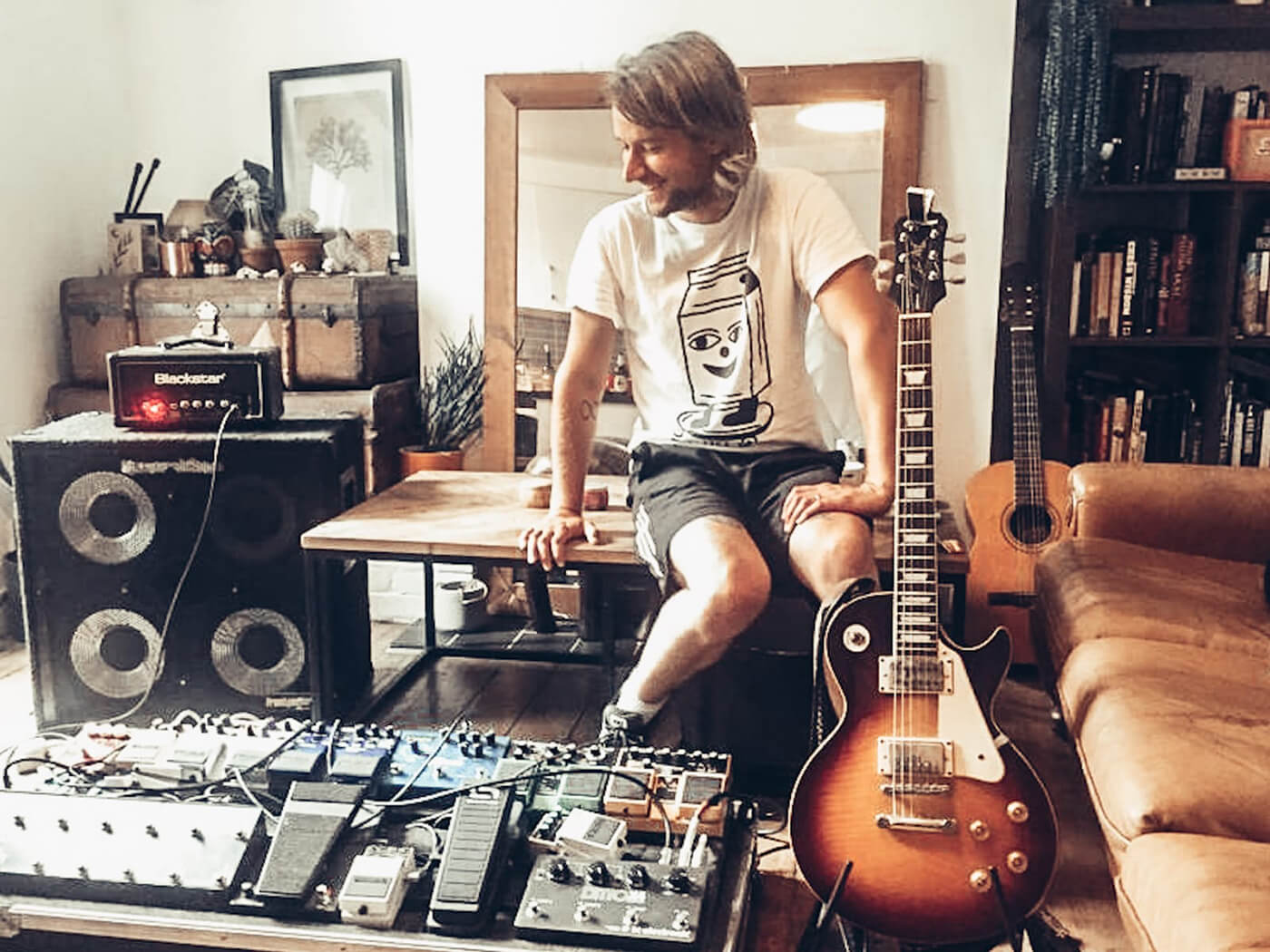
How Reynolds makes his noise is an interesting process aided by several key tools. Firstly, as there is no bass player in CLT DRP, to get that big low-end sound he is running through a Hartke HA3500 bass head and two 4×10 bass cabs, as well as a Laney GH100L head with a 4×12 custom cab.

Secondly – and perhaps most importantly – is his pedals, of which he counts the Boss SL-20 Slicer and the Strymon Mobius Ring Modulation among his favourites.

“The Mobius was a bit of a game-changer in a lot of ways because there are so many ways you can change the texture of your sound. I can’t really put it into words about just what I love about it so much. I wanted a filter for drops and I remember seeing a really good YouTube demo and I remember thinking the filter just sounded great on it, but it’s just kept giving. It was – and still is – an infinite source of inspiration for different textures.”

A huge fan of stacking, Reynolds’ sound has largely been shaped by how his pedals interact with each other. While he is regularly running his Slicer, Mobius, Boss DD7 and Boss OD-20 alongside each other, he found the Wampler Ego Compressor was actually crucial to the performance of everything.

“I didn’t realise how much it changes the sound of other pedals until I started using it. So when I use it alongside the Mobius, it drastically changes how the ring mod sounds. If you dial back the gain before going into a delay, for example, then it is much more effective than just having it turned full on, so I think that’s basically what the compressor does for me. I didn’t realise how affecting it was until I took it away one day.”

Ultimately it’s Reynold’s distinct use of effects that define the CLT DRP sound and him as a player right now. Traditional guitar playing is just not on his mind. “I’m not really a guitarist in that sense, that stuff takes a back seat in a lot of ways,” he says.

“I’ve had this guitar (Epiphone Les Paul Standard) since I was about 11. If I had the money, I’d love to get a Gibson SG or something, but I don’t yearn for it like I do pedals. For me, spending $300 on a pedal can do a lot more for me than spending $1,200 on a nice new guitar.”

While it may not be for traditionalists, Reynolds’ approach has yielded interesting results and CLT DRP is a stunning example of what guitar music is capable of being today.

Their new album Without The Eyes is out now.

CLT DRP Gear

El Tee writes honest songs about the perennial push-and-pull of holding space for yourself and giving it up for others. Listeners are swept up in stories delivered via introspective lyrics embedded in warm and nostalgic tones of instrumentation. El Tee’s songs saunter through intimate moments, and then drive hard and fast straight into the pit of your heart – all within the same few minutes.

The singer-songwriter – real name Lauren Tarver – explained the track’s origins in a statement. She noted that the song is “a very descriptive narrative” of a personal experience she had while travelling in New Zealand. Tarver also described the song as “emotional, to say the least” in a post to her Instagram.

‘Everything Is Fine’ joins two previously released singles on the album’s ten-song tracklist: ‘How I Like It’ in August last year, followed by ‘Keep Walking’ in March. “I went on a road trip with a friend, and was so full of anxiety the whole time,” she said. “It was bottled up and I couldn’t shake it. I literally felt trapped by the mountains of NZ.”

An American expat, Tarver recorded the album in her adopted hometown of Melbourne in 2019. Andrew McEwan engineered and mixed the album in addition to playing drums.

http://

Melbourne-based singer-songwriter El Tee has announced her debut studio album, ‘Everything Is Fine’, days after premiering the record’s title track. Melbourne community radio station 3RRR premiered the single on Monday (May 11). The song’s accompanying music video the following day. Dan Cahill directed the video, having also worked on El Tee’s video for ‘Keep Walking’.

Debut album ‘Everything Is Fine’ out September 18th, 2020
Released September 18th, 2020

The Band:
Guitar (rhythm) by Lauren Tarver
Guitar (lead) by Tim Scott
Drums by Andrew McEwan
Bass and BVs by Mimi Gilbert
Written by Lauren Tarver

“Bile and Bone” is the new album from songwriter al Riggs and guitar annihilator Lauren Francis.

Two years in the making, and in between countless side-projects, singles, side-albums, and a premiere at Hopscotch Music Festival 2019, Al and Lauren recorded this nine-song album in two different New York apartments, an apartment in Durham, a house on the other side of Durham, and additional recording in yet another house on yet another side of Durham.

Produced by Francis and mixed/mastered by Alli Rogers (recently an engineer on Bon Iver’s “i,i”), Bile and Bone is a culmination of familiar themes and tropes in Riggs’ songwriting (horror movie monsters, queer politics, puns) taffy-pulled into a widescreen format by Francis’ production and arrangement. Swaths of strings and electric piano are cut through by chunky acoustic guitar that sometimes teeters on the intrusive. Flirtations with soft rock (“Werewolf”) motorik pop (“Boyfriend Jacket”) and Eno-esque ambient balladry (“Apex Twin”) sit snugly against the ghosts of Fahey (“Dying Bedmaker Variations”) and the dust-clogged remnants of a pawnshop (“Love Is An Old Bullet”).

The title track is a shuffling climax of held-back fury, summarizing the overall air of the album with volatile lyricism (“I should not be in a place/where I am on my knees each night/praying for my leaders/to be shot down on sight”) with classic pop harmonies provided by Rook Grubbs (Vaughn Aed).

The end result is a patchwork of beauty with claw marks. Possibly cat, possibly wolf-person, definitely lovely.

“At the very end of the opening track, a sound is heard, a warped deviation, and you might, for a moment, think that it was Satan. Not the Satan our parents’ parents rejected in recordings, but rather a new, much improved Satan 2.0, leading by example of sensitivity and risky business, no longer mutually exclusive. Do not fear it. Give in and go forth and enjoy.”
-Adam Schatz (Landlady, expert on Satans)

http://

“It is their best and most compelling record yet, Riggs singing songs about self-realization during a moment that badly wants to beat you into preordered shapes, delivered with both tenderness and intensity over matching acoustic picking. A work of clarity and reckoning, it is the album that Riggs has been building toward for this busy past half-decade.”

Released September 18th, 2020

BIle and Bone is an album by Al Riggs and Lauren Francis

All words by al Riggs
All music by Al Riggs and Lauren Francis