For the past ten years, San Francisco rock / post-metal luminaries Deafheaven have built one of the most compelling discographies in metal, one that has challenged both the modus operandi and perceptions of the genre. Each critically acclaimed release widened the scope of their particular views of what rock and metal can be, capped by their most innovative album to date in 2018’s “Ordinary Corrupt Human Love”. It all began though, with the 2010, four-song Demo released to Bandcamp by the bands founding members George Clarke and Kerry McCoy. Set to embark on a world tour earlier this year to celebrate their 10th anniversary as a band and the five albums released in that span, Deafheaven had to switch gears when COVID canceled all gatherings across the world, instead teaming with long time producer Jack Shirley at Atomic Garden studios to bring the show they planned to perform in a studio sessions format.
The only live albums I’ve ever really connected with have been documentations of tours I’d seen in person. Deafheaven touring their 2018 LP Ordinary Corrupt Human Love, illustrating their sun-peaking-out-from-behind-a-cloud black metal with sunflowers strewn about the stage, which contrasted with the feral growls and extreme-black-metal getup of vocalist George Clarke. While their forthcoming live record 10 Years Gone serves as a stand in for the anniversary tour they’d planned for 2020, most of the track list is familiar to anyone who caught their OCHL tour a few years back. “Daedelus,” though, is a new addition to their live show, both recalling their early years (being the first song they ever wrote) while relaunching expectations for what future Deafheaven sets will look like.
10 Years Gone includes the first song they ever wrote in “Daedalus” from the first album Demo, which also serves as the first single released from this album, along with fan favourites like “Dream House” and “Vertigo” that have an added power in this setting. Deafheaven named ‘Artist of the Decade’ by Vice, along with albums featured in ‘Best of 2010s’ lists on Pitchfork, Rolling Stone, Metacritic, AV Club and many more.
Three previous albums Sunbather, New Bermuda and Ordinary Corrupt Human Love have received incredible praise from press and named ‘Best New Music’ by Pitchfork.
At the start of 2020, it looked as if Arre! Arre! had the year all mapped out; plenty more touring to come in support of last year’s incendiary Tell Me All About Them LP, as well as a new EP, the riotous Heavy Breathing, set for a summer release. Then, in March, the pandemic changed every-thing, and suddenly – like millions of others worldwide – the Malmö punks unexpectedly had plenty of time on their hands.
Singer and bassist Katja Nielsen has been putting it to good use. “After COVID-19 hit and gigs were being cancelled,” she says, “I found myself in a vacuum that needed to be filled with creativity.” Isolation lent itself naturally to the start of a solo project, She/Beast, to be written and produced entirely by Nielsen herself – which suited the subject matter. “Because of the personal nature of what I was writing about, I felt that I would not be able to share ownership of the songs the way I do in Arre! Arre! I wanted every little detail to be exactly the way I wanted it to be.”
About a year before she began work on She/Beast material, Nielsen was finally diagnosed with bipolar disorder after over a decade of suffering from it. Music, she says, was a crucial outlet for her to channel the rawness of her emotions, to spill her feelings into words and melodies. “Writing music has always been a coping strategy for me. Feelings get bottled up in a very destructive way if I don’t write a song about something I’m going through.”
The result is a pair of EPs, In the Depths of Misery and This Too Shall Pass; both titles are quotes from Vincent Van Gogh, another artist to have had bipolar, and taken together, they represent the emotional arc of the songs, which encompass despair, resolve and hope: there’s frustration in ‘Devil on My Mind’, resignation on ‘A Fragile State of Mind’, and fizzing anger on ‘Take My Pills’. “Just imagine being told that some of your personal traits are symptoms, and if you take your pills those traits will disappear,” Nielsen explains of her diagnosis. “Some of them I was happy to get rid of, and some I still mourn. Making sense of what’s a symptom and what’s a part of my personality – that’s what can be so tricky with having a mental illness. But by writing these songs, I could process one piece of the disorder at a time.”
Written and arranged entirely in Nielsen’s living room, the ten songs over the two EPs were recorded in conjunction with producer Joar Anderson. They mark a dramatic departure from the furious pace of Arre! Arre!’s output, instead evincing a lo-fi, pop-rock sound; the DIY nature of the songs strongly recalls Kathleen Hanna’s 1997 solo record Julie Ruin, whilst the instrumentation – growling bass, scuzzy guitars, snarled vocals – take their cues from both riot grill and post punk. “The DIY thing is just imprinted in my genes. If I could choose, we’d all still record songs in our garage, with just a tape recorder.”
Taken together, In the Depths of Misery and This Too Shall Pass represent an impressively accomplished first solo statement from an artist who, were it not for COVID-19, might not have re-leased one this soon – ten songs scored through with a palpable darkness, in keeping with Nielsen’s vision for the tracks to feel “uneasy and on the verge of despair, kinda like a silent horror film.” There should be more to come, too, as she continues to write on her laptop. “I usually do it in front of the tv – it’s kinda like knitting to me!”
The trio’s debut album, I’m Not Well was a brooding grunge quagmire vocalising founder Mark Holley’s struggle with his mental health. Follow-up Reiðifocused in on creating a vaster expanse through reverberated guitar lines amidst a slight withdrawal of the grunge bite. Now, two years after its release, and a line-up change (with bassist Tristan Jane and drummer Ant Thornton both leaving earlier this year), the band’s self-titled third effort is a last chance saloon of sorts. It’s Black Foxxes with the chains removed, ready to snarl at the world that all of this has been about more than being the next big thing.
It’s been a pretty hectic time for Bristol based indie rockers Black Foxxes – so much so that singer Mark Holley is now the sole remaining original member. Whilst the drama may have been enough to bring an abrupt end to other bands, Holley has chosen to swim rather than sink and returned with a second self-titled album which takes a darker more mature direction and signals a fresh new start.
“We wanted to make something incredibly different. But it was also important not to alienate people completely. So we felt a good way of doing that would be to write everything for ourselves, and to use all these crazy dynamics and different sounds, but to…pull it together in a familiar way.” – Mark Holley
Black Foxxes debut album is out now on Orange Vinyl which they promote with a huge tour across the UK in March
George Thorogood & The Destroyers – ‘Live In Boston 1982: The Complete Concert’ black vinyl 4LP set. This comprehensive reissue of George Thorogood and The Destroyers’ Live in Boston, 1982 captures the band’s triumphant Bradford Ballroom concert in its entirety for the very first time. Full of energy, power, and focus, Thorogood and The Destroyers play a blistering set that includes such classics asBad to the Bone, Who Do You Love?, and Move it on Over. Newly remastered by the Grammy® Award-winning engineer Paul Blakemore, the 27-track Live in Boston, 1982: The Complete Concert adds 12 previously-unreleased tracks to the original 2010 release.
Mike Krol is a band/idea out of Los Angeles, with additional members in Minneapolis, Madison, and Seattle. This Thursday at 9pm ET, the one and only Mike Krol will premiere his “Halloween Deadstream” concert on NoonChorus this week. Fans both old and new can expect all the hallmarks of a Mike Krol live performance: his full band in costume, strobe lights, smoke machine, distortion, and more! With a 72-hour rebroadcast of the performance.
Krol has also announced a CD reissue of the seasonally appropriate Mike Krol Is Never Dead: The First Two Records, out January 29th, 2021. The 3-CD box set includes Krol’s first two albums—I Hate Jazz and Trust Fund—housed in miniature-sized reproductions of the original album tri-fold wallets, and an additional disc filled with a comprehensive selection of outtakes, demos, and B-sides from that era.
Most listeners were introduced to Mike Krol in 2015 with the release of his Merge Records debut, Turkey. Few knew at the time that Turkey was actually Chapter 3 of the Krol saga, and that he had self-released two records years earlier. To the delight of his new legion of fans, Merge reissued those early albums as the 2017 collection “Mike Krol Is Never Dead”. With that release, “I Hate Jazz” and “Trust Fund” found new life, and the inclusion of digital-only rarities led to fresh demand for this CD reissue.
Self-released on LP in 2011, “I Hate Jazz” was the opening salvo of World War Krol. Only 500 copies were pressed; they were given away to anyone who showed interest (and many who showed none whatsoever). Including Krol classics like “Fifteen Minutes” and “Like a Star,” the record had long been unavailable. Trust Fund followed in 2013; its 500 LPs sold out on the ensuing tour, fuelling a mini-mania that would elevate it to cult status.
Here’s Krol take on the new CD edition: One of the most frequent questions I get on tour is “Where can I get your first album on CD?” (second only to “So… do you actually hate jazz?”). As a Compact Disc lover myself, I always assumed we were a dying breed, and that manufacturing this music on plastic would only fulfill the personal satisfaction I’d get from having my full discography lined up on a shelf. But over time, the fans have spoken and demanded I make these albums available on CD. So here they are, with the rarely-seen-in-person full album art intact. Completists, rejoice!
originally released July 14th, 2017.
All songs written and performed by Mike Krol With the help of
Phil Mahlstadt – Bass on all tracks Michael Sienkowski – Keyboard, Tambourine, Whistling Elliott Kozel – Lead Guitar, Organs, chord changes for “Locker” Erik Duerr – Heavy Metal Guitar, Janitor Andy Brawner – Nothing
From the album Mike Krol Is Never Dead: The First Two Records, out July 14th, 2017 on Merge Records.
Lande Hekt, who you might recognize as a member of U.K. group Muncie Girls, strikes out on her own with a contemplative and personal song about her experience of coming out. “Whiskey” tips its cap in the direction of The Replacements but remains unique to Hekt as she takes control of her life and drops the pretence of being anything other than herself. She’ll dive deeper into her journey on debut album Going To Hell, due in January 2021.
Lande Hekt’s voice in music is one that’s socially aware yet often introspective, drawing awareness to serious issues but at the same time baring her soul. Much of Hekt’s compositions act as a personal diary of what’s going on in her life at any given time. This is evident in her discography with Muncie Girls, the band which she formed in her hometown of Exeter as a teenager and have released two critically acclaimed albums to date. This knack of combining her own experiences and feelings whilst highlighting larger socio-economic issues has carried through to her more contemplative solo material, which began life in an EP ‘Gigantic Disappointment’, self-released in 2019.
“Whiskey” is the lead single off Lande Hekt’s debut album, “Going to Hell” out January 22nd, 2021 via Get Better Records
After eight years in absentia, Something for KateMelbourne based three piece science fiction folk rock band, didn’t pick the best of times to make their triumphant return. In fact, lead single ‘Situation Room’ arrived just as Australia entered lockdown.
Still, to borrow a phrase from the band’s back catalogue, the promise of ‘The Modern Medieval’ has been a light at the end of this tunnel for many listeners. This was certainly bolstered by the fact that the four singles released in its lead-up have been some of the best of the trio’s career. Expect more emotive, widescreen indie-rock to follow – as it has for over 25 years.
Something For Kate’s ‘The Modern Medieval’ is out via EMI Music on November 20th.
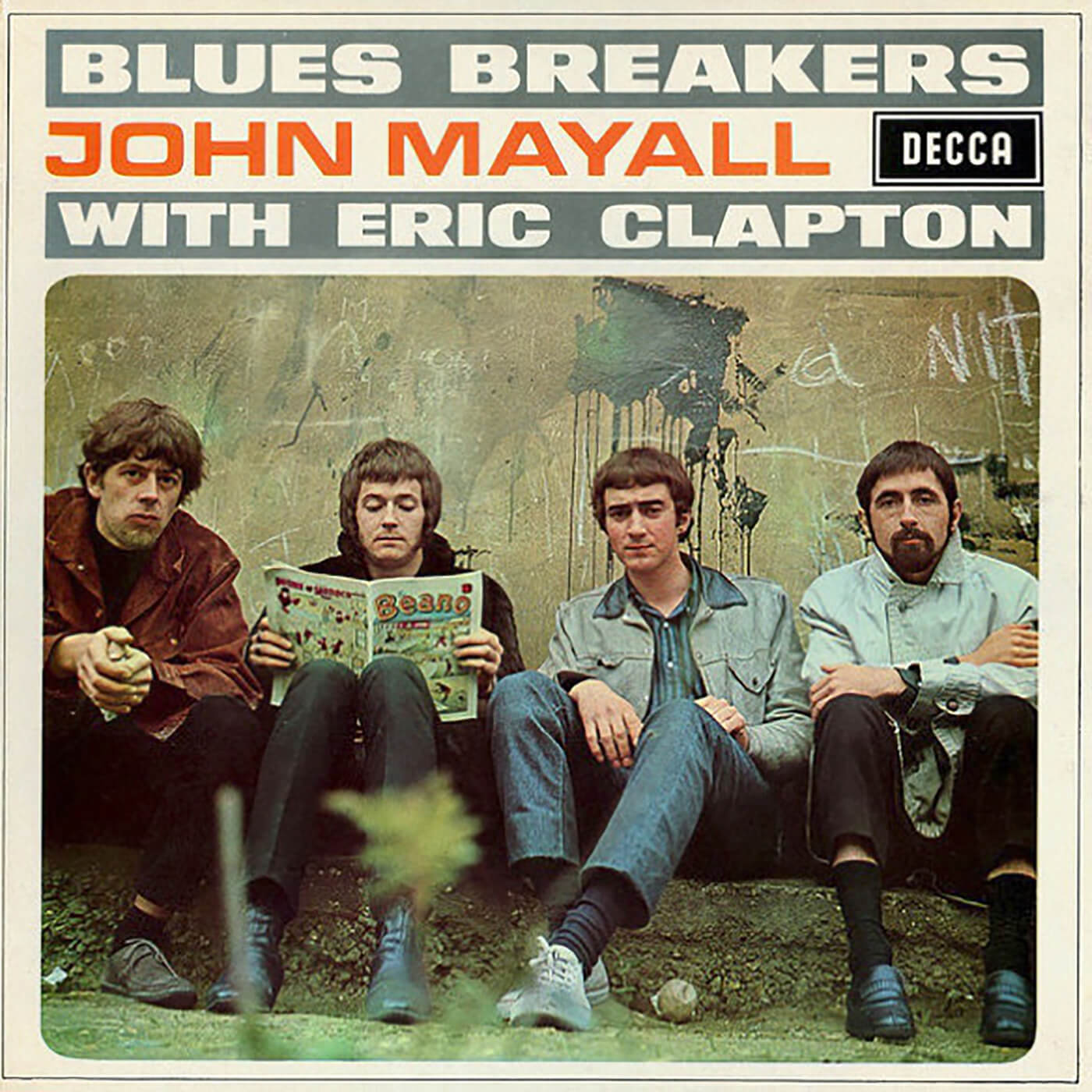
1966 – an age ago in football terms, but still a ridiculous year for music. The Kinks were blazing on a sunny afternoon while The Rolling Stones were painting it black, Dylan was having Visions Of Johanna, Otis Redding was writing the Dictionary Of Soul… The Beatles were reminding us Tomorrow Never Knows, while The Beach Boys were doing God Only Knows. Somewhere in amongst this tremendous crop of records, a fanatical 21-year-old guitarist who had turned his back on chart success with The Yardbirds a year earlier returned to express his heavily amplified love for the blues – and in the process, make an all-time-classic guitar album.
The band Eric Clapton joined in April of 1965, was led by vocalist and multi-instrumentalist John Mayall, had an ever-revolving cast and eventually, over 100 different line-ups performed under the Bluesbreakers moniker. Eric actually joined twice – he departed the Bluesbreakers in August to tour Greece with a band called The Glands before returning to the fold in November – but by March 1966, the band were ready to record and headed to Decca Studios with producer Mike Vernon.
Having moved on from his Yardbirds’ pairing of Telecaster through a Vox, Clapton instead turned to a 1960 Les Paul Standard through a Marshall Model 1962 2×12 combo, both turned up to full with the mic placed two feet from the amp, a Dallas Rangemaster treble booster and a blanket placed over the whole shebang. Clapton said he’d come across the sound accidentally, when trying to emulate Freddie King: “I would use the bridge pickup with all of the bass turned up, so the sound was very thick and on the edge of distortion. I also always used amps that would overload. Everything was on full and overloading” (though photos from the sessions show the Les Paul in middle position, too, and there are a variety of distinct tones on the record, implying Clapton varied his amp gain and treble to suit).
This pairing shook the studio to its foundations and the guitar world to its core for decades to come, and the ‘Beano’ Les Paul – stolen during rehearsals for Cream in 1966 – has become one of the guitar world’s Holy Grail instruments, with its performance on this record possibly even single-handedly saving the model itself from extinction.
But knowing what tone caps, neck profile, humbucker covers, amp settings, issue of The Beano he was holding on the cover or the length of Eric’s sideburns won’t get you close to the real essential ingredient behind all of the mythology: Clapton’s playing. Blending major and minor, unison bends and double stops, sustaining notes and feedback, the album’s solos were all recorded live (except for Stepping Out) and are packed with endless creativity, delivered with a perfect mix of edgy ferocity and fastidious precision. So if you want to improve your electric-blues phrasing and don’t know them already, it really is time to re-listen and learn the key licks…
Otis Rush’s swung minor blues single “All Your Love (I Miss Loving)” from 1958 featured not one but two timeless guitar figures: the uppercut single-finger slide up the E string to announce its main lick and the heavily vibrato’d three-finger A minor triad arpeggio at the beginning of the solo. Clapton reproduces both faithfully, before breaking into a strident solo that shows off the power and sustain of his newfound sound.
Eric was also in thrall to the fleet-fingered melodic charm of Freddie King and the cover of his “Hide Away” trades some of the bite of King’s staccato licks to instead emphasise the dynamic range of his Les Paul/Marshall combo. It’s a masterclass from start to finish, but if you only steal one thing, make it the looped major-key bends in the break at 1:30.
The John Mayall original “Have You Heard” may be sweetened by its Buddy Guy-influenced vocal falsetto, Hammond and horns, but its guitar solo is pure evil. Studio needles in the red, everything on full, at 3:25 a frantic Clapton rinses every squeal, slide, bend and drop of emotion out of his six strings in what, to this day, remains a career-high solo.
Finally, the Bluesbreakers’ high-octane reworking of Memphis Slim’s 1959 piano-blues instrumental “Steppin’ Out” (featuring a string-scraping solo by Matt ‘Guitar’ Murphy) not only has one of the most satisfying silences in the blues (2:04), it also has one of its most exquisite examples of feedback (2:22). But the lick to learn is the trio of expressive, lightning-fast slides descending along the G string at 0:17: a subtle but expressive touch that shows Clapton’s playing was on a different level to everyone else at the time.
The Beano union was intense but short lived and when Eric Clapton saw Buddy Guy’s trio play live, he left to form a new ‘supergroup’ with Ginger Baker and Jack Bruce, both of whom had previously played with Mayall. In December of the same year, when Cream released Fresh Cream, the world saw the guitarist who had burnished his reputation on the Beano album’s amped-up Chicago blues undergo another metamorphosis, launching his talent for extended improvisation into the realms of psychedelia.
Just as Clapton’s Yardbirds exit had paved the way for Jeff Beck and Jimmy Page, his departure for Cream opened the door for John Mayall to showcase the talents of Mick Taylor and Peter Green – clearly, you could look under a rock in the mid 60s and find innovative guitarists teeming and clambering over one another.
But the Beano album is the mother lode of blues-rock guitar, and without its influence, a legion of guitarists – among them Peter Green, Gary Moore, Jeff Beck, Eddie Van Halen, Billy Gibbons, Joe Bonamassa, John Mayer, Stevie Ray Vaughan, even Hendrix – may have sounded quite different.
From the release of Love’s March 1966 debut single, “My Little Red Book” b/w “A Message to Pretty,” it was clear the Los Angeles Group was a breed apart from its contemporaries. The group, led by Arthur Lee, built much of its music upon a snarling, sneering proto-punk aesthetic not completely removed from the style of bands like the Seeds. But just under the surface, there lurked a deeper complexity and nuance.
There had been multi-racial bands before Love: though they never achieved any kind of commercial success, the short-lived Rising Sons were led by Taj Mahal and Ry Cooder. But Love had a black man as its primary writer and front man, and enjoyed the higher profile and accompanying marketing boost that came with having signed to Elektra, home of (among others) the Doors.
Still, Love would manage only one Top 40 single in its time together, 1966’s “7 and & 7 Is,” a track off of the band’s second album, “Da Capo”. That album also displayed Love and Lee’s musical ambitions: a side-long track, “Revelation,” ran nearly 19 minutes. This was a full 18 months before Iron Butterfly released its own opus, “In-a-Gadda-Da-Vida.”
A House is Not a Motel” continues with the use of acoustic guitar as a central instrument. An insistent drum pattern and a subtle yet busy bass line part support Lee, who once again begins singing in a lilting manner. But as the song progresses, he builds in intensity, eventually reaching a rock ’n’ roll roar. Against an emphatic series of chords, Echols takes a pair of lean, sinewy electric guitar solos. For most of its first two minutes, the overall feel of “A House is Not A Motel” is one of restraint. But after a propulsive drum fill from Michael Stuart, multiple overdubbed distorted lead guitars explode into the mix; amid whoops and hollers from the band, those solos take the song to its fadeout.
The melancholy “Andmoreagain” plays up the album’s baroque character. Strings and acoustic guitars are the central instruments, and Lee’s vocal channels Mathis more overtly than anywhere else on the record. “The Daily Planet” is built around a vigorously strummed acoustic guitar, with deft stabs of chiming guitar and a beefy bass line. The mid-tempo rocker has a feel closer to the Byrds; though he’s not credited on the album, Buffalo Springfield guitarist Neil Young oversaw the track’s arrangement.
But on both “Andmoreagain” and “The Daily Planet,” it’s not really Love; instead Lee is backed by session musicians. Co-producer Bruce Botnick brought in the Wrecking Crew players when he found the band unable to play what was required. Apparently, the shock of being sidelined would eventually lead the band members to get their collective act together; the remaining tracks on Forever Changes would feature the band (plus the string and brass players as needed).
That said, the band members take a back seat on the subtle “Old Man.” Cellos and violins are at the centre of the fragile arrangement, based upon an idiosyncratic melody from Lee. Brass and tinkling piano are added to the mix in the song’s second half. And “The Red Telephone” is almost a continuation “Old Man.” With a similar arrangement and a (different) odd melody, it features a stronger beat and an insistent harpsichord part. The seamless interplay between acoustic guitar leads and the string players underscores the fact that the fiddles and cellos were part of Lee’s arrangement ideas from the beginning of the project. Lee’s spoken lines at the song’s end give “The Red Telephone” a vaguely psychedelic feel, but that is punctured by Lee’s “All o’ god’s chillen gots to have their freedom,” delivered in a kind of self-parody of black American dialect.
Near unanimous in their praise for Forever Changes, critics often point to MacLean’s “Alone Again Or” as the strongest track on the record. But a strong case can be made that Arthur Lee’s “Maybe the People Would Be the Times or Between Clark and Hilldale” deserves consideration as well. The brass arrangement in particular fits the song perfectly, helping provide an air of mystery and suspense. It helps, too, that for this track Lee had written a more straightforward melody. The instrumental break features a series of musical dialogues, first between acoustic guitar and the brass, then between electric guitar and the horns, and finally between Lee’s vocalizing and the auxiliary players.
The baroque arrangement that opens “Live and Let Live” is jarring when set against Lee’s lyrics about snot on his pants and threatening a bluebird with a gun. The song soon segues into a harder, rock-flavored feel; throughout its five-plus minutes, “Live and Let Live” shifts between the two styles; the bridges rock even harder, and toward the song’s end, stinging lead electric guitar makes one of its rare appearances on Forever Changes. By the hard-charging final moment of the tune, its bears no resemblance to the manner in which it began.
As effective as those rocking moments may be, it’s on the album’s gentler tracks where Love truly shines. “The Good Humour Man He Sees Everything Like This” is a case in point. The tune sports another odd melody from Lee; his vocals twist and turn amid an intricate pizzicato string and brass arrangement that rivals “Alone Again Or” in its understated brilliance.
“Bummer in the Summer” is Forever Changes’ outlier track; Lee adopts a sneering, spitting vocal demeanor that’s closer in style and character to “7 and 7 Is” and “My Little Red Book” than it is to anything else on the album. The arrangement is similar to the Leaves’ reading of “Hey Joe” mixed with a bit of Buddy Holly’s “Not Fade Away.” Other than session player Don Randi’s piano, the track doesn’t feature any auxiliary musicians.
Forever Changes was inducted into the Grammy Hall of Fame in 2008
Forever Changes concludes with “You Set the Scene,” a track built upon crystalline acoustic guitar picking, an insistent bass line and some sawing cellos. Lee’s double-tracked harmony lead vocal is among his best work on the record. In the place customarily occupied by a guitar solo, a soaring string ensemble arrangement, punctuated by brass, provides a stirring conclusion to the album. As the song winds toward its end, the majestic brass and string parts build to a crescendo, and then fade to silence.
Notably, outside of music critics, few recognized the specialness of Forever Changes upon its November 1967 release. The album reached a lowly #154 on the Billboard album chart, and the single “Alone Again Or” b/w “A House is Not A Motel” made it only as far as #123. But as had been the case with fellow Los Angelinos the Beach Boys’ Pet Sounds, Forever Changes fared far better in Great Britain.
The lineup that made Forever Changes soon fractured, though Love would go on to make four more albums in the decade to follow. Each of those has its high points, but all are flawed, and none succeeds in doing more than hinting at the once-in-a-lifetime brilliance of Forever Changes.
As a happier postscript, in the later years of his life—as previously-overlooked albums began to earn their due—Arthur Lee, who died in 2006 at age 61, was able to capitalize on the belated recognition of the record’s importance. With members of L.A.’s Baby Lemonade, he would tour, presenting the complete Forever Changes in concert. Those shows would often feature auxiliary musicians playing the album’s brass and string arrangements, resulting in a live reading that successfully captured the nuance and excitement of the 1967 studio recording.
Rose Hotel shared a new cassingle “Drive Alone” b/w “Constant,” out today via Cold Lunch Recordings. It’s the Atlanta band’s first new music since their 2019 debut album I Will Only Come When It’s a Yes. “Drive Alone” is full of rootsy, unhurried dream pop for a longing summer night, while “Constant” has a more brooding stare with its chunky guitars and gauzy vocals. Written during drives between Bowling Green, KY and Atlanta, GA, “Drive Alone” explores the confusion, excitement, heartache, lust, and disappointment of trying to continue a relationship that is slowly wilting.
In February, during a period I’ve been referring to as “the before times”, I had the privilege to record a couple tracks with the band at standardelectricrecordersco thanks to the wonderful folks at Cold Lunch Recordings they’re coming out later this month My sincere hope is that these tunes give you a break from the noise of the current times — maybe some comfort, maybe somethin’ else to think about, maybe just a little escape. Meant to be listened to in your car, alone, probably at night, with visions of a time when the FM radio ruled the airwaves and things felt much simpler. Don’t you touch that dial, more news coming soon
Jordan Reynolds – vocals/guitar Tymb Gratz – guitar Vinny Restivo – bass/synth Adam Weisberg – drums
Recorded by Damon Moon at Standard Electric Recorders Mastered by Christopher Colbert Released through Cold Lunch Recordings 2020


.jpeg)







 The Fat Angel Sings