Posts Tagged ‘Jagjaguwar Records’

Image may contain: one or more people, people playing musical instruments, people on stage and night

We invited one of our favourite bands and it is straight up rock and roll. Their album “IV” is nasty and beautiful with its groovy old-school Sabbath feel and symphony of synthesizers. Black Mountain elevated the House into another dimension.

SETLIST:

0:00 Mothers Of The Sun 9:00 Florian Saucer Attack 12:20 Don’t Run Our Hearts Around 19:35 Space To Bakersfield

The Strombo Show and House of Strombo reflects the beautiful and the badass of Canada’s diverse cultural landscape. There are no boundaries, with the gamut running from Aretha Franklin to Slayer and everything in between.

Band Members
Stephen McBean – Guitar/Vocals
Amber Webber – Vocals
Jeremy Schmidt – Keyboards
Colin Cowan – bass, keyboards
Joshua Wells – Drums/Keys

Image may contain: tree, sky, plant, grass, outdoor, nature, text and water

The third full-length album from Wisconsin singer/songwriter S. Carey  finds him grounded comfortably in his skin, but still with one foot in the stream. More direct than ever, there is a wellspring of confidence in this new batch of songs that lays bare the intricacies of life while keeping its ideas uncomplicated.

Trained in jazz, Carey’s astute musicianship has never been in question nor taken for granted, and the execution of Hundred Acres‘ new ideas is seamless. He intentionally unburdened himself from a more complicated instrumentation palate for these ten songs, and, in effect, this modification to his approach brings the content of the work much closer to a living reality. By giving equal status to the indifference of nature and the concerns of a material world — while employing more pop-oriented structures a new balance is struck that creates something unique. This in turn provides equal status for the feeling that created each song, and the feeling each song creates. Almost impossibly, there is more air between the bars; Carey and his contributors sway like treetops in the wind, remaining flexible enough that they never threaten to break.

S. Carey“More I See” taken from ‘Hundred Acres,’ out February 23rd, 2018 on Jagjaguwar Records

utre_TrevorSensorweb92--1

Well, we’ve finally got a copy of Trevor Sensor’s debut LP on Jagjaguwar Records. released in June and titled Andy Warhol’s Dream”. I’ve Been waiting a while for this one since seeing him at last years Green Man Festival. Here’s a little something on the first single, “High Beams”.

“The song derives from the desire to be one of those people on the television – a desire instilled in us since childhood in America and the western world at large. A desire that consumes us, especially those few born in middle America who look for supposedly greater things beyond the horizon of cornfields and prairies, or the northern factory towns of England – those places where nobody of any pop cultural significance is suppose to come from – for there is only so much room in the camera lens, the television screen, and we must save it for the pretty, plastic people,” Sensor explains. “It revolves around things lost, things hoped for and the dreams we tell ourselves to keep us from the possibly horrifying conclusions that forever creep up on us in the back of our minds. To these conclusions and this desire, I curl back my feelers and hiss.

Image may contain: tree, sky, plant, grass, outdoor, nature, text and water

In 2010, Sean Carey, under the moniker S. Carey, branched out from underneath the canopy of Bon Iver, and we saw what the singer-songwriter could do when separated from the Justin Vernon-led project. Now, after a pair of studio records and another duo of EPs, he’s getting ready to release “Hundred Acres”, which, per a press release, “finds Carey at his most confident, mature and grounded, writing the strongest songs of his career.” With the album, he seeks to communicate the beauty of simplicity while delving into the poetry of healing personal wounds.

The lead single “Fool’s Gold” showcases a piece of those reflections and gives us a taste of what we can expect from the rest of the album. The track sees Carey’s soothing vocals front and center, over a foundation of acoustic guitar strums decorated with ethereal keys and lilting slide. Carey explains in a press release, “This song is what started the whole record … everything came out of it and the vibe it created.”

Hundred Acres, out February. 23rd via Jagjaguwar, was self-produced by Carey, with engineering and co-production from Zach Hanson and Chris Messina, and boasts music contributions from Gordi, who sings backing vocals on three tracks, Casey Foubert (Sufjan Stevens) and Rob Moose (yMusic) Carey will set out on a tour supporting the album next spring—

S. Carey – “Fool’s Gold” taken from ‘Hundred Acres,’ out February 23rd, 2018 on Jagjaguwar Records

Image may contain: 1 person

The first Velvet Underground record sold only 30,000 copies in its first five years. Yet…I think everyone who bought one of those 30,000 copies started a band!” ,  The Velvet Underground & Nico has sold quite a few more copies since its release. Lou Reed and company’s DIY rock aesthetic has yet to go out of style for young audiences. Like many artists Brooklyn songwriter Max Clarke discovered the band at a young age, leading to a revelatory “I-could-maybe-do-this” experience while absorbing the complex simplicity of the band’s music.

On his forthcoming EP under the moniker Cut Worms, “Alien Sunset”, Clarke pays tribute to the frontman who opened new artistic doors to him. “Song of the Highest Tower” is a seven-minute ballad introducing the poetry of Rimbaud to the acoustic licks of Roy Orbison or the Everly Brothers and a correlative croon infused with the modern psych influence of lead Growler Brooks Nielsen. Yet at the heart of the track lies a melancholy likely attributable to the news of Reed’s passing the day the song was originally written back in 2013. “It wasn’t like, ‘OK, I’m gonna write this song now,’” recalls Clarke. “I kind of assigned that meaning to it afterward.”

It’s been a rough couple of years for young songwriters weaned on record collections inherited from their once-rebellious parents; as the Tom Petty tributes continue to pour in, and as groups like Wolf Parade slip paeans to their fallen idols into their recordings, Clarke’s tribute—although entirely more subtle—yields yet another meaningful testimony to the influence of the burgeoning American rock scene of the ’60s and ’70s. “I was just, like, writing an elegy to an artist I admired. And I always thought there was something nice about writing to or about someone who you have no chance of ever actually meeting.

Cut Worms“Song of the Highest Tower” from ‘Alien Sunset EP’ out Oct 20th on Jagjaguwar Records

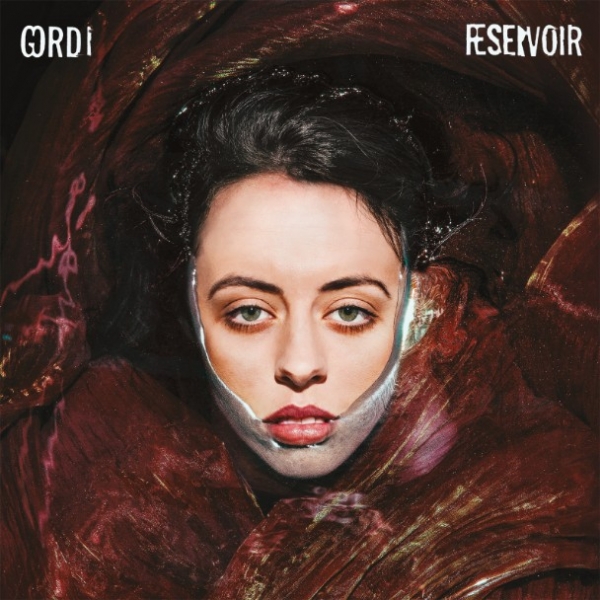
Composed for choreography, Gordi’s first full length release is full of dramatic, sweeping gestures, quiet, tender pleas, and grand, longing emotion that would make it a waste not to use in modern dance setting. I dub her under folktronica, the convergence of acoustic guitar, vocal harmonies, and electronic elements. She’s not the first to put these parts together, but she’s one of this year’s best examples of how to do it well.

On the farm in rural Australia where Sophie Payten – AKA Gordi – grew up, there’s a paddock that leads down to a river. A few hundred metres away up the driveway of the property named “Alfalfa” sits another house, which belongs to her 93-year-old grandmother. The rest, she says, “is just beautiful space. And what else would you fill it with if not music?”

And so she did, first tinkling away in her hometown of Canowindra (population 2,381) on the out of tune piano her mother had been given as a wedding present, and then on the acoustic guitar she got for her 12th birthday. As it turned out though, space wasn’t a luxury she’d be afforded for long. At the school she went to just after that same birthday, she shared a dorm room with 26 other girls, listening to Aled Jones on her Discman at night to drown out their chatter. Not that she minded. “It was like a massive sleepover every night,” she says. And besides, her love of music didn’t take long to follow her there.

Gordi’s first foray into songwriting came in the form of performances at the school’s weekly chapel. She’d tell her friends they were written by other artists to ensure they gave honest feedback – though given she was pulling lines from One Tree Hill for lyrics about experiences she was yet to actually have, that feedback wasn’t always glowing. It wasn’t until she started writing about what was happening around her, the friendships she was building and, as is inevitable in the tumult of growing up, breaking, that the chrysalis of the music she’s making now – a brooding, multi-layered blend of electronica and folk, with lyrics that tend to avoid well-trodden paths – began to form. “I often find that writing about platonic relationships,” she says, “can be a great deal more powerful than writing about romantic ones.”

“Heaven I Know,” the first taste of Gordi’s debut album Reservoir, is an example of just that. With the breathy chant of “123” chugging along beneath the song’s sparse melody and melancholic piano chords, “Heaven I Know” gazes at the embers of a fading friendship. “Cause I got older, and we got tired,” she sings, as synthetic twitches, sweeping brass and distorted samples bubble to the surface, “Heaven I know that we tried.”

“I have a really close friend, and she moved to New York last April,” explains Gordi, “and I was absolutely devastated. I sort of don’t have anyone else like that in my life. A few months in, it was just getting so hard, we both had so much going on. Amongst all this, I had a really vivid dream – not that we fought dramatically, I simply got older, and we stopped calling each other, stopped writing to each other and we slowly grew apart. I was struck by the tragedy and simplicity of it and how it happens to everybody at various stages of life. With a friendship, you almost throw more at it than you would a romantic partner, because when a friendship breaks it’s so much more heart-breaking. So it was sort of like we’d thrown everything at it, and in this alternate reality that I dreamed about, we just gave up.”
The ramifications of loss ripple throughout the album, which the 24-year-old wrote and recorded in Wisconsin, Reykjavik, Los Angeles, New York and Sydney during snatched moments while finishing a six year long medicine degree and international touring commitments. Payten produced two of the tracks herself (“Heaven I Know” & “I’m Done”), and co-produced the rest alongside Tim Anderson (Solange, Banks, Halsey), Ben McCarthy, Ali Chant (Perfume Genius, PJ Harvey) and Alex Somers (Sigur Ros).
“Long Way,” on which her contralto vocals are layered on top of each other as the sound of a ticking clock lurks underneath, begs of someone, “Can you hear my voice in your bones again? Can you be with me like you were back then?” It’s the first track on the album, and the last song she wrote in the green notebook her parents gave her when she was still at school. There’s a sense of loss too on “I’m Done,” though this time it’s something she’s come to accept. “It feels good to say I’m over you / and mean it more and more each time. / Lock my secrets behind open doors / ‘cause without you I’ll do just fine.” It’s about as close to a stripped-back acoustic song as Gordi’s willing to create, though it sits comfortably alongside beat-heavy electronic numbers. Her songs shift and mutate just as you think you’ve got a hold of them. You’re as likely to hear the squeak of her finger sliding down a guitar fret as you are a shuddering sample, and an organic trumpet sound will be injected with a jagged vocal loop.

But it’s not just loss which comes under the microscope in Reservoir. More so, it’s the journey that particular theme takes when aboard the vehicle of time. The interaction of time and loss is explored throughout, starting with album opener “Long Way”. “Myriad”, a delicately layered track which reaches a drumless climax, delves further, “Dissolve your sorrow / In my skin and bone / Take my tomorrow / It is yours to own”. Even the infectious single “On My Side” questions the prolonging of grievances because of a hesitation to communicate, which ultimately stems from a fear of loss. “Can We Work It Out” similarly opens up on inner conflict.

Boiled down, the running thread of the album is its lyrics, the importance and impact of which cannot be understated. “Lyrics to me are everything,” says Gordi. “Music is kind of what encases this story that you’re trying to tell. The music is obviously what makes people fall in love with a song first, but what eventually speaks to people, whether they know it or not, is the actual words that are being said.” Gordi’s lyrics are stark, honest and soul-searching, which are elevated by the album’s intricate and careful musical arrangements. Like the contemporary artists such as Fleet Foxes, Beth Orton and Laura Marling as well as “the trifecta” of Billy Joel, Carole King and James Taylor that she listened to with her mum growing up – she’s unafraid to sit in contemplative melancholy. It’s what the album title is about. And in the contemplative melancholy remains a conviction that manifests itself through Gordi’s memorable melodies and ambitious production, mastered by pioneers like Peter Gabriel, Cat Stevens and Sufjan Stevens.

“The name Reservoir, it’s that thing that you can’t describe, that space that anxious people would probably live their life in. It’s actually an expression my friend and I use. If I’m really down one day, I’ll say, ‘Oh I’m a bit in the reservoir today’. You’re mulling everything over, and you’re sitting in all these thoughts and feelings. In order to be able to write a song I need to go to that place, but I couldn’t live a functional life if I spent all my time in there.”

Writing music, in fact, is the way Gordi lifts herself out of the Reservoir. “Writing music has always been and will remain my therapy, my process and my way of communicating,” she explains. “I don’t write songs by someone else’s prescription, I write to fill my own need. I get this tightness in my chest, and nothing will make it go away other than trying to write lyrics or sitting down at a piano and playing it, and it’s like a medicine. If I have a good session of that, then that tightness and that weight just totally lifts. It just centers me, and gets the things that are riddled through my mind out on paper. And then I can leave them there.”

“Bitter End” off of Gordi’s debut album ‘Reservoir,’ out August 25, 2017 on Jagjaguwar Records.

Based out of New York, where he relocated to two years back from his native Chicago, Cut Worms is the pseudonym of songwriter Max Clarke. Signed to the ever reliable Jagjaguwar Records imprint, Cut Worms are hotly tipped as one of the most exciting new acts on the planet, and have this week detailed the release of their debut EP, Alien Sunset. The record showcases a collection of what could loosely be termed demos, recorded over the last few years with side A focusing on his time in Chicago and side B being his New York recordings.

Ahead of that release, Cut Worms have also shared the video to their new single, Like Going Down Sideways. The track is a beautifully lo-fi offering, Max’s multi-tracked vocals accompanied by walls of fuzzy guitars and twanging lead-lines. It’s the vocal though that is consciously pushed front and centre, like Harry Nilsson or Scott Walker before him, there’s the flourish of an old-time crooner, but lurking beneath the surface is the raw, melodic equivalent of a mischievous glint in his eye. With the debut album, “proper and polished”, due next year, Alien Sunset is a thrilling insight into the world of Cut Worms, that serves as both an introduction and a water mark for wherever Max’s music goes next.

Alien Sunset EP is out October 20tth via Jagjaguwar Records .

The music that Montreal singer-songwriter Tim Darcy makes with his band Ought wears its stresses as a medal of honor, the backbone of a certain internal tension indebted to post-punk and emo. That Darcy’s debut solo album, Saturday Night, doesn’t leave out that tension is almost a given; he’s a young man with a lot to say. But the record, which was tracked over nights and weekends during the making of Ought’s second album, Sun Coming Down, builds its arc of tension over the entire song cycle — a jaunty, fiery rumble-seat ride throughout the America that Darcy once called home.

Saturday Night’s opening track, “Tall Glass Of Water,” reflects the ways in which Darcy bends the form to his will. He kicks off with some incendiary open chords and a galloping rhythm worthy of The Strokes before slowing it down to focus on renewal and understanding his place in the world: “If at the end of the river, there is more river, would you dare to swim again?” Before he can catch a breath, he’s back with his response: “Surely I will stay, and I am not afraid / I went under once, I’ll go under once again.” Now reduced to an unadorned chorale, Darcy lays plain his history and his doubts, exploring the creative balance between strength and tenderness and how best to wield these two often-conflicting energies.

The video for “Tall Glass Of Water” places those forces into a literal perspective, harboring both the angst and the swelling pride that bookend the track. In the opening moments, we see Darcy walking away from himself. As the riff breaks and the song moves into its slightly more solemn second half, he’s still in motion, walking into a room filled with people and objects dressed in the red turtleneck and blue blazer he wears throughout the clip. As some of these characters mimic his actions while others do their own thing, Darcy presents the philosophy that he is free not only to pursue various directions, but to make peace with them all.

One of our picks for 2017’s best new artist so far is Tim Darcy who is the front person in the band Ought. Here Tim Darcy channels a bit of The Velvet Underground adding some surprising turns on his debut full-length, Saturday Nightreleased Feb. 17th.

thanks to NPRmusic

Image may contain: 1 person, playing a musical instrument

On the farm in rural Australia where Sophie Payten – AKA Gordi – grew up, there’s a paddock that leads down to a river. A few hundred metres away up the driveway of the property named “Alfalfa” sits another house, which belongs to her 93-year-old grandmother. The rest, she says, “is just beautiful space. And what else would you fill it with if not music?”

“Heaven I Know,” the first taste of Gordi’s debut album “Reservoir”, is an example of just that. With the breathy chant of “123” chugging along beneath the song’s sparse melody and melancholic piano chords, “Heaven I Know” gazes at the embers of a fading friendship. “Cause I got older, and we got tired,” she sings, as synthetic twitches, sweeping brass and distorted samples bubble to the surface, “Heaven I know that we tried.”

Debut album ‘Reservoir’ out 25 August 2017 on Jagjaguwar Records

Image may contain: 1 person, playing a musical instrument

From the first moments of Trevor Sensor’s debut EP for Jagjaguwar, Texas Girls and Jesus Christ, the Illinois-born 22-yearold singer/songwriter’s distinctive burr of a voice sounds aged decades beyond his years. The rest of the young talent’s music follows suit, too, with timeless-sounding melodies and a sense of songwriting that exudes maturity while still feeling fresh.

Sensor wrote the music featured on Texas Girls and Jesus Christ on a borrowed acoustic guitar that he has yet to return, composing songs that sound deeply felt and from a place of truth and honesty. “If I’m trying to do anything, it’s to be sincere,” he says about his songwriting approach.”A lot of singer/songwriters today are oriented in irony. It’s cooler to be lackadaisical rather than to try to be compelling.”

http://

Sensor’s music, above all else, is compelling the proclamatory howls that close out the piano-ed “Pacing the Cage,” the dark desolation of “Satan’s Man”, and the dynamic blowout of the EP’s title track grab your attention and refuse to let go. “I think it’s very boring when people choose one dynamic and go with it,” Sensor opines on the full-band jolt that takes place in the thrilling back half of “Texas Girls and Jesus Christ. “It’s more interesting to me when people try to mix things up and treat every song as if it were its own person.”

“Songs are gateways into little worlds, and different worlds do different things,” Sensor states regarding his approach to songwriting… 

Trevor Sensor – title track from the ‘Texas Girls and Jesus Christ’ EP out March 25th, 2016.