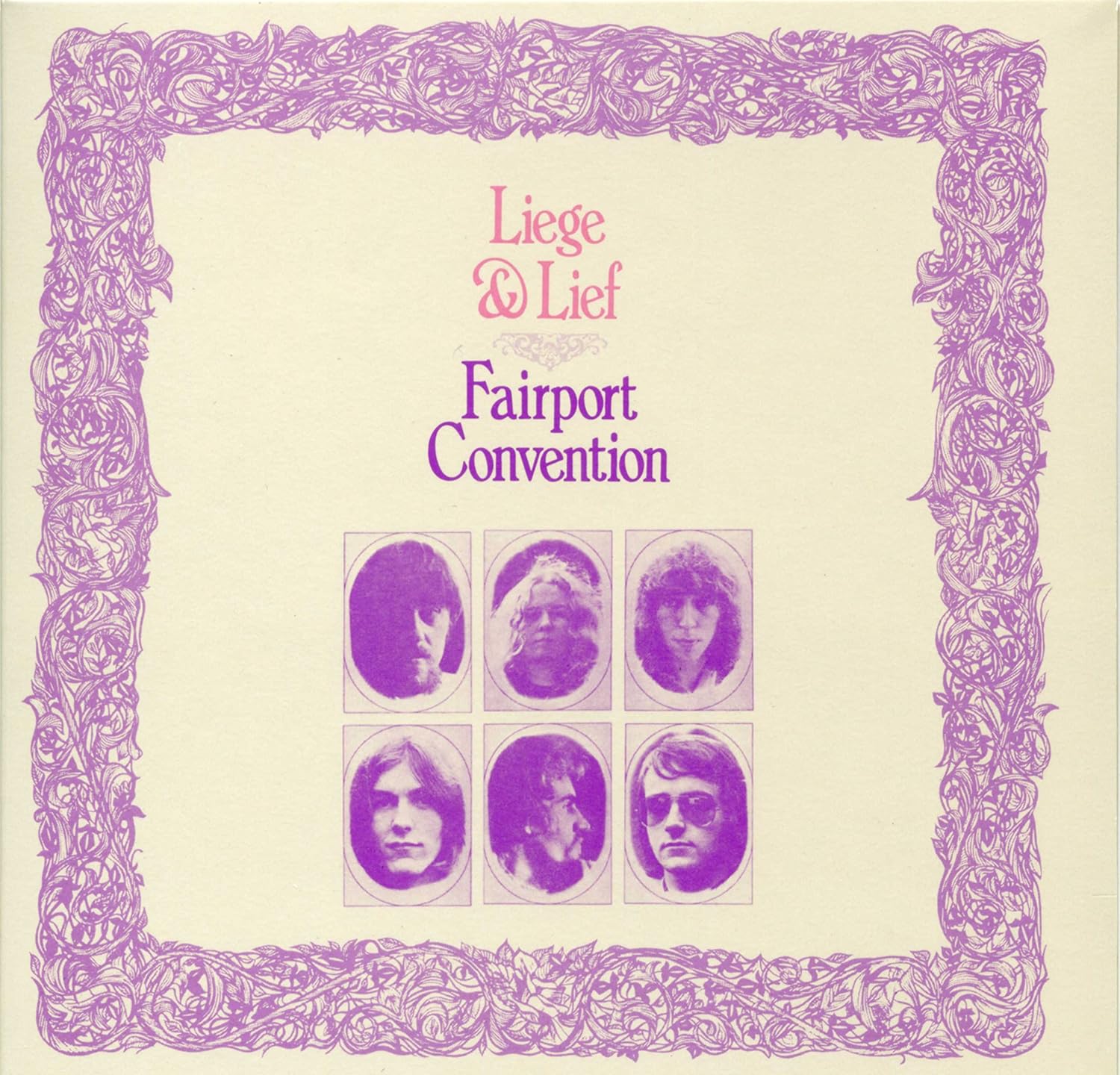
Fairport Convention generally have the tag of being ‘the all-time folk-rock band of Britain’ and deservedly so.
“They do in a very worthy sense have the right to be crowned the most important folk-rock band ever”
“They began with a much more American focus to their music, which is often forgotten. It was much less traditional than it became a few years later. They fell back more into being a traditional folk band, but with all the rhythmic and rock sensitivity that would come to them. Back in 1969, Liege & Lief was the seminal album which established British folk-rock as a distinct genre, separate to the hippy mysticism of America’s west coast or the earnest finger-in-the-ear traditionalism of the folk club purists. Paving the way for everyone from Steeleye Span to Lindisfarne, it mingled rock & roll attitude with a sense of indigenous history and myth that stretched back deep into folk memory.
In the first month of the 1970s. Fairport Convention had performed all be it miming, on the British TV institution Top Of The Pops in August 1969, and come within one place of the top 20, with ‘Si Tu Dois Partir,’ their French version of Bob Dylan’s ‘If You Gotta Go, Go Now.’
That helped the Fairports album it came from, “Unhalfbricking”, climb to No. 12 in the UK chart. Then, on 17th January, 1970, they entered the bestsellers with a follow-up that, like its predecessor, has become a folk music cornerstone: Liege & Lief, it was the group’s third album inside a year, after Unhalfbricking and before that What We Did On Our Holidays. All of that during a period in which a car crash claimed their original drummer Martin Lamble.
Sometimes it was difficult to tell traditional tunes apart from those written by the band. Although the supernatural epic “Tam Lin” and adulterous tragedy “Matty Groves” are plainly trad, the beautiful “Crazy Man Michael” was written by guitarist Richard Thompson and violinist Dave Swarbrick, while the melancholy “Farewell Farewell” is an old tune reworked with new lyrics — possibly in response to the fatal road accident on tour .
“Some of those members of Fairport did play with rock bands, including Dave Pegg who played with Jethro Tull, too. But they do in a very worthy sense have the right to be crowned the most important folk-rock band ever.
“I thought I might find something quirky, but I do have to go back to Liege And Lief because it’s the one that put them on the map. It’s the one you can’t escape, their biggie – their Aqualung, if you like!”
1. Come All Ye – 00:00 (Denny, Hutchings)
2. Reynardine – 05:02 (traditional – arr F C)
3. Matty Groves – 09:33 (traditional – arr F C)
4. Farewell Farewell – 17:44 (Thompson)
5. The Deserter – 20:24 (traditional – arr F C)
6. Medley – 24:50 (traditional x4 – arr Swarbrick, F C)
7. Tam Lin – 28:58 (traditional – arr Swarbrick)
8. Crazy Man Michael – 36:12 (Thompson, Swarbrick)
Sandy Denny – Lead Vocals Richard Thompson – Guitars Simon Nicol – Guitars Ashley Hutchings – Bass Guitars Dave Swarbrick – Violins and Viola Dave Mattacks – Drums and Percussion
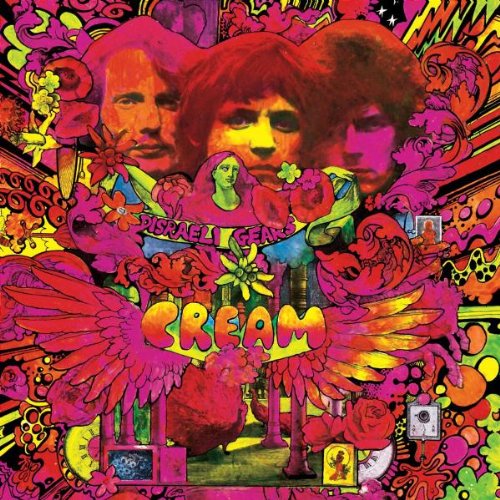
“Disraeli Gears” is the second studio album by the British rock band Cream. It was released in November 1967. The album features the two singles “Strange Brew” and “Sunshine of Your Love”. The album was recorded at Atlantic Studios in New York during May 1967, following the band’s nine shows as part of Murray the K’s “Music in the 5th Dimension” concert series. The sessions were produced by the future Mountain bassist Felix Pappalardi who also co-wrote the tracks “Strange Brew” and “World of Pain” with wife Gail Collins and were engineered by Tom Dowd According to Dowd the recording sessions took only three and a half days.
Disraeli Gears that turned Cream into a “supergroup.” Here they pursue the psychedelic ideals of the era with total abandon (the LP cover art still stands as one of the 1960s’ most striking designs), merging these ideals with their take on the blues and adorning the amalgamation with some superb pop craftsmanship. Of the 11 originals here, four–“Tales of Brave Ulysses”, “SWLABR”, “Strange Brew” and “Sunshine of Your Love”–earned major airplay. This, their excess-free greatest moment, does the Cream legend proud. “Disraeli Gears” features the group veering away, quite heavily, from their blues roots and indulging in more psychedelic sounds. The most blues-like tunes on the album are the remake of “Outside Woman Blues”, the Bruce/Brown composition “Take it Back” which had been inspired by the contemporary media images of American students burning their draft cards which featured harmonica work by Jack Bruce, and the opening track “Strange Brew” which was based on a 12-bar blues song called “Lawdy Mama” and featured Eric Clapton copying an Albert King guitar solo, note for note
The album title started as a joke. Mick Turner one of Cream’s roadies was discussing with drummer, Ginger Baker, how he fancied one of those bikes with’ Disraeli gears’. He meant, of course, derailleur gears, but the band found the mistake hilarious and so the name of one of one of the UK’s premier psychedelic albums was born.
For this Second album it was far different. Chemicals had been imbibed, Clapton had struck up a friendship with Australian artist Martin Sharp who not only provided the lyrics of “Tales Of Brave Ulysses” but also came up with the splendidly baroque cover. Meanwhile Jack Bruce was now working with underground poet, Pete Brown, whose lyrics were equally trippy. “SWLABR” (it stands for ‘She walks like a bearded rainbow’), “Dance TheNight Away” and “Sunshine Of Your Love” were perfect encapsulations of the point where the blues got psychedelic and in turn got heavy. “Sunshine…”’s riff is at once iconic and defines the power trio aesthetic that was to prove so popular with the band’s many disciples.
The other creative catalyst was producer Felix Pappalardi. Co-writing both “World Of Pain” he also helped transform the blueswailing “Lawdy Mama” into the slinky “Strange Brew” – a contender for best album opener of all time. Clapton’s guitar had by now been exposed to the effects heavy stylings of Jimi Hendrix and his heavy use of wah-wah gives Disraeli Gears just the right amount of weirdness, making this probably the most experimental album he ever made. The modish inclusion of Ginger Baker’s rendition of “A Mother’s lament” was the edwardiana icing on the cake.
Classic album is a term that’s used way too much when describing records but of course, one person’s classic album is another’s long-forgotten record, but we think that without fear of contradiction George Harrison’s All Things Must Pass is definately a CLASSIC album… 45 Years ago, released on 19th December 1970.
There’s an old adage in the music business that talks of, ‘the difficult third album’, well this was George’s third solo album and there’s nothing difficult about it, every track is worthy of its place, it was originally released as a triple vinyl album when it came out on 27th November 1970. Truth is George considered this to be his first solo album proper, having originally released his movie soundtrack, Wonderwall Music and his synthesizer album, Electronic Sound.
The genesis of All Things Must Pass can be said to have begun with George’s visit to America in November 1968 when he established his long-lasting friendship with Bob Dylan while staying in Woodstock. George’s songwriting output was increasing and becoming increasingly more self-assured, for example he co-wrote ‘Badge’ with Eric Clapton for Creams Goodbye album that came out in early 1969.
George’s involvement with Apple Record’s signings, Billy Preston and Doris Troy in 1969, as well as his tour playing guitar with Delaney and Bonnie in a band that included Eric Clapton, Leon Russell, Dave Mason, BobbyWhitlock, Carl Radle and Jim Gordon, began to influence his writing with elements of gospel and the kind of sounds that we have come to call ‘Americana’.
George’s spiritual journey saw him involved with the Hare Krishna movement that would also become another vital piece in the jigsaw of sound that makes up All Things Must Pass. In February 1969, on his 26th birthday, George recorded a demo of his song, ‘All Things Must Pass’, along with ‘Old Brown Shoe’ and ‘Something’. The latter two songs went on to be recorded by the Beatles and for whatever reason ‘All Things Must Pass’ was not recorded by the Beatles; the song is based on a translation of part of chapter 23 of the Tao Te Ching, “All things pass, A sunrise does not last all morning. A month earlier George also made a demo of ‘Isn’t It A Pity’, one of the standout tracks on All Things Must Pass, but this song too failed to make the cut for a Beatles album. It wasn’t until early 1970 that initial preparatory work began on George’s solo album; it was at this time that he played producer Phil Spector demos of songs that he had been writing while with the Beatles.
Some of these songs went back as far as 1966, specifically, ‘Isn’t It a Pity’ and ‘Art of Dying’ and he had written ‘’I’d Have You Anytime’ with Bob Dylan in late 1968 while in Woodstock. George had tried to get the Beatles interested in ‘All Things Must Pass’, ‘Hear Me Lord’ and the beautiful, ‘Let It Down’, during rehearsals for the Get Back album, but the other Beatles seemed not to be interested. ‘Wah-Wah’ and ‘Run of the Mill’ both dated from early 1969, while ‘What Is Life’ came to George while he was working with Billy Preston on his album, That’s the Way God Planned It. ‘Behind That Locked Door ‘ was written in the summer of ’69, just before Dylan’s performance at the Isle of Wight Festival and he started to write the epic, ‘My Sweet Lord’ in Copenhagen while on tour with Delaney and Bonnie in late 1969.
It was while on tour with Delaney Bramlett that the Americans asked George to play slide guitar and his ‘I DigLove’ is an early experiment with a sound that George came to make his own. Other songs on All Things Must Pass were all written in the first half of 1970, these include ‘Awaiting on You All’, ‘Ballad of Sir Frankie Crisp (Let It Roll)’, a tribute to the original owner of George’s home, Friar Park and ‘Beware of Darkness’. Shortly before the sessions for his album began, George was at a Dylan session in New York, which is where he heard, ‘IfNot for You’ and in turn George was inspired to write the Dylanesque, ‘Apple Scruffs’ as the All Things MustPass sessions were winding up, it was in tribute to the girls who hung around outside Apple Corps offices where he was working, or Abbey Road Studios in the hope of meeting a Beatle.
Recording the album began in late May 1970 and such was the frustration within George at being unable to get his songs on Beatles’ albums that it is of little surprise that there were so many on All Things Must Pass. The third record included in the original triple album is entitled Apple Jam and four of the five tracks – ‘Out of the Blue’, ‘Plug Me In’, ‘I Remember Jeep’ and ‘Thanks for the Pepperoni’ – are i instrumentals put together in the studio. According to George “For the jams, I didn’t want to just throw [them] in the cupboard, and yet at the same time it wasn’t part of the record; that’s why I put it on a separate label to go in the package as a kind of bonus.” The fifth track, It’s Johnny’s Birthday was a present for Lennon’s 30th and it is sung to the tune of Cliff Richard’s ‘Congratulations’.
Such is the big sound of All Things Must Pass that it is hard to be precise as to who appears on what track. Aside from those already mentioned there is Ringo Starr, Billy Preston, and German bassist Klaus Voormann who also did the artwork for the cover of the Beatles’ Revolver album. Members of Apple band, Badfinger were included, helping to create the wall of sound effect on acoustic guitars, and besides future Derek and the Dominos’ keyboard player Bobby Whitlock the other principal keyboardist was Gary Wright who had been a member of Spooky Tooth and later in the 1970s had some big hits in America. Other keyboard players included, Tony Ashton, and John Barham who both played on Wonderwall Music
The drummers were future Yes man, and member of the Plastic Ono Band, Alan White, Phil Collins in his pre-Genesis days and Ginger Baker on the jam, ‘I Remember Jeep’. Other musicians included Nashville pedal steel player Pete Drake and Procol Harum’s Gary Brooker.
Originally George had thought it would take just two months to record All Things Must Pass but in the end recording lasted for five months, not finishing until late October. George’s mother was ill with cancer during the recording and this meant that he needed to head back to Liverpool on a regular basis to see her; she died in July 1970. Phil Spector also proved somewhat unreliable and all this led to George himself doing much of the production work himself.
Final mixing of the record started at the very end of October in New York City with Phil Spector. George was not entirely happy with what Spector did, but nothing can take away from the brilliance of this record that still stands up to the test of time. Tom Wilkes designed the box to hold the three LPs and Barry Feinstein took the iconic photos of George and the four garden gnomes on the grass in front of Friar Park.
Scheduled for release in October, the delays meant it came out in America on 27th November 1970 and three days later in the UK. The first triple album by a single artist, it captivated audiences everywhere, entering the Billboard album chart in December it spent 7 weeks at No.1 in America starting with the first chart of 1971. In the UK it only made No.4 on the ‘official’ album chart, although it topped the NME’s chart for 7 weeks. George’s lead single from All Things Must Pass was, ‘My Sweet Lord’ and it topped the singles chart on both sides of the Atlantic.
As time passes we have come to love this amazing record even more. It is the kind of record that says so much about what made music so vital as the 1960s became the 1970s. It is full of great songs, and lyrics that not only meant something then but still resonate today. As future decades come and go, and new generations of music lovers look back, this is the kind of record that will take on almost mythical status. It’s one thing being able to read about its making, it’s quite another thing to allow it to envelop you, to caress you and to make you feel the world is a better place in which to live having listened to it.
All Things Must Pass is George’s spiritual high, truly a classic and unquestionably one of the greatest albums ever made…triple, double or single.
All Things Must Pass was remastered for 2014 and is included in George Harrison’s The Apple Years 1968-1975 box set.
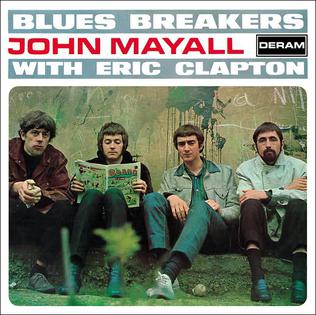
July 22nd 1966 saw the release of what has become the greatest British blues albums of them all, John MayallBlues Breakers with Eric Clapton. It was the first studio album and the second overall credited to JohnMayall, who teamed up for the first time in a studio release with the ex- Yardbirds Eric Clapton.
It is also known as The Beano Album because of its cover photograph showing Clapton reading The Beano a British children’s comic. Clapton stated in his autobiography that he was reading The Beano on the cover because he felt like being “uncooperative” during the photo shoot
The album set the benchmark for all blues albums that followed, cemented by Clapton’s explosive guitar tone thanks to the majestic bonding between a Gibson guitar and a Marshall amplifier. Not only is it the greatest British blues album but it’s also one of the great albums of all time, period. Recorded April 1966 at Decca Studios West Hampstead, London.
The guitar that Eric Clapton used during these sessions was a sunburst 1960 Gibson Les Paul Standard with two PAF humbucking Pickups . This guitar (which was stolen in 1966; its whereabouts remain unknown) is also called the “Blues Breaker” or “Beano” Les Paul and a replica of which was reissued by Gibson in 2012.
The band on this album includes Mayall on piano, Hammond organ, harmonica and most vocals; bassist JohnMcVie drummer Hughie Flint and Clapton. Augmenting the band on this album was a horn section added during post-production.
The album opens with the Otis Rush number “All Your Love”, a cracking way to begin. The song manages to capture everything great about the Bluesbreakers from John Mayall’s unique vocals, Clapton’s explosive guitar, McVie’s pounding bass and Flint’s driving rhythm that is the back bone of the entire song. It’s followed by “Hideaway” which has arguably become the standard version of the song, the original of course being by the late great Freddie King who Clapton was hugely influenced by at the time. Even though it’s a song largely dominated by Clapton’s guitar, the entire band shine brightly and showcase their abilities as Britain’s premier and best British blues band. The first Mayall penned track comes next in “Little Girl”. Apart from Mayall’s vocals, Clapton again takes centre stage with a blistering guitar solo over the ruthless rhythm section of John McVie and Hugh Flint, both of which really take this song to another level. “Another Man” is pure Mayall drenched with some of the best harmonica playing you’ll ever hear.
Things then slow down a tad with “Double Crossing Time”, a fantastic number written by Mayall and Clapton. It’s a wonderful slow blues which clocks in at just over three minutes in length which is the only downside as you feel it deserves to go on for at least another few minutes. The opening riff of “What’d I Say”, originally by Ray Charles, is next and this particular version remains one of the most exciting ever recorded. Mayall gives one of his best vocal performances and it’s the first time on the album so far where you’re able to bask in the magnificence of Hugh Flint’s drumming, as he plays a superb solo section halfway through the song. The rest of the band then return with a Day Tripper-esque riff to bring the song to a close. Next up is “Key To Love” which is another Mayall original. Flint is an abs0lute force of nature with some of the best drumming you’ll ever hear, and Clapton returns for another ear drum attacking guitar solo.
Released: July 1966 (mono) / December 1969 (stereo)
John Mayall: Lead vocals, piano, organ, harmonica
Eric Clapton: Guitar, lead vocals on “Ramblin’ on My Mind”, John McVie: Bass guitar, Hughie Flint: Drums, Plus: Alan Skidmore: Tenor saxophone, Johnny Almond: Baritone saxophone, Derek Healey: Trumpet
The great “Parchman Farm” comes next which was originally recorded by Bukka White in 1940 and then covered by a host of musicians including Mose Allison, Johnny Winter, Bobbie Gentry and Hot Tuna to name just a few. Mayall is a man possessed on harmonica here, arguably giving his finest musical performance of the entire album. The slow blues number “Have You Heard”then takes things in a slower direction, at least at first. When it comes to electric guitar solos this song certainly contains one of the finest ever recorded with Clapton showing exactly why the nickname “God” was so fitting. The things he managed to do with a guitar during this song are second to none in my opinion, firmly placing him as the greatest British blues guitarist of all time.
“Ramblin’ On My Mind” remains to this day as one of Robert Johnson’s most well known songs, helped by the legendary status of this version featuring Clapton on lead vocals. And it’s the fact that Clapton took lead vocal duties on this song that made it so legendary, after all this is the first time he ever sang lead on a song. Even though he used to sing backing vocals with The Yardbirds it’s a strong vocal performance with guitar accompaniment including a tasty solo, backed up by Mayall on piano. It’s probably the most pure blues song of the whole album and a song that opened up Clapton both vocally and musically, as he would go on to call Robert Johnson one of his main influences and as a eventually record Me & Mr. Johnson, a tribute album to his idol, in 2004. “Steppin’ Out” is the second guitar lead instrumental after Hideaway and a song Clapton would continue playing with Cream up until their final active year in 1968. It’s a superb number with Clapton yet again showcasing his guitar abilities fantastically. The final song is “It Ain’t Right” which sees the album end on a wonderful note. Originally recorded by Little Walter, Mayall lays down some fine harmonica while the rest of the band hit hard like a freight train. A perfect way to end the album.
Overall it’s a faultless album, A considerd Classic album. Not only do you get to witness the evolution of EricClapton but you get to listen to British blues at it’s very finest. The band as a whole were fantastic. John Mayall, EricClapton, John McVie, Hugh Flint.
One of the best moments for any music fan is the discovery of a band or artist with a long, rich body of work. In addition to obviously offering tons of music, massive discographies are often stylistically compelling and offer the fodder of debate among friends and fellow music nerds.
However, which record should a new fan start with? Does an artist’s often uncorrupted debut offer the purest example of their sound? Are oft-cited classics the best first step, or do they offer a difficult path for newcomers to tread?
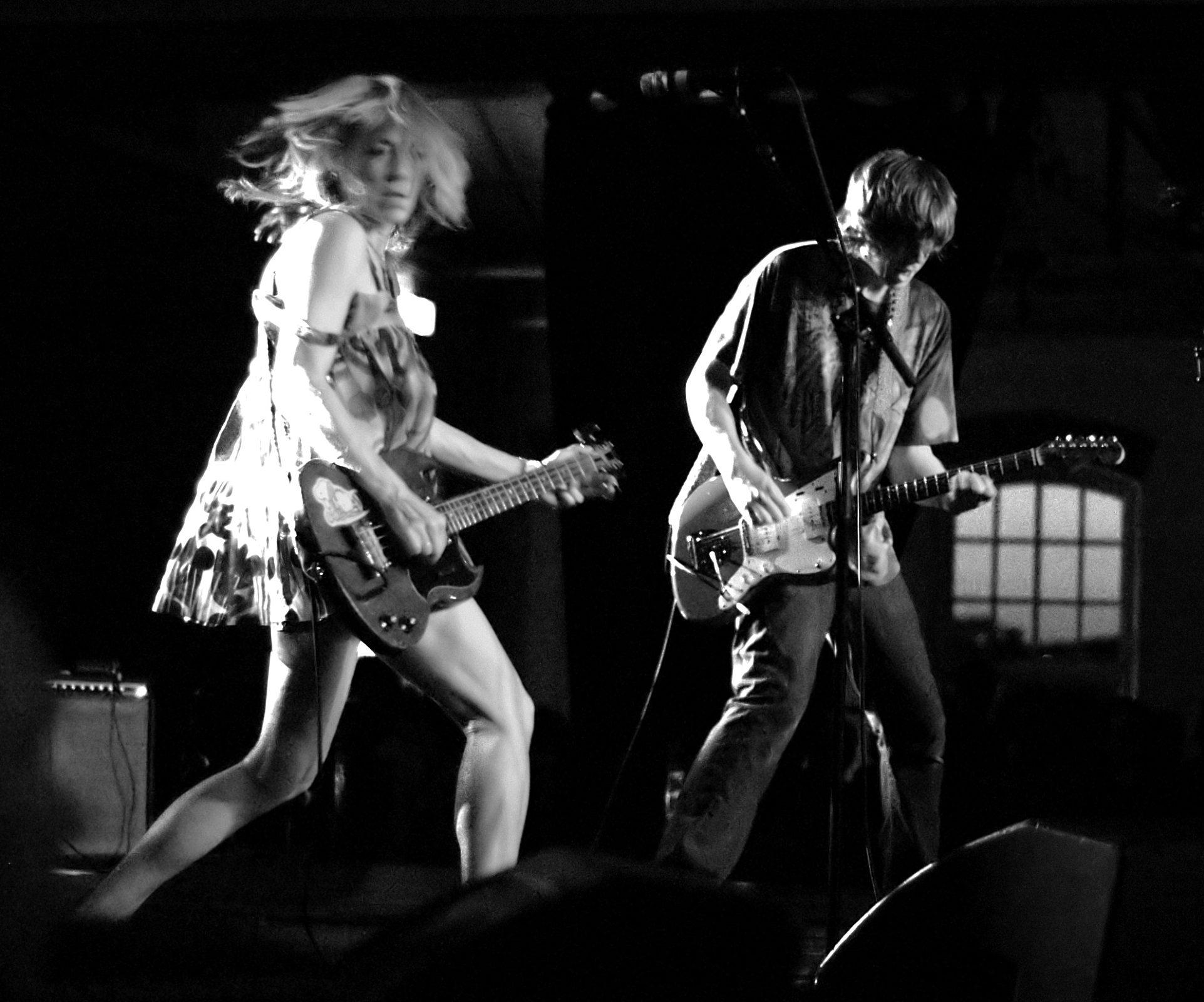
This influential noise rock band is on hold due to the marital separation of frontman Thurston Moore and bassist Kim Gordon. Other than being alt-rock icons, this extremely talented four piece released several fantastic albums of beautiful guitar clanging clamor over their 30-plus career together. Sonic Youth constantly toed the line between accessibility and ambition, which is why starting with 1987’s pre-fame Sister is perhaps the best for newcomers. Sister, released on iconic punk label SST Records, captured the band’s developing knack for melting pop melodies between slabs of abrasive noise rock. Further, Moore’s fascination with hardcore resulted in a full speed ahead energy on several cuts, like punk ravers “I Got A Catholic Block” and “Stereo Sanctity.” Elsewhere, the slow burning punk power ballad “Kotton Krown” remains one of Sonic Youth’s finest recorded moment.
One of the best moments for any music fan is the discovery of a band or artist with a long, rich body of work. In addition to obviously offering tons of music, massive discographies are often stylistically compelling and offer the fodder of debate among friends and fellow music nerds.
However, which record should a new fan start with? Does an artist’s often uncorrupted debut offer the purest example of their sound? Are oft-cited classics the best first step, or do they offer a difficult path for newcomers to tread?
With these questions in mind, we’ve selected one album from eights artists who boast towering, intimidating discographies of at least 13 albums or more. These eight acts are not only enormously prolific, but also fairly consistent, with no single album serving as “the” career definer (sorry Ryan Adams fans). Check out these entry point albums below.
Janis Joplin’s second and final solo classic album “Pearl” became the huge album in the US on February. 27th, 1971. The record was released posthumously released on January. 11th 1971. It was the final album with her direct participation, and the only Joplin album recorded with the Full Tilt Boogie Band, her final touring unit.
“Pearl” stayed in the top spot for 9 weeks. The album has a more polished feel than the albums she recorded with Big Brother and The Holding Company and the Kozmic Blues Band due to the expertise of the producer Paul A Rothchild and her new backing musicians. Rothchild was best known as the recording studio producer of The Doors, and worked well with Joplin, calling her a producer’s dream. Together they were able to craft an album that showcased her extraordinary vocal talents.
No one can go through Janis Joplin’s discography without listening to “Me and Bobby McGee” at least twice. Janis Joplin and her posthumously released hit Me and Bobby McGee. Written by country singer KrisKristofferson the country-blues single reached the No. 1 spot in the U.S. singles charts as well as Joplin’s album “Pearl” . This song also made it to the history books as being the second single to hit No. 1 in chart history after the artist had passed away. The recording sessions, starting in early September, ended with Joplin’s untimely death on October 4th, 1970. Her final session, which took place on Thursday, October 1st after a break of several days, yielded the acapella “Mercedes Benz.” It was the last song she recorded before her death
Another precious gem from her album “Pearl”, “Cry Baby” is a heart wrenching song especially captivated by the soul Janis’ voice brings. The opening wail to the track is just every emotion poured out into a performance. It also teaches about forgiveness with Janis singing for her man to come back home even though she’s been hurt by him, she’ll forgive him and believe that things will work out in the end. Originally recorded by Garnet Mimms and the Enchanters, Janis again, covered it in 1970 and made it her own by putting her own signature blues-rock spin to the song. The song became a usual song in Joplin’s repertoire and it was released as a single posthumously following her sudden tragic death in 1971.
When the five members of Fleetwood Mac reconvened in the studio in 1978 to record the follow-up to their massively successful/decade-defining/inescapable disc Rumours, it would have been painfully easy to simply spit out Rumours II.
Instead, they took 13 months and spent a then-unprecedented $1 million-plus to birth Tusk, a double album of 20 songs spanning 72 minutes. The effort defied expectations, confounded some fans, sold “only” 4 million units, and produced only two singles resembling hits: the tribal-sounding title track (recorded with the 112-piece University of Southern California Trojan Marching Band), and Stevie Nicks’ ethereal “Sara.”
However, a funny thing happened with Tusk in the ensuing 35 years. Its standing among both Fleetwood Mac fans and musicians has skyrocketed, as has respect for the wildly diverse songs and experimentation. Now, Rhino/Warner Brothers has released Tusk: The Deluxe Edition. The 5-CD/2-LP/1-DVD set includes the original album remastered, a bevy of outtakes and alternate takes, and plenty of live material from the ensuing tour.
In the booklet of liner notes and rare photos, Jim Irvin celebrates the potpourri grab bag of music, spearheaded by Lindsey Buckingham’s newfound infatuation with the sounds of punk and New Wave music, and a desire to not repeat the same old formula. He would even adopt an entirely new look for the photos shoots and tour of closely cropped hair, suits, and…uh…heavy makeup. “Listening to Tusk is like walking around a ridiculously eclectic art gallery curated by someone who’s keeping their aesthetic a secret,” Irvin offers. “And old master next to an abstract, a kinetic sculpture next to a watercolour. It makes no sense at first.”
Though, contrary to the established Rock History Narrative of him fighting for the change alone, both Nicks and Mick Fleetwood and not just Buckingham were also eager to shake things up, according to their own comments today.
And what of the effect as a whole? Buckingham certainly brings an un-Mac-like tension, nervous energy, and biting sarcasm to efforts like the deranged square-dance sound of “The Ledge,” the punkish “What Makes YouThink You’re the One,” the biting “Not That Funny,” and the “rockabilly on acid” of “That’s Enough For Me.”
Stevie Nicks, always given something of a short shrift in terms of songwriting since she doesn’t play an instrument (not counting the tambourine), offers some of her finest work in the longing “Storms,” an upbeat “Angel,” elegiac “Beautiful Child,” and mysterious “Sisters of the Moon,” which surprisingly resurfaced on the set list for the Mac’s recent reunion tours.
Only Christine McVie’s contributions seem slight and listless — both lyrically and musically — save for some soft-and-gentle work on her usual romantic balladry in “Over and Over” and “Brown Eyes.”
Tusk’s recording period saw Christine’s involvement with both Grant Curry (the band’s lighting director) and Beach Boy Dennis Wilson, while Lindsay Buckingham fell into an intense involvement with record-company exec/former model Carol Ann Harris (who later wrote a not-that-flattering book about the relationship, Storms).
The shocker, fans later found out, was the news of Nicks and Fleetwood’s brief-but-intense involvement. It led to Fleetwood’s divorce from Jenny Boyd…who had previously had an affair with previous lineup guitarist BobWeston…and was the sister of Rock’s Greatest Muse, Pattie Boyd, who sent both George Harrison and EricClapton into romantic bliss and yearning, poured out on vinyl.
And when Nicks and Fleetwood’s involvement ended, Nicks’ best friend, Sara Recor (partial inspiration for the song), took up with Fleetwood without either bothering to tell Nicks about it, which crushed her .(are you following all of this?). this was usual for the Fleetwood Mac circus
Thus, Nicks admits today that a number of her songs are about Fleetwood, and it’s not hard to interpret many of hers and Buckingham’s lyrics as continued musical snipes and judgments on their relationship.
Of the demos and alternate versions, there’s some very interesting development chronicled in the songs “I Know I’mNot Wrong” and “Tusk” as Buckingham — like he did with much of the material — tinkered with them in his own studio extensively before bringing them to the band. It was a way of songwriting that gave him more control, but which the band agreed to abandon after Tusk.
And on the live discs, listeners will find a band surprisingly willing to take risks with tempos and delivery onstage with material recorded in studio. And that includes tunes from their previous two records, Fleetwood Mac and Rumours.
So, while the hefty Deluxe Edition of Tusk may be for Fleetwood Mac Addicts only (and those with record players), less expensive options included a 3-CD Expanded Edition and a 1-CD Remastered effort.
In either case, for what attention and sometimes derision it received on release, Tusk is the one effort in the band’s discography whose standing has improved with time. Oh, and the meaning the title? It was Mick Fleetwood’s slang term for a penis. You’re welcome for that.
With the release of Blizzard of Ozz,on Sept. 20th, 1980, Ozzy Osborne initiated one of the most improbable career comebacks in rock history, silencing scores of unbelievers who felt the former BlackSabbath singer could never make it on his own. Ozzy himself was possibily one of those doubters.
So low was Osbourne’s self-esteem after being dismissed by Sabbath, in April 1979, that he would waste months wallowing in self-pity, sequestered in a seedy L.A. motel, while continuing to indulge in his numerous vices. In the end, it took an outcast of similar proportions with his future manager and, then later, wife, Sharon Arden to come to Ozzy’s rescue, at a time when she was looking to break ranks with her father, legendary artist manager Don Arden who, coincidentally was still in charge of Black Sabbath
In each other, Ozzy and Sharon saw something no one else did: hope. And so they started searching high and low for accomplices also willing to take a chance on Osbourne. Though the going was tough and the only label willing to offer a contract was Jet Records, they eventually found former Randy Rhoads from Quiet Riot a guitar prodigy who amazed Ozzy with his formidable musical talents and songwriting abilities.
Randy Rhoads flew to England in November 1979 to join Ozzy and Australian-born bassist Bob Daisley (ex-Rainbow, Widowmaker, Chicken Shack and Kahvas Jute) for rehearsals in the seclusion of the Welsh countryside, backed by a virtual cavalcade of stand-in drummers. it was another veteran musician, longtime Uriah Heep drummer Lee Kerslake, who wound up completing the formation informally baptized as the “Blizzard ofOzz” (based on an old suggestion from Ozzy’s dad).
Osbourne’s former bandmates in Black Sabbath had piled on the pressure by delivering a triumphant return to form in Heaven and Hell their first studio album with the newly aqquired lead singer Ronnie James Dio which bowled over fans and critics and quickly shot into the U.K. Top 10. All this while the Blizzard of Ozz was simultaneously hard at work in rural Ridge Farm Studios, hacking away at their as yet untitled debut.
Osbourne, Rhoads, Daisley, Kerslake and session keyboardist Don Airey produced a stunning set of songs built around Rhoads’ uncanny mastery of classically-trained lead and rhythm guitar work, Daisley’s evocative lyrics, Kerslake’s song-arranging experience, and Osbourne’s inimitable voice and charisma.
Those songs have since become standards of Ozzy Osbourne’s concert performances — especially the explosive call-to-arms of “I Don’t Know,” the ready-made hit single that was “Crazy Train,” the cautionary tale of “SuicideSolution” and the gothic fan favorite, “Mr. Crowley,” which benefited from a timeless cathedral synth intro by the talented Mr. Airey. Nestled amidst these popular all-timers were the heartfelt ballad “Goodbye to Romance” (Ozzy’s sad adieu to Sabbath), a pair of relentless heavy rockers in “No Bone Movies” and “Steal Away (The Night)” and twin showcases of Rhoads’ versatile talents in the acoustic interlude “Dee” and neoclassical epic “Revelation (Mother Earth).”
Blizzard of Ozz — as the album was ultimately named so that Ozzy’s brand could be given top billing gave Osbourne exactly the kind of impressive retort needed to silence his critics and counter Sabbath’s own confident rebirth behind Dio. Blizzard didn’t even gain a U.S. release until March 1981. But it would ultimately win the marathon, selling in excess of 5 million copies worldwide.
Ironically, just weeks after the album’s European release, yet still months away from its arrival in America, Osbourne’s new band was already hard at work recording its follow-up, “Diary of a Madman”.
Blizzard of Ozz — the album — went down as a heavy metal classic. Its songs have remained the very backbone of Osbourne’s solo career, well beyond Rhoads’ tragic death in 1982,
TheStooges‘ debut album from 1969 didn’t even crack the Top 100 album chart, so it wasn’t like too many people were waiting for the follow-up. Which was just fine. Without expectations, the band was free to explore almost any path it wanted to on the follow up “Fun House”. The Stooges (1970): Here’s where the first seeds of punk sprung, and with such force that ‘Fun House’ still sounds fresh. The funny part? Iggy Pop says he drew inspiration not from fellow modernists like MC5, but from Chicago blues master Howlin’ Wolf.
Still, their record company had faith in them and the Stooges were slowly picking up fans with their plugged-in, distortion-overloaded brand of scuzzy garage rock. So the second album, while maybe not as anticipated as some of the other post-hippie records that were starting to trickle out around the same time, was still under the watchful eye of the band’s bosses.
The label enlisted former Kingsmen keyboardist Don Gallucci to run the sessions, which were already booked for a two-week period in the middle of May 1970 in Los Angeles. And like former Velvet Underground member John Cale, who produced the Stooges’ self-titled debut, Gallucci realized that the group’s proto-punk attack wasn’t easily captured on tape. So he did what he figured was the most sensible thing: He had the band play the handful of new songs it had written for the album a dozen times each, sorting through them later to pick out the most usable version.
Not that that made things any easier. As anyone who’s heard Fun House in the years since its release in July 1970 (or especially the seven-disc, 1999 box set 1970: The Complete Fun House Sessions) can tell you, the record is one of the most abrasive, pummeling and aggressive sonic assaults ever made. Capturing that on tape, and then settling on a definitive version, must have been no easy task.
But because the Stooges really had almost nothing to lose — their debut made little to no impression in mainstream circles they pretty much recorded Fun House the way they played live with their amps cranked to full power, band members huddled together in one room, singer Iggy Pop recreating his stage show in the studio.
The result is one of the most primal and unhinged albums ever made. Saxophone player Steve Mackay, a temporary addition to the band who also came from the Stooges’ hometown of Detroit, blurts his way through songs in an acid-damaged take on free-jazz pioneer Ornette Coleman’s improvised soloing, pushing Fun House into a sort of avant-jazz proto-punk garage scuzz-rock genre all its own.
From the opening smackdown combo “Down on the Street” , The Stooges could groove with the best of ’em as ‘Down On The Street’ proudly proves. The opening track on the band’s 1970 classic ‘Funhouse’ is hard, loud and heavy for sure, but that rhythm section of Scott Asheton and Dave Alexander drive this thing home. Ron Asheton’s guitar is brutal, while Iggy is in full force here. The song was released as a single, with added organ that, while adding a cool spice to the mix, ultimately cluttered the song. Pure bravado like this needs no extra ingredients.
“Loose” How many different ways can we say ‘sex,’ ‘danger,’ when talking about the Stooges? This is not music for the faint of heart, or the lame of mind. It’s gutturally cerebral, or was that cerebrally guttural? Either way you slice the cake, it oozes the same tasty slime to bathe in. Bring your unhinged self and immerse in the glory of it all. When Iggy sings, “Now I’m putting it to you straight from hell,” he ain’t kidding, and when he sings, “I’ll stick it deep inside,” well, we’ll leave that one up to you.
“T.V. Eye” “Ladies and gentlemen, welcome to violence, the word and the act.” One of the most righteous screams ever opens this barn burner. The guitar riff from the heavens above pummels into the brain as the onslaught builds. The whole song sounds like a riotous street fight as guitars slash like razors, drums splatter like machine gun fire, and Iggy screeches like a Molotov cocktail.
The closing “L.A. Blues,” probably the most unstructured song released by a major label during the first half of the ’70s, “FunHouse”is a mess of sloppy guitar riffs, thrashing drums, larynx-shredding screams and saxophones . check out “1970” Over a Bo Diddley-inspired rhythm, the Stooges blast through this primal, life affirming rocker. The song’s riff, described by original Damned guitarist Brian James as “instant mayhem,” is relentless. You simply can’t help but get sucked into the vortex here. This song, and the attitude within, probably put more fuel in the tanks of punk rock, noise rock, and grunge, but still trumps them all in spades. The chaos grows and by the end of the song, the appearance of wild sax from Steve Mackay takes the whole thing into the stratosphere.
It’s also brilliant, a pre-punk milestone years ahead of the movement it unwittingly helped inspire.
Any surprise then that the album fared even worse than its predecessor? The Stooges didn’t even make the Top 200 this time, and when the band regrouped, after breaking up, a couple of years later to record its third LP, “Raw Power”, it was for a different record company. Drug addiction, alcoholism, low record sales — nobody could blame Elektra for severing its ties with the band. And hardly anyone noticed. At the time, anyway. It would take a fair few years, but “Fun House” eventually became known as an early punk classic, a landmark that inspired its fans to pick up instruments, not bother to tune them and bash out unregulated noise that amounted to a merciless attack on all accessible senses.
With the welcome up-swing in appreciation of Britain’s great history of cutting-edge folk-rock in the 1960s and ‘70s, it might come as a shock for modern converts to learn that the great duo of Richard & Linda Thompson never made the UK charts.
Thankfully, the first album to bill them together, ‘I Want To See The Bright Lights Tonight,’ — released exactly 41 years ago on April 30, 1974 — has belatedly achieved the recognition it richly deserves. In 2003, it was listed in Rolling Stone’s Top 500 Albums of All Time, chosen by critics and artists, at No. 332, just one place below the Beatles’ ‘Help!’. Last July, the record made its proud return to vinyl, the format in which it was first released, as part of Universal Music Catalogue’s Back 2 Black series.
The album was a superb showcase both for Richard’s spectacularly nimble and inventive guitar work, on songs like ‘When I Get To The Border’; his distinctive vocals, such as on ‘The Calvary Cross’ and the doom-laden ‘The End Of The Rainbow’; and the wonderful, pure voice of his then wife, the former folk singer Linda Peters, on pieces such as ‘Has He Got A Friend For Me,’ ‘Withered & Died’ and the title track. ‘Bright Lights’ was released as a single and seemed set fair for a chart position, but wasn’t able to convert airplay into sales.
The couple had recorded the album almost a year before it was released, in a London studio in May 1973. Just after its belated appearance, Richard Thompson answered the NME’s observation that it was full of world-weary sentiment.
“It is a bit of a down record,” he admitted, “but that was accidental. We tried to balance it, but something obviously went wrong somewhere…there are a lot of slow numbers. But I don’t think that’s bad – it’s still enjoyable, there are some optimistic songs. We’re not a doomy band – we try to cover aspects of our experience.”
As a duo, the Thompsons may never have turned the huge critical acclaim for their albums, and their live shows, to their true commercial benefit, but ‘Bright Lights’ stands today as a real jewel in the English folk-rock crown.






 The Fat Angel Sings