“Plum” is the fifth album, and first in three years, by Brooklyn indie types Widowspeak. Their music incorporates ‘60s psych rock and ‘90s dream pop – melodic with a widescreen warmth. The band decided to earn their corn by taking full-time jobs instead of touring, therefore the album was recorded during weekends when everyone was available. With song titles such as ‘Breadwinner’ and ‘Money’, how artists make a living is a central theme.
With the announcement comes the release of new single “Money.” The track soars over the back of a super slick and infectious guitar lick, that allows singer Molly Hamilton plenty of space to lay down her dreamy vocals. The track discusses the way that money plays a role in everything we do and the effect that has on our society.
Hamilton goes on to explain further below:
I’ve been thinking a lot about the things we tell ourselves in order to “forget” the toll of our collective actions: whatever makes it easier to forgive what we’re complicit in. Some of that is related to the environment and how people have trained themselves to tune out “environmentalist propaganda”. We made part of the video at a park in Kingston and the archival footage is mostly pulled from films aimed at employees or shareholders of various industries. The narration for many of them (forestry, agriculture, mining, energy) was surprisingly concerned with the dangers of an environment out of balance… Shows you that we haven’t learned much in the last 70 years. On the other hand, the lyrics are also about capitalism and how it trains us to see everything in terms of value, even our experiences, and we get so caught up in seeking some sort of return on investment that we ignore the damage we inflict (on people, on ourselves, on the planet).”
Find the official video for “Money”
Following “Breadwinner” Widowspeak have their new album Plum, which will come out on August 23rd via Captured Tracks Records.
Cigarettes After Sex is an ambient pop collective led by songwriter Greg Gonzalez & is currently based out of Brooklyn, NY. “I’ve always avoided studios,” says Cigarettes After Sex frontman Greg Gonzalez. “There’s something special about recording out in the world, some kind of X-factor that comes from the character and atmosphere of wherever it is that you’re working that becomes essential to the feeling of the music.”
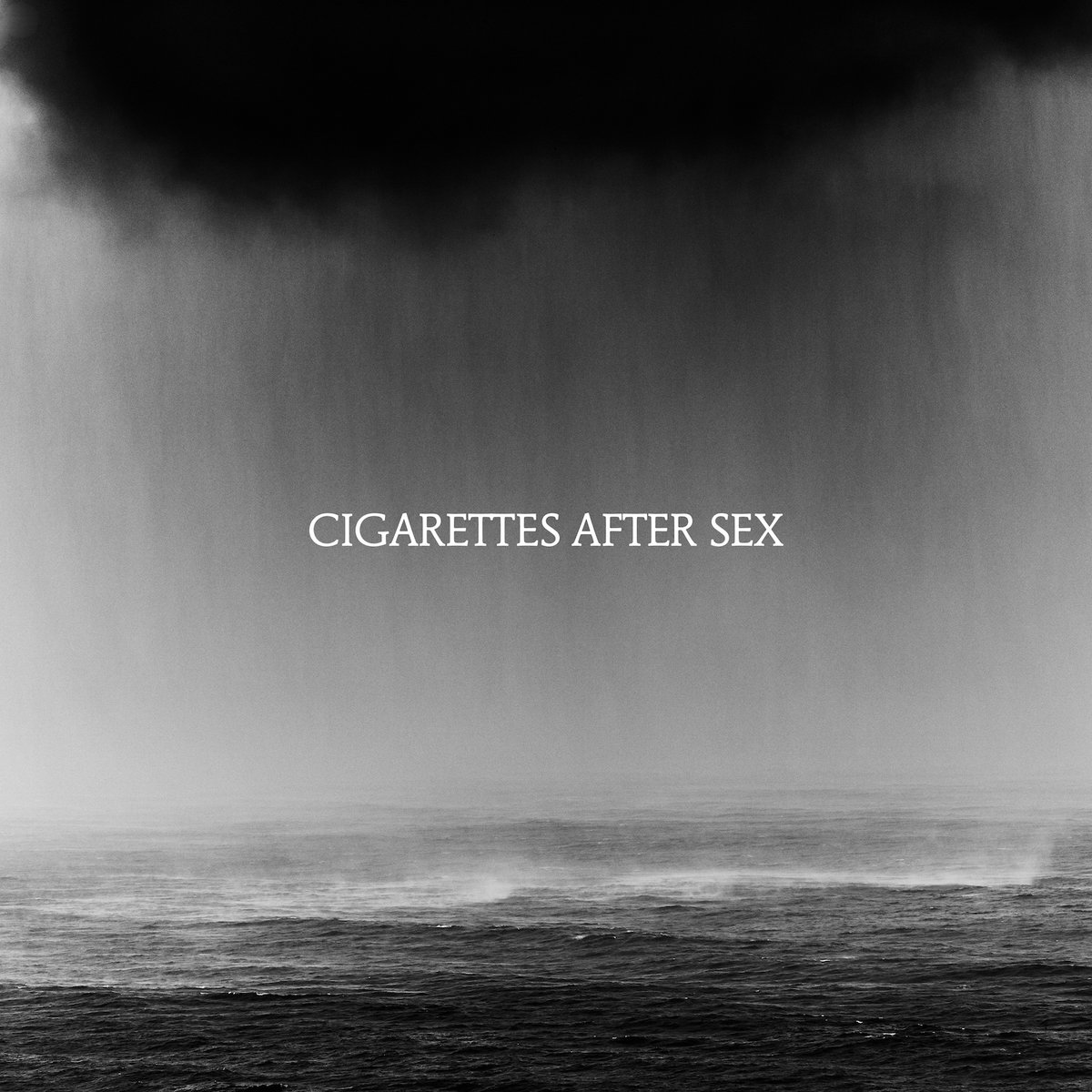
That marriage of sound and setting is the heart and soul of Cry, Cigarettes After Sex’s riveting sophomore album. Recorded in a stunning house on the Spanish island of Mallorca, the collection reflects the uneasy beauty, erotic longing, and stark minimalism of the space, all smooth lines and soft light. Energized by the fresh palette and setting, Gonzalez would write songs just minutes before recording them with the band—drummer Jacob Tomsky, bassist Randy Miller, and keyboardist Phillip Tubbs. He engineered and produced the sessions himself, with an emphasis on capturing live performances and exploring the material together in dialogue with the house and with each other.
Clocking in at nine songs, Cry is a compact collection, but its brevity belies its depth. While the band’s sound may be most associated with the romantic pop music of the late 50’s and early 60’s, Gonzalez pushes into more unexpected sonic territory on Cry, reaching back to his childhood in El Paso, Texas, to draw subtle melodic influence from 90’s Tejano stars like Selena and mainstream pop country artists like Shania Twain. Gonzalez pushes himself lyrically on the album, too, tackling sex with the graphic frankness of Henry Miller or Leonard Cohen as he renders unabashed, sometimes explicitly erotic scenes with a casual candor. Writing with a filmmaker’s eye, he captures tiny moments with a rich, cinematic detail that manages to locate the profound within the mundane.
Cigarettes After Sex return with their anticipated sophomore album – Cry via Partisan Records. Recorded during night time sessions in a mansion on the Spanish island of Mallorca, the album is a lush, cinematic meditation on the many complex facets of love – meeting, wanting, needing, losing…sometimes all at once. The album was self-produced and engineered by Greg Gonzalez, and mixed by Craig Silvey (Arcade Fire, Yeah Yeah Yeahs).
There’s something special about an artist whose music reaches the full potential of a particular genre while also transcending it altogether. That can be said about Nirvana with grunge, Miles Davis with jazz, My Bloody Valentine with shoegaze and so on. One could also add Nation of Language to that list, with respect to new wave music.
The Brooklyn-based band, led by vocalist and songwriter Ian Devaney and featuring his wife Aidan Devaney on keys and Michael Sui-Poi on bass, unleashed their debut album Introduction, Presence last month, and it’s crowned them as the most exciting new synth-pop act in years. The band has been releasing invigorating, ’80s-indebted singles for about five years now—tracks like “I’ve Thought About Chicago” and “Reality” are undoubtedly direct descendents of Pet Shop Boys, A Flock of Seagulls and Orchestral Manoeuvres in the Dark, but there’s also a subtle glow that recalls 21st century anthemic indie rock à la Arcade Fire, The National and The Killers. While their decade-spanning influences can certainly be scavenged, their songs always sound bigger than them—Devaney’s songwriting feels essential and eternal.
It might not be the best time to release a highly-anticipated, highly-danceable album, but “Introduction, Presence” resonates in kitchens and cars just as well as it would in the animated bars of New York City. Ian Devaney is currently sitting by the bedroom window in his Brooklyn apartment, which overlooks an alley full of weeds that have grown far larger than normal. “It’s kind of sad actually,” Devaney says. “Over the last couple weeks, I’ve watched them grow from little tiny weeds into big bushes. It’s my little bit of nature.”
Like most of us, he’s feeling strange about the present circumstances, but his album release date was something to look forward to, and it also happened to be his 30th birthday. During quarantine, he’s been pinging between instruments, recording equipment, video games and books, which are all set up near him so he can simply “follow [his] spirit.”
It’s no secret that 1980s nostalgia has been prevalent in indie rock for years now. From Future Islands and Interpol to The 1975 and TOPS, countless bands from the last two decades have found success filtering their music through distinctly ’80s lenses. Still to this day, you can hardly swing a dead cat without hitting an indie band with one or more of these elements: interstellar synths, bass-driven songs, rich production and melodramatic vocals. To join these ranks is both a blessing and a curse. On one hand, there’s a huge demand for music that sounds like it came from the era of big hair and goths, but on the other hand, it’s hard to stand out in such a saturated market—and even harder to make lasting, impactful songs that transcend its revivalist label. New York City band Nation of Language approach this weighty task with more grace and far better song writing chops than the vast majority of bands who attempt retro pastiches or something close to them. For starters, lead singer and songwriter Ian Devaney (formerly of Static Jacks) has a low-pitched, aching voice that just screams classic new wave, but more crucially, he has an ear for awe-inspiring melodies and synth lines that go above and beyond mere cinematic uplift. Nearly every one of his songs prompts a mental highlight reel of one’s own life, but without the stylish, candy-coated nostalgia that’s fetishized nowadays—it’s the profound kind that allows you to view yourself at your lowest and highest moments and see the beauty in having a finite amount of time to live.
Nation of Language formed in 2014, around the same time Devaney’s previous band, The Static Jacks, dissolved. The Static Jacks toured internationally and released two albums of garage rock-tinted indie-pop, and although Devaney hadn’t yet found his feet, you can hear his knack for song writing and budding interest in 1980s pop (see “Mercy Hallelujah” and “Katie Said”). With Nation of Language, Devaney didn’t start from scratch with hopes of becoming the next big buzz band—the group simply came from a place of musical experimentation.
“I didn’t think of it as ‘I’m starting a new band,’” Devaney says. “It was just an exploration of trying to write a different style song than I had been writing for years. Even after we had played a couple of shows, it wasn’t a very serious thing until Aidan joined the band. She’s a very ambitious person and wants to go out and play, and that made me believe in myself and the music more.”
While Devaney says making the music was quite a deliberate process, their debut album itself just sort of happened.
“‘Indignities’ has been out for a while, but when we recorded it, I didn’t so much think, ‘We’re piecing together an album,’” Devaney explains. “It was just like, ‘We’ve got enough money that we can go do this, so let’s get in there and make a song.’ I had a certain amount of unreleased material that felt like it lived so well with these things that we had released earlier that I was like, ‘Let’s just call this a bundle of our early works.’”
Introduction, Presence is satisfyingly 10-tracks-long, and it’s essentially a greatest hits album—excluding only the stirring early single “I’ve Thought About Chicago,” which was curiously left off the tracklist. Despite its compilation feel, it has mindful sequencing. The first half is exhilarating—almost like they wanted listeners to be fully impressed right from the jump. You can’t hear “Tournament” and “Rush & Fever” without imagining a crowd hanging on its every beat with their bodies intuitively swaying and eyes blissfully shut. Then comes the peak of this record’s poignant nostalgia, “September Again” and “On Division St,” followed by the rhythmic post-punk glory of “Indignities.” The latter half of the album is a bit more spacious and varies more in tempo and style, but it doesn’t conclude without one more life-affirming dancefloor filler, “The Wall & I.” It’s all packaged so thoughtfully, and it leaves you wanting more.
Devaney said he’s always striving to write something as good as LCD Soundsystem’s “All My Friends,” and you can hear nods to Brooklyn’s dance-punk gods and that wide-eyed NYC pulse rushing through nearly every song. However, he pushes back against the idea that Nation of Language are a distinctly New York City band. Yet, it’s still hard not to imagine Introduction, Presence as a soundtrack to the lives of New Yorkers who feel both uplifted and quashed by the mythology of the city.
“I think those are big brushes that I used to make the record—that hopeful melancholia thing,” Devaney says. “I think New York probably amplified that, but I think that’s maybe part of the reason I was drawn to live here in the first place—the hopeless, never-ending struggle aspect.”
Nation of Language sound refreshingly out of step with the gentrified Brooklyn scene’s trendy bedroom pop and tired art-punk acts, but they never felt a part of that world to begin with.
“We’re down south of Crown Heights and Lefferts Gardens, and so there’s this feeling of being in Brooklyn and a part of the action, but also very much separate from it,” Devaney says. “I think that’s probably good for me because if I lived right in the middle of everything, I might not leave myself the time to actually work on the music and just spend all my money hanging out with people. Just being in Brooklyn is a very important thing to me—just something about the fact that when you look around, it feels like people are pursuing something and striving for something. It’s inspirational and makes me want to get back to it.”
Devaney likes the primitive quality of early new wave, when artists were only just scratching the surface of the possibilities of synthesizer-based music. It wasn’t overly technical, but it still transmitted emotions in a way that was quite profound. When Devaney shifted from writing indie-pop tunes to new wave ones, he liked the idea of not fully knowing what he was doing, but he’s not worried about losing that charming novice quality that so many bands struggle to maintain beyond their first few records.
“There are so many different options out there for different ways of creating music using a synthesizer, that I think between that and the fact that I’m not very good at guitar or bass means that there will be that sort of beginners’ touch for quite a long time,” he says.
Their transcendent sounds intersect with a thematic brooding that’s an equally integral part of Nation of Language. Devaney gets rained on in the album’s opening scene (“And that’s fine / I’m wasting away / I took the long road home and it never paid off for me / But to feel the proof as I’m walking around the city / In a torrent of rain”) and later finds himself paralyzed by time on “September Again.” Later, he’s somehow still trudging forwards on “Automobile”: “In a landscape harsh and thick / Thick with the dreams that you never quite kicked / You carry on for a long time.” His lyrics are marked by a deep romanticism and an ever-shifting relationship to nostalgia, and it’s these universal struggles that make his songs so towering.The blurred image on their debut album cover is a bit enigmatic, but as Devaney explains it, it’s actually a perfect microcosm of Nation of Language.
“I thought about the fact that our live show is a very energetic and hectic thing, but still confined within the bounds of these very rigid drum machines,” Devaney says. “I found an old picture from a disposable camera from years ago and I don’t know exactly what it is. I think I was either trying to take a picture of something and someone moved in front of the camera or I was trying to take a picture of someone and they moved out of the way at the last second. But it’s certainly a person passing by.”
Just like this figure fading out of sight, Nation of Language are reaching for something that’s slipping away. They’re simultaneously crushed and enlivened by the past, present and future, and their songs sound scientifically engineered for beginning and end credits. As long as there’s a desire to reminisce or forget one’s memories altogether, Nation of Language are there to be the sublime soundtrack.
Cigarettes After Sex made a hushed and sensual splash with their 2017 self-titled debut, and the Greg Gonzalez-led indie-pop project are returning with their second record, “Cry”, out now on Partisan Records. The band recorded Cry during nighttime sessions at a mansion on the Mediterranean island of Mallorca, with Gonzalez self-producing and engineering the album, and Craig Silvey (Arcade Fire, Yeah Yeah Yeahs) mixing it. “The sound of this record is completely tied to the location for me,” says Gonzalez.
“Ultimately, I view this record as a film. It was shot in this stunning, exotic location, and it stitches all these different characters and scenes together, but in the end is really about romance, beauty & sexuality. It’s a very personal telling of what those things mean to me. Raunchier yet equally as romantic and sentimental, Cry doesn’t necessarily break new ground, but continues to explore the band’s noir atmosphere.
Cigarettes After Sex is an ambient pop collective led by songwriter Greg Gonzalez & is currently based out of Brooklyn, NY.
singer/songwriter Harry Nilsson who was born on this date June 15th, 1941 in Brooklyn, NY. Nilsson moved to Los Angeles as a teenager to escape his family’s poor financial situation. While working as a computer programmer at a bank, he grew interested in musical composition and close-harmony singing, and was successful in having some of his songs recorded by various artists such as The Monkees.
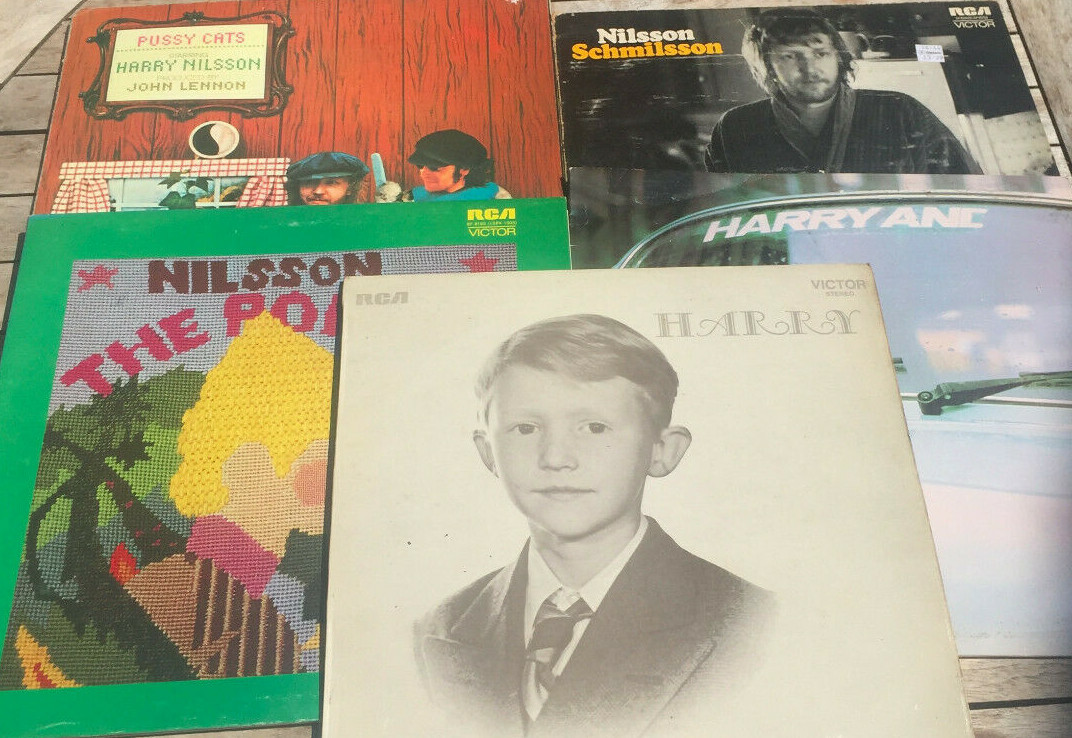
In 1967, he debuted on RCA Victor with the LP “Pandemonium Shadow Show”, followed by a variety of releases that include a collaboration with Randy Newman (“Nilsson Sings Newman”, 1970) and the original children’s story “The Point!” (1971).
His most commercially successful album, “Nilsson Schmilsson” (1971), produced the international top 10 singles “Without You” and “Coconut”. His other top 10 hit, “Everybody’s Talkin'” (1968), was featured prominently in the 1969 film “Midnight Cowboy”. A version of Nilsson’s “One”, released by Three Dog Night in 1969, also reached the U.S. top 10.
During a 1968 press conference, the Beatles were asked what their favorite American group was and answered “Nilsson”. Sometimes called “the American Beatle”, he soon formed close friendships with John Lennon and Ringo Starr. In the 1970s, Nilsson and Lennon were members of the “Hollywood Vampires” drinking club, embroiling themselves in a number of widely publicized, alcohol-fueled incidents. They produced one collaborative album, “Pussy Cats” (1974).
After 1977, Nilsson left RCA, and his record output diminished. In response to Lennon’s 1980 murder, he took a hiatus from the music industry. For the rest of his life, he recorded only sporadically.
The RIAA certified “Nilsson Schmilsson” and “Son of Schmilsson” (1972) as gold records, indicating over 500,000 units sold each. He earned Grammy Awards for two of his recordings; Best Contemporary Vocal Performance, Male in 1970 for “Everybody’s Talkin'” and Best Pop Vocal Performance, Male in 1973 for “Without You”.
Nilsson passed away January 15th, 1994 at the age of 52.
Now and then a debut comes along that feels more like a greatest hits collection. Introduction, Presence is a portrait of Nation Of Language’s first few years — singles trying out different iterations of a sound and attacking various ideas, but fully-formed even within that process of early discovery. Climactic moments abound: the twin “where is my life going” catharses of album bookends “Tournament” and “The Wall & I,” the digital wormhole of political screed “Indignities,” reclaimed awe in the city lights of “On Division St.” Eventually the vignettes form a whole story, tracing the listlessness and yearning of being not-quite-young-anymore in precarious times.
Brooklyn-based synth auteurs Nation of Language entered 2020 as one of the most heralded new acts of recent memory, having already earned high-praise from the likes of NME, FADER, Stereogum and countless others for their energetic anthems’ ability to blend the upbeat with a healthy dose of sardonic melancholy. Inspired by the early new-wave and punk movements, the band quick earned a reputation for delivering frenzied nights of unconventional bliss to rapt audiences, establishing themselves in the process as bright young stars emerging from a crowded NYC landscape.
The small handful of offerings from the band that began circulating in recent years prompted unusually big reactions from the press for an unsigned and fully independent new artist, turning many a head in their direction. Stereogum labeled the band “Immediately Addicting” while the NME went on to describe Nation of Language as ‘An Absolute Blast’ and some of the ‘most exciting music coming out of New York’.
What a debut Introduction, Presence is! An album of the year contender for sure.
While many of their contemporaries are hellbent on 1980s homages, Nation of Language’s song writing influences recalls 2000s bands like Arcade Fire and The National just as much as ’80s golden era groups. You can hear Matt Berninger like tone and pacing on “Tournament,” James Murphy’s warmth and exhilaration on “Rush & Fever,” the zest and pomp of Cut Copy’s Dan Whitford on “Indignities” and Arcade Fire-sized elation on “The Wall & I.”
For Craig Finn, these three records feel like one big body of work, and the songs on this collection are a part of that piece. For various reasons, these songs didn’t appear on the records they were recorded with, but they still tell a part of the same story – modern people trying to make it through, to keep their heads above water, to live past their mistakes, to survive. “All These Perfect Crosses” gives a glimpse into what this collection of odds and ends will sound like. It’s a tender piano ballad that clocks in at just under three minutes and its easy to see how this didn’t fit into what went on his three solo albums.
Craig is best known as the frontman of The Hold Steady, however he is also a skilled songwriter in his own right. 2019’s I Need A New War solidified Craig as one of today’s most important storytellers, among the ranks of Leonard Cohen and Tom Waits.
I wanted to tell you about my new release! “All These Perfect Crosses” is a 2xLP set out for Record Store Day, courtesy of the amazing people at Partisan Records. The songs largely come from the sessions that made up my last three records, but it’s also got a few demos and acoustic versions. All of this music was lovingly produced by Josh Kaufman, and a great deal of it was recorded by the awesome Dan Goodwin. (The demos and acoustic tracks were recorded by Josh).
These are songs I really love, they often just didn’t fit the theme or the flow of the record they were recorded for. Thus, I’m thrilled to be putting these together and putting them out in the world on vinyl. I wrote liner notes about each of the tracks, and the whole package is really cool. Artwork by Vance Wellenstein .
Double black LP collecting B-sides and alternate version from Craig Finn’s previous three albums Faith In The Future (2015), We All Want The Same Things (2017), I Need A New War (2019).
Craig Finn – ‘All These Perfect Crosses’ is the title track from Craig Finn’s Record Store Day exclusive album. Record Store Day will take place on June 20, 2020
Brooklyn songwriter Katie Lau has used the time to add the finishing touches to her new album “When You Found Forever”, her first project to be released in five years under the Painted Zeros name. It’s an uncompromising journey into a person stricken with a battle of the psyche, overcoming a tumultuous relationship with alcohol and breaking free from the clutches of an old love (see “”). Lau is fearless in showing the pains of addiction mixed with the beautiful colour palette that returns once its been abandoned. On her latest single that we’re thrilled to premiere, “I Will Try” Lau takes the various shades that make up ourselves to create an anthem endowed with a restored affirmation in her identity and making the best of the future.
A beacon of hope soars high as Lau’s ever so graceful guitar tugs at your heart strings, championed by an endearing drum pattern guiding her along the path. Swells of emotion pour out as the track weaves its way across glistening lyrics emboldened by Lau’s honesty, “When it comes, I’m still here / The dark dissolves, to stay another year”. As Lau details, “I wrote this song channeling the feeling of gratitude I have for what really feels like getting a second chance at life thanks to getting sober, and getting on the other side of a difficult time onto a path of emotional/mental health in general. Now, every day I wake, I’m just trying to do the right thing/live an honest, useful life, and trying to help others however I can. When I was still drinking and using, life had become so dark and miserable, and now, being in recovery for three years, my life has changed beyond recognition; it’s better than I ever could have imagined it could be.”
Classic-sounding post-rock energy fuses with gently-communicated truths then blazes on “I Will Try” the powerful, pristine new single from Katie Lau’s Painted Zeros The track is taken from the “When You Found Forever” LP that she releases this Friday, May 29th. You can order digital and vinyl versions of it from and it’s available from her Bandcamp page as well.
Releases May 29th, 2020
Written, performed, engineered, and mixed by Katie Lau
Drums played by Jared Kaner on tracks 3 & 8
Bass played by Jim Hill on tracks 3 & 8
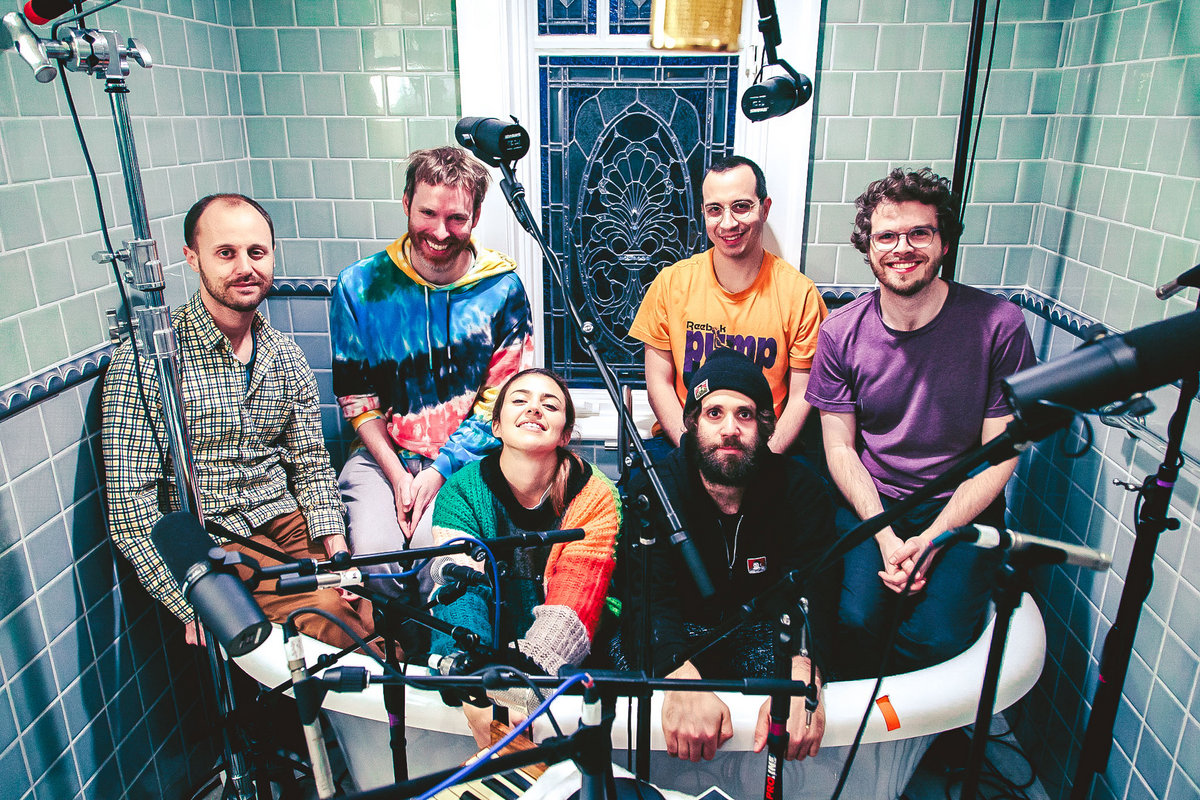
Kristin Slipp, also a member of Dirty Projectors, is the voice of Brooklyn– and Philadelphia-based collective Cuddle Magic, who recorded their new album Bath in a bathroom. You can preview its twinkling, understanding “Working On Me” here.
Big news: we have a new song out today, “What If I,” and we’ll have a new album out soon. It’s called ‘Bath’ and it’s coming out on July 3rd on Northern Spy.
Please take a moment right now to pre-save the album, follow us on your chosen streaming platform, and listen to “What If I” (the link below should let you do all three of those things). It’s the first song we all wrote together and we’ve been wanting to release a recording of it for a long time. We love how it turned out and hope you do, too!
Band Members
Benjamin Lazar Davis, Alec Spiegelman, Kristin Slipp, Christopher McDonald, Cole Kamen-Green, David Flaherty
The album is released on July 3rd by Northern Spy Records, and you can pre-order the digital version of it by visiting the band’s Bandcamp page now.
A couple old unreleased tracks are out now: A version of “Alien Sunset” that was Cut from “Hollow Ground” for reasons I don’t recall. features @jonathanrado (who also produced it) on Drums, percussion, and I think some keyboards? and a demo called “Conspiracy Theorist Blues”








 The Fat Angel Sings