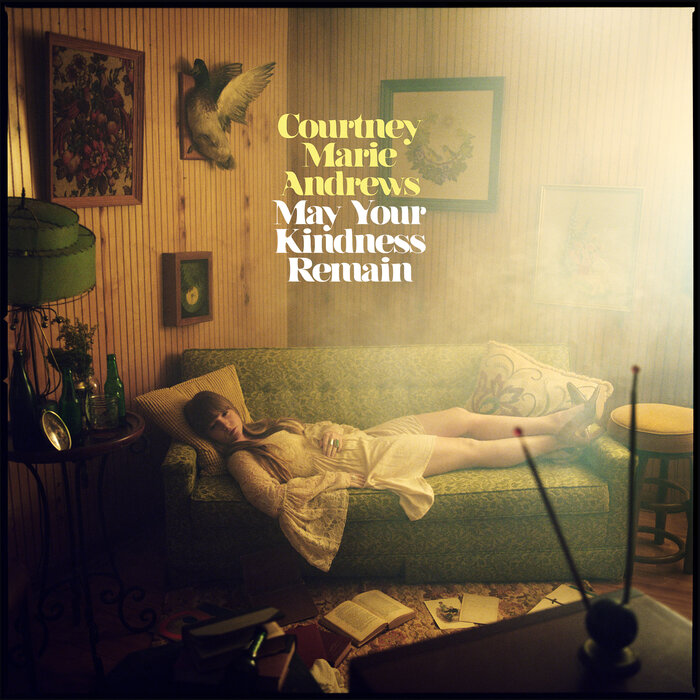
The layers of singer-songwriter Courtney Marie Andrews’ May Your Kindness Remain are vast as the music is enchanting. Her sixth record is easy to fall for, with her dusky soprano rising atop an easy-going, yet sultry band. Her groove is reminiscent of Linda Ronstadt, particularly with the way she slides around the spectrum of Americana: country, folk, gospel and something else you can’t quite put your finger on. Lyrically, Andrews is in touch with her own loneliness, kindness and empathy and that shines through songs like “I’ve Hurt Worse,” “May Your Kindness Remain” and “Two Cold Nights in Buffalo.” The inspiration for these songs came from meeting people on her tours and realizing that everyone is suffering from the same types of sadness. May Your Kindness Remain is an accurate, passionate account of facing problems directly and dealing with depression head-on.
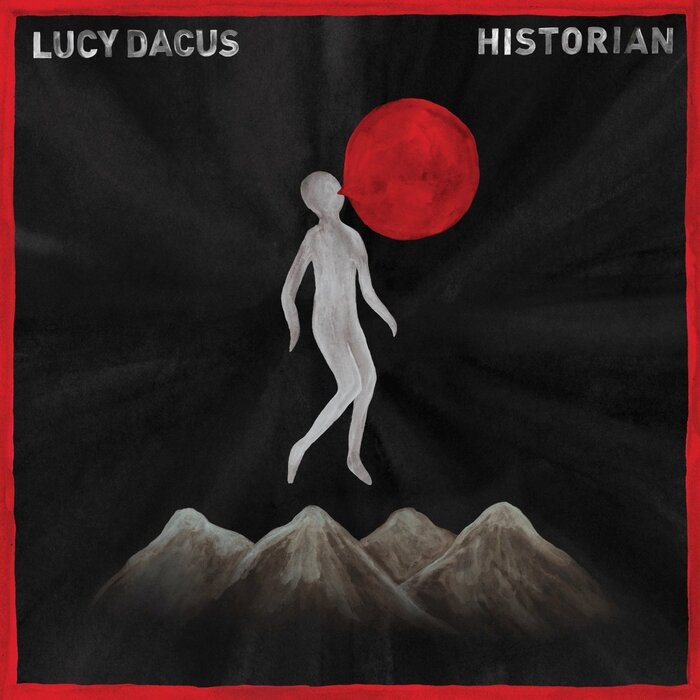
A long and hectic, albeit fruitful, year is just getting going for 22-year-old Lucy Dacus, following the March 2nd release of what is decidedly her breakthrough LP, Historian, on Matador Records. Where her first LP, No Burden showcased her talent for embedding meditative lyrics inside approachable rock songs, Historian is a major artistic stride.
If you’ve ever picked a scab and felt pacified watching the slow bleeding, you’ll know the strange satisfaction of revisiting wounds that won’t heal. I began listening to Lucy Dacus’ Historian while mourning a relationship that was long dead. Its painful dissolution symbolized something more difficult: a loss of youthful idealism, a growing weariness with the world around me. The 22-year-old Dacus has a knack for distilling feelings that, while universal, feel denser at this age. Her evocative, tightly-wound lines unravel the messiness of human emotion: “I feel no need to forgive, but I might as well / Let me kiss your lips, so I know how it felt,” she sings on “Night Shift,” her sweet voice cleaving cleanly through the complexities she’s laid bare. It’s an album that allows you to surrender to your most vulnerable self, sober and unguarded
For Lindsay Jordan, this “record” would be the songs she wrote at fifteen that lend themselves to 2016’s Habit, her breakthrough EP. Written and recorded in her childhood home in the suburbs of Baltimore, its songs—introspective, sonic documentations of that overwhelming period of change when you sit on the cusp of adulthood—reminded audiences of the infinite, complex emotions adolescent kids experience. Coupled with her prodigious guitar talent and deadpan delivery, Habit unexpectedly made Jordan an indie darling who often evoked critical comparisons to her hero Liz Phair.
With the release of her first full-length, Lush, Jordan takes her music a step forward. In the two years since Habit, she’s come out as gay, graduated high school, and signed to Matador Records. Lush reflects both the realizations and the confusions that come with growing up, deftly straddling the line between youthful vulnerability and adult self-assuredness.
If her emotional candor makes her appear far older than she is (before interviews, she sends a list of frequently asked questions to avoid, like the tired “What’s it like being a woman in a band?”), as soon as she speaks, Jordan reminds you that she’s just nineteen years old. Excitement courses through her rapid, breathless, “like”-peppered sentences. She’s still figuring this all out, a little overwhelmed at the attention she’s received so quickly. If Lush is any indication, though, she’s heading in the right direction. Jordan spoke with us about artistic growth, vulnerability, and both the difficulty and importance of keeping in touch with the person she used to be.
We got a small teaser of Hop Along’s new album when they opened for Conor Oberst at BRIC Celebrate Brooklyn! Festival in Prospect Park, a show they said they took a break from recording to play. Propelled by Frances Quinlain’s wild, raw voice, Hop Along really shine live, and they debuted a great-sounding new song at that show. Attendees of Cap’n Jazz’s House of Vans show in Chicago, which Hop Along opened, got to hear even more new material, and Frances promised new stuff at a few solo dates in October with Oberst and Tim Kasher. There hasn’t been much concrete info yet about Hop Along’s next album, but 2015’s Painted Shut was one of our favorite albums of the year, and we’re eager to hear Bark Your Head Off, Dog .
We are very happy to share our video for “How Simple” with you. Thank you to Derrick Belcham for his excellent work directing, and to all who were involved, this was a lot of fun to make.
What makes this album such a gratifying listen are the tensions Hop Along sets up: the ingenious interplay between the full band’s inviting hooks and abrasive progressions, between melodies you can sing along to and melodies you wouldn’t dare attempt, and between lead singer and lyricist Frances Quinlan’s sweet soprano and rugged rasp. Musically, everything bubbles to the surface and gasps for air, including, at times, Quinlan herself. Lyrically, Hop Along finds empathy for the Bible’s first murderer Cain (on “Not Abel”), illuminates the failures of false ideals in war (“Of course I am for peace, one that suits me”), and encapsulates the current cultural moment of untangling toxic masculinity in one perfect phrase (“So strange to be shaped by such strange men”).
With every record, Damon McMahon aka Amen Dunes has transformed, and Freedom is the project’s boldest leap yet. The first LP, D.I.A., was a gnarled underground classic, recorded and played completely by McMahon in a trailer in upstate New York over the course of a month and left as is. The fourth and most recent LP Love, a record that enlisted Godspeed! You Black Emperor as both producers and backing band (along with an additional motley crew including Elias Bender Rønnenfelt of Iceage and Colin Stetson), featured songs confidently far removed from the damaged drug pop of Amen Dunes’ trailer-park origins.
Love took two years to make. Freedom took three. The first iteration of the album was recorded in 2016 following a year of writing in Lisbon and NYC, but it was scrapped completely. Uncertain how to move forward, McMahon brought in a powerful set of collaborators and old friends, and began anew. Along with his core band members, including Parker Kindred (Antony & The Johnsons, Jeff Buckley) on drums, came Chris Coady (Beach House) as producer and Delicate Steve on guitars. This is the first Amen Dunes record that looks back to the electronic influences of McMahon’s youth with the aid of revered underground musician Panoram from Rome. McMahondiscovered Panoram’s music in a shop in London and became enamored. Following this the two became friends and here Panoram finds his place as a significant, if subtle, contributor to the record.
The bulk of the songs were recorded at the famed Electric Lady Studios in NYC (home of Jimi Hendrix, AC/DC, D’Angelo), and finished at the similarly legendary Sunset Sound in L.A., where McMahon, Nick Zinner, and session bass player extraordinaire Gus Seyffert (Beck, Bedouine) fleshed out the recordings.
On the surface, Freedom is a reflection on growing up, childhood friends who ended up in prison or worse, male identity, McMahon’s father, and his mother, who was diagnosed with terminal cancer at the beginning of recording.
The characters that populate the musical world of Freedom are a colourful mix of reality and fantasy: father and mother, Amen Dunes, teenage glue addicts and Parisian drug dealers, ghosts above the plains, fallen surf heroes, vampires, thugs from Naples and thugs from Houston, the emperor of Rome, Jews, Jesus, Tashtego, Perseus, even McMahon himself. Each character portrait is a representation of McMahon, of masculinity, and of his past.
Yet, if anything, these 11 songs are a relinquishing of all of them through exposition; a gradual reorientation of being away from the acquired definitions of self we all cling to and towards something closer to what’s stated in the Agnes Martin quote that opens the record, “I don’t have any ideas myself; I have a vacant mind” and in the swirling, pitched down utterances of “That’s all not me” that close it.
The themes are darker than on previous Amen Dunes albums, but it’s a darkness sublimated through grooves. The music, as a response or even a solution to the darkness, is tough and joyous, rhythmic and danceable. The combination of a powerhouse rhythm section, Delicate Steve’s guitar prowess filtered through Amen Dunes heft, and Panoram’s electronic production background, makes for a special and unique NYC street record.
It’s a sound never heard before on an Amen Dunes record, but one that was always asking to emerge. Eleven songs span a range of emotions, from contraction to release and back again. ‘Blue Rose’ and ‘Calling Paul the Suffering’ are pure, ecstatic dance songs. ‘Skipping School’ and ‘Miki Dora’ are incantations of a mythical heroic maleness and its illusions. ‘Freedom’ and ‘Believe’ offer a street tough’s future-gospel exhalation, and the funk-grime grit of ‘L.A.’ closes the album, projecting a musical hint of things to come.
Following on from last years compilation “Collection”, Nashville based Sophie Allison aka Soccer Mommy now brings us her debut album proper. Produced by Gabe Wax (Deerhunter, War On Drugs, Beirut), the new album is a huge step up from her earlier bedroom recordings. The fuller sound works perfectly with Sophie’s finely crafted, bitter-sweet pop songs that have a world weary quality beyond her 20 years. Whole record is stellar, new version of Last Girl makes me really happy. A contender for the best record so far in 2018,
Twenty-year-old Sophie Allison, cuts to the core on Soccer Mommy’s Clean, as if she’s already in hurry. Her flat delivery and lack of lyrical pretense lay bare moments of obsession and rejection in a frank, almost detached fashion. Her album takes its title from Taylor Swift’s freedom ballad, but there’s also a sense of the world-burning defiance borrowed from Liz Phair’s ’90s debut. “I don’t want to be your f****** dog,” she snarls in answer to decades of obliviousness. Clean betrays simmering anger, hurt and an ever-present humor and self-deprecation (not surprising for someone with a moniker this silly). The emotions are felt, but Allison revels in none of them. As if to say there’s a lot of life yet to live, she keeps a sense of the absurdity of it all. “She’ll steal your joy like a criminal,” Allison sings in admiration. “I wanna be that cool.”
We love the delicate-yet-fearless vibe of Soccer Mommy’s new songs “Cool,” “Still Clean,” and “Your Dog,” the latter of which she performed for us live in the Paste studio last month. The young Nashville songwriter’s debut full-length, Clean, finally drops today.
Released March 2nd, 2018 Sophie Allison – Guitar, vocals, bass Julian Powell – Lead guitar Nick Brown – Drums Gabe Wax – Piano, synth, mellotron, bass, guitar, drum programming, percussion
Grace Vonderkuhn is a rock musician based out of Wilmington, DE. Her music combines psych and garage rock aesthetics with a sharp pop sensibility. Vonderkuhn oscillates between heavy riffs and driving melodies drawing influences from bands such as The Breeders, T-Rex, and Autolux. Since releasing her debut EP, which landed , she and her band have been playing up and down the east coast, sharing the stage with the likes of Titus Andronicus, Lower Dens, Sheer Mag, Alice Bag and more.
Grace Vonderkuhn can really rip it up. I heard a song of hers on All Songs Considered back in January, It wasn’t until I was going through the list of bands playing at SXSW and remembered her name. From there, a trip to YouTube confirming that yes she is something I should be listening to, her label, Egg Hunt Records,
The scrappy, fuzzed out, cathartic stompers of Grace Vonderkuhn’s “Reveries” are the type of jams that lodge themselves deep into both your head and heart while avoiding the usual garage pop clichés. Spanning longer song-form explorations as well as the usual two-to-three minute blasts, the sparky punk immediacy of tracks like, “Worry” and “Cellophane” can’t simply be outdone. Reveries is a concise release filled with fun energy and hooks-upon-hooks, firmly planting itself as an early contender for one of 2018’s first great records.
Relying on personal and relatable lyrics, simple melodies with extra dirt sprinkled on top, and a ramshackle driving guitar pushing through the mix, Grace proves that burning youthful intensity and expert pop craftsmanship go hand-in-hand, and she restates her case time-and-time again on each of these ten ‘reveries’ living up to the album’s title and delivering loads of promise. After dropping a record this solid there is surely plenty to anticipate from this mesmerizing up-and-comer.
Vonderkuhn comes from Delaware and plays a brash blend of garage and 90s alternative indie rock. but while the music is brash and a little grimy, there is a wonderful melodic feel throughout the album. Tunes like Cellophane, Worry and Bad Habits are among the best on this excellent debut album.
Reveries, Grace’s debut full length LP is out this February. 23rd on 12″ vinyl released on Egg Hunt Records,
Olden Yolk is a New York-based group whose penchant for dystopian folk, abstract poeticism, and motorik rhythms have enveloped them in a sound uniquely of-the-moment yet simultaneously time-tested. The project is currently led by songwriters, vocalists, and multi- instrumentalists Shane Butler and Caity Shaffer, whose interlaced vocals are found guiding each composition on their enlivening self-titled debut. The project was initially conceived in 2012 by Butler as an outlet for one-off songs and visual art while touring and releasing albums with the band Quilt (Mexican Summer). Following the release of a split-record with Weyes Blood in 2014, Olden Yolk became a collaborative entity.
Olden Yolk’s debut ruminates on questions surrounding love, self-doubt, and locating autonomy amidst burgeoning unrest. Wrought with hazy melancholy and halcyon joy, Butler and Shaffer’s lilting vocals play off one another through a devotional dialogue, taking form in haunting choral melodies and candid rock n’ roll. These songs are ecstatic odes to the life of the city; to the subway platforms, kiosks, and monuments which enliven and encompass our collectivity, elevating into an urban-psychedelia.
On the album, Butler and Shaffer are joined by drummerDan Drohan (Tei Shi, Uni Ika Ai) and guitarist JesseDeFrancesco who round out the studio sessions and live-band. Drohan’s deep passion for jazz, hip-hop, and experimental percussion come to fore while Defrancesco’s minimal yet powerful guitar ambiences are heard swelling in the peripheries of each song. The album was recorded at Gary’s Electric in NYC by Jarvis Taveniere (Woods) with co-production, electronics, and mixing by Jon Nellen (Ginla, Terrible Records). Other guests, such as multi-instrumentalist John Andrews (Woods, Quilt, The Yawns) and violinist Jake Falby (Mutual Benefit, Julie Byrne), add to the mercurial nature of the record, creating a landscape tinged with beatific songwriting and transgressive underpinnings.
All songs written & recorded by Olden Yolk (ASCAP) Olden Yolk is:
Shane Butler:
vocals, acoustic guitar, electric guitar, fx, keys, bass, production
Caity Shaffer:
vocals, piano, keys, bass, percussion
Dan Drohan:
drums, percussion
Jesse Defrancesco:
electric guitar, keys
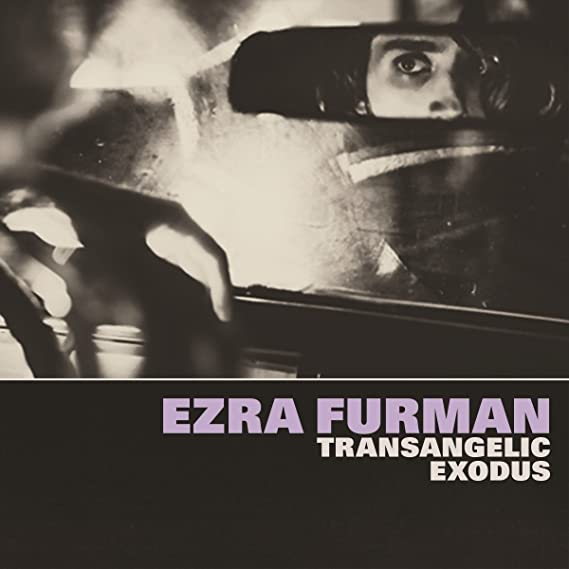
Bella Union Records are celebrating the release of Ezra Furman’s beautiful, pioneering, thrilling, tremendous new album “Transangelic Exodus”, which is available now via Bella Union! Transangelic Exodusis a new landmark for the American singer-songwriter: “Not a concept record, but almost a novel, or a cluster of stories on a theme, a combination of fiction and a half-true memoir,” according to its author. “A personal companion for a paranoid road trip. A queer outlaw saga.”
After five years since the release of “Transangelic Exodus”. This record means so much to me & I can never fully explain it.
One thing I can say: so much hard work and soul went into it. Five people made this record and we gave our lives to it for months and months. My four bandmates were all operating at maximal creativity & dedication, willing to explore possibilities with me, to try new things, to rip it up & start again. None of it could have been done if I was a “solo artist,” as some call me. This was a collaborative work, and I am so grateful to my collaborators: Tim, Sam, Jorgen & Ben. It really became a musical rebirth for me, first as a songwriter & then as a musician in general.
It was also a crucial ingredient of an ongoing queer awakening, a spiritual awakening, a social/political awakening—America was in scary upheaval in 2017, & so was my own life and spirit. These tracks reflect that—fear, rage, joy, despair, adventure, a fierce inner peace in direct contradiction to the violence that churns all around it.
“Transangelic Exodus” is in the running for my favourite thing I have ever made. It is probably the hardest I have ever worked on any piece of art.
The reward for our efforts was the album’s reception: not by blogs or critics and certainly not by the pop charts, but by the individual people who opened their hearts to this record. I know it’s a weird record and I never expected most people to understand it. But those who got it, really really got it. Travelling around playing this music, I met these wonderful people who brought me so much happiness. You used the album as it was intended to be used: as shelter for the mind, as tinder for a parking lot fire of the heart. Some of you were runaways of one sort or another, some of you outlaws on paper or in spirit, & so many were young queers working your asses off to totally change your lives. As was I. We did it, & we’re still doing it. Thank you.
Blessings to all Ezra
Transangelic Exodus Ezra Furman’s second album for Bella Union, is a new landmark its “not a concept record, but almost a novel, or a cluster of stories on a theme, a combination of fiction and a half-true memoir,” according to its author. “A personal companion for a paranoid road trip. ” The music is as much of an intense, dramatic event, full of brilliant hooks, with an equally evolved approach to recorded sound to match Furman’s narrative vision. In honour of this shift, his backing band has been newly christened: The Boy-Friends are dead, long live The Visions. In other words, the man who embodies the title of his last album Perpetual Motion People is still on the move… Or in the vernacular of the new album, on the run. His musical DNA remains intact – a thrilling, literate form of garage-punk rooted in The Velvet Underground, Jonathan Richman and ‘50s rock’n’roll. Standout tracks include the album’s lead single Driving Down To LA, a sparse, but explosive, mix of doo-wop and digital crunch.
Another is the haunting Compulsive Liar. Transangelic Exodus addresses another kind of coming out, as Furman addresses his Jewish faith on record much more openly than before, from the shivery ballad God Lifts Up the Lowly (which includes a verse in Hebrew) to the exquisite Psalm 151 and the line “I believe in God but I don’t believe we’re getting out of this one” in Come Here Get Away From Me, a heady blend of rock’n’roll rumble and ghostly clarinet. Crossing between love, gender, sexuality and religion, and singing in solidarity with the innocent, persecuted, oppressed and threatened, Ezra Furman has soundtracked the current fear and loathing across America like no other, while pushing ahead with his own agenda, always on the move.
“2016 was a hard year,” Furman notes in a statement. “While the political and cultural conversation devolved in a very threatening way, we travelled and toured a lot. We saw ourselves coming to the end of what we were, and we wanted to become something new.”
This sea change included an album full of memoir-like material, in which Furman opens up more about his personal journey of coming out as queer and gender-fluid, as well as addresses his Jewish faith. “Not a concept record, but almost a novel, or a cluster of stories on a theme, a combination of fiction and a half-true memoir,” explains Furman. “A personal companion for a paranoid road trip. A queer outlaw saga.” Speaking about the concept behind the record, Furman continues,
“The narrative thread is I’m in love with an angel, and a government is after us, and we have to leave home because angels are illegal, as is harbouring angels. The term ‘transangelic’ refers to the fact people become angels because they grow wings. They have an operation, and they’re transformed. And it causes panic because some people think it’s contagious, or it should just be outlawed. The album still works without the back story, though. What’s essential is the mood — paranoid, authoritarian, the way certain people are stigmatized. It’s a theme in American life right now, and other so-called democracies.”
Furman cites Kendrick Lamar’s To Pimp a Butterfly, Vampire Weekend’s Modern Vampires of the City, Kanye West’s Yeezus, and Angel Olsen’s Burn Your Fire For No Witness as influences on Transangelic Exodus.
acclaim for “Transangelic Exodus”
“Thelma & Louise meets Angels In America… Pop has plenty of angels, and Transangelic Exodus joins them in the firmament.” Mail On Sunday – 5 Stars ***** (Album of the Week) “This is one of the most probing and pioneering avant–retro–pop albums of the age.” Classic Rock – 8/10
“By way of glam, garage rock, baroque’n’roll balladry and declamation, Furman fashions a bold and engrossing manifesto.” Sunday Times
“Both sonically and lyrically, it’s an album that is explicitly, thrillingly transgressive, and is already an early contender for one of the albums of the year.” Uncut – 8/10
“His seventh album vibrates with fear, rage and fierce defiance… Transangelic Exodus feels like an appropriately angry response to a repressive political moment.” MOJO – 4 Stars ****
“Furman’s music has been rethought, cut up, redrafted into something irresistibly modern. The songs are tremendous – melodic, unsettling and laugh–out–loud brilliant.” Q – 4 Stars ****
“Transangelic Exodus sets out for fresh horizons with a full tank of passion, purpose, political rage, raucous invention and rock’n’roll fire.” Record Collector – 5 Stars ****
“A sense of defiance and unrest runs throughout Transangelic Exodus… Timely and uncompromising, it feels like a record of real importance.” DIY – 4 Stars ****
“This is a fascinating, mature set from an artist who feels as vital as ever.” DORK – 4 Stars ****
It was just like being in a disaster movie.” That’s how Hookworms singer Matthew “MJ” Johnson remembers Boxing Day in 2015, when the river Aire burst its banks, engulfing the band’s studio and rehearsal space. He was having lunch at his parents’ house several miles away at the time. The moment he heard the emergency flood alert, Johnson abandoned the meal and drove through rising water to the studio, which was soon five feet under. “The electricity was off and there was an eerie calm,” he says. “It was genuinely scary. I’ve got strong legs through cycling but I kept getting knocked over.”
Because the building, in the Kirkstall area of Leeds, was on a flood plain, he’d been unable to get insurance (even though the last flood had occurred in 1866). By the time he went back two days later to assess the damage, the waters had taken his car, much of the band’s back catalogue, their new recordings and – since he ran the place as a commercial studio – his livelihood. “I looked around,” he says, “and there was nothing left.”
Two years on, the studio has been rebuilt, courtesy of crowdfunding, friends and other bands who rallied round. Hookworms have now poured their frustrations into Microshift, a glorious, electronic-psychedelic third album with motorik grooves and euphoric choruses. After two previous albums of brain-scrambling, fuzzy psych-rock, it is being widely heralded as a triumph. The Guardian called it “their most accessible work and their most intense”, while the Times, in another five-star review, hailed it as “an instant classic” comparable to such benchmarks as the Jesus and Mary Chain’s Psychocandy and Spiritualized’s Ladies and Gentlemen We Are Floating in Space.
Not that the down-to-earth quintet are getting carried away. “The album got three stars in Crack magazine,” laughs Matthew “MB” Benn, the band’s synth player (an audiologist by day). They’ve learned to not take anything for granted. Microshift has a hymnal, giddy energy, akin to the ecstasy that can follow agony, which feels very appropriate – because floods aren’t all they’ve had to deal with.
“So much has gone on that I think there is a Hookworms curse,” says Benn. “We’d had such a terrible few years. So we wanted the music to be upbeat, uplifting.”
When the group formed amid the bustling Leeds DIY scene in 2009, lady luck initially smiled. The Brudenell SocialClub booked Hookworms to support Wooden Shjips before they’d even heard a note. Then Alex Turner of Arctic Monkeys started saying how much he liked Wooden Shjips. “So,” recalls Benn, “we played our first ever gig to a sold-out venue.”
Almost immediately afterwards, things started going wrong. Equipment was lost or malfunctioned, cars broke down, the band’s bank account was defrauded and a former booking agent sent them an abusive letter declaring: “You will never be successful.” Incredibly, Johnson’s first studio – a place in Armley he rented after quitting his office job to chase a childhood dream – also flooded. “The roof collapsed,” he says. “And it turned out the landlord hadn’t told anyone I was there, because the building had already been declared uninhabitable.”
None of this stopped Hookworms becoming the most promising Leeds band since the heady days of Kaiser Chiefs. But when their 2013 debut, Pearl Mystic, was acclaimed as a masterpiece, Johnson was horrified, having fully expected to end up with hundreds of unsold copies under his bed. “I had impostor syndrome,” he says. “If we were making perfect records, where could we go from there? And I didn’t think it was perfect.”
The frontman has battled “chronic depression” since his teens and was thoroughly unprepared when a comment in a press release he hadn’t expected many people to read (about a “half-hearted suicide attempt”) went viral. All he will say about the incident now is that it was “a cry for help”. Deep down, he says, “all my songs are about mental health”.
After rushing their second album, 2014’s The Hum, the band resolved to take their time with the third, spending the label advance on electronics to take their sound in a new direction. But during recording, the sound engineer – a close friend – died. He had loved their track Negative Space, having heard it in its early stages on one of the last occasions they were together. It is now Microshift’s surging opening song – and all about him. It hinges on the euphoric line: “I always see you when I’m down.” Says Johnson: “Soon after he died, I was in the supermarket and saw him. Then you realise it’s not that person.”
Ullswater, a frenzied electro shimmer of a track, refers to the Lake District beauty spot where Johnson’s father used to take him before he developed Alzheimer’s. “My dad was – is – into poetry,” he says. “When I was very young, he introduced me to Dylan Thomas, Sylvia Plath and then Neil Young. A lot of those things went on to really shape my life, so it was important to get the lyrics right. Alzheimer’s is talked of with shame, in the way cancer was in the 1960s. But that absolutely needs to change, because it’s going to affect so many of us.”
Other songs on Microshift address male anxiety, body image and – on Opener – toxic masculinity. Given its subject matter, why does Opener sound so joyous? “I’m arguing that it’s OK for males to admit to failings. Even now, there’s still this notion that the man is the breadwinner – this 1950s, 60s culture that I find really weird.”
These are refreshing subjects for pop, but Johnson is keen to let it be known he despises the notion of the tortured artist: he says he writes some of his best songs when he’s happy. “There’s a certain type of man who reads Bukowski and wants bad things to happen to him so he can write terrible, deep lyrics. Personally, I’d rather be totally sane and stable and never have made any music than be depressed and make music that people like.”
The band members have yet to give up their day jobs, and feel grounded by their employment (pub work, teaching, Citizens Advice). Nor do they have a manager. Benn has taken over the role, answering emails and booking hotels. “We were being ripped off by promoters,” he says. “I was naive. It’s been a steep learning curve.” He’s not the only one doubling up: bassist Johnny “JW” Wilkinson looks after graphic design, while guitarist Sam “SS” Shjipstone keeps the books.
It’s rare to see a pop act have such a disregard for careerism, but Johnson points out that making records at their own pace – without management or label pressure – means they can carry on for as long as they want. “I never want to have to do gigs all month to pay the rent,” he says. “We can make a record like Microshift – but then our next one might be incredibly difficult and uncommercial. And that doesn’t matter. That’s really important to us.”
Two years after the flood, Johnson remains in “a ton” of debt but has enjoyed rebuilding the studio. “I taught myself joinery,” he says proudly. “I’d never done anything like that before.”
Hookworms suddenly seem to have a lot to look forward to. Do they think Microshift is lifting the curse? “It’s hard to see what else could go wrong,” says Benn. “I’d better not tempt fate.”





 The Fat Angel Sings